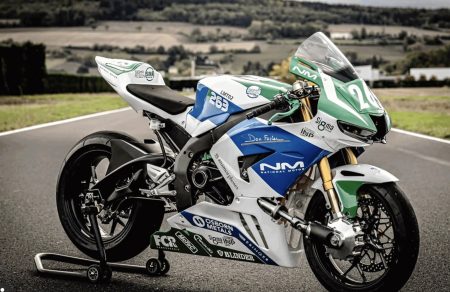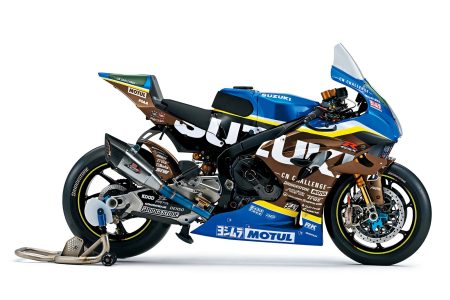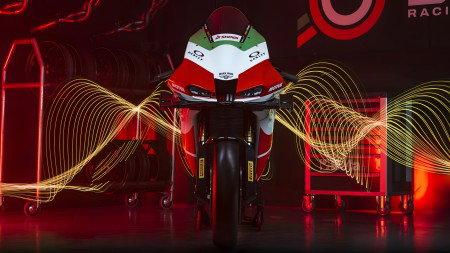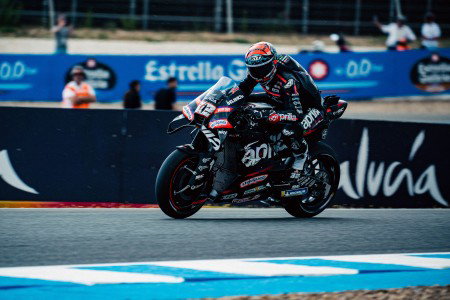
- 798 instead of 765 cc, rev limit at 13,800 rpm, compression ratio 14.0:1
- 5.5 percent more peak power, 10 percent more airflow, 2 kg (4.4 lbs) lighter
- First test runs with the new chassis at Aragón, official testing ahead of the 2027 season opener
When Triumph announced the new Moto2 engine in August ahead of the British Grand Prix at Silverstone, the most important figures were left open. All that was confirmed was that the displacement would change, power would rise by around six percent and the engine would be 2 kg lighter. Now the manufacturer has followed up and published the full data. For the intermediate class of the Grand Prix World Championship, it is the biggest technical step since Triumph became the sole engine supplier in 2019. And it comes in a year in which all of Grand Prix racing is being reshaped: MotoGP is also switching to new 850 cc engines in 2027.
What do we now know about the new Triumph Moto2 engine 798?
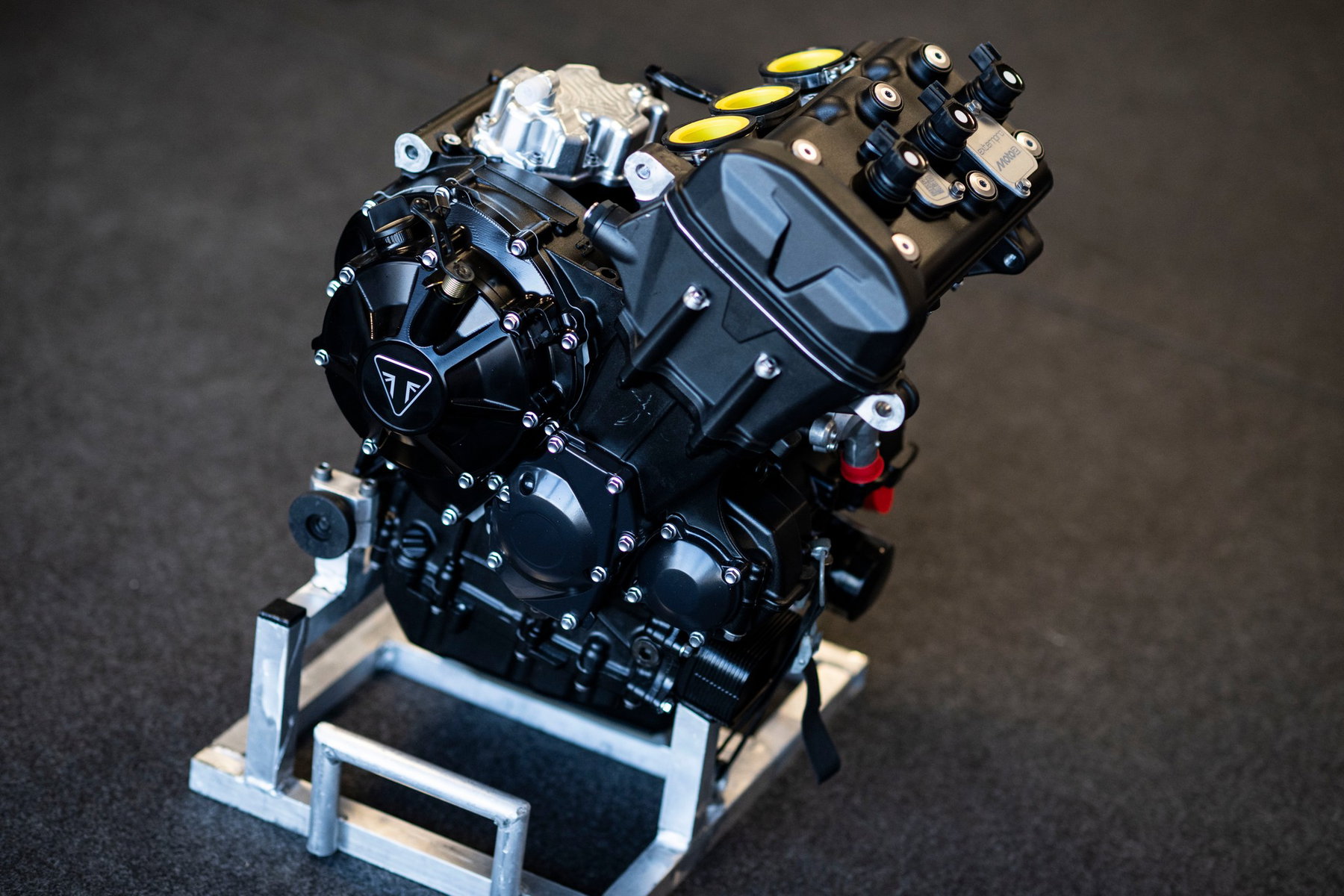
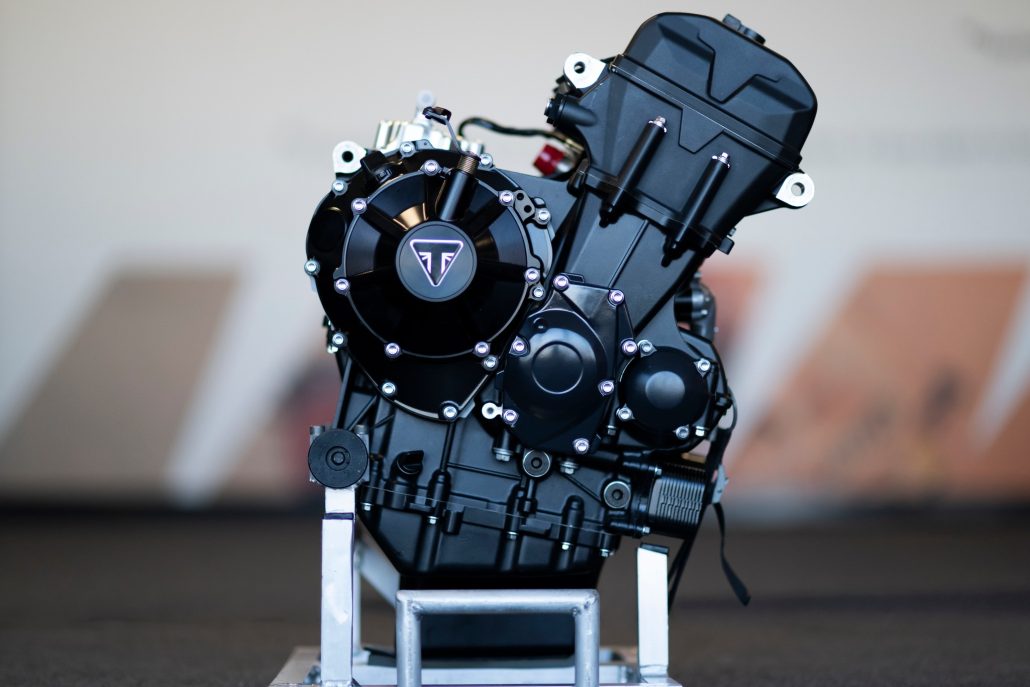
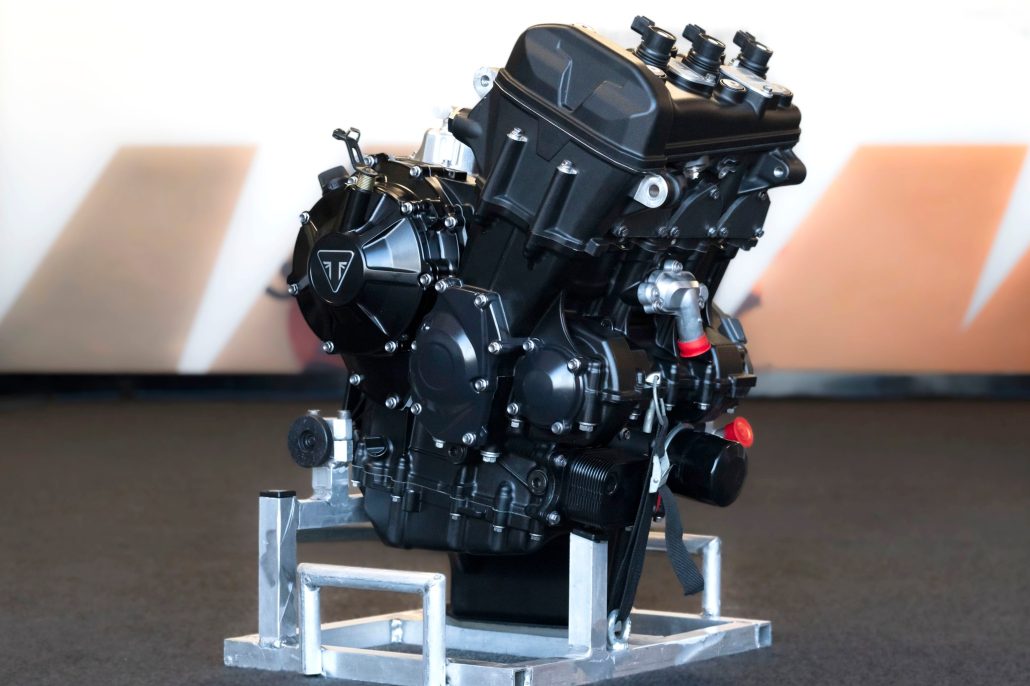
The new three-cylinder has a displacement of 798 cc, revs to 13,800 rpm and runs a compression ratio of 14.0:1. According to Triumph, peak power rises by 5.5 percent, and torque is said to increase across the entire rev range.
That answers the questions left open after the announcement in the summer. Back then, Triumph had kept bore, stroke, rev limit and compression ratio to itself. The manufacturer has also become more precise about the power gain: the roughly six percent from August has become 5.5 percent. Triumph still does not give an absolute horsepower figure, nor a torque value.
This is not the familiar 765 with a bit more displacement, but a completely new engine. The previous race engine was derived from the powertrain of the Street Triple 765 RS and was developed over the years mainly in terms of the gearbox and top-end performance.
Where do the extra cubic centimetres come from?
Triumph has only lengthened the stroke; the bore stays at 78 mm. A new crankshaft means the pistons travel 2.25 mm further up and down.
That sounds like very little, but it is enough for the jump from 765 to 798 cc. Doing the maths, a cylinder with a 78 mm bore and 2.25 mm of extra stroke gains just under 11 cc of volume. Across three cylinders, that adds up to a good 32 cc, which matches the manufacturer’s rounded figures.
Despite the longer stroke, the engine is not supposed to lose out at the top end. Triumph explicitly promises more power at high revs as well, with the rev limit set at 13,800 rpm.
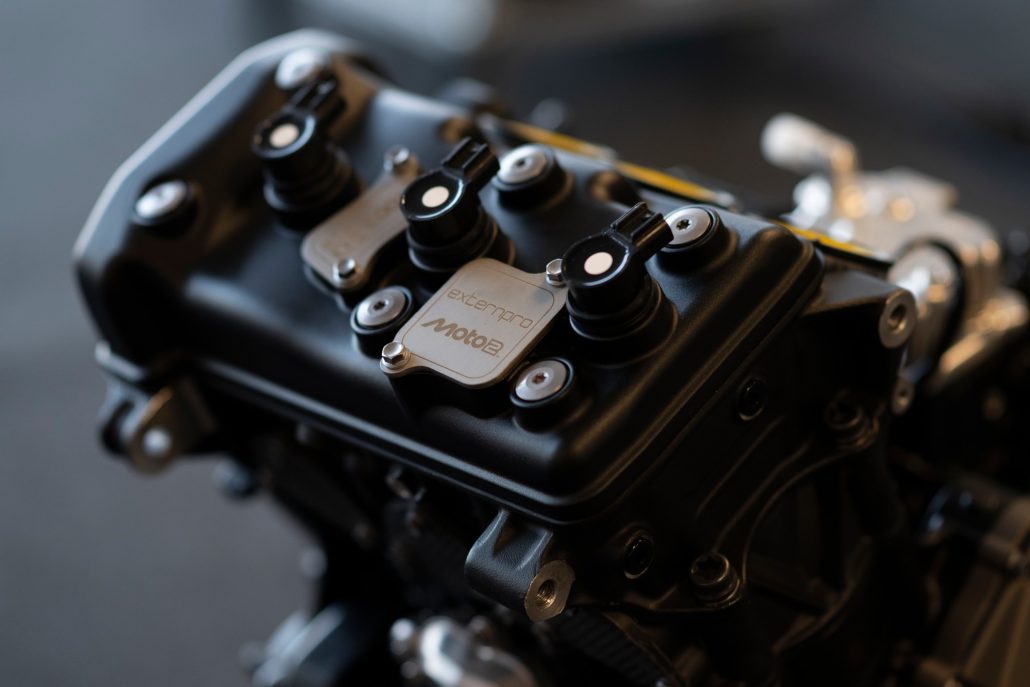
Why is the cylinder head the heart of the new engine?
Because that is where most of the changes that deliver more power come together. Triumph has completely redesigned the head with the aim of getting more air into the cylinders.
The most important element is a new valvetrain with finger followers. A finger follower is a small, light lever that sits between the camshaft and the valve and transfers the movement of the cam lobe to the valve. Because the moving parts weigh less, the valves follow the cam cleanly even at very high revs. The titanium intake valves, which are also lighter than steel valves, contribute to this. Together they allow more aggressive cam profiles, meaning cams that open the valves faster and further.
How does more air get into the engine?
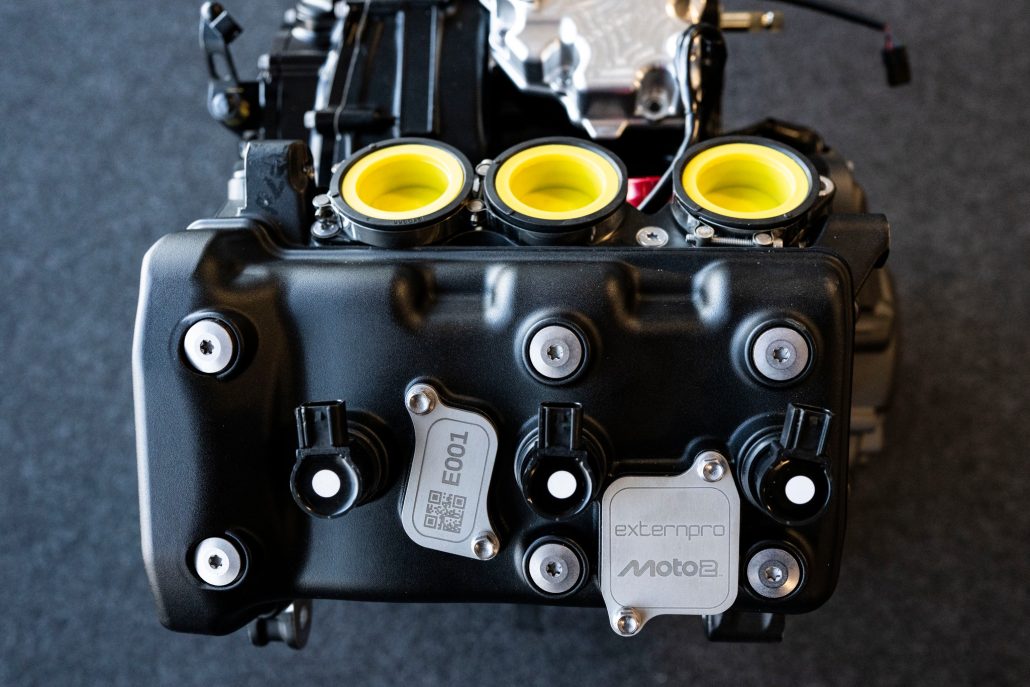
Airflow increases by 10 percent. To achieve this, Triumph has changed several areas at once:
- a larger airbox with two inlets and a new air filter
- revised intake ports in the cylinder head
- larger valves on both the intake and exhaust side
- new higher-flow Bosch injectors that atomise the fuel better
The combustion chamber and pistons are also new. They raise the compression ratio from 13.5:1 to 14.0:1. A higher compression ratio squeezes the mixture harder before ignition, which helps torque.
Where does Triumph save 2 kg on the Moto2 engine?
The biggest share comes from the new cylinder head at 1.1 kg, with a further 0.6 kg from the redesigned camshaft drive. Together that makes 1.7 kg.
The remaining roughly 0.3 kg is spread across smaller measures. Triumph has modified the cylinder liners and developed a new magnesium cam cover. In total, that adds up to the 2 kg (4.4 lbs) the manufacturer had already announced at Silverstone.
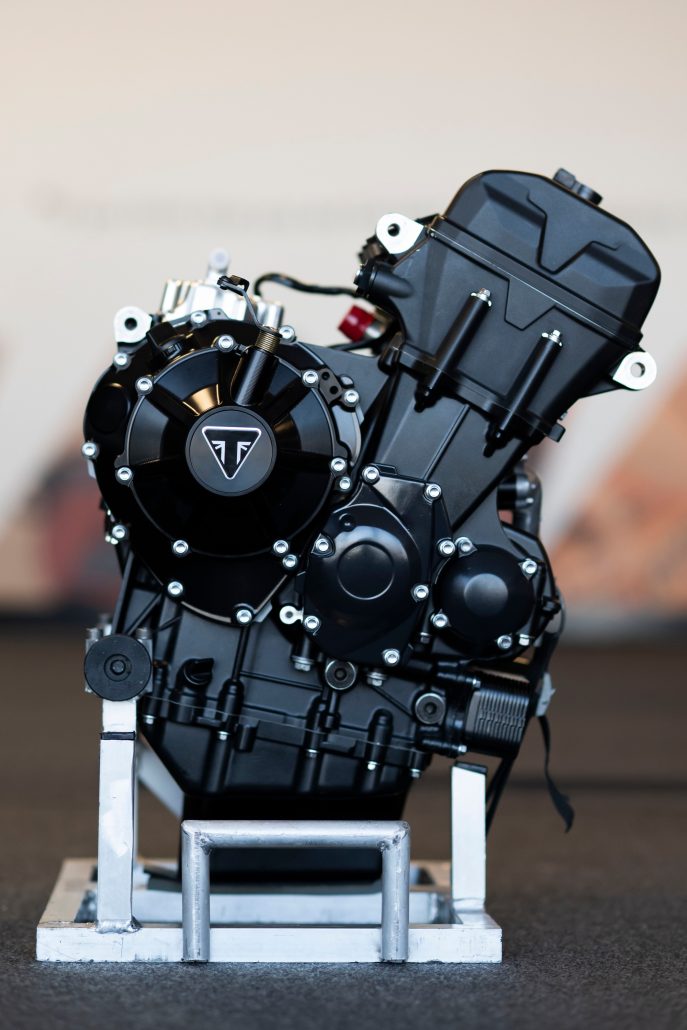
Which components were strengthened for the higher loads?
Practically all major components have been redesigned so that the engine can withstand the additional power over the long term. This includes the parts through which torque is transmitted to the rear wheel.
Triumph has adapted the primary drive and gearbox to the higher forces. The crankcases are stiffer, and the gearbox oil supply has been revised. In addition, a wider cam chain now drives the camshafts. The goal is an engine that reliably lasts race distances despite producing more power. For development, Triumph was able to draw on around two million kilometres of race data from eight Moto2 seasons.
How did the first test of the new Moto2 chassis at Aragón go?
The three chassis manufacturers Kalex, Boscoscuro and Forward ran their 2027 bikes with the new engine for the first time at Aragón in early September. According to Triumph, the feedback was positive.
New frames are mandatory because the position of the air intake and the points at which the engine is mounted in the frame have changed. The designers had received the engine data around a year before the announcement. However, at the time of the announcement they had not yet seen the engine itself. For the test on the Tuesday and Wednesday after the Aragón Grand Prix, each manufacturer had one engine available, with two test riders each.
The times were close together. On the first day Celestino Vietti was fastest on the Boscoscuro, on the second Alex Escrig on the Forward. Escrig came within a few hundredths of the 1:49.4 that Alonso Lopez had set in qualifying on the race weekend. Behind him came the Kalex riders Daniel Holgado with 1:49.9 on a used tyre and David Alonso with 1:50.0. The test did not go entirely smoothly: at Forward, a minor technical problem with setting up the electronics, which had to be adapted to the new engine, slowed things down.
What happens next before the 2027 season opener?
The engine now enters the official test phase and will make its race debut at the 2027 season opener. Until then, the teams have four test days at Jerez in February to set up the new bikes.
Steve Sargent, Chief Product Officer at Triumph, points out that the manufacturer brings a wealth of data and experience from eight seasons in Moto2. He says Triumph used the larger displacement to deliver more power and torque across the entire rev range and to add even more at the top end. “This is a significant development step, and we look forward to seeing its impact on track from 2027.”
The new engine replaces a 765 during whose era almost 100 circuit and race lap records fell. It was also the first Moto2 engine to take a bike beyond 300 km/h.
The partnership is secured for the longer term. Following extensions in 2021 and 2023, the contract between Triumph and MotoGP Sports Entertainment Group, formerly Dorna, runs from 2025 to 2029.
Frequently Asked Questions
-
How much displacement does the Triumph Moto2 engine 798 have?
The new three-cylinder has 798 cc, 33 cc more than the previous 765. The bore stays at 78 mm, while the stroke is 2.25 mm longer.
-
How much horsepower does the new Moto2 engine have?
Triumph does not give an absolute figure. The manufacturer only states that peak power rises by 5.5 percent and that torque increases across the entire rev range.
-
How high does the Moto2 engine rev from 2027?
The rev limit is 13,800 rpm. Despite the longer stroke, Triumph also promises more power at the top end.
-
Why do the Moto2 teams need new frames in 2027?
On the new engine, the air intake and the mounting points are in different positions. Kalex, Boscoscuro and Forward therefore had to build completely new chassis, which were tested for the first time at Aragón in early September.
-
How long will Triumph supply the Moto2 engines?
The current contract runs from 2025 to 2029. Triumph has been the sole engine supplier of Moto2 since 2019.