- The wings start to tilt down from 160 km/h (100 mph) and lie flat from 200 km/h (124 mph)
- Travel of 15 degrees, the full movement takes half a second
- Control comes from speed, brake pressure and throttle position, without a lean angle sensor
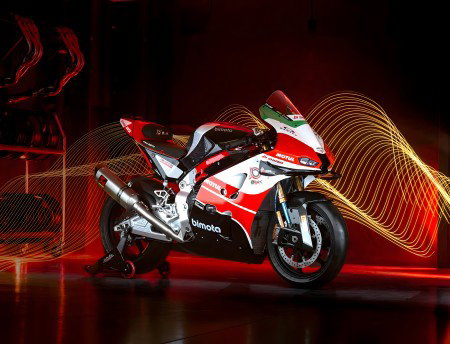
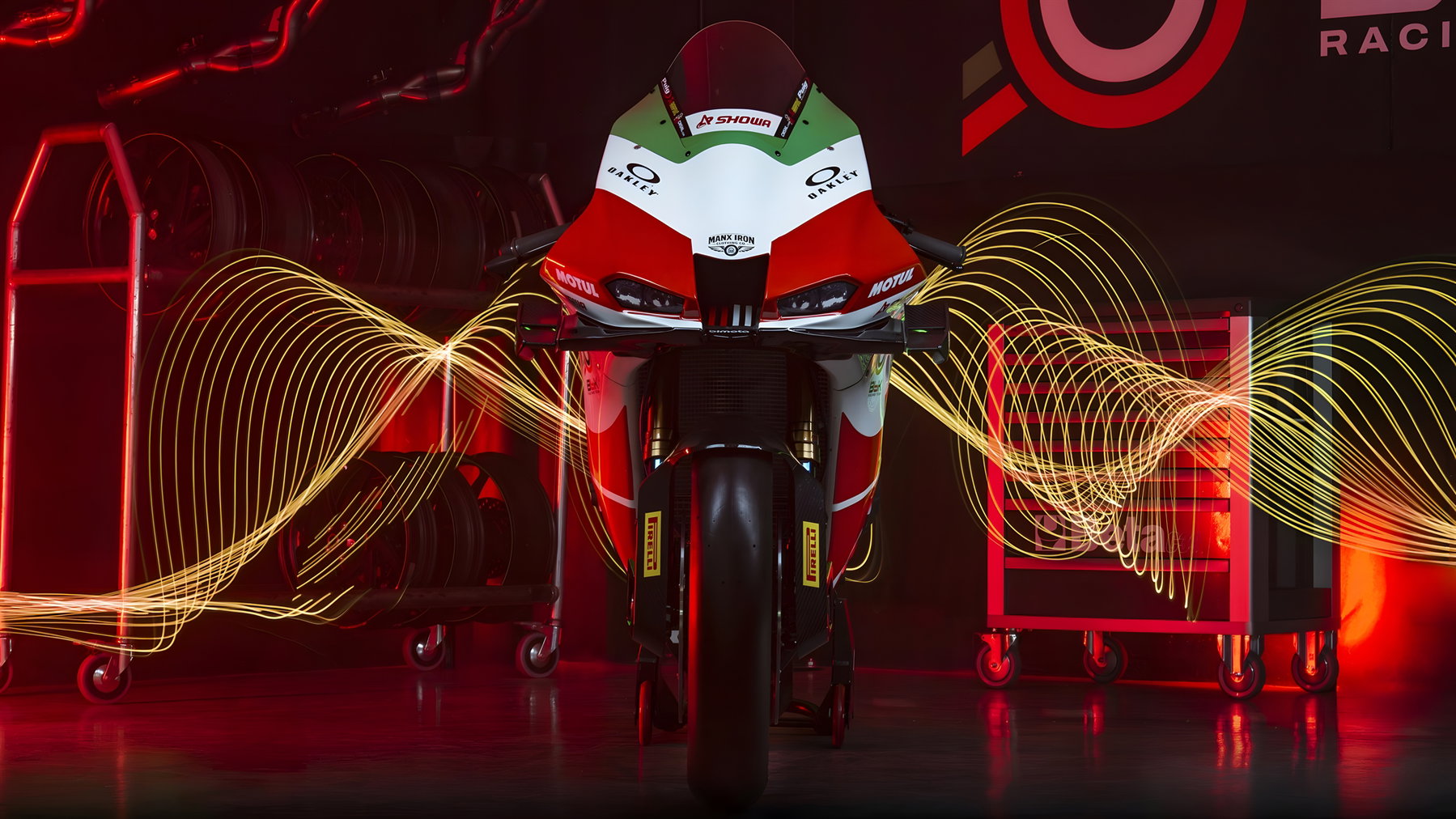
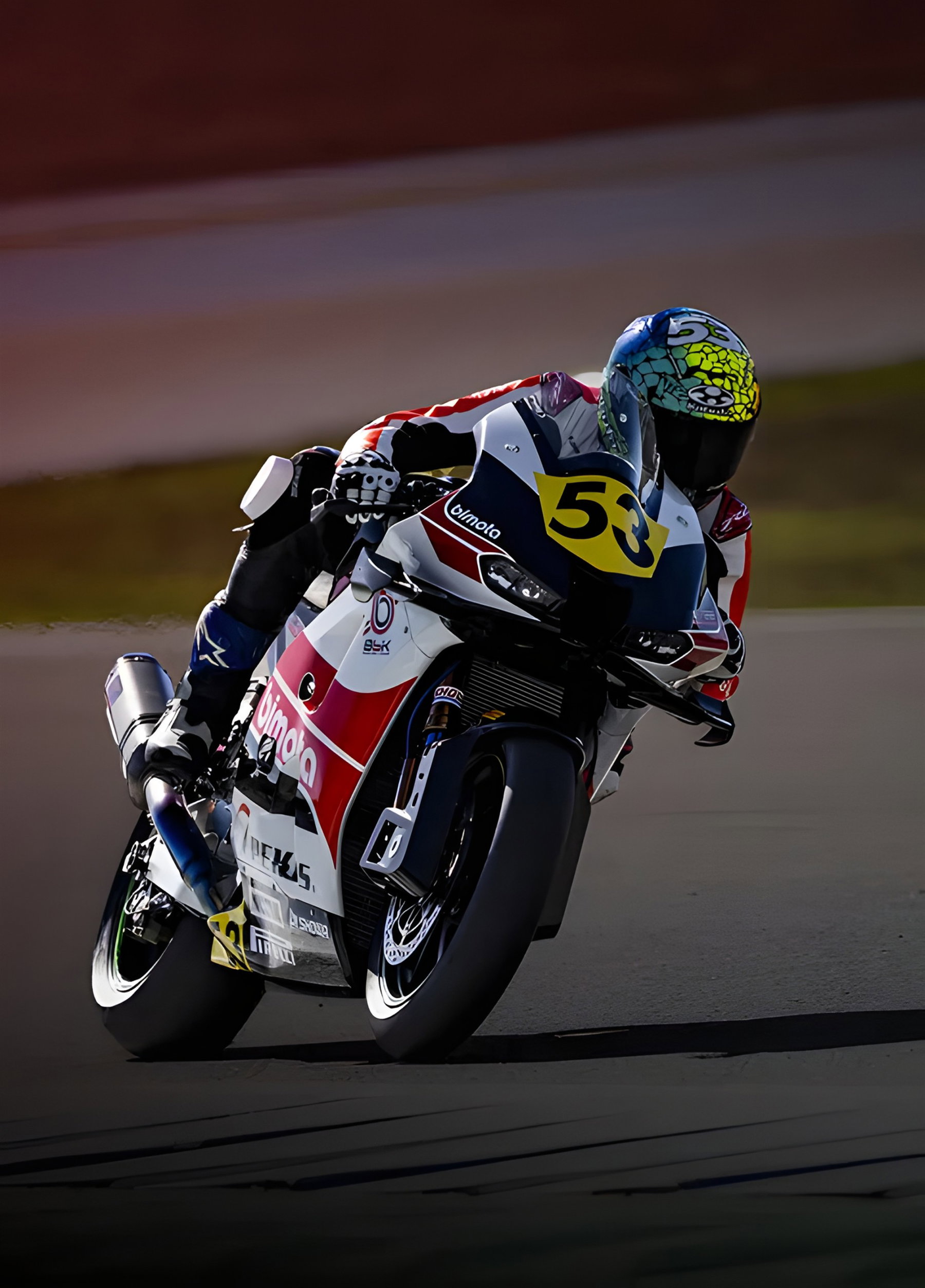
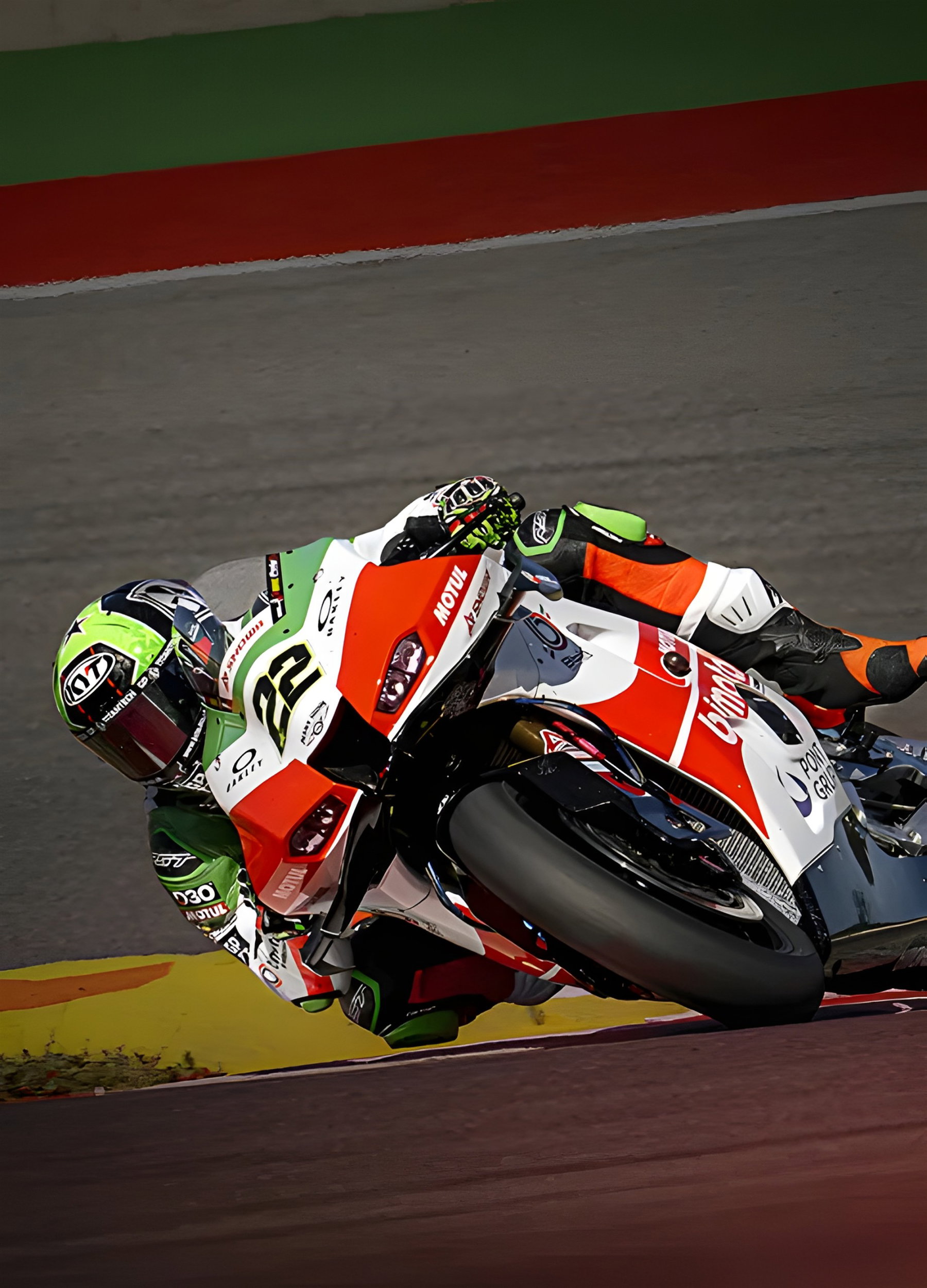
With the KB998 Rimini, Bimota has returned to the front of the Superbike World Championship. That was made possible by the link with Kawasaki, which has held a 49.9 percent stake in the Rimini manufacturer since October 2019. The bike’s most striking feature is a pair of carbon wings at the front that change their angle of attack while riding. Exactly how that works was something Bimota kept to itself for a long time. Now the details are on the table.
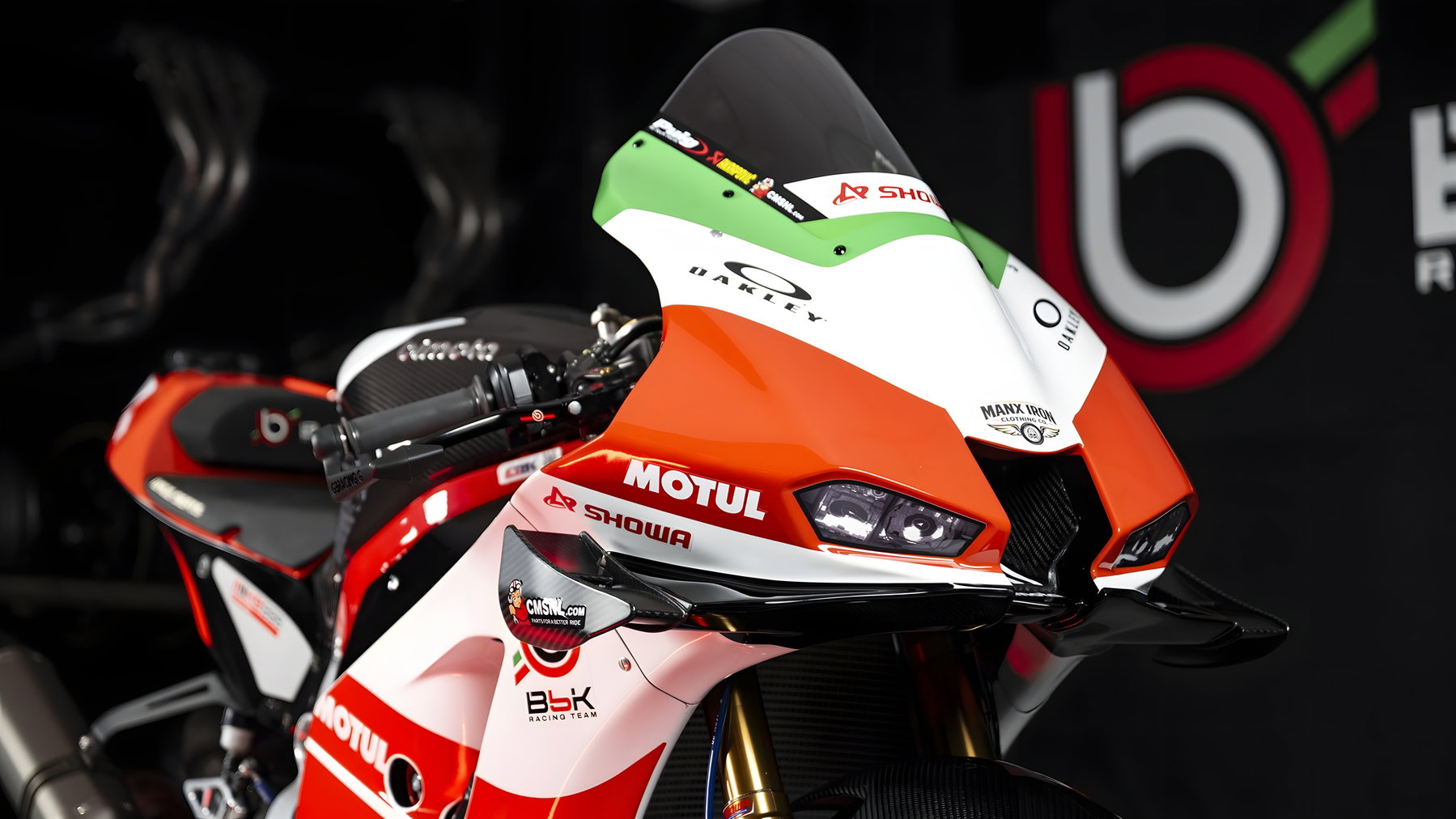
How do the active winglets on the Bimota KB998 Rimini work?
An electric motor moves the wings via cables. There is no hydraulics or compressed air involved, which keeps the design comparatively simple.
The electronics behind it come from GET, the electronics division of Athena. Bimota brought the partner on board to develop and control the active aerodynamics. GET built a dedicated control unit for it that reads the bike’s sensors and adjusts the wings in real time. The platform was tailored specifically to the electronic architecture of the KB998.
The collaboration is not new. It began with the BX450, an enduro based on the Kawasaki KX450X that Bimota presented in 2022. From the dirt track it went straight into the supersport class.
Project leader Pierluigi Marconi describes the effort as considerable. Active aerodynamics, he says, „requires an extremely high level of integration“. GET played a decisive part in that.
What data does the wing control system use?
The control unit evaluates just three parameters: speed, brake pressure and throttle position. A signal from the inertial measurement unit, meaning the sensor for lean, pitch and yaw, is not processed by the system.
That means the aerodynamics work independently of how far the bike is leaned over. Speed has the biggest influence. From 160 km/h (100 mph) the winglets start to tilt down, at 200 km/h (124 mph) they lie completely flat and cut drag when the bike heads for top speed. Under braking they stand up again and generate downforce.
The travel is modest at 15 degrees. The movement is quick nonetheless: going from 0 to 15 degrees takes around half a second.
What does movable aerodynamics deliver on the road?
According to GET, the benefit goes beyond simply trading drag for downforce. Better stability, advantages on turn-in and more traction are all cited.
Fixed winglets always have to represent a compromise. More angle of attack means more downforce, but at the same time more drag and less top speed. A movable system can resolve that compromise because it picks the right position for each situation. During a test at the British circuit Cadwell Park, media reports observed exactly that behaviour: flat from around 160 km/h (100 mph), raised under braking.
Why do the left and right wings always move together?
On the production bike Bimota deliberately chose the simpler and safer solution. Both wings always work in sync.
Separate actuation was discussed. That would allow different amounts of downforce on the left and right in mid-corner. For road use it seemed too risky. There is also a technical reason: without a lean angle signal the control unit has no idea how far the bike is leaned over. Independent adjustment would therefore require a link to the inertial measurement unit.
What happens if the electronics fail?
The system checks itself. When the ignition is switched on with the bike stationary and the engine idling, the wings run through one full cycle. It is reminiscent of the exhaust power valves on old two-strokes and shows whether the mechanism is working properly.
If the test comes back negative, the bike has to go to the workshop. If a fault occurs while riding, the wings move to the safest position and stay there. That is the setting with maximum downforce, not the flat position.
What changed with Euro5+?
The Euro5+ emissions standard affected the engine, not the aerodynamics. Bimota states that the wing control system did not have to be reworked for it.
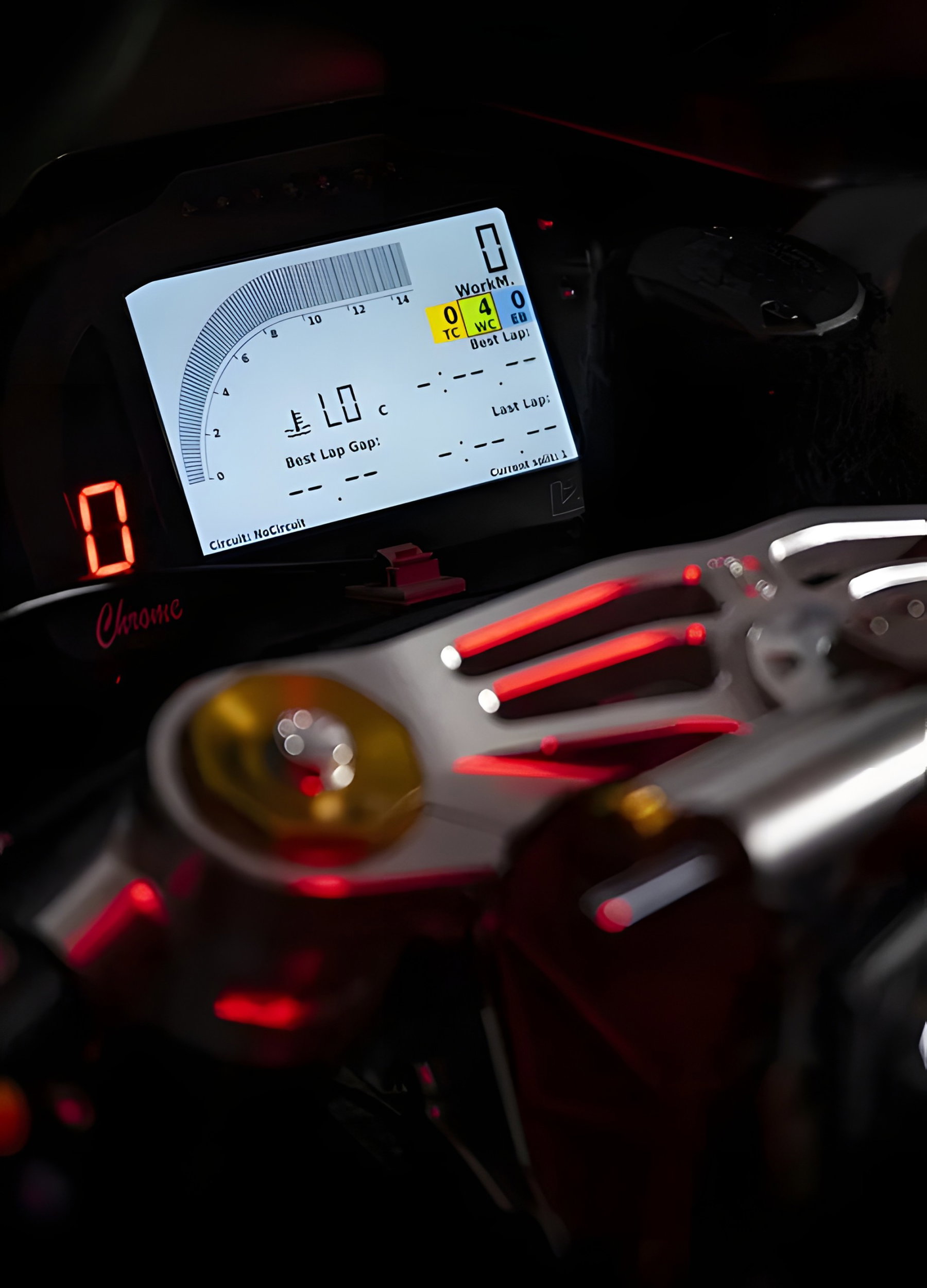
For type approval, the four-cylinder taken from the Kawasaki ZX-10RR needed new ECU data, modified sections of the wiring loom and an additional lambda sensor. Euro5+ requires permanent monitoring of the catalytic converter via the ECU. The electronics compare the readings from a sensor before and a sensor after the converter and flag deviations through a warning light in the display.
According to Bimota there was no special treatment during type approval itself either. The movable wings were not scrutinised any more strictly than fixed parts. That removes a hurdle on which many such systems have failed so far.
What is the KB998 Rimini made of technically?
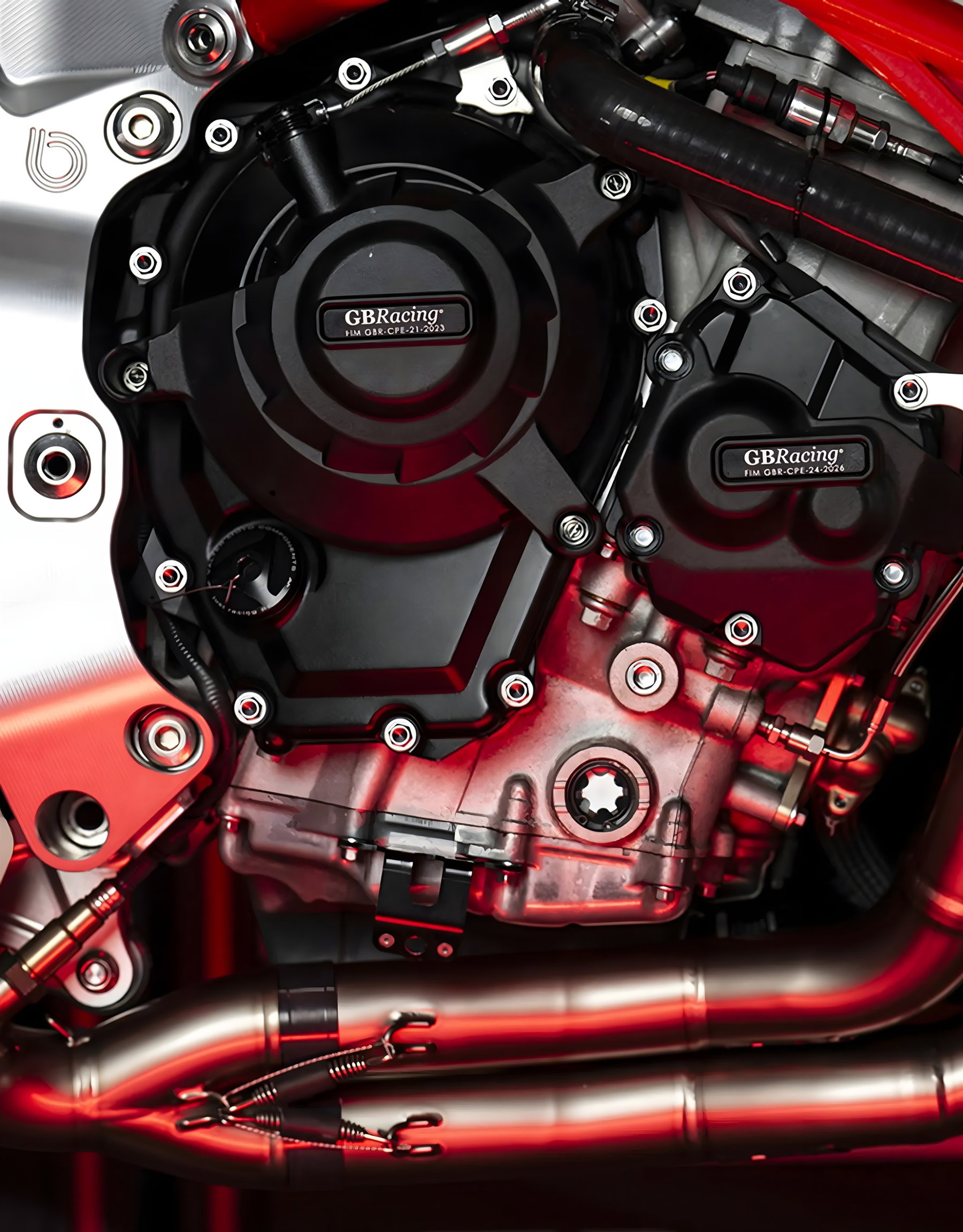
Kawasaki supplies the base, the chassis comes from Bimota. The 998 cc inline four produces 200 hp (147 kW) at 13,600 rpm and delivers 111 Nm (82 lb-ft) at 11,700 rpm.
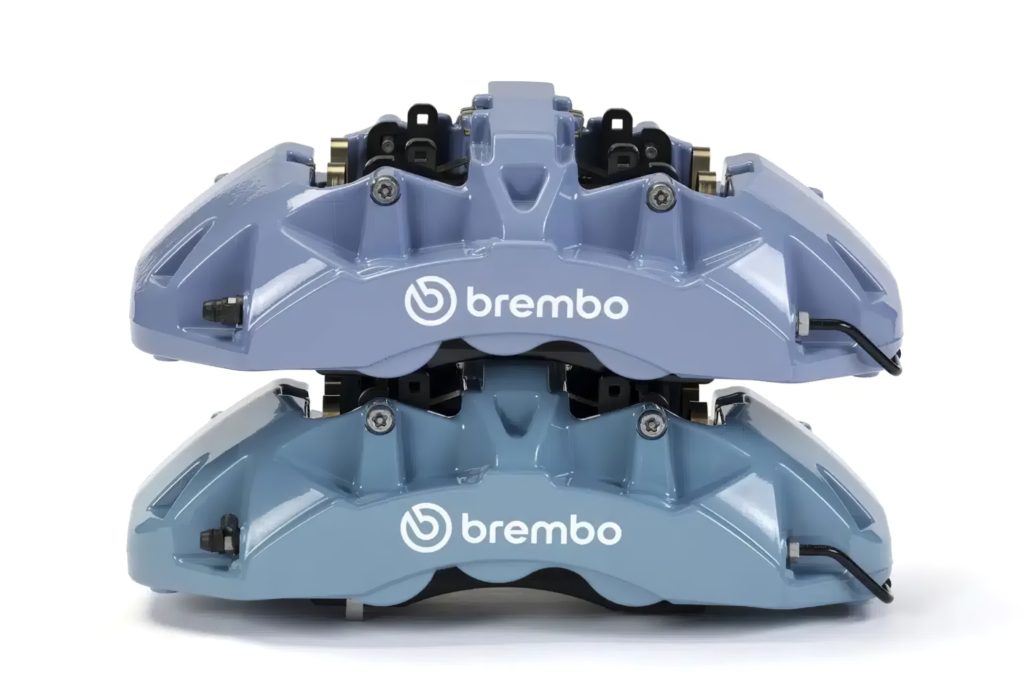
The frame is a hybrid construction of machined aluminium plates and a trellis of oval steel tubes. The swingarm pivot and the upper shock mounting point are adjustable, and a cross member in the frame can be loosened or removed entirely to alter stiffness. The wheelbase measures 1,454 millimetres. Up front there is a fully adjustable Showa fork with 43 millimetre stanchions and 130 millimetres of travel, at the rear a Showa shock with 125 millimetres. The brakes come from Brembo, with twin 330 millimetre discs at the front.
Bimota quotes a weight of 194 kilograms (428 lbs) with all fluids but without fuel. Fully fuelled the KB998 Rimini comes in at around 207 kilograms (456 lbs), roughly on a par with the ZX-10RR.
At its sales launch in April 2025 the price was 43,990 euros (around 50,650 US dollars). That figure is no coincidence: Superbike World Championship rules cap the price of a homologation model at just over 44,000 euros. In the UK it was listed at 37,777 pounds (around 44,110 euros / 50,800 US dollars). A total of 500 units will be built, 125 by February 2025, another 125 by the end of 2025 and 250 during 2026.
Will movable aerodynamics be banned in racing?
According to Bimota, motorcycling’s world governing body FIM intends to prohibit variable winglets in the Superbike World Championship from 2027. Official confirmation is still outstanding.
At the end of July 2026 the Superbike Commission presented its plans through to 2030 at Donington Park. They include manufacturer-specific rev limits from 2027 in steps of 500 rpm, a single fuel supplier, a reduction of the noise limit from 115 to 112 decibels, a new concessions system from 2028 and approval of 1,200 cc for four-cylinder engines from 2030. Aerodynamics does not appear anywhere in that announcement.
In principle the Superbike World Championship is closely tied to the production bike anyway. Wings and aerodynamic aids, movable ones included, are only permitted if they are fitted to the homologated road model. Their range of movement must not go beyond what happens on the production bike in normal use. That is exactly why road approval for the KB998 Rimini matters so much to Bimota.
Marketing boss Gianluca Galasso is reserved about the consequences of a restriction. „It could be developed in any direction without this restriction“, he says. The timing would be unfortunate, because the system has only just arrived on a road-legal motorcycle.
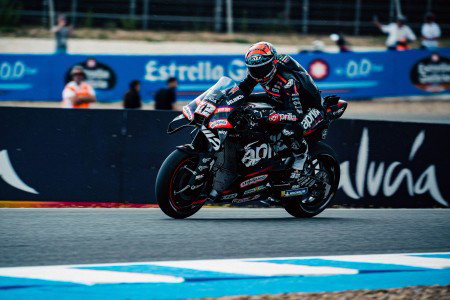
On track, the 2026 season is going solidly for Bimota. After eight race weekends the team sat second in the manufacturers’ standings, albeit 276 points behind the dominant Ducati camp.
Who else is working on active aerodynamics?
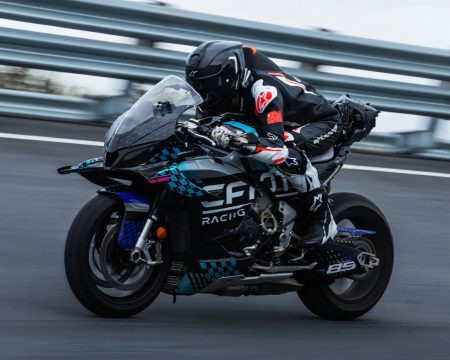
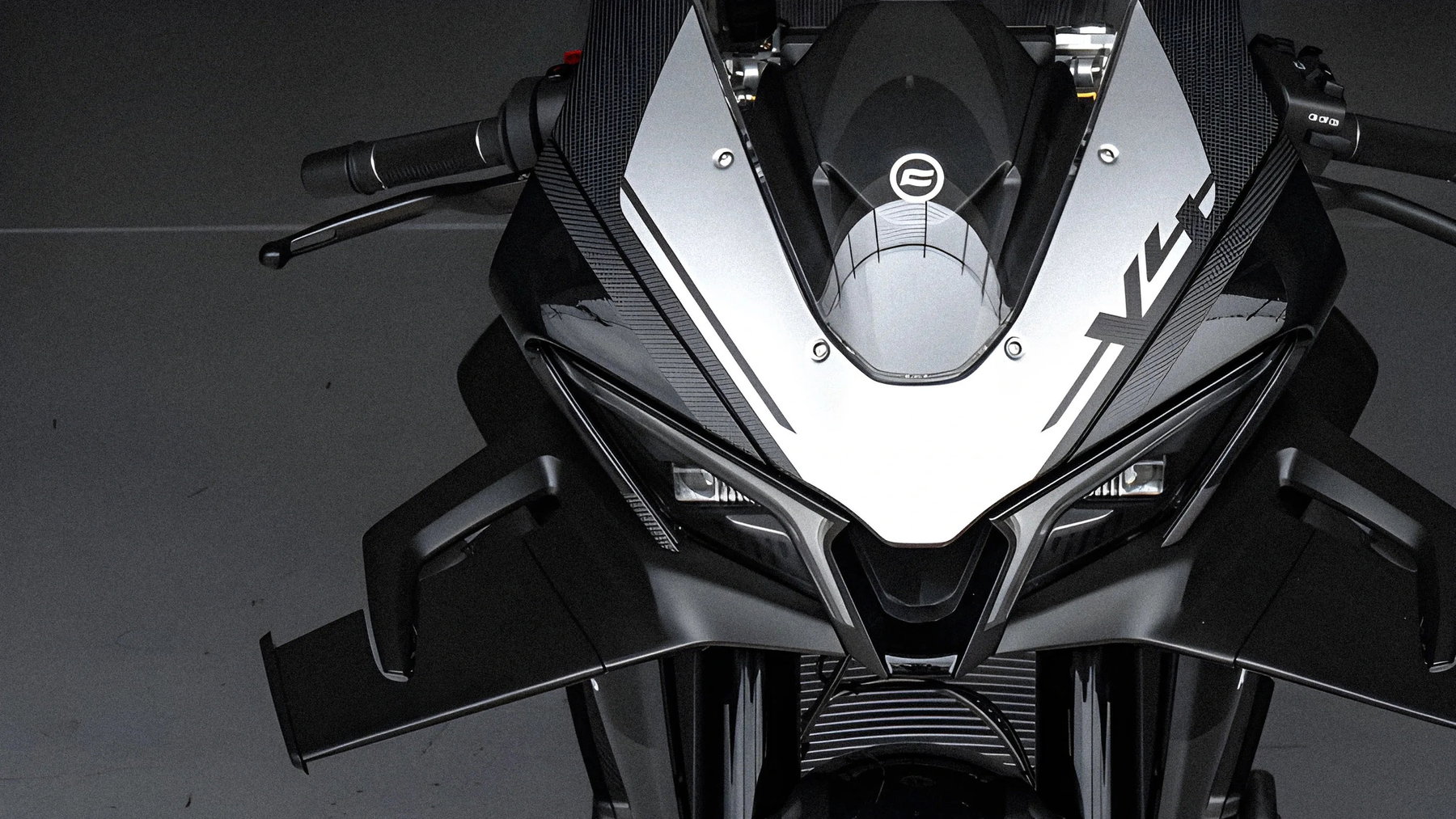
In November 2025 CFMoto showed the V4 SR-RR as a prototype with a particularly far-reaching interpretation of movable wings. Whether it becomes a production model depends partly on how racing deals with the technology.
The Chinese manufacturer quotes more than 207 hp for the 997 cc V4 and a top speed of over 300 km/h (186 mph). Patent drawings show a bearing as the pivot, a push rod and an electric actuator. The plan is for a shallow angle below 10 degrees under acceleration, 10 to 20 degrees at high speed and 45 to 90 degrees under braking, with the wings then also acting as an air brake. Unlike Bimota, the wings are intended to operate individually and to use data from the inertial measurement unit. Workshop practice was considered too: the push rod is deliberately designed to be weaker than the expensive actuator and gives way first under impact.
That leaves active aerodynamics at a point where it will be decided whether it remains a niche feature of exclusive small-series machines or finds its way into larger volumes. The benefit at 160 km/h (100 mph) and above has been documented, the benefit in everyday riding has not.
Frequently Asked Questions
-
How fast do you have to ride before the wings on the Bimota KB998 Rimini move?
From 160 km/h (100 mph) the winglets start to tilt down. At 200 km/h (124 mph) they lie completely flat. Below that they stay in the position with the most downforce.
-
How much power does the Bimota KB998 Rimini have?
The four-cylinder produces 200 hp (147 kW) at 13,600 rpm and 111 Nm (82 lb-ft) at 11,700 rpm. The engine is carried over unchanged from the Kawasaki ZX-10RR.
-
How much does the Bimota KB998 Rimini cost?
At its sales launch in April 2025 the price was 43,990 euros (around 50,650 US dollars). Superbike World Championship rules cap the price of a homologation model at just over 44,000 euros. A total of 500 units will be built.
-
What happens if the active winglets fail?
The wings automatically move to the position with maximum downforce and stay there. The system also runs a self-check when the ignition is switched on. If that test fails, a workshop visit is required.
➜ This article is part of our comprehensive overview: Motorcycle Patents and Future Technology: What Manufacturers Are Developing. Find all key information on this topic in one place.