- According to Steve Sargent, the new Moto2 engine is explicitly not the unit from the Tiger Sport 800
- The development direction is reversed this time: the race engine first, the production model afterwards
- Displacement is above 765 cc, but not 800 cc, and below the 850 cc of MotoGP
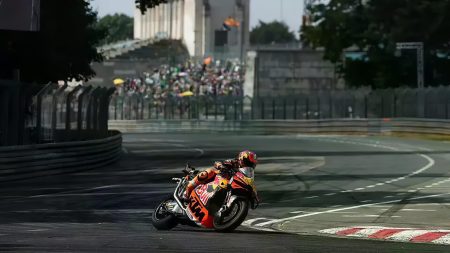
In early August, Triumph and MotoGP jointly announced that the Moto2 World Championship will run a new race engine from 2027. Around six percent more peak power, two kilograms less weight, a new cylinder head and a changed displacement. Since then, one question has occupied the industry more than the bare engine data: which production motorcycle does this triple actually come from, and which one will it end up in. The obvious answer is now off the table.
Where does the new Triumph triple come from?
The new Moto2 engine is not based on the 798 cc platform from the Trident 800 and the Tiger Sport 800. Steve Sargent, Chief Product Officer at Triumph, made that unmistakably clear according to media reports.
Asked whether the race engine shares the architecture of the recently introduced 800 models, he answered: “It’s categorically not the Tiger Sport 800 engine. It’s a completely different set-up.”
That removes the explanation many considered the most obvious after the announcement. Triumph only recently brought the 798 cc range to market, among others in the Trident 800, which has taken over the place of the discontinued Street Triple R in the line-up. According to the manufacturer, the race engine has nothing to do with this range.
Why is the development direction reversed this time?
Because Triumph built the race engine first, with the production motorcycle following afterwards. In 2019 it was exactly the other way round.
Sargent describes the difference clearly. Back then the company had a finished production engine that was subsequently developed into a race engine; this time it is different. The starting point was the question of what Moto2 actually needs in order to move forward. With the previous 765, the balance between power and durability was roughly exhausted, so reworking the existing unit was no longer enough.
That is more than a footnote. Until now, Moto2 always meant that a production-based engine was converted into a race engine. That was the case with the four-cylinder based on the Honda CBR600RR, which shaped the class until 2018, and it was also the case with the 765, which is derived from the Street Triple 765 RS. For the first time, an engine now enters the class that was drawn up as a race engine from the outset.
What does this mean for the Street Triple 2027?
Officially, Triumph comments exclusively on the race engine. A production model with this unit is not ruled out by that, however, quite the opposite.
Sargent sticks to the principle that racing and production models belong together at Triumph. He says the Moto2 engine and the road engines have always cross-fertilised each other, and that part of what is developed for Moto2 will inevitably find its way into production motorcycles. He does not name a date.
One indication comes from the homologation situation. For the 2027 model year, according to media reports, only the Street Triple 765 RX with the familiar 765 has been certified so far. No approval is on file for the RS, the R and the Moto2 Edition. That is not proof, because certifications can be filed later. But it fits the assumption that a new production engine is being worked on.
How big is the displacement of the new Moto2 engine?
Displacement is above the previous 765 cc, but not 800 cc, and below the 850 cc that will apply in MotoGP from 2027. Triumph will name the exact figure later.
This classification comes from Sargent himself and clears up a widespread assumption. Many reports mention an 800, which is explained by the proximity to the new 798 cc range. That is precisely the figure Triumph rules out. On the timetable, Sargent said: “The big talking point in 2027 is changes to engine capacity and there will also be a change in Moto2. We will be revealing the exact capacity at a later date.”
So it remains an inline triple, with a displacement somewhere between 765 and 850 cc. Everything beyond that is open so far.
Could this turn into a supersport bike?
It is possible, but it is not confirmed. Media reports voice the assumption that the new engine could point to a fully faired sports motorcycle.
The idea rests on two observations. For one, Triumph has not offered a faired version of the Street Triple for years, even though the Daytona name is available for it. For another, the segment is moving: models such as the Yamaha R9 and the KTM 990 RC R serve a new generation of supersport bikes that also appeals to privateer racers. A production motorcycle that can claim the same technical origin as a Moto2 bike would be a strong argument for marketing.
None of this is documented. Triumph has not announced a corresponding model, and Sargent has deliberately kept quiet about the origin of the engine.
How is the Triumph middleweight range positioned at the moment?
The sporty middleweight range currently consists of the Trident 800 and the 765 models of the Street Triple. Both ranges cover different demands.
The Trident 800 runs 798 cc and produces 115 hp (84.6 kW) at 10,750 rpm, with maximum torque of 84 Nm at 8,500 rpm. It is designed as an everyday motorcycle, rolls on fully adjustable Showa suspension and costs from 9,695 euros (around 11,200 US dollars). Market launch was in April 2026.
The Street Triple 765 RX, on sale since February 2026, is noticeably sportier. It uses the familiar 765 cc triple with 130 hp (95.6 kW) at 12,000 rpm and 80 Nm at 9,500 rpm. Added to that are a fully adjustable Öhlins NIX30 fork with 115 millimetres of travel, an Öhlins STX40 shock and clip-on bars that create a more stretched riding position. Prices start at 13,995 euros (around 16,170 US dollars).
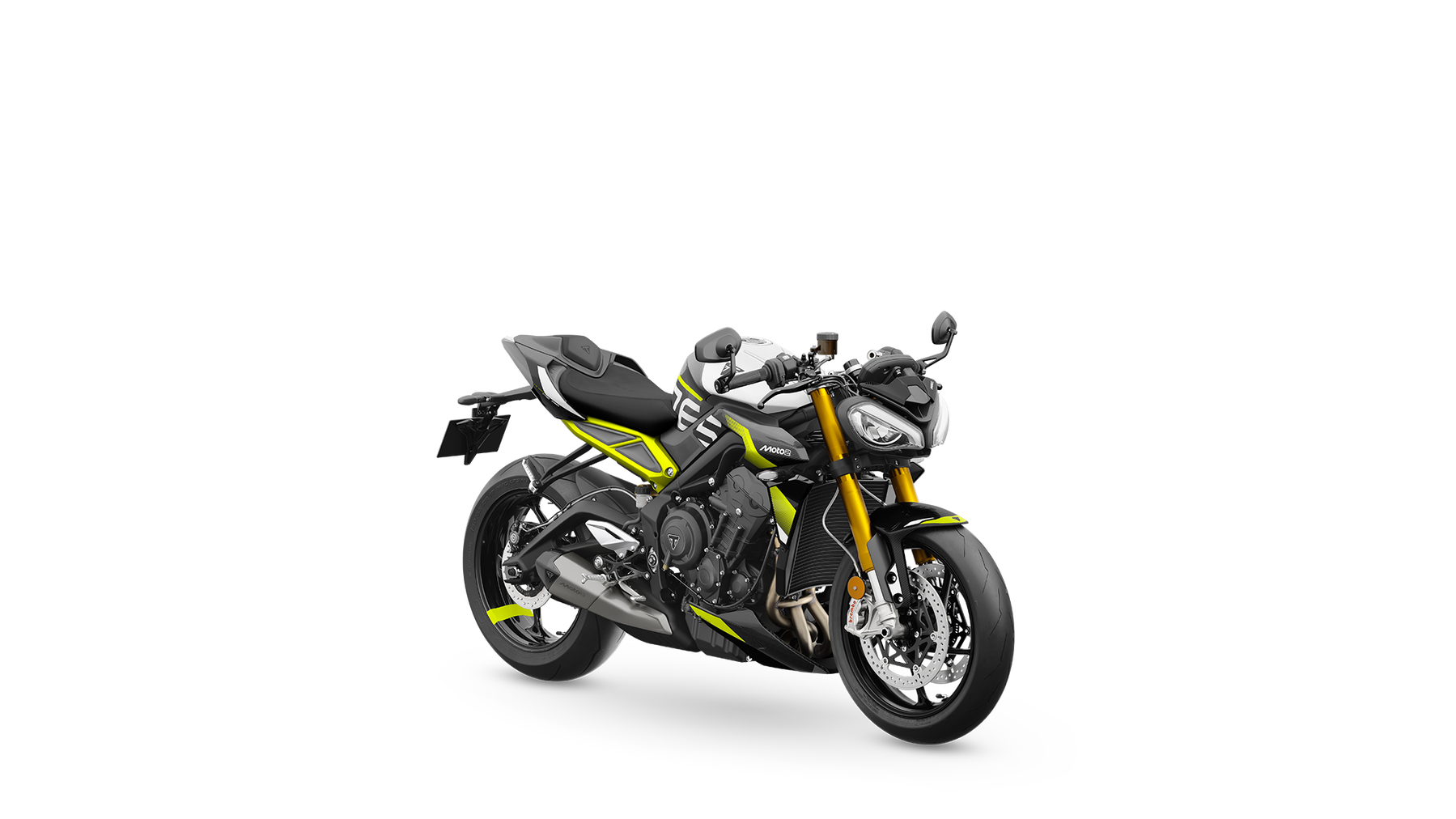
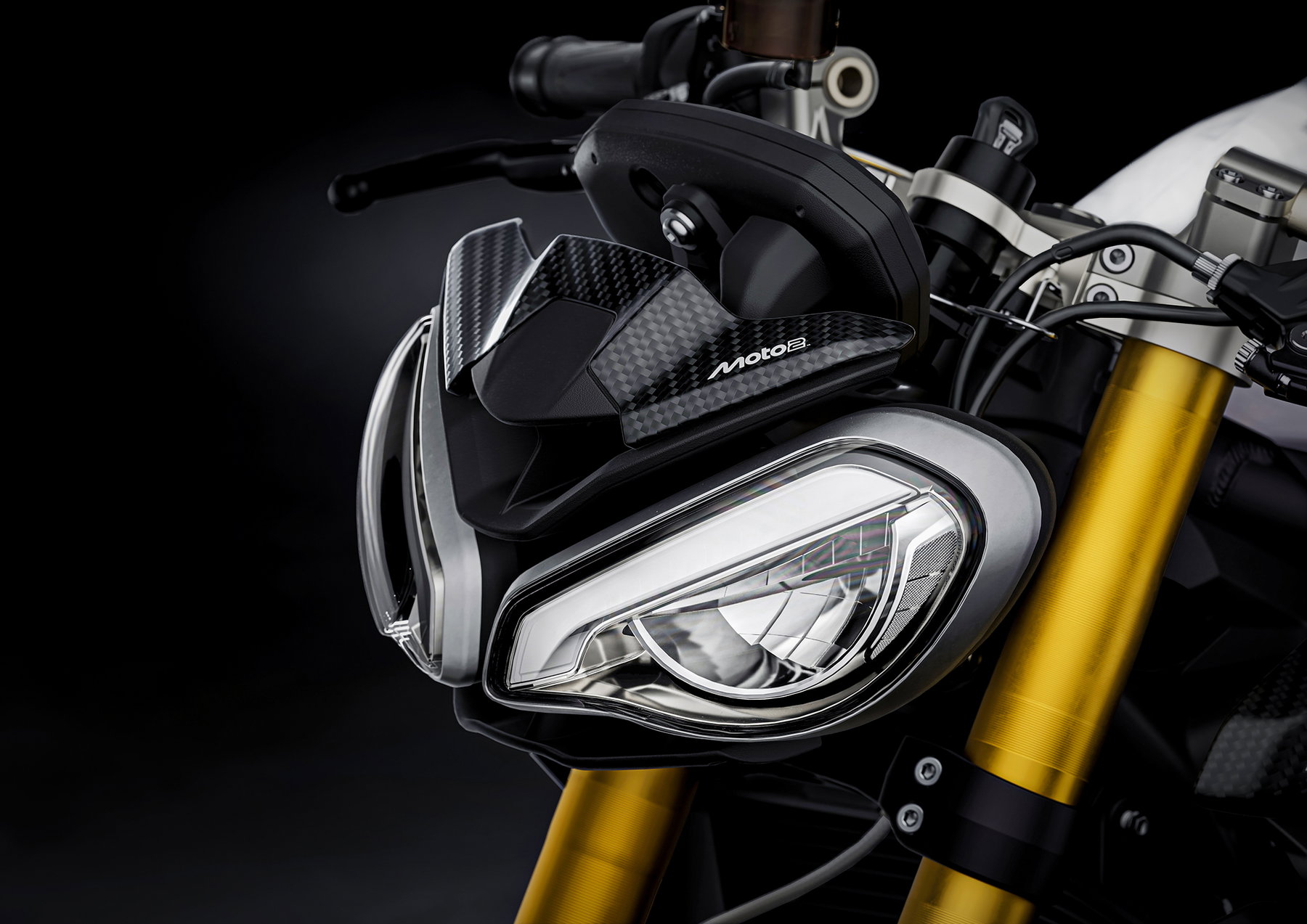
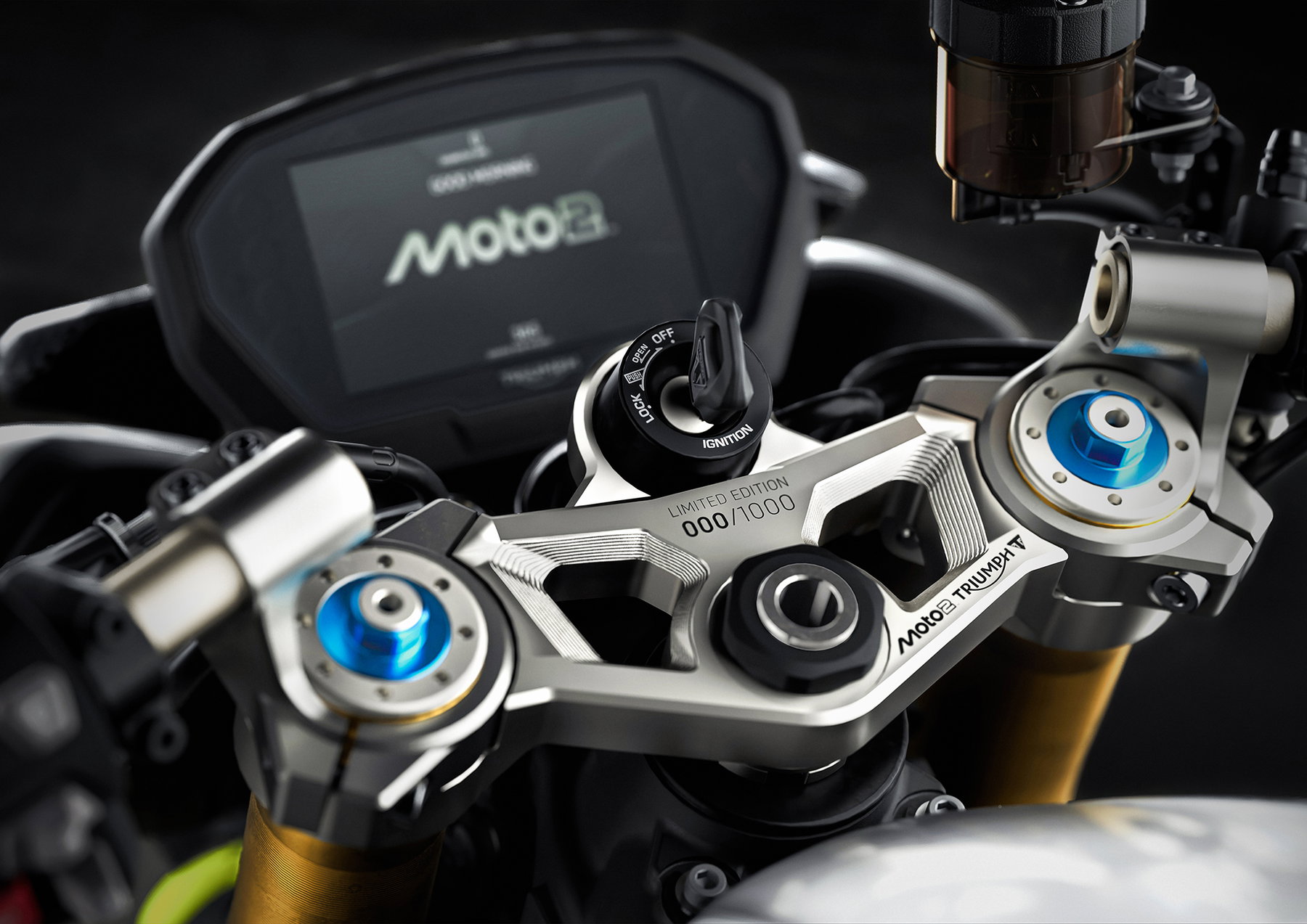
Above that sits the Street Triple 765 Moto2 Edition, limited to 1,000 units worldwide. It brings carbon parts on the side panels, front mudguard and belly pan, plus an individually numbered, billet-machined top yoke and a wet weight of 188 kg (415 pounds). It costs 15,795 euros (around 18,250 US dollars) and has been delivered since April 2026.
What is confirmed by 2027 and what is not?
The timetable for the race engine is confirmed. Everything that concerns the production motorcycle is not.
According to Triumph, the project has been running for around two and a half years. The engine was developed by the roughly 40-strong race department at the Hinckley headquarters. Testing generally begins on the dyno, because in Sargent’s words a completely new engine does not belong under a rider straight away. That is followed by a stress phase on track, where former and in some cases active racers reel off lap after lap close to race pace without going to the limit. First track tests are announced for the coming months, and racing begins in 2027. The contract with Dorna runs until the end of 2029.
One change that will not happen initially concerns the fuel. Moto2 currently runs a 40 percent sustainable share and will not switch to 100 percent in 2027. Sargent explains this by saying that the series did not want to change too many things at once, because that makes development work considerably harder.
The new triple is therefore part of a larger overhaul that affects all Grand Prix classes in 2027. In MotoGP, displacement drops to 850 cc; in Moto2 it rises. Which production motorcycle ultimately benefits from this development is the last big open question.
Frequently Asked Questions
-
Does the engine of the Triumph Street Triple 2027 come from the Trident 800?
No. Steve Sargent has ruled out that the new Moto2 engine is based on the 798 cc range of the Trident 800 and the Tiger Sport 800. He described it as a completely different set-up.
-
How much displacement does the new Triumph Moto2 engine have?
The exact value is open. All that is confirmed is that it is above the previous 765 cc, not 800 cc, and below the 850 cc of MotoGP. Triumph wants to name the figure at a later date.
-
How powerful is the new race engine?
Triumph does not quote an absolute output, only the increase of around six percent over the current engine. Added to that are two kilograms less weight and more torque across the entire rev range.
-
When will a production motorcycle with the new engine arrive?
There is no date. Triumph officially comments only on the race engine, but stresses that findings from Moto2 will inevitably feed into production motorcycles.
-
Will Moto2 switch to 100 percent sustainable fuel in 2027?
No. The class will initially stay at a 40 percent sustainable share. Triumph did not want to bundle too many changes into a single season.
➜ This article is part of our comprehensive overview: New Motorcycles 2027: All Models, Releases and Highlights at a Glance. Find all key information on this topic in one place.