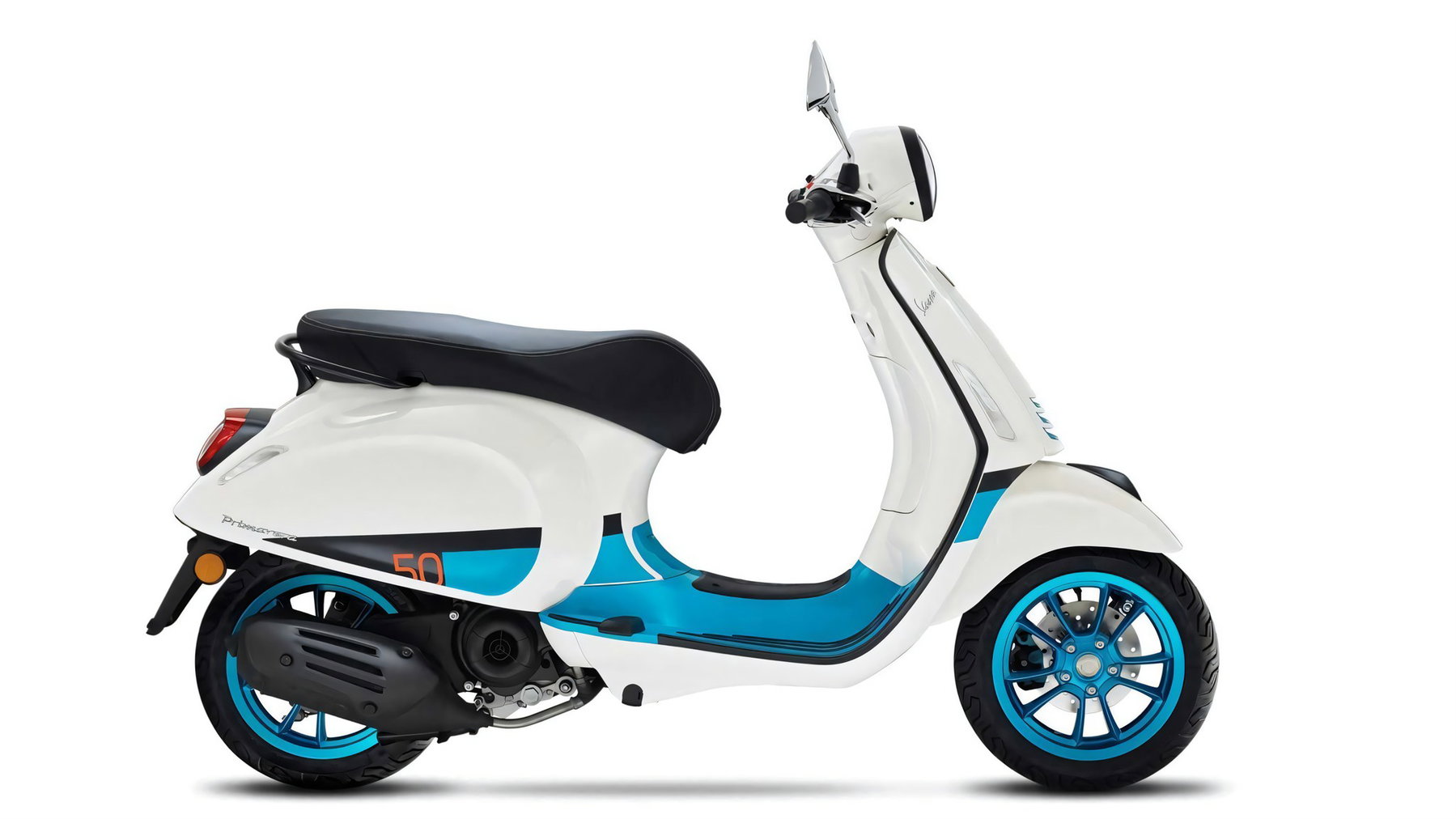
- The EUIPO registered the shape of the Vespa Primavera as a three-dimensional trade mark on 22 July 2026.
- The protection covers scooters and scale models, but not the lettering or logo.
- Future evolutions of the Primavera are also set to be covered.
The Vespa is one of the most recognisable vehicle shapes in the world. For decades, that very recognition has also made it the model for countless copies. The Piaggio Group, which owns Aprilia, Moto Guzzi and Derbi alongside Vespa, has now taken another step against such imitations. As the company announced in September, the European Union Intellectual Property Office (EUIPO) registered the shape of the Vespa Primavera as a three-dimensional trade mark on 22 July 2026. This means that it is not just a name or a logo that is protected, but the form of the scooter itself.
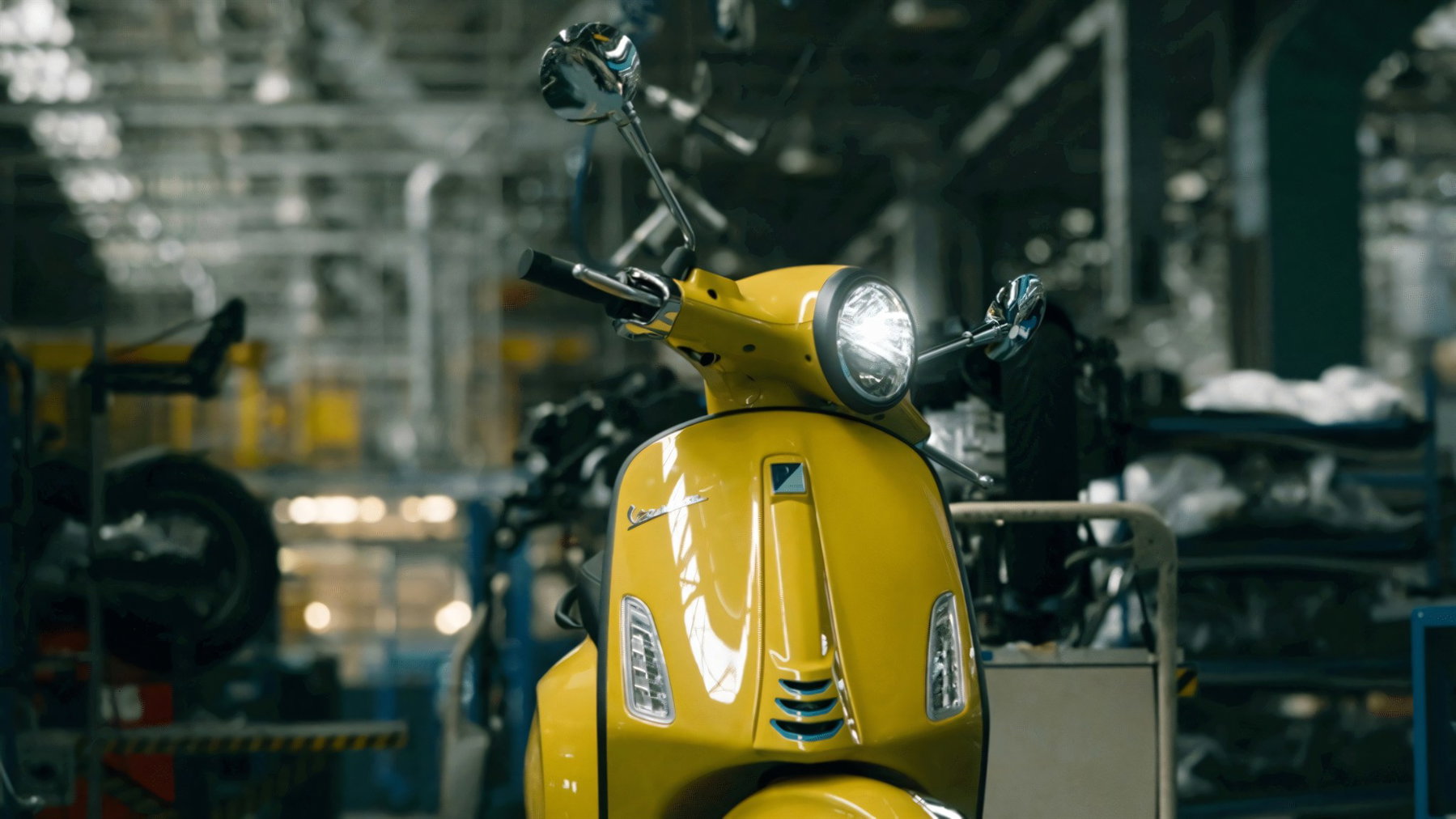
What does the three-dimensional trade mark of the Vespa Primavera protect?
What is protected is the scooter’s outer shape, in other words its characteristic silhouette. Lettering and the logo are explicitly not included.
A three-dimensional trade mark works in principle like a registered brand name. The difference: instead of a word, a shape indicates the origin of a product. The EUIPO approved the registration both for two-wheeled vehicles and for scale model vehicles. This means the miniature Vespa on the toy shelf is covered too.
The European registration is not the first of its kind. In Italy, the shape of the Primavera has been protected as a trade mark since February 2024, and in the United Kingdom since November 2025. With the EUIPO’s decision, the protection now applies throughout the EU.
The decisive factor for the registration was so-called acquired distinctiveness through use. This means that a shape must be so well known that buyers immediately associate it with a specific manufacturer. According to the EUIPO, this applies to the Vespa. The reasoning states: “Vespa has been present on the market not only in the European Union but throughout the world for over 70 years. This long-standing use has made it an icon in the motorcycling sector, to such an extent that the target consumers immediately recognise it as indicative of a specific commercial origin. Although the design has undergone some changes over the years, the modifications have not altered its essential characteristics or its distinctive core.” The office also points out that the Vespa has been on the market since 1946 and that its reputation extends far beyond the borders of the EU.
Why will future Primavera models remain protected?
The EUIPO regards new versions of the Primavera as an evolution of their predecessors. As long as the characteristic features are retained, stylistic changes should not jeopardise the protection.
This point matters to Piaggio. A vehicle that has been built for decades never stays exactly the same. The Primavera itself originally dates back to 1968. According to Piaggio, the EUIPO has made clear that future variants will not affect the protection, “as the model to which the application refers may be regarded as an evolution of preceding models, while retaining their distinctive features”.
In practice, this should mean that Piaggio can revise the headlight, wheels or dashboard, for example, without losing legal protection for the overall shape. However, the manufacturer is not completely free. The defining features of the design must be retained, otherwise the link to the protected shape could be lost.
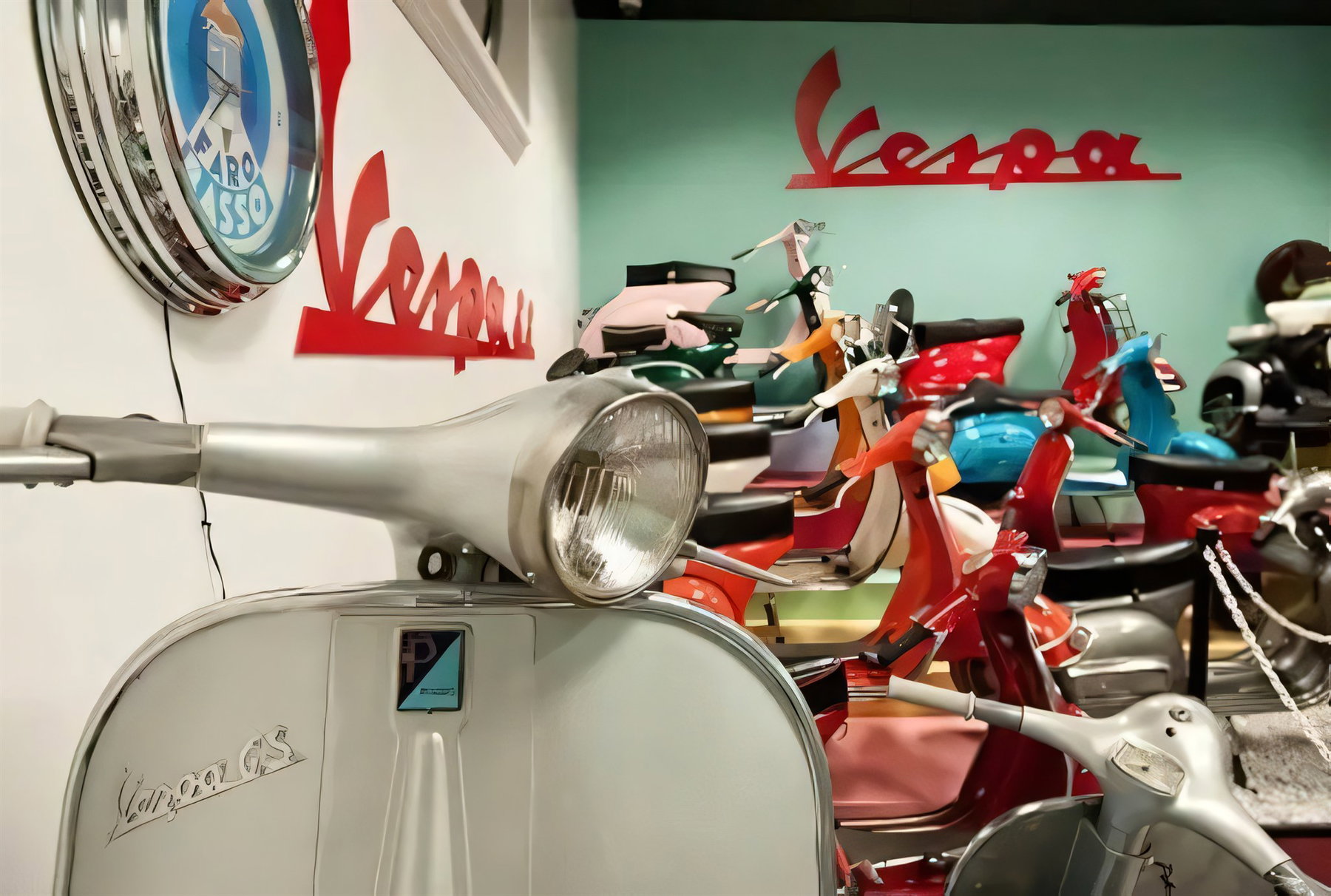
How long has Piaggio been fighting Vespa copies?
Piaggio has been taking targeted action against imitations for many years. Well-known cases go back to 2011.
The Vespa was the scooter that gave Piaggio its big commercial breakthrough after the Second World War. It later became a brand in its own right and a symbol of Italian design and la dolce vita. Like many classics, it has been copied again and again, above all by Chinese manufacturers.
At the 2011 Paris Motorcycle Show, Piaggio had 49 copied scooters removed. In 2013, the Tribunal de Grande Instance in Paris found an infringement of copyright. The scooters were then destroyed, and the company behind the copies had to pay the legal costs. There were also seizures at EICMA in Milan in 2012 and 2013.
The dispute with the Chinese manufacturer Znen, officially Zhejiang Zhongneng Industry Group, dragged on for a particularly long time. Its scooters not only looked like the Vespa, one of them was even called “Ves”. After six years, the Court of Appeal in Turin finally closed this part of the proceedings in Piaggio’s favour in 2019.
Another case followed after EICMA 2019. There, Vespa-like scooters were removed from the show at Piaggio’s request. Their manufacturer had previously registered its own design. In 2020, the EUIPO’s Invalidity Division declared this design invalid because it did not produce a different overall impression from the registered design of the Vespa Primavera. According to Piaggio, the Primavera was already protected in three ways at that time: by a design registered in 2013, by a three-dimensional trade mark for the Vespa scooter and by copyright. According to the company, within two years Piaggio also secured the cancellation of more than 50 trade marks filed by third parties.
Why did the EUIPO overturn the Vespa protection in 2021?
At the time, the EUIPO did not consider it sufficiently proven that the Vespa shape was recognised as an indication of origin throughout the EU. The General Court of the European Union overturned this decision in 2023.
The story of the current registration begins in early 2013. At that time, Piaggio applied to the EUIPO to register the three-dimensional shape of the Vespa as an EU trade mark, specifically that of the Vespa LX. On 16 January 2014, the trade mark was registered for scooters and model scooters. Znen and another Chinese company, both of which sell competing scooters, then applied for its cancellation. On 25 October 2021, the EUIPO ruled in their favour. The competent Board of Appeal concluded that Piaggio had not sufficiently proven acquired distinctiveness for the entire territory of the EU.
Piaggio took the case to the General Court of the European Union and won. On 29 November 2023, the court annulled the EUIPO’s decision. The judges found that the Board of Appeal had assessed the evidence too strictly. It was not necessary to submit separate evidence for each individual member state. Evidence could also cover several countries or the entire EU together. In addition, the target public regards all Vespa scooters as products of the same manufacturer, because their overall appearance has remained essentially the same since 1945.
The court also accepted evidence beyond surveys or sales figures. This included the Vespa’s presence in the Museum of Modern Art in New York, reports that international design experts count the Vespa among the twelve cult design objects of the last hundred years, its appearance in films such as “Roman Holiday” and Vespa clubs in numerous member states. According to reports from Italy, the current decision on the Primavera is based on exactly this principle from the Vespa LX proceedings.
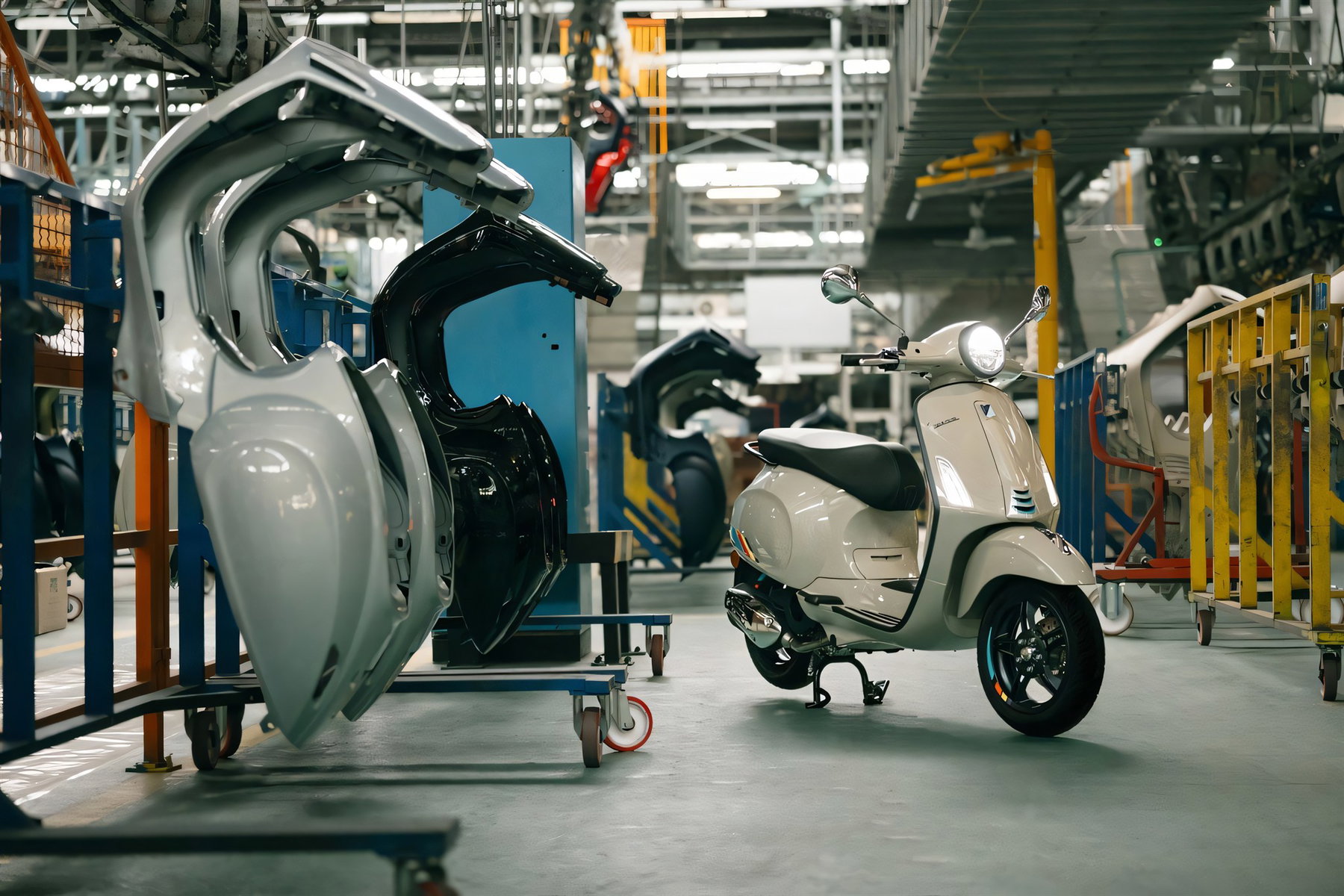
What does the decision mean for other retro scooters?
Piaggio gains an additional tool against imitations. However, exactly where the line runs between a retro scooter and an unlawful Vespa copy remains open.
Many typical design features of the Vespa do not belong to it alone. A rounded leg shield, a curved rear, the proportions of a step-through scooter or a round headlight can also be found at other manufacturers. Examples include the Honda Giorno, the Kymco Like, which Kymco itself promotes with timeless retro design, and the scooters from Royal Alloy.
This does not mean that Piaggio will be able to take action against every scooter with a round headlight and a floorboard in future. Establishing trade mark infringement is considerably more complicated than placing two similar-looking vehicles side by side. However, the decision strengthens Piaggio’s position that the overall shape of the Vespa is more than just a variant of classic scooter design. According to Italian assessments, this is likely to make it harder for competitors to offer overly similar shapes without facing objections.
Drawing the line also remains difficult because the Vespa itself has strongly shaped the image of the classic scooter since 1946. What is general scooter style and what is typically Vespa cannot always be clearly separated. How the EUIPO and the courts draw this line in future disputes is likely to be decisive for all manufacturers of retro scooters.
How much is the Vespa brand worth to Piaggio?
In 2023, the consultancy Interbrand valued the Vespa brand at €1.079 billion (approx. $1.23 billion). That explains why Piaggio defends its appearance so consistently.
At the previous valuation in 2021, the value was still €906 million (approx. $1.03 billion). The valuation takes into account, among other things, business figures, awareness and design. After 75 years, Piaggio had sold more than 19 million Vespas worldwide. In Italy, the Primavera is still one of the best-selling and best-known scooters in city traffic. A design so closely tied to a brand is therefore far more than a question of style for the company. With the EU-wide registration, around 80 years after the launch of the Vespa, Piaggio has now legally secured one of the most important foundations of this value.
Frequently Asked Questions
-
What does the Vespa design protection by the EUIPO mean?
The EUIPO has registered the shape of the Vespa Primavera as a three-dimensional trade mark. This protects the scooter’s silhouette in all 27 EU member states, while the lettering and logo are not covered. The protection applies to scooters and to scale models.
-
Since when has the shape of the Vespa Primavera been protected in the EU?
The EUIPO completed the registration on 22 July 2026, and Piaggio announced it in September 2026. In Italy, the shape has been protected since February 2024, and in the United Kingdom since November 2025.
-
Does the protection also apply to new Vespa Primavera models?
Yes, according to Piaggio it also covers future versions. The EUIPO regards new models as an evolution of earlier versions, as long as their characteristic features are retained.
-
Are all retro scooters with a Vespa look now banned?
No, the registration does not amount to a general ban. Whether a scooter infringes the trade mark has to be assessed case by case. Design features such as a round headlight or a leg shield do not belong exclusively to Vespa on their own.