- Base: BMW R 12 with 1,170 cc boxer, 95 hp (70 kW) and 110 Nm (81 lb-ft)
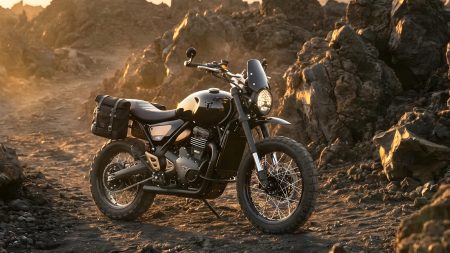
- Built by FCR Original from Chauvigny, France, scrambler styling in black and gold
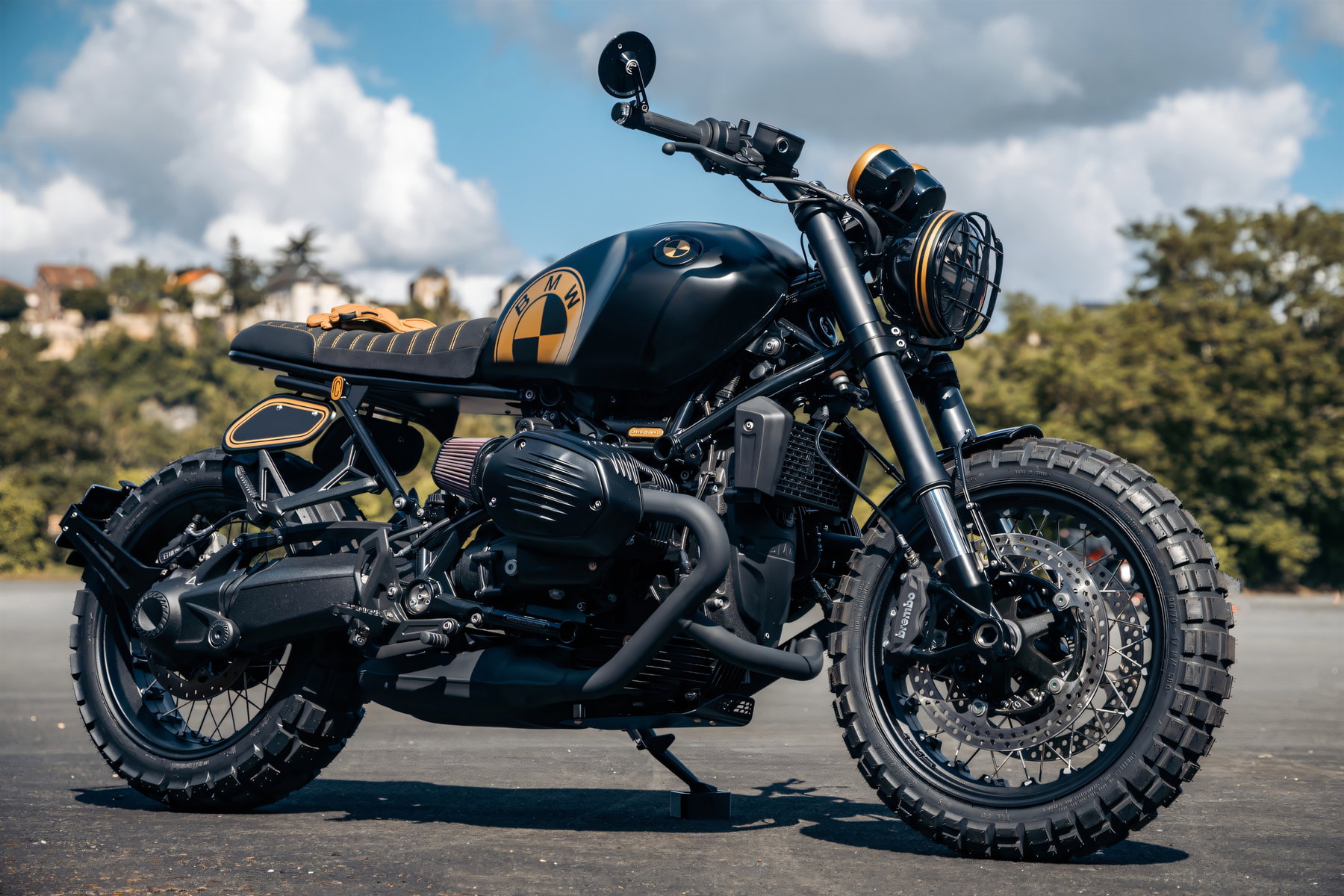
- Knobby Continental TKC80 tires, custom exhaust, and solo seat with embroidered French flag detail
FCR Original is one of the internationally active workshops in the European custom scene. From its base in Chauvigny, France, the company founded by Sébastien Guillemot has evolved from humble beginnings into a manufactory that handles design, engineering, and paintwork entirely in-house. The team became known primarily for its neo-retro builds based on brands like BMW and Triumph, as well as its own parts catalog, FCR Accessoires. For the latest project, the choice fell on a modern heritage platform from Bavaria: the BMW R 12.
Which BMW serves as the base for the build?
The donor motorcycle is the BMW R 12, the relaxed heritage cruiser from the boxer family. The stock model is powered by an air- and oil-cooled flat-twin boxer displacing 1,170 cc, which according to the manufacturer produces 95 hp (70 kW) at 6,500 rpm and a maximum torque of 110 Nm (81 lb-ft) at 6,000 rpm. The engine features dual overhead camshafts, four radially arranged valves per cylinder, and a central balance shaft; power reaches the rear wheel via a six-speed gearbox and shaft drive. In stock trim, the R 12 tips the scales at 227 kg (500 lbs) ready to ride with a full tank, the seat height sits at 754 mm (29.7 in), and BMW quotes a top speed of 203 km/h (126 mph). It is precisely this low-slung, laid-back cruiser that forms the starting point FCR Original has reinterpreted in a decidedly rougher direction.
According to FCR spokesperson Laura German, the team understood the build as a deliberate homage to the Bavarian manufacturer’s design heritage, viewed through a neo-retro lens. The goal was to highlight BMW’s signature design elements while maintaining the high-quality surfaces and attention to detail that define FCR projects. The modern everyday usability and rideability of the donor were to be preserved, even though the look has clearly shifted toward a classically inspired scrambler.
What did FCR Original change on the chassis and wheels?
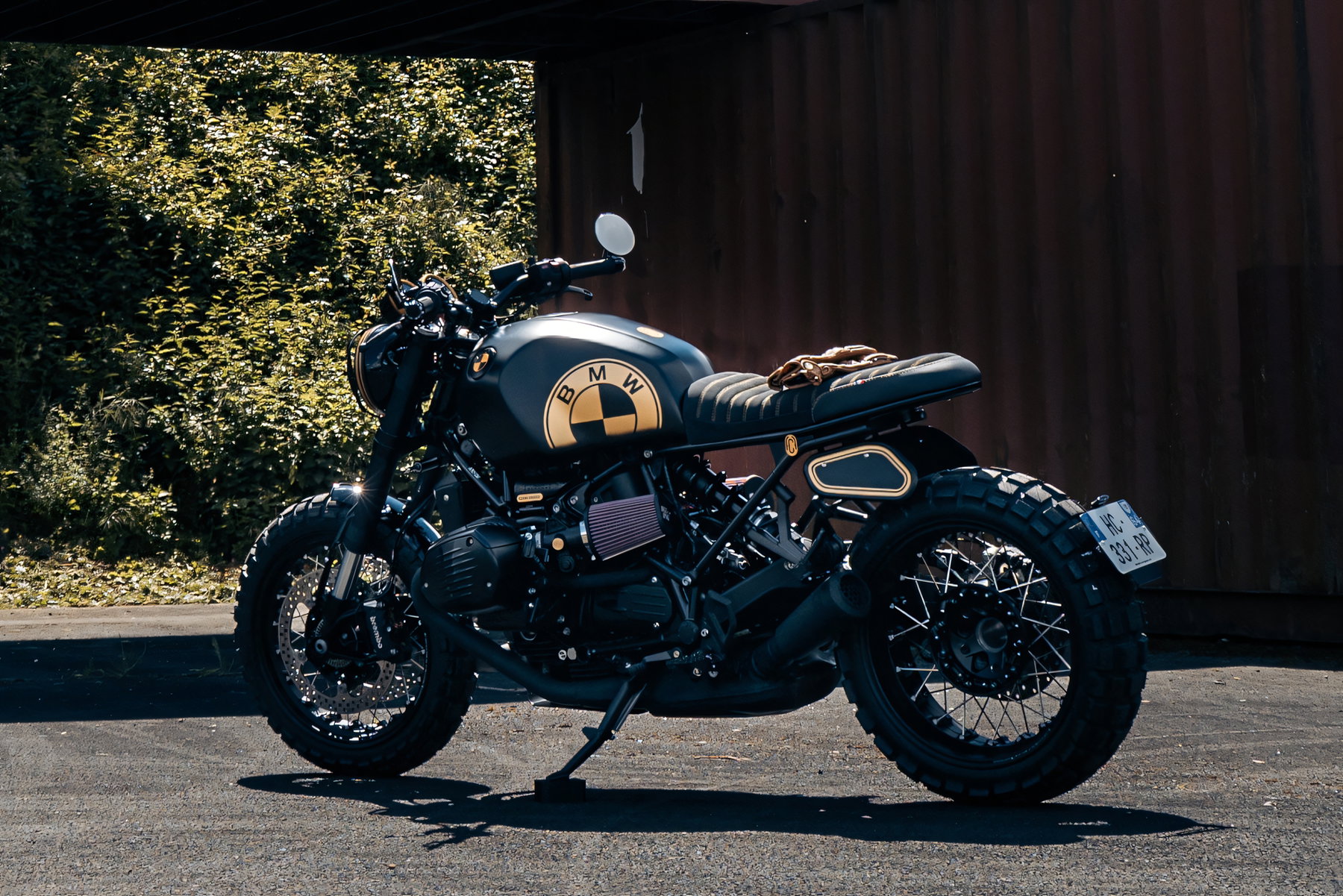
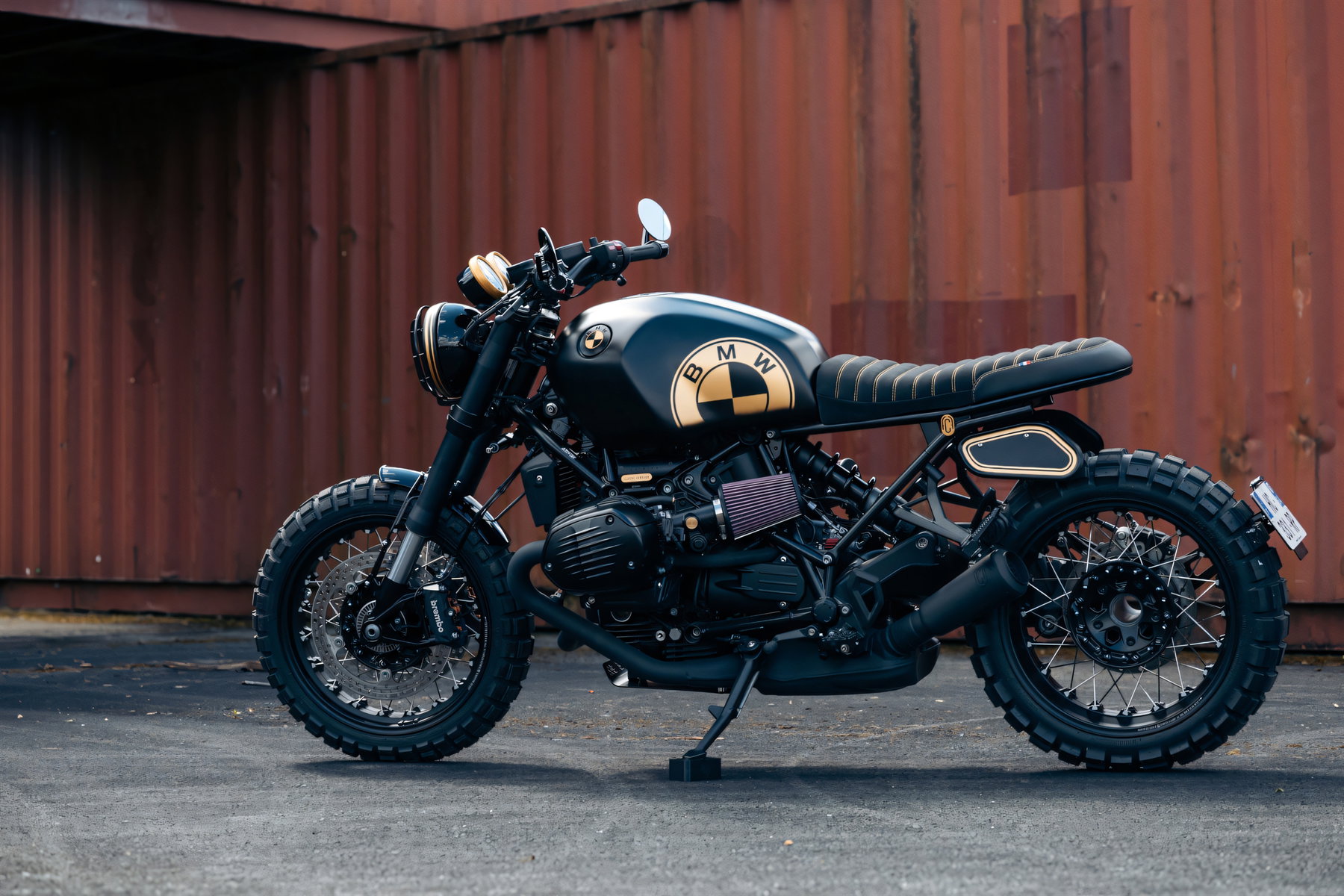
The rear end, front section, and tires were visibly transformed. On the frame, the team fitted a custom FCR Original rear loop that redefines the tail’s lines. Up front, satin-black triple clamps, black anodized fork stanchions, and equally black lower legs replace the understated stock appearance. A gloss-black, deliberately compact front fender from the in-house catalog complements the look, primarily serving the minimalist aesthetic according to the workshop. In place of the factory cast aluminum wheels, the build rolls on a purpose-built spoke wheel set with black rims and stainless steel spokes. The wheels are wrapped in knobby Continental TKC80 tires, which visually shift the former street cruiser equally toward light off-road terrain and narrow city streets.
How does the boxer engine sound and breathe after the build?
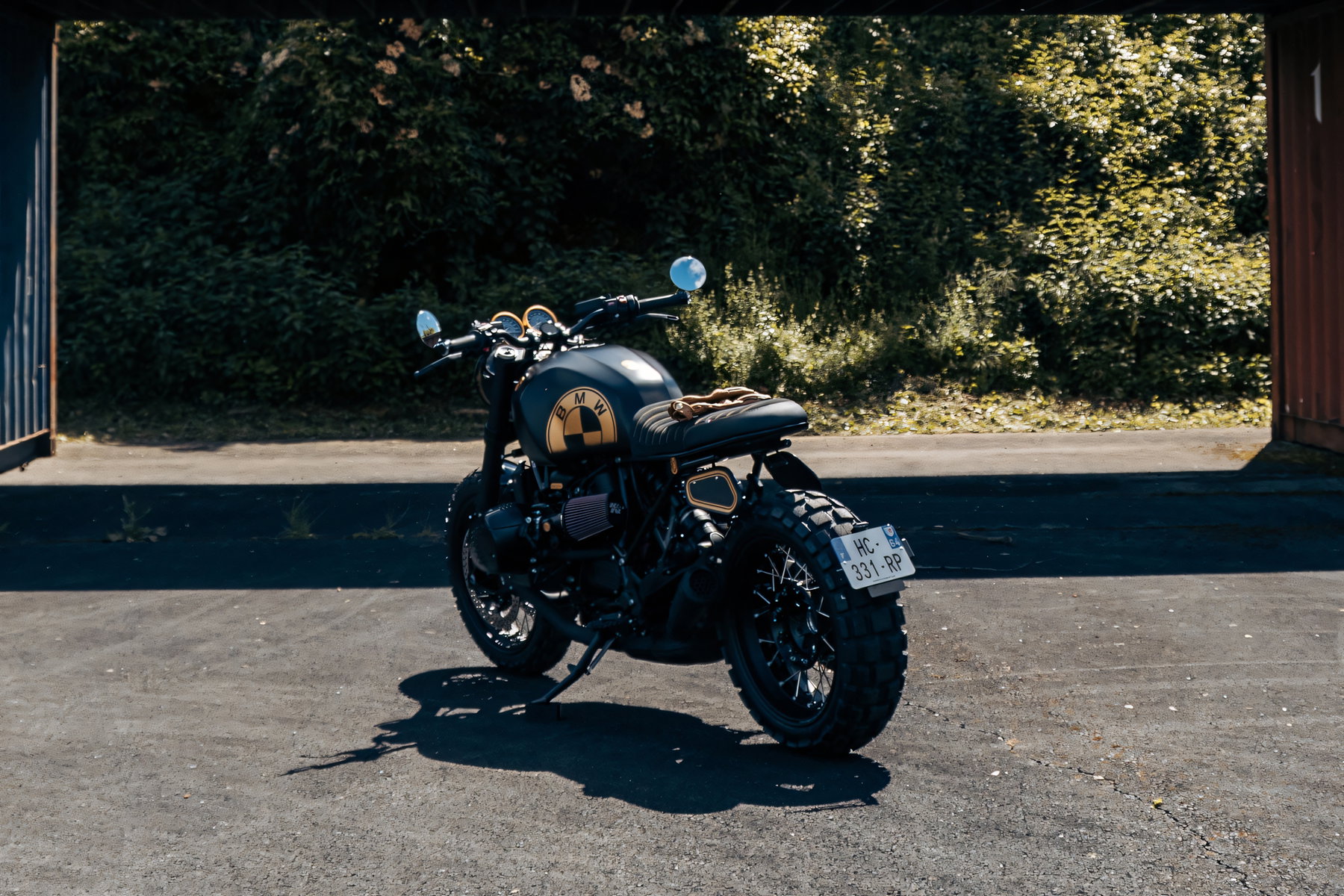
The internals of the 1,170 cc boxer remained untouched; the changes focused on the intake and exhaust. FCR Original fitted a custom exhaust system with a matte black ceramic coating that runs beneath the motorcycle and terminates in two purpose-built mufflers on either side of the rear wheel. On the intake side, two black K&N air filters handle airflow, while textured black BMW valve covers with a V-twin look give the top of the boxer a more muscular appearance. The stock drivetrain technology is thus preserved — only the engine’s sound and visual presence have been reworked.
Lighting, cockpit, and ergonomics in detail
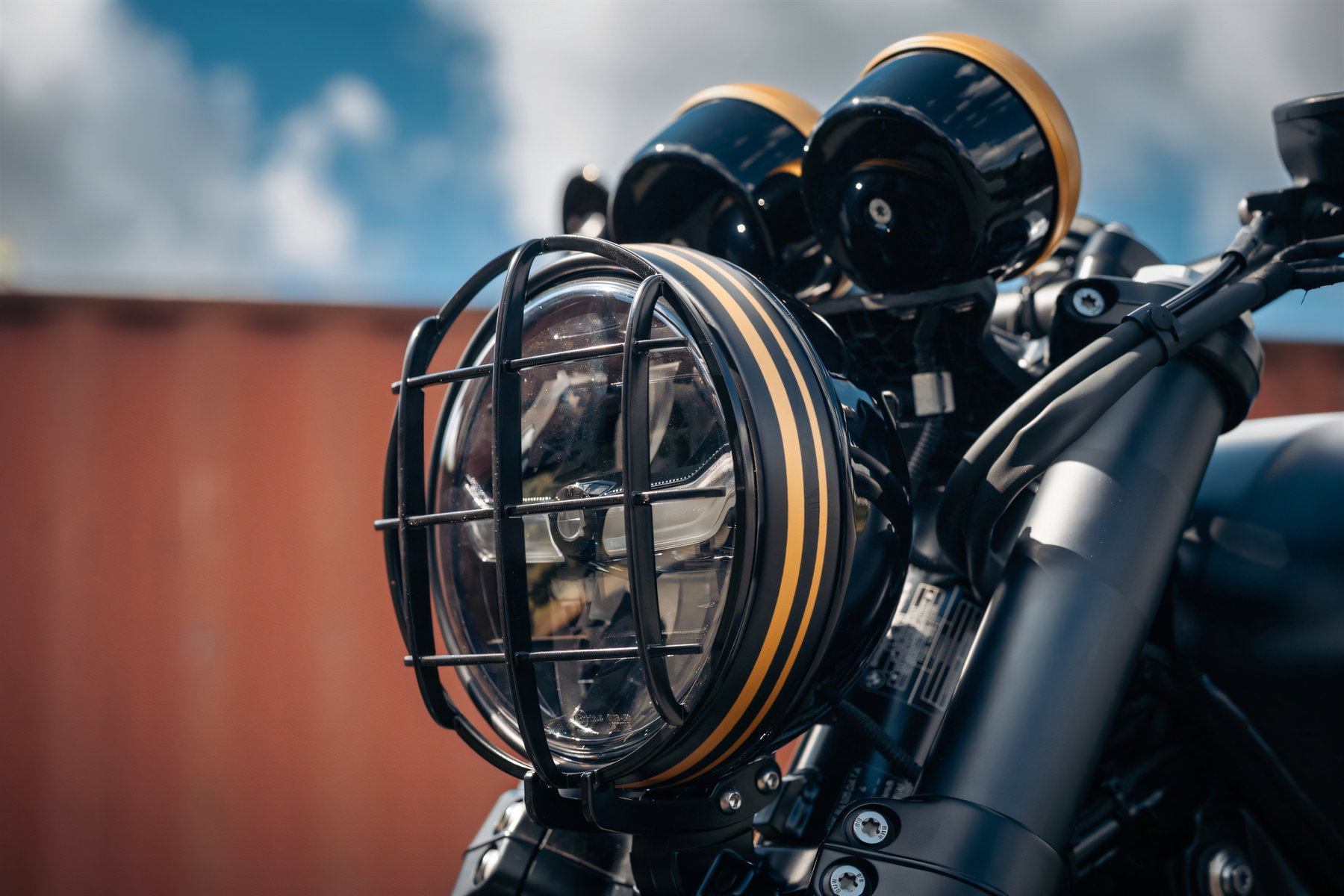
The entire lighting system was swapped to Motogadget components. Mo.Blaze turn signals sit front and rear, while a dedicated LED taillight is integrated directly into the custom rear loop. The team deliberately kept the original instrument cluster, replacing only its housing with a gloss-black variant. Above the headlight, a protective grille on an equally gloss-black bucket provides the rougher scrambler look. At the contact points, FCR opted for a riser handlebar with the original switchgear, supplemented by black anodized brake reservoir caps, high-mounted Motogadget M-Street mirrors, and SW-Motech footpegs. In terms of ergonomics, the standout feature is the custom solo scrambler seat with perforated side panels in black Skai leather, yellow contrast stitching, and a subtly embroidered French flag at the rear edge.
Where does the black-and-gold paint come from?
The paintwork draws on the classic combination of black and gold and was produced entirely in-house. The tank wears a deep satin-black base coat, accented by large satin-gold BMW logos on both sides. The branding is complemented by blacked-out BMW emblems and brushed aluminum FCR Original plaques. To carry the theme throughout, gold accents also appear on the headlight ring, the front fender trim, the tank sides, and the instrument housing. With the finished BMW R 12 Scrambler, FCR Original dissolves the donor’s cruiser character in favor of a raw, off-road-leaning aesthetic without touching the stock machine’s modern technology.
The build joins the heritage lineup that BMW itself has expressly positioned for customizing through an extensive options and accessories program. For FCR Original, the R 12 is yet another base from the classically oriented boxer segment that the workshop has already used as a starting point in previous projects.
Frequently Asked Questions about the BMW R 12 Scrambler by FCR Original
What model is the FCR Original scrambler based on?
It is based on the BMW R 12, the heritage cruiser with an air- and oil-cooled 1,170 cc boxer. FCR Original left the engine internals untouched and focused changes on the chassis, exhaust, wheels, lighting, and paint.
How much horsepower does the BMW R 12 have?
The stock model produces 95 hp (70 kW) at 6,500 rpm and delivers a maximum torque of 110 Nm (81 lb-ft) at 6,000 rpm. These figures remained unchanged during the build, as the engine was not modified internally.
What tires does the BMW R 12 Scrambler by FCR Original run?
The build runs on knobby Continental TKC80 tires. These are mounted on a purpose-built spoke wheel set with black rims and stainless steel spokes, replacing the factory cast aluminum wheels.
Who is behind the build?
The build was carried out by FCR Original, a manufactory based in Chauvigny, France, founded by Sébastien Guillemot. The company handles design, engineering, and paintwork entirely in-house.
What colors define the build?
The scrambler is finished in black and gold. Large satin-gold BMW logos sit on the satin-black tank, with gold accents extending across the headlight ring, front fender, tank sides, and instrument housing.
➜ All technical specifications of the base model: BMW R 12 (2025) in our motorcycle database.