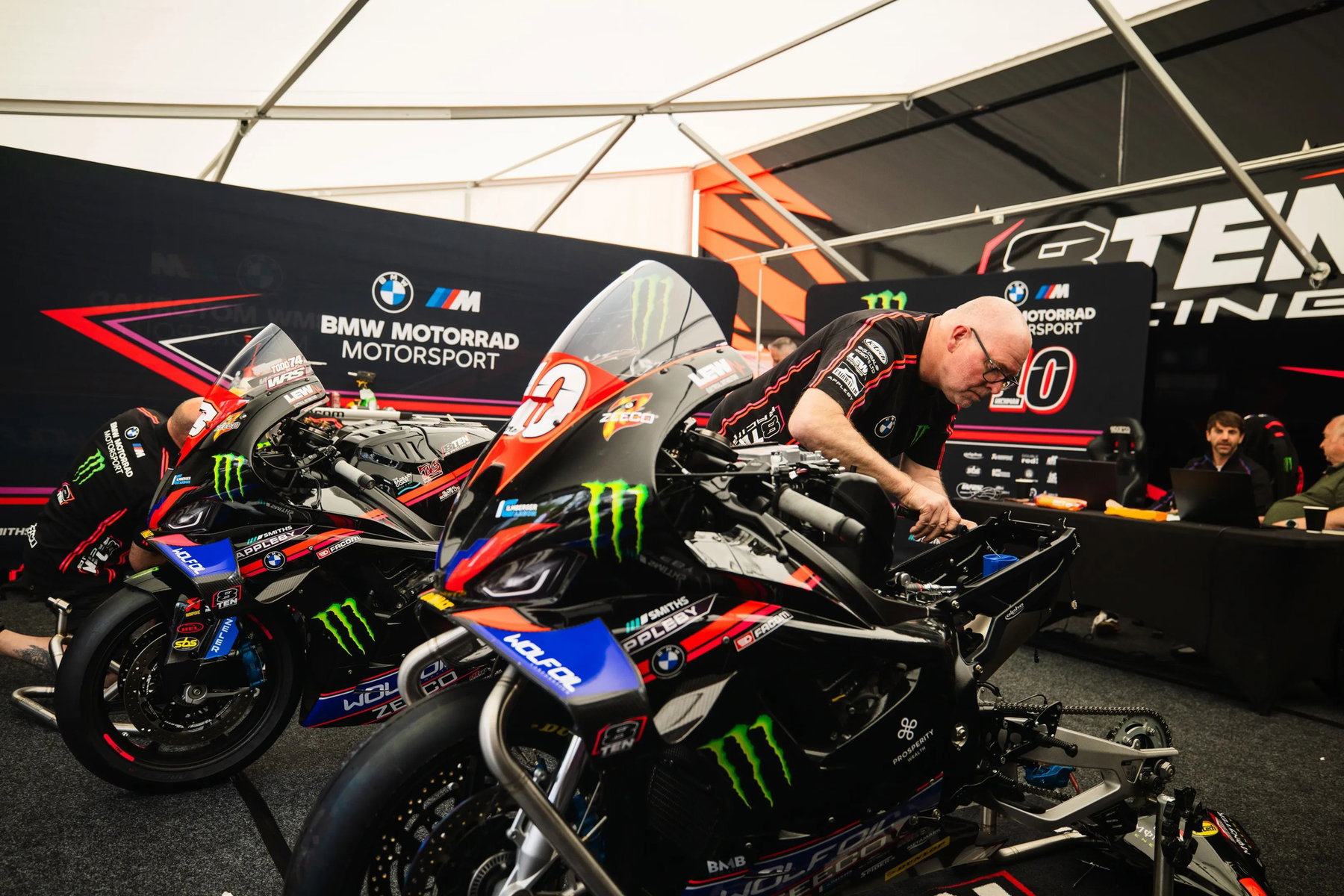
- BMW won the World Superbike Championship in 2024 and 2025 with Toprak Razgatlioglu
- Below the M1000RR, there is no sport model for the World Supersport or Sportbike World Championship
- Blusch offers no details but sees a chance for change
In the World Superbike Championship, BMW is one of the established forces, yet in the classes below, the manufacturer is nowhere to be found. This gap is now becoming a topic of discussion. Motorsport director Sven Blusch has addressed the question of whether Munich could expand its sporting involvement beyond WorldSBK. His statements reveal a degree of openness that did not exist in this form before. Placed in the context of the 2026 season, in which BMW is restructuring its project following the departure of title holder Toprak Razgatlioglu, the topic carries additional weight.

How did BMW get into the World Superbike Championship?
BMW entered the series in parallel with the development of its first dedicated superbike and returned permanently in 2019 after a hiatus. In the 2000s, the manufacturer wanted to shed its previously rather conservative image. The S1000RR, introduced in 2009 under the internal designation K46, quickly became a success and marked the beginning of a new era for the brand. At the same time, BMW took the step into the World Superbike Championship with a factory effort.
The initially ambitious goals, however, were clearly missed. Following a change in management, BMW withdrew from the championship before returning in 2019. The sporting breakthrough ultimately came with the two world titles won by Toprak Razgatlioglu in 2024 and 2025. The fact that top-level two-wheeled racing for BMW remained limited to WorldSBK is also linked to another decision: CEO Markus Flasch had raised the possibility of a MotoGP entry in March 2024 but dismissed it again at the end of October 2025, saying it was not feasible under current economic conditions.
Why does BMW lack a platform for rider development?
Below the M1000RR, BMW has no sport model that would allow participation in the World Supersport Championship or the Sportbike World Championship. While Ducati, Yamaha, Kawasaki, and Honda compete in multiple categories and can bring their young riders up through the smaller classes step by step, BMW has no comparable structure. A factory entry into the World Supersport Championship or the Sportbike World Championship is therefore currently not on the table. This also means the manufacturer lacks the ability to develop its own talent within its own system.
Blusch sees this as a clear disadvantage. We have recognized that motorsport is a very important building block for BMW Motorrad as well. We have made it the top priority,” he emphasized. At the same time, he acknowledged that the missing support structure limits the possibilities: “Of course it is difficult when the support structure is missing. We would like to have that option. If we had possibilities in that regard, it would be a help.”
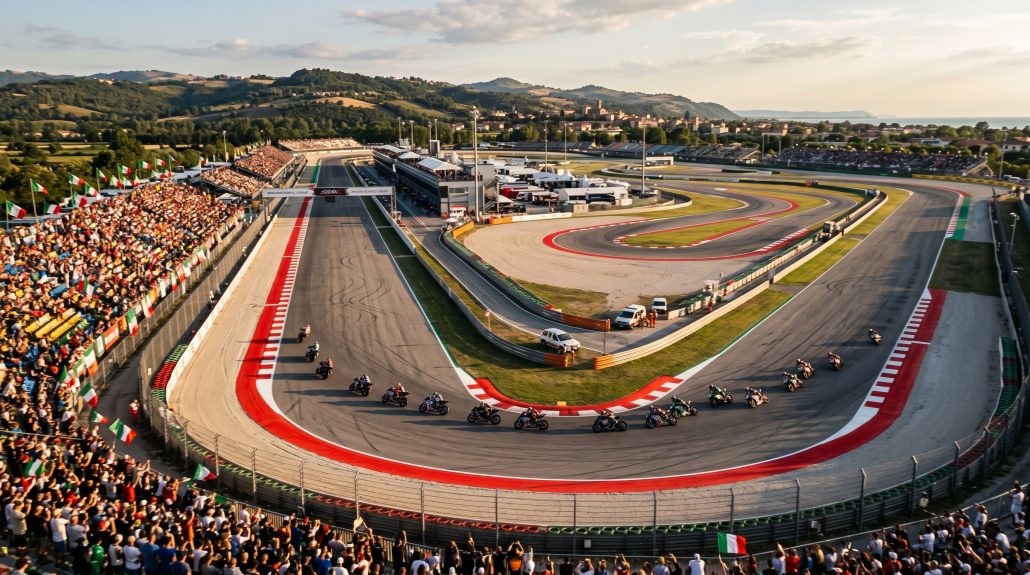
What does Sven Blusch say about a possible sport model?
Blusch does not rule out an additional sport model but ties it to BMW Motorrad’s overall strategy. An expansion of the model range should not happen for sporting reasons alone. A corresponding motorcycle would need to fit the brand’s long-term direction. “It also has to fit into BMW Motorrad’s long-term strategy. We need to have the right motorcycles to feed this system. It has to fit into the company’s strategy,” he explained.
One particular phrasing stands out. While BMW consistently invested in racing over the past years and developed the M1000RR into a race-winning motorcycle, concrete indications of further sport models had been absent until now. Blusch now hints that this could change: “Motorsport now has a high priority. And therefore there is a chance to change that in the future.” He did not provide specific details. His words thus leave room for a future sport motorcycle that could bridge the gap between road model and racetrack.
Satellite team as a possible channel for young riders
The topic of rider development touches on a second point at BMW: the absence of a satellite team in the World Superbike Championship. After the end of the Bonovo project, BMW is only represented with two factory machines in the field. For comparison: Ducati currently has nine motorcycles on the grid and can draw on a correspondingly large data pool. BMW instead relies on an extensive testing program with Michael van der Mark, who also serves as a replacement rider.
The fact that no customer team has been established so far is not solely related to the sporting situation. First, the long-term future of the Superbike project had to be secured internally. “In our current situation, it would have been wrong to bring a second team into the championship without written confirmation from BMW about the future,” Blusch explained. Now that this confirmation is in place, the scenario is moving closer. “For us, it would be very interesting to have a satellite team. That would also be a channel for young riders,” he said. The prerequisite, however, is that the motorcycles can be run at an identical technical level. The corporation already laid the groundwork for this in mid-May, when Blusch announced a long-term plan encompassing the World Superbike Championship, the Endurance World Championship, and customer racing. “Motorsport is important for our brand, it is in our DNA,” he summarized the board’s position.
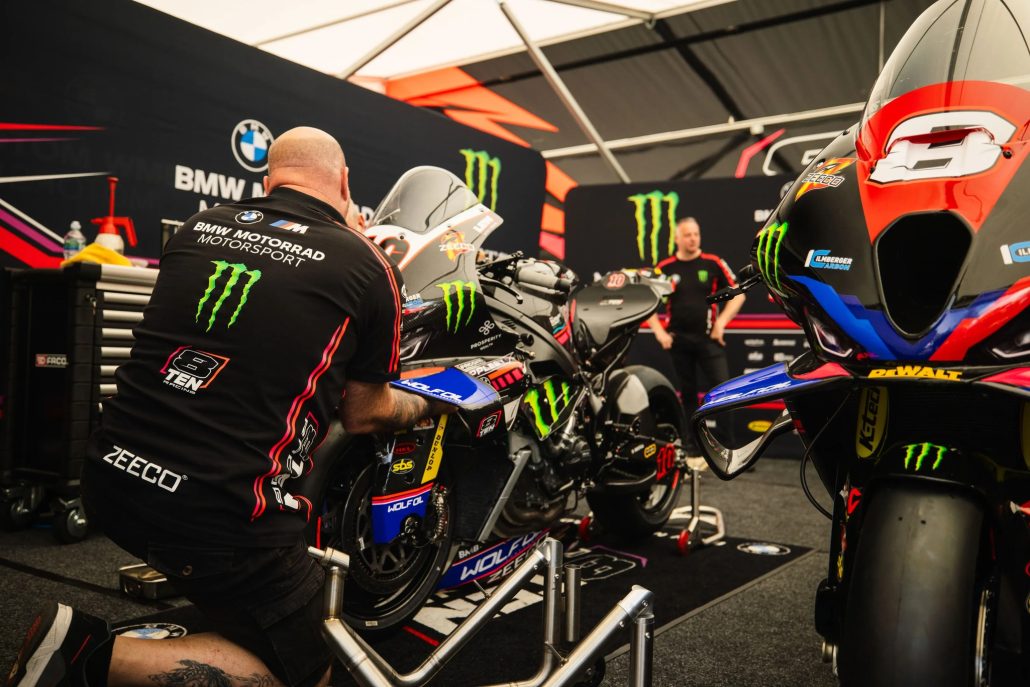
How is BMW performing in the 2026 World Superbike Championship?
On the sporting side, BMW is in a transitional phase in 2026, with the factory riders not yet fighting for victories. Following Toprak Razgatlioglu’s switch to MotoGP, the entire project had to be restructured. BMW signed two experienced riders in Miguel Oliveira and Danilo Petrucci, yet the Ducati factory riders continue to set the pace at the front. In the championship standings, Nicolò Bulega leads with 434 points, while the best BMW rider is Oliveira in ninth place with 97 points.
Despite the gap, Blusch points to progress and cites the weekend in Hungary as a positive signal. “We have made a good step, also compared to last year. Our two riders are faster with our motorcycle than was the case last year,” he emphasized. For more, however, it is not enough at the moment: “We have made a step, but it was not big enough to win races at the moment.” He expressly praises the competition from Bologna while also calling for more excitement at the front: “We can all see how well Ducati has worked. But at the end of the day, we all want to see different manufacturers battling it out at the front. We are certainly giving our best, but at the moment we are not at the front.”

Frequently Asked Questions
-
Is BMW entering the World Supersport Championship?
Not at this time. A factory entry into the World Supersport Championship or the Sportbike World Championship is currently not on the agenda because BMW does not offer a suitable sport model below the M1000RR. However, motorsport director Sven Blusch sees a chance to change that in the future.
-
What titles has BMW won in the World Superbike Championship?
BMW won the World Superbike Championship in 2024 and 2025, both times with Toprak Razgatlioglu. Following his switch to MotoGP, the manufacturer restructured the project with Miguel Oliveira and Danilo Petrucci.
-
Why does BMW not have a satellite team in WorldSBK?
BMW first wanted to secure the long-term future of the Superbike project internally before supporting a customer team. After the end of the Bonovo project, BMW is only represented with two factory machines. A satellite team is now considered a realistic future scenario, provided the motorcycles can be run at an identical technical level.
-
Is BMW planning a MotoGP entry?
Not as things stand. CEO Markus Flasch had raised the topic of a MotoGP entry in March 2024 but shelved the idea again at the end of October 2025, saying it was not feasible under current economic conditions.