- 292 cc single-cylinder with 28 hp (20.6 kW) at 9,500 rpm, 150 kg (331 lbs), A2-compliant
- Priced at 3,999 euros (around 4,635 US dollars) in Spain, first deliveries in September 2026
- Technically based on the Leonart Rally 300, built in China
The Bultaco name has stood for Spanish off-road sport since the 1960s. Models such as the Sherpa T, the Pursang and the Frontera shaped trial and enduro riding for decades. Now the thumbs-up logo is appearing on a fuel tank again, this time on the Rally GT 300. The route that led there, however, says more about the motorcycle market of 2026 than about the history of the brand.
What is the technical make-up of the Bultaco Rally GT 300?
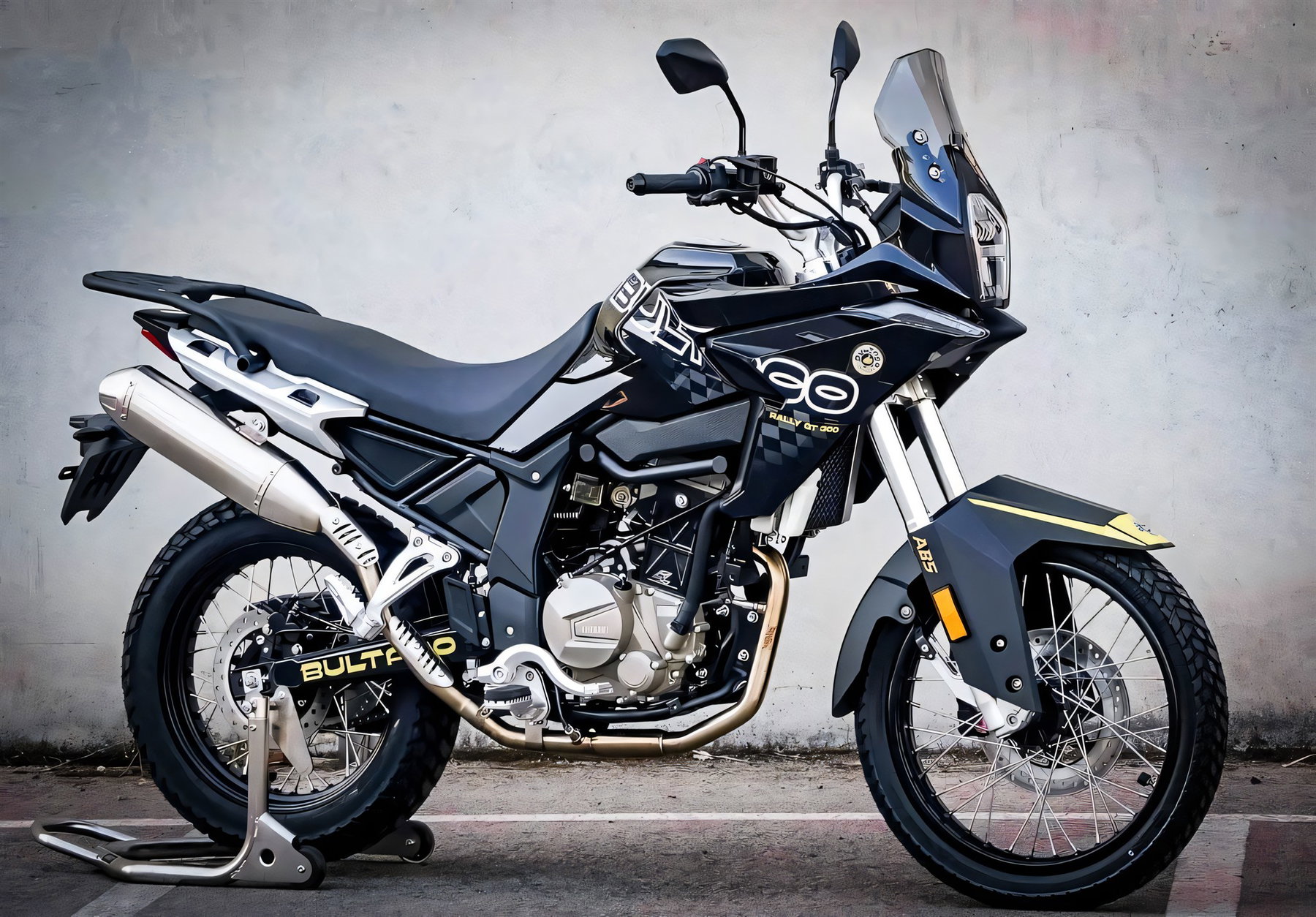
The Rally GT 300 runs a liquid-cooled single-cylinder engine displacing 292 cubic centimetres, with twin overhead camshafts and four valves. The manufacturer quotes 28 hp (20.6 kW) at 9,500 rpm and a peak torque of 25 Nm (18.4 lb-ft).
Fuelling is handled by Bosch electronic injection, and power reaches the rear wheel through a six-speed gearbox and a wet multi-plate clutch. CO2 emissions are given as 70 grams per kilometre. That keeps the machine comfortably inside the European A2 category, the licence class capped at 48 hp.
The chassis is deliberately straightforward. A bridge-type frame, an upside-down fork and a central shock absorber form the basis, with a single disc and ABS at each end. According to media reports, the ABS can be switched off. A 19-inch wheel with a 90/90 tyre sits at the front, a 17-inch wheel with a 130/80 at the rear. Bultaco justifies the combination by saying the larger front wheel steers precisely in town and offers more security away from the tarmac.
The remaining dimensions are sporty for a 300: 883 millimetres seat height, 260 millimetres ground clearance, a 1,410 millimetre wheelbase and an overall length of 2,160 millimetres. The tank holds 16 litres and the kerb weight is quoted at 150 kilograms (331 lbs). On the closely related sister model, consumption sits at around three litres per 100 kilometres, which should allow a range of more than 500 kilometres. Top speed is given as roughly 130 km/h.
Who actually builds the new Bultaco?
The Rally GT 300 is developed and distributed by Leonart Motors, a company based in the Barcelona area. It is manufactured in China by Chongqing Andes Motorcycle Manufacturing, where the same motorcycle is sold as the Andes 3.5.
The Bultaco is therefore not a new design. It is identical down to the details with the Leonart Rally 300, which already reached the market in spring 2026. Leonart refers to the engine internally as the CF300. Output and displacement match the 300 models from CFMoto exactly, and that unit in turn is based on a Japanese design. German trade media therefore attribute the engine directly to CFMoto.
Behind the brand name today stands the newly founded Bultaco Next s.l., which set up the website bultaco.pro in August 2026. According to reports from the United Kingdom, the rights to the name belong to a Spanish holding company called Pandora Future Group, whose first product under the label was an electric children’s motorcycle named Micro Sherpa.
How much Bultaco is left in the Rally GT 300?
According to the brand, the Bultaco Racing team was involved in tuning the chassis and the electronics. That is the part which goes beyond a pure rebadging exercise.
The brand makes no secret of it. Marc Llorens, head of design at Leonart Motors, describes the approach like this: “Bultaco no se convirtió en una leyenda repitiendo el pasado, sino abriendo nuevos caminos. La Rally GT 300 representa precisamente ese espíritu: un primer paso honesto para volver a ver el nombre de Bultaco sobre una motocicleta actual, escuchando al mercado, aprendiendo y respetando profundamente el legado que ha mantenido viva la marca durante todos estos años.” In English: “Bultaco did not become a legend by repeating the past, but by opening new paths. The Rally GT 300 represents exactly that spirit: an honest first step towards seeing the Bultaco name on a current motorcycle again, listening to the market, willing to learn and with deep respect for the legacy that has kept the brand alive all these years.”
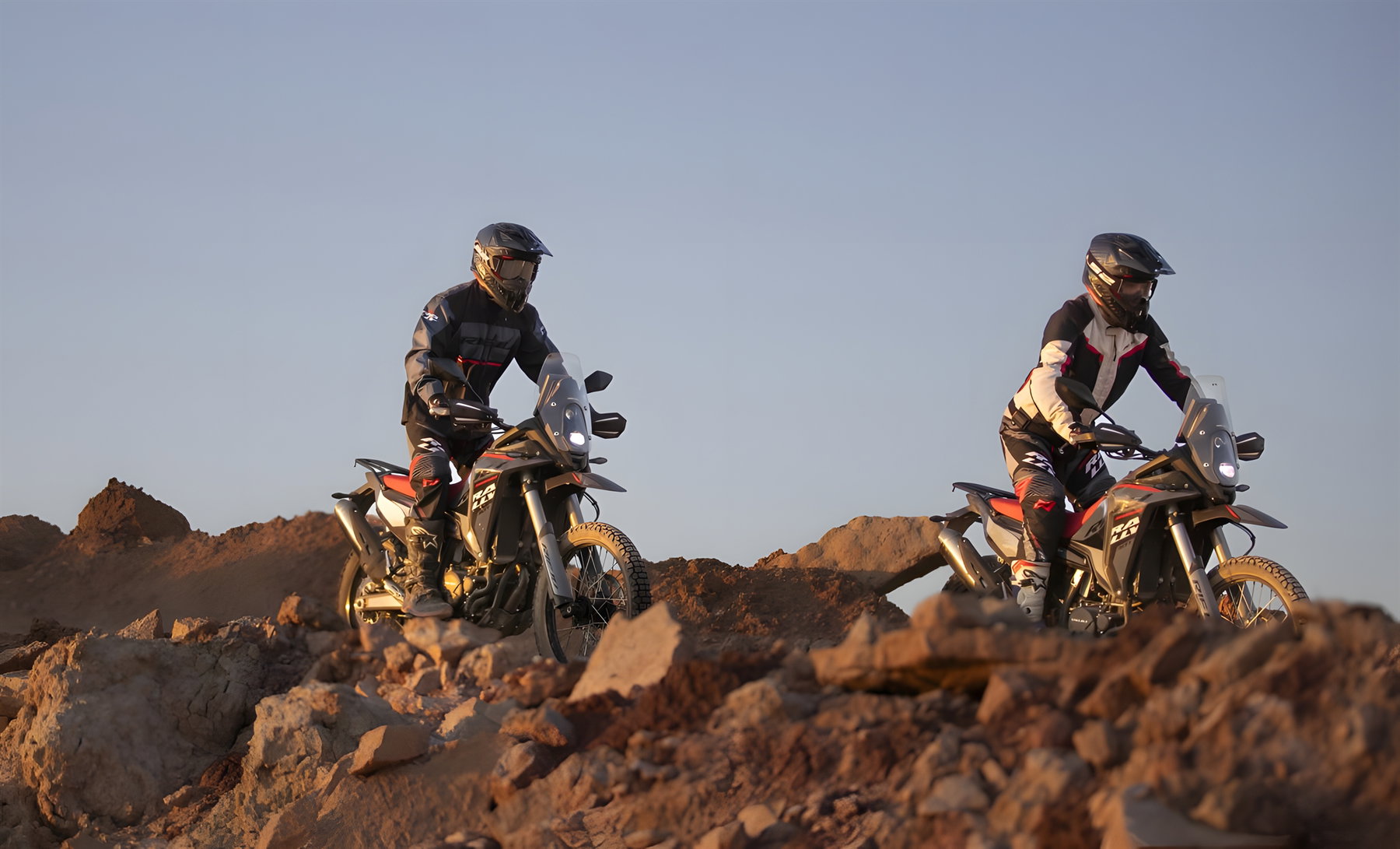
Bultaco showed the first images of the machine through its own channels in early August 2026. The photos were taken during test rides at the Moto Club Vilobí facility in Girona, with Juan Bultó himself at the handlebars. Alongside the production version, an off-road variant with knobbly tyres and an Akrapovic exhaust system was also on show.
What equipment does the Rally GT 300 offer for 3,999 euros?
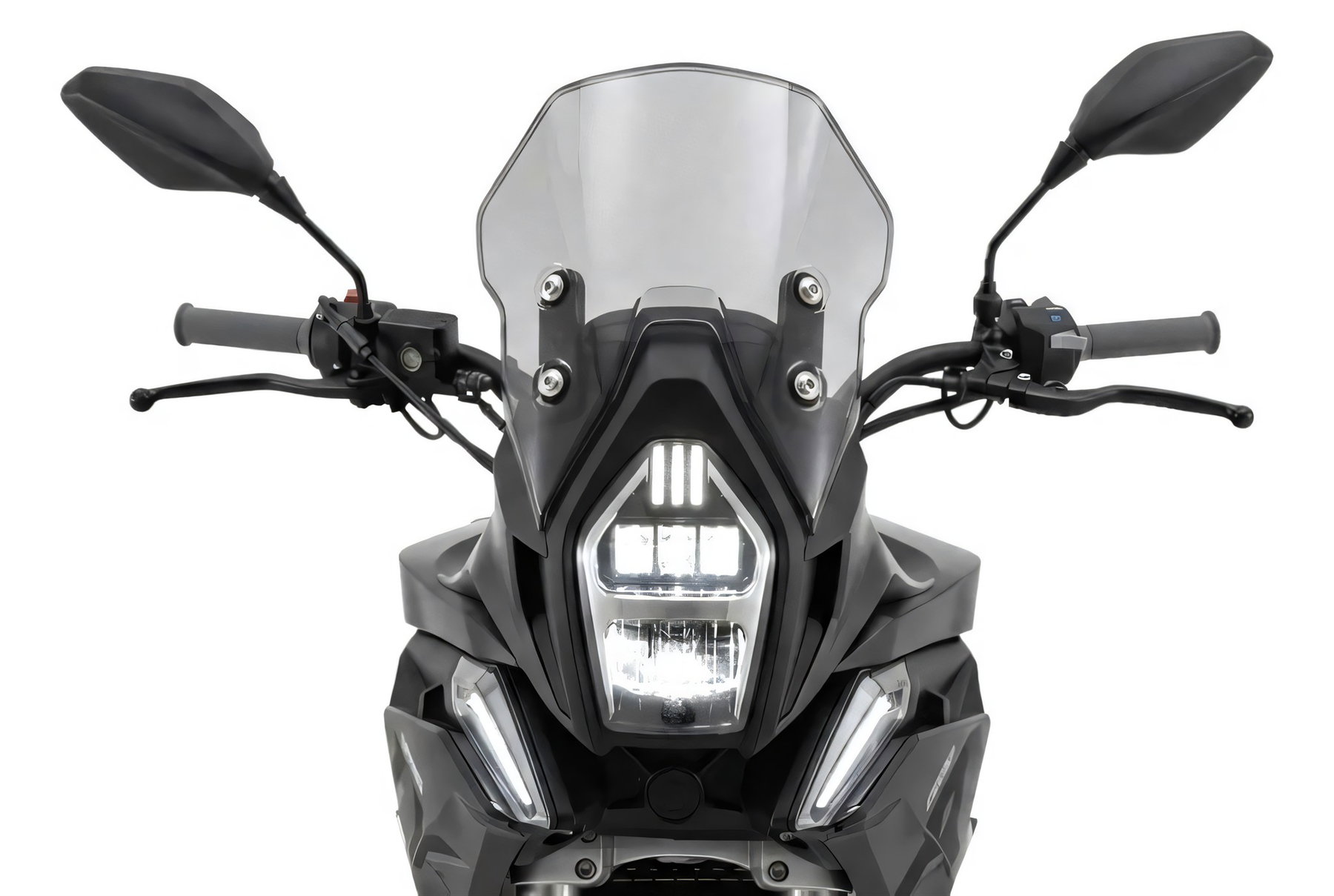
For the money, the equipment list is fairly complete. A 5-inch TFT display, full LED lighting with indicators integrated into the fairing and a permanently fitted dashcam are standard.
The display shows speed, engine revs, the selected gear and fuel level. The front camera records automatically in loops of five minutes each, and individual sequences can be saved. On top of that come a USB port, a luggage rack, crash bars, a folding gear lever, tyre pressure monitoring and a clock. The sister model additionally gets illuminated handlebar switches.
How did Bultaco disappear in the first place?
Bultaco was founded in Catalonia in 1958 by Paco Bultó, the grandfather of former MotoGP rider Sete Gibernau. The lights went out at the brand in the early 1980s, and the Spanish plant closed in 1983.
A first revival attempt started in 2014 and relied entirely on electric drivetrains. The Rapitán and Rapitán Sport prototypes never made it into production. Only the Brinco, a cross between a pedelec and a lightweight motorcycle, and the Albero moped reached the dealers. Sales fell short of expectations, the company spent years looking for investors and filed for insolvency at the end of 2018. Since then the name had all but vanished, even though rumours of a return kept surfacing.
When does the Bultaco Rally GT 300 arrive and what does it cost?
The first machines are due to be delivered to Spanish customers in September 2026. The price is 3,999 euros (around 4,635 US dollars), and reservations can be made through the bultaco.pro platform and through Leonart Motors.
For distribution, Leonart has built up a dealer network in Spain. The brand also promises customer service and spare parts supply from day one. Whether and when the Rally GT 300 will reach Germany, and what it would cost there, remains open. There are no details for the United Kingdom either.
Where does the Rally GT 300 sit against the competition?
In the lightweight 300 enduro segment, the Bultaco faces well-established competition, both from Japanese manufacturers and from Chinese suppliers who compete on price. The most obvious rival is the Rieju Aventura 307 Rally, likewise developed in Spain and built in China.
The Rieju costs 4,599 pounds in the United Kingdom (around 5,370 euros / 6,225 US dollars) and uses a 293 cc Loncin single with a quoted 34 hp (25 kW). It weighs 160 kilograms (353 lbs) and holds 20.5 litres of fuel. The Bultaco is therefore slightly ahead on weight but behind on power and tank capacity. Test reports on the Rieju also noted individual quality issues, including a leaking shock absorber and surface rust on the chain.
Why are so many European brands returning by way of China?
Because the classic route has become too expensive. Anyone building a brand from scratch needs engines, tooling, suppliers, factories, homologation, electronics and a distribution network, all of it before the first motorcycle is sold.
In China these structures already exist. A European heritage name with emotional value can therefore be brought back to the showroom far more quickly and cheaply. Bultaco is not an isolated case. Benelli belongs to the Chinese group Qianjiang, Moto Morini to the Zhongneng Vehicle Group, and SWM, Mondial and Morbidelli have also returned via Chinese capital or Chinese production. The signs have reversed: Chinese production was long seen as a threat to European manufacturers, and now it is keeping European names alive.
What happens next for Bultaco?
The Rally GT 300 is explicitly intended as a first step rather than the high point of the comeback. According to reports from Spain, Bultaco wants to follow up with its own models from 2027, with spring named as the earliest date.
Until then, the Rally GT 300 mainly serves to put motorcycles carrying the Bultaco logo back in dealerships and to bring money in. Whether a viable brand grows out of that depends on whether the announced in-house models actually arrive and whether the quality holds up. In a 2026 model year already shaped by new brands and models from Asian production, the return of Bultaco is therefore less a sensation than another example of a development that is currently reshaping the European market.
All technical specifications in detail: Bultaco Rally GT 300 2026 in our motorcycle database.
Frequently Asked Questions
-
What does the Bultaco Rally GT 300 cost?
The Bultaco Rally GT 300 costs 3,999 euros (around 4,635 US dollars) in Spain. Reservations run through the bultaco.pro platform and through Leonart Motors. A price for Germany is not known so far.
-
How much power does the Bultaco Rally GT 300 have?
The 292 cc single produces a quoted 28 hp (20.6 kW) at 9,500 rpm. Peak torque is 25 Nm (18.4 lb-ft). That places the machine in the A2 category.
-
Where is the Bultaco Rally GT 300 built?
It is manufactured in China by Chongqing Andes Motorcycle Manufacturing, where the same model runs as the Andes 3.5. Development and distribution sit with the Spanish company Leonart Motors. The engine is reported to come from CFMoto.
-
When does the Bultaco Rally GT 300 reach the market?
The first deliveries are due to begin in Spain in September 2026. Further, then genuinely in-house Bultaco models have been announced from 2027. A launch date for Germany is still outstanding.