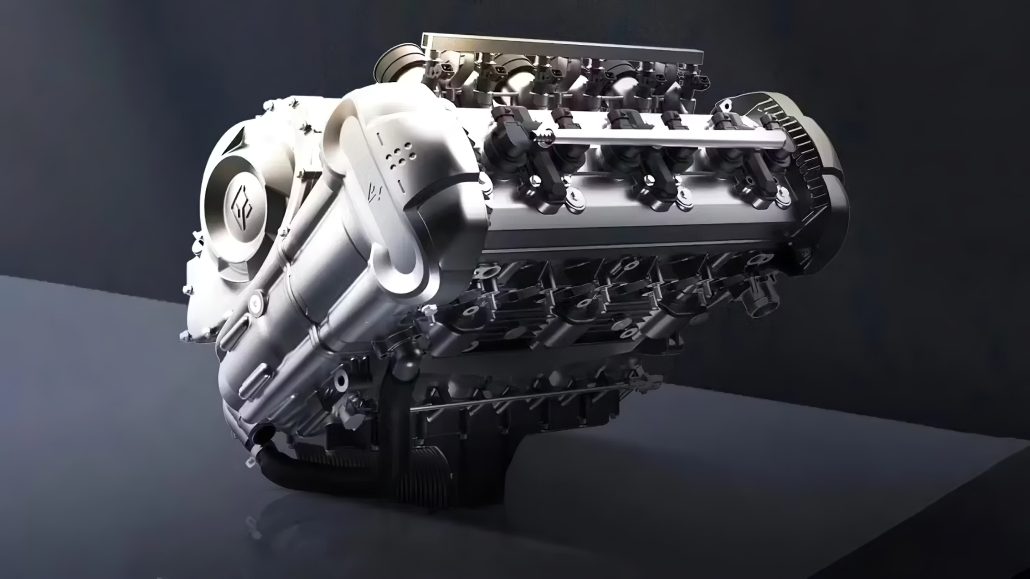
- Dark oil shows that the additives are doing their job, according to Motul, and is not a sign of declining quality
- Modern engines need precisely matched viscosity grades, especially during a cold start
- Engine oils can be mixed regardless of their base, what matters are the approvals and specifications
Engine oil is one of those subjects where a lot of half-knowledge circulates in workshops and at the pub. Some of it was even correct decades ago, but it no longer works as a rule of thumb today. The French lubricant manufacturer Motul has therefore named four widespread misconceptions and explained what speaks against them from a technical point of view. “Many of these myths date back to the days of simpler engine designs,” says Alexander Hornoff, Technical Support Manager at Motul Germany. Choosing the right oil, he says, is today one of the factors determining an engine’s service life and performance.

Why does engine oil turn dark over time?
According to Motul, dark oil is not a loss of quality but a sign that the additives are doing their work. They bind deposits and residues in the engine and hold them in suspension instead of letting them settle.
Technical publications describe this task in more detail: so-called detergents and dispersants keep wear particles and soot in suspension and carry them to the oil filter. That is precisely what discolours the lubricant. An oil that still looks as light after a few hundred kilometres as it did when poured in would rather suggest that it is not picking up the dirt at all. Fresh oil is a clear yellow to light brown. It only becomes critical when it looks milky or cloudy, because water is usually involved and the oil can no longer be used.
Does thicker oil protect the engine better?
No, according to Motul a viscosity that is too high can even become dangerous. Modern engines are designed around precisely matched viscosity grades so that a lubricating film reaches every point quickly, above all during a cold start.
The reasoning behind it sounds plausible at first: a more viscous oil ought to form a thicker film and therefore offer more protection. In practice, however, thick oil takes longer during a cold start to reach all the lubrication points. That is exactly the phase in which most wear occurs. On top of that, experts say a higher oil consumption cannot be permanently fixed with a thicker grade anyway, as the cause usually lies elsewhere.
What the numbers on the container mean
A designation such as 0W-30 belongs to the SAE classification. The number before the W stands for cold resistance. The smaller it is, the better the oil flows at low temperatures. A 0 indicates suitability down to around minus 40 degrees Celsius, a 5 down to minus 35 degrees, a 10 down to minus 30 degrees. The second number describes the viscosity at 100 degrees Celsius. Which combination belongs in a given engine can be found in the owner’s manual or in the lubricant manufacturers’ databases.
Does synthetic oil attack older seals?
According to Motul, synthetic oils are the standard today and are also suitable for older engines; they do not attack seals. For classics built before 1970 there are also said to be specially developed products.
Synthetic oil is produced artificially and is chemically more uniform in structure than classic mineral oil from the refinery. It copes better with heat and cold and allows longer change intervals, but costs more. When buying, it is worth looking at the exact designation: only the term fully synthetic stands for a share of at least 80 percent pure synthetic oil. Terms such as HC synthesis or synthetic technology describe hybrid forms.
Can different engine oils be mixed?
Yes, Motul explicitly emphasises that all engine oils are compatible with one another regardless of their base. What matters is not mineral oil or synthetic, but the approvals and specifications of the vehicle manufacturer.
In specialist articles too, the miscibility of common four-stroke oils is considered undisputed. One point does remain to be noted: anyone topping up a high-quality oil with a simpler grade lowers the quality level of the entire fill. For an emergency top-up on the road that is not a problem, because too little oil in the engine does considerably more damage than a mixture.
Why motorcycle oil has to do more than car oil
On most motorcycles, a single oil fill lubricates the engine, gearbox and clutch at the same time. That makes the requirements clearly different from those in a car and turns the blanket adoption of passenger car recommendations into a risk.
In the gearbox, high shear forces act on the oil, with the tooth flanks effectively breaking up the molecular chains. Shear stability is therefore a central criterion. Added to that is the wet clutch, in other words a clutch running in an oil bath. It needs specific friction values in order to engage cleanly. Low-friction oils for cars contain friction modifiers and can therefore cause the clutch to slip. A separate standard exists for this area, JASO T 903. The classes MA, MA1 and MA2 are designed for wet clutches, with MA2 considered particularly clutch-friendly. Class MB is aimed at scooters with a dry clutch and is not suitable for oil-bath clutches.
What engine oil is made of
Modern engine oil is a mixture of three components. The largest share, at around 75 to 80 percent, is the base oil, followed by roughly 10 to 15 percent viscosity index improvers and around 10 percent additives.
It is precisely this smallest share that determines quality. Alongside the cleaning agents already mentioned, it includes anti-oxidants that slow down thickening through ageing, plus anti-wear additives for high surface pressures and foam inhibitors. The latter are more important than they sound: air bubbles in the oil can cause the lubricating film to collapse locally. That also explains why engine oil is often described today as a liquid component. It does not just lubricate, but cools hotspots such as the piston crown and cylinder head, protects against corrosion, supports the seal at the piston rings and dampens noise.
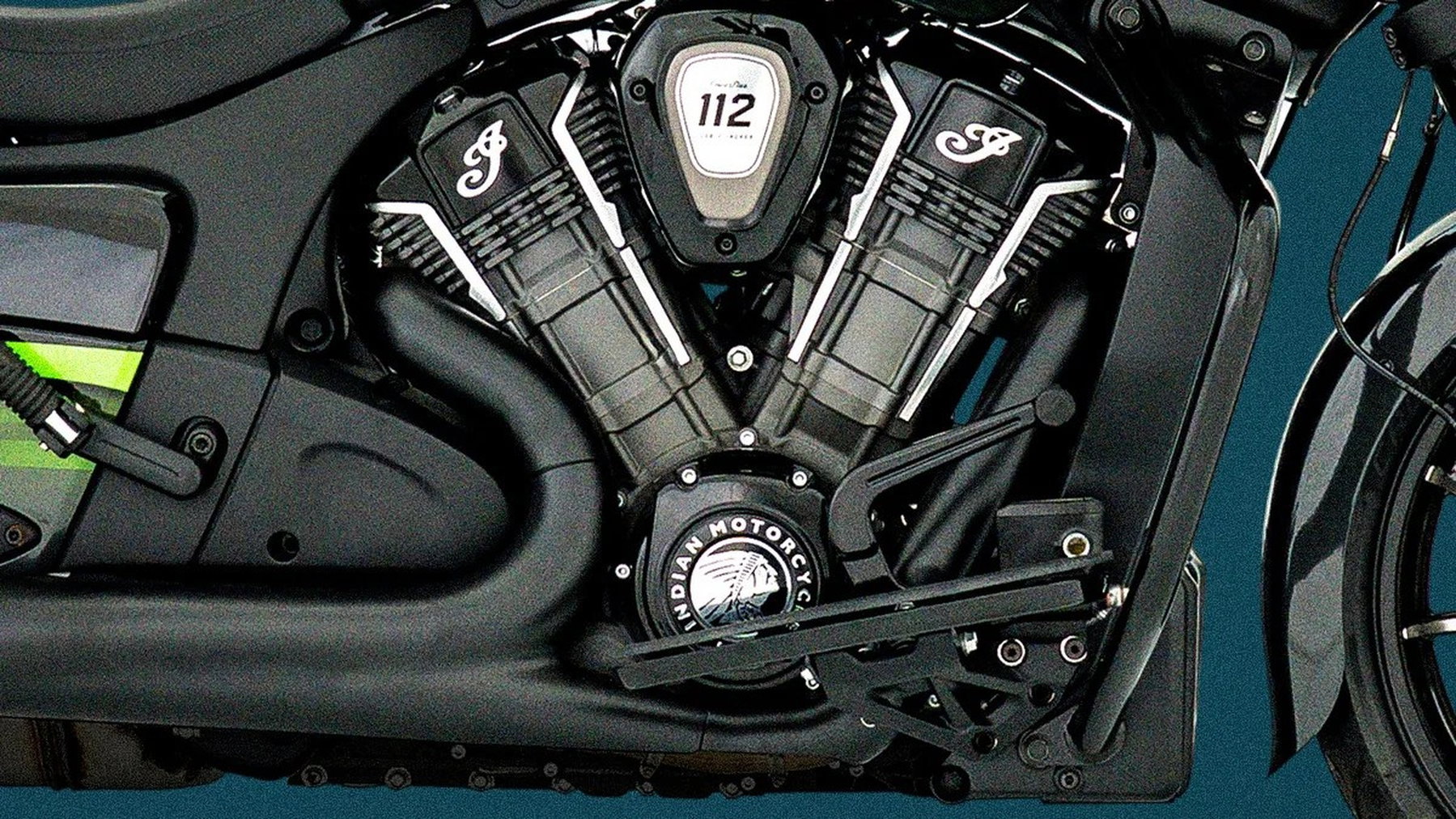
Which oil level mistakes get expensive?
The most expensive of all is ignoring the oil pressure warning light while riding, because bearing damage can occur within seconds. Too much oil is a problem as well, and not a safety buffer.
If the level is above the maximum mark, the crankshaft can whip the oil into foam. Lubrication deteriorates and, in an unfavourable case, the catalytic converter is damaged too. Excess oil should therefore be extracted. After topping up, the lubricant also needs some time to distribute itself, and only then is a check meaningful. Another point concerns storage: unopened, engine oil keeps for up to five years in a cool, dry place; once opened, the container should be emptied within a year.
How to find the right oil
The vehicle manufacturer’s specifications are always decisive and can be found in the owner’s manual. In addition, lubricant manufacturers offer online databases, at Motul for example the so-called oil advisor, which returns products matching the respective vehicle.
This places the topic in the wider context of motorcycle maintenance. Checking the oil level, change intervals and choosing the correct specification are among the jobs that determine the condition of a motorcycle over the years more than any single repair. Technical expertise and suitable lubricants are the key to a long engine life, as Motul puts it.
Frequently Asked Questions
-
Which engine oil myths are the most persistent?
The four most widespread assumptions are that dark oil is spent, that thicker oil protects better, that synthetic oil attacks old seals and that different oils must not be mixed. According to Motul, none of these applies to modern engines and today’s lubricants. The ideas date back to a time of simpler engine designs.
-
What does JASO MA2 mean for motorcycle oil?
JASO MA2 is a class within the motorcycle standard JASO T 903 and stands for particularly good compatibility with wet clutches. Oils in this class deliver the friction values that a clutch running in an oil bath needs to engage cleanly. Class MB, by contrast, is intended for scooters with a dry clutch and is unsuitable for oil-bath clutches.
-
Can car oil be used in a motorcycle?
This is not advisable, because in a motorcycle the oil usually serves the engine, gearbox and clutch at the same time. Low-friction oils for cars contain friction modifiers that can make the wet clutch slip. In addition, the shear forces in the gearbox demand higher shear stability.
-
What does the designation 10W-40 on the oil container mean?
The number before the W describes cold behaviour, with a 10 indicating suitability down to around minus 30 degrees Celsius. The second number gives the viscosity at 100 degrees Celsius. Which combination the engine needs is specified by the vehicle manufacturer.