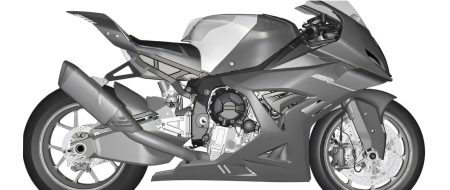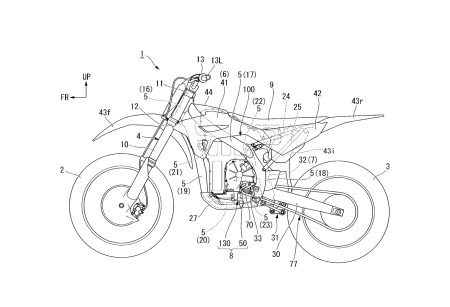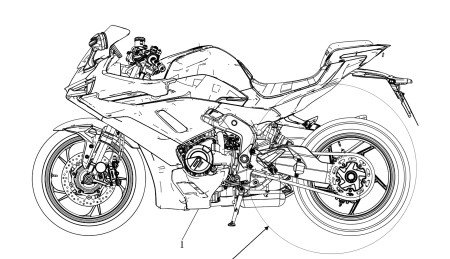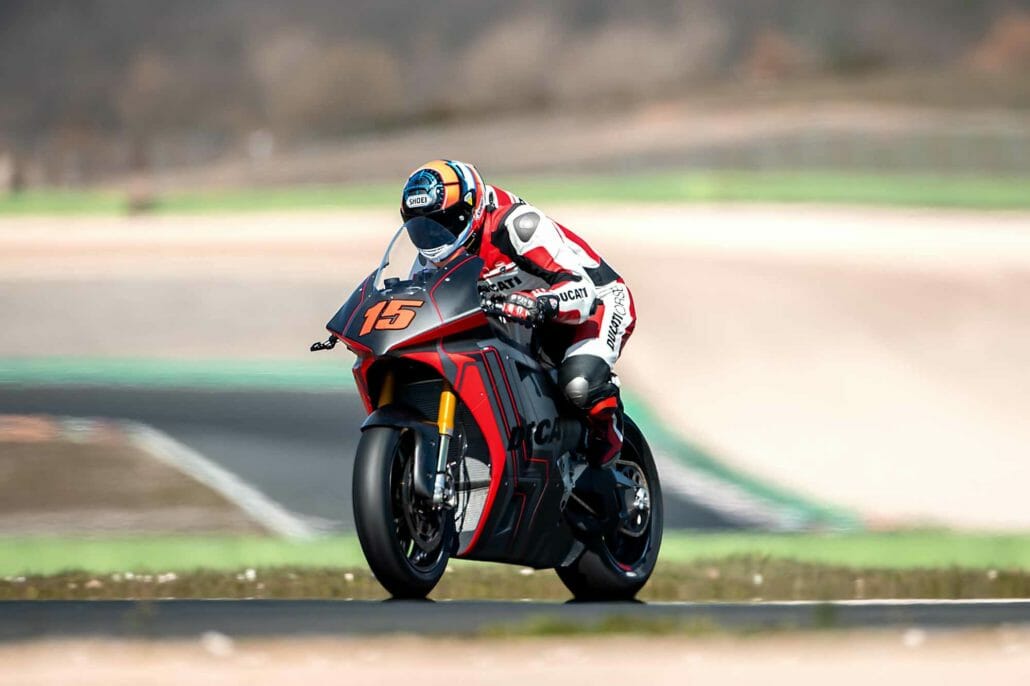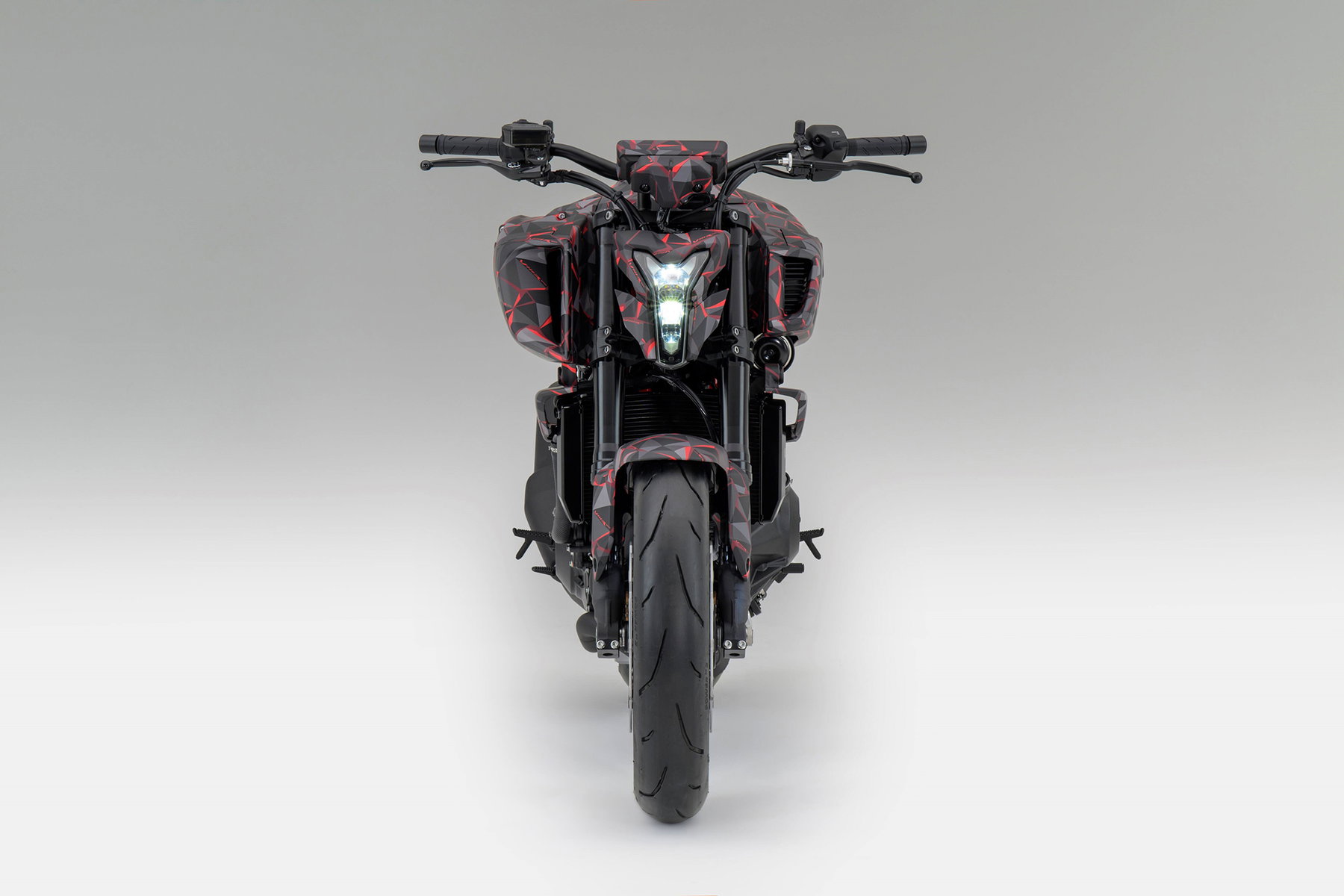
- Honda V3R 900 E-Compressor: 900 cc V3 with what Honda calls the world’s first electronically controlled compressor for motorcycles
- Nine new patents show the compressor fitted to a flat-six boxer, a parallel twin and an inline four
- Output according to Honda on par with a 1,200 cc engine from just 900 cc, equating to roughly one third more specific power
With the V3R 900 E-Compressor, Honda unveiled a prototype at EICMA 2025 in Milan that rethinks forced induction for motorcycles. Instead of a conventional turbocharger or a mechanically driven supercharger, the V3 engine houses an electrically driven compressor that regulates boost pressure independently of engine speed. The prototype alone points in a direction that, according to recent patent filings, could extend well beyond a single model.
What Is Behind the Honda V3R 900 E-Compressor?
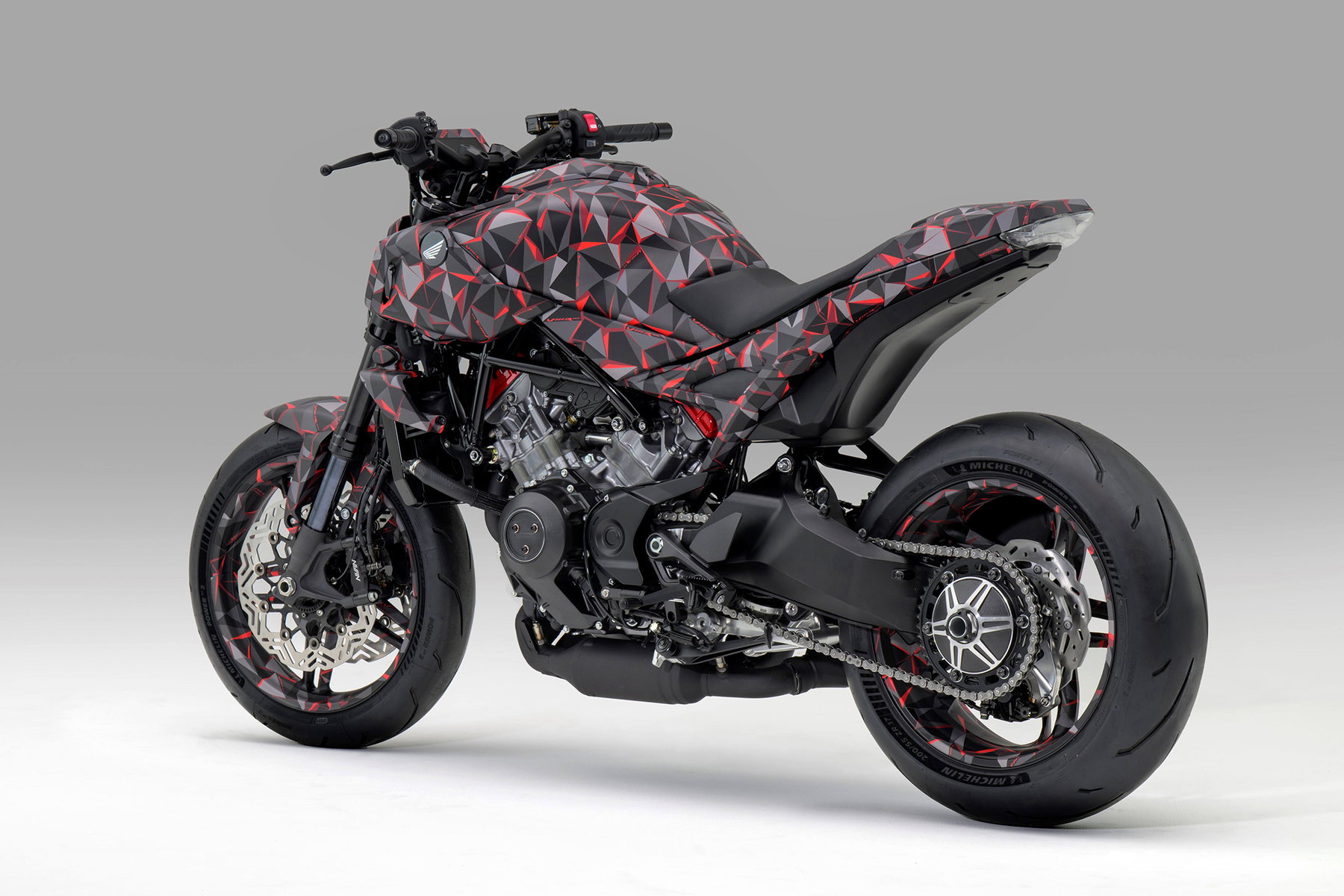
The E-Compressor is an electrically driven compressor that pressurises the intake air of the V3 engine to deliver more power. According to Honda, it is the world’s first electronically controlled compressor in a motorcycle. The unit sits inside a water-cooled 75-degree V3 displacing 900 cc, building on the layout of the V3 concept shown at EICMA 2024. Honda states the development target is output equivalent to a 1,200 cc engine, combined with a compact form factor and a better environmental footprint.
Notably, Honda currently has no 1,200 cc engine in its line-up. The closest is a 1,084 cc parallel twin powering the NT1100 and the Africa Twin. The former VFR1200F and VFR1200X were discontinued in 2017 and 2021 respectively. The comparison with the 1,200 cc class therefore describes the targeted performance level rather than any existing powerplant.
How Does Honda’s Electric Compressor Work?
The electric drive allows virtually lag-free boost because the compressor does not need to spool up via exhaust gases or a belt. According to the patents, the compressor operates on a part-time basis and only engages when the rider demands full power. Under normal riding conditions the engine breathes through a separate intake path that bypasses the compressor. Only when needed do electronically controlled valves route the air through the compressor, while the engine management precisely regulates boost pressure and simultaneously controls the compressor’s electric motor.
This layout results in comparatively low boost pressure that can be finely modulated. Because the compressor is electrically driven, it can be positioned almost anywhere in the vehicle without a mechanical link to the crankshaft or any connection to the exhaust system. It is precisely this flexibility that makes the technology attractive for engines that were not originally designed for forced induction.
Which Honda Models Could Get the E-Compressor?
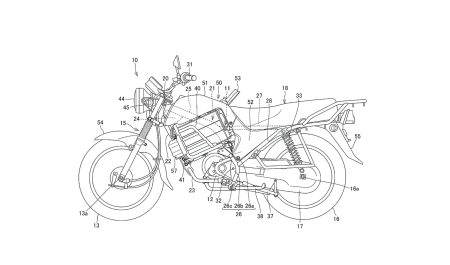
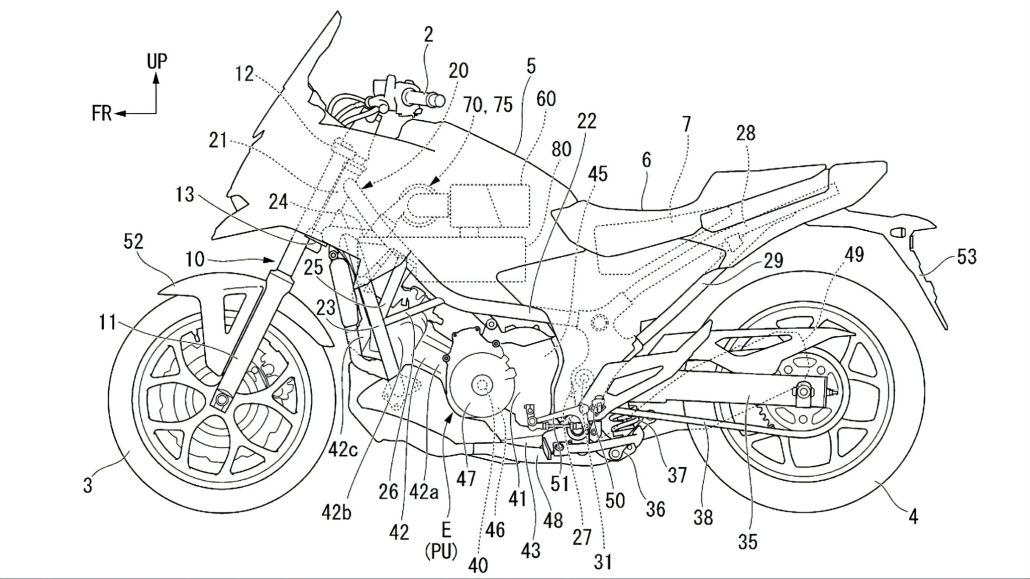
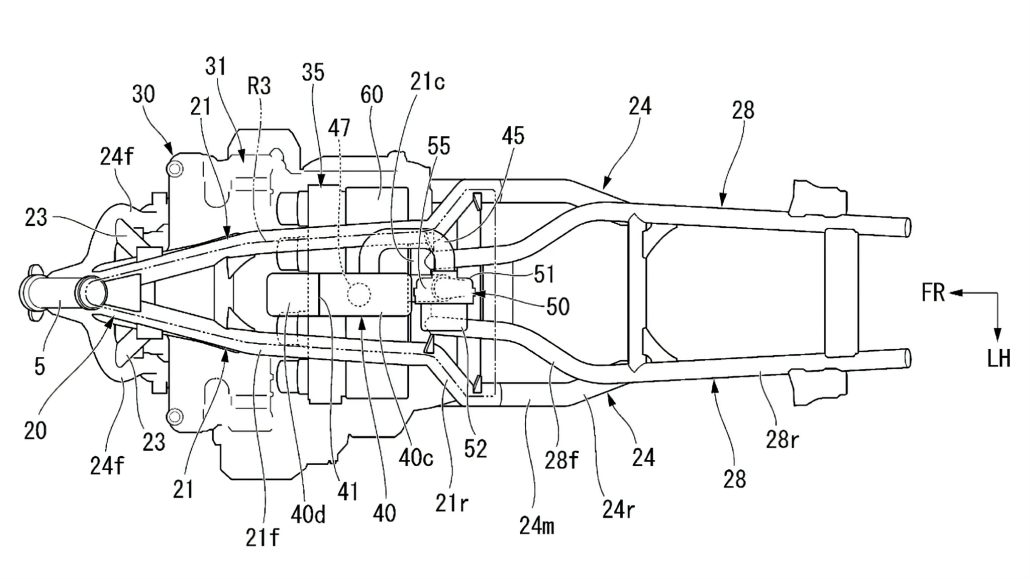
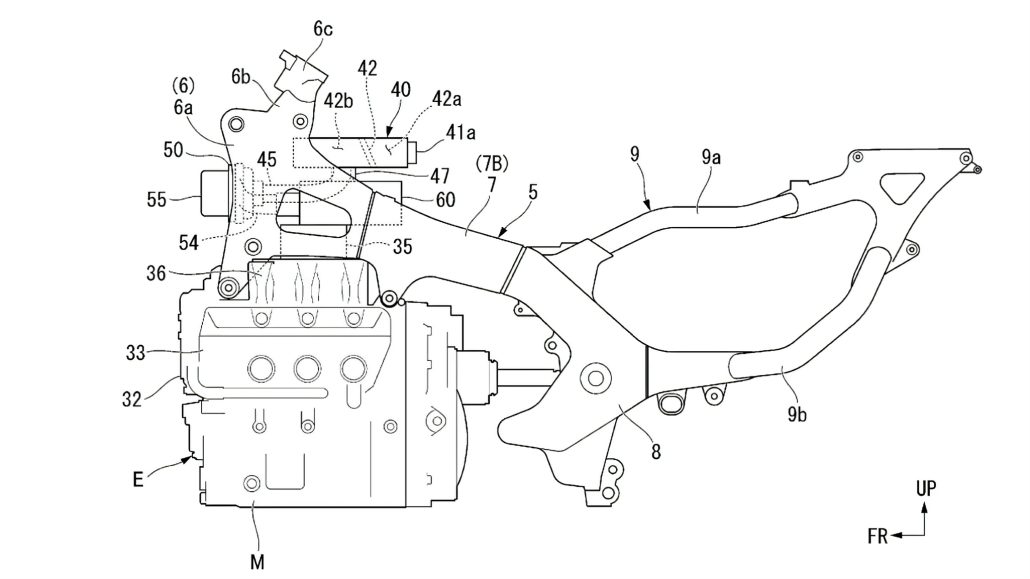
Nine new patents show how the E-Compressor can be adapted to different engine architectures, including a flat-six boxer, a parallel twin, a V-twin and an inline four. Clearly identifiable are the GL 1800 Gold Wing, where the compressor sits above the six-cylinder boxer, and the NC 750 X. On the NC 750 X the generous space above the low-mounted parallel twin lends itself to housing the air filter box, the compressor and the pressure chamber for the throttle bodies.
In addition, two inline fours are shown. One is based on the now-discontinued CB 1300 Super Four, which likely serves to protect the packaging solution for an inline four rather than signalling a specific production model. The second shows a bridge-frame inline four using the current CBR 1000 RR-R Fireblade as an example. Given that the Fireblade already produces over 200 hp as standard, a forced-induction variant could compete at the very top of the class. The documents also describe a V-twin derived from the modular V3 by removing one cylinder from the front bank. This engine would displace roughly 600 cc and deliver the output of an 800 cc motor.
How Much Extra Power Is the Compressor Expected to Deliver?
Honda has not yet released precise technical data on the E-Compressor, so concrete power figures for further models remain speculative. The only known ratio comes from the V3R’s V3: roughly one third more specific power, translating from 900 cc to 1,200 cc-level output. The baseline figures of the 900 cc V3 without forced induction have not been published either. On that basis, hypothetical projections for individual models can be made to illustrate the potential:
- Honda NC 750 X: from 58 hp (43 kW) to around 80 hp (59 kW), torque from 69 Nm to over 90 Nm
- Honda CB 750 Hornet and XL 750 Transalp: from 92 hp (68 kW) to over 120 hp (88 kW), torque from 75 Nm to around 100 Nm
- Honda CB 1000 Hornet: from 152 hp (112 kW) to over 200 hp (147 kW), torque from 104 Nm to around 140 Nm
- Honda CBR 1000 RR-R Fireblade: from 218 hp (160 kW) to up to 300 hp (221 kW), torque from 113 Nm to approximately 150 Nm
- Honda CRF 1100 L Africa Twin: from 102 hp (75 kW) to approximately 135 hp (99 kW), torque from 112 Nm to around 150 Nm
- Honda GL 1800 Gold Wing: from 126 hp (93 kW) to around 170 hp (125 kW), torque from 170 Nm to approximately 225 Nm
These figures are expressly rough calculations and not manufacturer specifications. They do, however, indicate the direction the power gains could take if Honda does transfer the technology to existing model ranges.
Honda Continues to Expand Its Technology Offensive
Honda rolling out a new technology across its model range is not a new pattern. With the dual-clutch transmission DCT and the automated clutch E-Clutch, the manufacturer has already demonstrated in recent years how individual innovations can be transferred to engines of different sizes and architectures. The DCT is now found in parallel twins as well as the flat-six boxer; the E-Clutch ranges from singles to inline fours. The E-Compressor would fit neatly into this strategy and aligns with a series of motorcycle innovations in which forced induction and electronics are increasingly converging.
The central challenge posed by the patents lies less in the compressor itself than in the packaging. The task is to fit the compressor and its electric motor between the airbox, the fuel tank, the throttle bodies and the engine. The fact that Honda has documented several variants suggests serious intent, though it primarily protects intellectual property for now.
When Will the Honda V3R 900 Reach the Market?
A production version of the V3R 900 is expected at EICMA in November 2026, complete with a fully developed compressor. Honda itself has so far only stated that development is continuing towards series production without naming a specific date. The prototype shown at EICMA 2025 features asymmetric side panels, a single-sided swingarm and, for the first time, the new “Honda Flagship WING” tank emblem, which according to the manufacturer will gradually appear on the top models from the coming year.
Whether and when further models with forced induction will follow remains open. Patents are not a promise of series production, as factors such as cost, commercial viability and the question of whether the technology works as planned in everyday use are decisive. Should the V3R 900 prove popular, an expansion to further model ranges is considered likely, however.
Frequently Asked Questions
-
What is the Honda E-Compressor?
The Honda E-Compressor is an electrically driven compressor that pressurises the intake air to increase power. According to Honda, it is the world’s first electronically controlled compressor in a motorcycle. It debuts in the V3R 900 powered by a 900 cc V3 engine.
-
Which Honda models could receive a compressor?
New patents show the E-Compressor fitted to the GL 1800 Gold Wing, the NC 750 X and the CBR 1000 RR-R Fireblade, among others. A derived V-twin and inline fours are also documented. Series production has not been confirmed, however.
-
How much power does the Honda V3R 900 have?
Honda has not yet released specific power figures. The manufacturer states the target is output on par with a 1,200 cc engine despite the V3 displacing only 900 cc. That equates to roughly one third more specific power.
-
When will the Honda V3R 900 be released?
A production version is expected at EICMA in November 2026. Honda has so far only confirmed that development is continuing towards series readiness. The prototype was shown at EICMA 2025.
-
How does the E-Compressor differ from a turbocharger?
The E-Compressor is electrically driven and delivers boost pressure with virtually no lag. A conventional turbocharger draws its energy from the exhaust stream and therefore responds more slowly. The electric compressor can also be positioned more freely within the vehicle.
➜ This article is part of our comprehensive overview: Motorcycle Patents and Future Technology: What Manufacturers Are Developing. Find all key information on this topic in one place.