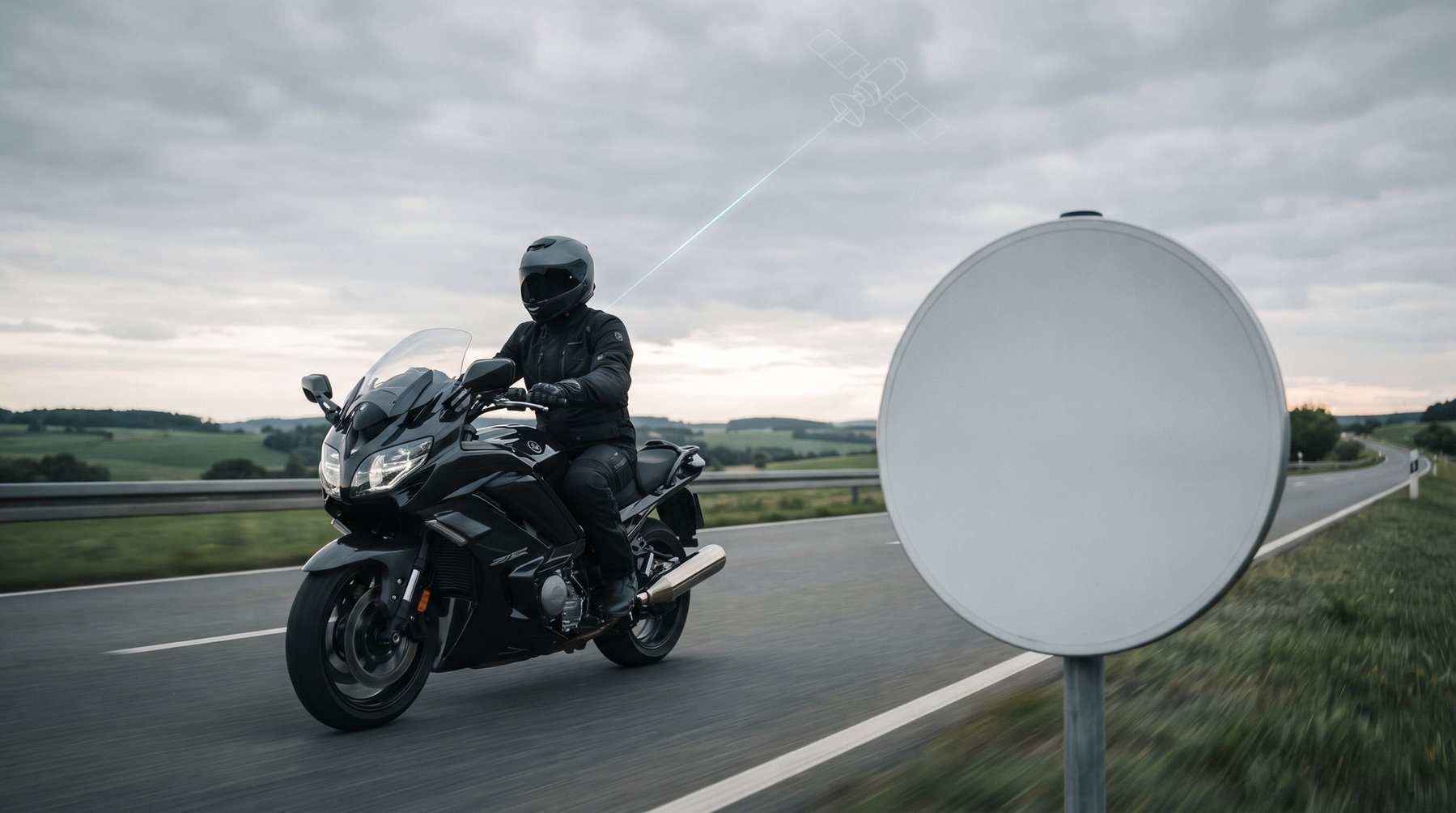
- The technology is meant to combine satellite positioning, GPS maps and cameras to detect the speed limit and cut engine power when needed.
- Even in the best case, mandatory use is unlikely before 2030, and no draft legislation exists yet.
- Supporters expect up to 20 percent fewer road deaths, while studies show weaknesses in how reliably the systems detect speed limits.
Many drivers across Europe have only just gotten used to the beeping and warning prompts of the new speed assistance systems. Now Brussels appears to be considering a far deeper intervention. According to British media reports, the European Commission is looking into a technology that would no longer just warn drivers, but could actually slow a vehicle down itself when it exceeds the speed limit. Little of this is confirmed so far, and that is exactly what makes the case interesting for motorcyclists.
What exactly is the European Commission planning?
According to reports, the European Commission is examining a technology that could actively intervene in vehicle control as soon as the permitted speed is exceeded. Every new vehicle would be fitted with a device that remotely limits engine power for drivers going too fast. It would rely on the vehicle’s position and the speed limit in force at that location. The stated goal is to reduce the number of accidents caused by excessive speed. Supporters believe this could cut road deaths by up to 20 percent. That figure is not yet substantiated and comes from road safety organizations.
How is the technology supposed to work?
According to the reports available so far, the system would consist of three building blocks: satellite positioning, digital maps and onboard cameras. First, satellites would determine the vehicle’s location and speed. Cameras would then read the road signs showing the permitted speed. If the onboard computer detects that the limit has been exceeded, it would bring the vehicle back down to the permitted speed by reducing engine power. In British 20 mph zones, roughly 32 km/h, the vehicle would be throttled back automatically.
How does this differ from today’s ISA systems?
The key difference is that today’s assistance systems only warn the driver, while the technology under review could intervene on its own. Since July 2022, new vehicle types in the EU have been required to carry an intelligent speed assistance system, known as ISA (Intelligent Speed Assistance). Since July 2024, this has applied to all newly sold cars. These systems use GPS data, maps and cameras to determine the speed limit. They display warnings, emit sounds, or increase resistance on the accelerator pedal. Crucially, drivers can override or switch them off in nearly all cases. That option would disappear, or be sharply restricted, under the new technology.
What does this mean for motorcyclists?
For motorcyclists, the most important question remains open, namely whether motorcycles would be included at all. The reports do not make clear whether the technology would apply to motorcycles alongside cars and vans. There are also practical concerns. Motorcycles sometimes need short bursts of acceleration, for example to overtake safely or avoid a sudden hazard. A system that cuts power at that exact moment could make riding more difficult. Handling incorrect map data, temporary restrictions at roadworks, or misread signs is also considered a sensitive issue. These questions already come up with today’s warning systems. But if the same technology gains access to the throttle or the brakes, the consequences of getting it wrong become far more serious.
How reliably do the systems detect the speed limit?
According to data from the British research institute Thatcham Research, today’s systems are far from error-free. In real-world tests, the worst-performing vehicle achieved a 91.3 percent accuracy rate measured over distance driven. But when every single speed limit change was assessed individually, that figure dropped to 74.3 percent. In other words, roughly one in every four limit changes was displayed incorrectly. Even the best-performing vehicle fell from 98.39 percent over distance to 90.3 percent on individual changes, meaning roughly one error in every ten changes. Thatcham Research also found cases where vehicles displayed a speed limit that does not exist at all, such as 5 mph (about 8 km/h) or 100 mph (about 161 km/h). This does not refer to the speed being driven, but to the limit the system believed was in force. Such values do not occur on ordinary roads; one would be far too low, the other higher than any permitted limit. With a pure warning system, that is mainly annoying and costs the driver’s trust. But if the technology were to intervene directly, a wrongly detected 5 mph limit could bring a vehicle to a sharp halt in the middle of moving traffic. Another criticism concerns the testing procedure itself: the current EU method measures accuracy over distance driven, which does not capture how often a system gets an actual limit change wrong.
Why are the plans facing criticism?
Critics point mainly to risks around data privacy, reliability, and control over one’s own vehicle. British opposition politician Richard Holden described the plan in British media as “a recipe for Big Brother,” warning that it amounted to a step toward a surveillance state, and cautioned about potentially serious consequences for drivers. Howard Cox, founder of the campaign group FairFuelUK, believes most drivers are sensible enough to choose the right speed themselves and is calling for less interference from the EU. The concern also stems from the fact that the EU has already mandated numerous assistance systems in recent years, including speed warnings, drowsiness detection, distraction warnings and event data recorders.
When could the technology become mandatory?
Mandatory use is conceivable at the earliest from 2030, and even that is not yet certain. It’s important to put this in context: there is currently neither a law nor a draft bill. A European Commission spokesperson described the considerations as purely exploratory. Because of Brexit, any such requirement would not automatically apply in the United Kingdom. The UK’s Department for Transport stated there are currently no plans for such technology, but that it intends to keep working with European partners on vehicle safety. Experts nonetheless expect manufacturers to fit the technology in UK models too, since building separate vehicles just for the British market would be too costly. The possible EU satellite speed limiter therefore fits into a longer trend in which the EU has gradually introduced stricter safety requirements for new vehicles.
➜ This article is part of our comprehensive overview: Motorcycle Law & Policy: Regulations, Court Rulings and Developments for Riders. Find all key information on this topic in one place.
Frequently Asked Questions
-
What is the EU planning with the satellite speed limiter?
According to reports, the European Commission is examining a technology that would automatically slow vehicles down when they exceed the speed limit. It would combine satellite positioning, GPS maps and cameras. No law or draft bill exists yet.
-
Would motorcycles be affected by the EU satellite speed limiter?
That is currently unclear. The available reports do not state whether the technology would also apply to motorcycles. So far, only cars and vans have been mentioned.
-
From when could the technology become mandatory?
According to reports, mandatory use would be possible at the earliest from 2030. That isn’t certain, since only a review is currently underway and no decision has been made.
-
How does the system differ from today’s assistance systems?
Today’s ISA systems only warn the driver and can be overridden or switched off. The technology under review, by contrast, could intervene directly and reduce engine power.
-
How accurately do the systems detect the speed limit?
According to Thatcham Research, the accuracy rate for individual speed limit changes ranges between 74.3 and 90.3 percent depending on the vehicle. In the worst case, that means the limit is misread roughly once every four changes.