- Contract with Ducati Corse until the end of the 2028 season, with the Pertamina Enduro VR46 Racing Team as his outfit from 2027
- Aldeguer will ride a factory Desmosedici GP with full technical support from the manufacturer for the first time
- The switch coincides with the start of the 850cc era and the tyre change from Michelin to Pirelli
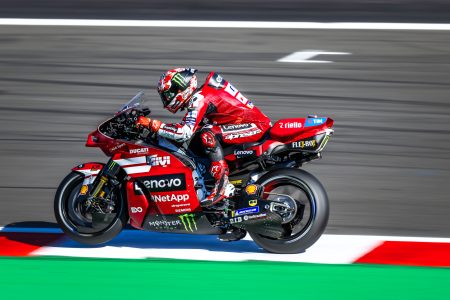
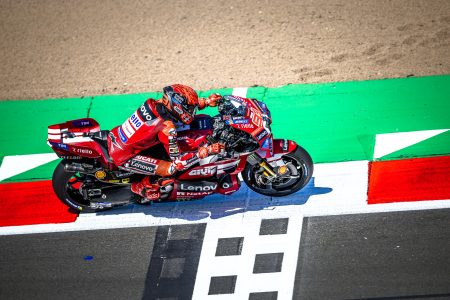
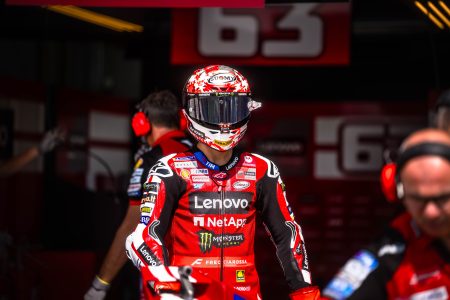
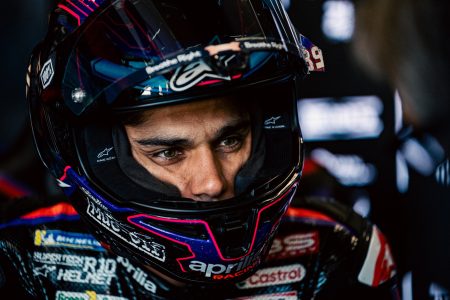
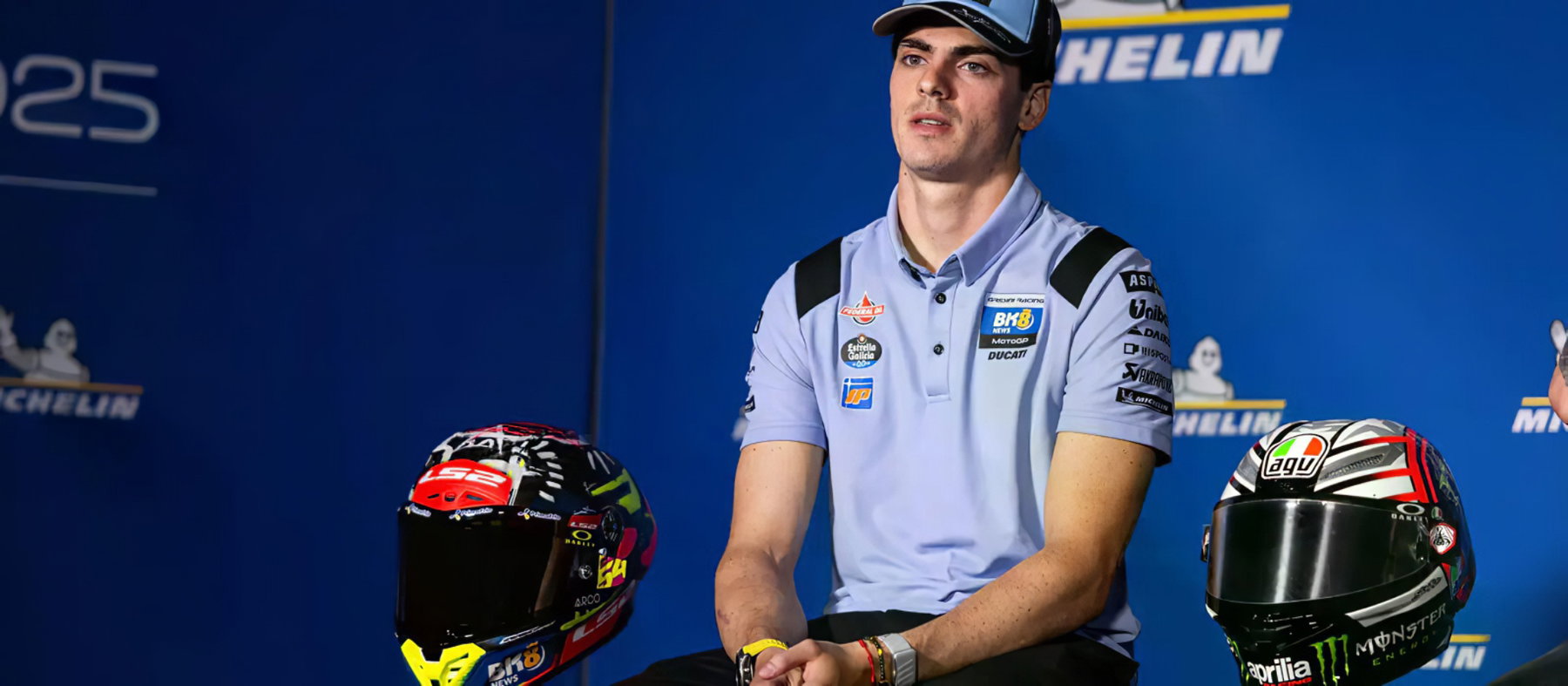
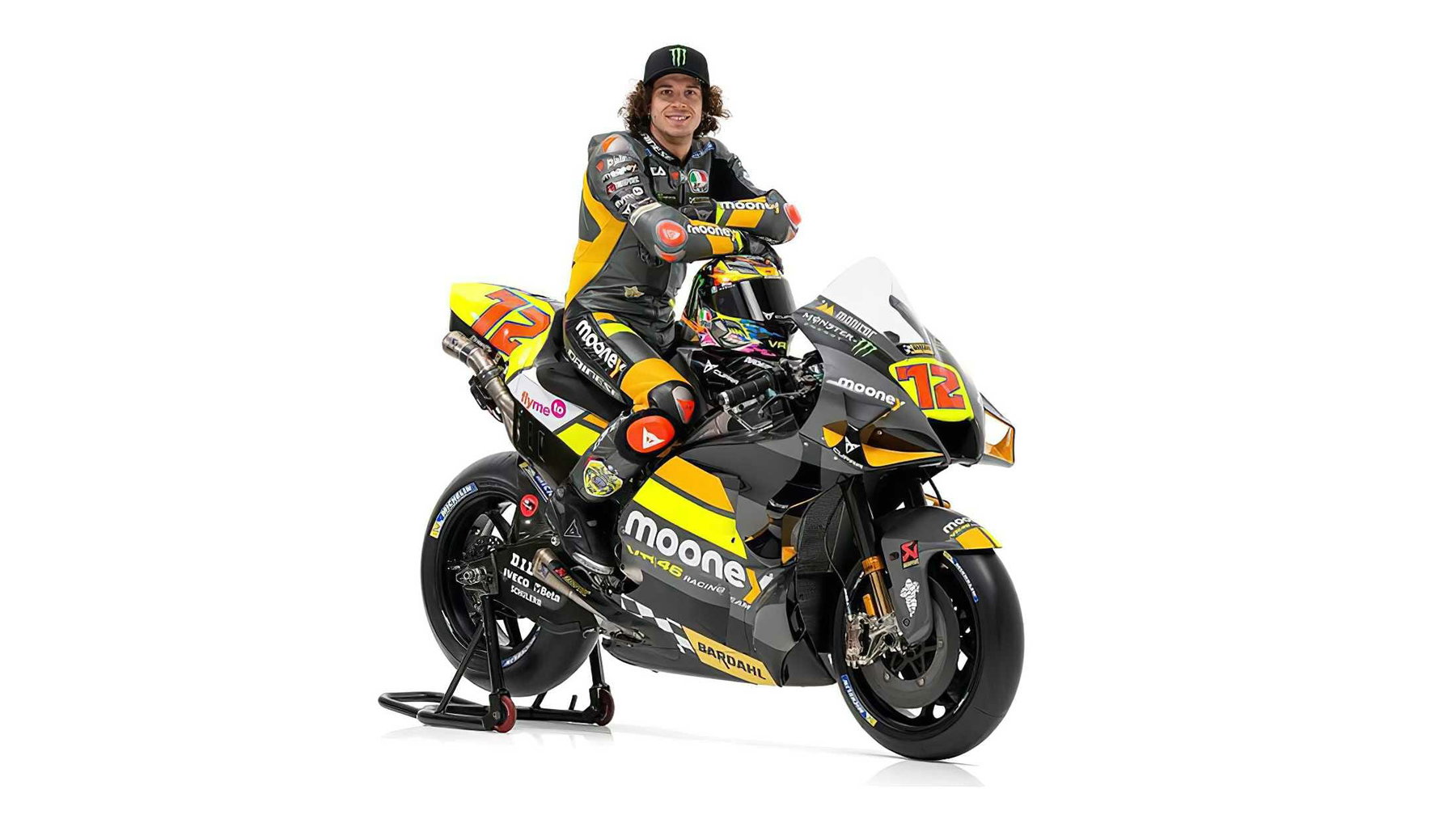
On 26 August 2026, Ducati Corse announced the extension of its partnership with Fermin Aldeguer. The 21-year-old Spaniard will stay with the manufacturer from Borgo Panigale for two more years, but will change teams within the Ducati family. After two seasons with Gresini, he will race in the neon yellow colours of Valentino Rossi’s team in 2027 and 2028. For Aldeguer this is more than a change of livery, because the move comes with a promotion to official Ducati Corse rider.
How long does Fermin Aldeguer’s new contract run?
The agreement between Ducati Corse and Aldeguer runs until the end of the 2028 season. In its statement, Ducati speaks of an extension covering the next two seasons of the MotoGP World Championship.
The decision is not quite as new as it looks, though. According to media reports, Aldeguer signed a two-plus-two-year deal back in January 2024, before his final Moto2 season. That secured 2025 and 2026 to begin with. The option for 2027 and 2028 was reportedly taken up in March. At the same time, Ducati is said to have told Aldeguer that he would ride for VR46 from 2027. First details of the agreement reportedly leaked around the Brazilian Grand Prix in March, just as Aldeguer was making his comeback after breaking his femur. The announcement on 26 August is therefore mainly the official confirmation of a decision taken long ago.
One point is important for understanding the arrangement: Aldeguer is contracted directly to Ducati Corse, not to the team. So it is the manufacturer that decides which garage the Spaniard races out of and what machinery he receives.
What changes for Aldeguer with factory status?
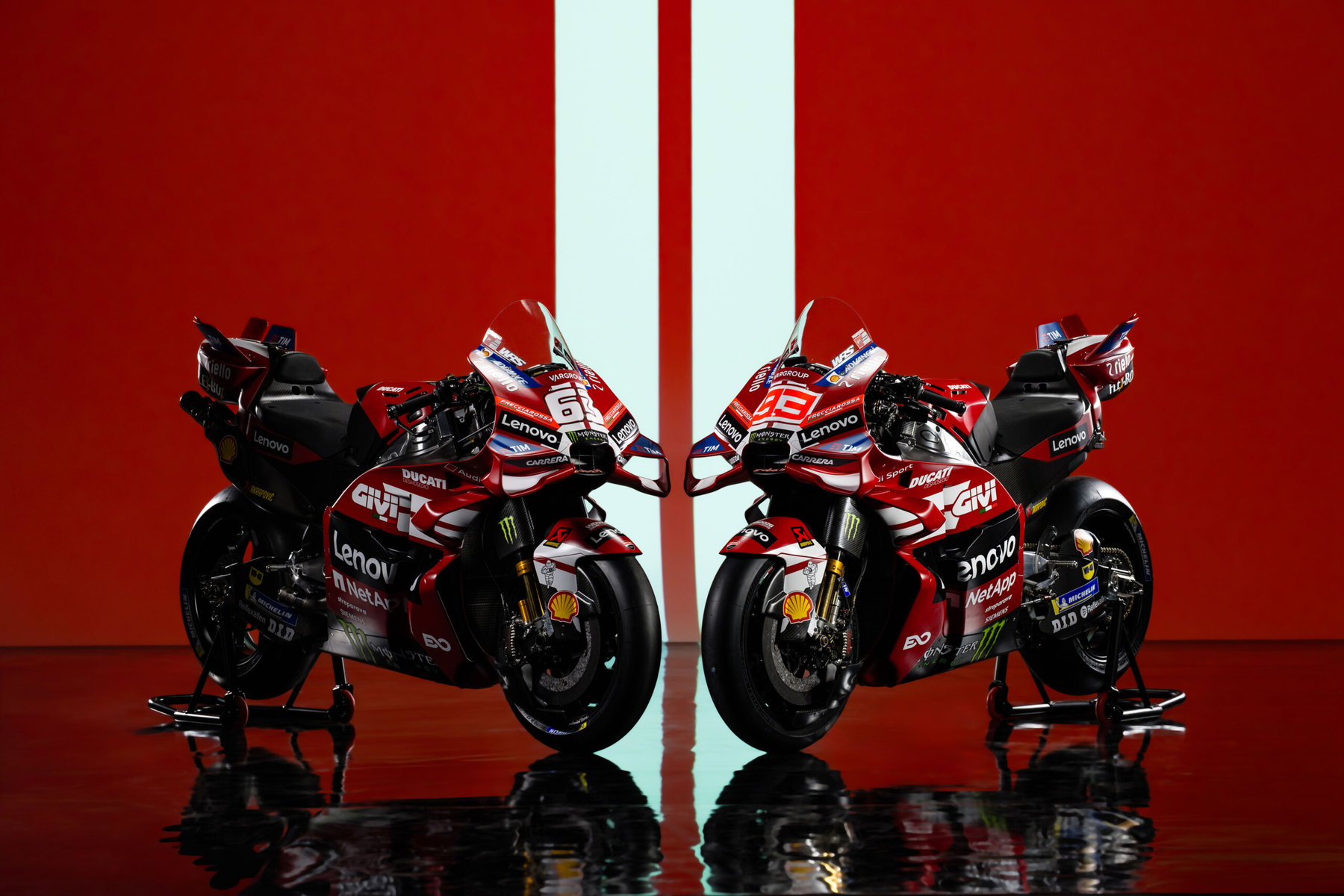
At VR46, Aldeguer will get a current factory Desmosedici GP for the first time. In his first two MotoGP seasons, he had to make do with a bike from the previous year each time.
In 2026 he is, alongside Franco Morbidelli, one of only two riders in the field running the year-old GP25. That is a noticeable disadvantage, because factory bikes receive updates far more quickly. From 2027 that gap disappears for him. Team director Alessio Salucci spells out the new role in the team statement: “We are looking forward to welcoming him to the team, where he will ride a factory Desmosedici GP, as he will be an official Ducati Corse rider.”
For VR46 this is a change as well. Until now the Rossi team’s garage held only a single machine with factory status, most recently for Fabio Di Giannantonio. From 2027 the Tavullia squad will officially line up as a Ducati-supported factory team. According to sources close to the team, the partnership between Ducati and VR46 has been extended until the end of 2029.
Aldeguer himself frames the step primarily in sporting terms, but also talks about the personal side. He describes Rossi as one of his idols and role models and expects his advice within the team to help him. He puts his sporting goal modestly: ride consistently, avoid mistakes, spend as much time as possible on the bike and regularly finish in the top five.
Why does Ducati keep backing Aldeguer?
Ducati justifies the extension with the young Spaniard’s potential and with its own youth strategy. The manufacturer explicitly places Aldeguer at the centre of its long-term sporting planning.
Ducati boss Claudio Domenicali says: “Fermín is a perfect fit for Ducati’s vision of racing in the future: believing in young talent and supporting its growth so that it can realise its full potential.” Ducati Corse general manager Gigi Dall’Igna is more specific and names the reasons for the investment: “Since entering MotoGP he has shown extraordinary talent, a great capacity to learn and a determination that impressed us immediately. He is still a very young rider, but his potential is enormous.”
Those statements carry extra weight when you look at the turnover in the Ducati camp. For 2027, only Marc Marquez and Aldeguer remain on board out of the current Ducati riders. Alex Marquez and Di Giannantonio are moving to KTM, Francesco Bagnaia is going to Aprilia, and Enea Bastianini already rode for Trackhouse this season. That makes Aldeguer one of the few riders Ducati has under direct contract, alongside Marquez and Pedro Acosta, who is arriving from KTM.
Saying goodbye to Gresini
For Gresini, the move means losing a second regular rider within a short space of time. Nadia Padovani’s team had already confirmed a completely new pairing for 2027 in early July, with Joan Mir and Moto2 graduate Daniel Holgado. Aldeguer’s departure was therefore factored in.
It clearly did not go entirely smoothly, however. According to paddock sources, Gresini would have liked to keep the Spaniard beyond 2026, and Ducati’s decision is said not to have gone down well within the team. Gresini reportedly even considered parting company with Ducati at the end of the season and running as a Honda customer team from 2027.
In public, the team strikes a different tone. After the confirmation, Nadia Padovani published a personal message to her rider: “From the very first moment you got on our bike, you brought a wave of energy, passion and an incredible hunger for wins. Watching you grow and fight in our colours was and is an immense source of pride.” She closes by saying that 2027 can wait. Aldeguer, for his part, thanked Gresini and Padovani.
What changes in the MotoGP rules in 2027?
MotoGP enters a new technical era in 2027 in which practically all the cards are reshuffled. Capacity drops from 1000 to 850 cubic centimetres, aerodynamics are more tightly restricted and tyres will come from Pirelli instead of Michelin.
On top of that comes the ban on so-called devices, meaning the ride-height and holeshot systems the teams have used until now to alter ride height at the start and through corners. In addition, the series switches entirely to non-fossil fuels for the first time.
The timing is favourable for Aldeguer. By then he will have gathered two years of experience in the premier class, but he will start out on a largely new bike at the same time as everyone else. He names the changeover as his main task and expects the factory machine to help him with development work over the course of the season.
How has Aldeguer fared so far?
His first MotoGP season in 2025 was strong, his second has been defined by injuries. As a rookie he took three podium finishes in the Sunday races, including victory at the Indonesian Grand Prix, and ended the season eighth overall.
At 20 years and 183 days, his win at Mandalika made him the second-youngest premier-class Grand Prix winner. He added a third place in France and a second place in Austria, as well as the Rookie of the Year title. His route there was unusual: after success in Spanish and European series, he made his world championship paddock debut in MotoE in 2021, and from 2022 he raced full time in Moto2. His best result there was third in the standings in 2023.
The current 2026 season, by contrast, began with a setback. In January, Aldeguer broke his left femur in a training crash and missed pre-season testing as well as the season opener in Thailand. After his return he took second place in Barcelona, and shortly afterwards he crashed in Friday practice at Assen and fractured his seventh thoracic vertebra. He has been able to contest only eight of the season’s twelve Grands Prix so far and currently lies eleventh in the standings. His comeback is due at the Aragon Grand Prix this weekend.
Looking ahead to 2029
The signing is also interesting with a view to the period after the new contract. Marc Marquez and Pedro Acosta have also signed their Ducati factory deals for two years until 2028. That means Aldeguer’s agreement runs exactly in parallel.
If he meets expectations, he would be an obvious candidate for a factory team seat in 2029, at the age of 24. That is precisely where the pressure for the next two years comes from as well. With a current bike and full factory support, he will be measured by a different yardstick than before.
His team-mate at VR46 has not been officially confirmed yet. The favourite is the current Superbike World Championship leader, Nicolo Bulega. Franco Morbidelli, in turn, is rumoured to be heading to the Superbike World Championship. Neither has been confirmed so far. That leaves Ducati’s 2027 line-up complete but for one seat, with Marquez and Acosta in the factory team, Aldeguer at VR46 and Mir and Holgado at Gresini. Amid the major reshuffle of the 2027 rider market, Aldeguer is therefore one of the first riders whose future is settled for good.
Frequently Asked Questions
-
Which team will Fermin Aldeguer ride for in 2027?
Fermin Aldeguer will ride for Valentino Rossi’s Pertamina Enduro VR46 Racing Team in 2027 and 2028. He is leaving Gresini but stays under contract with Ducati. His deal with Ducati Corse runs until the end of the 2028 season.
-
Will Aldeguer get a factory bike at VR46?
Yes. From 2027 Aldeguer will compete as an official Ducati Corse rider and ride a factory Desmosedici GP. In his first two MotoGP seasons he only had a bike from the previous year at his disposal.
-
Why is Aldeguer leaving the Gresini team?
The decision was made by Ducati as the rider’s contractual partner. The manufacturer placed Aldeguer at VR46 for 2027, which will compete as a Ducati-supported factory team from that season. Gresini will field Joan Mir and Daniel Holgado in 2027.
-
How successful has Aldeguer been in MotoGP so far?
In his 2025 rookie season he took three podium finishes in the Sunday races, including victory in Indonesia, and finished eighth overall as well as Rookie of the Year. In 2026 two injuries held him back, and his best result is second place in Barcelona.
-
What changes in MotoGP in 2027?
Capacity drops from 1000 to 850 cubic centimetres, aerodynamics are restricted and ride-height as well as holeshot systems are banned. The series also switches from Michelin to Pirelli and moves entirely to non-fossil fuels.
➜ More on this topic in our overview: 2027 MotoGP Season: The Complete Overview.
➜ This article is part of our comprehensive overview: MotoGP 2026 Season: The Complete Overview – Teams, Riders, Calendar & Standings. Find all key information on this topic in one place.