- Rear-facing microphones are meant to detect and locate other vehicles by sound
- Accelerometers compensate for the rider’s head movements
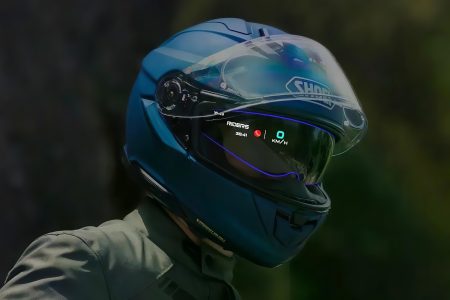
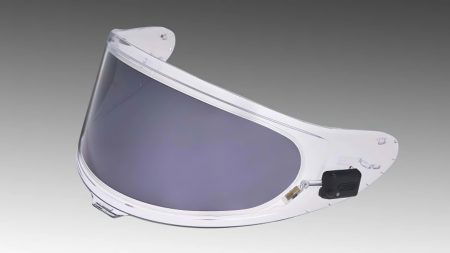
- Multicolour light-emitting diodes in the chin bar project cues into the visor
Ever since the Australian manufacturer Forcite was acquired in 2024, it has been unclear what GoPro intended to do with the technology. Last year a collaboration with the Italian helmet maker AGV was added. Now several patent applications published in the United States offer a look at the planned helmet. They show that this is not just about a built-in camera.
What do the new GoPro patents show?
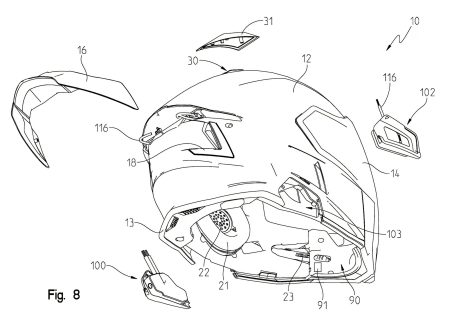
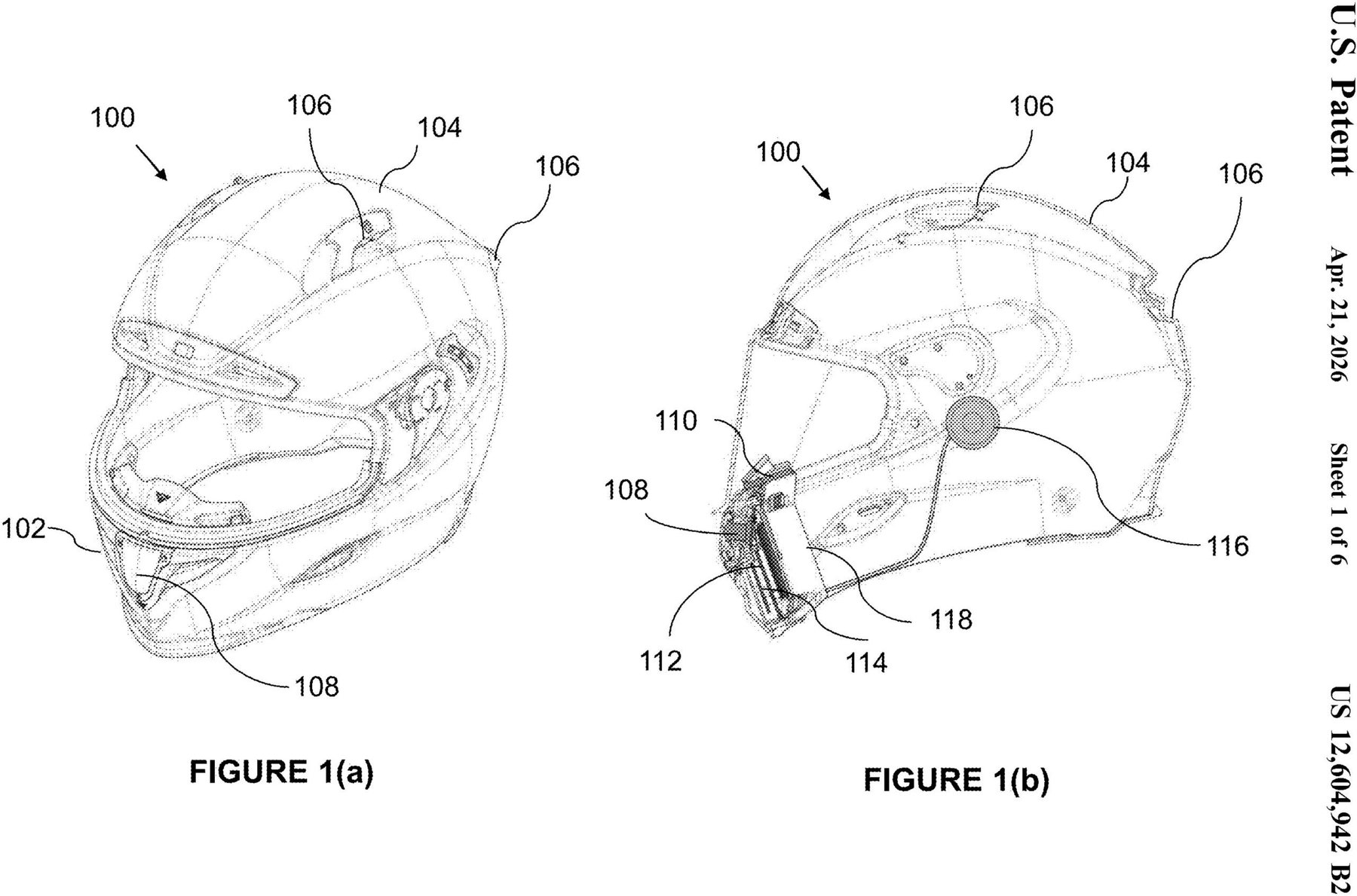
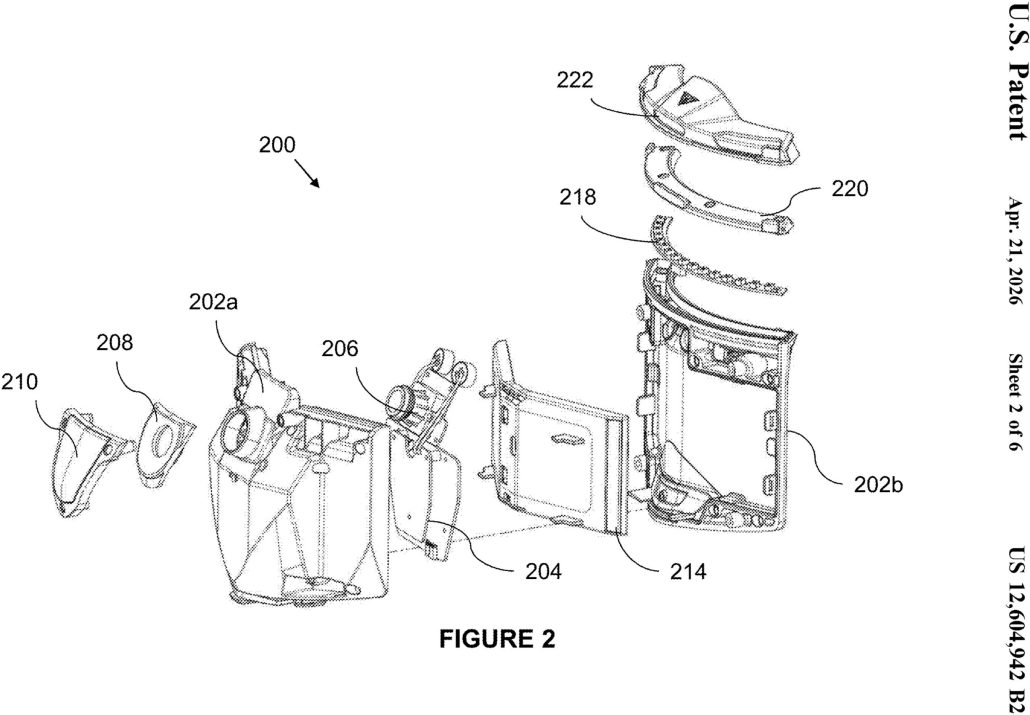
The documents describe a helmet with a camera permanently integrated into the chin bar, a lighting system in the field of view and a blind spot warning based on microphones. The lens sits behind a flush-mounted protective cover so that it does not protrude from the helmet contour.
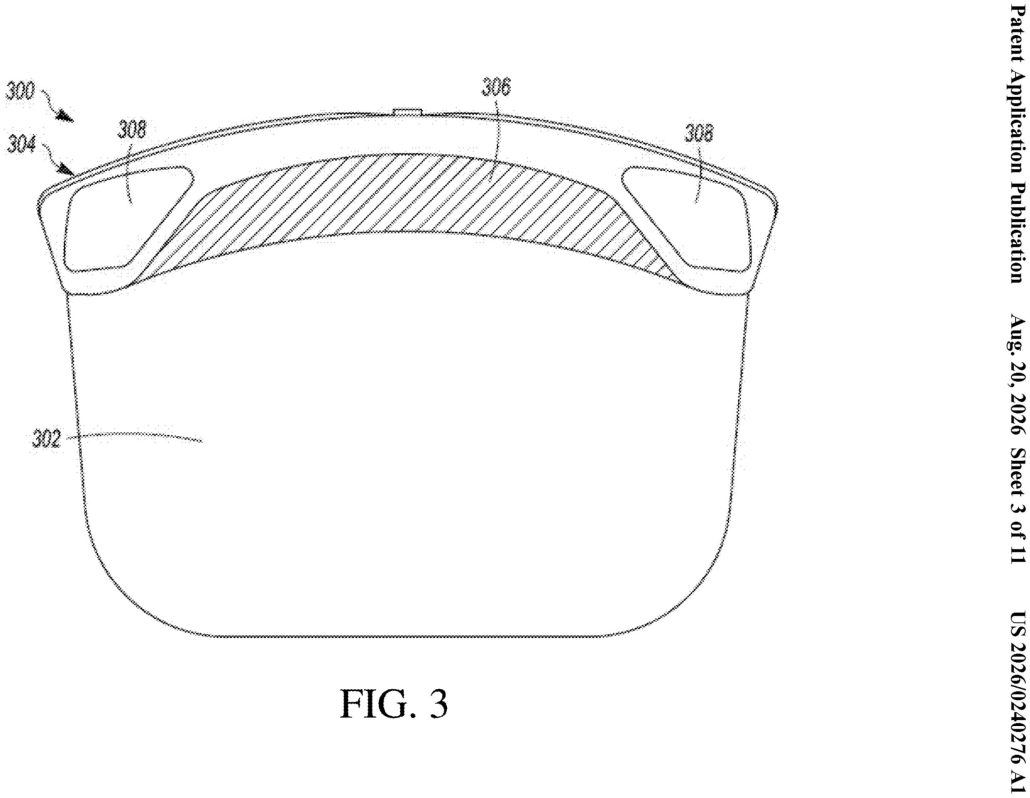
Connected to it are two inward-facing microphones intended to record the rider’s voice. On top of the chin bar there is also a row of multicolour light-emitting diodes. They shine upwards and cast their light onto a reflective segment in the upper area of the visor. Different colours and sequences are meant to convey cues, for example the direction of a turn during active navigation.
Part of the patents names Forcite founder Alfred Boyadgis as the inventor. The developments therefore go back directly to that earlier acquisition.
How is the microphone-based blind spot warning supposed to work?
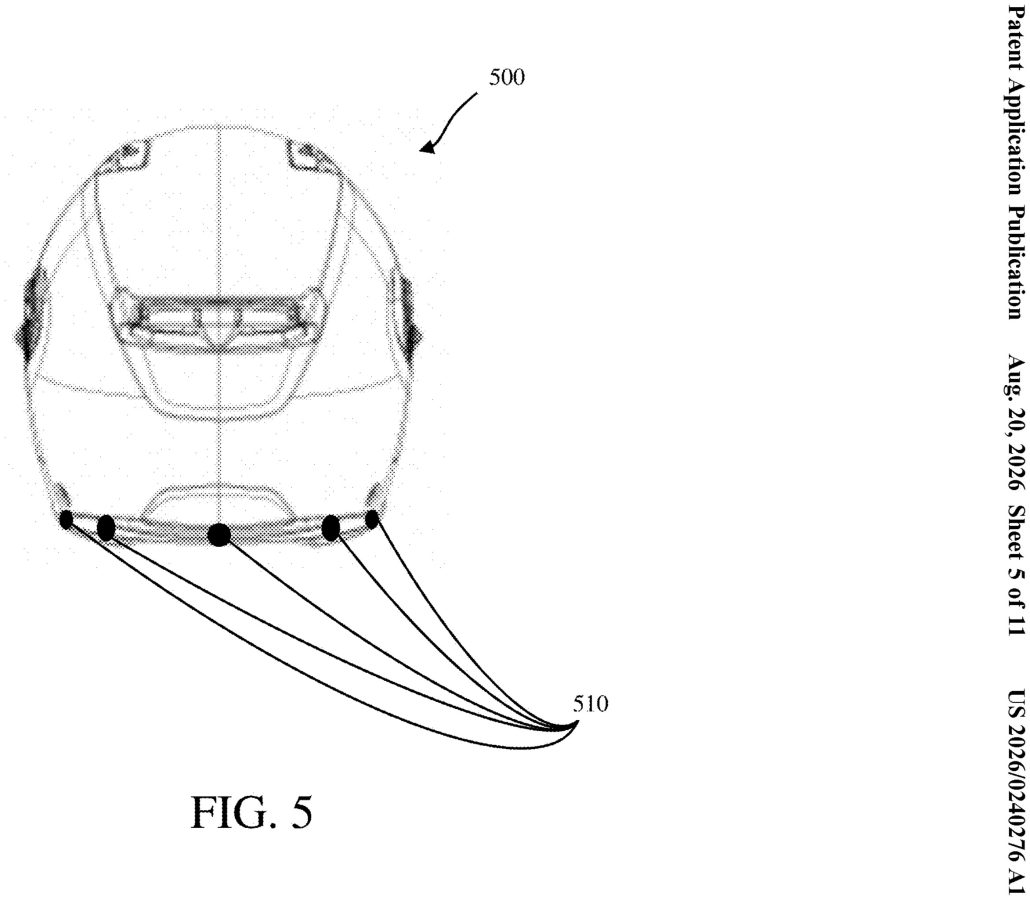
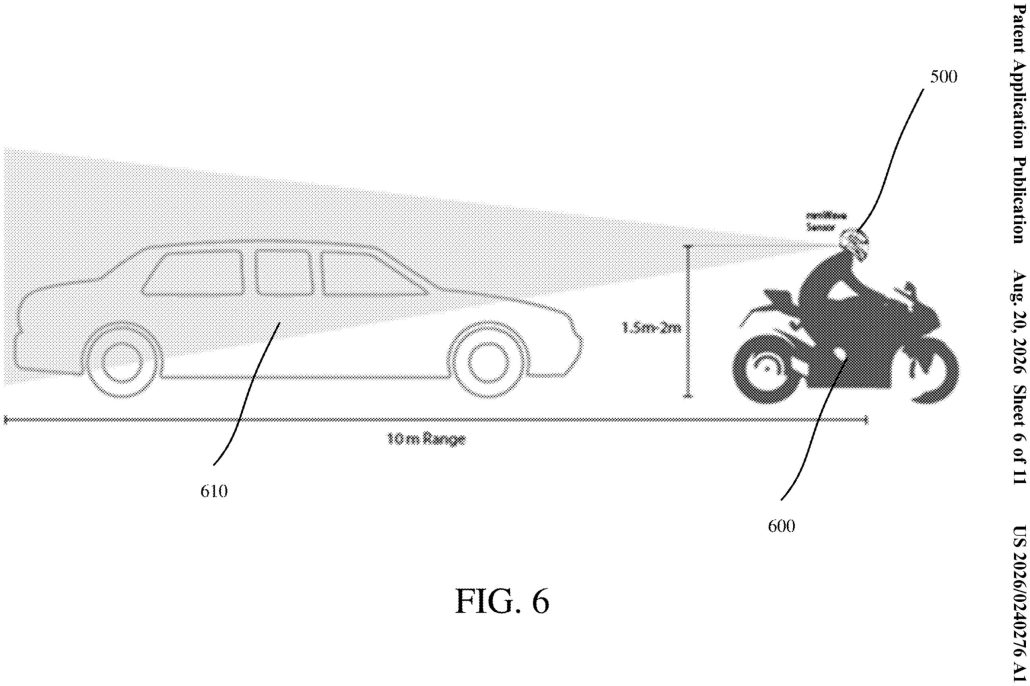
The actual core of the patents is a group of microphones in the rear section of the helmet, combined with a cloud connection and machine learning. These microphones pick up the sounds of the surrounding traffic, from which the software is meant to calculate the position and distance of other vehicles.
For that to work, the system has to handle two sources of interference. First, the helmet is supposed to learn to filter out the noise of the rider’s own motorcycle. Second, built-in accelerometers register the rider’s head movements. If he turns for a shoulder check, the system knows that the microphones have moved and not the other vehicles. According to the documents, the calculation is meant to take into account, among other things, the reflection of the sound and the proximity of the noise source.
Why does GoPro do without radar and cameras?
The reason is cost. Microphones are considerably cheaper than the cameras or radar sensors used so far for blind spot warning systems on motorcycles.
In the patent documents GoPro states that developing such a system should turn out cheaper than the existing solutions using camera and radar technology. Processing power takes over the work that expensive sensors would otherwise have to do. For a helmet that already has to accommodate a camera, a battery and electronics, that makes a noticeable difference in component costs.
What are the weaknesses of a sound-based warning?
It remains open whether other vehicles can be located reliably by sound alone. Conditions on a motorcycle make that difficult.
Airflow generates constant and strongly fluctuating noise at the helmet. On top of that, modern cars vary widely in how loud they are. A small car under partial load sounds different from a van, and an electric car is barely audible at low speeds. Whether software can derive reliable warnings from this cannot be judged from the patent documents. The documents also give no figures on development costs.
Light signals in the field of view instead of a classic display
For the lighting system, GoPro builds on a solution already used in the Forcite MK1S. There, light-emitting diodes sat at the lower edge of the eye port, directly above the chin bar. They indicated the direction of a turn by having the light travel in the corresponding direction. They were designed to remain visible even in bright daylight without dazzling the rider.
The patents expand this principle considerably. A table contained in the patent text lists six different light colours used in various patterns. Alongside the travelling direction indicator there are pulse sequences that convey further information, for example about the weather. In total this results in 38 different meanings.
In addition, it is not only the helmet that lights up. The MK1S already had a control unit on the handlebar that had to be charged separately from the helmet. GoPro’s patents also provide for a separate control unit. Helmet and control unit each work with their own lighting systems and their own meanings.
Which patents are registered?
Several intellectual property rights are registered with the US Patent Office in the name of GoPro and of the former Forcite team. The most recent application dates from 24 March 2026 and was published on 23 July 2026.
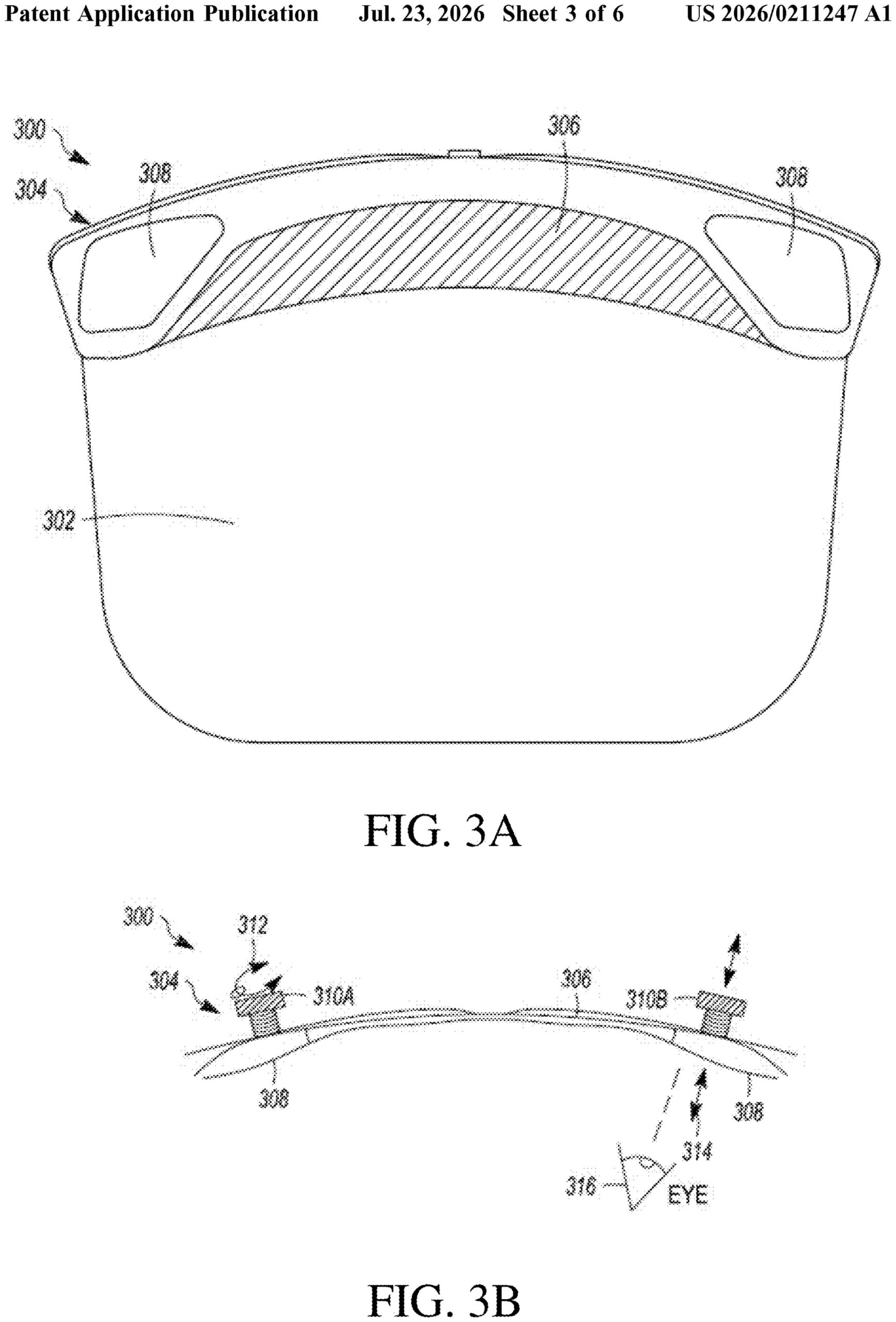
This application, number 20260206906, describes a light strip that runs along the eye port of the helmet and is visible in peripheral vision. The signals consist of colours and of patterns that travel sideways across the strip. Also published on 23 July 2026 was application 20260211247 with the title “Adjustable Helmet Display System”. It describes a visor with a flexible screen whose distance from the eyes can be adjusted to change the focal length.
Already granted is patent 12604942 of 21 April 2026. It protects the construction of the chin bar with a circuit board, battery and camera in a housing recessed into the outer shape of the helmet. An older patent with the number 12016421 from June 2024 covers the principle of the row of light-emitting diodes in the helmet that generates riding cues from incoming data. The roots go back even further: as early as 2017, Forcite Helmet Systems filed for a module designed to cushion attachments on the helmet in a controlled way during a crash.
Further applications by GoPro carry the titles “Image Capture Device With Tracking Capability” and “Image Capture With Face Blurring”, and therefore concern the tracking of objects and the blurring of faces.
Data protection and open questions
A helmet that continuously records image and sound, analyses noise and transmits data to the cloud inevitably collects personal data. The Forcite MK1S could only be used with a smartphone app, and there is no indication that this will be any different in a GoPro version.
That raises questions which remain unanswered so far: what happens to the recordings, how long are they stored, and who has access to them. The patent on blurring faces suggests that GoPro at least has the topic in mind. How far the data processing actually goes, however, does not emerge from the patent documents.
When will the helmet reach the market?
So far there is no information on that. Neither a date nor a price nor a model designation is known.
Patents initially only prove that a company is securing a technical solution. Whether and in what form it will find its way into a production product is not yet settled. In the context of the Forcite acquisition and the collaboration with AGV, however, it is becoming apparent in which direction connected helmets could develop over the coming model years. One advantage of a permanently integrated solution is obvious: anyone using an action camera today needs a helmet, a mount and a camera. That increases the weight on the head and acts as an additional lever on head and neck in a crash. An integrated camera avoids this problem.
➜ This article is part of our comprehensive overview: Motorcycle Patents and Future Technology: What Manufacturers Are Developing. Find all key information on this topic in one place.
Frequently asked questions
-
What does the GoPro helmet patent say about blind spot warning?
The patent describes a group of microphones in the rear helmet area that picks up traffic noise. From these sounds, software using machine learning is meant to calculate the position and distance of other vehicles. The noise of the rider’s own motorcycle is filtered out.
-
Why does GoPro use microphones instead of radar?
Because microphones are considerably cheaper than radar sensors or cameras. GoPro states that development is therefore less expensive than with existing systems. The actual work is done by processing power.
-
How many light signals does the planned GoPro helmet have?
A table in the patent documents lists 38 different meanings spread across six light colours. The signals appear both on the helmet and on a separate control unit, each using its own patterns.
-
When will the GoPro motorcycle helmet be released?
No date is known. GoPro acquired the Australian helmet manufacturer Forcite in 2024 and has been working with AGV since 2025, but no specific production model has been announced so far.
-
What does Forcite have to do with the GoPro helmet?
Forcite developed the MK1S smart helmet with a camera in the chin bar and light-emitting diodes in the field of view. After the takeover by GoPro, these approaches fed into the new patents, in which Forcite founder Alfred Boyadgis is named as the inventor.