- Seven new models and three revised CB350 variants
- First scooter in India approved for fuel with up to 85 percent ethanol
- Around 15 billion rupees for a third production line in Tapukara
Honda Motorcycle & Scooter India, or HMSI for short, presented ten models at once in New Delhi on 24 July 2026. Seven of them are entirely new, three simply receive new colours. The range runs from an electric scooter through two cruisers and two off-road models to a retro roadster with half a litre of displacement. What they all have in common is that they are to roll off the line in the country itself in future, instead of being partly imported as complete vehicles. That places the launch within a trend of the 2026 model year, with manufacturers shifting more of their production to Asia.
Which models did Honda India present?
The new arrivals are the ADV 160 scooter, the CB500 roadster, the Rebel 300 and Rebel 500 cruisers, the XR 300L and XR 300 Rally off-road models and the QC3 electric scooter. They are joined by the CB350, the CB350C and the CB350RS in fresh colours.
The manufacturer places the package within a strategy it describes as a multi-pathway approach. The idea is that combustion engines, electric drive and fuels with a high ethanol content should coexist, because charging and refuelling infrastructure in India is developed to very different degrees. According to Honda India, the market is currently shifting away from the purely utilitarian vehicle towards motorcycles that are meant to suit a lifestyle. Selected models therefore also receive the E-Clutch. This technology operates the clutch automatically, so the rider does not have to use it when pulling away or coming to a stop.
How do the Rebel 300 and Rebel 500 differ?
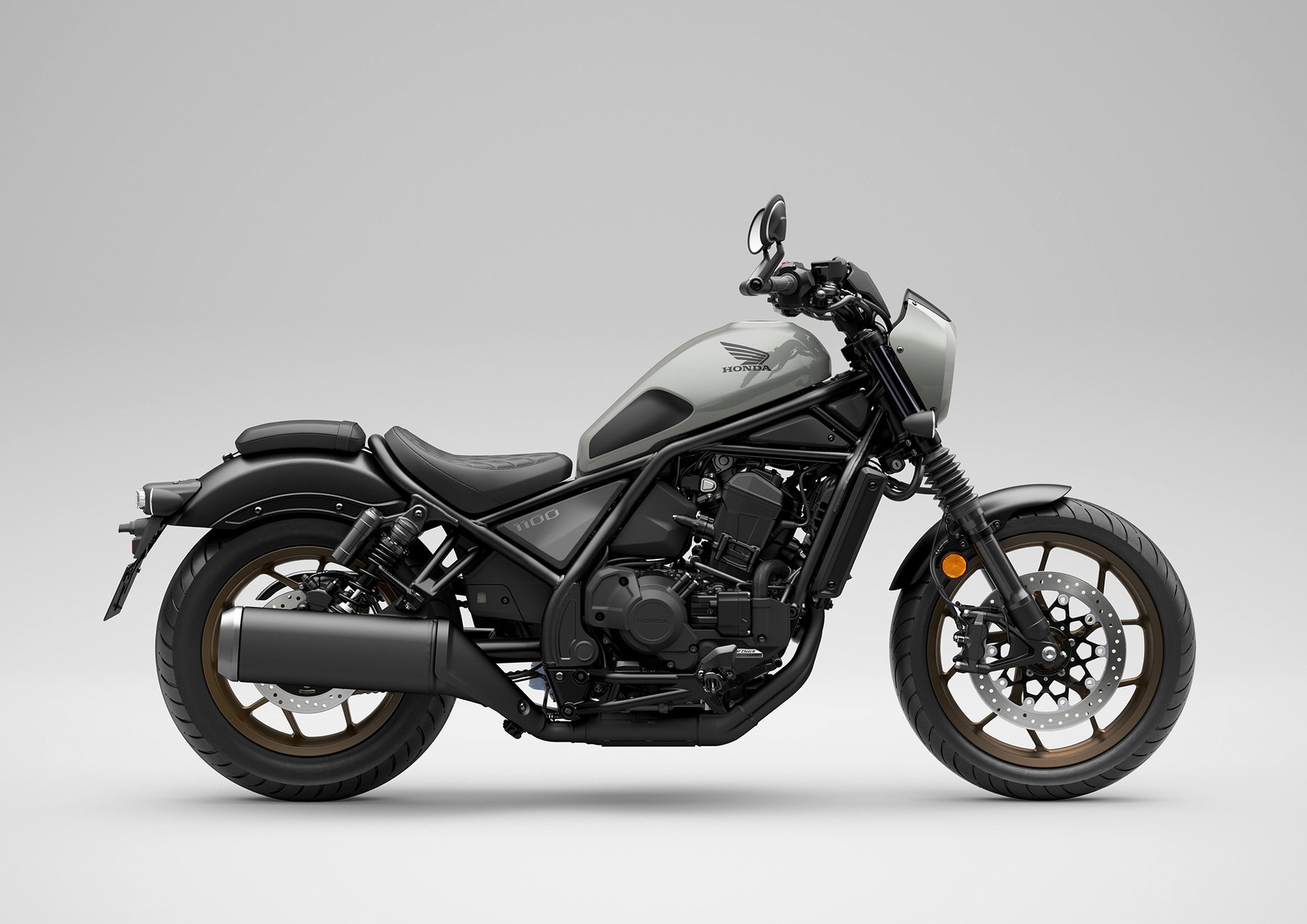
The Rebel 300 is the entry-level cruiser with a 286 cc liquid-cooled single, while the Rebel 500 uses a 471 cc twin. Both are to be offered in a standard version and with the E-Clutch.
Only expected figures are available so far. The Rebel 300 should produce around 26 hp (19.1 kW) and 27.5 Nm (20.3 lb-ft), the Rebel 500 roughly 46 hp (33.8 kW) and 43.3 Nm (31.9 lb-ft). Kerb weights are quoted as 172 kg (379 lbs) for the smaller machine and 191 kg (421 lbs) for the larger one. Both run six gears, a high handlebar, forward-set footpegs and a seat height of 690 mm. Visually, the familiar bobber look with its low riding position remains. The key change is that the Rebel 500 will also be built in India in future and no longer has to be imported.
What can the XR 300L and the XR 300 Rally do?
Both share a 293.5 cc air-cooled single with an oil cooler. Around 27 hp (20.1 kW) and 26.6 Nm (19.6 lb-ft) are expected, along with a six-speed gearbox.
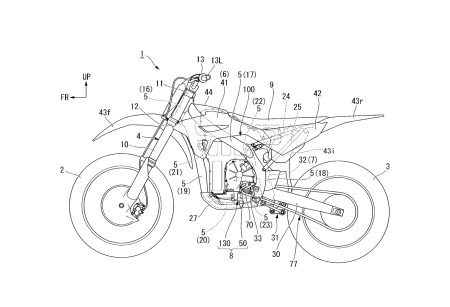
Suspension travel and seat height are identical on both models at 260 mm and 830 mm. The difference lies in their focus. The XR 300L is conceived as a dual-purpose model, in other words a motorcycle that works just as well in everyday use as on light terrain. Honda emphasises its low weight and easy handling. The XR 300 Rally builds on the same base but takes its cue from the company’s rally history and is designed for longer distances and changing surfaces. With them, Honda covers a class in India for which the brand previously had no suitable offering.
ADV 160 and QC3: scooters with E85 and electric drive
The ADV 160 is a scooter with an adventure look and a 160 cc water-cooled engine. Honda points out that it is the first scooter in India able to run on fuel with an ethanol content of up to 85 percent. The tank holds 8.1 litres and there are 27 litres of storage under the seat. The manufacturer describes both as best-in-class figures.
The QC3 is the new electric scooter and runs on a 3 kWh battery. Under the Indian IDC test cycle it is said to cover 151 km. Charging from empty to 80 percent takes 2 hours and 40 minutes. It also offers 32 litres of storage, keyless access and a 5-inch colour display with connectivity functions.
What changes for the CB350 range and the CB500?
Nothing changes technically on the CB350 range. The CB350, the CB350C and the CB350RS keep the 348.6 cc air-cooled single with around 21 hp (15.4 kW) and 29.5 Nm (21.8 lb-ft) as well as the five-speed gearbox. What is new are the paint schemes and revised graphics on the tank and side panels.
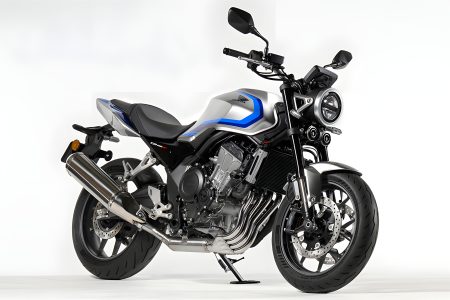
Above them, Honda positions the new CB500. It uses a purpose-developed 501 cc single with air cooling and an additional oil cooler, producing 28 hp (20.6 kW) and 43.3 Nm (31.9 lb-ft). It is offered in three versions, once with cast wheels and twice with tubeless spoked wheels, one of those with additional graphics. That makes it the only model of the presentation to reach the 500 cc mark.
When will the models reach dealers?
There is no date so far. Honda is introducing the models in India step by step and intends to announce prices, dates and availability shortly before each sales launch.
For Europe, it therefore remains open whether any of the models will find their way here. When asked, Honda’s British subsidiary declined to comment on future models, according to media reports. There are still some pointers. The Japanese-built GB 350 S costs 3,999 pounds (approximately 4,670 euros / 5,387 US dollars) in the United Kingdom and went on sale there in 2025. The motorcycle industry association MCIA reported 212 new registrations for June 2026 alone, which made the 350 the best-selling motorcycle in the United Kingdom in the 126 to 500 cc displacement class. A retro model with 500 cc could slot in where the CL500 currently sits at 5,699 pounds (approximately 6,655 euros / 7,677 US dollars).
How fast is Honda’s production in India growing?
Honda wants to raise annual capacity in India from the current 6.25 million to around eight million units by 2028. A central building block is a third production line at the Tapukara plant in Rajasthan.
As the company announced in March 2026, HMSI is investing around 15 billion rupees (approximately 136 million euros / 157 million US dollars) and buying 74,000 square metres of land next to the existing plant. The new line is due to start up in 2028, build 670,000 vehicles per year and create 2,000 jobs. The second plant would thus reach 2.01 million units. Independently of that, capacity there is to rise through automation from the current 1.3 million to 1.34 million units, and to do so before the end of the financial year on 31 March 2027.
Another comparison shows how big India is for Honda. The four plants in Manesar, Tapukara, Narasapura and Vithalapur employ around 24,000 people, the dealer network comprises more than 7,000 outlets and over 76 million customers. On 22 May 2025, the 500 millionth Honda motorcycle rolled off the line in India. According to the manufacturer’s 2025 figures, Honda produces around 20 million two-wheelers worldwide each year, with the Asian market including India, Indonesia, Thailand and Vietnam accounting for roughly 85 percent.
Company head Tsutsumu Otani places the model offensive in exactly this context. He says India remains one of the strategically most important markets for Honda and that the country is at the same time gaining importance as a manufacturing and export base within the global network: „This not only allows us to bring Honda’s global technologies closer to Indian customers, but also reinforces India’s role as an important manufacturing and export hub within Honda’s global operations.“
Sales director Mutsuo Usui explains the choice of models with changing buying behaviour. In his account, Indian customers now look for vehicles that suit their lifestyle and do not merely cover the commute to work: „Indian customers today are looking for products that complement their lifestyles as much as their mobility needs.“
Frequently Asked Questions
-
Which ten models did Honda India show?
The new arrivals are the ADV 160, CB500, Rebel 300, Rebel 500, XR 300L, XR 300 Rally and the QC3 electric scooter. They are joined by the revised CB350, CB350C and CB350RS in new colours. All models are to be built in India.
-
How much power does the Honda Rebel 500 have?
Around 46 hp (33.8 kW) and 43.3 Nm (31.9 lb-ft) are expected for the Rebel 500. The twin measures 471 cc and uses liquid cooling. Honda has not yet published official figures.
-
What is the range of the Honda QC3?
The QC3 electric scooter is said to cover 151 km under the Indian IDC test cycle. The battery has a capacity of 3 kWh and charges to 80 percent in 2 hours and 40 minutes. There are 32 litres of storage under the seat.
-
What do the new Honda models cost?
Honda has not announced prices so far. The rollout is happening step by step, with prices and dates to be published shortly before each individual model goes on sale.
-
Will the models come to Europe?
There is no official statement on this. The range was presented for the Indian market first, and a distribution decision for other regions is still pending.
➜ This article is part of our comprehensive overview: New Motorcycles 2026: All Models, Releases, and Highlights at a Glance. Find all key information on this topic in one place.