- 37 mm Showa SFF-BP upside-down fork instead of the previous 41 mm telescopic fork
- Radially mounted four-piston brake calipers instead of axially mounted two-piston calipers
- UK launch in December at £7,499 (approx. €8,820 / $9,900)
For years, the Ninja 650 has been Kawasaki’s sporty offering in the middle-weight class. A 649 cc parallel twin, a lightweight trellis frame and an upright riding position define the model. Kawasaki is not changing this basic recipe for 2027. Instead, the Japanese manufacturer focuses specifically on the front end, the area where the Ninja 650 has so far been rather basically equipped. This sets it apart from many other Kawasaki models of the new model year, which mainly get new colors.
What changes on the Kawasaki Ninja 650 for 2027?
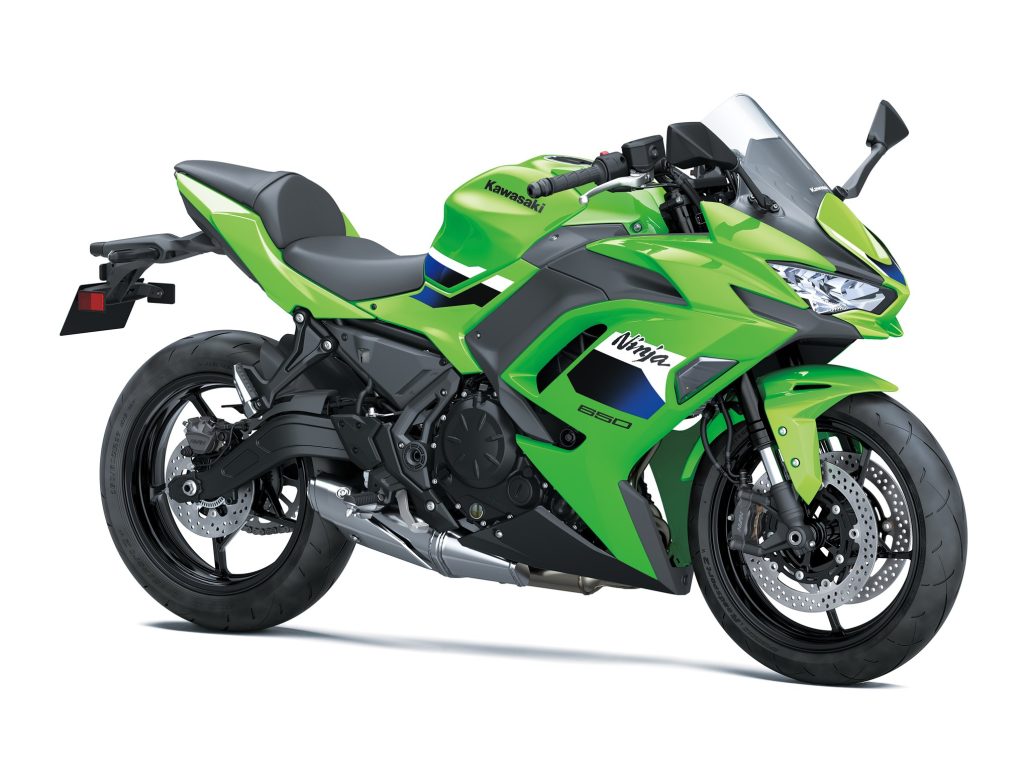
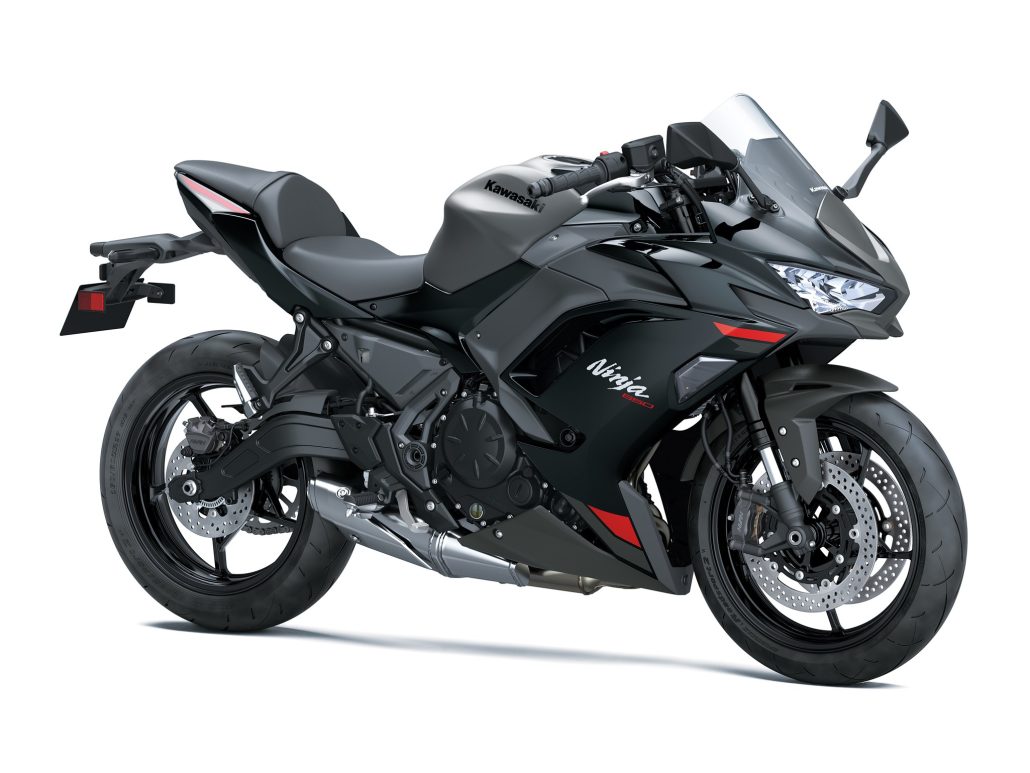
The most important updates to the Ninja 650 2027 concern the fork, the front brake and the cockpit. Kawasaki fits a Showa upside-down fork, radially mounted four-piston brake calipers and a TFT display with a new layout.
On top of that come a stiffer rear spring and a reshaped front fender. According to Kawasaki, this should make the Ninja 650 sportier to ride without losing its beginner-friendly character. The manufacturer sums this up under its “Fun-Style-Easy” concept, meaning riding fun, looks and easy handling.
In the 2027 model year, a technical update like this is rather the exception at Kawasaki. Models such as the Ninja ZX-6R, the ZX-4RR, the Ninja 500 SE, the Z1100 and the Vulcan S enter the season largely with new paint schemes. The Ninja 650, on the other hand, is one of the 2027 new models where the technology actually changes.
What fork does the Ninja 650 2027 get?
From 2027, the Ninja 650 rides on a Showa SFF-BP upside-down fork with 37 mm inner tubes. It replaces the previous conventional 41 mm telescopic fork.
The abbreviation SFF-BP stands for Separate Function Front Fork Big Piston. The key point is the larger piston inside the fork. According to Kawasaki, it reduces damping pressure. This is meant to provide more control and let the motorcycle compress and rebound more calmly under braking and acceleration. Kawasaki also promises more stability when turning into corners and a more planted feel under braking.
The new fork is not adjustable. At 125 mm, wheel travel remains the same as on the previous model.
Stiffer spring at the rear
To keep the front and rear in balance, Kawasaki has also made changes at the back. The shock gets a stiffer spring. Even so, the Ninja 650 is not supposed to become as firm as a classic supersport bike. Kawasaki stresses that the natural and easy riding feel should be retained.
What do the new four-piston brakes bring?
The new brake calipers are designed to respond more directly to the brake lever and to be easier to modulate. Instead of axially mounted two-piston calipers, radially mounted four-piston calipers now sit at the front wheel.
Kawasaki speaks of linear and easily controllable braking performance. This means that braking force increases evenly with the pressure on the lever. Together with the new fork, this should improve road holding and provide more control when riding in a sporty manner.
Visually, the new fender stands out at the front. It is wider at the sides and longer at the bottom than before, covering a larger part of the fork.
New cockpit: TFT display with navigation and voice control
The cockpit features a 4.3-inch color TFT display with a redesigned layout. The most important information should be visible at a glance.
As before, the smartphone connects via Kawasaki’s Rideology app. What is new is that the app now also supports navigation and voice commands.
What stays the same on the engine and frame?
The engine of the Ninja 650 remains unchanged. The 649 cc parallel twin is tuned for strong pulling power in the low and mid-range rev band.
It produces around 68 hp (50 kW) at 8,000 rpm. Peak torque is 64 Nm (47.2 lb-ft) at 6,700 rpm. The engine sits in a lightweight steel trellis frame.
Kawasaki quotes the curb weight at 194 kg (428 lbs), measured with the tank 90 percent full. The tank holds 15 liters. Seat height remains 785 mm. Together with the slim frame, this should give shorter riders a confident footing as well.
The electronics still include KTRC (Kawasaki Traction Control) with two selectable modes. A shift assistant is available as an accessory: the Kawasaki Quick Shifter (KQS) allows clutchless upshifts.
When will the Kawasaki Ninja 650 2027 arrive and how much will it cost?
In the UK, the Ninja 650 2027 arrives at dealers in December. It costs £7,499 (approx. €8,820 / $9,900) there, exactly the same as the 2026 model.
In Italy, the Ninja 650 is set to be available from €7,990 (approx. $8,970). For Germany, Kawasaki has not yet announced either a price or a date.
In the sporty middle-weight class, the Ninja 650 competes with the Yamaha R7 and the Aprilia RS 660, among others.
Which colors are available for the Ninja 650 2027?
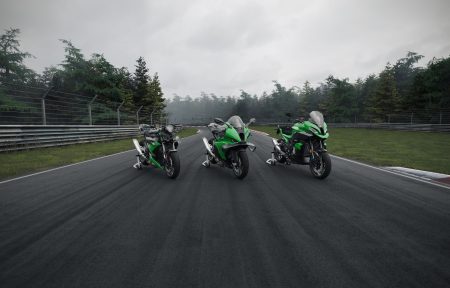
Kawasaki lists a total of three color options for the Ninja 650 2027. However, not every one of them will be offered in every country.
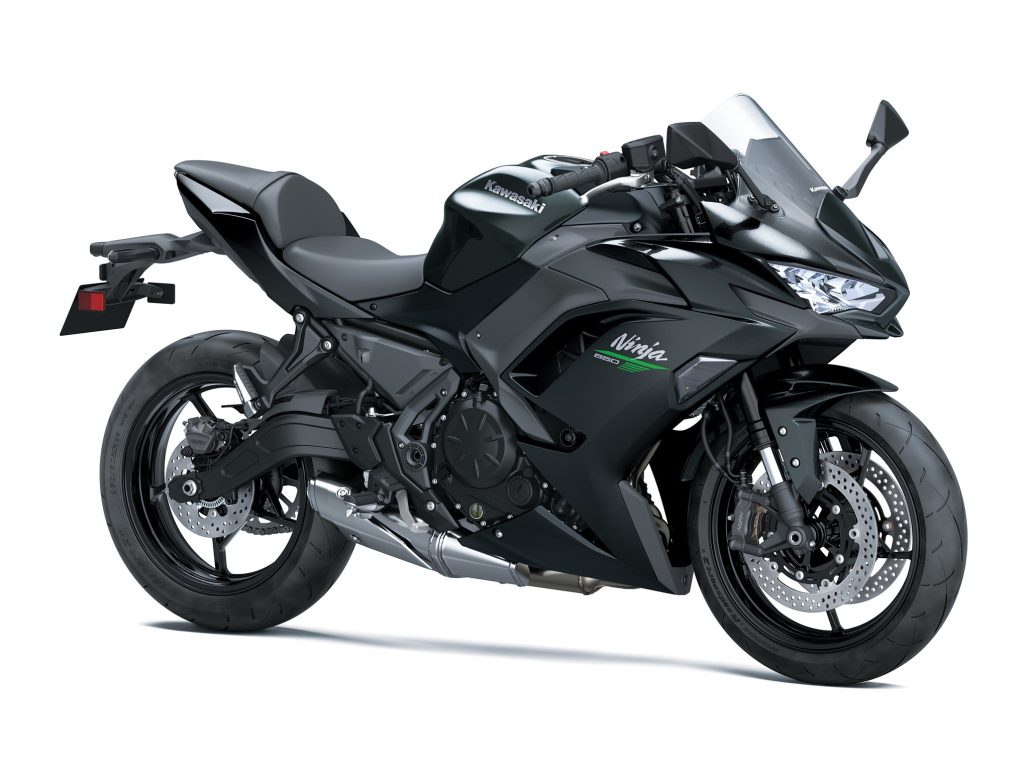
The choices are Lime Green, Metallic Flat Spark Black/Metallic Carbon Gray and Metallic Matte Graphenesteel Gray/Metallic Spark Black. In the UK and Italy, only the first two versions have been announced so far. Which colors will come to Germany is still open. For availability, Kawasaki refers to the dealers in each country.
Frequently Asked Questions
-
How much does the Kawasaki Ninja 650 2027 cost?
In the UK, the Ninja 650 2027 costs exactly £7,499 (approx. €8,820 / $9,900), the same as the previous model. In Italy it is set to start at €7,990 (approx. $8,970). A German price has not yet been announced.
-
When will the Kawasaki Ninja 650 2027 be available?
The Ninja 650 2027 arrives at UK dealers in December. Kawasaki has not yet announced a date for Germany.
-
How much horsepower does the Ninja 650 2027 have?
The Ninja 650 2027 produces around 68 hp (50 kW) at 8,000 rpm. Peak torque is 64 Nm (47.2 lb-ft) at 6,700 rpm. The engine is unchanged for 2027.
-
What fork does the new Ninja 650 have?
The Ninja 650 2027 has a non-adjustable 37 mm Showa SFF-BP upside-down fork. It replaces the previous 41 mm telescopic fork. Wheel travel remains 125 mm.