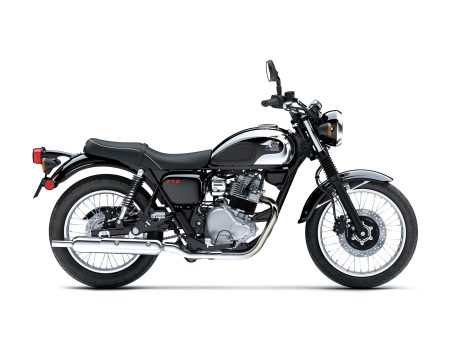
- KX327 and KX327X: Kawasaki’s first newly developed two-stroke above 250 cc in around 20 years, from 10,295 euros
- KLE500 SE Smartride: mechanical centrifugal clutch for 7,795 euros, on sale in December 2026
- CORLEO: robotic vehicle with a hydrogen engine, production planned for around 2035
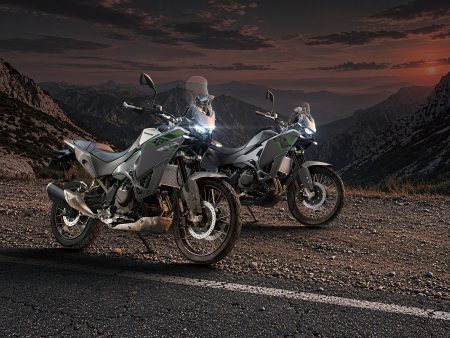
Officially, Kawasaki is putting two public premieres in the spotlight: the Versys 900 and the KLE650 are shown to the public for the first time in Milan. What stands around them on the booth is more interesting, though. There are models that until now were mostly known from press photos, including the brand’s return to big two-strokes. That makes it one of the most extensive trade show appearances by the Japanese manufacturer around the new 2027 models and an important part of EICMA 2026.
What is Kawasaki showing at EICMA 2026?
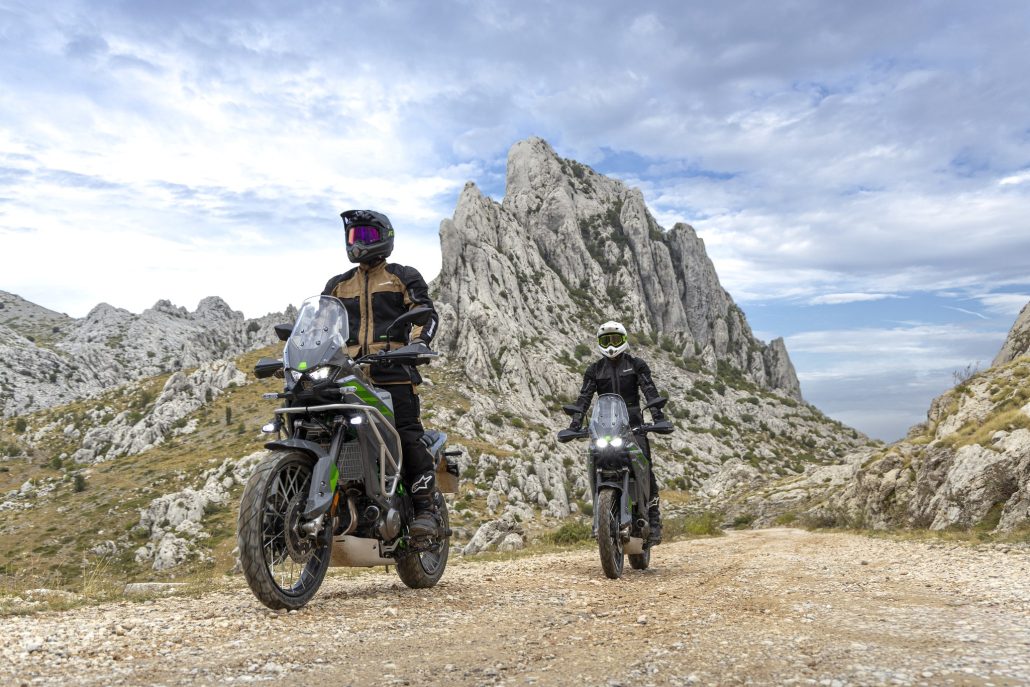
Kawasaki is showing its new 2027 models in Hall 11 on booth N46, including the Versys 900, KLE650, KX327 and KLE500 SE Smartride. They are joined by the hydrogen-powered robotic vehicle CORLEO and a dedicated area for bimota.
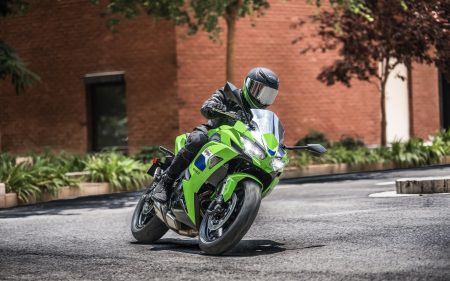
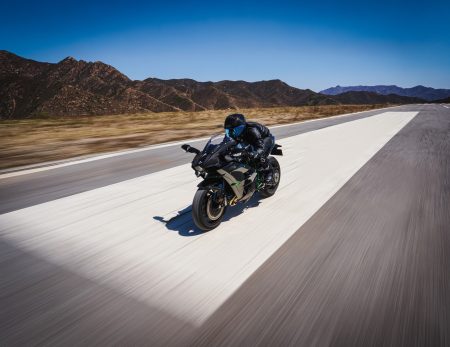
The line-up is completed by the updated Ninja 650 and the Ninja H2 Carbon. Race machines are on the booth as well: Ninjas from the World Superbike and World Supersport championships and a KX that won a championship title. A dedicated shop sells clothing and merchandise for 2027. Tommaso Telaro of Kawasaki Italy describes fitting so much onto a single booth as a welcome challenge. EICMA opens to visitors from 5 to 8 November, with two days reserved for press and trade visitors beforehand.
How does the new Kawasaki KX327 two-stroke work?
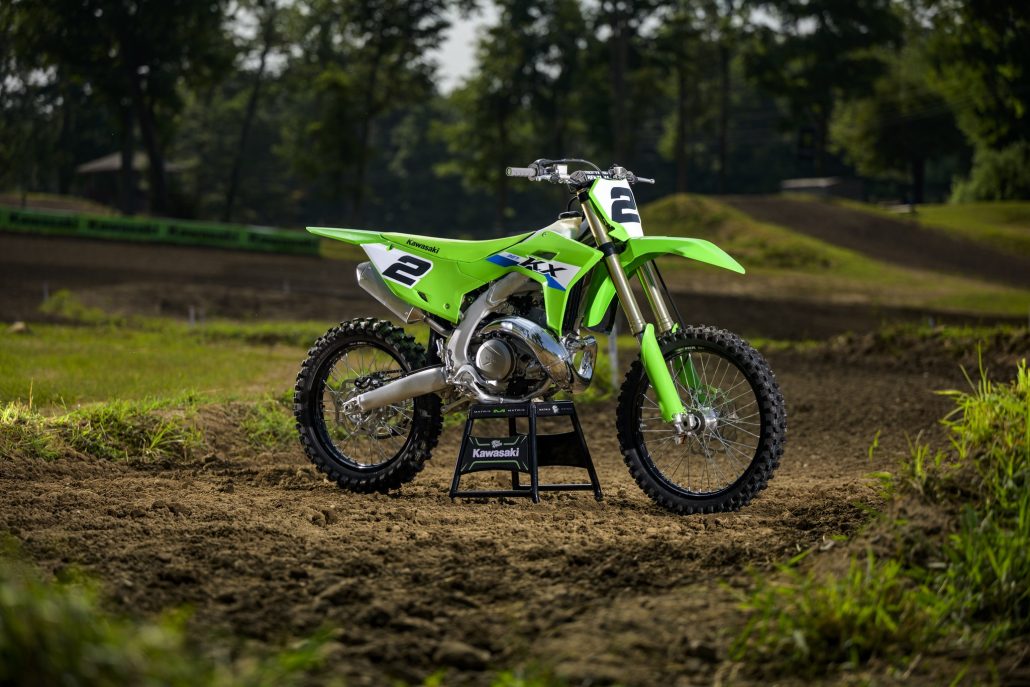
The KX327 uses a liquid-cooled 327 cc single-cylinder two-stroke with electronic fuel injection instead of a carburettor. It is Kawasaki’s first newly developed two-stroke above 250 cc in around 20 years.
The injection works in two stages. A second injector cuts in at high revs. To match this, Kawasaki has developed an exhaust valve system that continuously adjusts the exhaust port timing. Both are said to deliver smooth power delivery and good traction even at very low revs. One advantage over a carburettor: the injection compensates for changes in temperature and altitude by itself, so re-jetting is no longer needed.
Lubrication stays traditional. Instead of a separate oil tank with a pump, premixed fuel at a ratio of 32:1 goes into the tank, which according to Kawasaki holds 8.6 litres. Modern features include the electric starter with a light lithium-ion battery, the hydraulically operated clutch and a balancer shaft against vibration. Two engine maps can be selected via a handlebar switch, and there is also smartphone connectivity through the Rideology The App KX2.
The chassis is built around an aluminium frame based on the KX450F four-stroke. Up front there is a 48 mm KYB fork, at the rear a KYB shock with Uni-Trak linkage. Both are fully adjustable, and the brakes come from Nissin. Kawasaki has not yet published power or weight figures.
What is the difference between the KX327 and KX327X?
The KX327 is designed for motocross, the KX327X for cross-country and enduro. The motocross version has a close-ratio five-speed gearbox and a 19-inch rear wheel. It does without hand guards, additional covers and a side stand. The X version gets six longer gears and an 18-inch rear wheel. Both run a 21-inch front wheel.
How much does the Kawasaki KX327 cost in Germany?
In Germany the KX327 costs from 10,295 euros (approx. 11,500 US dollars) ex works. Kawasaki asks 10,795 euros (approx. 12,060 US dollars) for the KX327X.
Officially both models are 2027 model year, but deliveries are set to start by the end of 2026 at the latest. They are available in Lime Green. At the same time, Kawasaki has also updated the KX450F and KX250F four-strokes along with their cross-country versions.
What does the Smartride clutch change on the Kawasaki KLE500?
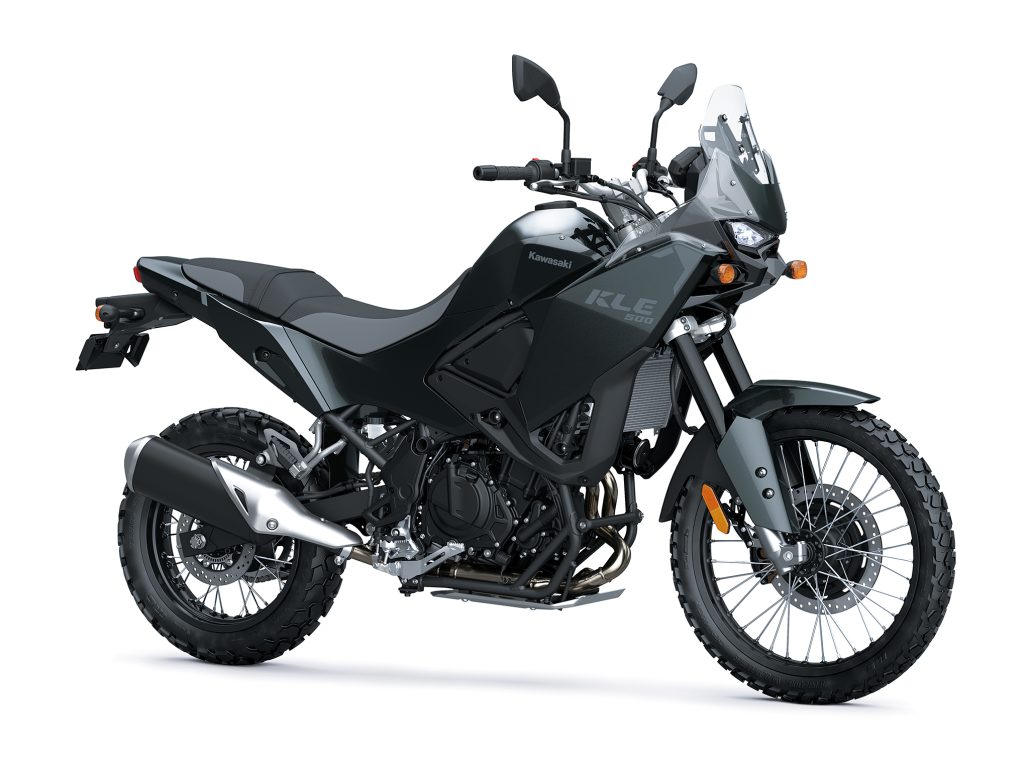
With Smartride, the KLE500 rider no longer has to pull the clutch when pulling away and stopping. Shifting gears on the move stays the same as usual, with clutch lever and gear pedal.
Technically, a small centrifugal clutch sits inside the regular clutch. A centrifugal clutch engages by itself as engine speed rises and disengages again when it drops. Unlike Honda’s E-Clutch, the system needs no electronics and no actuators, it works purely mechanically. There is still no quickshifter.
The new SE Smartride brings a second change. Its spoked wheels are designed for tubeless tyres, which makes small punctures on the road easier to deal with. At the rear the tyre grows from 140/70-17 to 150/70-17. The Smartride weighs 199 kg (439 lbs) ready to ride, 4 kg more than the regular SE. The wheelbase grows by 15 mm to 1,570 mm. The engine stays the same: the 451 cc parallel twin makes 45 hp (33 kW) at 9,000 rpm and 42.6 Nm (31.4 lb-ft) at 6,000 rpm.
How much is the Kawasaki KLE500 SE Smartride and when is it coming?
The KLE500 SE Smartride costs 7,795 euros (approx. 8,710 US dollars) ex works or 8,195 euros (approx. 9,155 US dollars) including delivery. It is due to reach German dealers in December 2026.
The premium over the regular KLE500 SE is 500 euros (approx. 560 US dollars). The Smartride is only available in Pearl Blizzard White/Ebony. Kawasaki offers two packs for all three KLE500 variants. The Rally Edition includes an Akrapovič titanium exhaust, a radiator cover, a lower pillion seat and a USB-C socket. The Adventure Tourer Edition adds an engine guard and two 21-litre side cases with racks.
CORLEO: Kawasaki’s four-legged hydrogen-powered vehicle
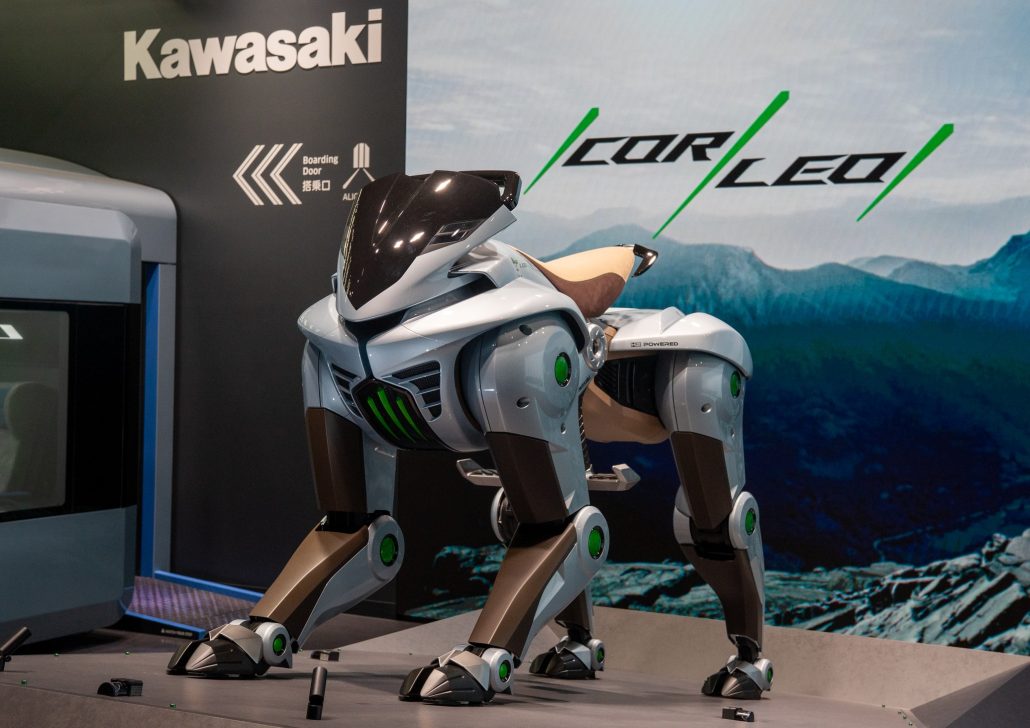
CORLEO represents a new vehicle class that Kawasaki calls a Robotic Multi-legged Vehicle, a robotic vehicle with several legs. A full-size model can be seen in Milan from 5 to 8 November. It cannot be ridden on the booth, but visitors can experience its dimensions up close.
Instead of wheels, CORLEO has four legs. It is steered by the rider shifting their weight, similar to riding a horse. Power comes from a 150 cc engine that runs on hydrogen and generates electricity. The hydrogen is stored in cartridges at the rear. Also planned is a navigation system that is meant to recognise weather, temperature, terrain and even wildlife and suggest safe routes. It is to display this in the cockpit and on smartphones.
The project runs under the name Safe Adventure. The development team in charge reports directly to the president of Kawasaki Heavy Industries. Kawasaki aims to bring CORLEO to market ready for production around 2035. Shigemi Tanaka, head of Kawasaki Motors Europe, sees it as an example of the technical know-how across the whole group and of the path towards a carbon-neutral future.
Which already announced Kawasaki models are on show in Milan?
Alongside the premieres of the Versys 900 and KLE650, Kawasaki is showing the updated Ninja 650 and the limited Ninja H2 Carbon. All four models had already been officially presented before the show.
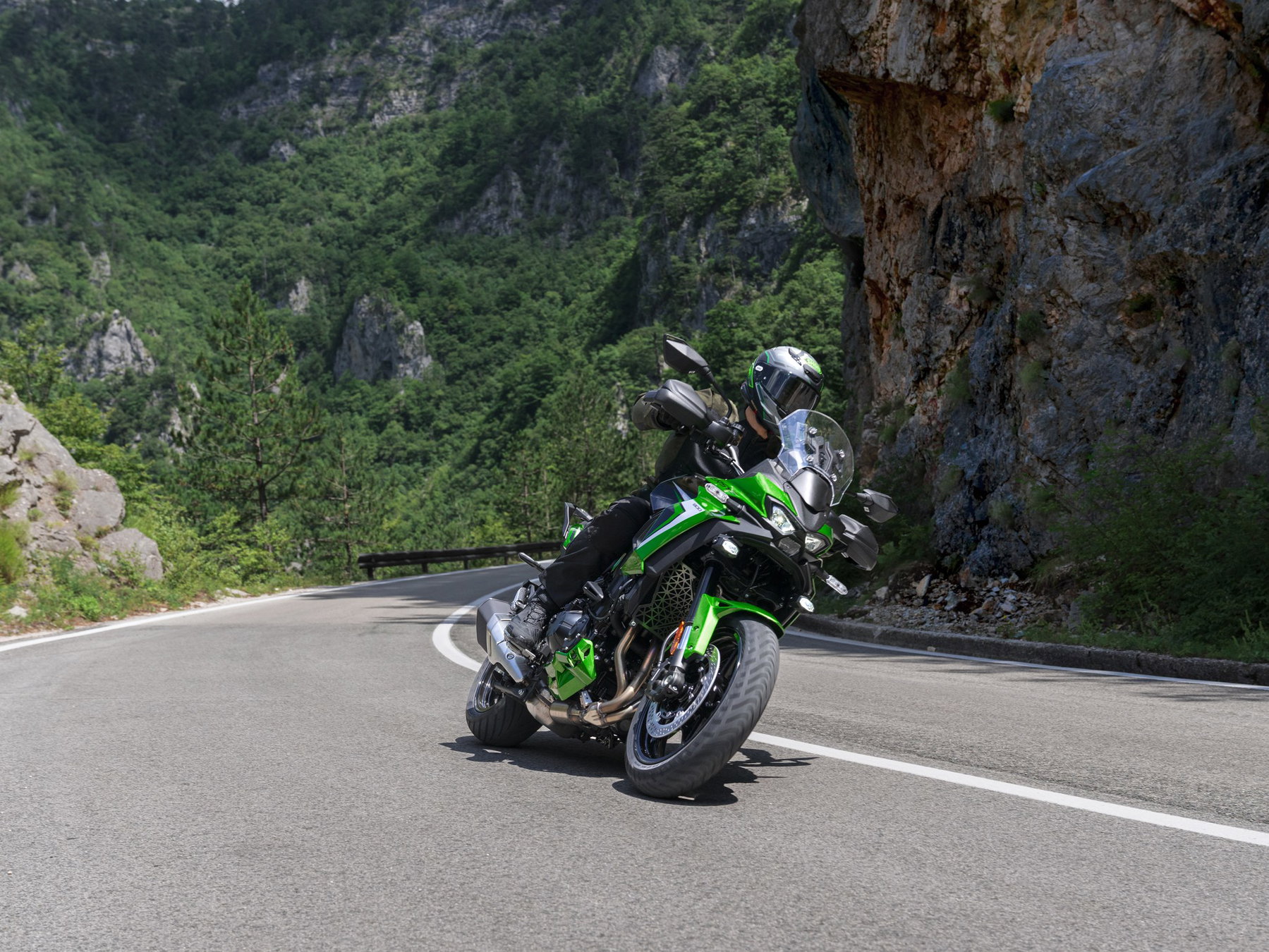
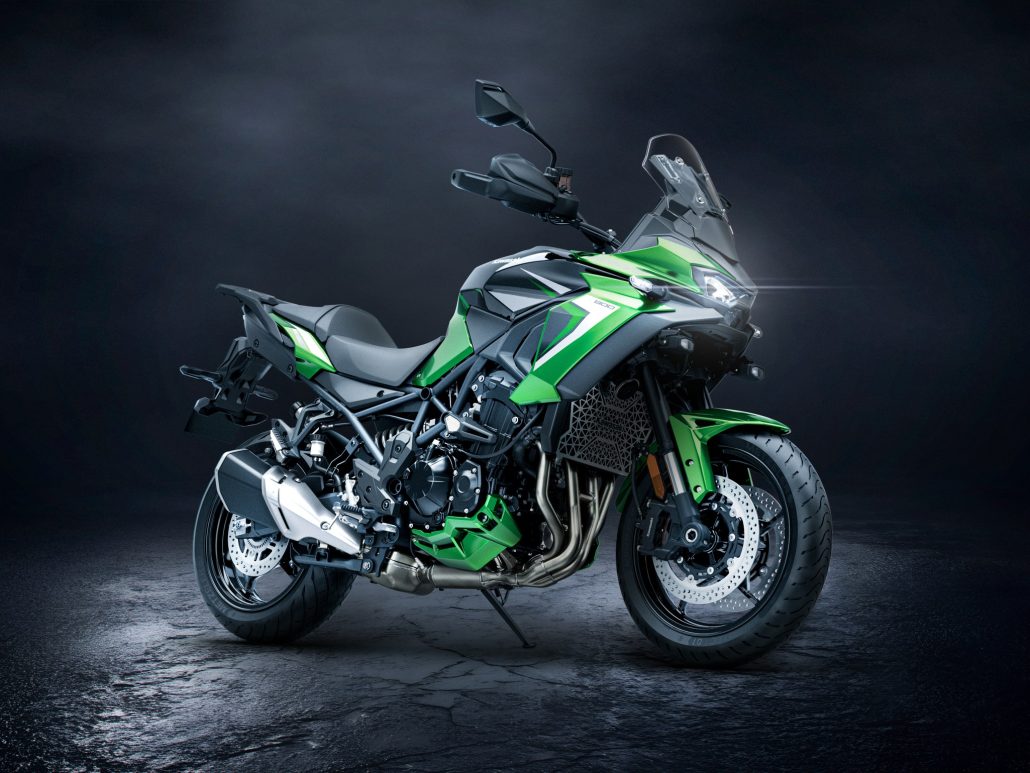
The Versys 900 closes the gap between the Versys 650 and Versys 1100. Its four-cylinder makes 122 hp (around 90 kW) and 97.3 Nm (71.8 lb-ft). It is the first Versys with radar on board, with adaptive cruise control plus collision and blind spot warning. The Ninja 650 gets new Showa front components and radially mounted four-piston calipers instead of axial two-piston calipers. There is also a 4.3-inch TFT that now handles navigation and voice control via the Rideology app. On the Ninja H2 Carbon, the upper fairing is made of carbon fibre reinforced plastic.
bimota shows its complete 2027 range
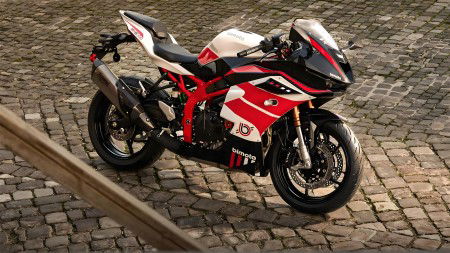
bimota has its own area on the Kawasaki booth and is showing its entire 2027 range there. This includes the BX450 enduro and the new KB399. bimota is also presenting its own smartphone app in Milan.
Frequently asked questions
-
Where is Kawasaki at EICMA 2026?
Kawasaki is in Hall 11 on booth N46 at the Fiera Milano Rho exhibition centre. The show is open to visitors from 5 to 8 November. CORLEO and the bimota area can also be found there.
-
How much does the Kawasaki KX327 cost?
In Germany the KX327 costs from 10,295 euros ex works. The cross-country KX327X is priced at 10,795 euros. Deliveries are due to start by the end of 2026 at the latest.
-
How does Smartride work on the Kawasaki KLE500?
Smartride is a mechanical centrifugal clutch built into the regular clutch. It engages and disengages by itself when pulling away and stopping. The clutch lever is still used to change gear on the move.
-
When will Kawasaki CORLEO go on sale?
Kawasaki plans for CORLEO to be ready for production around 2035. At EICMA 2026 only a full-size model is on show. The vehicle is to be powered by a hydrogen engine that generates electricity.