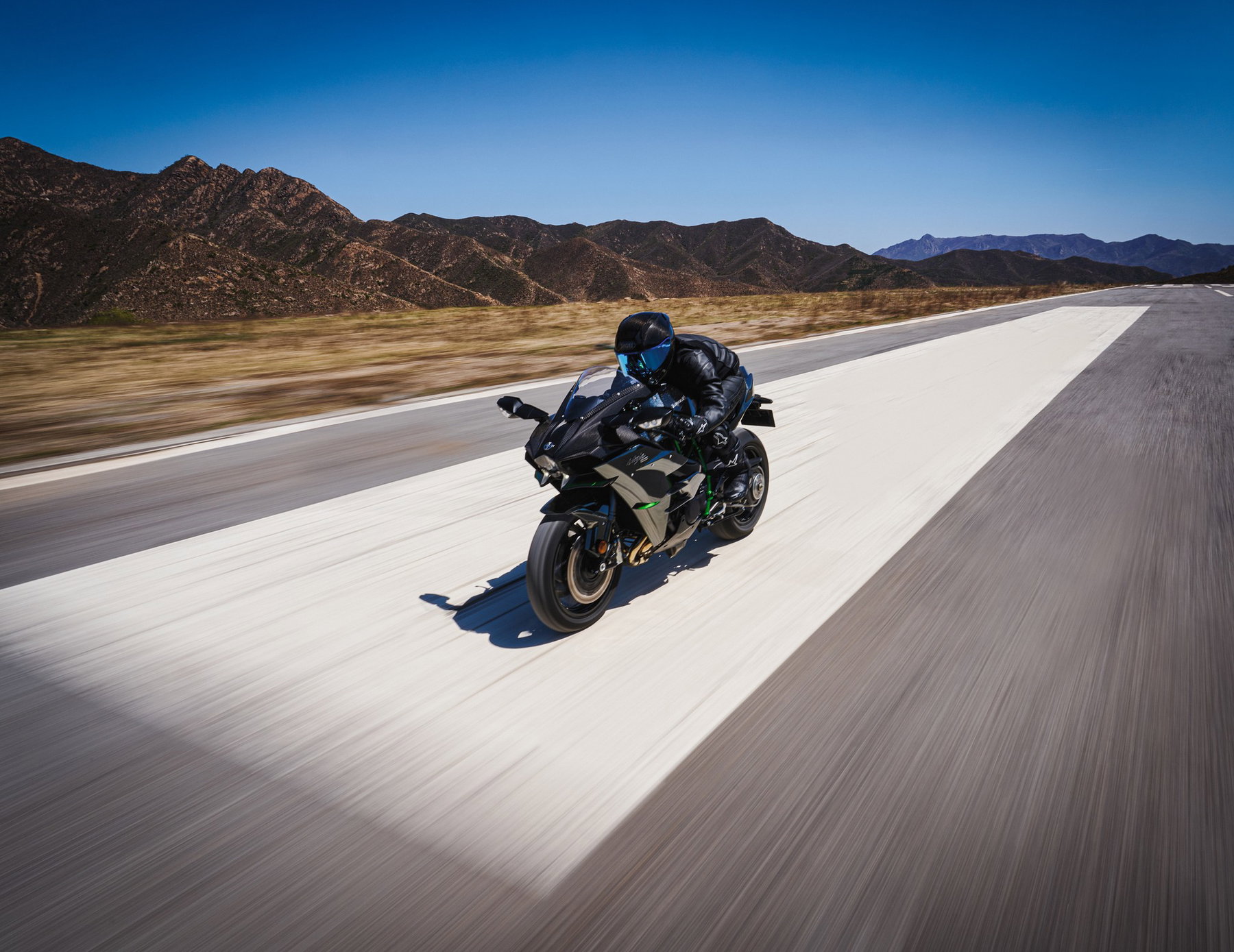
- 209 hp (154 kW) with ram air and 135 Nm at 8,500 rpm
- First Kawasaki model with Brembo Hypure brake calipers
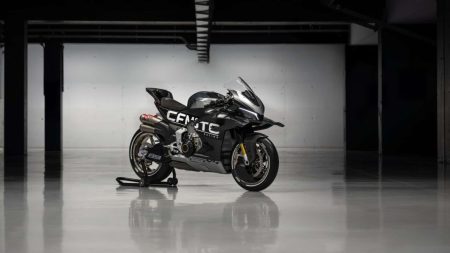
- Three versions: Ninja H2, limited H2 Carbon and the track-only H2R
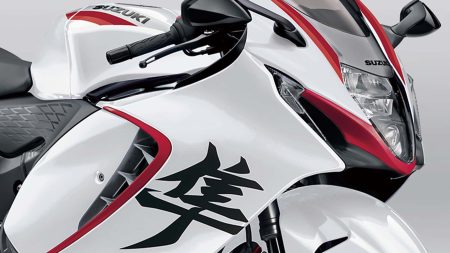
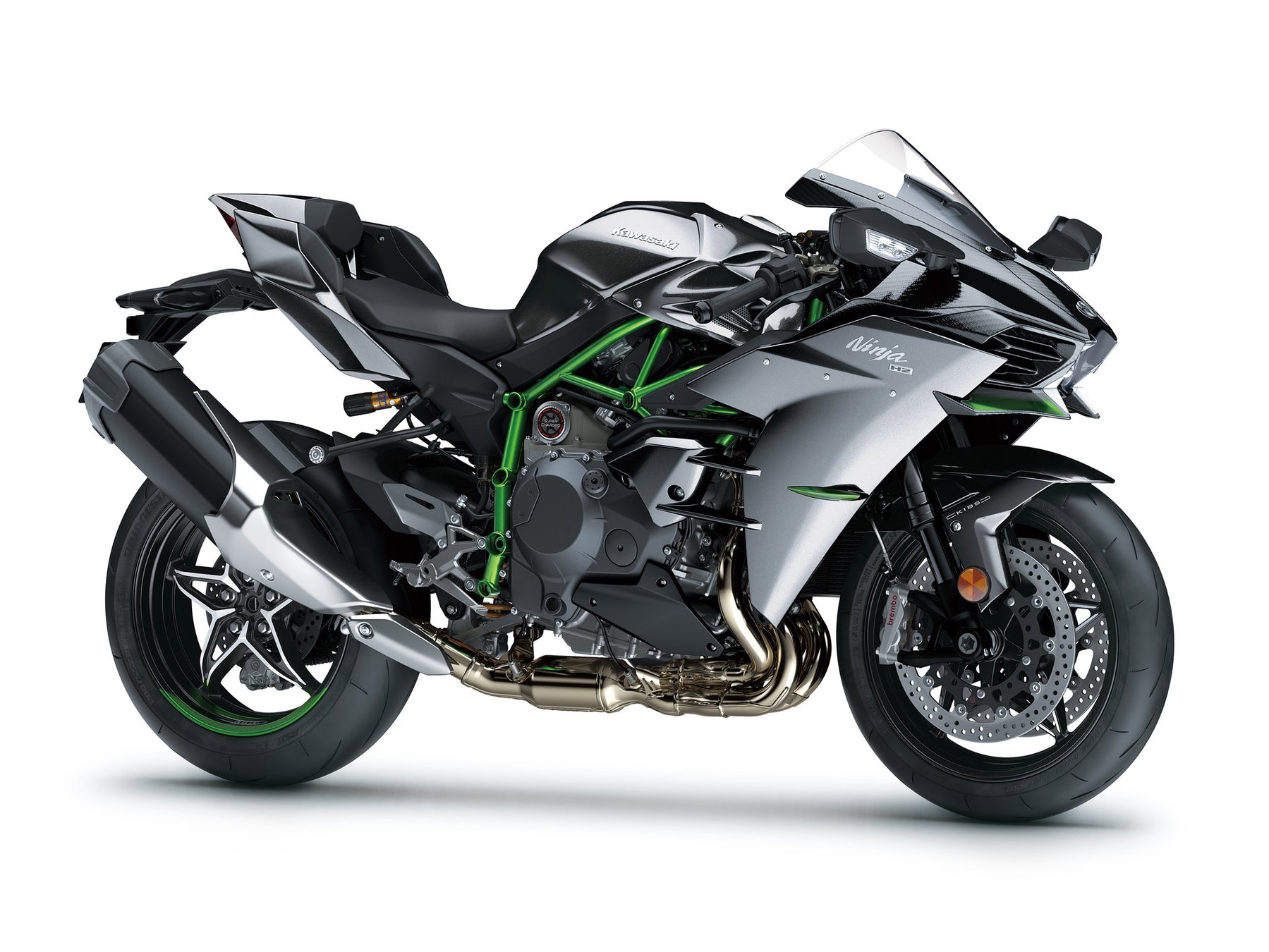
When Kawasaki unveiled the Ninja H2 and the H2R a good ten years ago, both models caused an immediate stir. Their development involved not only the motorcycle engineers but also specialists from the aerospace and gas turbine divisions of the Kawasaki group. That is why the H2 models carry the so-called River Mark. Kawasaki awards this emblem only to selected models of special historical significance. Ahead of the official launch, homologation documents and a teaser campaign running for several weeks had already hinted at the comeback. Now the technology, prices and dates are confirmed. The familiar design with the trellis frame stays, while a great deal has changed underneath the fairing. Among the new models for the 2027 model year, the H2 is therefore not an entirely new motorcycle but a comeback with largely new internals.
What changes on the engine of the Ninja H2 2027?
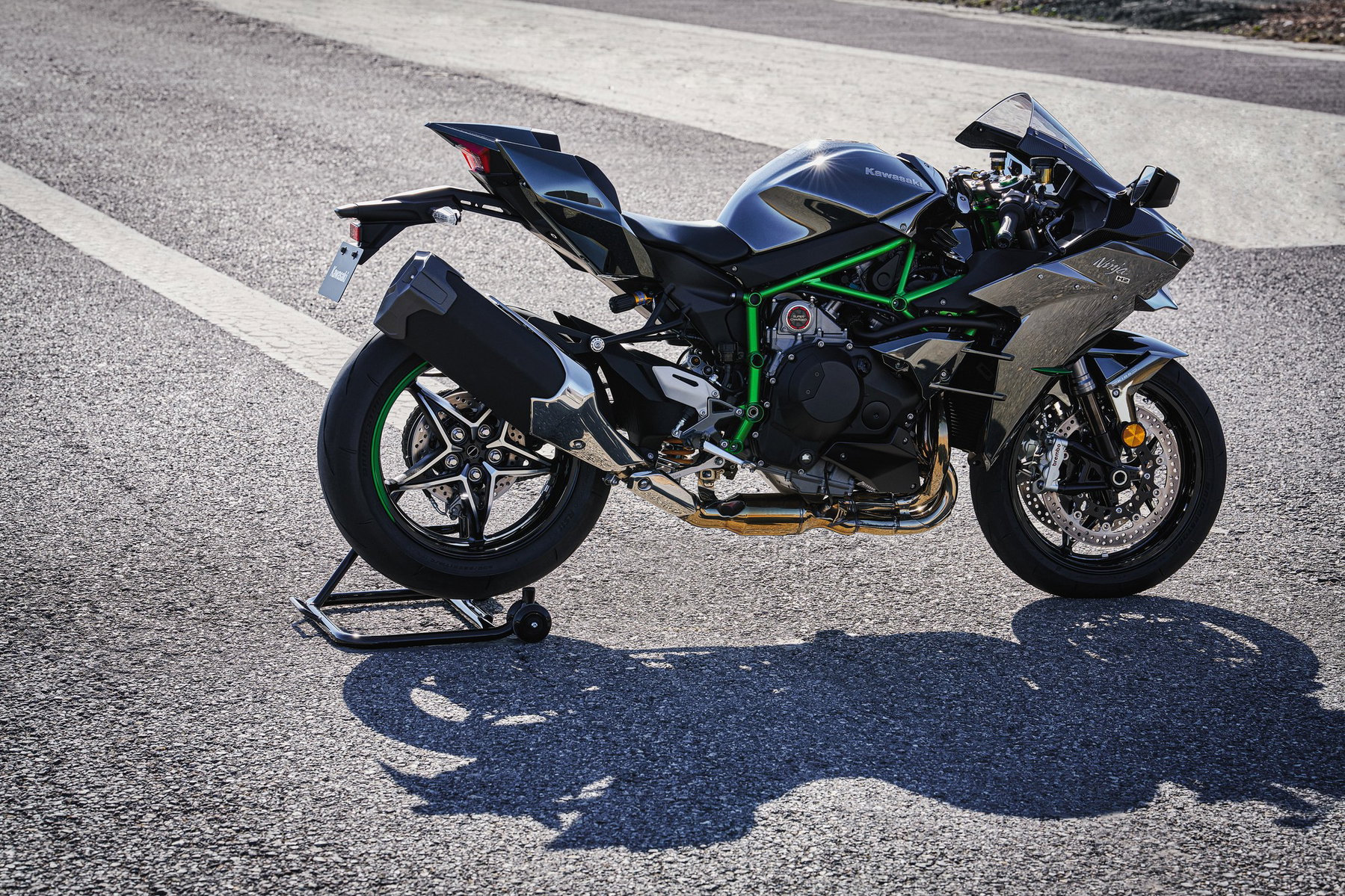
Kawasaki has redeveloped almost all of the important components of the supercharged four-cylinder with 998 cubic centimetres, even though it looks barely any different from the outside. Completely newly designed are the supercharger impeller and the entire intake system. The supercharger forces additional air into the engine and has always been the trademark of the H2 family.
Also new are the pistons, cylinder head, cylinder, crankshaft and camshafts. Kawasaki has replaced the throttle bodies as well, and the gearbox ratios have been changed. The exhaust system is new too. It has revised pipe diameters, a newly designed pre-chamber and a compact end silencer. According to Kawasaki, this makes the system lighter and provides more torque in the low and mid rev range. Visually, it is above all the end of the system that stands out. Instead of the previous polished end can with two outlets, there is now only one outlet. With all these changes, the engine meets the stricter Euro 5+ emissions standard. That allows the Ninja H2 to be sold in Europe again.
How much power does the Kawasaki Ninja H2 2027 have?
The Ninja H2 2027 produces 209 hp (154 kW) at 11,000 rpm, measured with ram air. Peak torque of 135 Nm (around 99.6 lb-ft) arrives at 8,500 rpm.
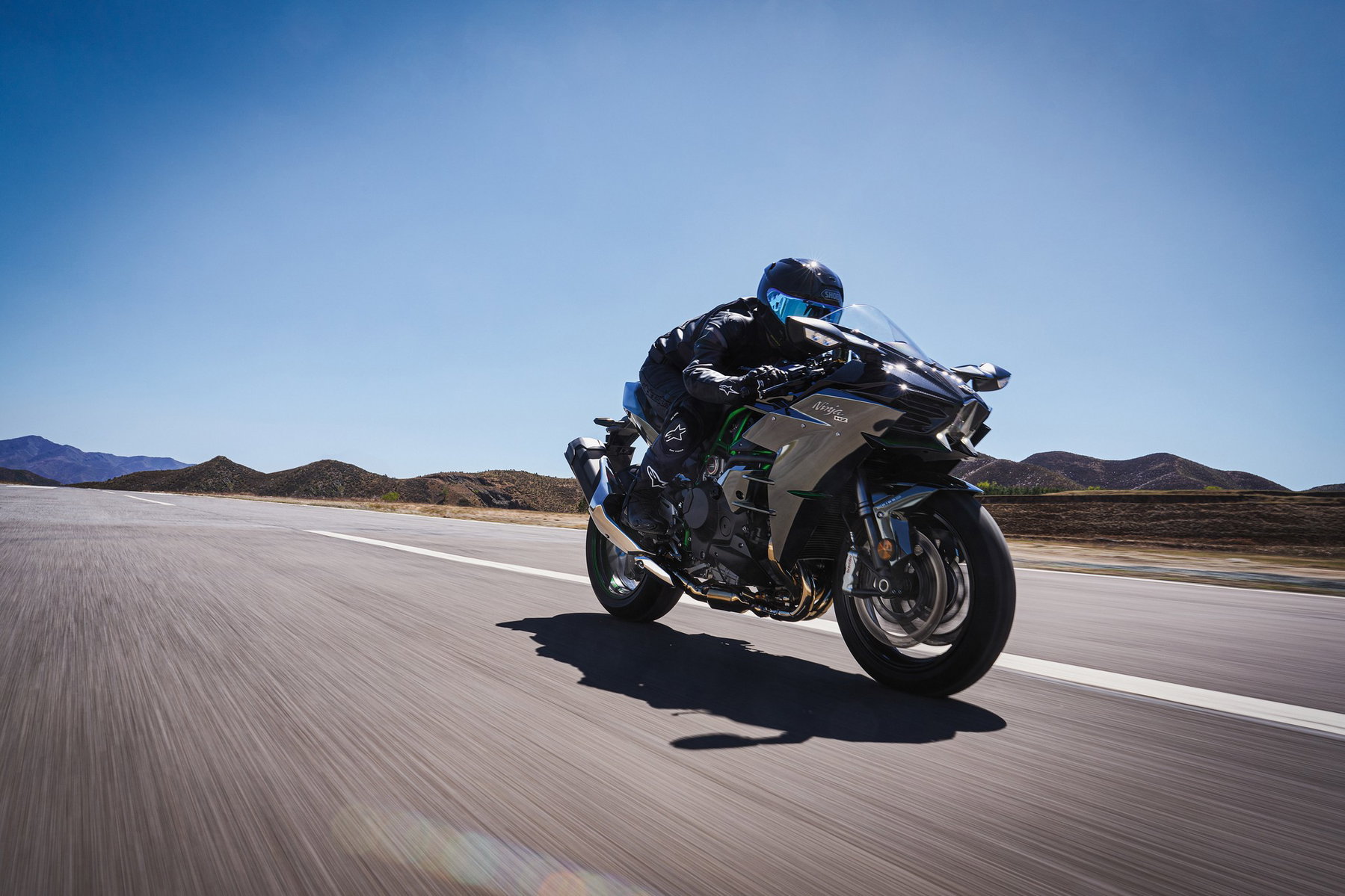
Ram air means that at high speed the airflow is forced through an air intake into the airbox, which increases power on top. The output is therefore below the figure with which the H2 was last homologated in the USA. There, 228 hp were registered, the equivalent of around 231 PS (170 kW). In any case, Kawasaki is not putting peak power at the centre of the new engine. The aim of the setup is more strength in the mid-range without losing the surge at high revs that is typical of the H2. How that feels in everyday use and on the track can only be shown by a riding test. On weight, everything stays the same: ready to ride, the Ninja H2 weighs 238 kg (around 525 lbs), exactly as much as its predecessor.
How closely related is the new engine to the H2 SX?
The similarities with the H2 SX sport tourer are clear, but Kawasaki has not confirmed a shared base. Bore and stroke on the new H2 remain 76 by 55 millimetres, and the 2026 model year H2 SX uses exactly the same dimensions.
There is another detail on top of that: the H2 SX reaches its peak power and its maximum torque at precisely the same engine speeds as the new Ninja H2. The exhaust system with just one outlet is also already familiar from the H2 SX and from the Z H2 naked bike. Both models already meet the stricter emissions rules and were therefore available in Europe the whole time. That suggests Kawasaki may have drawn on solutions from these models when reworking the H2. Kawasaki itself has not commented on these parallels so far.
Which brakes and which suspension does the Ninja H2 2027 have?
At the front, the Ninja H2 2027 is the first Kawasaki model to use Brembo Hypure four-piston calipers. They replace the previous Brembo Stylema units and are said to be light, very stiff and to respond evenly to pressure at the lever.
The calipers grip semi-floating brake discs measuring 330 millimetres in diameter. Semi-floating means that the disc can expand slightly when hot without warping. At the rear, a 250-millimetre disc works with a two-piston caliper. For the chassis, Kawasaki sticks with the proven trellis frame. It is designed for a balance of stiffness and targeted flex and is intended to provide stability even at high speeds. At the front there is a manually adjustable KYB AOS-II upside-down fork with 43-millimetre stanchions and 120 millimetres of travel. At the rear, an Öhlins TTX36 shock with 135 millimetres of travel is used. An electronic Öhlins steering damper is also part of the standard equipment.
Dashboard, electronics and app connectivity
The dashboard is new and offers two selectable displays. Type 1 picks up the shape of the H2’s air ducts in its design. Type 2 puts the supercharger readings more at the centre and additionally shows lean angle and vehicle attitude in a graphic reminiscent of aviation instruments.
On the electronics side, the Ninja H2 and H2 Carbon get an extensive package. Kawasaki has reworked the KTRC traction control and the KLCM launch control for optimised starts. Added to that are the KCMF cornering management, the KIBS cornering ABS, the KQS quickshifter for clutchless up- and downshifts, and the KEBC engine brake control. Cruise control and the electronic Öhlins steering damper are part of the equipment as well. A smartphone can be connected to the motorcycle via the Rideology app.
What sets the Ninja H2 Carbon and the H2R apart from the base model?
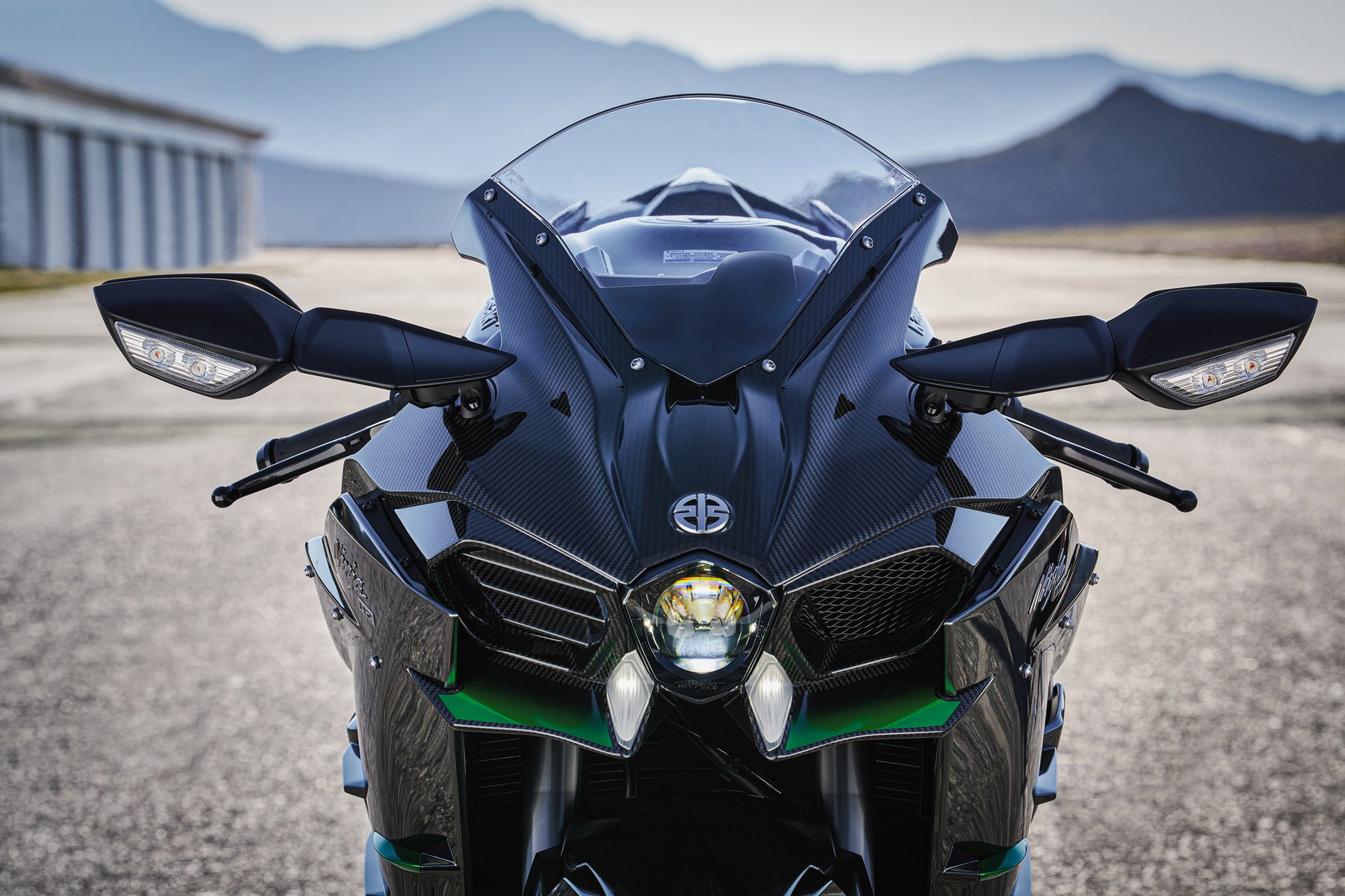
The Ninja H2 Carbon differs from the standard version by an upper fairing made of CFRP; the engine is identical on both. The H2R, by contrast, is a pure track motorcycle without road approval and produces more than 300 hp.
CFRP stands for carbon fibre reinforced plastic, which is very light and at the same time very stiff. As with its predecessor, the H2 Carbon is a limited edition. Kawasaki has not yet named a production figure, and there is no information on a possible weight difference either. Both road versions are available exclusively in Mirror Coated Spark Black. The H2R also remains in the range. Kawasaki builds it to customer order only, with first deliveries in Germany planned for spring 2027.
What does the Ninja H2 2027 cost and when does it arrive?
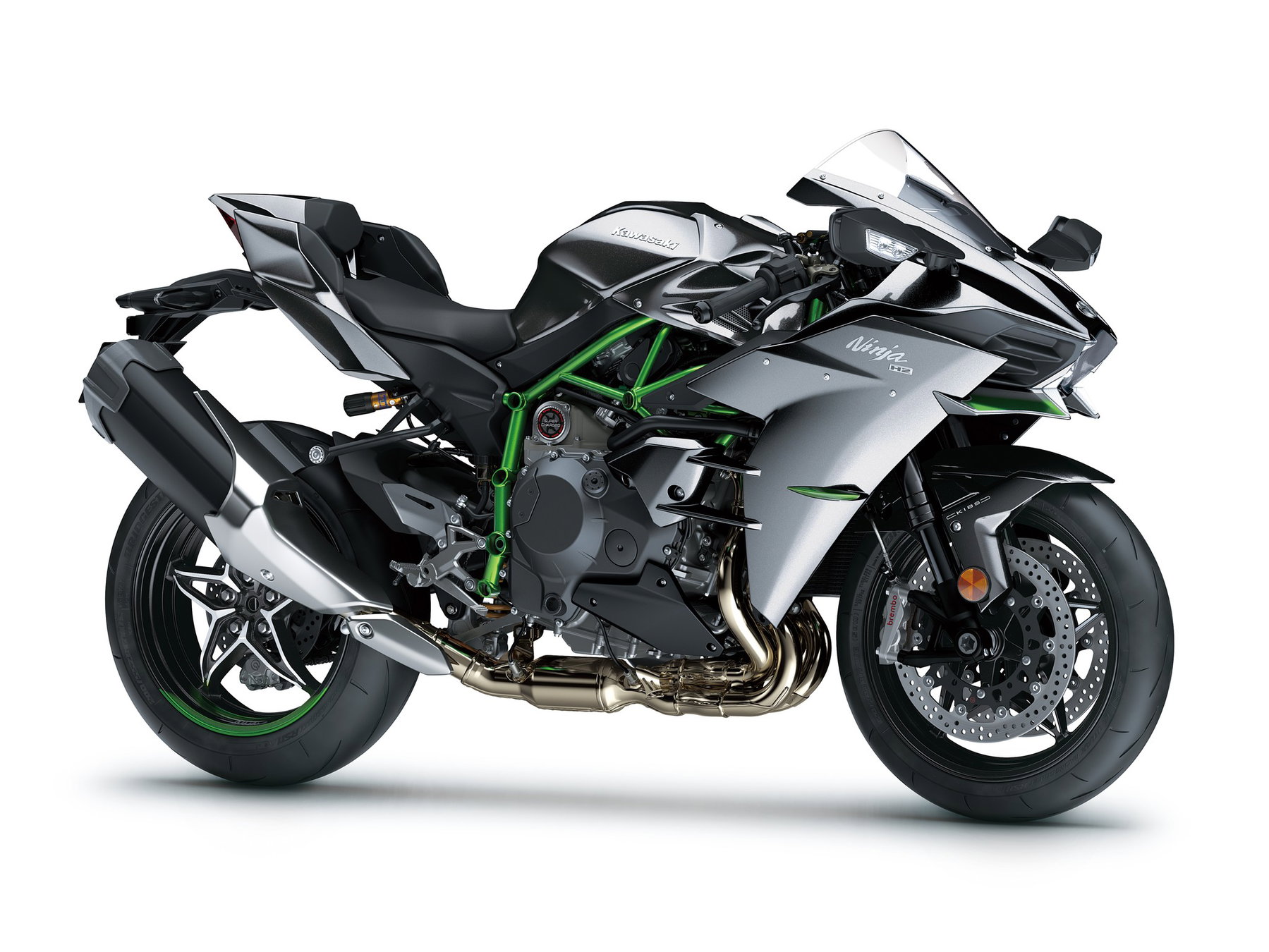
In Germany, the Ninja H2 2027 costs 32,500 euros (around 37,500 US dollars) ex works and 33,050 euros (around 38,130 US dollars) including delivery. The standard version reaches dealers from April 2027, while the H2 Carbon is available as early as October 2026.
For the H2 Carbon, Kawasaki asks 35,800 euros (around 41,300 US dollars) ex works and 36,350 euros (around 41,940 US dollars) with delivery. The H2R costs 58,000 euros (around 66,920 US dollars) ex works and 58,550 euros (around 67,550 US dollars) including delivery. In Austria, prices are 35,999 euros (around 41,530 US dollars) for the Ninja H2 and 39,999 euros (around 46,150 US dollars) for the H2 Carbon, with both models due to be available there from November.
The H2 is returning to the United Kingdom as well. There it had dropped out of the range at the end of 2020 as a Euro 4 model. Prices are 28,600 pounds (around 33,360 euros / 38,480 US dollars) for the Ninja H2, 31,350 pounds (around 36,560 euros / 42,180 US dollars) for the H2 Carbon and 52,000 pounds (around 60,650 euros / 69,970 US dollars) for the H2R. The first motorcycles, limited in number, are due to reach dealers there at the end of the year.
Frequently Asked Questions
-
What is the Ninja H2 2027 price in Germany?
In Germany, the Kawasaki Ninja H2 2027 costs 32,500 euros (around 37,500 US dollars) ex works and 33,050 euros (around 38,130 US dollars) including delivery. The limited H2 Carbon is 35,800 euros (around 41,300 US dollars) ex works. The track-only H2R comes in at 58,000 euros (around 66,920 US dollars) ex works.
-
How much power does the Kawasaki Ninja H2 2027 have?
The Ninja H2 2027 produces 209 hp (154 kW) at 11,000 rpm, measured with ram air. Peak torque is 135 Nm at 8,500 rpm. The H2 Carbon uses the same engine, while the track-only H2R makes more than 300 hp.
-
When does the Ninja H2 2027 reach dealers?
In Germany the standard version is available from April 2027, the H2 Carbon as early as October 2026. The H2R is built to order only, with first deliveries planned for spring 2027.
-
Why is the Ninja H2 available in Europe again?
The revised engine now meets the Euro 5+ emissions standard. To achieve that, Kawasaki redeveloped the supercharger impeller, the intake system, the pistons, the cylinder head and the complete exhaust system, among other parts. Prices are already confirmed for Germany and Austria.
-
What is the difference between the Ninja H2 and the H2 Carbon?
The H2 Carbon has an upper fairing made of carbon fibre reinforced plastic and is available in limited numbers only. Engine, chassis and electronics are identical on both versions. In Germany, the Carbon version costs 3,300 euros (around 3,810 US dollars) more than the standard model.