- Ten measures ranging from policing and factory-fitted tracking to legal practice areas
- According to industry body MCIA, thefts in 2025 were almost 15 percent below the 2022 level
- At the same time, the Motorcycle Action Group is calling for motorcycle theft to finally be counted separately
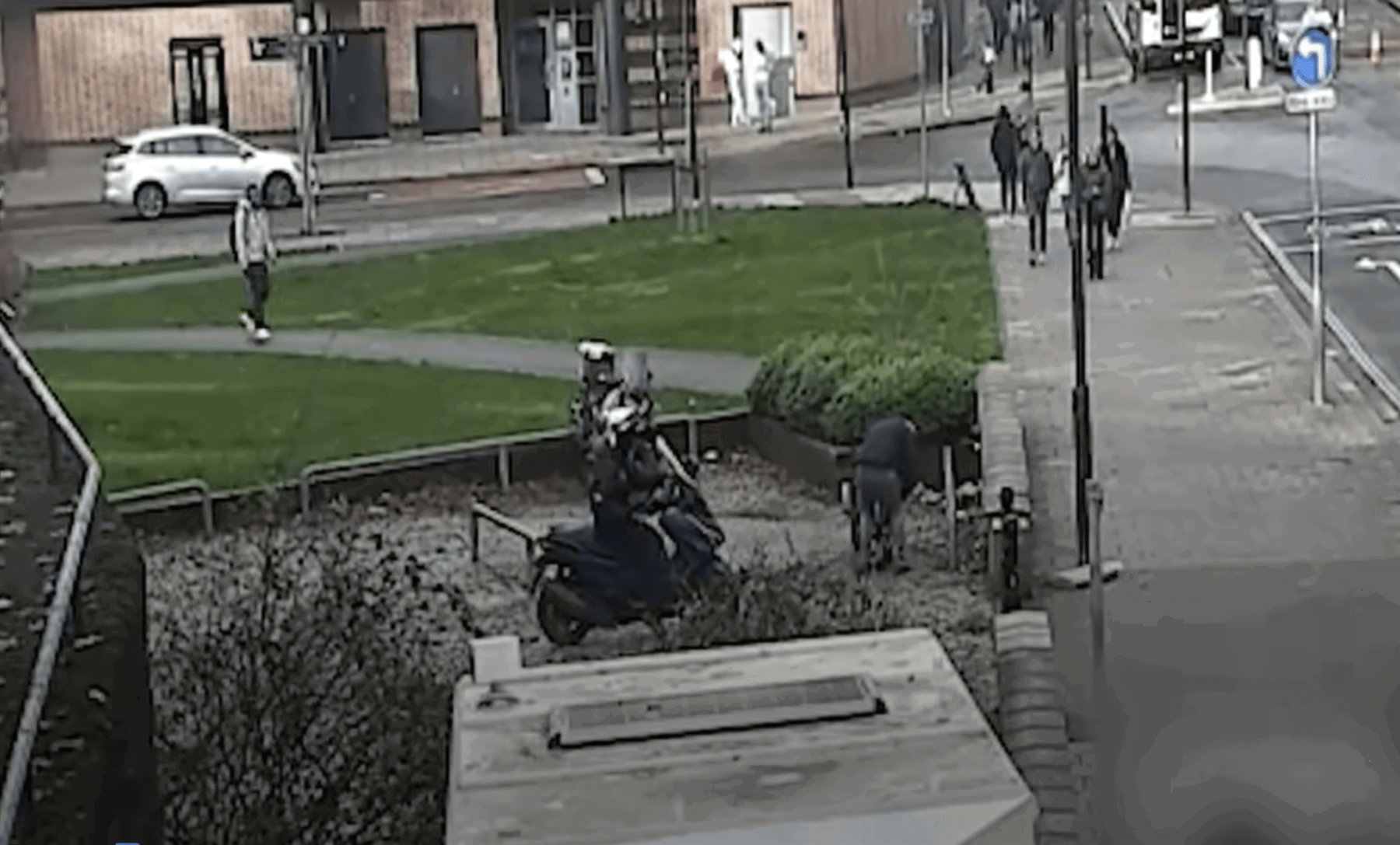
Motorcycle theft has been a persistent issue in the UK for years. Every year, thousands of motorcycles, scooters and mopeds disappear across the country. Many of them later turn up in further crimes, such as thefts from passers-by, from shops and businesses, or in drug dealing across city and police boundaries, known in Britain as County Lines. The National Motorcyclists Council (NMC), an umbrella body for British motorcycling organisations, wants to tackle this with a new approach. On 21 September 2026, it presented a ten-point action plan. It is backed by the Motorcycle Industry Association (MCIA), the trade body of the motorcycle industry.
What is the NMC’s ten-point plan?
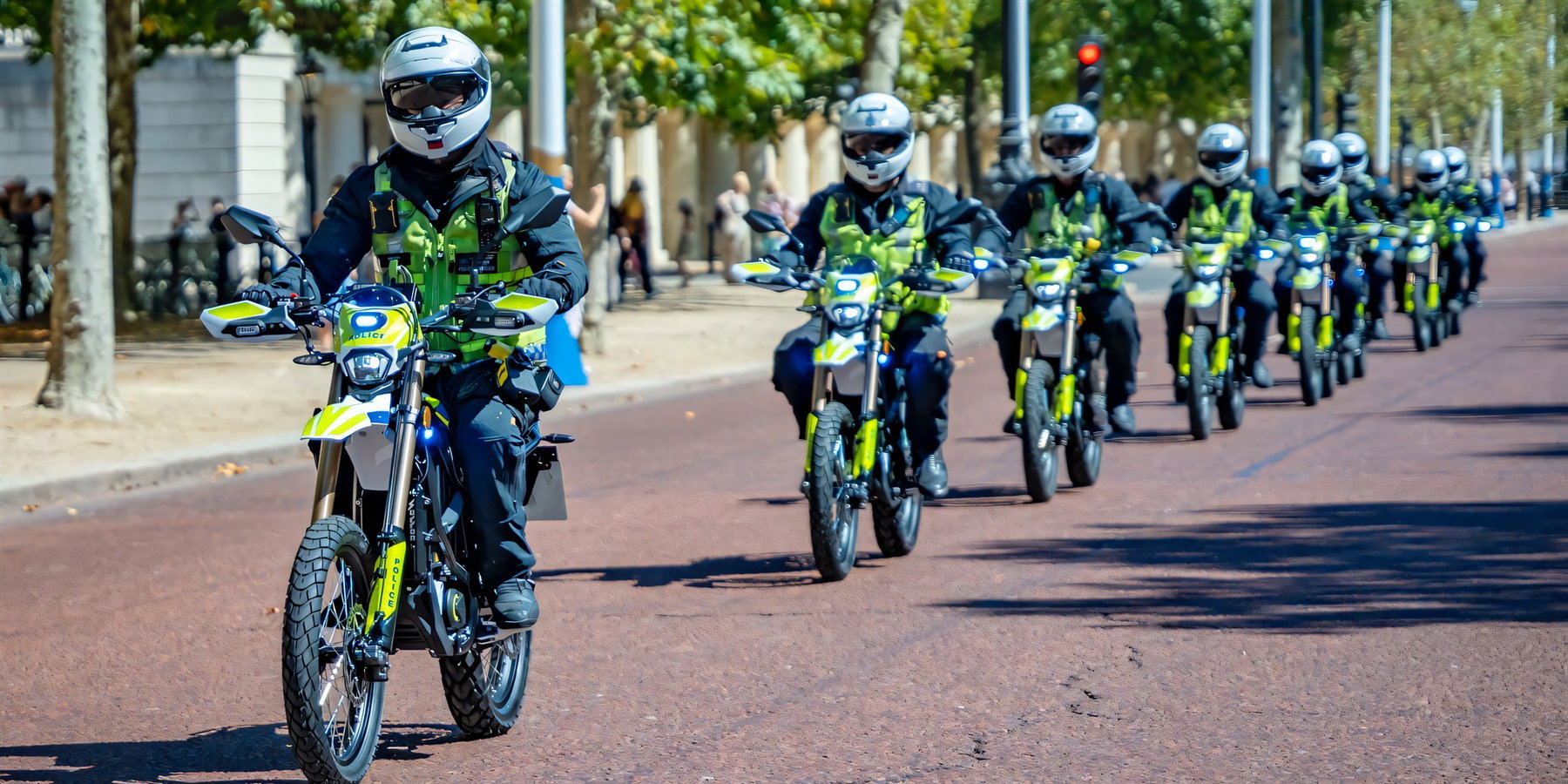
The ten-point plan is an overall concept designed to bring police, government, industry and rider organisations to the same table instead of each organisation acting on its own. It combines tougher enforcement with prevention and education.
The NMC itself describes the paper as possibly the first fully coordinated strategy on the issue. The toolbox includes technology, gathering and analysing intelligence, targeted police operations, vehicle registration and rider training. The aim is to tackle theft, antisocial behaviour and the associated crime at the root.
The organisation makes no secret of the fact that not everything can be implemented immediately. NMC Executive Director Craig Carey-Clinch explains that some measures can start straight away and many are already being driven forward by industry and motorcycling organisations. Others, however, would need long-term commitment, funding and partnerships. He says: “Some remain aspirational at this stage, but bringing them together within a single strategic framework, with organisations working together, not separately, offers a clear roadmap for future action.”
Why do the organisations believe a new approach is needed?
In the NMC’s view, decades of individual campaigns against motorcycle theft have raised awareness but have not fundamentally changed the situation. Theft has now become part of a wider problem of crime and antisocial riding.
The organisation describes the development as follows: organised gangs have moved into the business because it pays and motorcycles are easier to steal than cars. They often lack sophisticated security systems. At the same time, the number of police officers in England and Wales has fallen, particularly between 2010 and 2018. Many forces have prioritised violent crime over property crime, and some specialist vehicle crime teams have been disbanded.
According to the paper, stolen bikes are often taken to order, shipped abroad via British ports or broken up for parts. Some motorcycles are also given a new frame and a false identity. London is considered a hotspot. There, thieves mainly target models from Yamaha, Honda and BMW, and machines of 125 cc and below appear particularly often in the statistics. This also has financial consequences for owners: according to the NMC, insurance premiums in London are in some cases so high that some riders can no longer afford cover. Some insurers no longer offer policies there at all.
What role do illegal e-bikes play?
A second reason for the plan is powerful e-bikes that are ridden illegally without registration, tax or insurance. The NMC describes the riders mostly as young people, often without helmets, who ride at high speed through residential areas and escape pursuits via alleys and paths. In public perception, these vehicles are often lumped together with motorcycles. In the organisation’s view, this damages the reputation of motorcycling and fuels calls to restrict legal riders’ access to cities and rural areas.
What measures does the plan propose for police and the justice system?
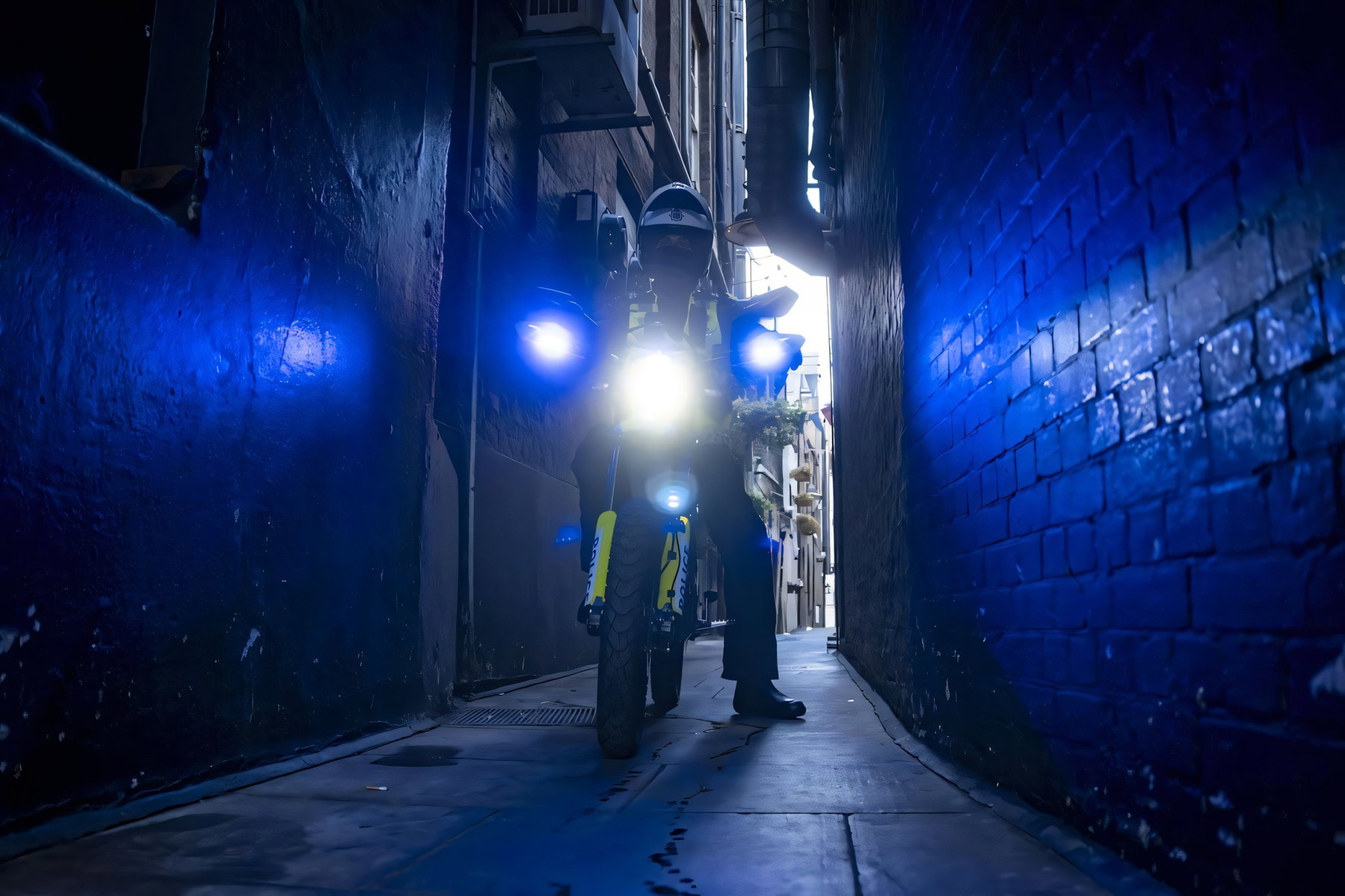
Three of the ten points are aimed directly at police and the justice system: better policing, tougher penalties and a closer network of investigators, ports and data sharing.
Point 1: Policing based on proven models
Successful methods used by individual police forces are to be shared nationwide. This includes identifying hotspots using data and extending specialist motorcycle units to more police areas. The NMC cites the London Metropolitan Police’s Operation Venice as a model, which started in 2016 and targets theft gangs with covert surveillance and technology. In addition, mobile task forces are to carry out surprise checks, seize illegal vehicles and arrest offenders. There is already a guide for the police from the MCIA and the Bicycle Association that helps officers identify illegal e-bikes.
Point 2: Tougher penalties
Anyone riding without a licence, underage or while disqualified should face higher fines. Also planned are automatic penalty points, licence revocation for repeat offenders and community service for young offenders. Those who refuse it should face custody. For illegal e-bikes, all offences are to be prosecuted, not just the lack of insurance but also licence, registration, number plates and evaded vehicle tax.
Point 6: A network against theft gangs
One problem starts with the statistics. Motorcycles stolen from private property often end up recorded as burglary rather than motorcycle theft. The NMC wants to change this and record the data nationwide. In addition, police, Europol, Interpol, UK Border Force and motorcycling organisations are to work more closely together to target theft gangs and stop the export of stolen machines through ports. This builds on the work of the National Vehicle Crime Intelligence Service (NaVCIS). According to the NMC, this unit intercepted 29 percent more stolen vehicles destined for export at British ports in the second quarter of 2024.
How are registration, tracking and online sales supposed to slow thieves down?
Four points aim to make it harder for thieves to make money from stolen machines. At the centre are mandatory registration for new off-road motorcycles, factory-fitted tracking technology and stricter rules for online sales.
Point 4: Mandatory registration for new off-road motorcycles
There is already a voluntary registration scheme in the UK for off-road machines that are not road-legal. The NMC wants to make it mandatory for all new off-road motorcycles, but without changing its scope. Registration should take place directly at the point of sale, and changes of ownership should be recorded. The scheme is to remain free of charge and vehicle tax for these machines is to stay at zero. In the organisation’s assessment, this would make unregistered motorcycles harder to sell. In the NMC’s view, earlier registration proposals had brought disadvantages and costs for legal off-road riders and motorsport. This is not to be repeated this time.
Point 5: Factory-fitted tracking and up-to-date lists for insurers
The NMC wants to discuss with manufacturers and importers why not all new motorcycles are fitted with a tracker at the factory. The organisation acknowledges that some manufacturers have understandable reasons for this that first need to be understood. The MCIA and Datatag marking scheme is to be extended to all new vehicles. Another point concerns insurers: the lists of approved security devices are mostly out of date. Many effective new products are missing from them, which discourages buyers from investing in additional security.
Point 7: Stricter rules for online sales
Anyone offering a motorcycle for sale online should first have to prove that they own it. This includes a check of the VIN. Machines classified as write-offs are to be deregistered, and in the case of severe damage the frame is to be scrapped. The sale of frames together with vehicle documents is also to be banned, because this is how motorcycles with false identities are created. Exemptions are planned for rare and historic frames. According to the NMC, only 0.7 percent of thefts involve machines older than 40 years, while for motorcycles over 25 years old the figure is 3.6 percent.
Point 8: Import controls
According to the NMC, powerful e-bikes with motorcycle-like performance are sometimes imported under false commodity codes, for example as toys or bicycles. Importers thereby avoid duties, and the low prices in turn make the vehicles attractive to criminals. The organisation wants to discuss stricter customs checks with the government for imports outside official distribution channels.
Parking, education and practice areas
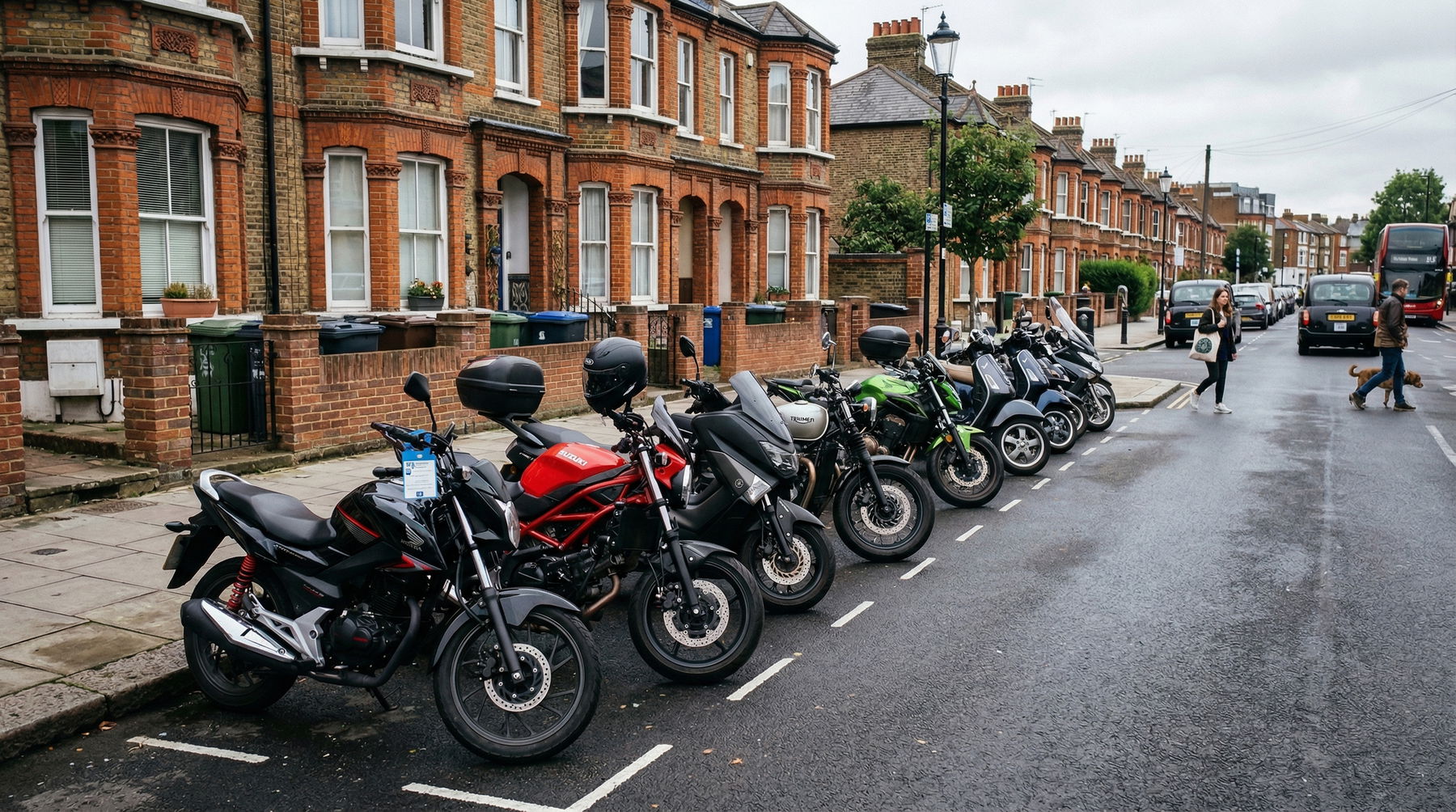
The remaining three points address riders’ everyday lives. They concern secure parking, campaigns and legal places to practise.
Local authorities are to be required to include secure on-street motorcycle parking as standard, as is already common for bicycles (point 3). Large development projects for workplaces and, in some cases, housing should also include such parking spaces.
Education (point 9) involves a joint campaign by government and the motorcycle industry. Antisocial riding is to become socially unacceptable. The NMC sees a particular challenge with one large group: around two thirds of riders use their motorcycle only for commuting to work or education or for everyday purposes. They see themselves more as road users than as motorcyclists and are hard to reach through traditional motorcycle media and clubs. However, their machines account for a high proportion of thefts. Theft prevention is therefore to become an integral part of all rider training. The Trail Riders Fellowship’s Ride Right initiative is already pursuing this goal.
Point 10 provides for legal practice areas and tracks near towns and cities. There, young people in particular should be able to ride under supervision, organised with youth groups and the Auto-Cycle Union (ACU). From there, they should find their way into regular training and the licence test.
Are motorcycle thefts in the UK already falling?
Yes, the numbers are going down. According to the MCIA, motorcycle thefts in 2025 were almost 15 percent below the 2022 level.
The industry body sees this as a success of investment by the industry, of riders securing their machines better and of more consistent policing. It nevertheless explicitly supports the plan: “Motorcycle theft remains a serious issue for riders, retailers and the wider industry, and we will always support measures, like this action plan, that help reduce it further.” The MCIA describes the plan as a helpful start towards reducing the numbers further.
How reliable such statistics are, however, is disputed. The Motorcycle Action Group (MAG), a British riders’ rights organisation, relaunched its campaign against motorcycle theft in August 2026 under the title “Still There in the Morning”. In response to a Freedom of Information request, the London Metropolitan Police said it could not state the number of motorcycles stolen each year without individually reviewing almost 100,000 theft records. Motorcycles are not recorded separately from other vehicles there. Colin Brown, MAG’s Director of Campaigns and Political Engagement, sums it up: “You can’t fix a problem nobody is counting.”
What is MAG calling for?
MAG has four demands. Motorcycle theft should appear as a separate offence in the statistics, as bicycle theft already does today. The police should catch and charge more offenders instead of relying on longer sentences for a few. Motorcycles and parking should be designed to be theft-proof from the outset. And the police should have a written procedure for cases where a tracker reports the location of a stolen motorcycle.
The last point has a concrete background. Since 29 June 2026, section 171 of the new Crime and Policing Act 2026 allows police to search a home without a warrant if tracking data shows stolen property there. According to the Metropolitan Police, however, it has no written procedure for such tracker alerts.
Another MAG figure shows how serious the issue is. According to information from West Midlands Police, a stolen motorcycle was involved in 21 percent of fatal motorcycle collisions in its area between 2021 and 2025. Merseyside Police’s Operation Needle, on the other hand, shows that targeted operations can work. In the two weeks around the TT, twelve motorcycles were still stolen in Liverpool city centre in 2022, and five each in 2023 and 2024. In 2025 and 2026, not a single motorcycle was stolen there. MAG had supported the operation with chains and marking kits handed out at motorcycle events.
What happens next with the plan?
The NMC and MCIA now want to develop and implement the proposals together with government, police and partner organisations. The organisations have not given a timetable for individual points.
Some of the measures are already under way, such as the guide to identifying illegal e-bikes or the Ride Right initiative. Other points, such as factory-fitted trackers for all new vehicles or mandatory registration for off-road machines, depend on manufacturers and legislators. The Crime and Policing Act 2026 already provides new powers for the police on which the plan is to build.
For the organisations, this is not just about theft. They want motorcycles in the UK to be recognised as part of the solution to congestion, emissions and mobility. In their view, the reputation that theft gangs and illegal e-bike riders have given motorcycling stands in the way of this. The plan thus joins a series of position papers with which the NMC has sought to influence British transport policy in recent months.
Frequently Asked Questions
-
What is the ten-point plan against motorcycle theft in the UK?
It is an action plan by the National Motorcyclists Council presented in September 2026. It aims to curb motorcycle theft, antisocial riding and motorcycle-related crime. Police, government, industry and rider organisations are to work together on it.
-
How many motorcycles are stolen in the UK?
There is no exact nationwide figure; the NMC speaks of thousands of motorcycles, scooters and mopeds per year. The London Metropolitan Police says it cannot give the figure for its area without reviewing almost 100,000 records. According to the MCIA, thefts in 2025 were almost 15 percent below the 2022 level.
-
Will all new motorcycles be fitted with a tracker?
That is one of the plan’s goals, but not yet a requirement. The NMC wants to clarify with manufacturers and importers what obstacles exist to factory-fitted trackers. In addition, the MCIA and Datatag marking scheme is to be extended to all new vehicles.
-
Do off-road motorcycles have to be registered in the UK?
So far, registration is voluntary. The NMC proposes making it mandatory for all new off-road motorcycles at the point of sale. The existing scheme is to remain free of charge and unchanged in scope.
-
What is the “Still There in the Morning” campaign?
It is the Motorcycle Action Group’s campaign against motorcycle theft, relaunched in August 2026. Among other things, it calls for motorcycle theft to be recorded as a separate offence. The police should also have a fixed procedure for tracker alerts.