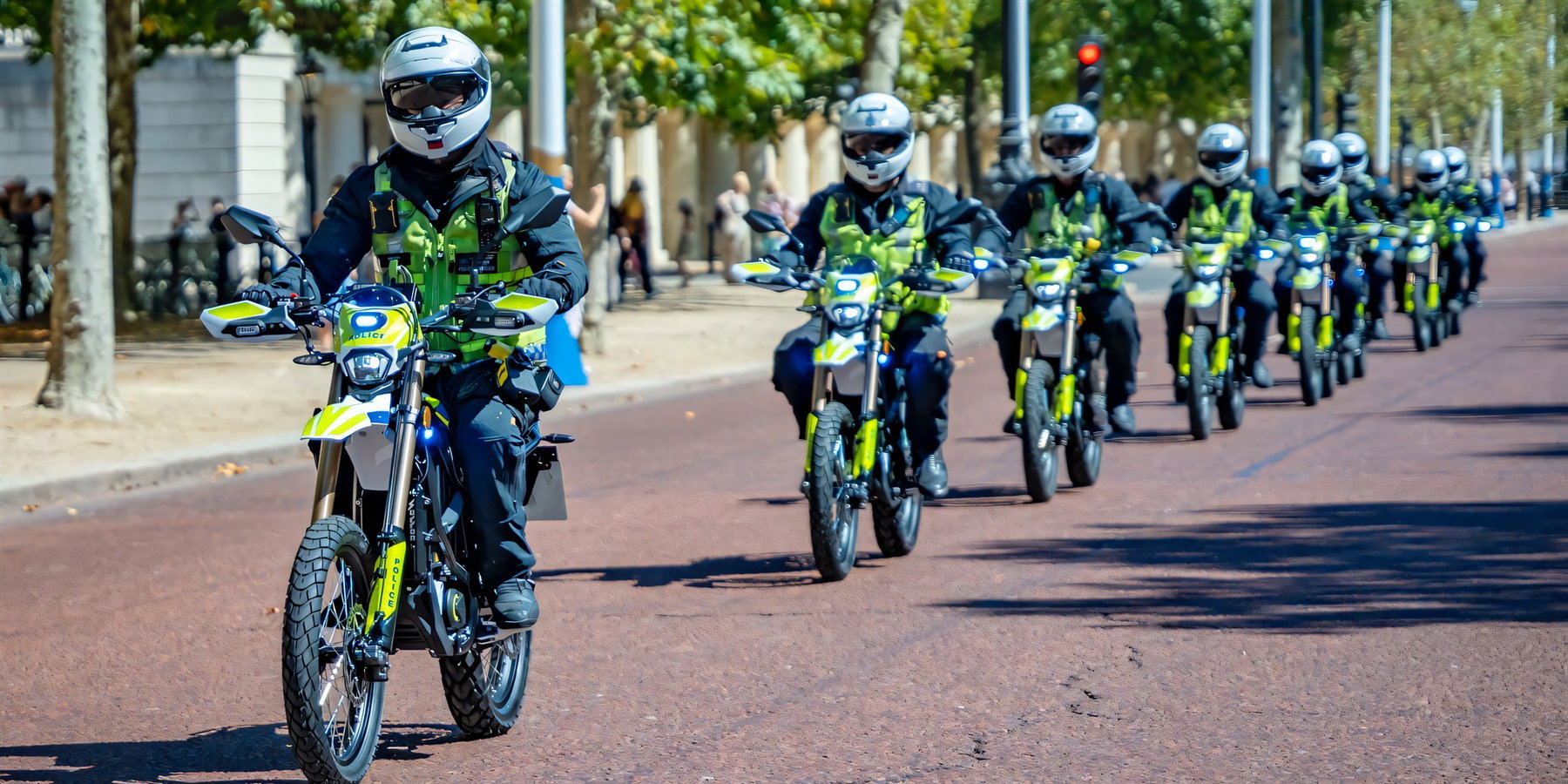
- 20 new Sur-Ron Ultra Bee machines, so far deployed across seven London boroughs
- Up to 80 km/h, registered and insured as motor vehicles
- The Met has seized more than 2,500 illegal e-bikes and e-scooters this year alone
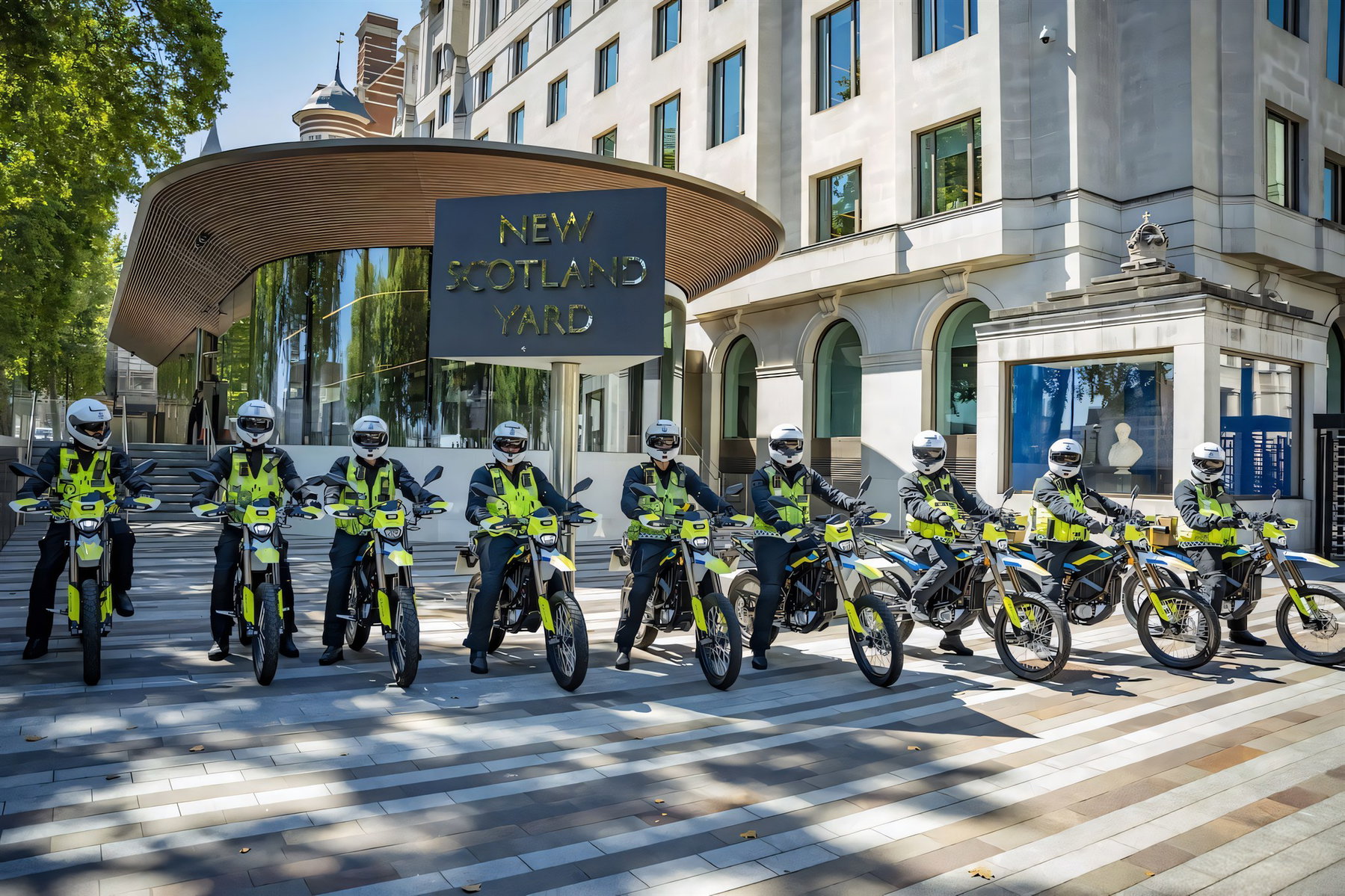
Phone snatching has been part of everyday life in London for years. Offenders ride up to their victim on light, fast electric two-wheelers, grab the phone and disappear through alleyways, parks and pedestrian zones. Patrol cars and heavy police motorcycles are regularly left behind. On 27 August 2026, the Metropolitan Police therefore presented a considerably bigger answer: its fleet of Sur-Ron Ultra Bee machines is growing from five to 25. They are exactly the kind of electric off-roaders police otherwise seize when they turn up illegally on the road.
Why is the London police force turning to Sur-Ron of all things?
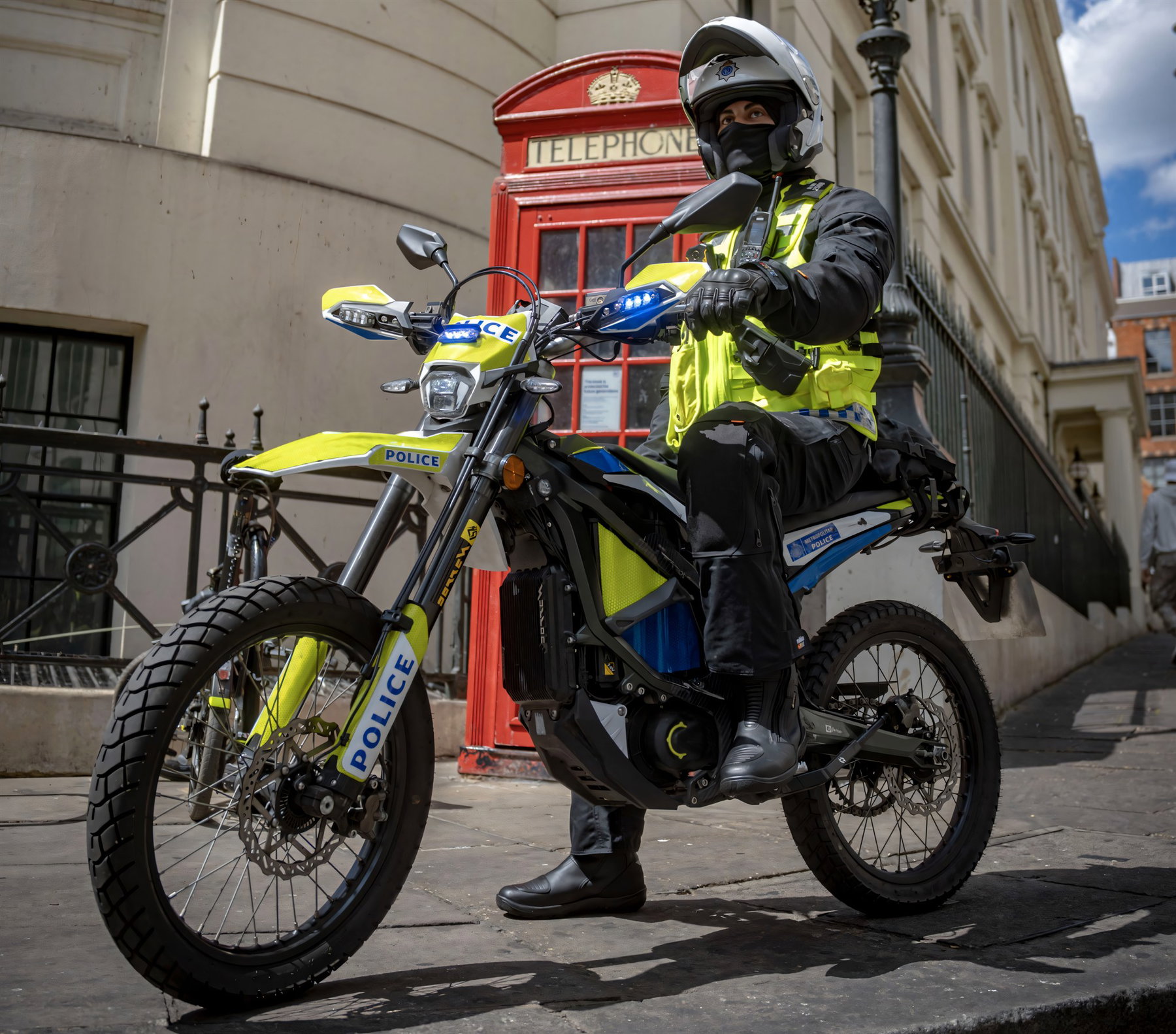
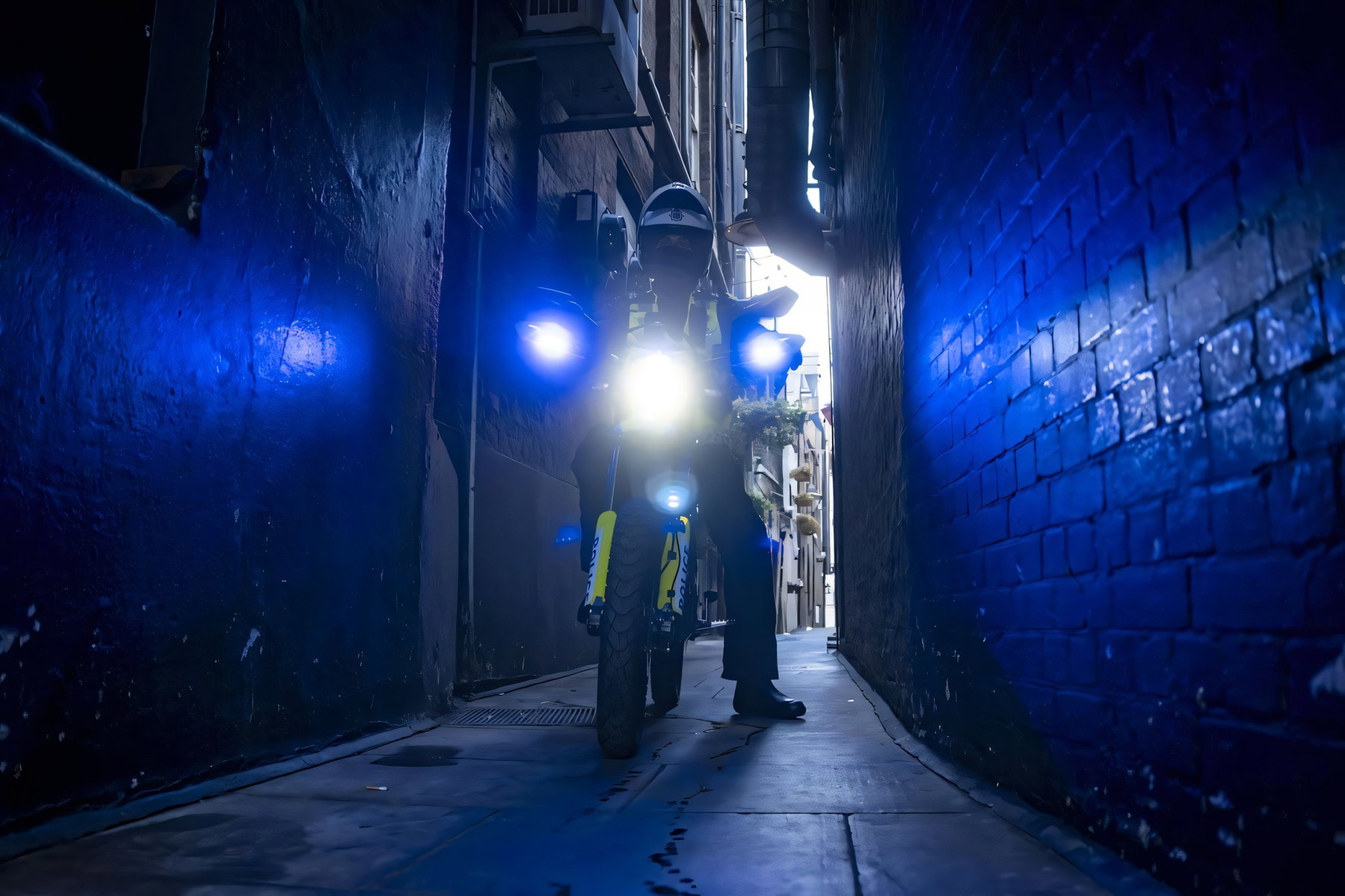
Because the offenders ride the same machines. The Met justifies the purchase by pointing out that gangs commit crimes on e-bikes and mopeds and then escape to places conventional response vehicles cannot reach. The light machines slip through stationary traffic, take narrow streets and even handle steps. That gets officers to places which are off limits for police motorcycles and patrol cars.
Louise Puddefoot, Deputy Assistant Commissioner for frontline policing, says the larger fleet gives officers an additional means of staying one step ahead of criminals: “Expanding our Sur-Ron fleet gives officers another powerful tool.” She also points out that offenders committing phone theft and robbery often use heavily tuned, illegally modified e-bikes.
What can the Sur-Ron Ultra Bee do in city traffic?
The Sur-Ron Ultra Bee reaches up to 80 km/h, hops kerbs, takes steps and accelerates hard from a standstill. It is precisely that mix which makes it strong in the inner city, because top speed is rarely the decisive factor in London traffic.
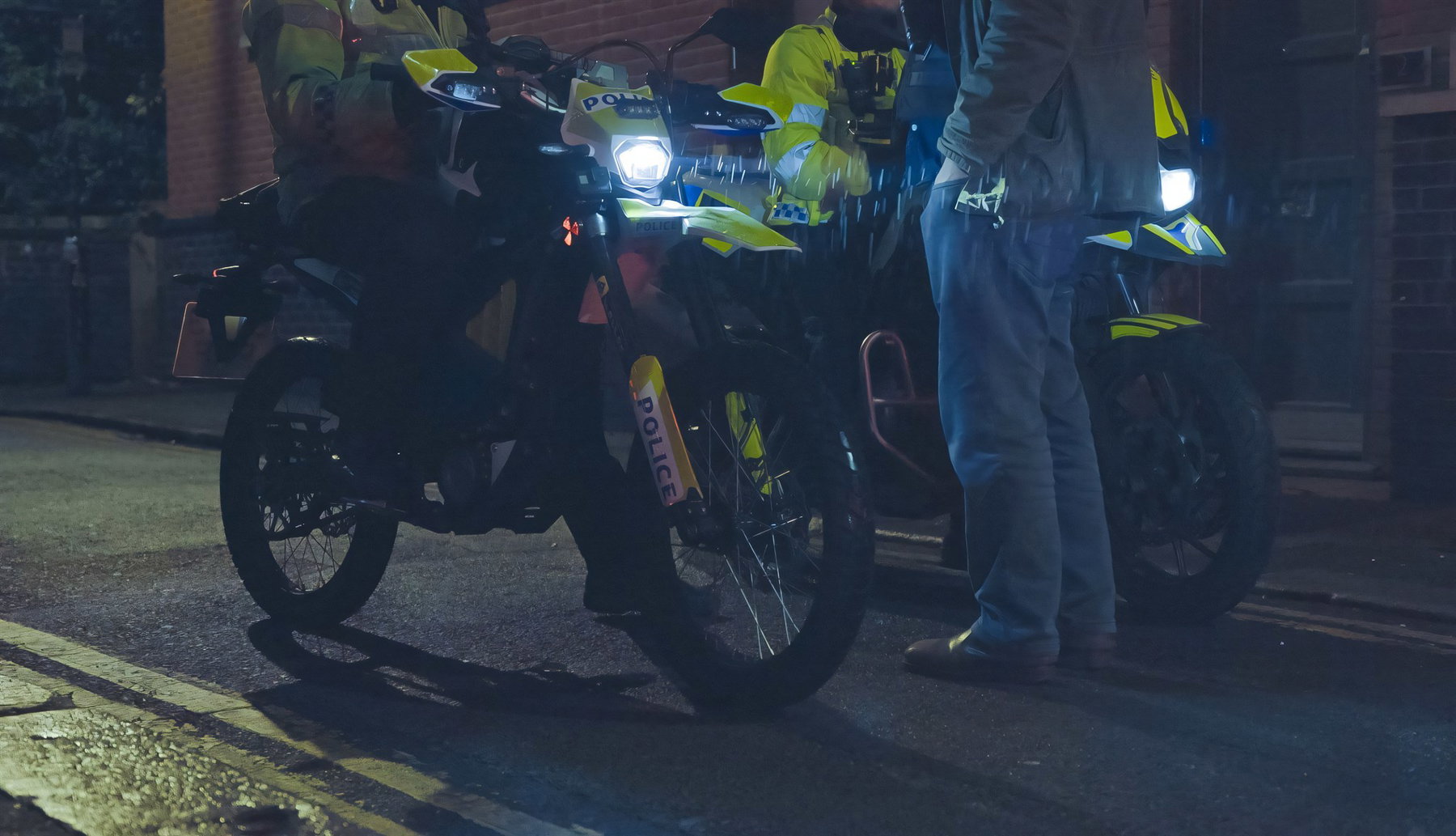
The police machines carry Met markings and a high-visibility livery. They have blue lights front and rear plus a siren as loud as that of a patrol car. The officers are trained, the vehicles are insured and registered. When the first five machines went into service in February 2025, one officer described the benefit like this: “These plug a gap in the Met’s toolbox.”
For context on the model range: the Light Bee X for model year 2026 produces 13.6 hp (10 kW) peak output, reaches 80.5 km/h and is expressly not road legal. The homologated Light Bee L1E variant, by contrast, is limited to around 45 km/h.
When is a Sur-Ron legal in the UK?
There is nothing prohibited about the machine itself. What matters is the classification: an electrically assisted pedal cycle in the UK may have no more than 250 watts of continuous output and may only assist up to 25 km/h. Anything above that counts as a motor vehicle and needs registration, insurance, a licence, type approval and a helmet.
With several thousand watts and 80 km/h or more, Sur-Ron models are clearly outside that limit. Pure off-road versions may only be ridden on private land as long as they are not separately registered. That is exactly where the problem on the road comes from: offenders ride without registration, without insurance and without a licence. The Met itself lists illegal e-bike use in individual neighbourhoods as a focus of its work. For its own machines, the force stresses that they are registered and insured as motor vehicles.
Two August operations show how it plays out
The Met has released footage from two operations. On 17 August the case involved an illegally ridden, uninsured e-bike. The rider tried to flee, the officers were able to match his acceleration and stayed with him. The man lost control, was arrested and the vehicle was seized.
On 21 August a moped rider trying to avoid a check was spotted at a control point. An officer on the Sur-Ron followed him through traffic into a housing estate. When the rider crashed and continued on foot, the officer stayed on him. A larger quantity of hard drugs was found during the arrest. The man was also banned from driving and was riding a moped with false plates.
What do the numbers really say?
The Met is recording clear falls, yet only a fraction of cases leads to a legal outcome. According to the force, the number of phone thefts fell by more than 13,000 offences last year, and police expressly factor in the deployment of the Sur-Ron machines. In the twelve months to May, the number of reported phone thefts dropped from around 68,000 to roughly 54,000, the statistics show.
The second part of the balance sheet is more sobering: the share of cases leading to an outcome such as a charge or a caution remains below one per cent. Kaya Comer-Schwartz, Deputy Mayor for Policing and Crime, told reporters that tackling such offences has to go hand in hand with improving the entire justice system and better support for victims. One officer also reported during a patrol that the regulars had long since adjusted to police shift patterns.
Across all offence groups, the Met reports a 14 per cent fall in neighbourhood crime for the twelve months to July, more than 33,000 fewer offences. That includes 23,455 fewer thefts from the person (down 24.0 per cent), 2,886 fewer robberies (down 11.2 per cent) and 7,336 fewer vehicle offences (down 8.0 per cent). Sarah Jones, the minister responsible for policing and crime, places the move in line with government policy and points to an 11 per cent fall in knife crime since taking office. Mayor Sadiq Khan sees the fleet as a signal that London does not tolerate criminal behaviour.
Where does the money for the fleet come from?
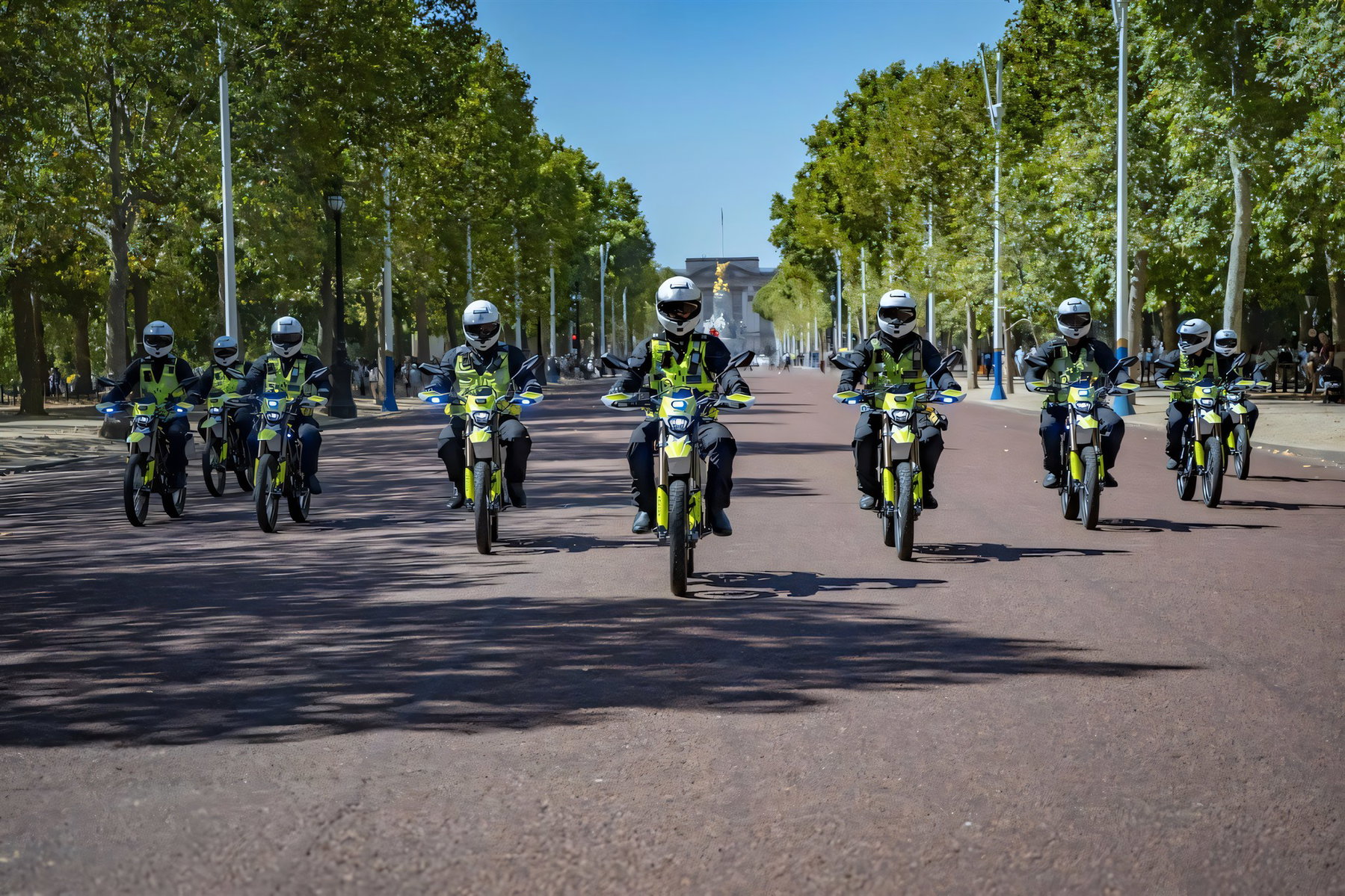
The machines were funded from profits confiscated from offenders and put back into policing. The Home Office additionally supported rider training in the West End. So far the new machines have been deployed in Camden, Islington, Hackney, Tower Hamlets, Westminster, Kensington & Chelsea and Hammersmith & Fulham. In parallel, the Met has already seized more than 2,500 illegal e-bikes and e-scooters this year, many of them converted with more powerful batteries or ridden without insurance. On top of that, police are using drones to close the mobility gap.
Other police forces are following suit
London is not an isolated case. Merseyside Police is using road-legal Stark Varg machines capable of up to 137 km/h as part of Operation Gears. They work alongside the national police air service and the existing vehicle fleet, and their almost silent drive allows discreet patrols in parks and woodland. Since the operation started in June 2025, more than 1,600 two-wheelers linked to crime, dangerous riding or antisocial behaviour have been seized there. The deployment initially runs as a trial until October 2026. Superintendent Paul Holden stresses that the measures are not aimed at responsible riders but at those who deliberately break the law.
Cleveland Police launched a similar unit in June 2026 with the Stark Varg EX and drones, after more than 800 incidents involving two-wheelers were counted in February and March 2026 alone. Nottinghamshire Police is taking a different route and asking the public to film and report nuisance off-road riders. Anyone identified receives a Section 59 warning, which allows seizure on the next offence. That places the London move within a broader development in which light electric motorcycles are becoming a fixed part of police equipment. The manufacturer itself, incidentally, commented on the development with a wink, noting in effect that specially trained officers in London are using the Ultra Bee against phone theft and bicycle crime.
➜ Find all technical specifications for the Sur-Ron Ultra Bee 2026 in our motorcycle database.
Frequently Asked Questions
-
Which Sur-Ron does the London police ride?
The Metropolitan Police uses the Sur-Ron Ultra Bee. After the addition of 20 machines, the fleet comprises 25 vehicles, all registered and insured as motor vehicles.
-
How fast is the Sur-Ron Ultra Bee?
The Sur-Ron Ultra Bee reaches up to 80 km/h. More important for city use, however, is its agility, because it can handle kerbs, steps and narrow gaps.
-
What does a Sur-Ron cost?
Prices for the police machines have not been published. In retail in Belgium and the Netherlands, a road-legal Light Bee limited to 45 km/h costs 4,999 euros (around 5,795 US dollars) and roughly 4,895 euros (around 5,675 US dollars) respectively.
-
Is a Sur-Ron banned in the UK?
No. It may only be ridden on the road, however, if it is registered and insured as a motor vehicle and the rider holds the appropriate licence. Pure off-road models are only permitted on private land without registration.
-
How many illegal e-bikes has the London police seized?
This year alone the Met has seized more than 2,500 illegal e-bikes and e-scooters. Many of them had been converted with more powerful batteries or were being ridden without insurance.