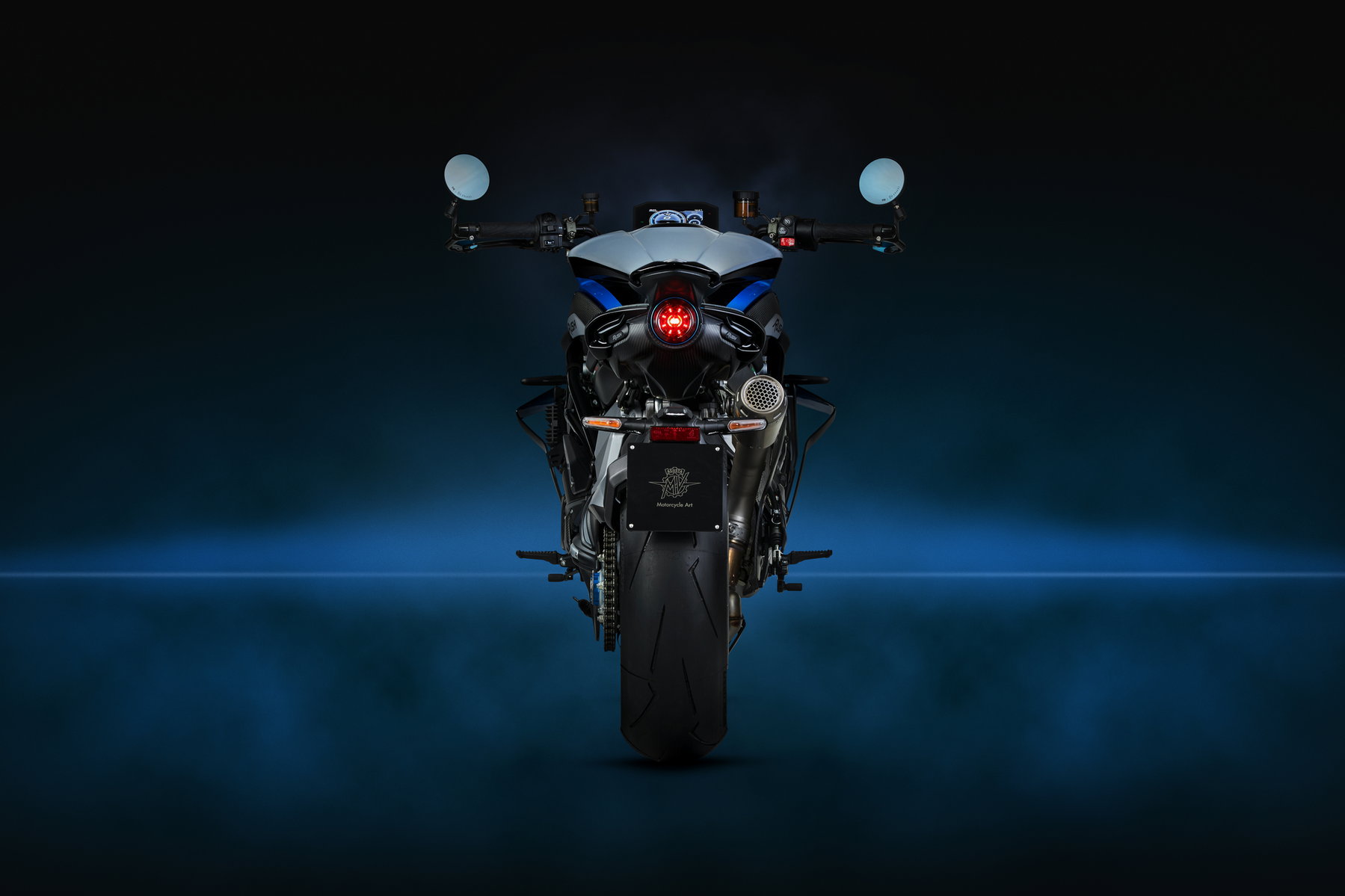
- The material palette ranges from billet and sintered aluminum through titanium and carbon to Alcantara and full-grain calfskin leather
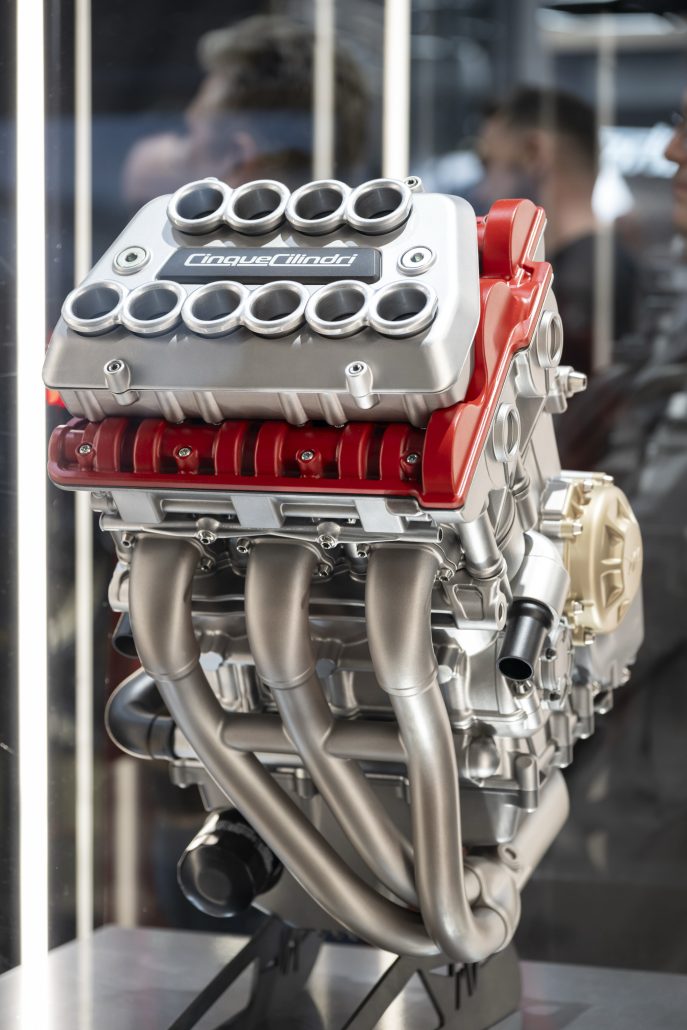
- In the four-cylinder engines, 16 radial titanium valves and four forged titanium connecting rods are meant to reduce moving mass
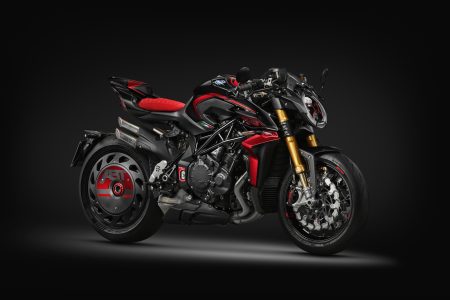
- The Rush Titanio gets a seat made entirely of Alcantara, which the manufacturer calls a certified world first
Italian manufacturer MV Agusta has used the term Motorcycle Art as a self-description since the mid-1990s. Until now, what exactly stood behind that claim remained unclear. In a detailed manifesto, the company now gives the term a technical framework and explains why each material is used in a particular place. The basic idea: according to the company, mechanics and design are conceived as a single object from the very first sketch, and every component should still hold up even when the motorcycle is taken apart.
What does MV Agusta Motorcycle Art mean?
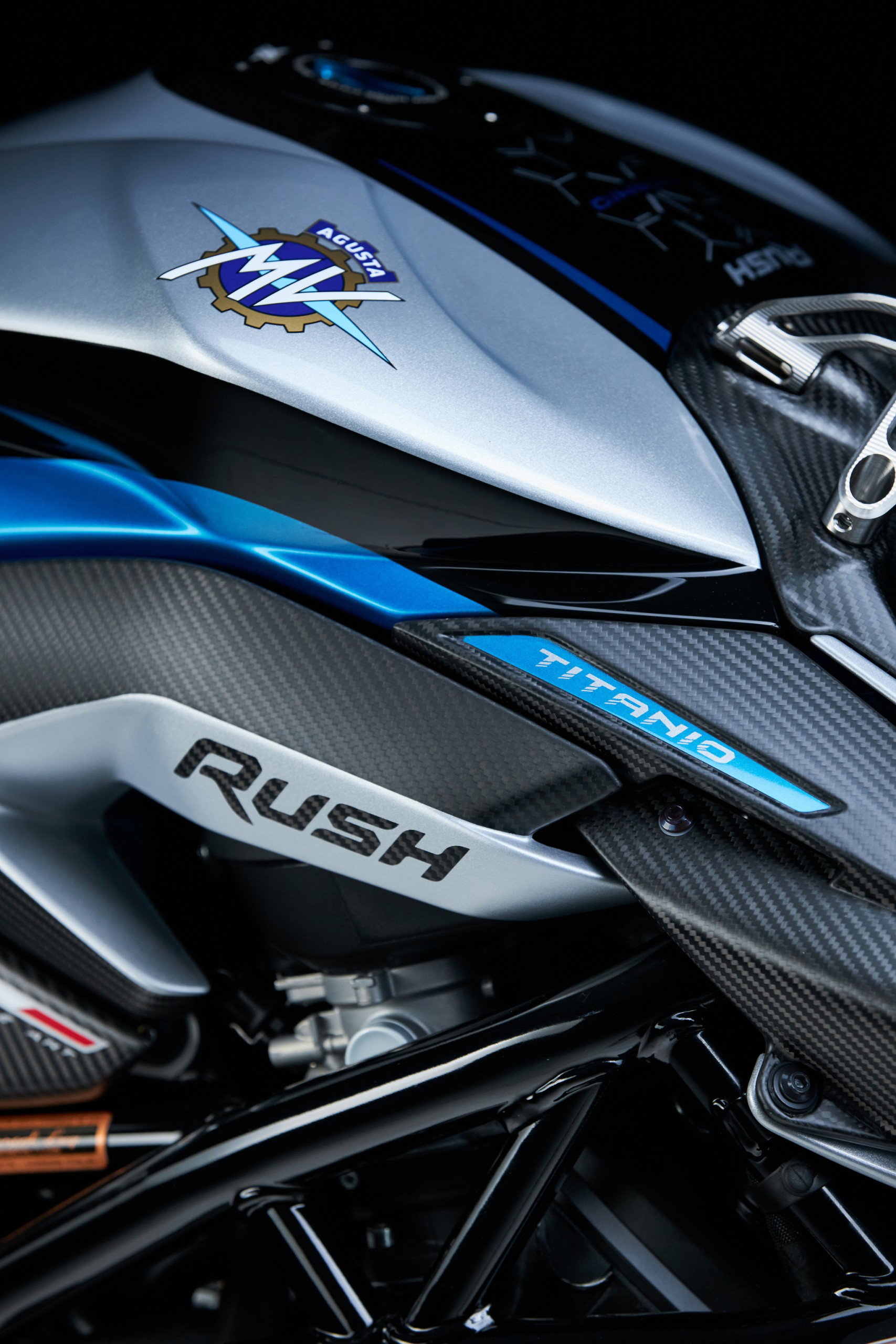
At MV Agusta, Motorcycle Art describes the claim that every component is finished to the same standard inside and out. According to the manufacturer, there are no hidden shortcuts: anyone who strips a Brutale or a Superveloce down to the last screw should find the same build quality even in places that are never seen. The company, which has been building motorcycles since 1945, explicitly views its machines as objects meant to be examined up close, not just to make an impression from a distance. According to the manifesto, premium character is not defined by performance figures alone, but is built into and justified by the object itself.
How does MV Agusta structure its material hierarchy?
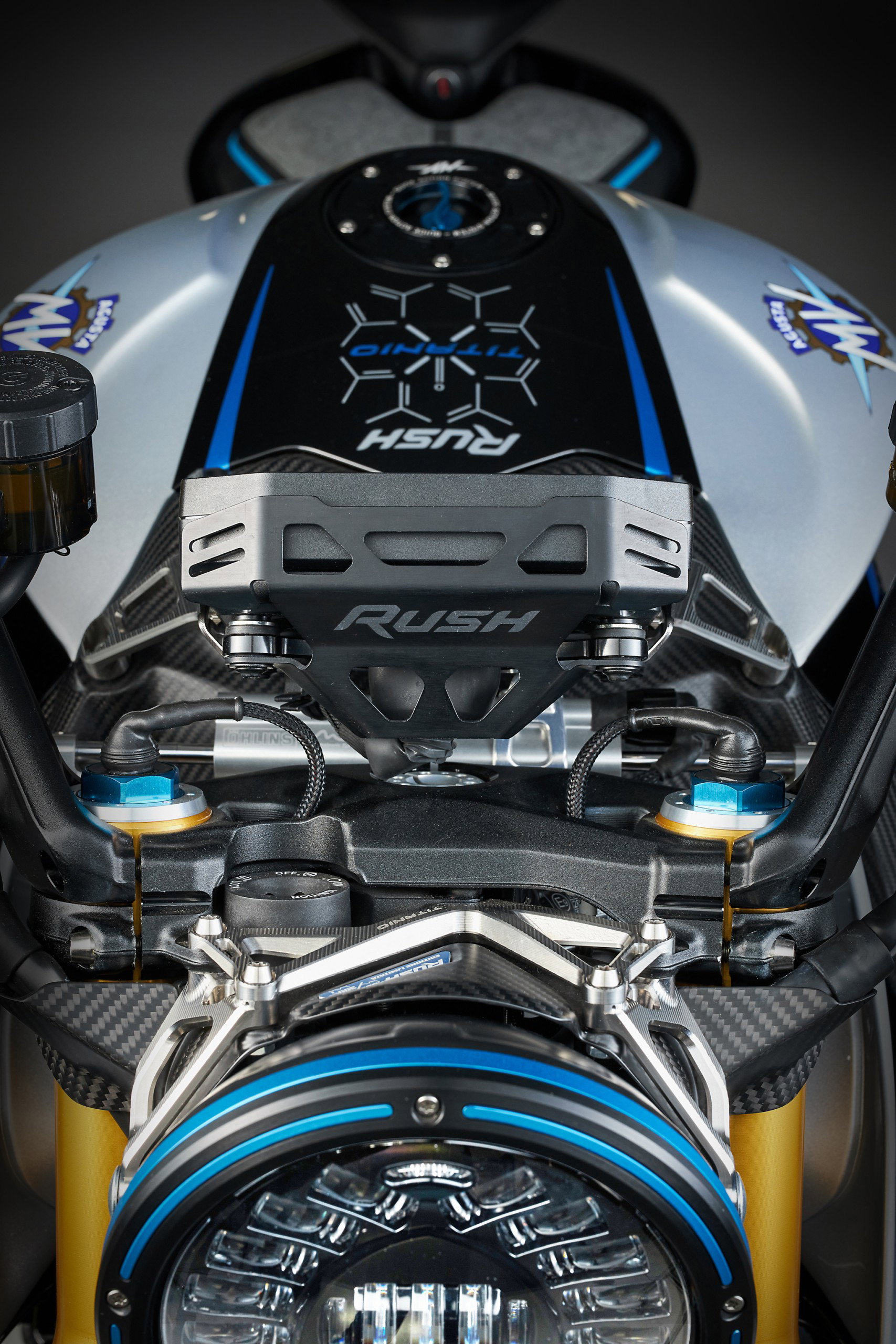
MV Agusta arranges its materials in a fixed hierarchy of value that runs through several characteristic components. The starting point in each case is how a material behaves under load, under vibration, and in terms of weight. One example is the cockpit bracket, which is directly connected to the tank and which the manufacturer describes as a proprietary solution with no equivalent among competitors.
From aluminum to titanium
The cockpit bracket begins as a billet aluminum component, machined from solid stock and engineered for load. In the Rush Mamba, it becomes sintered aluminum, where topology optimization maps load and vibration and removes material from unstressed areas. In the Rush Titanio, titanium is finally used, allowing thinner cross-sections and more delicate details. MV Agusta applies the same progression to the headlight bracket, which ranges from stamped and bent sheet metal through billet aluminum to titanium.
Why even the tank emblem plays a role
The Italian emblem on the tank, known as the Fregio, also follows this logic. It ranges from an embossed alloy, whose finish varies by model and special series, through billet aluminum on machines such as the Superveloce 1000 Serie Oro and the Superveloce 1000 AGO, to a titanium version on the Rush Titanio. According to the manufacturer, this titanium variant exists purely for the love of detail.
Why does MV Agusta use titanium?
At MV Agusta, titanium is first and foremost a functional material, and only secondarily a decorative one. In the four-cylinder engines, 16 radially arranged titanium valves and four forged titanium connecting rods are intended to reduce moving mass and enable higher engine speeds. The same material is used in the exhaust systems developed together with Arrow and Akrapovič, ranging from individual and complete Arrow systems to the homologated Akrapovič system on the F3 RR. Because titanium’s low modulus of elasticity allows thinner cross-sections, the metal also becomes a design feature on the Rush Titanio, for example on the cockpit and headlight brackets.
What makes the carbon parts special?
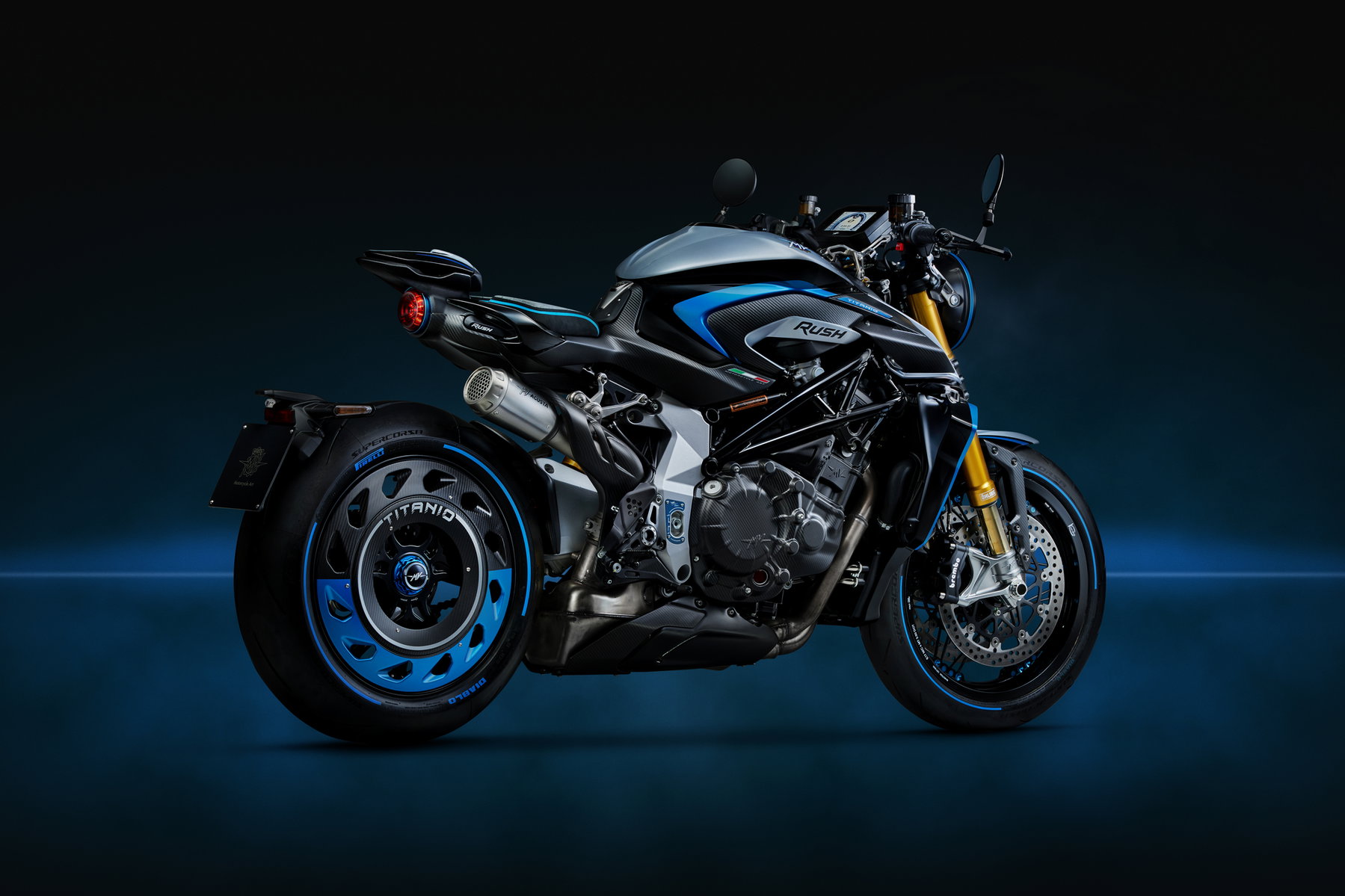
MV Agusta treats carbon as both a structural material and a visible surface at the same time. Highly stressed parts such as wheels or the cockpit bracket on the Superveloce 1000 Serie Oro are made through hand lay-up and autoclave curing, or from pre-impregnated, press-molded material. The visible weave is a deliberate choice and ranges from twill to plain weave to short fibers. The finish also varies between glossy, transparent, matte-transparent, and a tinted version in which a pigment shows through beneath the weave.
Which wheels does MV Agusta use?
For wheels, MV Agusta follows the same principle of matching the material to the task at hand. The range spans spoked wheels with a sealed rim bed for tubeless use, fitted to models such as the Enduro Veloce, the Superveloce 1000 AGO and the Superveloce 98, through cast and forged aluminum wheels, to full carbon on the F3 Competizione. The carbon wheel is considered the lightest solution in the lineup.
How are the seats made at MV Agusta?
MV Agusta views the seat as part of the design, not merely as a place to sit. Instead of varying a single cover material through embossing, the manufacturer combines several covers across the entry-level range, joined by a contrast-colored seam. Higher-grade materials follow above that: Alcantara, whose foam is protected against water by Alcantara’s patented EXO technology, and, at the top of the range, full-grain calfskin leather combined with Alcantara on the Superveloce 1000 Serie Oro. The repertoire also includes quilting, embroidery, laser engraving and thermally welded Alcantara. The range is topped off by the Rush Titanio, with a seat made entirely of Alcantara that combines thermal welding and laser engraving in a single component and which MV Agusta calls a certified world first.
Paintwork and graphics made in Italy
According to the manufacturer, every MV Agusta is painted exclusively in Italy. The colors are the brand’s own developments, derived from a base shade and given their own name. Graphics are applied using water transfer so that they appear to merge with the surface, then sealed between two clear coat layers over the color and primer. The number of layers depends on the desired finish. According to the company, the goal is a visible and tangible depth that sets it apart from a simple decal on the fairing.
This material strategy positions MV Agusta within its own model range, which spans the Superveloce, the Brutale and the Turismo Veloce to limited series such as the Rush Titanio, placing the brand in the premium segment. Federico Macario, Head of Product at MV Agusta, sums up the approach: “A motorcycle should reward the closest possible look. We design every MV Agusta component to be technical and beautiful at the same time — and to stay beautiful even when you take it apart. That is what makes every MV Agusta a unique piece of art.”
Frequently Asked Questions
-
What does MV Agusta Motorcycle Art mean?
MV Agusta Motorcycle Art describes the claim that every component is finished to the same standard inside and out. The term has been used since the mid-1990s and describes a combination of engineering and design that also includes hidden parts.
-
What materials does MV Agusta use?
According to the company, MV Agusta uses a broad range of materials spanning billet and sintered aluminum, titanium, carbon, Alcantara and full-grain calfskin leather. Each material is selected, according to the manufacturer, based on its behavior under load, vibration and weight.
-
What does MV Agusta use titanium for in the engine?
In the four-cylinder engines, 16 radial titanium valves and four forged titanium connecting rods are meant to reduce moving mass and enable higher engine speeds. Titanium is also used in the exhaust systems developed with Arrow and Akrapovič.
-
What is special about the Rush Titanio’s seat?
The Rush Titanio gets a seat made entirely of Alcantara, which MV Agusta calls a certified world first. It combines thermal welding and laser engraving in a single component.