- On 20 July 2026, insolvency practitioners from KR8 Advisory were appointed, and trading stopped with immediate effect.
- The company operated six locations in the United Kingdom and sold around 15,000 used motorcycles per year.
- Despite revenue of around £83 million (approximately €97 million / $112 million), the business model was no longer viable.
Europe’s self-proclaimed largest used motorcycle dealer, SuperBike Factory, has gone insolvent and ceased trading. For buyers, sellers and several hundred employees, the question now is what happens next. SuperBike Factory had long been considered one of the biggest success stories in the British used motorcycle trade. What started as a single showroom in Macclesfield grew into a dealer with six locations that bought and resold thousands of motorcycles every year. Little remains of that growth today. The company has appointed insolvency practitioners and halted sales.
What happened to SuperBike Factory?
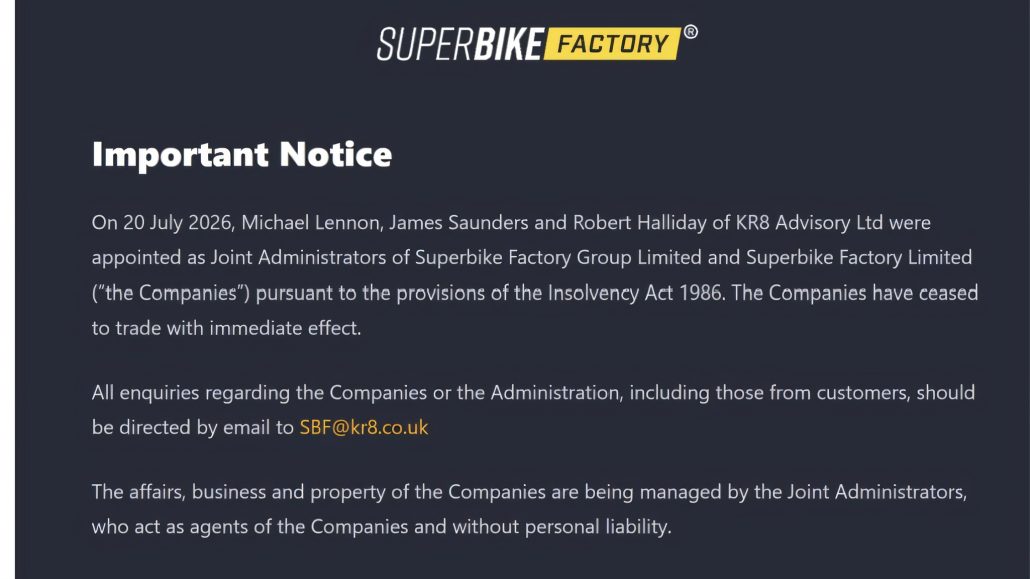
SuperBike Factory has gone insolvent and ceased trading. Late on 20 July 2026, insolvency practitioners were appointed for both Superbike Factory Group Ltd and Superbike Factory Ltd.
This followed a so-called notice of intention to appoint an administrator, which the company filed on 17 July 2026. Such a step initially protects a company from creditor action and buys time to negotiate a rescue or a sale. A few days later, the actual administration followed. Business operations ended with immediate effect.
Who is managing the company now?
The administration is being handled by Manchester-based firm KR8 Advisory. Michael Lennon, James Saunders and Robert Halliday were appointed as joint administrators.
They manage the business, assets and ongoing affairs of both companies, acting as agents of the firms. Enquiries from customers and other affected parties should be directed exclusively to SBF@kr8.co.uk by email. Comments on the company’s social media channels have since been restricted, and direct contact with the former management was no longer possible.
How big was SuperBike Factory?
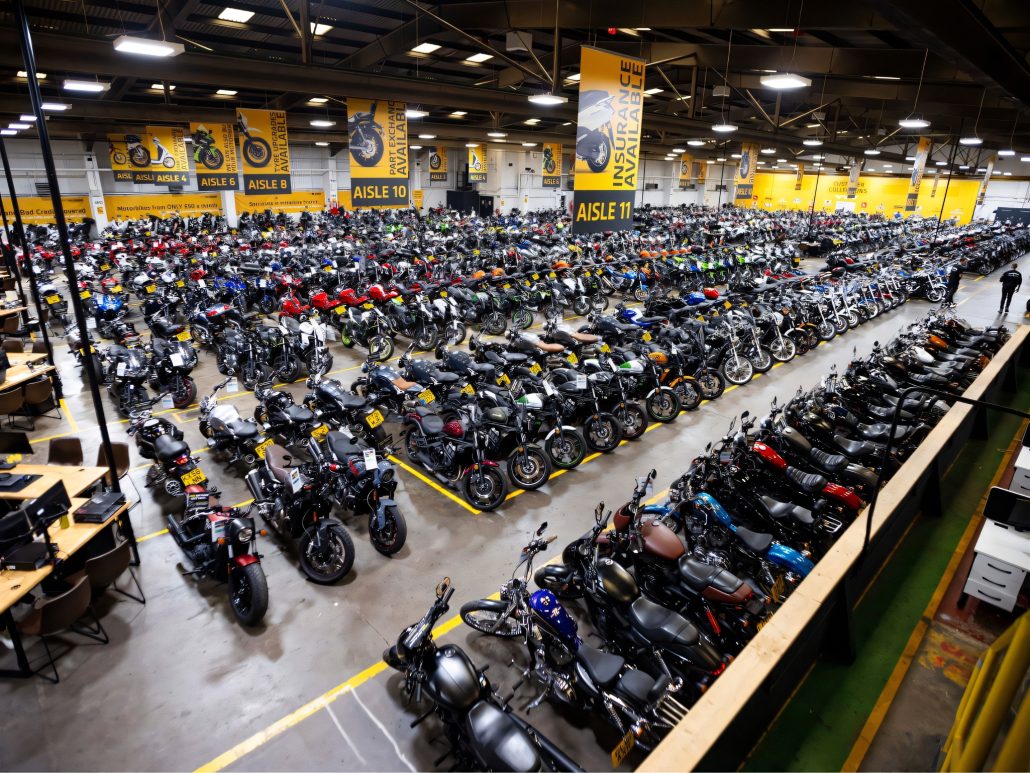
SuperBike Factory was a heavyweight in the British used motorcycle market, with six locations and around 15,000 motorcycles sold per year. According to filed figures, that amounted to 15,036 machines in 2024, up from 13,588 the year before.
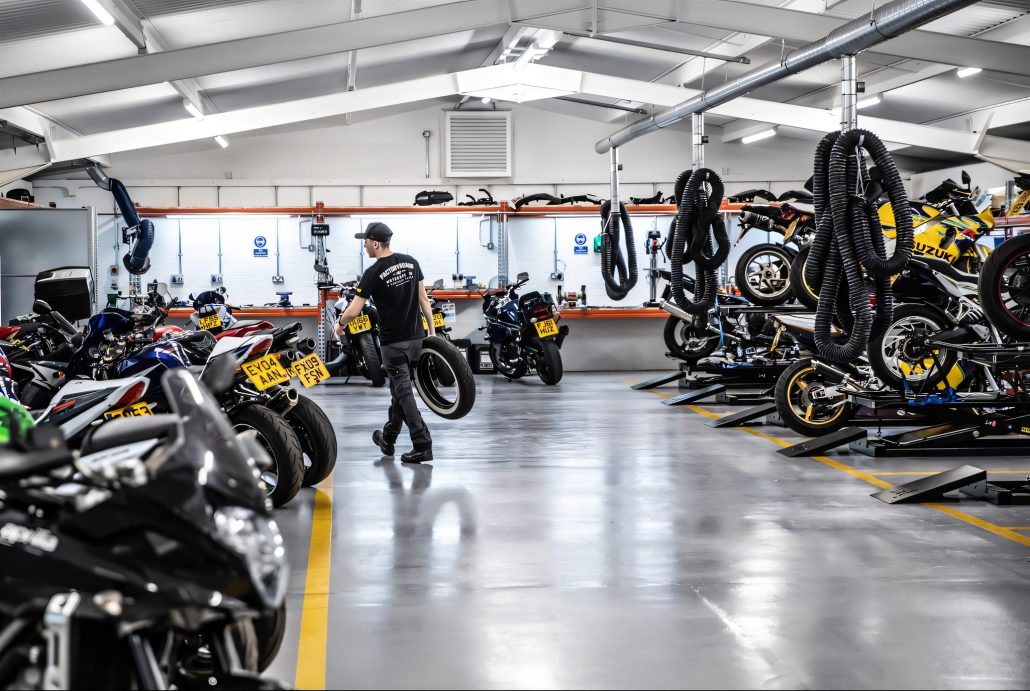
The business model was clearly structured. Via the platform WeBuyAnyBike.com and other digital channels, the company bought motorcycles in large numbers, prepared them centrally, and resold them through large showrooms as well as online. According to the company, every motorcycle sold came with a 90-day warranty and at least six months remaining before its next MOT was due. In parallel, the company built up its own financing arm and became one of the UK’s leading motorcycle credit brokers. SuperBike Factory most recently employed around 200 people; according to official figures, it had 276 at the end of 2024.
Which locations were part of it?
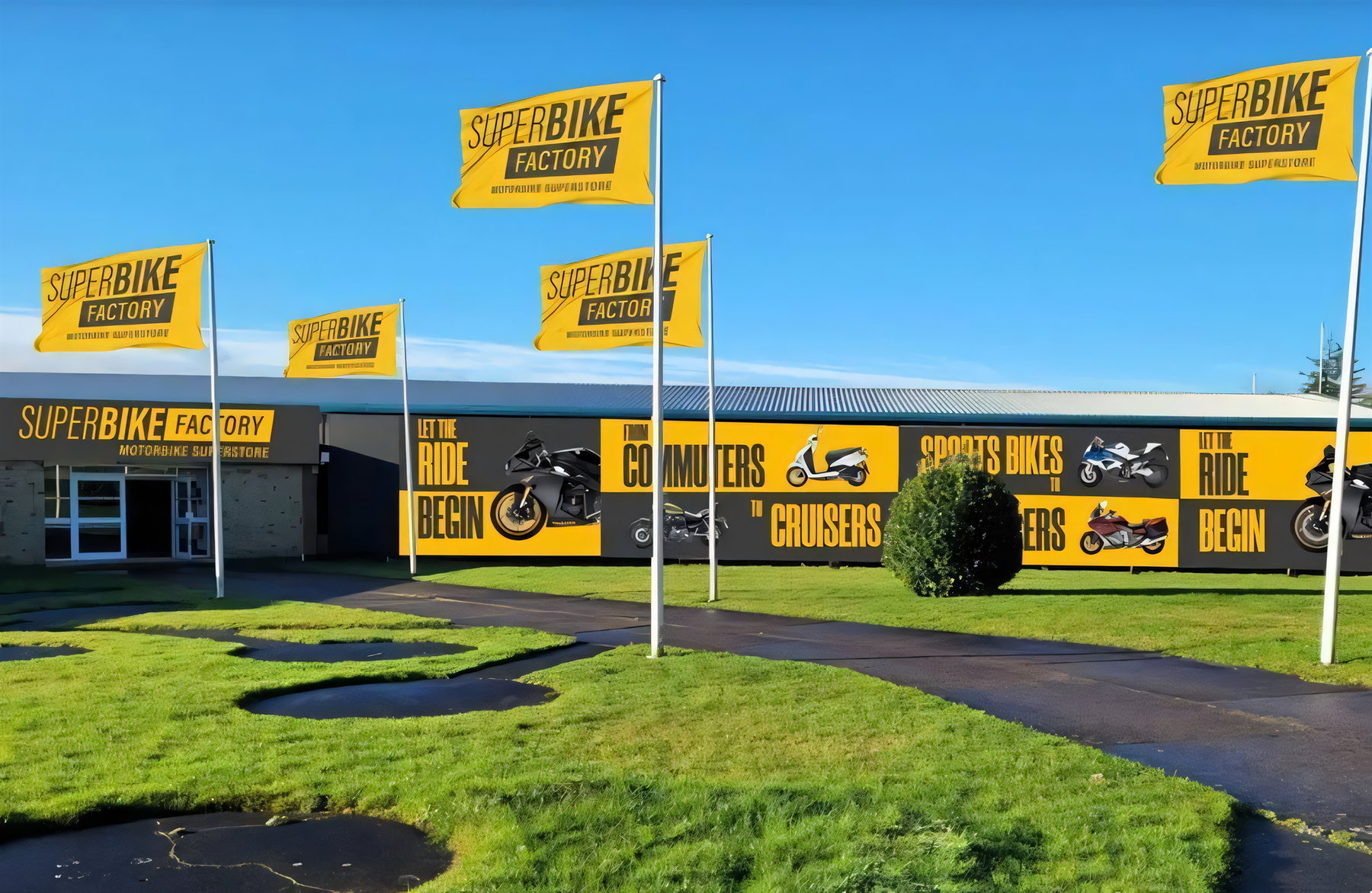
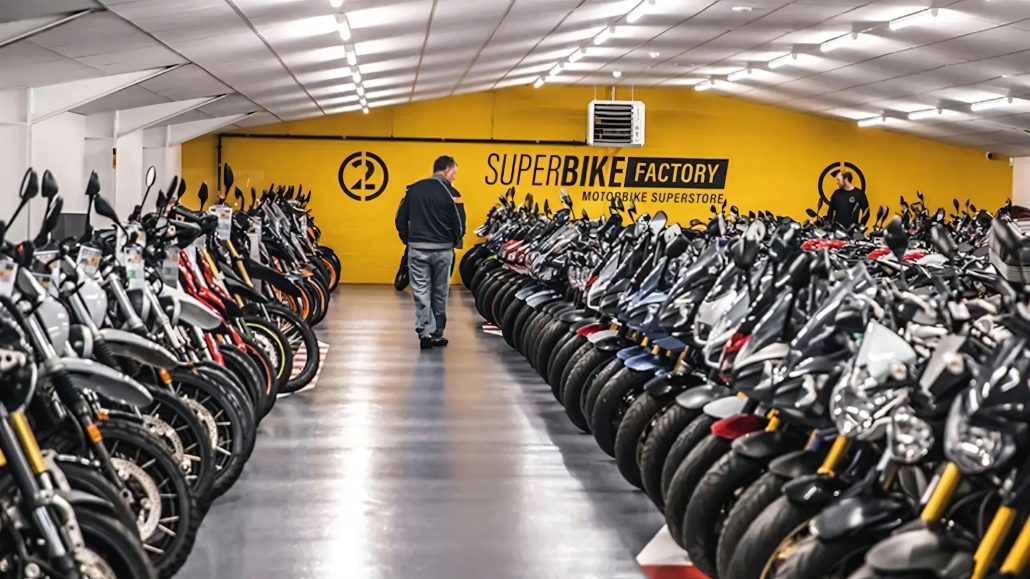
The headquarters in Macclesfield remained the flagship and ranks among the largest indoor motorcycle showrooms in Europe. In 2021, a second location was added at Donington Park, right next to the racetrack, which also houses the Factory Heads Café and its own accessories shop. In 2022, the company acquired dealer Ritebike in Bradford and renamed it SuperBike Factory West Yorkshire. Locations in Bristol and Milton Keynes followed in 2023. The sixth and final location opened in February 2025 in Crawley, on the former site of P&H Motorcycles.
Why did SuperBike Factory run into trouble?
The decisive factors were a mix of problems in the financing market and a weak consumer environment. The company had already flagged several risks in its 2024 annual accounts.
A central issue was the availability of financing partners. A UK court ruling classed certain dealer commissions paid without the customer’s knowledge as unlawful. This exposed lenders to potential compensation claims from former customers, which weighed on the entire motorcycle finance market. Rising living costs and fragile consumer confidence added further pressure. The company had been acquired by Enact, the mid-market fund of investment firm Endless, in December 2023. SuperBike Factory was founded back in 2010 by entrepreneurs Scott Behrens and James Watson, who positioned themselves as challengers in a highly fragmented, traditionally dealer-driven market.
On paper, the situation initially looked solid. The most recently published annual accounts for 2024, filed in September 2025, showed a pre-tax profit of £8.5 million (approximately €10 million / $11 million) on revenue of around £83 million (approximately €97 million / $112 million). The risks outlined above, however, show how fragile that picture really was underneath.
What does the insolvency mean for buyers and sellers?
For customers, the key point is this: sales have stopped, and all enquiries now go through the insolvency practitioners. Anyone who had a motorcycle in for repair or processing, is expecting an outstanding payment, or has questions about warranty and service should contact SBF@kr8.co.uk by email.
Since trading was halted with immediate effect, processes such as deliveries, payouts to sellers and service commitments remain unresolved for now. What happens to the WeBuyAnyBike.com platform, which the company also operated, has not yet been finally clarified. In such insolvency proceedings, the administrators assess which path best serves the creditors. A sale of the business to a new owner is possible, but so is a full wind-down. The example of Norton, which was taken over and continued by manufacturer TVS after financial troubles, shows that a brand can be carried on out of insolvency. In SuperBike Factory’s case, however, there is no guarantee of that.
How is the motorcycle market doing overall?
SuperBike Factory is not the first big name to run into trouble in recent years. Dealer Completely Motorbikes collapsed in 2024, and Mutt Motorcycles and CCM went into administration in 2025.
The market had been under pressure for some time. Following the introduction of the new Euro 5 Plus emissions standard, buying behaviour shifted, and higher credit costs and cautious spending added to the strain. Recently, however, there have also been positive signals. By the end of June 2026, new motorcycle registrations in the UK had risen 15.7 percent to 54,631, up from 47,222 in the first half of 2025. Against this backdrop, the end of an established player like SuperBike Factory carries even more weight, as it shows that even a recovering market environment does not automatically sustain every individual business model.
Frequently Asked Questions
-
Is SuperBike Factory really insolvent?
Yes, insolvency practitioners were appointed for both companies on 20 July 2026. Trading operations ceased with immediate effect.
-
What does the SuperBike Factory insolvency mean for pending orders?
All enquiries are now handled by the insolvency practitioners at KR8 Advisory. Customers with open matters should contact SBF@kr8.co.uk by email, as trading has stopped and warranty and service commitments remain unresolved for now.
-
How many locations did SuperBike Factory have?
The company operated six locations in the United Kingdom. These included the headquarters in Macclesfield as well as branches in Donington Park, Bradford, Bristol, Milton Keynes and Crawley.
-
How many motorcycles did SuperBike Factory sell per year?
The company sold around 15,000 used motorcycles per year. For 2024, 15,036 machines sold were reported, up from 13,588 the year before.
-
Why did SuperBike Factory fail despite high revenue?
Despite revenue of around £83 million, problems in the financing market and a weak consumer environment weighed on the business. A court ruling on unlawful dealer commissions made arranging credit more difficult, compounded by rising living costs and fragile consumer confidence.