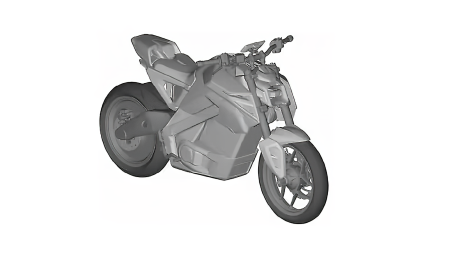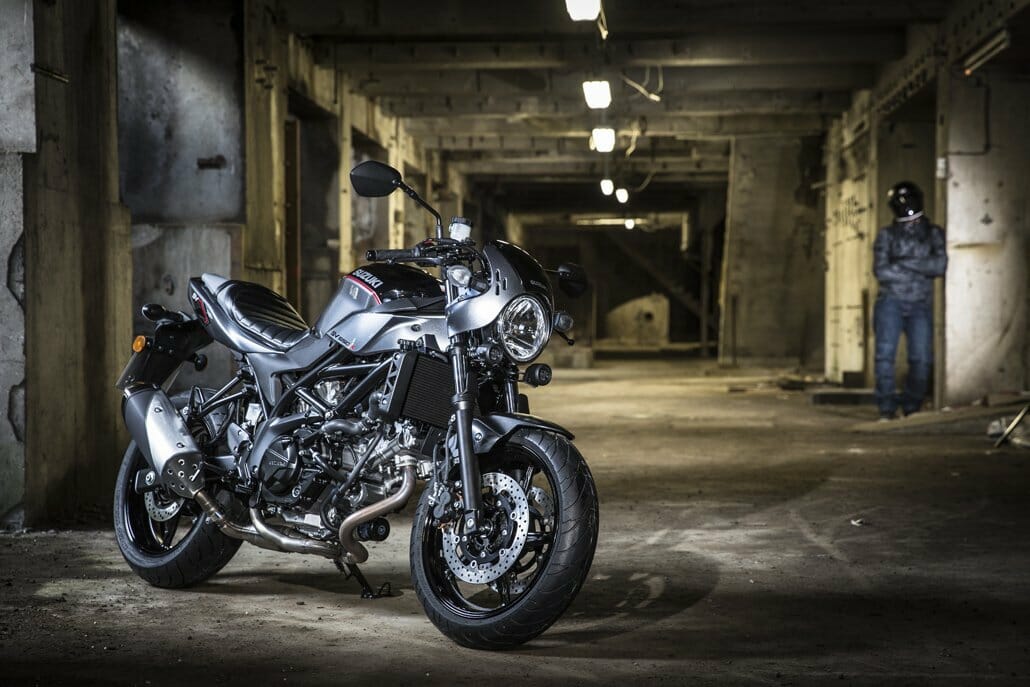
- Certified by California’s air quality regulator CARB under the model code SV650RQM7 for 2027
- Engine and emissions hardware come from the SV-7GX, including a second lambda sensor and a revised catalytic converter
- A reveal at EICMA in November 2026 looks likely, pricing remains open
For many riders the story seemed to be over. In autumn 2024 Suzuki showed what looked like the final set of new colours for the SV 650, and the update from Euro 5 to Euro 5+ never happened. That made it clear the model, launched in 1999, was being phased out in Europe. Suzuki’s range had long included the similarly positioned GSX-8S with its parallel twin and up to 83 hp (61 kW). Now the SV 650 has resurfaced in a regulatory filing from California, and with technology it never had before.
What does the Californian certification say about the Suzuki SV 650?
The California Air Resources Board (CARB) has added the SV 650 to the existing certification of the SV-7GX, clearing it for the 2027 model year. The bike is listed there under the code SV650RQM7, while the 2026 version is still called SV650AM6.
That string of letters says more than it appears to. Under Suzuki’s usual system, the suffix M7 stands for the 2027 model year. The letters RQ have marked every street model from the brand that uses the newer engine generation since the GSX-8S arrived in 2023. Back then the GSX-8S ran under the code GSX800RQM3. Being folded into the SV-7GX certification also means both models share the same engine and the same emissions system, including the second lambda sensor behind the catalytic converter and the revised converter itself.
The filing says nothing about styling, the frame or the chassis. Documents of this kind only cover the powertrain and emissions.
Which technology does the new SV 650 take from the SV-7GX?
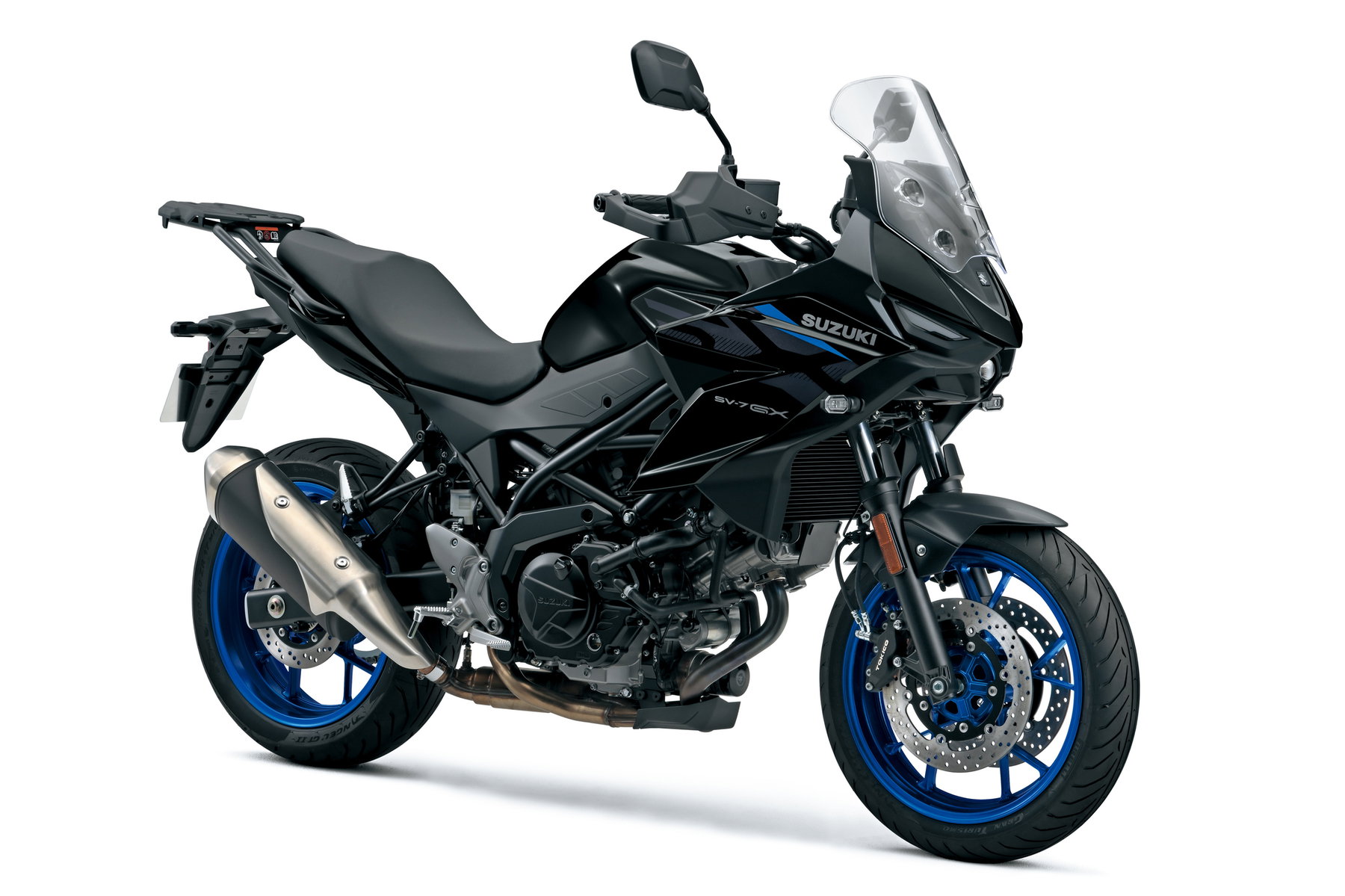
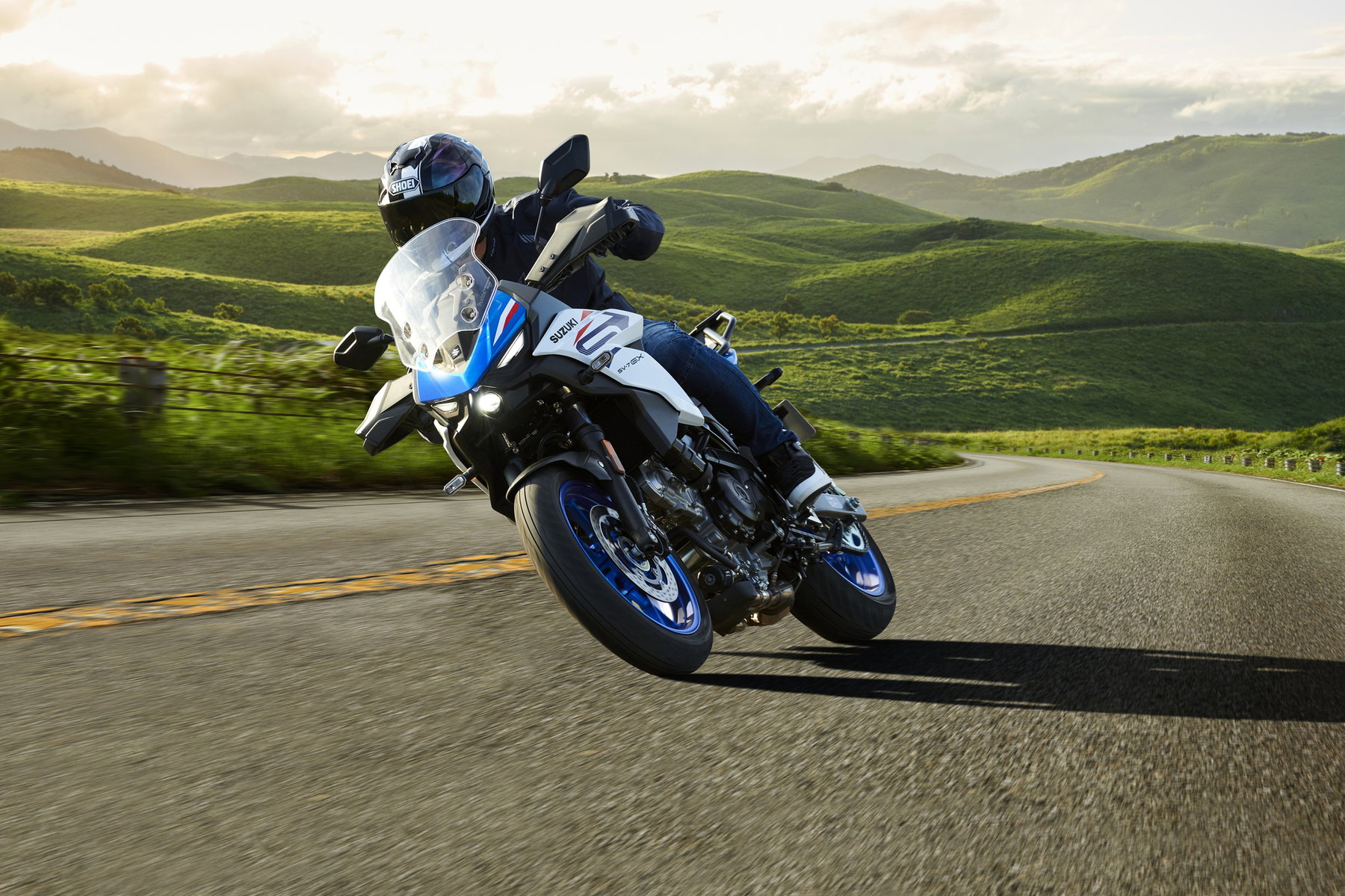
Alongside the Euro 5+ compliant V-twin with 73 hp (54 kW), the SV-7GX electronics package is the obvious candidate. It includes ride-by-wire, selectable riding modes, traction control, a bi-directional quickshifter and a 4.2-inch TFT display.
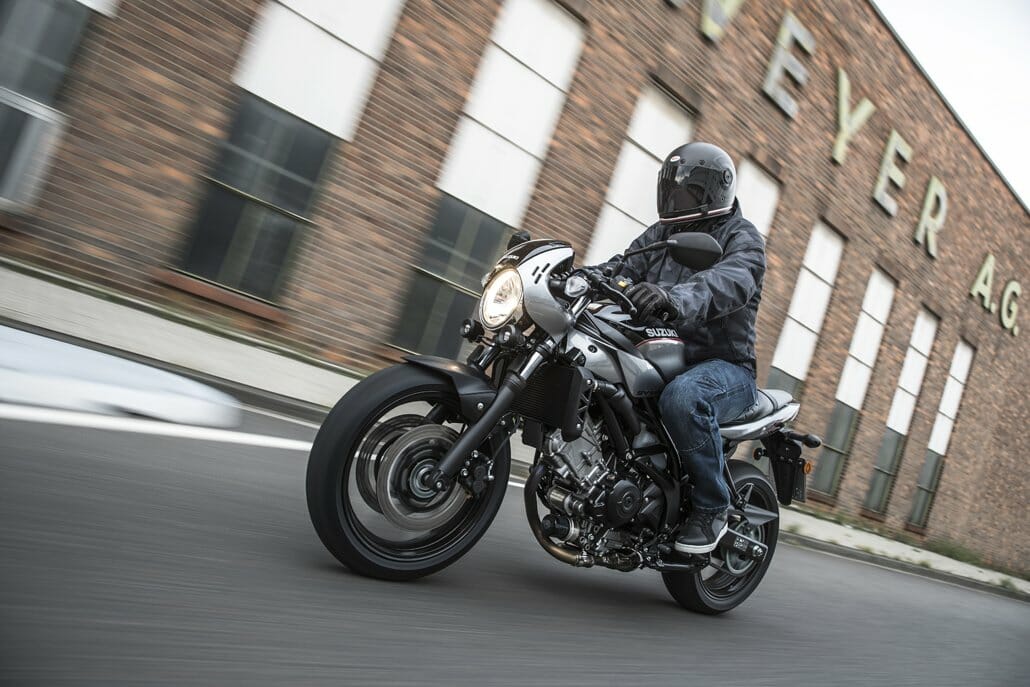
Ride-by-wire means there is no longer a cable running from the throttle grip to the throttle bodies; instead a sensor passes the signal to the control electronics. Only that setup makes riding modes and slip control possible in the first place. The current SV 650 lacks exactly this foundation, making do with a monochrome LC display, no riding modes, no traction control and no lean-angle-sensitive rider aids. It produces 73 hp (54 kW) at 8,500 rpm and 64 Nm (around 47 lb-ft) at 6,800 rpm, weighs 200 kilograms (441 lbs) and is listed as a Euro 5 run-out model from 7,789 euros (around 9,035 US dollars).
The chassis is likely to be carried over as well, because despite its crossover styling the SV-7GX is not a long-travel machine. Suspension travel is 129 millimetres front and rear, seat height is 795 millimetres, and the 17-inch wheels carry a 160-section rear tyre. That matches what the SV 650 has always been about. On weight, the new version should stay below the GX, which weighs 211 kilograms (465 lbs) fully fuelled and holds 17.4 litres. The last SV 650 built came in at exactly 200 kilograms (441 lbs) with a 14.5-litre tank.
Why did the SV 650 disappear from Europe in the first place?
The reason was the Euro 5+ emissions standard, which came into force on 1 January 2024. It tightened the on-board diagnostics requirements, mandated catalytic converter monitoring and raised the durability demands.
A one-year transition period allowed existing models to stay on sale but ran out in 2025. For Suzuki, converting the old engine clearly was not worth it. That does not apply in the US, where the Environmental Protection Agency has not introduced stricter motorcycle limits. The tightening adopted in April 2024 from the 2027 model year onwards only covers passenger cars and light commercial vehicles. This pattern has a history at Suzuki: as early as 2009 the DR-Z400S, DR-Z400SM, GSX-R600 and GSX-R750 vanished from Europe because of Euro 4, and in 2022 the GSX-R1000 followed because of Euro 5. All four stayed in the US line-up.
When will the new Suzuki SV 650 arrive and what will it cost?
An official premiere at EICMA in Milan in November 2026 looks likely, although Suzuki has not confirmed it. There is no pricing information at all so far.
One reference point is the sister model’s price list: the SV-7GX currently costs 8,588 euros (around 9,960 US dollars). In Germany, a new SV 650 was most recently available for under 8,000 euros (around 9,280 US dollars). Whether that level can be held will only become clear at the official launch. There is another interesting angle: with the updated V-twin, a new V-Strom 650 would be technically feasible, and it would then have to set itself apart as a genuine adventure tourer from the more road-focused SV-7GX. That is not confirmed either. In the 2027 model year, with many manufacturers reshuffling their middleweights, the SV 650 would be one of the few returnees rather than an all-new design.
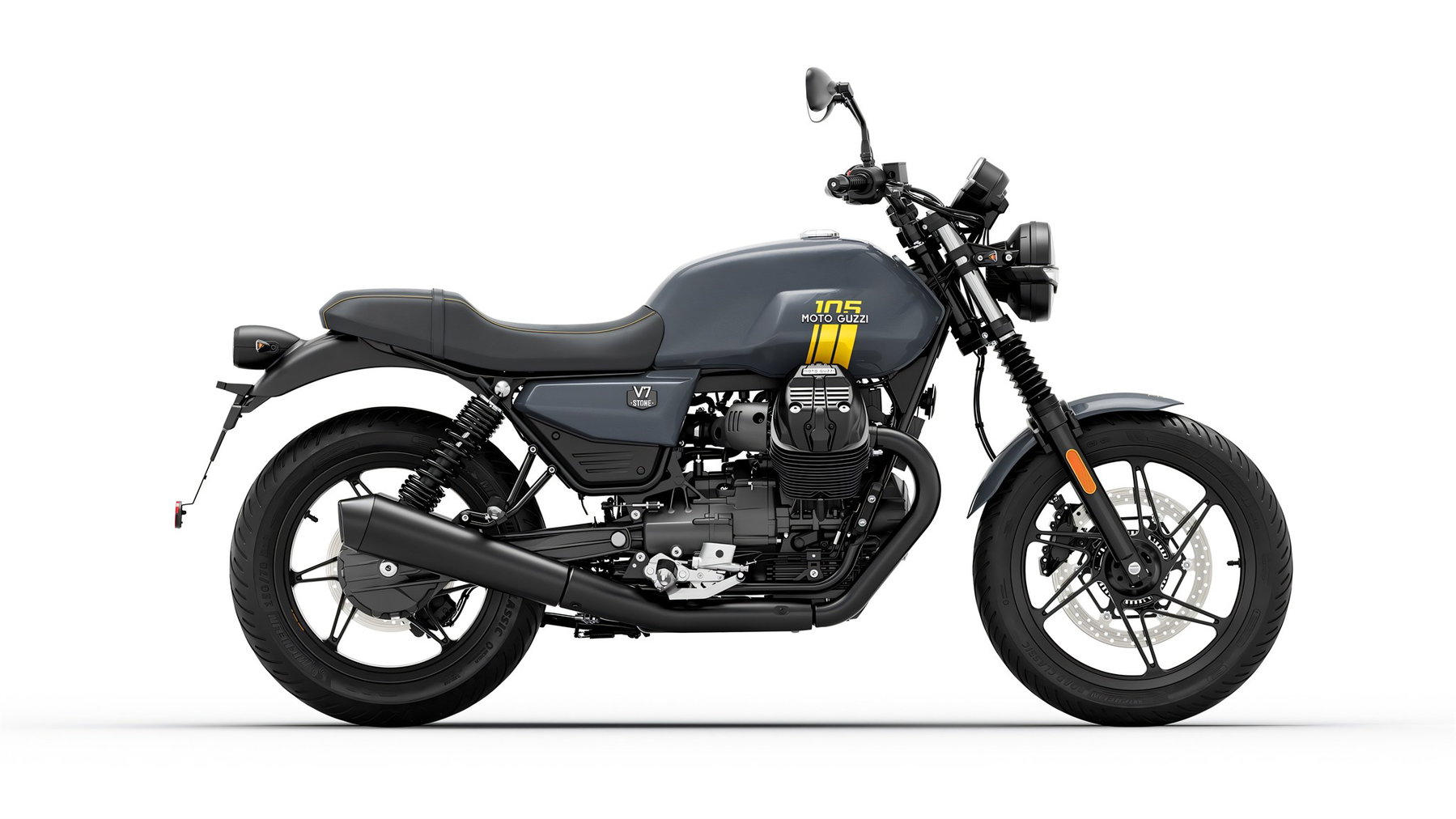
These V-twin naked bikes are still available in Germany
The V-twin has all but died out in this capacity class. Anyone looking for an unfaired motorcycle with two cylinders arranged in a V today will find only two models besides the run-out SV 650, and both are set up very differently.
Moto Guzzi V7 Stone
The V7 Stone carries its V-twin longitudinally, as is typical for Moto Guzzi. From 853 cubic centimetres it makes 67 hp (49 kW) at 6,900 rpm and 79 Nm (around 58 lb-ft) at 4,400 rpm. At 218 kilograms (481 lbs) it is heavier than the Suzuki, and visually it sits firmly in the retro camp. Electronically it is more modern than its looks suggest: traction control, cruise control and riding modes are on board. The biggest difference is the price, with the base version listed at 9,800 euros (around 11,370 US dollars).
Ducati Scrambler
The Ducati Scrambler is less a naked bike than a scrambler with retro styling. Its Desmodue engine uses toothed belts for the valve gear and traces its basic layout back to the Pantah of 1977. Today it measures 803 cubic centimetres, produces 73 hp (54 kW) at 8,250 rpm with oil cooling and delivers 65 Nm (around 48 lb-ft) at 7,000 rpm. That puts it practically level with the liquid-cooled Suzuki V-twin, but it offers more electronics: ABS and traction control are lean-angle-sensitive as standard. The entry price is 9,990 euros (around 11,590 US dollars).
Why do Chinese manufacturers barely build V-twins in this class?
The segment of affordable naked bikes from 500 cubic centimetres up to around 75 hp is barely occupied even in the Chinese home market. Accordingly, there is no V-twin alternative to the SV 650 from that direction either.
Where Chinese manufacturers do use V-twins, they are mostly cruisers and bobbers. One exception is Moto Morini, now part of China’s Zhongneng Group, which has again shown various concepts with V-twin engines from 750 to 1,200 cubic centimetres. For the class around 650 cubic centimetres the choice therefore remains slim, and that is exactly what makes a modernised SV 650 interesting for the European market.
Frequently Asked Questions
-
Will the Suzuki SV 650 return to Europe?
That has not been confirmed so far. All that is certain is the certification for the 2027 model year in California. Because the new version uses the same Euro 5+ compliant engine as the SV-7GX, a European sale would be technically possible.
-
How much power does the Suzuki SV 650 V-twin make?
The 645 cubic centimetre V-twin produces 73 hp (54 kW). On the current SV 650 peak power arrives at 8,500 rpm, with maximum torque of 64 Nm (around 47 lb-ft) at 6,800 rpm. The Euro 5+ version in the SV-7GX has the same rated output.
-
When will the new Suzuki SV 650 be unveiled?
EICMA in Milan in November 2026 is seen as the likely date. Suzuki has not named a date so far. The SV-7GX was shown for the first time at the previous year’s edition of the show.
-
What does the current Suzuki SV 650 still cost?
The run-out Euro 5 version is available from 7,789 euros (around 9,035 US dollars). For comparison: the technically more modern SV-7GX costs 8,588 euros (around 9,960 US dollars). Prices for the new edition are not yet available.
-
Which V-twin naked bikes are currently available in Germany?
Besides the run-out Suzuki SV 650 these are the Moto Guzzi V7 Stone from 9,800 euros (around 11,370 US dollars) and the Ducati Scrambler from 9,990 euros (around 11,590 US dollars). Both have larger engines than the Suzuki, but are considerably more expensive.