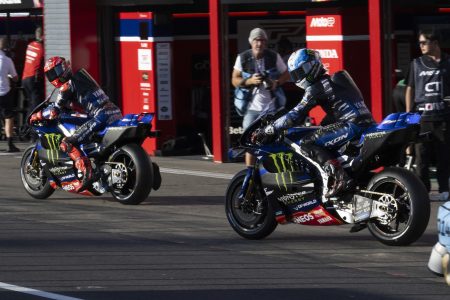
- 12 championship points after eleven race weekends, with zero points scored in the sprint races so far
- Best result so far was 11th place at the Balaton Park Grand Prix
- From 2027, MotoGP switches to 850cc bikes and Pirelli tyres, and Razgatlioglu already has a contract in place for that season
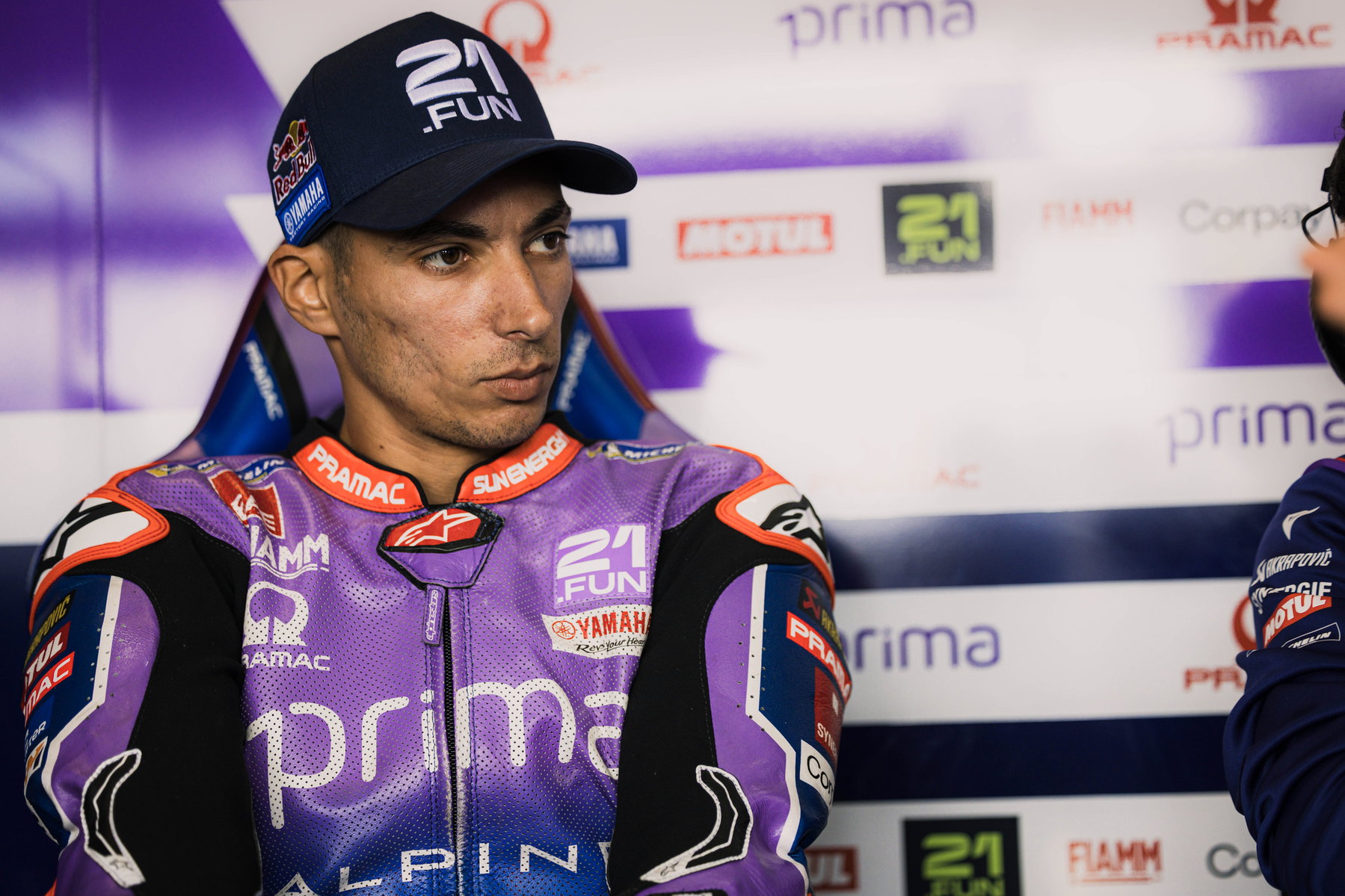
When Toprak Razgatlioglu announced his move to the premier class, it was about more than one rider’s career. The Turkish rider arrived as a three-time Superbike World Champion with 78 race wins, having claimed his titles with Yamaha and BMW, and was regarded as one of the strongest riders in the production-based class. His switch to Pramac Yamaha was therefore also read as a test case for the reputation of the Superbike World Championship, whose level has been rated lower by some inside the MotoGP paddock for years. At the halfway point of the 2026 MotoGP season, the answer to that question is less clear-cut than many had expected.
How Does Toprak Razgatlioglu’s Mid-Season Balance Sheet Look?
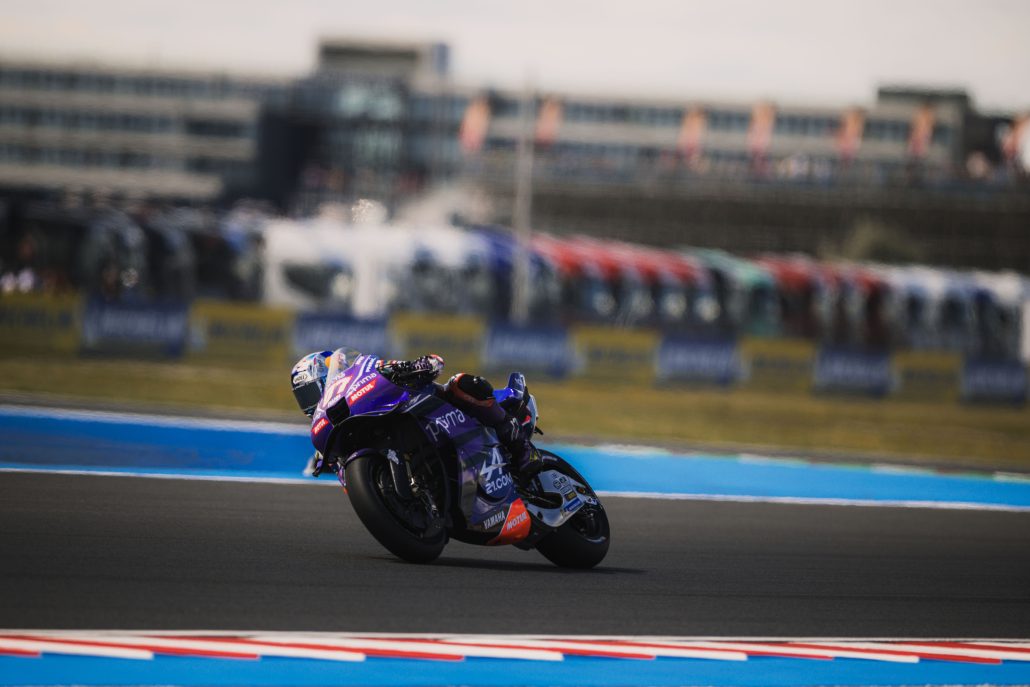
After eleven of 22 race weekends, Razgatlioglu sits 21st in the riders’ standings with 12 points, making him the weakest of the four Yamaha riders. In the Saturday sprint races he is still waiting for his first point, having scored all of his points on Sundays.
His first success came at the third round of the season in Austin, where he finished 15th to score points for the first time. That was followed by 13th in Le Mans and 11th at the turbulent Balaton Park Grand Prix, his best result so far. In Brno he crossed the line 14th. Another bright spot came in qualifying in Brazil, where he fought his way into the top ten during a chaotic Friday practice session, sending him straight through to the second qualifying segment, Q2.
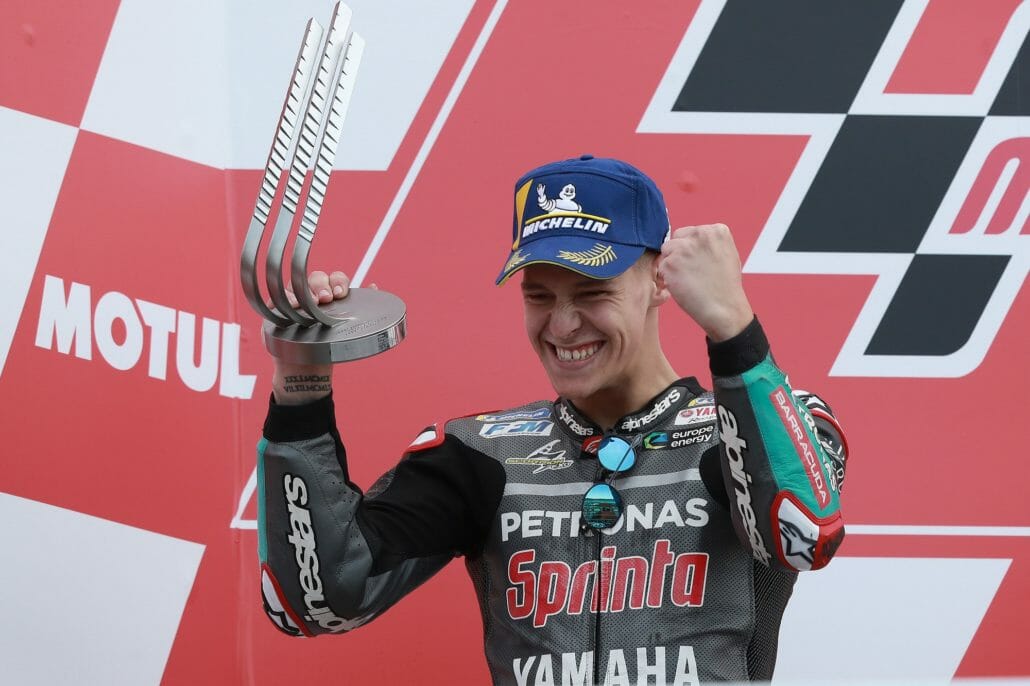
For comparison: after eight weekends, Razgatlioglu had nine points on the board, three fewer than fellow Yamaha rider Alex Rins and two fewer than Pramac box neighbour Jack Miller. Over the same period, Fabio Quartararo’s 37 points showed what is currently possible on the M1 at best.
Why Is Razgatlioglu Struggling on the Yamaha M1?
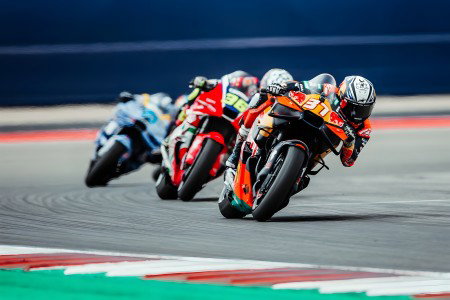
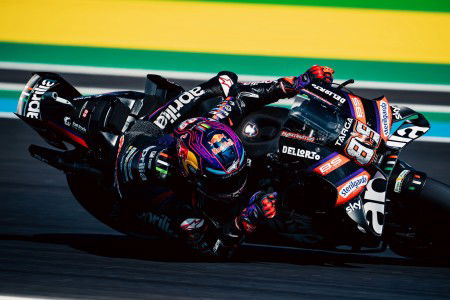
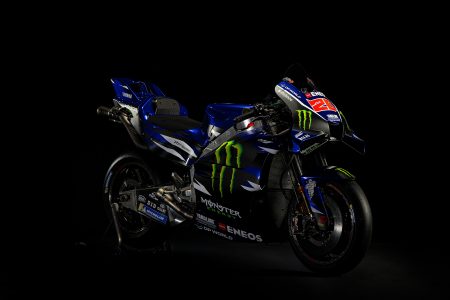
The biggest factor is the equipment: under normal conditions, the new V4 Yamaha is clearly off the pace of the Ducati, Aprilia, KTM and Honda machines. That leaves Razgatlioglu without the base he needs to even show his strengths.
He has described just how much this limits him himself. His biggest problem, he explained ahead of the Brno race, is that he cannot overtake anyone. On the straights the rivals are faster; under braking he can close the gap, but has no way to attack afterwards. Riding alone, his pace is decent, but he cannot get past a rival ahead of him. Against other Yamahas he can attack, but against other manufacturers it becomes difficult. “That gives me a bad feeling,” he said about it.
On top of that comes the switch to the Michelin tyres, which MotoGP will continue using through the end of 2026. Razgatlioglu has admitted that he has not yet fully shaken off his Superbike riding style and does not yet understand the tyres in every situation.
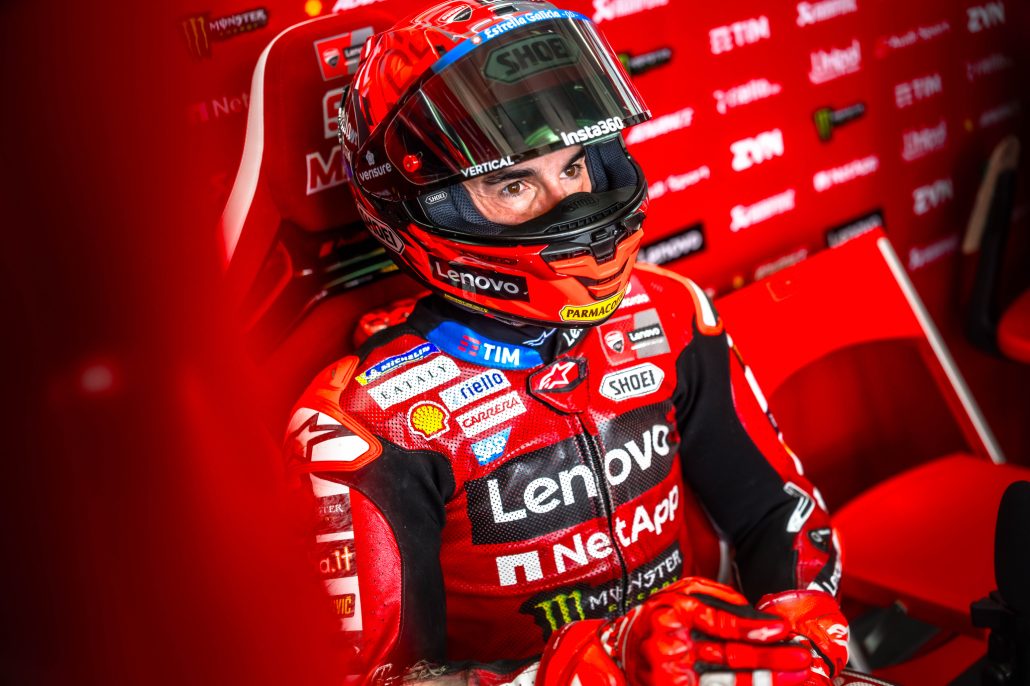
Why Doesn’t a Superbike Riding Style Easily Translate to Modern MotoGP?
Because modern MotoGP prototypes leave riders very little room to ride a bike in their own personal style. Aerodynamic bodywork, ride-height-adjustable suspension and extremely stiff chassis define a narrow operating window in which the rider has to adapt to the technology, not the other way around.
That, however, is exactly what Razgatlioglu thrives on. His spectacular braking manoeuvres and aggressive style worked in the Superbike World Championship for years. In MotoGP, they have barely paid off so far. Marc Márquez has repeatedly explained that today’s bikes can no longer simply be ridden through their limits. Ten years ago, an exceptional rider could still compensate for a bike’s weaknesses to a certain degree; these days, the technology sets the pace. Even Márquez has had to adapt his approach to the current aero bikes.
The Sachsenring as the Low Point of the First Half of the Season
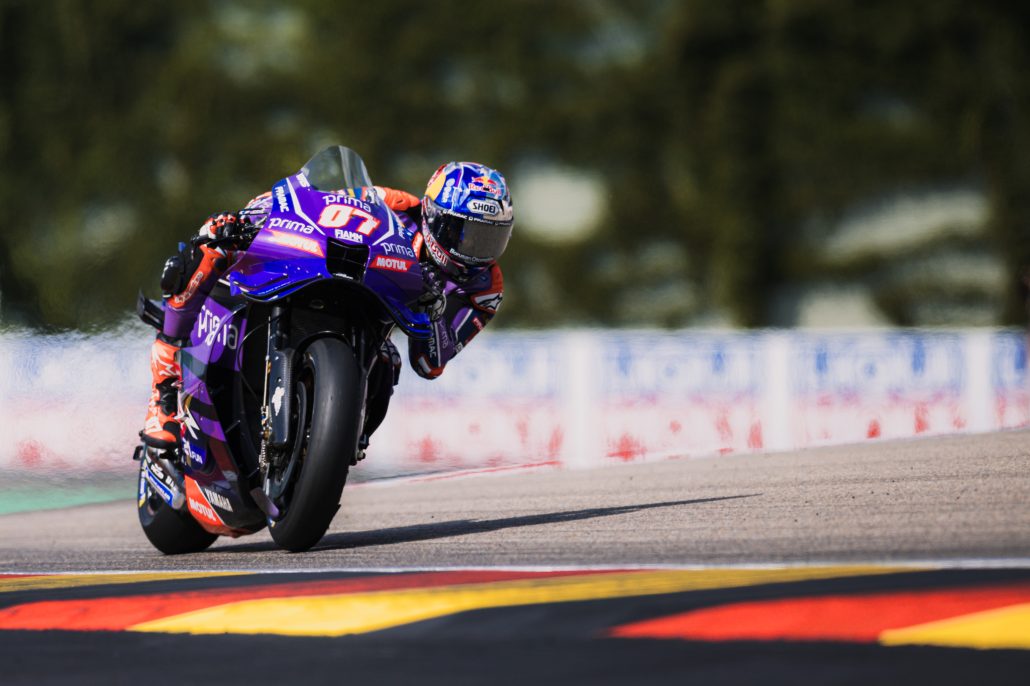
The German round in mid-July closed out the first half of the season for Razgatlioglu with a clear setback. He crossed the line 15th, last among all riders who finished the race. He was more than 38 seconds behind race winner Marc Márquez and around 12 seconds behind teammate Jack Miller, who finished twelfth. He secured his single point only because several riders crashed ahead of him.
His verdict was blunt: “That was the worst weekend for me.” The decisive factor was the special tyres used for the Sachsenring. Because the track consists almost entirely of left-hand corners, Michelin brought asymmetric compounds with a harder left shoulder than right. Razgatlioglu never found confidence in them and lost most of his time in the circuit’s second sector, which is made up exclusively of left-handers.
What irritated him most was that the tyre compounds change from track to track. No sooner has he got used to one set than a completely different one turns up the following weekend. That, he said, had killed his motivation. The other riders know both the track and the tyres from previous years, while for him both were new. The last time he had raced at the Sachsenring was back in 2014, in the Red Bull MotoGP Rookies Cup.
One other moment stuck out: LCR stand-in Cal Crutchlow, riding his fifth race for the injured Johann Zarco and starting from 20th on the grid, passed the rookie and stayed ahead of him for six laps. Razgatlioglu, who had started from 16th, only got back past in the second half of the race once the Honda’s tyres began to fade. That bike, he noted afterwards, turned better and had more grip. He was explicit that he was not questioning the work of Yamaha and his team, but spoke openly about the lack of progress.
What Changes in MotoGP for 2027?
For the 2027 season, the technical regulations will be overhauled from the ground up. Engine capacity drops from 1000cc to 850cc, ride-height-adjustable suspension will be banned, aerodynamics will be significantly cut back, and Pirelli takes over as the spec tyre supplier from Michelin.
That removes exactly the elements currently placing the tightest constraints on riders. The expectation is that the rider will once again have more influence on the result. Razgatlioglu has justified the timing of his move with this shake-up from the start. He said before the season began that making the move already in 2026 was the right call, since he first needs to get used to the chassis, a new riding style and unfamiliar tracks. By 2027, he said, he will be ready to unlock his potential. His contract already runs beyond this season, which sets him apart from most of the grid.
He has already had a first taste of the new technology: after the Brno race weekend, he was among the few regular riders allowed to test the 850cc bike on Pirelli tyres. He is not expecting miracles from it, saying the overall package will be decisive, not the tyres alone.
The Open Question Over Yamaha’s Machinery
That puts one big unknown centre stage: the development status of the 850cc Yamaha. Not particularly optimistic assessments are circulating in the paddock so far, though there are no reliable facts – only rumours. Should they prove accurate and Yamaha continue to trail the field under the new rules as well, Razgatlioglu could find himself in a sporting dead end.
Time is a factor here too. The Turkish rider turns 31 in autumn 2027. If the breakthrough fails to materialise, another fresh start in the premier class will be difficult, especially as a young generation of riders is moving up from Moto2 – riders who are often more attractive to team managers than one with titles from another series.
What Role Could the Superbike World Championship Play as a Return Option?
The Superbike World Championship remains the obvious alternative for Razgatlioglu, since practically every manufacturer there would be interested in a rider of his calibre. BMW in particular is said to be cultivating a direct line to him and his manager, Kenan Sofuoglu.
However, the production-based series is changing too. Ducati currently sets the benchmark there and dominates large parts of the season. On top of that, 2027 brings a new era with Michelin as the new spec tyre supplier, and nobody can seriously predict today what effect that will have on the balance of power. A return would therefore be no guarantee of instant success.
Bottom line: after the first half of his rookie season, Razgatlioglu has proven neither that a Superbike champion can hold his own in MotoGP long-term, nor the opposite. That question will only be answered under the technical conditions of the 2027 season.
Frequently Asked Questions
-
How many points has Toprak Razgatlioglu scored in MotoGP in 2026?
After eleven of 22 race weekends, he has 12 championship points on the board. He scored all of them in the Sunday Grands Prix, while he remains without a point in the sprint races. That puts him 21st in the riders’ standings.
-
What is Toprak Razgatlioglu’s best result in MotoGP?
His best result is 11th place at the Balaton Park Grand Prix. He also scored points with 13th in Le Mans, 14th in Brno, and 15th on two occasions, in Austin and at the Sachsenring.
-
Which team does Toprak Razgatlioglu ride for in MotoGP?
Razgatlioglu races for Pramac Yamaha on a Yamaha M1 with the new V4 engine. His contract runs beyond the 2026 season and also covers 2027.
-
What changes in the MotoGP regulations for 2027?
Engine capacity is reduced from 1000cc to 850cc, ride-height-adjustable suspension is banned, and aerodynamics are heavily restricted. Pirelli also takes over from Michelin as the spec tyre supplier.
-
Why is Razgatlioglu struggling with the Michelin tyres?
The compounds change from track to track, sometimes with an asymmetric construction like at the Sachsenring, where the left shoulder was built harder. Razgatlioglu lacks the years of prior experience needed to adapt quickly, and he has not yet fully shed his Superbike riding style.
➜ This article is part of our comprehensive overview: 2026 MotoGP Season: The Complete Overview – Teams, Riders, Calendar & Championship Standings. Find all key information on this topic in one place.