- As things stand, all motorcycles first registered from 1 January 2001 would be affected
- Offences could lead to fines from £1,000 (approx. €1,165 / $1,330) up to an unlimited amount
- The law could be passed in summer 2027 and take effect after a six-month transition period
A different exhaust, a remapped ECU or a removed catalytic converter are everyday modifications for many motorcyclists in the UK. Exactly these modifications could soon become a criminal offence. The Department for Transport (DfT) wants to tighten an existing emissions rule and extend it to L-category vehicles. These include motorcycles, scooters, mopeds, trikes and quads. The British riders’ organisation Motorcycle Action Group (MAG) then asked the department what data this extension is based on. The answer was brief: there is none. For motorcyclists in the UK, it is one of the proposals that could fundamentally change how already registered machines and the used market are treated.
What is the UK government planning for emissions rules?
The government wants to enshrine in law that every vehicle must meet the emission limits that applied when it was built and first registered for its entire lifetime. The basis is a public consultation titled “Regulating environmental impact of in-use emissions of road vehicles”. The DfT published it on 6 July 2026, and it ran until 6 September 2026.
At its heart is Regulation 61A of the Road Vehicles (Construction and Use) Regulations 1986. This rule was introduced in 2000 and applies to vehicles first used from 1 January 2001. It requires vehicles in use to meet the Euro standard they were built to. For cars, it is the reason why emissions are measured at the British MOT test.
From the department’s point of view, the problem is a gap. The regulation was only updated up to Euro 4 for cars and Euro V for heavy commercial vehicles. For newer vehicles built to Euro 5, Euro 6 or Euro VI, there is no obligation to keep the emissions control system working. The DfT wants to close this gap and at the same time include motorcycles for the first time, because Regulation 61A has never applied to the L category.
Importantly, nobody is demanding that an older motorcycle built to Euro 3 suddenly achieves Euro 5+ values. The benchmark is always the standard to which the individual machine was built and type-approved.
This is to be implemented through existing sections of the Road Traffic Act 1988. Section 42 concerns using a vehicle that does not comply with construction and use requirements. Section 75 covers alterations to vehicles, and Section 76 relates to fitting or supplying unsuitable vehicle parts. Depending on the case, a conviction in a magistrates’ court can lead to fines from £1,000 (approx. €1,165 / $1,330) up to an unlimited amount.
This would make three things illegal: riding a vehicle that no longer meets its emissions standard, permitting such a vehicle to be used, and modifying a vehicle yourself or having it modified so that it fails to meet the standard.
Which motorcycle modifications would be affected?
Any modification that causes a motorcycle to emit more pollutants than permitted at type approval would be affected. This explicitly applies even if the higher values were not intended.
The department stresses that it does not want to ban all modifications. The consultation describes modifying vehicles as a legitimate practice carried out by tuners, workshops and enthusiasts worldwide. Aftermarket parts instead of original parts are not to be banned in principle either. According to the DfT, the only thing that matters is how a hardware or software modification affects emissions.
However, the department wants some interventions to always be classed as illegal. These include removing particulate filters, removing the catalytic converter, often combined with altered sensors or new engine software, and tampering with diesel exhaust aftertreatment. For motorcycles, the catalytic converter is the most relevant.
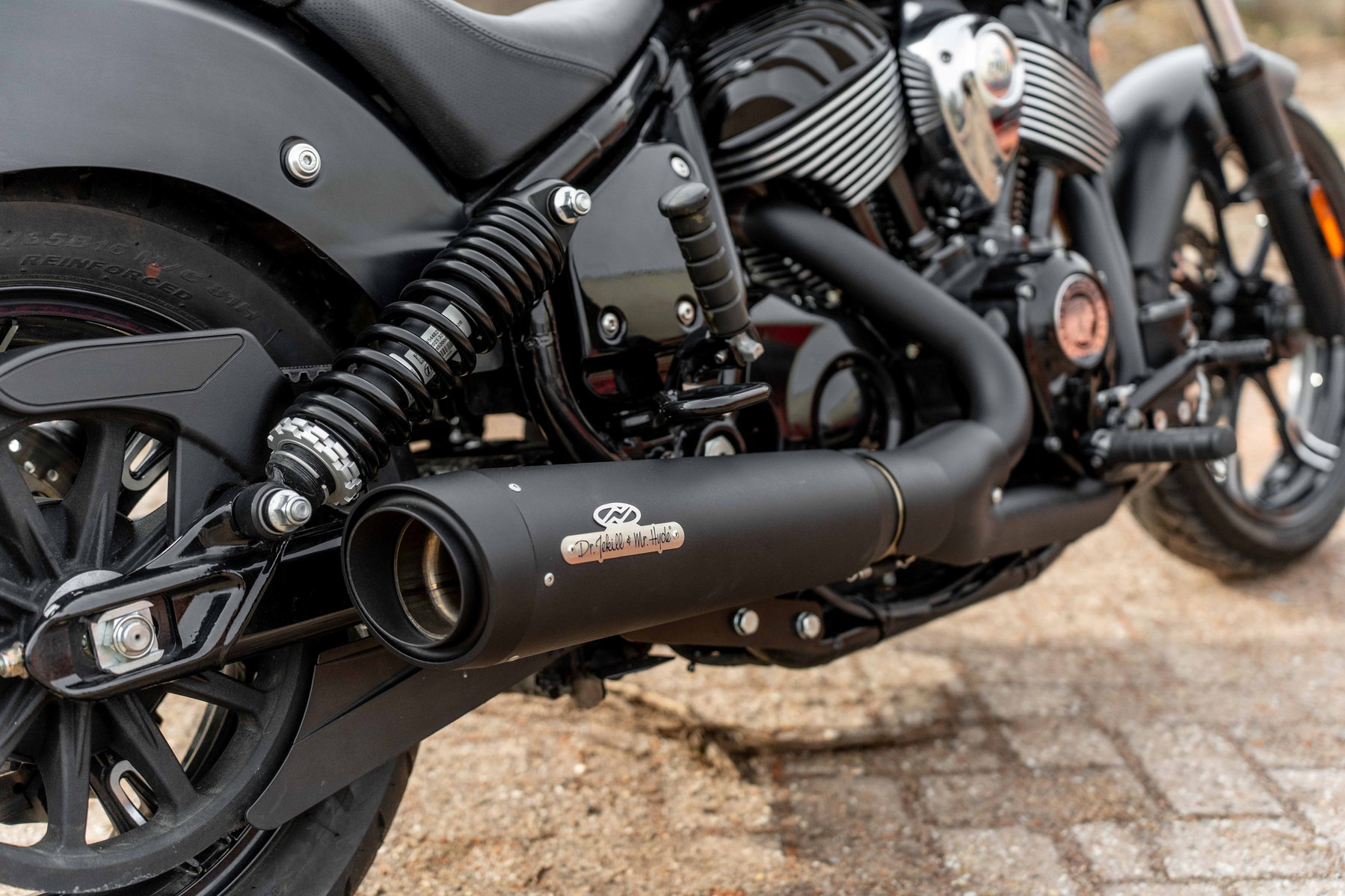
In practice, several common modifications could become a problem: so-called decat pipes that replace the catalytic converter, other exhaust systems and altered ECU maps, known in the trade as remaps. According to current assessments, type-approved silencers are not expected to be affected.
There is also a second point. The department does not intend to distinguish whether excessive emissions are caused by a modification or by poor maintenance. As they age, emissions control systems can deteriorate without the rider noticing. Anyone riding an older motorcycle could therefore break the rules without knowing it.
This is particularly tricky for buyers of used motorcycles. According to the MAG, the proposed rule targets not the modification itself but the use of the vehicle. Anyone who buys a used machine with an aftermarket exhaust or altered engine software could therefore break the law on every ride, even if they neither carried out the modification themselves nor knew about any offence. The draft does not include any grandfathering for existing modifications.
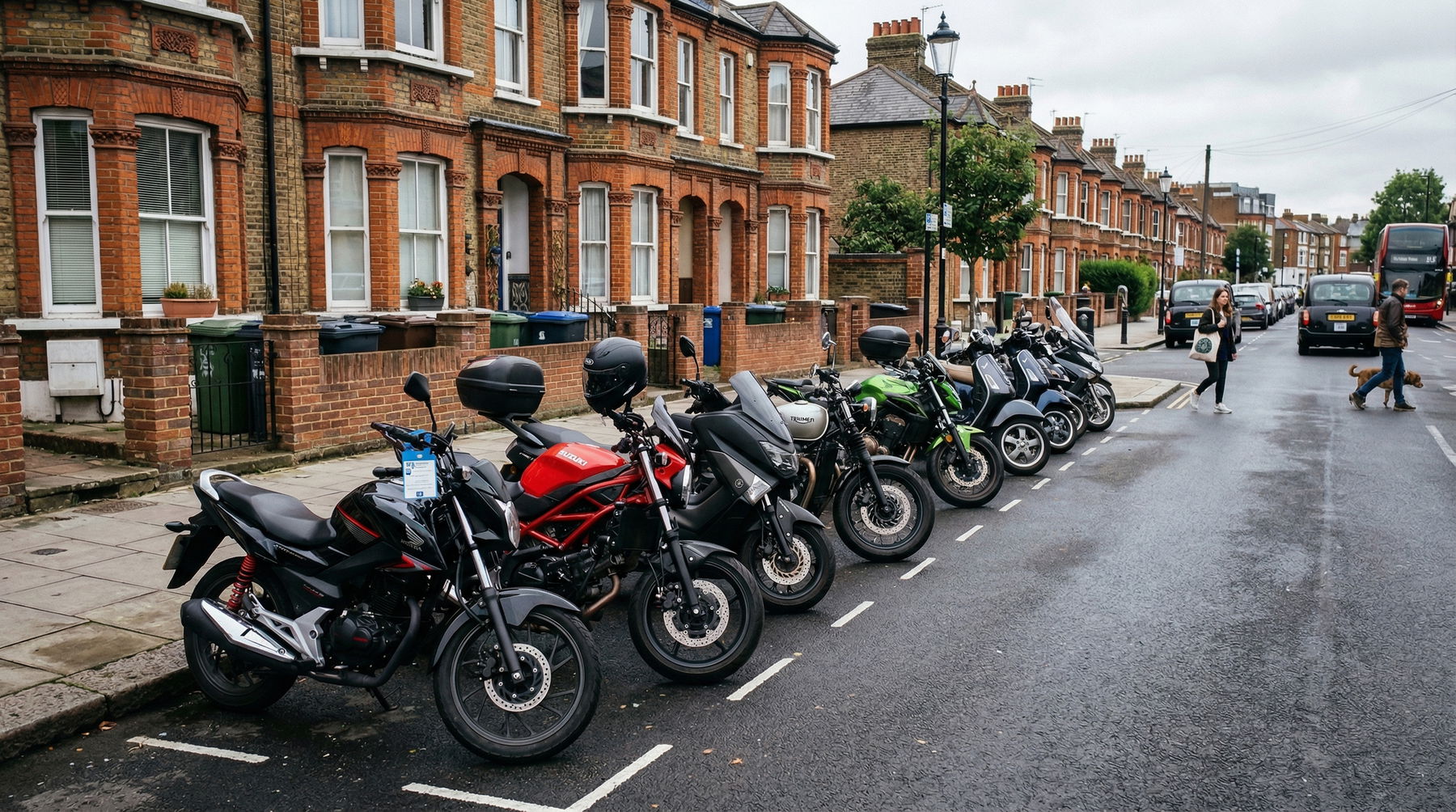
Why should motorcycles be included at all?
The Department for Transport does not justify the extension with concrete data, but with a potential problem. In the consultation, the DfT admits that it has only limited evidence on real-world motorcycle emissions.
However, since motorcycles could in principle contribute to excessive emissions, the department says it found no clear policy or technical reason to exempt them. That is why they are to be included.
The evidence cited by the department in the consultation relates mainly to cars. A study using roadside measuring equipment recorded more than 94,000 vehicles in several British cities. Fewer than 1 in 10 cars met the official limits for nitrogen oxides. Around two thirds of Euro 5 and Euro 6 diesel cars emitted more than three times the permitted amount. In addition, the market surveillance unit of the British vehicle authority DVSA received a total of 331 reports of tampered emissions systems in 2024. The consultation contains no motorcycle-specific figures.
What the Department for Transport has admitted in writing
The MAG wanted to know what the extension to motorcycles is based on. On 27 July 2026, the organisation submitted a request under the Environmental Information Regulations 2004. This is a British law that gives citizens access to environmental information held by public authorities. The department replied on 18 August 2026 under reference EIR-00075203.
Asked about the evidence for including motorcycles, the DfT wrote: “This information is not held; the Department holds no analysis or evidence of this kind that was relied upon in developing the proposal.”
The department also had to pass on the other questions:
- There is no analysis attributing excessive emissions to poor maintenance or deliberate tampering. Other possible causes would include factory calibration, peculiarities of the type-approval test cycles or normal wear of components.
- There is no comparison of how frequently tampering occurs and how well limits are met between vehicles already covered by the rule and newer vehicles.
- There is no estimate of how many motorcycles would be affected and what the consequences would be for the used market, parts supply and the tuning industry.
The department also made clear that it does not assume motorcycles have a widespread emissions problem. The proposal is based on the fact that motorcycles also have to meet emissions standards at type approval and could therefore contribute to higher emissions in use. According to the DfT, it is aware of research such as the European Horizon Europe LENS project on emissions, noise and tampering in L-category vehicles. It is also aware that there is a market for motorcycle modifications. However, neither was included in the analysis for the proposal.
The department is withholding an internal paper on which the consultation relies, citing internal communications. Only a single figure from it was released: nitrogen oxide emissions in the UK fell by 44 per cent between 2010 and 2020. This figure refers to the entire vehicle fleet and not specifically to motorcycles.
Colin Brown, responsible for campaigns and political engagement at the MAG, sharply criticises the department’s reasoning. He says: “Riders deserve better than being brought into a new criminal offence on a shrug.” For him, the absence of a reason to exempt is not evidence but a reversal of the burden of proof.
For its part, the department points out that it had already contacted the MAG by email on 5 June 2026, before the consultation launched, and invited questions. The MAG says that this single email was lost in its central inbox and that the department did not follow up.
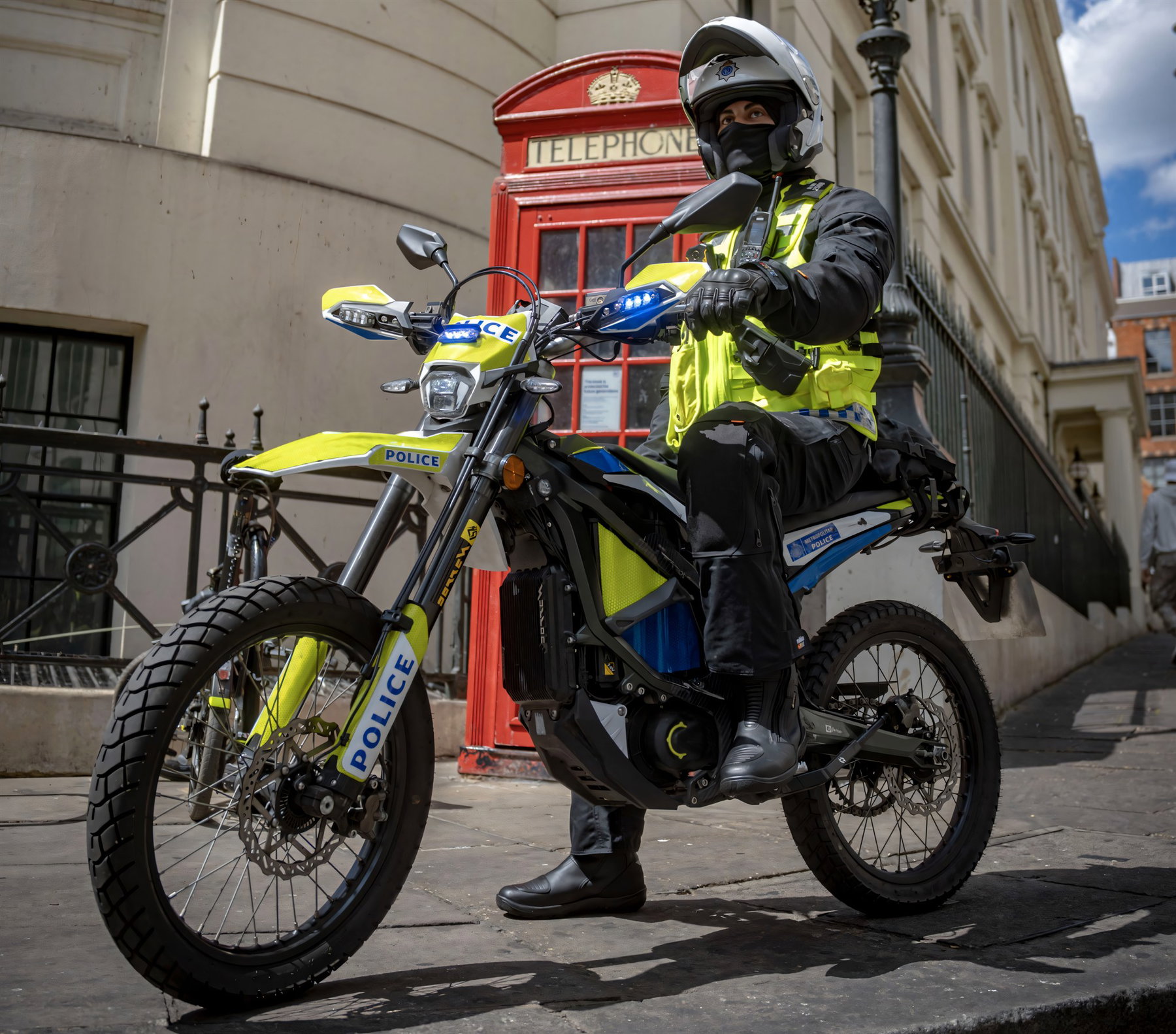
How clean are motorcycles in the UK according to available data?
The little data available suggests that motorcycles are not a major emissions problem. However, the figures do not come from the Department for Transport, but from London.
Measurements by the London transport authority Transport for London show that around 97 per cent of motorcycles, scooters and mopeds entering London’s Ultra Low Emission Zone meet its requirements. Only around 3 per cent of motorcycles entering the zone are older than Euro 3. Of these older machines presented for testing, 73 per cent met the Euro 3 nitrogen oxide limit, a stricter value than the one they were built to. 48 per cent managed this straight away, and a further 25 per cent after a simple adjustment. The data comes from a response by the Mayor of London in October 2019.
Then there is the small share of traffic. According to the MAG, motorcycles account for around 1 per cent of traffic in the UK. A study by the British industry association Motor Cycle Industry Association (MCIA) last year concluded that powered two-wheelers cause only 0.4 per cent of domestic transport emissions.
Technically, new motorcycles are already monitored. The Euro 5+ emissions standard requires the catalytic converter to work properly over the entire life of the vehicle. For this, an additional lambda sensor sits behind the catalytic converter. It measures the oxygen content in the exhaust gas so that the ECU can continuously check the converter’s effectiveness and switch on a warning light if there is a problem.
What is the Motorcycle Action Group demanding?
The MAG is calling for motorcycles, scooters, mopeds, trikes and quads to be excluded from the new rules as long as the department presents no evidence. However, the organisation has no objection to the underlying principle.
In its official response of 1 September 2026, the organisation explicitly supports closing the gap for cars, vans, lorries and buses. The MAG also has no objection to action against deliberately disabling emissions control, for example by removing particulate filters or catalytic converters. The response was approved by the National Committee, the elected body of representatives from the regional and local groups.
The MAG is particularly critical of treating modifications that deliberately disable emissions control in the same way as ordinary changes. Remapping engine software for better throttle response or swapping a part whose effect on emissions a rider cannot know must not automatically be considered illegal.
Should the department include motorcycles anyway, the organisation is calling for several safeguards:
- Grandfathering for all modifications carried out before the rule comes into force. The burden of proof should lie with the authorities, not the rider.
- An exemption for correctly marked, road-legal aftermarket parts.
- Enforcement that focuses on commercial suppliers of tampering devices rather than individual riders.
- A significantly longer transition period than six months, combined with an information campaign.
- A separate impact assessment for motorcycles before any legislation is passed.
According to the MAG, a key practical problem is that there is no measured emissions test for motorcycles at the MOT. Riders and dealers would therefore have no way of finding out whether a machine complies with the rules. There is also no guidance on which modifications would be banned in future. In addition, some original parts needed to restore a bike to standard are no longer available.
The organisation rejects a register of modifications in the British V5C logbook. The MAG recalls that in the 2000s it successfully fought against a planned German-style MOT. This would have banned non-factory parts and required every modification to be recorded in the logbook. The MAG is also calling on the department to publish the withheld internal paper as far as possible. It also wants a commitment that no emissions test for motorcycles will be introduced at the MOT without a separate consultation.
What exemptions are planned?
The department wants to carry over several exemptions from the existing rule under which excessive emissions do not constitute an offence. Which of these will be included in the new legislation was part of the consultation.
The existing Regulation 61A exempts the following cases:
- Vehicles used off public roads.
- Faults that the keeper or rider cannot control. This requires that no subsequent modification is the cause, that normal maintenance would not fix the problem and that all emissions control components are present and working.
- Journeys to have the emissions control system repaired, provided no modification is the cause.
- Journeys to a port for export.
- Journeys by examiners such as MOT testers during or after the test.
- Vehicles belonging to people resident abroad who are in the UK for no more than six months and meet basic safety and equipment rules.
The last exemption is relevant for motorcycle tourists from abroad. The consultation asks whether this exemption for up to six months within twelve months should be retained. A decision on this is still pending.
When could the new emissions law apply?
The government expects the new legislation to be passed in summer 2027. After that, there is to be a six-month transition period before the rules actually apply.
During this time, keepers should be able to have their vehicles serviced. Businesses should be able to adapt their products and advertising. The DVSA would be responsible for enforcement. Since the annual MOT test can only say so much about emissions control, the authority is expected to focus mainly on businesses that offer or carry out illegal modifications.
Next, the Department for Transport will analyse the responses received. A summary and the government’s response are to be published on the consultation page. Whether motorcycles will ultimately fall under Regulation 61A therefore remains open.
Frequently Asked Questions
-
What does the new UK emissions law mean for motorcycles?
Motorcycles, scooters and mopeds would have to meet the emissions standard they were built and type-approved to for their entire lifetime. To achieve this, the Department for Transport wants to extend Regulation 61A to L-category vehicles for the first time. As things stand, this would affect machines first registered from 1 January 2001.
-
Will aftermarket exhausts be banned in the UK?
Not in principle, what matters is the effect on emissions. A modification would be illegal if the motorcycle then emits more pollutants than permitted at type approval, even unintentionally. Removing the catalytic converter would always be illegal, while type-approved silencers are not expected to be affected according to current assessments.
-
How high are the planned fines?
Fines range from £1,000 (approx. €1,165 / $1,330) up to an unlimited amount. They apply after a conviction in a British magistrates’ court. The penalties are based on existing sections of the Road Traffic Act 1988.
-
When would the new rules apply?
The government expects the legislation to be passed in summer 2027. A six-month transition period is planned after that. First, however, the Department for Transport is analysing the responses to the consultation, which closed on 6 September 2026.
-
What evidence does the government have for including motorcycles?
By its own written admission, none. In response to a request from the Motorcycle Action Group, the Department for Transport confirmed in August 2026 that it holds no analysis or evidence on motorcycles that the proposal relied on. There is also no assessment of how many motorcycles would be affected or of the consequences for the used market.