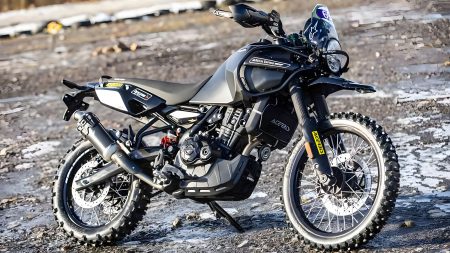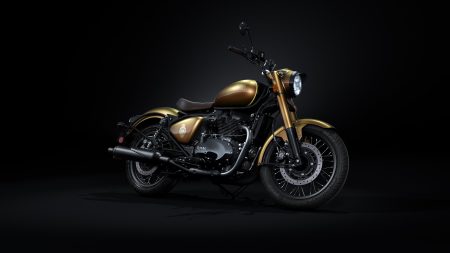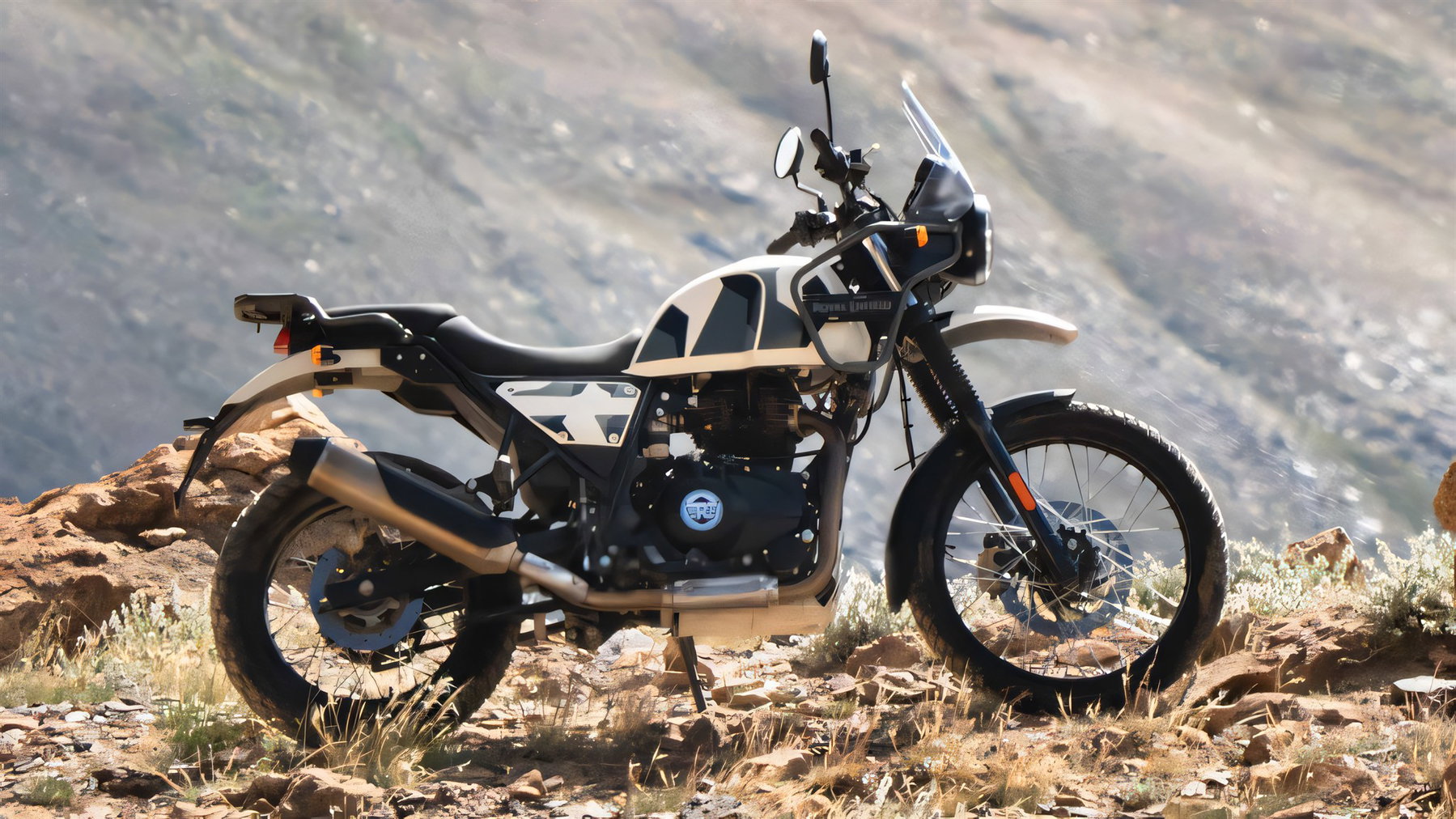
- 443 cc single with 25.4 hp (18.7 kW) at 6,250 rpm and 34 Nm (around 25 lb-ft) at 4,000 rpm, plus six gears for the first time
- Priced from 2.29 lakh rupees, roughly 2,070 euros (about 2,400 US dollars) ex-showroom
- 800 millimetres seat height, 220 millimetres ground clearance, 199 kilograms (around 439 lbs) kerb weight
When Royal Enfield dropped the Himalayan 411 from its line-up, it looked like a routine model change. The Himalayan 450 was more powerful, more modern and technically clearly superior. But it was also more expensive, taller and more complicated. That is exactly what sparked years of criticism in India from customers who had valued the old air-cooled enduro above all for its simplicity. Royal Enfield has responded to those letters and brought the range back. Since 4 September 2026 the Himalayan 440 has been on sale at Indian dealers, and the manufacturer explicitly places it in the tradition of the 2016 original. The model page puts it this way: „Unchanged in spirit. Stronger at heart.”
What does the Himalayan 440 cost in India?
The Himalayan 440 price starts at 2.29 lakh rupees ex-showroom, the equivalent of roughly 2,070 euros (about 2,400 US dollars). That puts the model below the expectations Indian trade media had quoted ahead of the launch. They had talked about 2.40 to 2.50 lakh rupees, or roughly 2,165 to 2,255 euros (about 2,510 to 2,615 US dollars).
An important qualification: that figure is the ex-showroom price without taxes and registration. The actual on-road price is considerably higher. In Delhi, dealer lists put it at around 2.69 lakh rupees, which corresponds to roughly 2,430 euros (about 2,820 US dollars).
The gap to the Himalayan 450 is wider than expected. The 450 starts at about 3.06 to 3.08 lakh rupees, or roughly 2,760 to 2,780 euros (about 3,200 to 3,230 US dollars). That leaves around 77,000 to 79,000 rupees between the two models, the equivalent of roughly 695 to 715 euros (about 805 to 830 US dollars). Royal Enfield has therefore deliberately pushed the two Himalayans far apart rather than letting them take customers from each other.
What technology is in the Himalayan 440?
The enduro is powered by an air-cooled 443 cc single that already does duty in the Scram 440. According to the manufacturer it produces 25.4 hp (18.7 kW) at 6,250 rpm and delivers 34 Nm (around 25 lb-ft) at 4,000 rpm.
The pure power gain over the old 411 is small. Its predecessor made 25 hp (around 18.4 kW) and 32 Nm (around 24 lb-ft). The character matters more. With an 81 millimetre bore and an 86 millimetre stroke, the engine is a pronounced long-stroke unit. Long-stroke means the piston travel is longer than the cylinder diameter. Engines like this rev less freely but pull strongly from low revs, which helps off-road and when manoeuvring with luggage. Compression is 9.5 to 1, mixture preparation is handled by electronic fuel injection, and the whole thing is controlled by a single overhead camshaft.
The second big point is the gearbox. The Himalayan 411 had only five gears and revved audibly high on the open road. The 440 gets six ratios plus a multi-plate wet clutch. A side effect of the larger displacement is cleaner combustion, which counts in India because the emissions rules there are closely modelled on the European Euro standards.
Chassis, wheels and weight
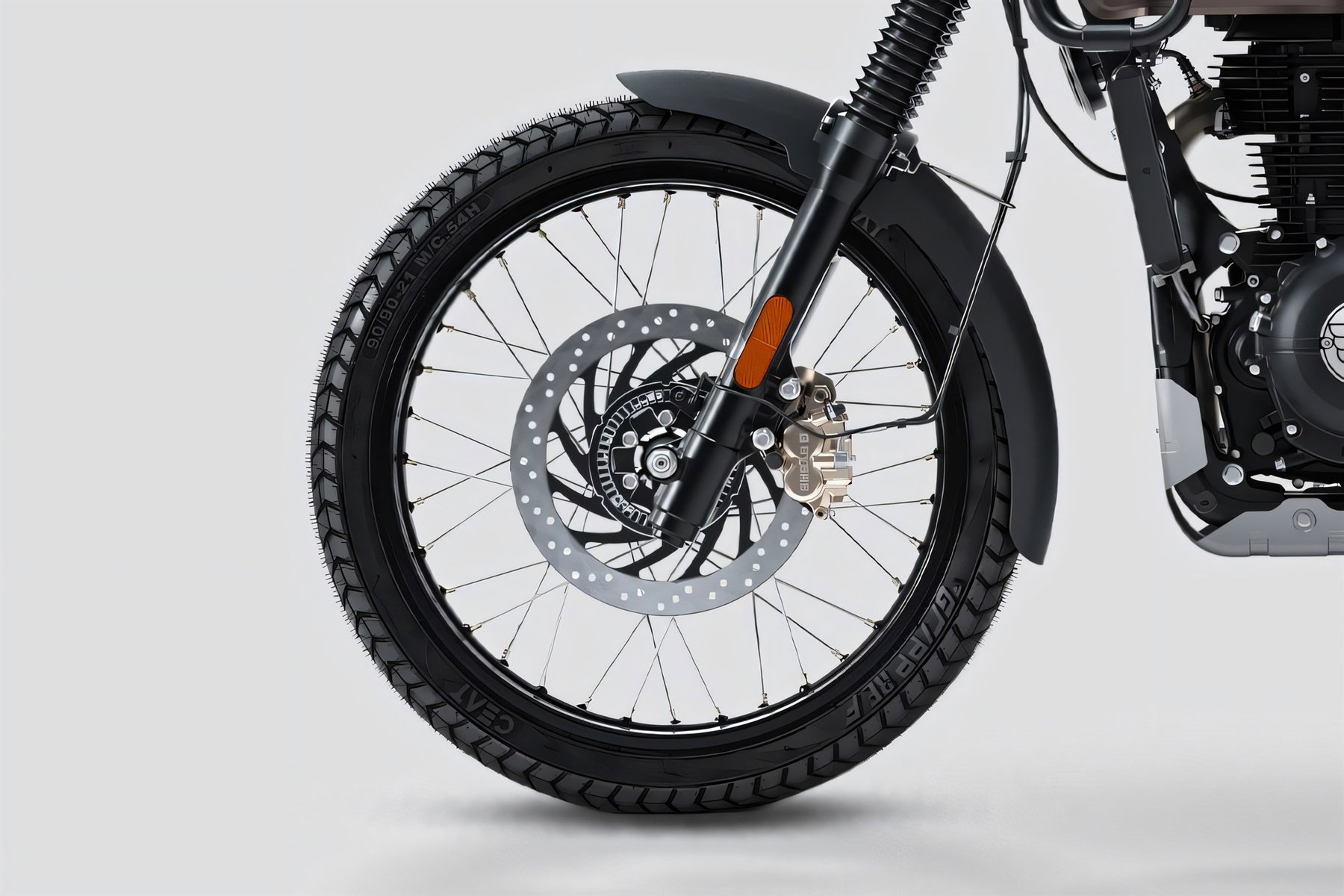
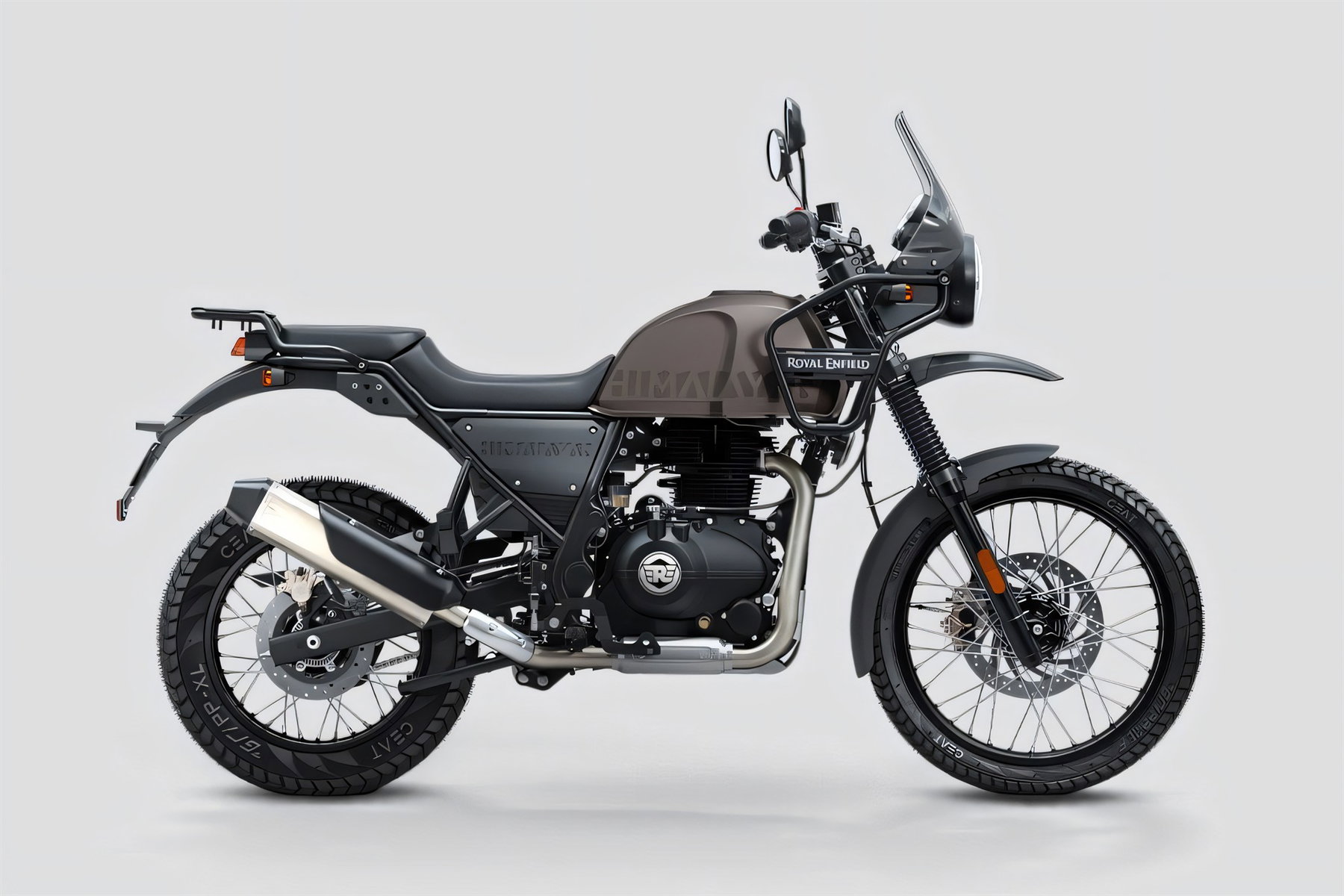
For the chassis, Royal Enfield sticks with what it knows. A half-duplex frame with a split lower cradle carries a telescopic fork with 41 millimetre stanchions and 200 millimetres of travel. At the rear there is a linkage-mounted shock with 180 millimetres of travel.
That results in 220 millimetres of ground clearance at a seat height of just 800 millimetres. This combination is the real trick of the model, because many modern adventure bikes buy their ground clearance with a riding position that causes problems for shorter riders. The wheelbase measures 1,460 millimetres, the machine is 2,190 millimetres long, 840 millimetres wide and 1,370 millimetres tall up to the top edge of the small screen.
According to Royal Enfield the Himalayan 440 weighs 199 kilograms (around 439 lbs) ready to ride. The manufacturer quotes a payload of 176 kilograms (around 388 lbs), with an additional 10 kilograms (around 22 lbs) permitted on the standard luggage rack. The tank holds 15 litres. It rolls on spoked wheels with tube tyres, 90/90-21 at the front and 120/90-17 at the rear. The 21-inch front wheel is the most important difference from the Scram 440, which runs only 19 inches up front and is more road-oriented. A larger front wheel runs more calmly over ledges and rocks off-road.
What is genuinely new on the Himalayan 440?
The main new items are the LED headlight and the brake system. For the first time Royal Enfield uses components from Bybre, a subsidiary of brake manufacturer Brembo. At the front a 300 millimetre disc with a twin-piston floating caliper does the work, at the rear a 240 millimetre disc with a single-piston caliper. The ABS is dual-channel and can be switched off at the rear wheel, which matters on loose surfaces for controlled braking.
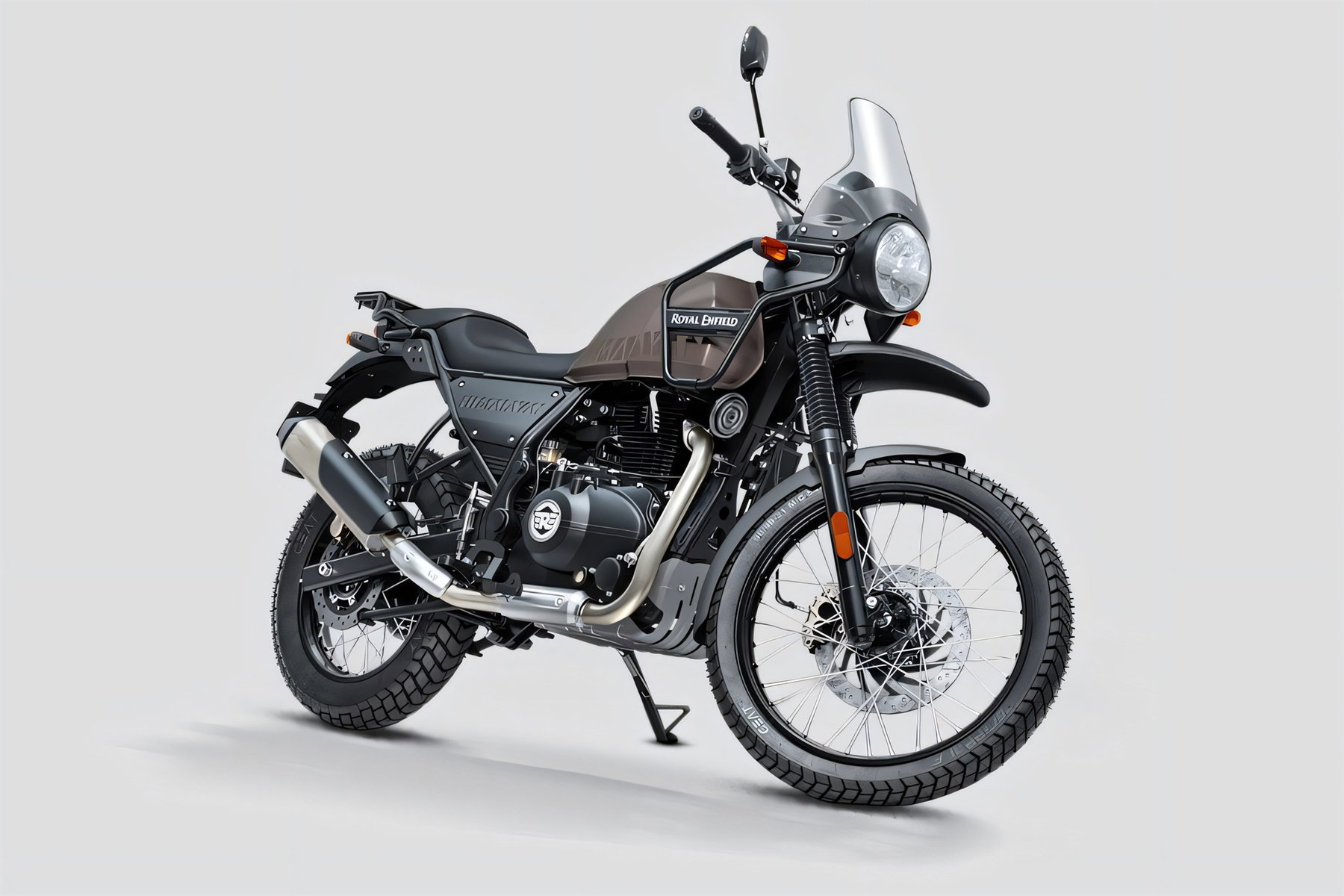
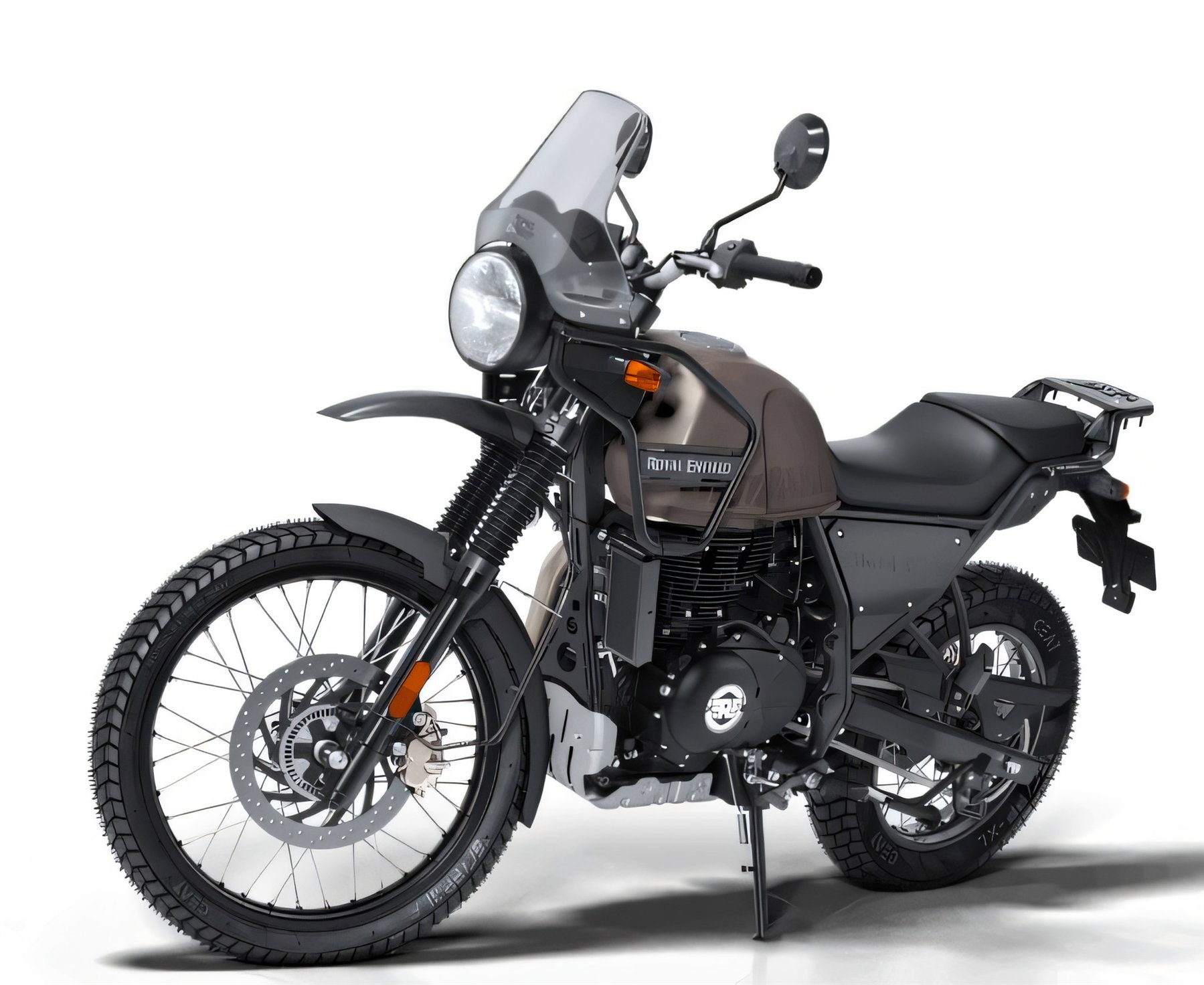
Otherwise the equipment stays deliberately lean. There is an analogue-digital instrument cluster instead of a colour display, the Tripper module for turn-by-turn directions, a USB-C charging socket and an LED tail light. Riding modes, traction control or ride-by-wire are nowhere to be found. This is not cost-cutting but positioning: the 440 is meant to be the simple alternative, not a stripped-down 450. As a reminder of ten years of the Himalayan, every example carries an anniversary emblem. Three colours are available, which Royal Enfield calls Mustang Brown, Sela Black and Nelong White.
How does the Himalayan 440 differ from the Himalayan 450?
Despite a difference of just nine cubic centimetres, these are two completely different motorcycles. The 450 has a liquid-cooled 452 cc engine with twin overhead camshafts and around 40 hp (roughly 29 kW) as well as 40 Nm (around 30 lb-ft) at 5,500 rpm.
On top of that, the 450 gets an upside-down fork with 43 millimetre tubes, a four-inch colour display with map navigation, riding modes and ride-by-wire. Its tank holds 17 litres and the seat height starts at 825 millimetres. The 440 counters with the lower seat, the simpler build and a significantly lower price. Anyone looking for an adventure bike for long stages and demanding terrain will find the better tool in the 450. Anyone who wants a rugged, manageable motorcycle for everyday use, gravel and unhurried travel ends up with the 440. In the Indian market it faces models such as the TVS Apache RTX 300, the Suzuki V-Strom SX and the Yezdi Adventure.
Will the Himalayan 440 come to Europe?
It does not look like it at the moment. So far Royal Enfield offers the Himalayan 440 in India only, and there is no announcement for other markets.
The strongest argument against a European launch comes from the model history itself. The 443 cc engine has been running in the Scram 440 for around two years, and that model, too, remained restricted to the Indian market. As long as Royal Enfield shies away from the effort of European type approval for this range, the enduro is unlikely to appear here. For a sense of the price structure: in its final model years the Himalayan 411 cost around 5,000 euros (about 5,800 US dollars) in Germany, more than twice the Indian ex-showroom price of its successor. Taxes, duties, homologation and distribution all weigh heavily here.
For the 2026 model year, that makes the Himalayan 440 an unusual case. While most manufacturers replace discontinued entry-level models with larger and more expensive successors, Royal Enfield is deliberately bringing a retired range back and grading its line-up more finely as a result.
Frequently Asked Questions
-
What does the Royal Enfield Himalayan 440 cost?
The Himalayan 440 price starts at 2.29 lakh rupees ex-showroom, the equivalent of roughly 2,070 euros (about 2,400 US dollars). The on-road price in Delhi is considerably higher at around 2.69 lakh rupees, or roughly 2,430 euros (about 2,820 US dollars). There is no price for other markets.
-
How much power does the Himalayan 440 have?
According to the manufacturer, the 443 cc single produces 25.4 hp (18.7 kW) at 6,250 rpm. Peak torque is 34 Nm (around 25 lb-ft) at 4,000 rpm. That puts it only just above the old Himalayan 411 with 25 hp and 32 Nm.
-
How high is the seat of the Himalayan 440?
Royal Enfield quotes 800 millimetres. That is lower than the Himalayan 450, which starts at 825 millimetres. At the same time 220 millimetres of ground clearance remain, because the manufacturer has been generous with suspension travel at 200 millimetres front and 180 millimetres rear.
-
Will the Himalayan 440 come to Germany?
There is no statement from Royal Enfield on this. The model is sold in India only so far, and even the technically related Scram 440 never came to Europe. A market launch in Germany is therefore not to be expected at the moment.
-
What sets the Himalayan 440 apart from the Scram 440?
Both share the engine and the frame, but they are aimed differently. The Himalayan 440 rolls on 21 inches at the front instead of 19 inches, has 200 instead of 190 millimetres of front suspension travel and 220 instead of 200 millimetres of ground clearance. That makes it more clearly geared towards off-road use.