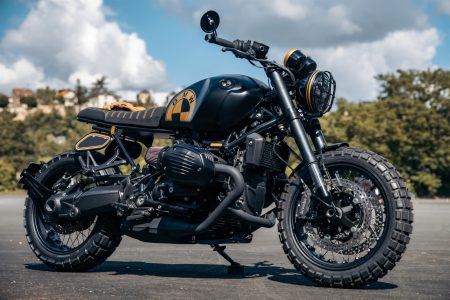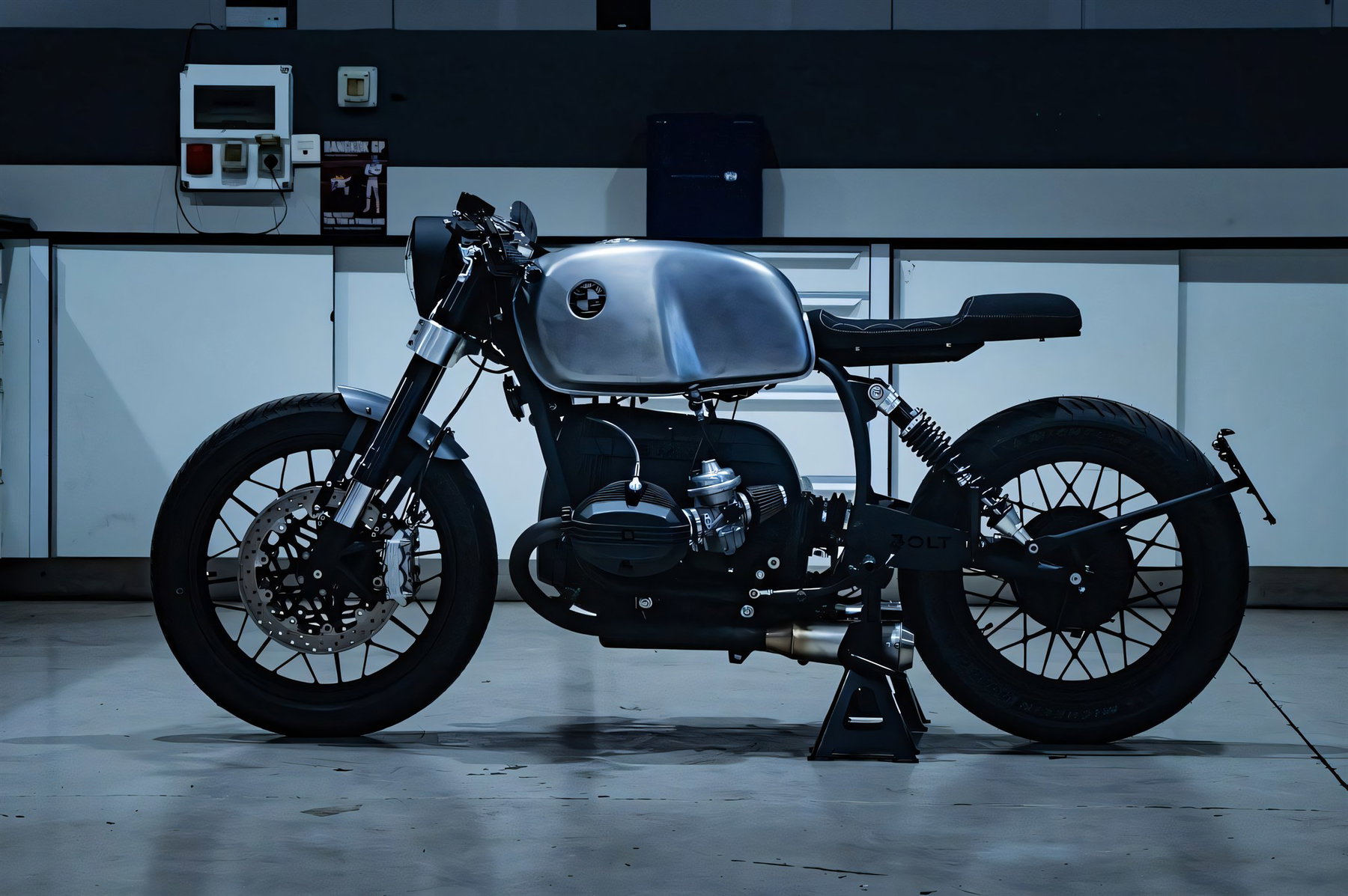
- The base is the air-cooled 980 cc boxer with 70 hp (51 kW), a five-speed gearbox and shaft drive
- The engine was completely rebuilt and the clutch converted from cable to hydraulic operation
- The subframe is modular: undoing two bolts is enough to switch from two-seater to single-seater
There is no shortage of custom builds based on the old BMW boxers. The starting point for this project was unusual, however, because the workshop did not take delivery of a running motorcycle but of a crate full of individual parts. Before a single design idea could take shape, the team first had to put the machine together. That is exactly where the project name came from.
Why is the build called BOLT ≠ 100?
The name BOLT ≠ 100 refers to the not-equal sign and therefore to the basic idea behind the project: the machine was deliberately not meant to become a classic restoration. The symbol stands for the fact that the build intentionally departs from the original.
The delivery was what set everything in motion. “When the motorcycle arrived at our workshop, it was completely dismantled inside a wooden crate”, recalls Joel Rodriguez, Creative Director at Bolt. He goes on to explain that the team first had to assemble the complete motorcycle in order to identify every component, check that nothing was missing and assess the condition of the parts. Only then did the actual design work begin: “Before we could even begin designing the build, we had to assemble the entire motorcycle to identify every component, check that all the parts were present, and assess their condition.”
The number in the project name refers to the model, not to the workshop’s own count. Bolt’s 100th project was a Kawasaki ZRX 1200R presented in spring 2026.
What was done to the engine of the BMW R 100?
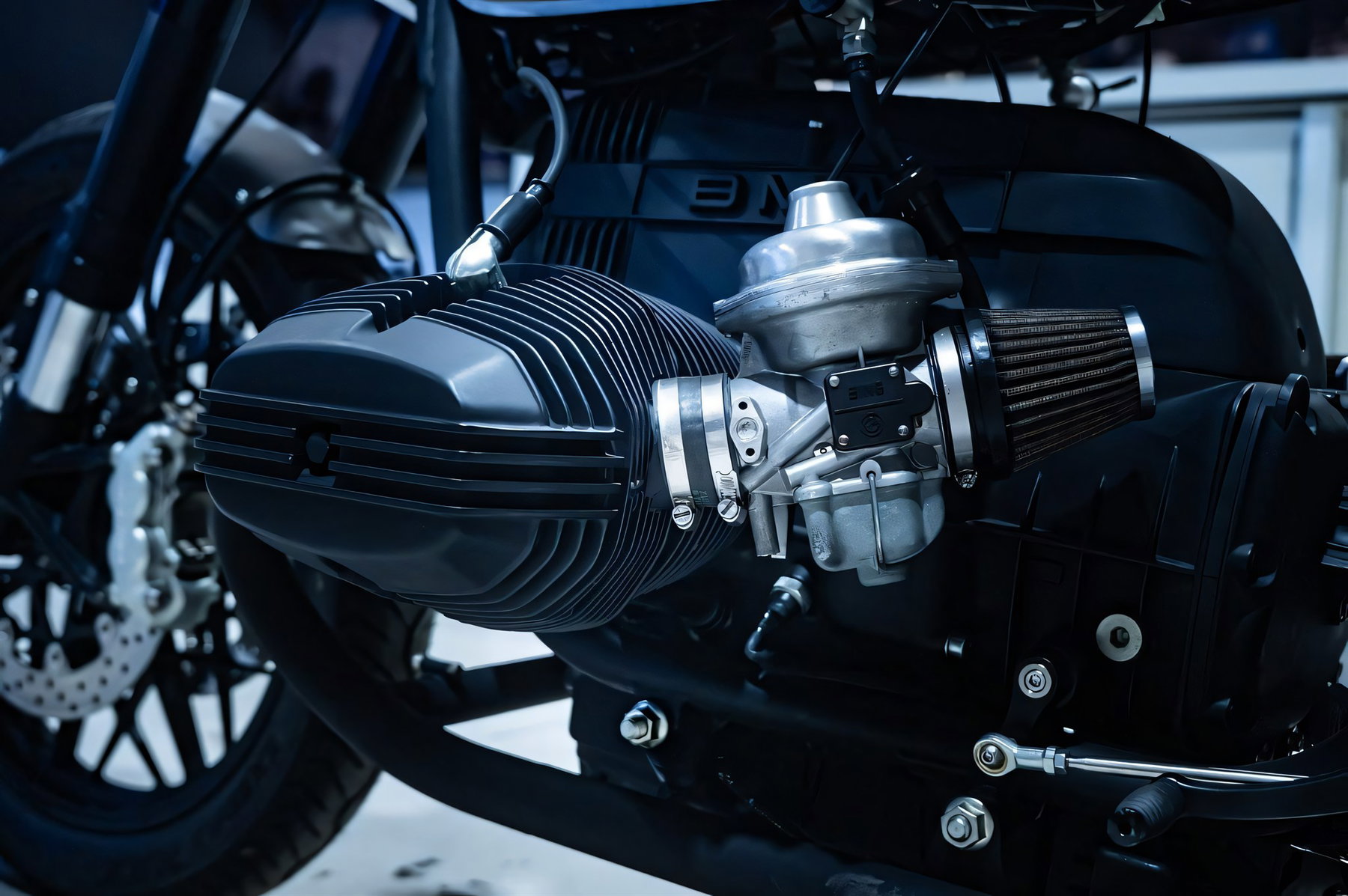
The boxer was rebuilt from the ground up. Bolt fitted new cylinders, new pistons and new connecting rods, along with reworked cylinder heads.
The production base provides a solid starting point for that. The air-cooled two-cylinder boxer with 980 cc produces 70 hp (51 kW), with power reaching the rear wheel through a five-speed gearbox and a shaft drive. After the rebuild, the engine received an upgraded carburettor kit and electronic ignition.
Beyond the pure engine overhaul, there were several technical conversions. The clutch, originally cable-operated, was switched to a hydraulic system. That counts as a demanding job, because both the master and the slave side have to be laid out again. The aim behind it: a better feel at the lever and a more cleanly defined engagement point.
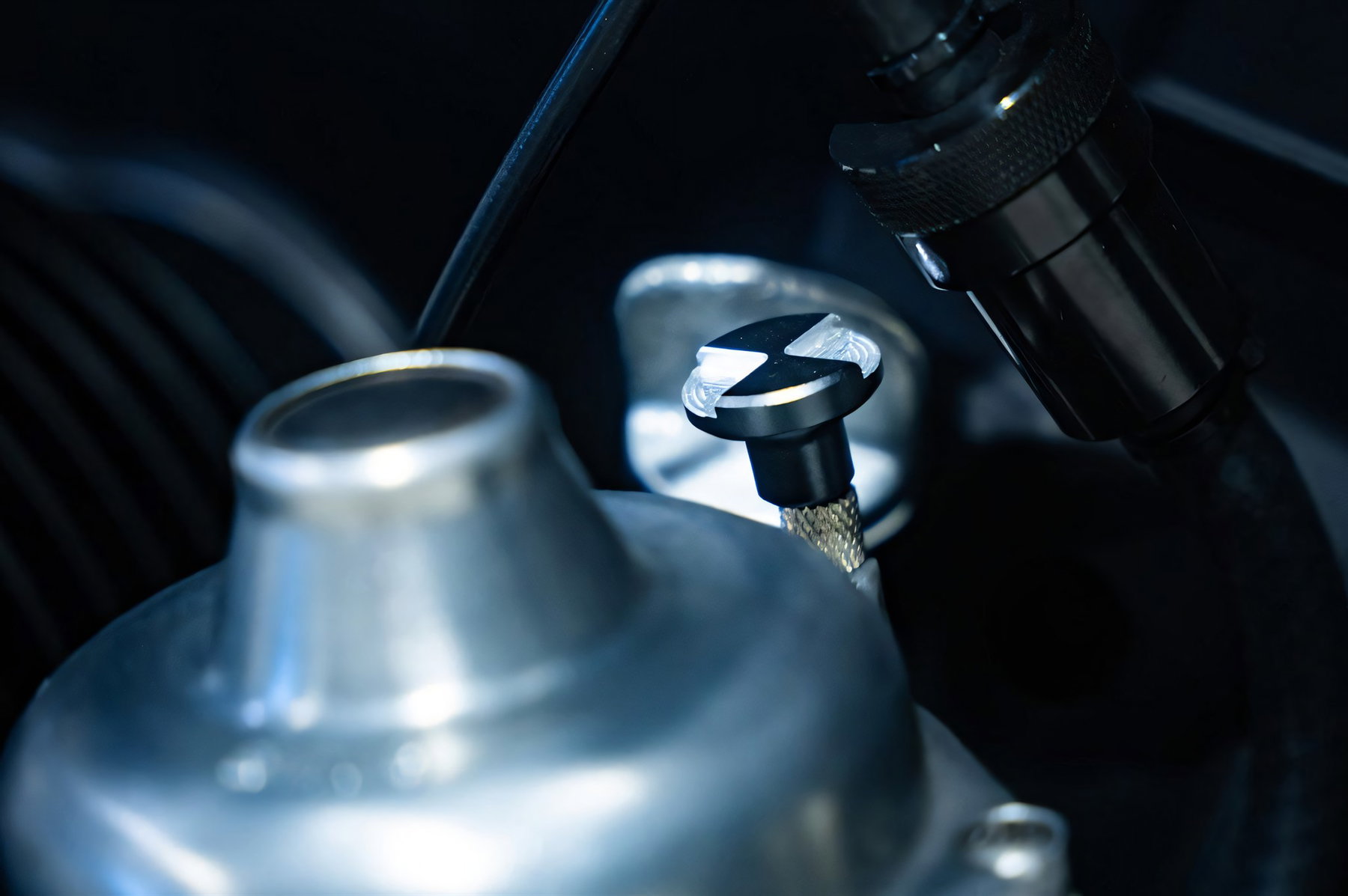
Small details were given attention as well. BMW emblems were engraved into the buttons of the cold-start device on the carburettors, colloquially known as choke knobs.
Why does the tank stay unpainted?
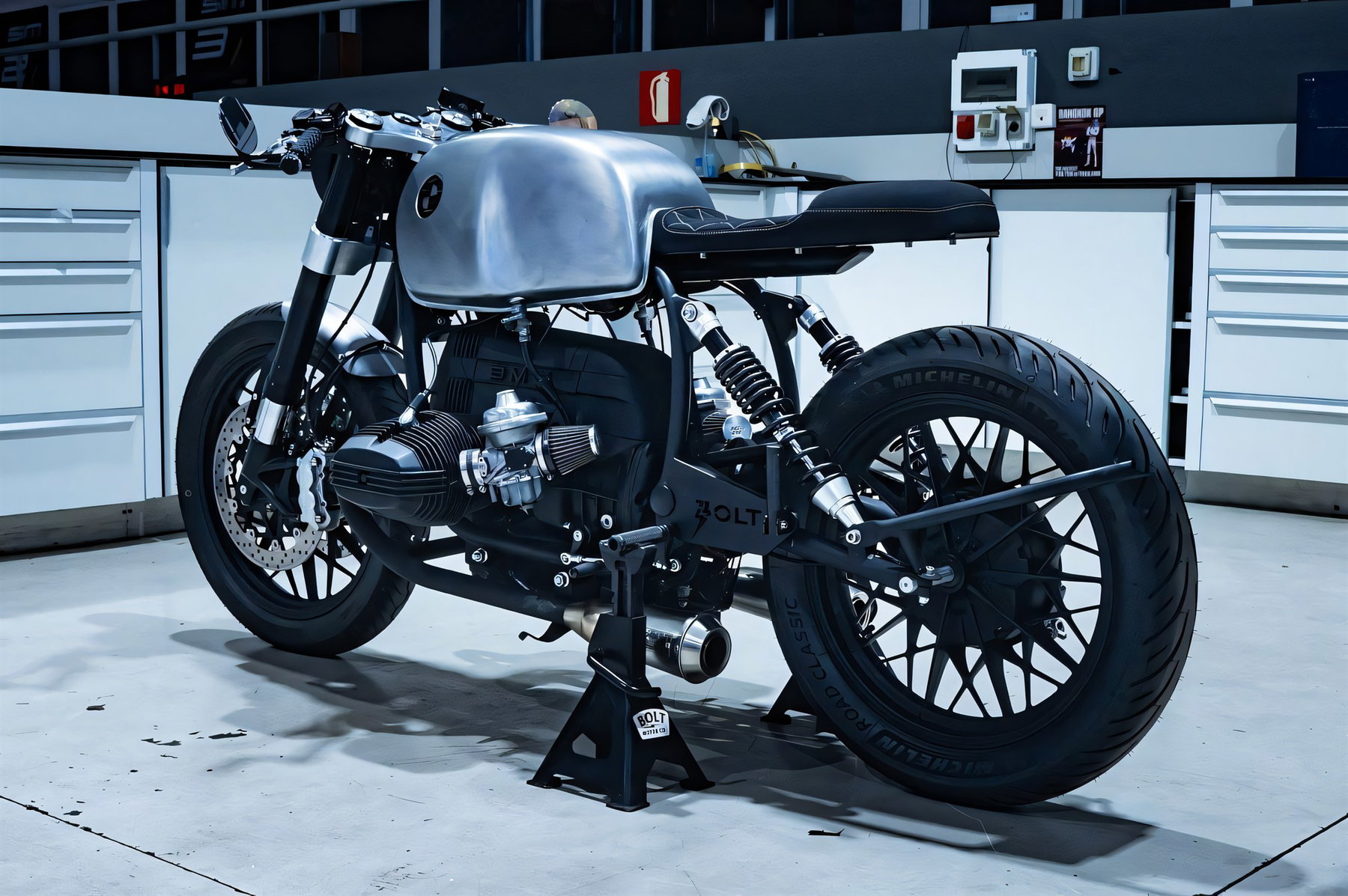
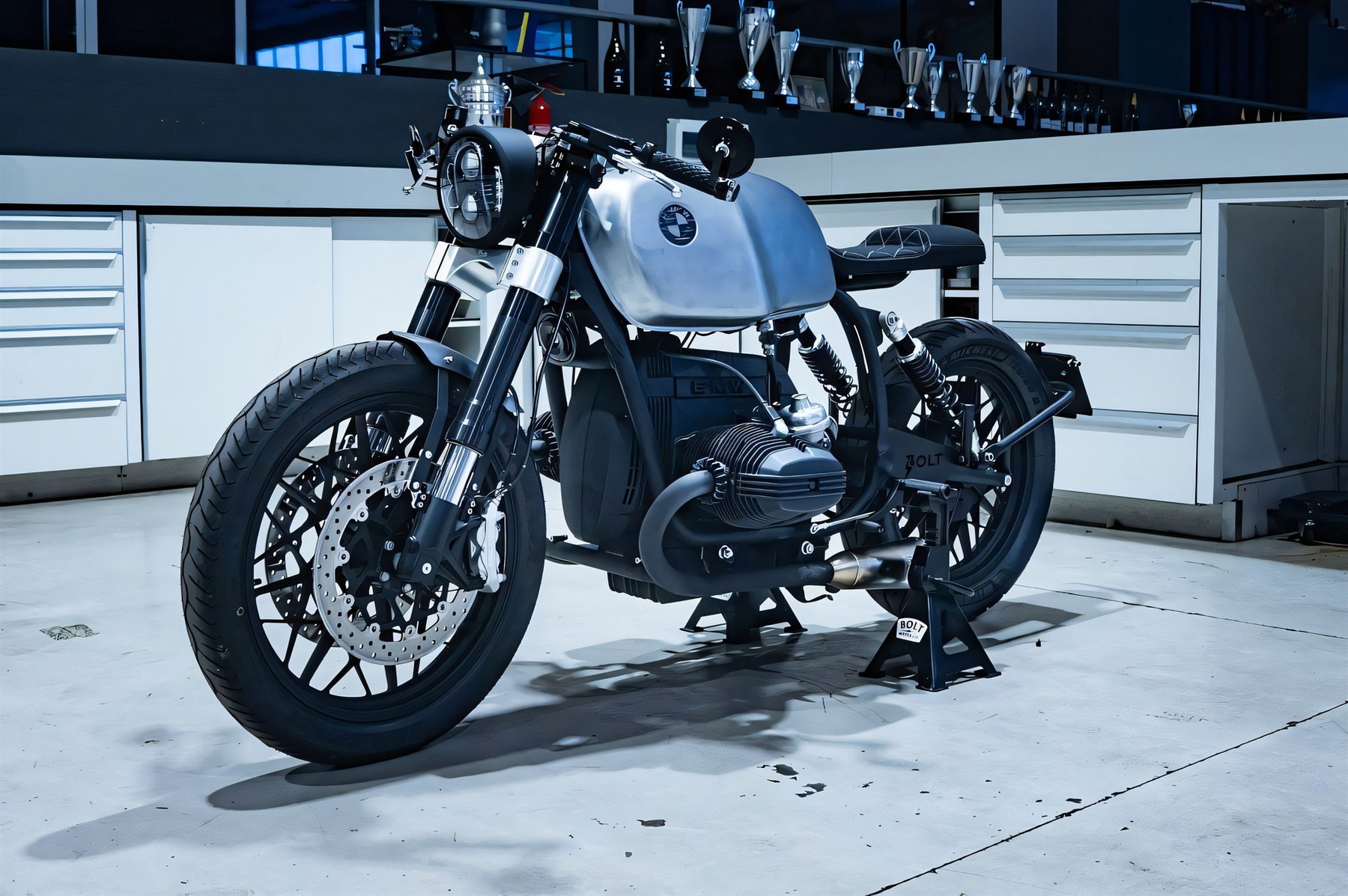
The tank is brushed and remains unpainted. That turns the bare metal itself into a design element, and it demands very clean workmanship.
This solution leaves no room for sloppiness, because without filler and without a covering coat of paint every imperfection stays visible. The brushed finish continues throughout the motorcycle, among other places on the slim front fender, on the custom-made triple clamps, on brake calipers and discs as well as on the exhaust.
As a counterpoint, the frame and engine casings are finished in a heavily textured black. The interplay of bare metal and matt black creates an overall impression that makes the old R 100 look considerably more modern than its year of manufacture would suggest.
How does the two-seater turn into a single-seater?
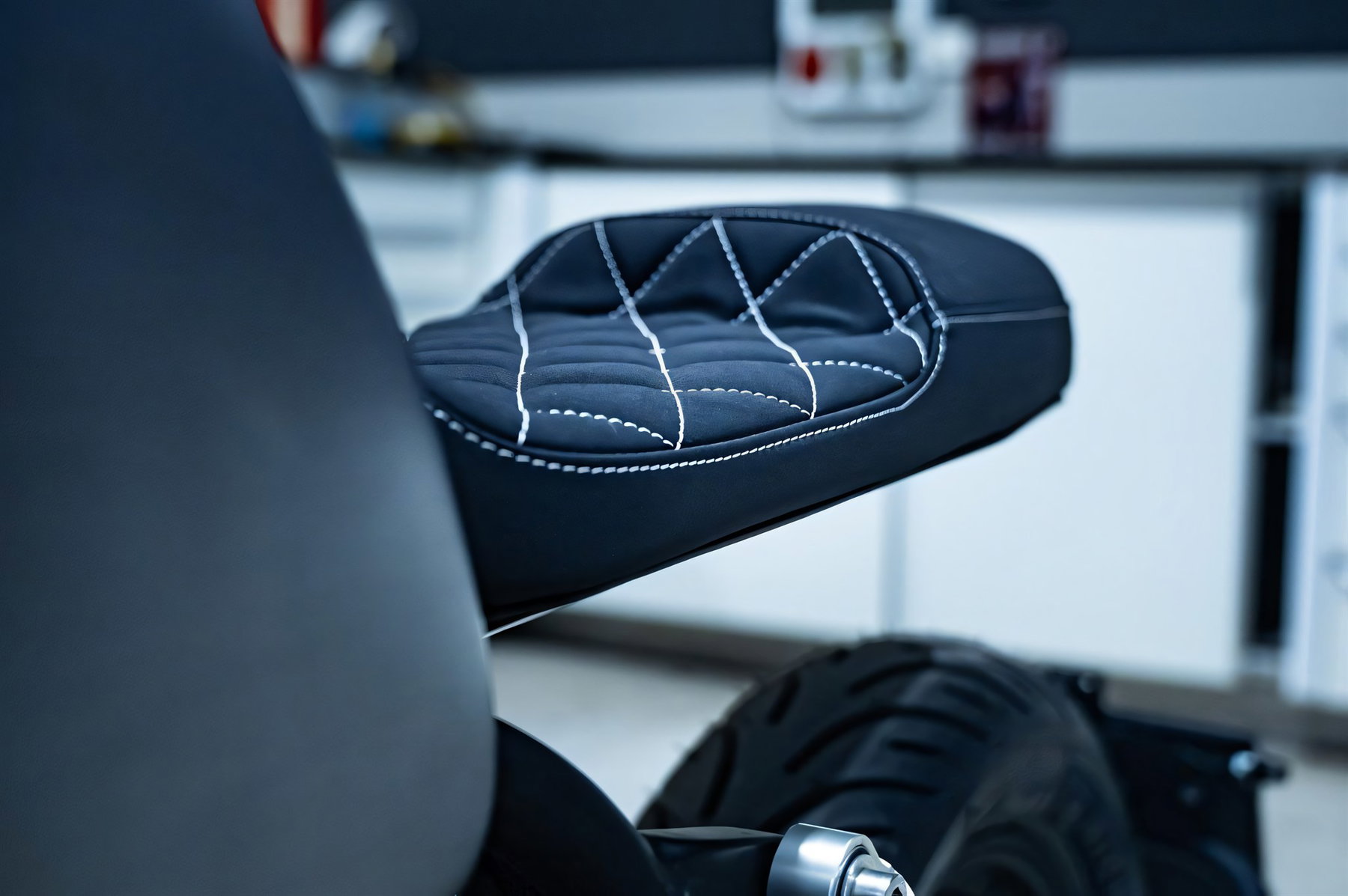
Bolt designed a modular subframe. Undoing two bolts is enough to swap between two seats and therefore to convert the two-seater into a single-seater.
Both seats are handmade and covered in suede. Each of the two units has its own LED tail light built in. As a result the motorcycle remains fully functional and street-legal in both configurations. Riding alone means fitting the short version, while the longer one goes on the bike for two-up riding.
What has changed in the chassis and the brakes?
Almost the entire chassis is new. At the rear there is an in-house box-section swingarm, at the front a modern upside-down fork from BMW.
The new swingarm carries the Bolt logo and is said to be more torsionally rigid than the production part. Torsional rigidity describes how much a component twists under load. The less it gives, the more precisely the wheel stays on line. On top of that come YSS shock absorbers, which are intended to be a noticeable update over the aged production dampers.
More effort was needed at the front. To make the modern upside-down fork fit into the old frame at all, CNC-machined triple clamps were produced. Braking is handled by a twin-disc setup with four-piston calipers. The front end is completed by a 3D-printed headlight cowl with modern LED technology.
Electrics, cockpit and riding position
Low-mounted clip-on handlebar halves sit at the steering head, clamped directly onto the fork tubes. Together with the Tarozzi rearsets, the result is a forward-leaning, sporty riding position.
The electrics come entirely from Motogadget and are controlled by an M-Unit. This module takes over the job of conventional fuses and relays and makes the wiring harness considerably slimmer. Bar-end indicators and handlebar switches are part of the package. Highsider mirrors complete the cockpit.
Who is behind Bolt Motor Company?
Bolt Motor Company is a workshop from Valencia in Spain that describes itself as a modern coachbuilding atelier. It is run by Adrián Campos.
The business grew up on the premises of the Campos Racing team, and by its own account that background still shapes the way it works today. The workshop names tight tolerances, well-reasoned material choices and documented decisions as its benchmark. According to its own figures, the team has completed more than 150 projects in twelve years and manufactured over 820 parts in house. The work is split into three areas: motorcycles, the Heritage restomod line and the Titán division.
Classic BMW boxers and the so-called Flying Bricks, meaning the four-cylinder K series, keep coming up in the process. Dave Rojas, Head of Design & Bespoke Projects, sums up how the team sees its work on the R 100: “For us, this project represents the balance between classic BMW engineering, modern technology, and handcrafted design.” He adds that it was a special project for the whole team: “It was a very special build for the entire BOLT team.”
Frequently Asked Questions
-
Which base was used for the BMW R 100 custom build?
The basis is an air-cooled BMW R 100 with a 980 cc boxer engine. In standard form it produces 70 hp (51 kW) and delivers power through a five-speed gearbox and a shaft drive. The motorcycle arrived at the workshop completely dismantled inside a wooden crate.
-
How much power does the BMW R 100 have?
The factory figure is 70 hp (51 kW). Bolt rebuilt the engine completely, among other things with new cylinders, pistons and connecting rods as well as reworked cylinder heads. An upgraded carburettor kit and electronic ignition were added on top.
-
Can the converted BMW R 100 be ridden two-up?
Yes. The modular subframe allows a change between single-seater and two-seater by undoing two bolts. Both handmade suede seats have their own LED tail light, so the motorcycle stays street-legal in either version.
-
Who built the BMW R 100 custom?
Bolt Motor Company from Valencia in Spain is responsible. The workshop has been building one-off machines for around twelve years and grew up on the premises of the Campos Racing team. The project is called BOLT ≠ 100.