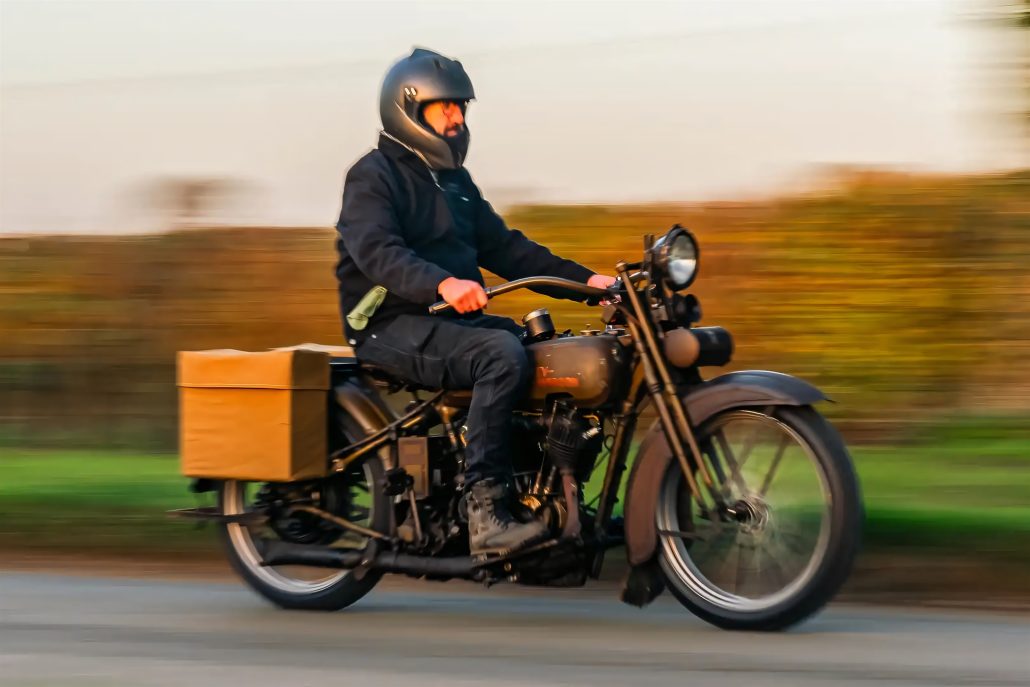
- Two Harley-Davidson Model JDs from 1924 and 1927 now run on gasoline, electricity, or both simultaneously.
- A Maeving hub motor with 15 hp (11 kW), powered by a 2.7 kWh battery, is fitted inside the rear wheel.
- A 1921 Model FD with an irreparable engine was fully converted to electric drive.
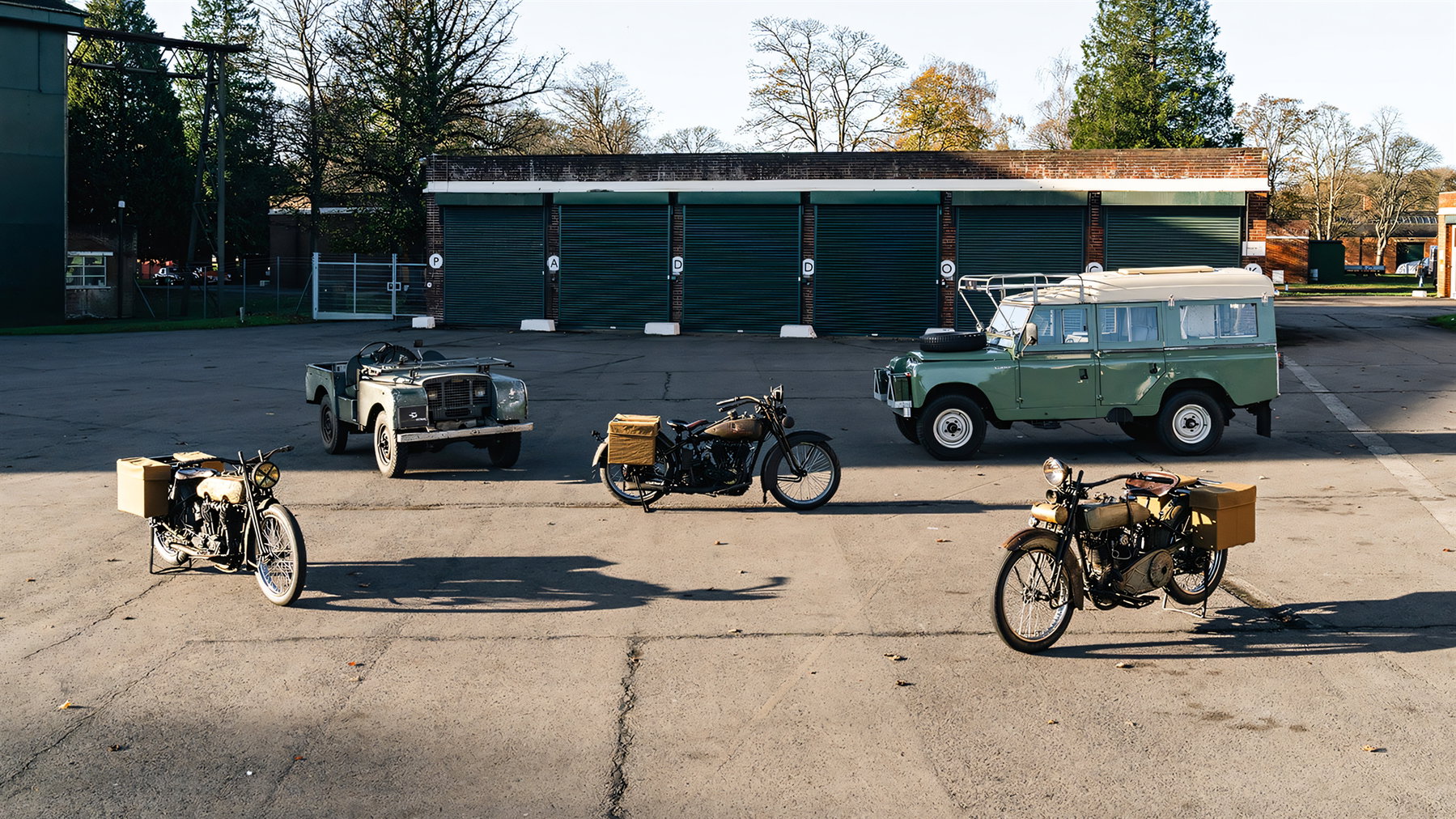
Upgrading old vehicles with modern technology has a long tradition, from fuel injection to disc brakes. Actor Jason Momoa, known from Aquaman, Game of Thrones, and Dune, takes this principle a step further by having his classics converted to electric and hybrid drivetrains. For the latest round of five vehicles, he once again worked with British specialist Electrogenic from Oxfordshire. At the center are three Harley-Davidson motorcycles from the early 1920s, which have become the most unusual part of the project.
What Did Electrogenic Change on the Harley-Davidson Motorcycles?
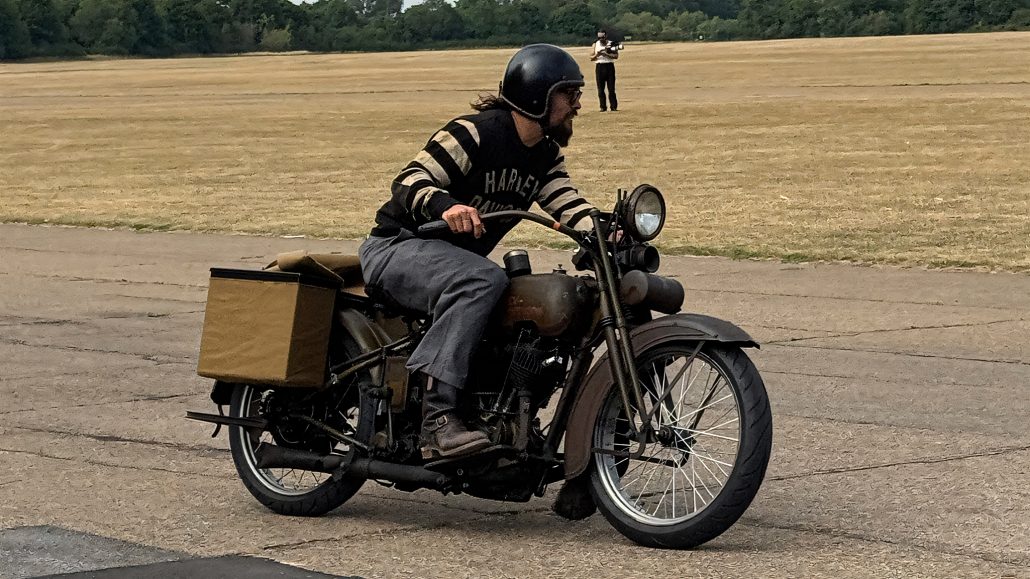
Electrogenic converted three Harley-Davidson motorcycles from the early 1920s — two into plug-in hybrids and one into a purely electric motorcycle. For the 1924 and 1927 Model JDs, the original drivetrain was retained: a V-twin with 74 cubic inches of displacement (approximately 1,213 cc), about 20 hp (15 kW), and roughly 68 Nm (50 lb-ft). Each was supplemented with an electric powertrain. The 1921 Model FD had an engine beyond repair and therefore runs exclusively on electricity. According to Electrogenic, these are the company’s first motorcycle conversions — the firm had previously made its name electrifying classic cars. Nothing on the motorcycles was cut, drilled, or welded, meaning every conversion can be fully reversed.
How Does the Plug-in Hybrid Drivetrain Work?
The drivetrain combines the original gasoline engine with an electric hub motor in the rear wheel, and the rider switches between them via a toggle. The options are pure electric, pure gasoline, or both powertrains together. The hub motor comes from British electric motorcycle manufacturer Maeving, produces 15 hp (11 kW), and delivers around 260 Nm (around 192 lb-ft) — significantly more torque than the old combustion engines with their approximately 68 Nm (50 lb-ft). The electric motor also serves as a starter, firing up the gasoline engine and eliminating the traditional kick-start. Electrogenic CEO Steve Drummond explains that only one manufacturer offers a sufficiently powerful motor: “the only company in the world that manufactures a motor powerful enough is Maeving.” The coordination between the combustion engine and the electric drivetrain is handled by proprietary control software called EG-OS.
What Range and Charging Time Does the Conversion Offer?
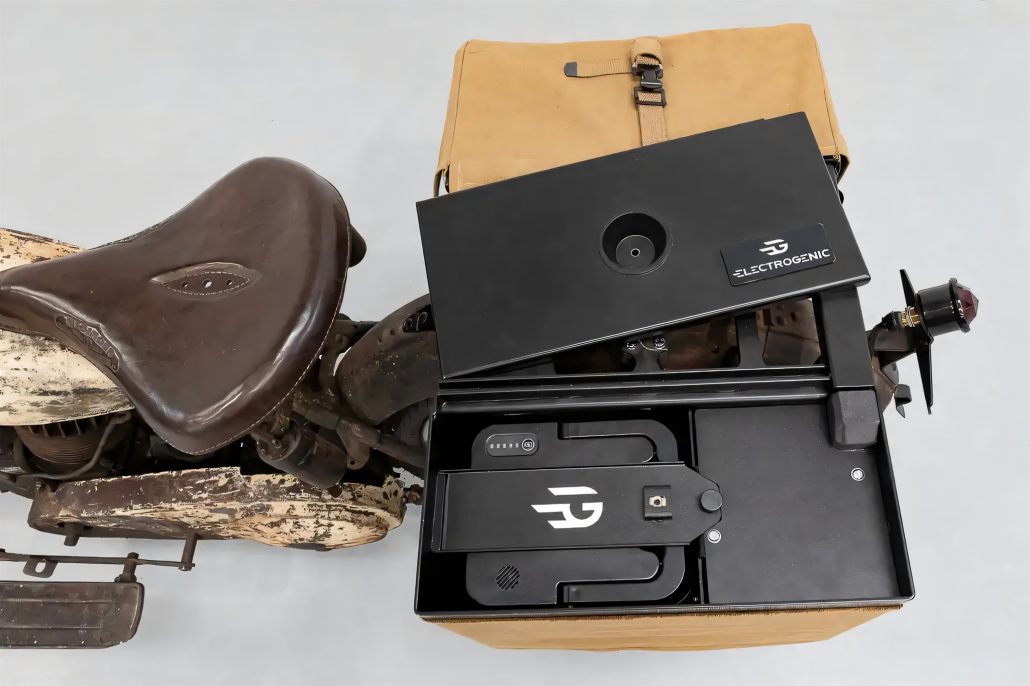
On electric power alone, the motorcycles are said to cover more than 80 kilometers (50 miles), with additional range available via the gasoline engine. Power comes from a removable 2.7 kWh battery housed in a pair of custom-made saddlebags. These sit slightly lower than the originals and are finished in leather or canvas to maintain a period-appropriate look. The battery can be charged on the motorcycle or removed and plugged in separately; a full charge from a standard household outlet takes approximately 2.5 hours, according to Electrogenic. Momoa expressed enthusiasm about the result, saying: “This is the best thing we’ve ever made.” He also describes how, at the push of a button, he can switch between the sound of the old twin-cylinder engine and near-silent riding without the motorcycle losing its 1920s character.
More Safety for Roughly Century-Old Motorcycles
Beyond the drivetrain, Electrogenic also modernized the brakes. The originals had no front brake at all and relied solely on a band brake on the rear wheel plus engine braking — a setup considered demanding even at the time. As part of the conversion, the company replaced the band brake with a modern disc brake, a significant safety improvement for machines that are now roughly a century old.
What Happened to the Two Land Rovers?
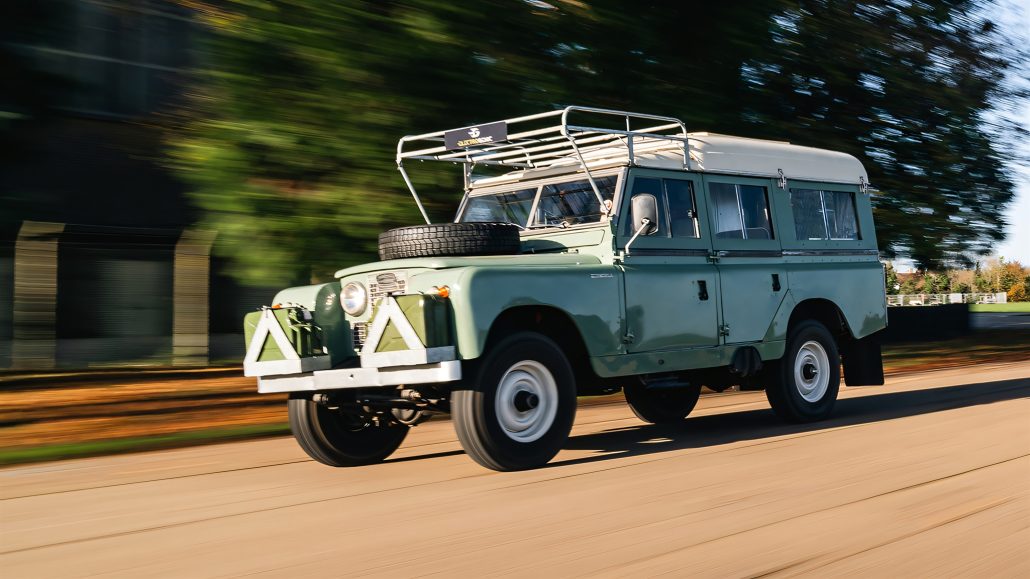
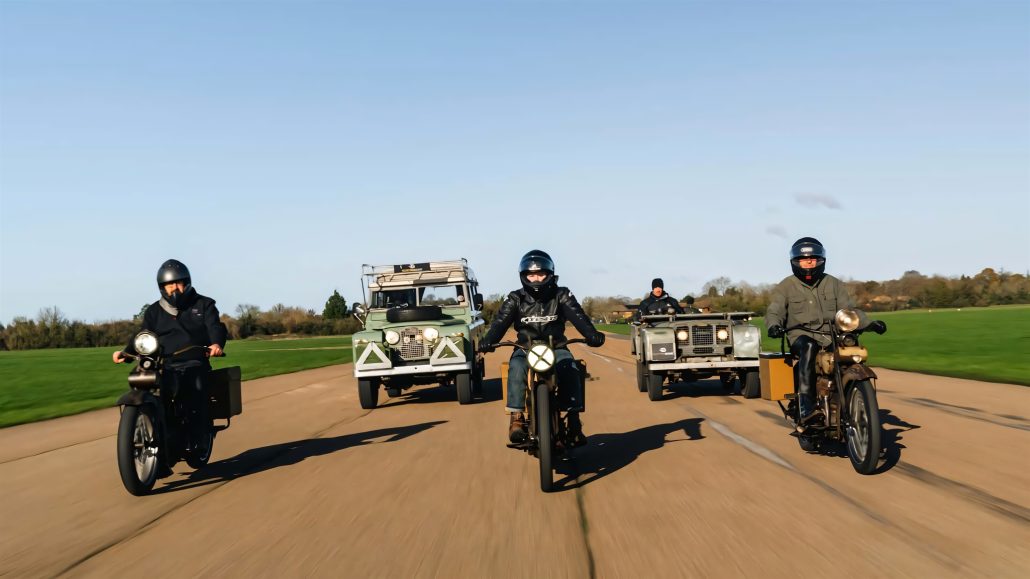
The two Land Rovers were converted to fully electric drivetrains while retaining their original all-wheel-drive systems, including the original control levers. The 1949 Series I 80 lost its 1.6-liter four-cylinder with 50 hp and received a 48 kWh battery along with a 204 hp (150 kW) electric motor whose torque was deliberately limited to avoid overloading the original gearbox. Power flows through a fixed 2:1 reduction gear bolted directly to the existing transfer case. The range is quoted at over 240 kilometers (150 miles), with charging via CCS fast charging. The second vehicle is a rare 1961 Series IIA 109 Dormobile, one of only 150 of these camper conversions, fitted with a 62 kWh battery and a 163 hp (120 kW) motor. Inside, an induction cooktop replaces the former gas stove. Additionally, Electrogenic equipped Momoa’s camping trailer, a Schutt Industries XVENTURE XV-2, with a 93 kWh battery intended to power camping equipment over extended periods and serve as a mobile charging station.
Can You Buy the Hybrid Conversion?
Yes, Electrogenic offers the Harley hybrid technology as a retrofit kit. It is a plug-and-play solution that, according to the manufacturer, can be installed at home and is available in several wheel sizes. The complete system adds approximately 34 kg (75 lbs) to the motorcycle’s weight, and the retrofitted rear wheel includes a hydraulic disc brake. Customers can also send in an original wheel to have it fitted with the electric powertrain.
What the Conversion Reveals About the Future of Restomodding
This project illustrates how the definition of modernization shifts alongside technology. For a long time, fuel injection, disc brakes, or better audio systems were considered state-of-the-art upgrades for classics. Electrogenic argues that batteries, motors, and hybrid systems now belong to the same toolkit. Because none of the conversions involve permanent alterations, every vehicle can be returned to its original condition. This is not Momoa’s first project of this kind — in 2024, he had a 1929 Rolls-Royce Phantom II electrified, also by Electrogenic and also for his series On the Roam. The current conversions thus fit into the broader trend of keeping classic vehicles road-worthy through electric and hybrid technology. They can be seen in the fourth episode of the second season of On the Roam, titled Off the Grid, streaming on HBO Max and Discovery+.
Frequently Asked Questions
-
Which Harley-Davidson motorcycles did Jason Momoa have converted?
Jason Momoa had three models converted: a 1921 Model FD as well as a 1924 and a 1927 Model JD. The two Model JDs were turned into plug-in hybrids, while the Model FD became a purely electric motorcycle.
-
How much power does the electric motor of the Harley hybrids produce?
The Maeving hub motor produces 15 hp (11 kW) and delivers around 260 Nm (around 192 lb-ft). The original V-twin engines produce about 20 hp (15 kW) and approximately 68 Nm (50 lb-ft).
-
How far can the converted Harley-Davidson travel on electric power alone?
On electric power alone, Electrogenic quotes a range of more than 80 kilometers (50 miles). The 2.7 kWh battery charges at a standard household outlet in approximately 2.5 hours.
-
Can you buy the plug-in hybrid conversion from Jason Momoa’s Harley-Davidson?
Yes, Electrogenic sells the technology as a plug-and-play retrofit kit for classic Harley-Davidson motorcycles. It can be installed at home, is available in several wheel sizes, and adds approximately 34 kg (75 lbs) to the overall weight.
-
Where can you see Jason Momoa’s converted vehicles?
The conversions can be seen in the fourth episode of the second season of On the Roam, titled Off the Grid. The series is available on HBO Max and Discovery+.