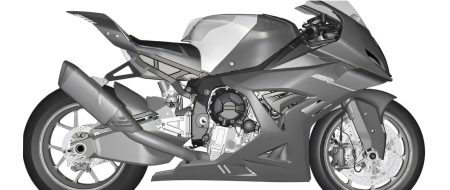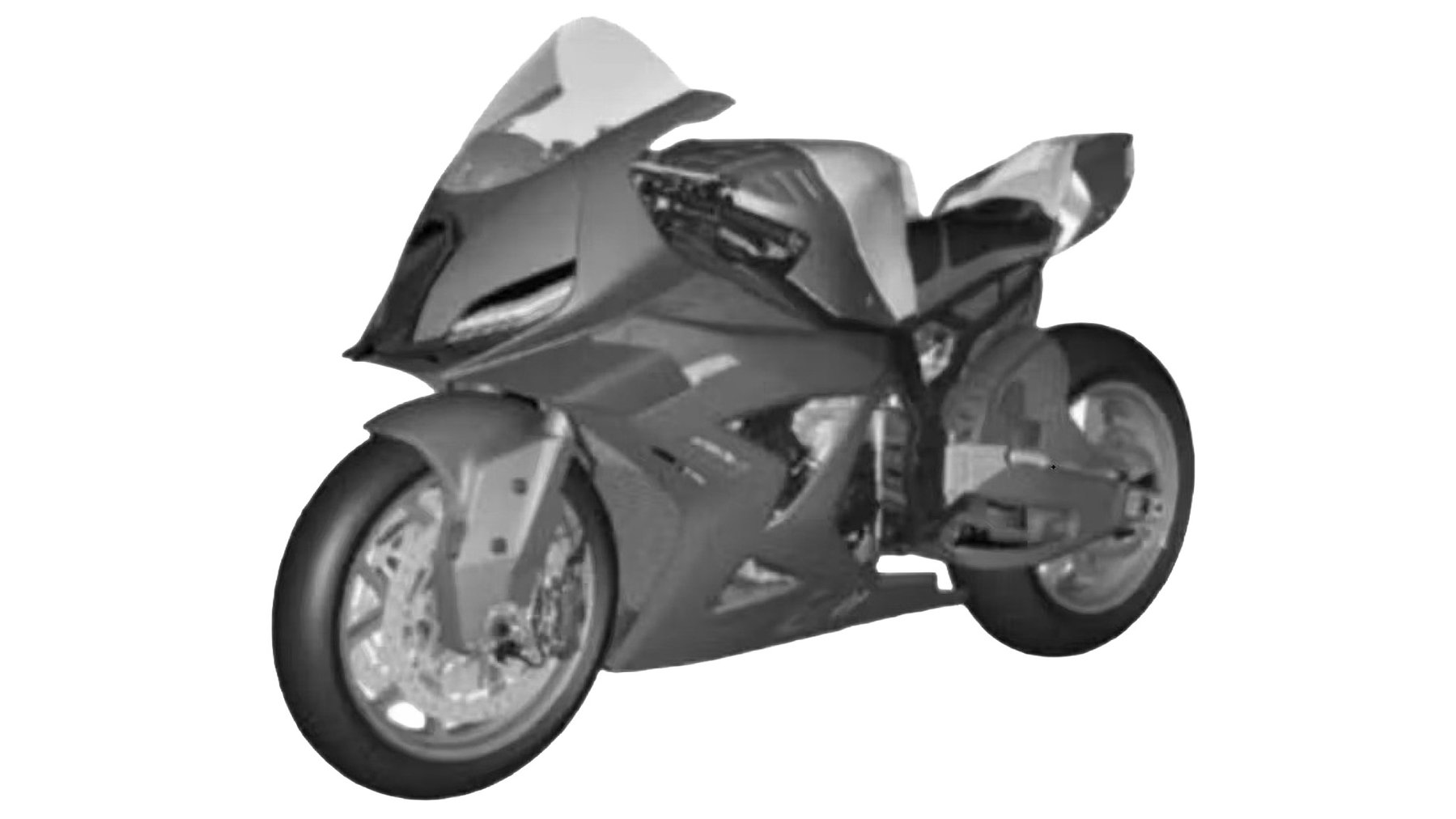
In July 2026, a drawing surfaced that reportedly comes from a design patent BMW filed in India, showing the next S 1000 RR. Along with the image, early technical details have leaked, chief among them a claimed output of 215 hp.
- The new BMW S 1000 RR 2027 is said to produce 215 hp (158 kW) from the factory, five hp more than the current model
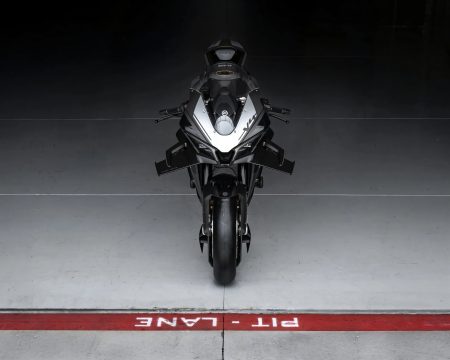
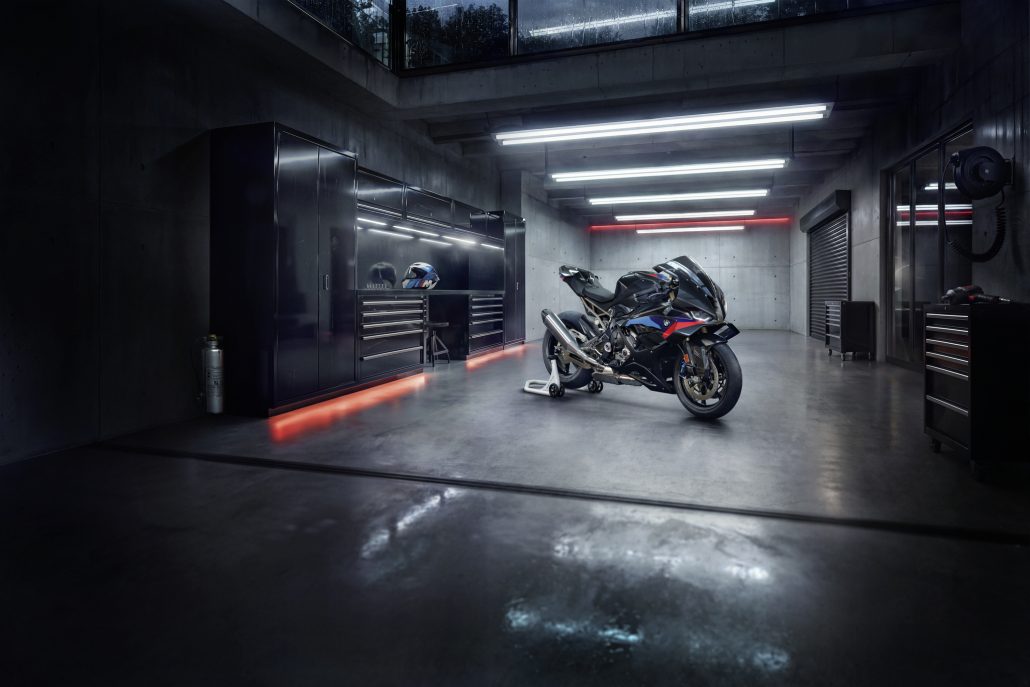
- Visually, the production model reportedly stays almost identical to the 2025 Concept RR
- Production is said to start in May 2027, with dealer availability expected by summer 2027
When BMW unveiled the Concept RR in May 2025, the message was clear: the show bike was meant to set the direction for the next generation of the RR lineup. A good year later, there’s concrete evidence for the first time of just how close the production machine stays to that blueprint. And the answer turns out to be more literal than is usually the case with concept bikes.
What does the patent image of the new BMW S 1000 RR show?
The image shows a machine that looks almost exactly like the Concept RR on the outside. Visible are the winglets integrated into the fairing and the large central air intake at the front.
The drawing surfaced in July 2026 and reportedly comes from a design patent BMW filed in India. A design patent protects only the outer shape of a product, not its technology, which is exactly why it’s so revealing when it comes to previewing the styling.
The fairing retains the sharply drawn lines of the concept. The central intake at the front serves two purposes at once: while riding, it forces air into the intake tract, an effect known as ram air that adds a bit of boost pressure at high speed. At the same time, it channels airflow through the motorcycle all the way to the tail.
The winglets are no longer just for show. At speed, the small wings generate downforce and help keep the front wheel planted under acceleration. At power outputs beyond 200 hp, that’s a component with a clear function rather than a nod to racing.
How much power will the new BMW S 1000 RR have?
The leaked figures point to 215 hp (158 kW), as a standard, street-legal output. That would be five hp more than the current model.
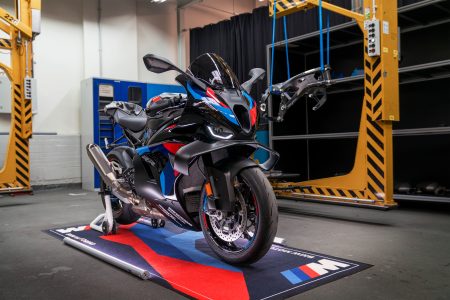
Today’s S 1000 RR makes 210 hp (154 kW) at 13,750 rpm and 113 Nm (about 83 lb-ft) at 11,000 rpm, good for a claimed 303 km/h (188 mph) according to BMW. The basic layout is unlikely to change: the bike is powered by an inline four-cylinder engine displacing around 1,000cc.
ShiftCam plays an important role here, BMW’s two-stage variable intake camshaft control. It allows different valve opening times for the lower and upper rev ranges. Add to that lightweight titanium valves, long a standard in the supersport segment, which enable very high engine speeds.
Why does BMW talk about more than 230 hp for the Concept RR?
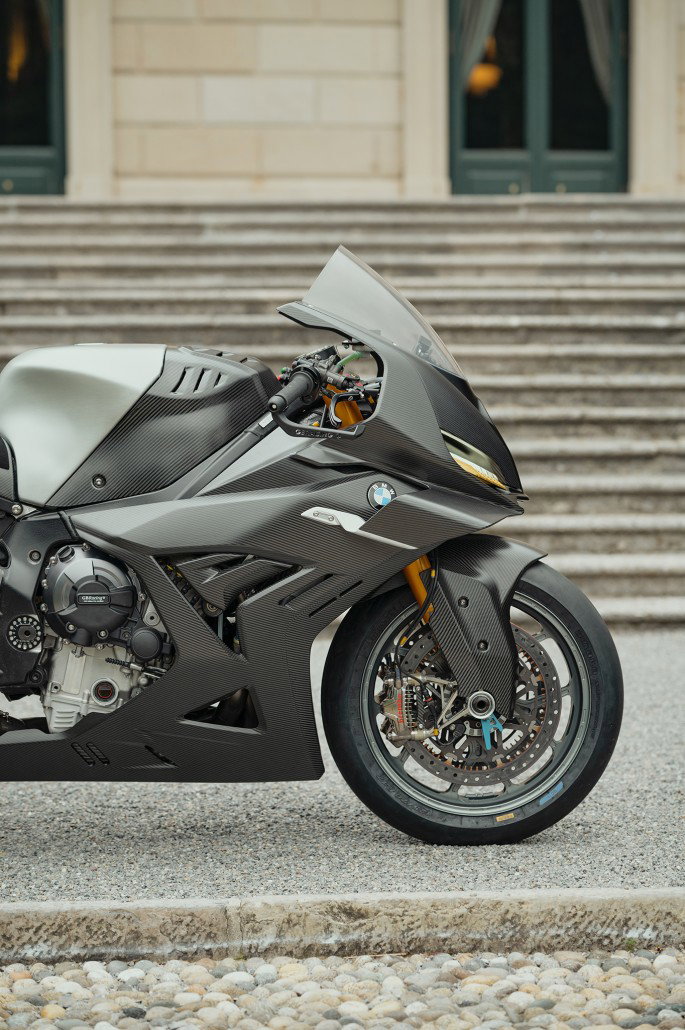
Because that figure applies to the concept, not the production model. BMW explicitly cited more than 230 hp (169 kW) in connection with the Concept RR.
The concept’s engine is derived from the factory Superbike that Toprak Razgatlioglu rode to the Superbike World Championship title in 2024. An engine like that can’t simply be dropped into a street-legal production motorcycle. So the 215 hp of the upcoming S 1000 RR and the 230-plus hp of the concept describe two different things.
There’s also the internal hierarchy to consider: the M 1000 RR sits above the S 1000 RR, and that gap has to be maintained. The current M version makes 218 hp (160 kW) at 14,500 rpm.
How much will the new BMW S 1000 RR weigh?
There’s no information on that yet. Only today’s figure is known: 198 kilograms (about 437 pounds) in base trim with the tank 90 percent full.
According to media reports, the current machine’s dry weight is 185 kilograms (about 408 pounds). The two figures don’t contradict each other, they simply measure different things: one without operating fluids, the other ready to ride.
Whether the new generation sheds weight remains open. But BMW hinted at the direction when it unveiled the concept: plenty of carbon, plus aluminum, titanium and magnesium. Output is meant to stay above 200 hp, weight below 200 kilograms. The M 1000 RR serves as the reference point at 194 kilograms (about 428 pounds), measured with carbon wheels and a 16.5-liter tank filled to 90 percent.
What the Concept RR reveals about the frame, brakes and chassis
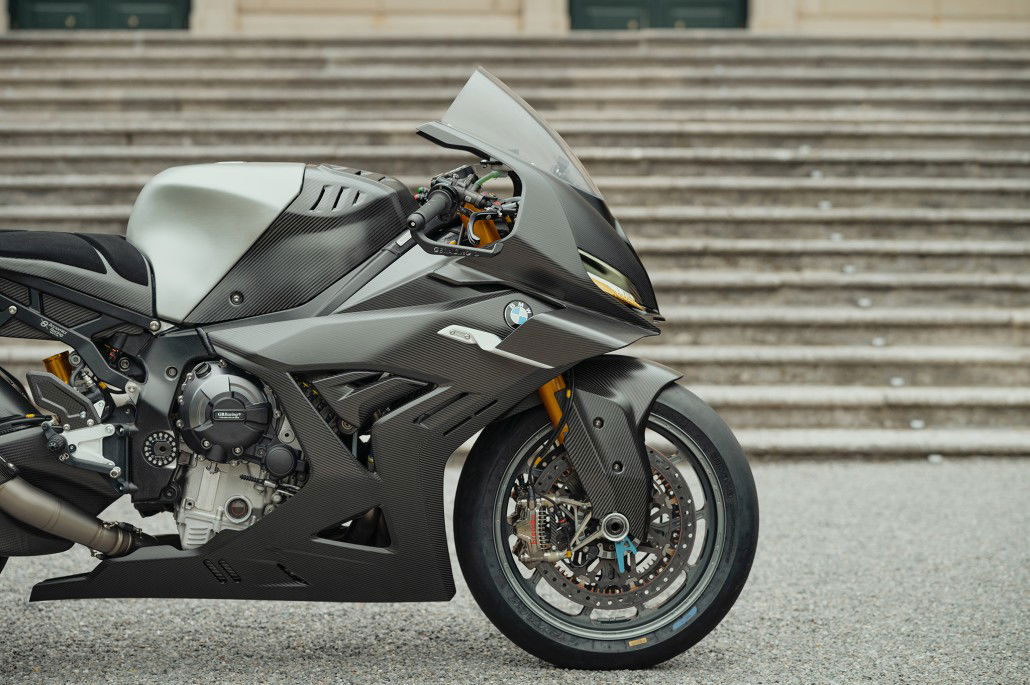
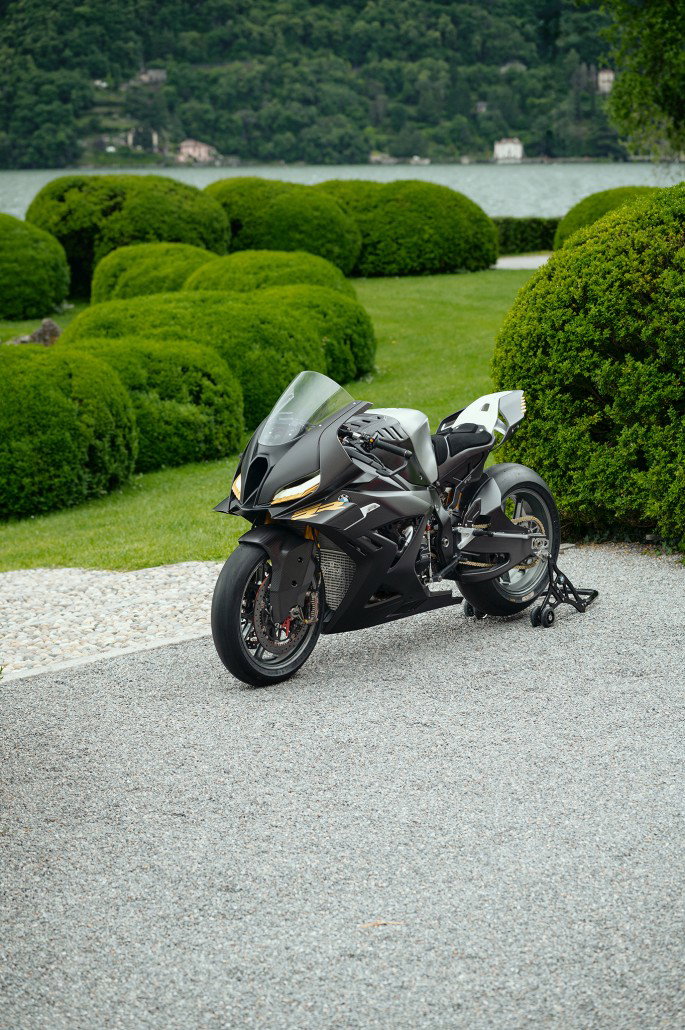
On the show bike, every fairing panel was apparently made from carbon. The wheels, on the other hand, didn’t appear to be carbon, but rather forged or machined light alloy, likely aluminum.
The frame stood out. Both the main frame and the bolt-on subframe appeared to be made from aluminum, with the subframe featuring a lattice structure. On the S 1000 RR and M 1000 RR, this component is currently made from steel.
The brakes used Brembo monoblock calipers, paired with unusually large discs with an estimated diameter of between 330 and 340 millimeters. The fork and shock came from Öhlins. The carbon on the swingarm was likely just a cover over the aluminum underneath.
A carbon frame like the one on the 2017 HP4 Race is considered unlikely. That machine was a limited, non-street-legal small-batch model and therefore a special case.
When will the new BMW S 1000 RR reach the market?
Production is reportedly set to begin in May 2027, which would put the bike in dealerships by summer 2027.
This timeline hasn’t just emerged with the patent image. It was already mentioned back when the concept was unveiled in May 2025. That’s plausible too, since BMW only introduced the current Euro 5+ versions of the S 1000 RR and M 1000 RR in autumn 2024 as new models for 2025. Whether BMW reveals more before then, say at a trade show in autumn 2026, remains to be seen.
What remains unusual is how early BMW announced the coming generation. Markus Flasch, head of BMW Motorrad, said at the presentation that the company had never before given such an early preview of a future RR generation, framing it as underscoring BMW Motorrad’s “leadership claim” in this segment.
What’s changing on the current S 1000 RR for the 2027 model year?
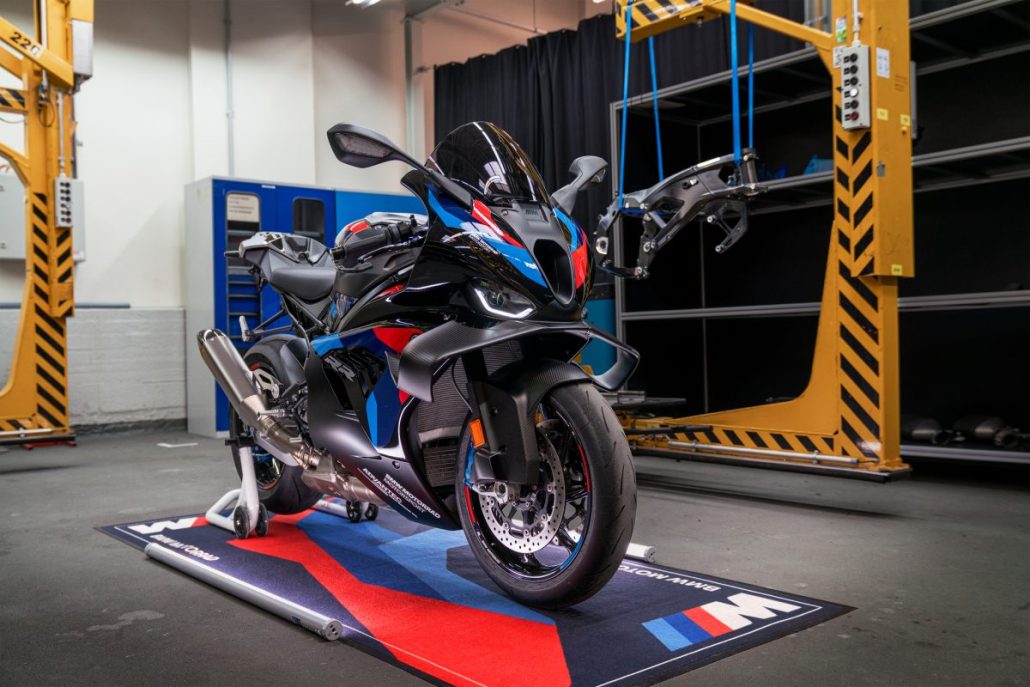
Before the new generation arrives, today’s machine is getting one more update. Starting in August 2026, it can be ordered as the “Edition M Sport” trim.
That includes the “Blackstorm Metallic/M Motorsport” color scheme, a tinted windscreen and forged M wheels. Also new is a USB charging port, included in both the Dynamic Package and the Edition M Sport. The M Package is being expanded as well, and will now include the M forged wheels.
The new BMW M 1000 RR won’t arrive until the 2028 season
The M 1000 RR is also getting an update for the 2027 model year, likewise orderable from August 2026. The centerpiece is the new third-generation M Motorsport frame, which is 1.3 kilograms (about 2.9 pounds) lighter.
This step has a racing motivation behind it. In the Superbike World Championship, only components that are also fitted to the production motorcycle are allowed. This process is called homologation. The new frame therefore forms the basis for the 2027 season.
The completely new M 1000 RR on the new RR platform isn’t expected until late 2027, for the 2028 season. It, too, is expected to get a further boost in peak output. Current figures on paper stand at 218 hp (160 kW) at 14,500 rpm, up to 314 km/h (195 mph), and 194 kilograms with a full tank.
That points to a staggered handover for the 2027 supersport generation: the base version first, the racing variant a year later.
Why did BMW file the design in India of all places?
Because India is considered a possible market for the future RR lineup. BMW already sells the S 1000 RR there, and a design filing is usually one of the first steps a manufacturer takes when sounding out a market.
Context matters here: the filing counts as a precautionary step. BMW has not yet officially unveiled a production version of the Concept RR for any market, nor has the company named a timeline. The world debut is therefore likely to happen somewhere else first.
What still makes the filing valuable: it offers the first reliable look at what the production motorcycle will actually look like. And for a motorcycle that’s still a good year away, it’s remarkably detailed.
Frequently Asked Questions
-
How much power does the new BMW S 1000 RR 2027 have?
The leaked figures point to 215 hp (158 kW) for the street-legal production version. That’s five hp more than the current model’s 210 hp (154 kW) at 13,750 rpm. Official confirmation from BMW is still pending.
-
When will the new BMW S 1000 RR arrive?
Production is said to start in May 2027, with deliveries to dealers expected by summer 2027. BMW has not confirmed this timeline so far.
-
What will the new BMW S 1000 RR cost?
There’s no pricing information yet. BMW has neither officially unveiled a production version nor published a price list.
-
How does the Concept RR differ from the production machine?
Visually, hardly at all: the patent image shows the winglets and central air intake nearly unchanged. Technically, though, the two are far apart. BMW cited more than 230 hp (169 kW) for the Concept RR, while 215 hp (158 kW) is being discussed for the production version.
-
When will the new BMW M 1000 RR arrive?
The completely new M 1000 RR isn’t expected until late 2027, timed for the 2028 season. For the 2027 model year, there’s initially just an update with a frame that’s 1.3 kilograms lighter.
➜ More on this topic in our overview: New Motorcycles 2027: All Models, Releases and Highlights at a Glance.
➜ This article is part of our comprehensive overview: Motorcycle Patents and Future Technology: What Manufacturers Are Developing. Find all key information on this topic in one place.