- Official dates according to the organiser: January 1 to 15, 2027, with start and finish at King Abdullah Economic City
- According to Reuters, the ASO is working on an alternative route in the north of Saudi Arabia
- Spanish media also report an eight-day Plan B in Morocco
Rumours about the 2027 Dakar Rally have been circulating for weeks. One day the rally is said to be cancelled. The next, it is supposedly moving to the north of Saudi Arabia or relocating to Morocco altogether. On top of that came reports that Fernando Alonso would return to the Dakar, which he quickly shot down himself. Very little is official. What is clear, however, is that the situation in the Middle East is having a massive impact on the organisers’ plans. Around eleven weeks before the scheduled start, many questions therefore remain open, for factory teams and privateers alike.
Will the 2027 Dakar go ahead as planned?
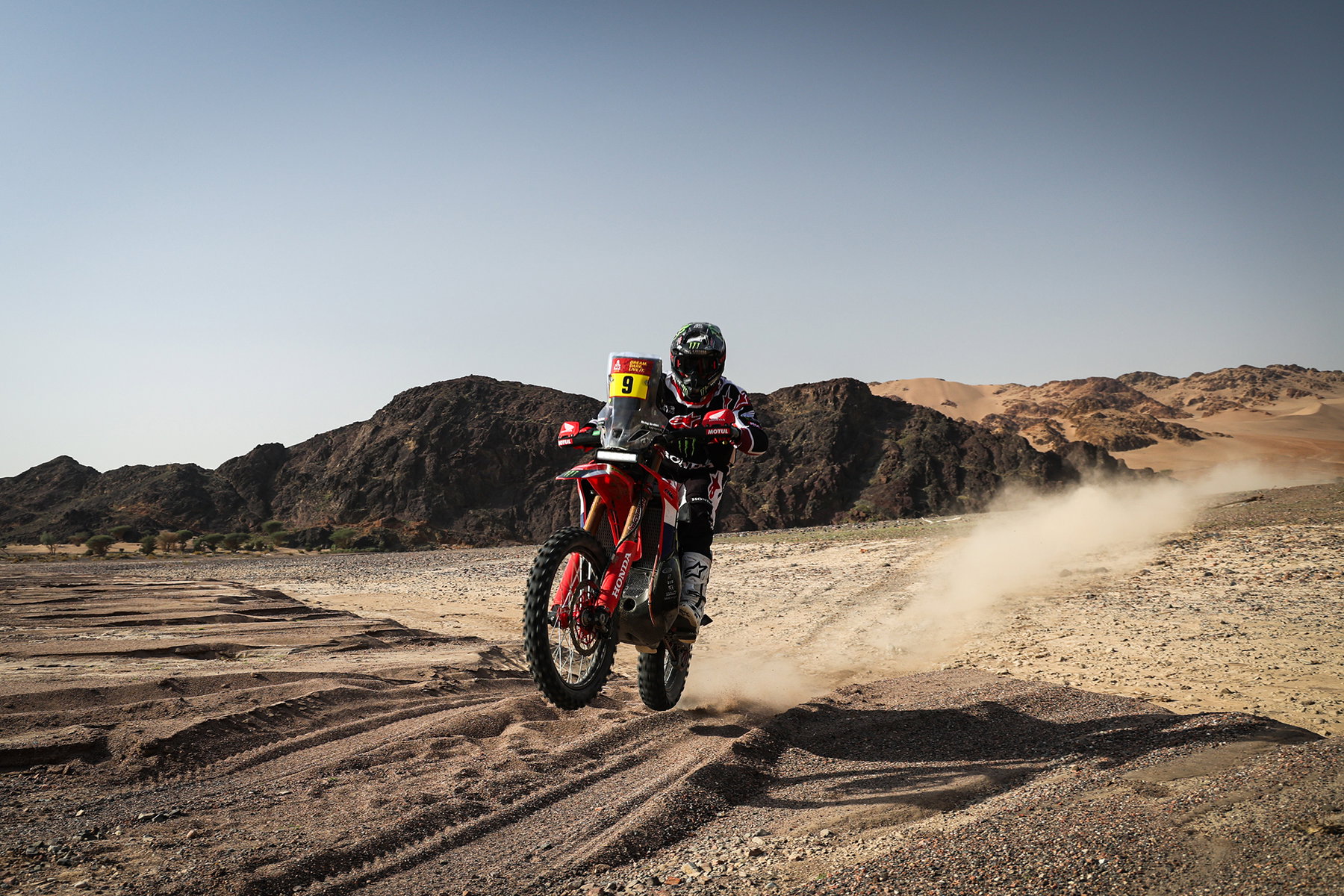
As of today, the Amaury Sport Organisation (ASO) has neither cancelled nor postponed the 2027 Dakar. Officially, the event is still scheduled for January 1 to 15, 2027 in Saudi Arabia.
The ASO had already dismissed rumours of a cancellation in September. At the time, the organiser stated: “The rumours regarding a possible cancellation are unfounded.” Preparations were on schedule, it said, and the organisation was in contact with its Saudi partners and monitoring the situation closely. The ASO gave a similar answer on September 15 to the team TimeOut Racing, which had originally planned to enter ten vehicles in the Dakar Classic. The organiser said it understood the questions and would provide further information shortly.
Since then, however, the situation has moved on. According to a Reuters report from October 8, the organisers are working on an alternative route so that the rally can still take place in Saudi Arabia. The news agency cites three people from the World Rally-Raid Championship, two drivers and one team member. The ASO, the motorsport governing body FIA and the motorcycling governing body FIM did not initially respond to requests for comment.
Why is the Dakar in Saudi Arabia in doubt?
The reason is the increasing number of attacks by Yemen’s Houthi militia on targets in Saudi Arabia. The Iran-aligned group is stepping up its attacks on cities, airports and energy facilities.
According to their own statements, the Houthis attacked King Khalid International Airport in Riyadh and a refinery belonging to the oil company Aramco in early October, among other targets. The refinery is only around 50 kilometres from King Abdullah Economic City, the planned start and finish location of the Dakar. Back in September, the Houthis had already reported attacks on Aramco facilities in Yanbu and on the Khamis Mushait air base. The United Kingdom has updated its travel advice for parts of Saudi Arabia.
The original route does not pass through Riyadh, nor does it run directly along the border with Yemen. However, some stages in the south are located in the same region as the targets of the attacks. The plan was a loop with start and finish at King Abdullah Economic City on the Red Sea, passing through Al-Ula, Ha’il, Al-Duwadimi, Bisha, Wadi Ad-Dawasir and Al Bahah, among other places.
Other racing series have already reacted. The World Rally Championship has cancelled its season finale in Jeddah in November, with Rally Sardinia stepping in as a replacement. Besides security concerns, the fact that Toyota and Hyundai were unwilling to travel is also said to have played a role. Formula 1 has dropped its races in Saudi Arabia and Bahrain, and the World Endurance Championship its round in Qatar. The MotoGP Grand Prix in Qatar has been moved from April to November. The WRC cancellation does not automatically spell the end for the Dakar, though. The two events have different organisers, routes and procedures.
What do the ASO’s Plan A and Plan B look like?
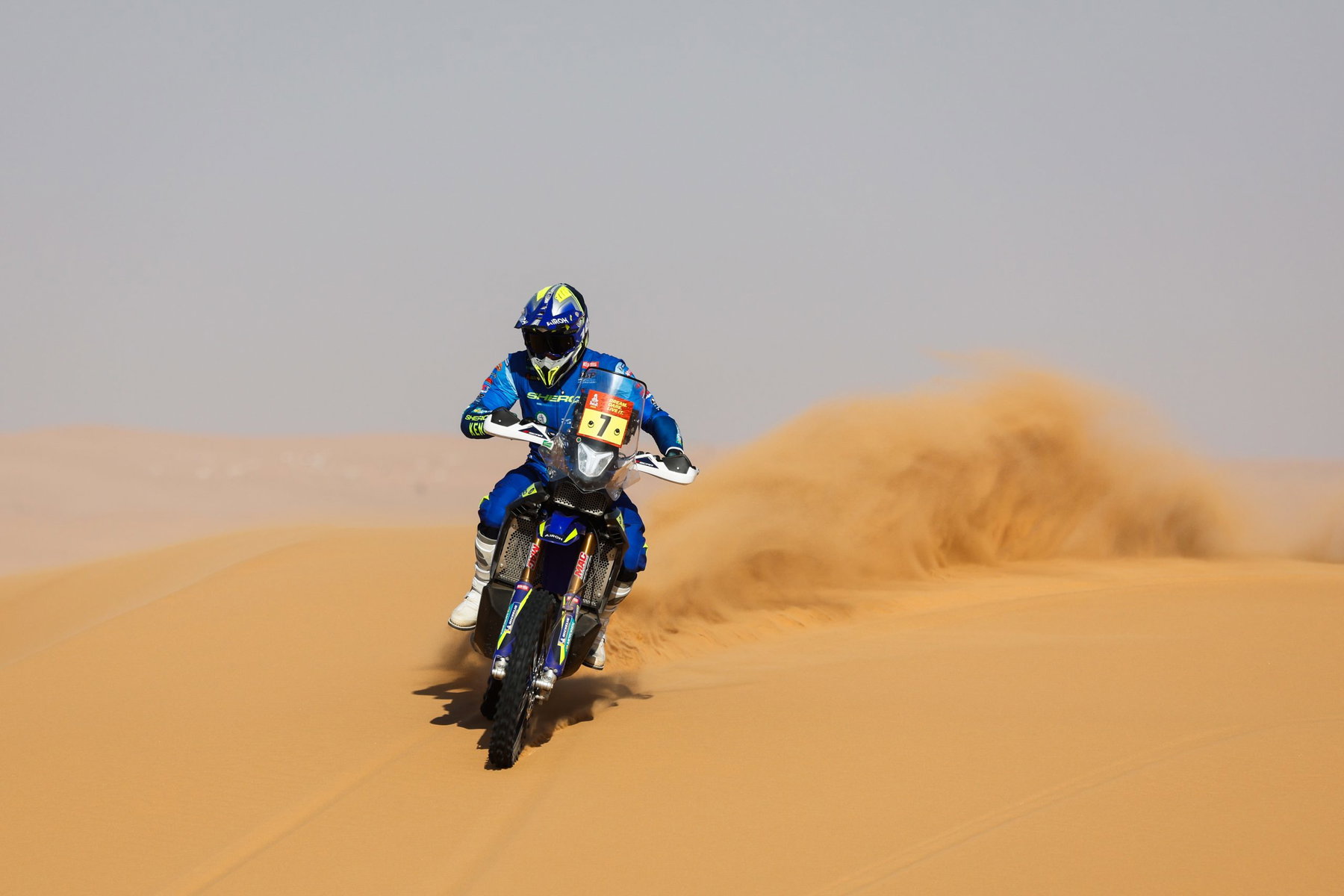
The ASO is apparently looking at two scenarios. The preferred option is a route moved further north within Saudi Arabia, the alternative a shortened rally in Morocco. The organiser has confirmed neither of them.
Plan A: A northern route in Saudi Arabia
According to Reuters, representatives of the Dakar organisation were present at the Rallye du Maroc and spoke with drivers and team managers there. According to the sources, work is under way on a new route in the north of the country, with fewer bivouacs than originally planned. A bivouac is the rally’s overnight camp, where teams sleep and repair their vehicles.
The Spanish sports newspapers Marca and AS also report on this option. According to them, the route would move well away from the border with Yemen. The bivouacs could be located closer to larger towns, and medical coverage along the route would be denser. This would mean that a large part of the route planning would have to be redone within just a few weeks.
Plan B: A short version in Morocco
The second option is a rally in Morocco. According to Marca and AS, it would last only eight days instead of fifteen and start on January 8. It would therefore finish around January 16. The ASO knows the country well, as a round of the World Rally-Raid Championship has been held there for years. In September, there was also talk of a possible alternative route through Spain, Portugal and Morocco.
Such a move would have consequences for the teams. Many have already organised their sea freight. A shorter rally would also significantly change the sporting character of the Dakar. The decision lies with rally director David Castera and the ASO.
What role do insurance and factory teams play?
Besides security, insurance cover is one of the biggest hurdles. Without insurance for riders, drivers, mechanics and support staff, the teams cannot travel.
KTM advisor Heinz Kinigadner also points this out. Speaking to Speedweek, he said that he personally expects a cancellation, even though nothing is official yet. In the past in Africa, competitors did sign declarations accepting the risk, he said. But the organiser’s problem is a different one: when travel warnings are issued, insurers pull out. Several hundred people would then be on the move without cover, from the TV crew to the rest of the staff. No organiser could take on that responsibility, he said.
Logistics are also becoming more expensive. Vehicles and equipment are shipped from Europe through the Suez Canal and the Red Sea to Saudi Arabia. Insurers have already raised their premiums for ships in high-risk areas.
Unrest is apparently growing among the factory teams. According to Motor16, KTM has been pushing for a quick decision for weeks. If governments advise against travel, Toyota and KTM are reportedly not going to send their teams to Saudi Arabia, according to paddock sources. Some teams are said to be deliberately delaying their entries, and some, especially private teams, have not entered at all for safety reasons.
FIM President Jorge Viegas told AS: “No es fácil, no es nada fácil.” In English: “It’s not easy, it’s not easy at all.” He referred to the internal policies of the companies and the safety of riders and mechanics. Five-time Dakar winner Nasser Al-Attiyah, on the other hand, is confident: “El Dakar se celebrará en Arabia Saudí.” In English: “The Dakar will take place in Saudi Arabia.” He argues that the decision lies with the ASO as a private organiser and not with the FIA.
Which dates are now crucial for the 2027 Dakar?
The coming weeks are crucial for planning. The entry deadline for the 2027 Dakar was set for October 20.
Logistics come next. After a first technical inspection on November 27 and 28, the vehicles are due to be loaded onto the ferry in Barcelona. By then at the latest, the teams need clarity. Almost at the same time, the Abu Dhabi Desert Challenge takes place from November 22 to 27, the finale of the 2026 World Rally-Raid Championship, where titles are still to be decided.
The Dakar was supposed to open the 2027 season of the World Rally-Raid Championship. If it were postponed or moved to another continent, the entire calendar would have to be adjusted. Meanwhile, the Africa Eco Race has confirmed its 18th edition. It runs from January 24 to February 6 from Tangier to Dakar. Some teams are said to have already entered there rather than wait for a decision. An eight-day Dakar in Morocco would end before the start in Tangier, so both rallies could take place side by side.
What was originally planned for the 2027 Dakar?
The original plan was for the 49th edition of the Dakar and the eighth in a row in Saudi Arabia. With 5,320 kilometres of special stages, it was set to offer more timed kilometres than any edition since the move to Saudi Arabia in 2020.
Special stages are the sections on which the time is measured. The previous high in Saudi Arabia was 4,903 kilometres in 2025. The route was presented in May. It included three completely new stages focused on the Red Sea region. The organisers promised more sand and fewer rocky sections. There was also a marathon stage, in which competitors spend the night in the bivouac without outside assistance. Entries for the Dakar and the Dakar Classic opened at that time. Whether this route will be used as planned is now uncertain.
Will Fernando Alonso race the 2027 Dakar?
Not according to Alonso himself. The two-time Formula 1 world champion has denied reports of a Dakar comeback.
Spanish media had reported that Alonso would start in 2027 with a former Dacia factory vehicle that could compete in Aston Martin livery. He had already competed in the Dakar in 2020, with Marc Coma as his co-driver. At the Singapore Grand Prix, Alonso made it clear: “It’s nearly impossible to fit in demanding programmes like an F1 championship and Dakar.” Regarding his next challenge, he said: “I will announce it, it will not be a rumour.” Neither Alonso nor Aston Martin has so far been entered for the Abu Dhabi Desert Challenge, the final round of the championship.
Has the Dakar ever been cancelled before?
Yes, once so far. The 2008 edition was called off shortly before the start because of terror warnings in Mauritania.
A year later, the rally moved from Africa to South America and continued there. There has also been a serious incident in Saudi Arabia before. Ahead of the start of the 2022 Dakar, a car and a truck exploded, and an attack was considered possible. Security measures were tightened and the rally ran to the finish. Unlike in 2009, however, there would be very little time for a relocation this time.

Frequently Asked Questions
-
Will the 2027 Dakar be cancelled?
Not so far. The ASO has neither cancelled nor postponed the 2027 Dakar and has described rumours of a cancellation as unfounded. According to Reuters, however, the organiser is working on an alternative route in the north of Saudi Arabia.
-
When does the 2027 Dakar take place?
Officially from January 1 to 15, 2027 in Saudi Arabia. Start and finish are at King Abdullah Economic City on the Red Sea. If the Plan B in Morocco comes into effect, the rally would start on January 8 and last only eight days, according to Spanish media.
-
What is Plan B for the 2027 Dakar?
According to reports, the ASO is considering a shortened eight-day rally in Morocco. However, the preferred option appears to be a route moved further north in Saudi Arabia with fewer bivouacs. Neither option has been officially confirmed.
-
How long is the 2027 Dakar route?
5,320 kilometres of special stages were planned. That would be more timed kilometres than at any previous Dakar in Saudi Arabia. Whether this route will be changed due to the security situation is still open.
-
Is Fernando Alonso racing the 2027 Dakar?
According to Alonso himself, no. He explained in Singapore that a Formula 1 season and the Dakar can hardly be combined. He intends to announce his next challenge officially himself.