- Since September 2025, India has charged 18 percent GST on motorcycles up to 350cc and up to 40 percent above that
- Triumph and Bajaj plan to shrink their 400cc engines below 350cc, with output dropping from almost 40 to around 35 hp
- The 400cc platforms are set to remain in production for export, above all for Europe
Since autumn 2025, engine size has had a direct say in how much a motorcycle costs in India. The government reorganised its Goods and Services Tax (GST) and drew a hard line at 350cc. Smaller machines have become noticeably cheaper since then, larger ones considerably more expensive. In a market where many buyers watch every rupee, this affects the model planning of several manufacturers. Triumph and Bajaj are hit hardest, as their best-selling models sit just above the line.
How has India changed GST on motorcycles?
Since September 2025, motorcycles up to 350cc have been taxed at 18 instead of 28 percent in India. For all machines with a larger engine, the rate rises to as much as 40 percent.
Before the reform, the two groups were much closer together. Bikes above 350cc used to pay 28 percent GST plus a 3 percent surcharge, 31 percent in total. Now they fall into the top tax bracket that otherwise applies to luxury goods. The gap between the two classes has grown from 3 to 22 percentage points.
Which manufacturers benefit from the 350cc threshold?
The winners are mainly brands whose range sits almost entirely below 350cc. Royal Enfield leads the way.
Around 87 percent of Royal Enfield’s volume comes from 350cc models, including the Classic 350, the Hunter 350 and the Meteor 350. After the tax cut, the company lowered prices across this range by about 22,000 rupees (roughly 201 euros / 232 US dollars). Since then, Royal Enfield has been selling around 100,000 motorcycles a month.
Classic Legends, with its Jawa and Yezdi brands, also has its entire line-up below the threshold. The company sells an average of around 4,000 motorcycles a month, with a slight upward trend.
Why are Triumph and Bajaj under pressure?
So far, Triumph and Bajaj have been covering the higher tax themselves instead of passing it on to customers through higher prices. This helps them hold on to sales, but it cuts into their margins.
The situation became tougher because Royal Enfield got cheaper at the same time, widening the price gap between a 350 and a comparable 400. Triumph currently sells around 3,500 units of its 400cc models per month in India. To keep up during the festive season in October 2025, it even cut the price of individual models by around 16,000 rupees (roughly 147 euros / 169 US dollars). In the long run, however, this approach is hardly sustainable for the companies.
What are Triumph and Bajaj planning with 350cc engines?
Both manufacturers are working on new engines below 350cc that are derived from the existing 400cc units. The plans called for a market launch as early as April 2026.
Technically, the step is modest. The engineers reduce the bore, meaning the cylinder diameter, until displacement drops below the tax threshold. Output is expected to fall from almost 40 hp to around 35 hp. In return, the motorcycle moves into the lower tax bracket. For the buyer, that means a little less power but a noticeably lower tax rate.
The smaller engines are to be used in several model lines at once: in the Pulsar and Dominar at Bajaj, and in the existing 400cc models at Triumph. Higher volumes per engine lower costs. At the same time, the new versions will compete head-on with Royal Enfield’s 350s, which have so far benefited from the threshold.
What does the reform mean for 400cc models in Europe?
There are no plans to drop the 400s for Europe. The existing platforms are set to remain in production for export, above all for the European market.
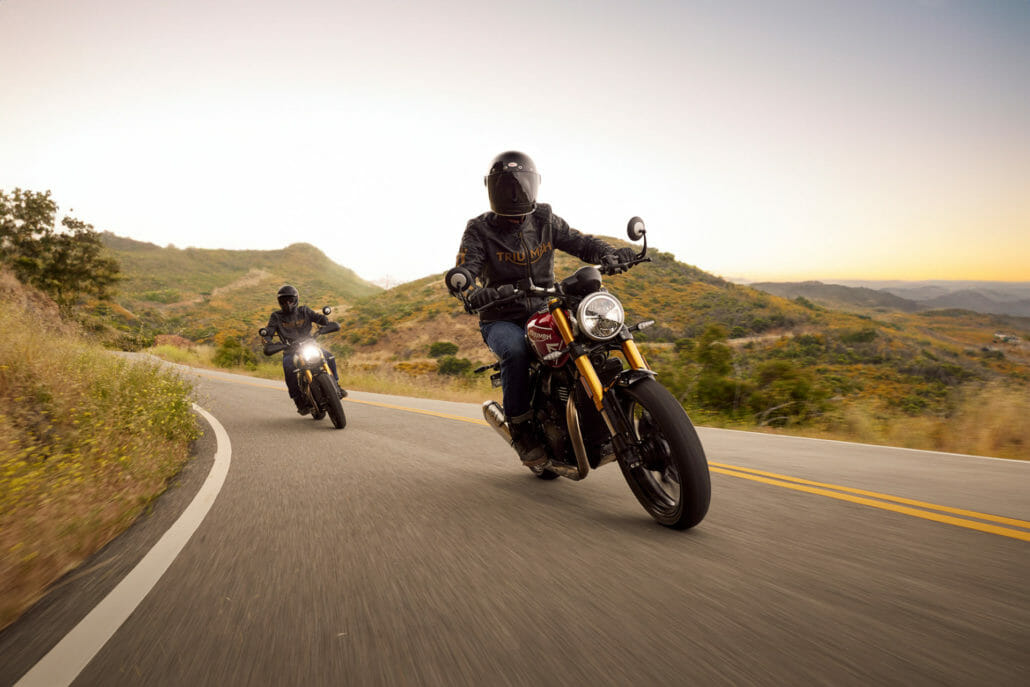
There, models such as the Triumph Speed 400 and the Scrambler 400 X appeal to riders because their output suits the A2 licence. The switch to 350cc is aimed at the Indian home market. Whether lower 400cc volumes in India will affect costs and prices in other countries in the long term cannot be predicted at this point.
Royal Enfield’s 450 models such as the Himalayan 450 and the Guerrilla 450, as well as the Harley-Davidson X440, are also above the threshold. In India, they likewise fall into the high tax bracket.
How are other manufacturers reacting to the GST reform?
Hero MotoCorp and its partnership with Harley-Davidson have so far gained little ground in the segment above 350cc. TVS Motor may review its engine plans for the upcoming 400cc models of its Norton brand in India.
The direction on the Indian home market is clear. The tax bracket has become as important a selling point there as performance or equipment, and the 350cc class is moving to the centre of manufacturers’ attention.