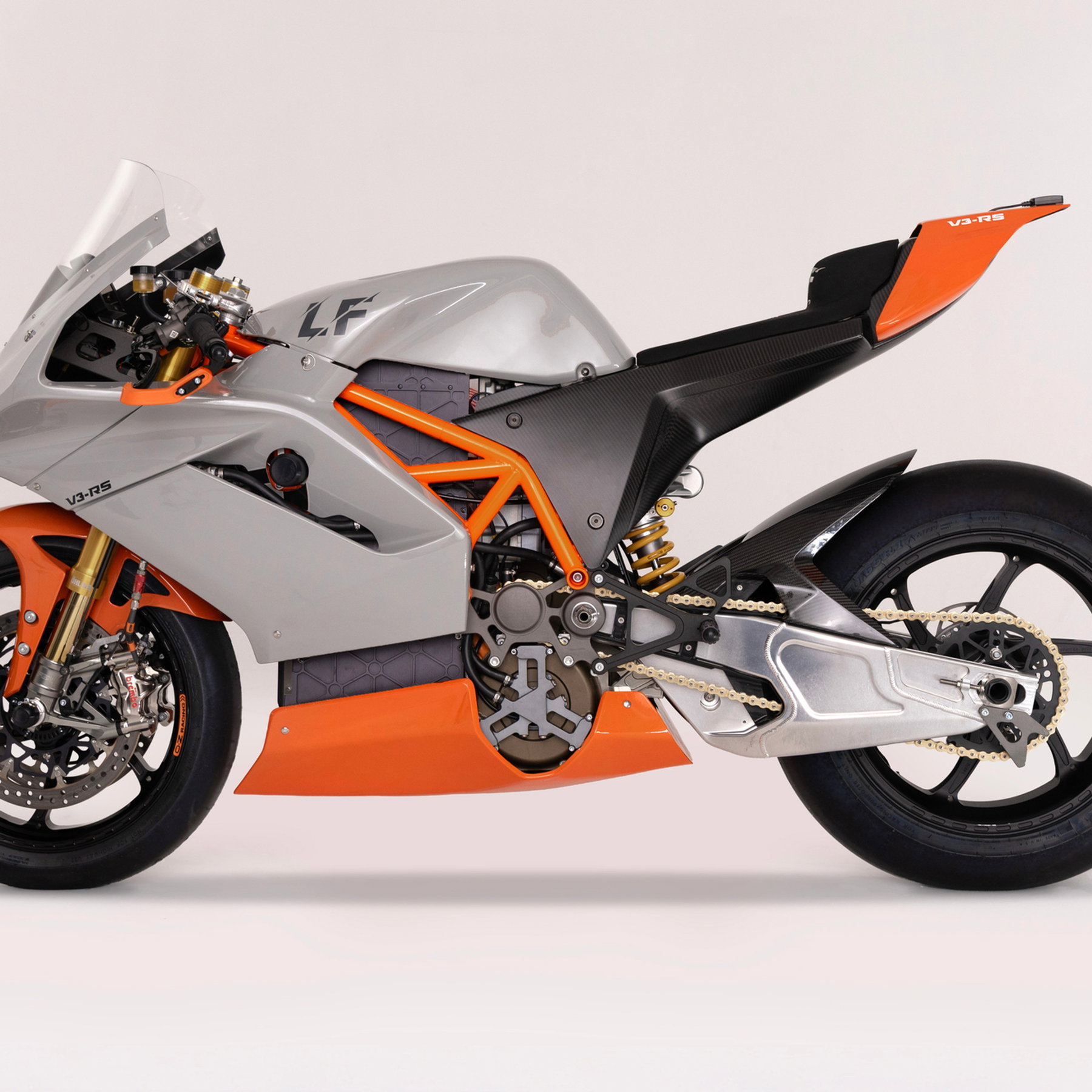
- Shared 115 kW motor, tuned to 154 hp in the V3-RS and 135 hp in the V3-RH, plus 162 Nm at the motor shaft
- 16 kWh battery with NMC cells, weight 181 kg (399 lbs), charging time approximately one hour
- Racing debut in the 2026 MotoAmerica Super Hooligan with OrangeCat Racing and riders Josh Herrin and Kaleb De Keyrel
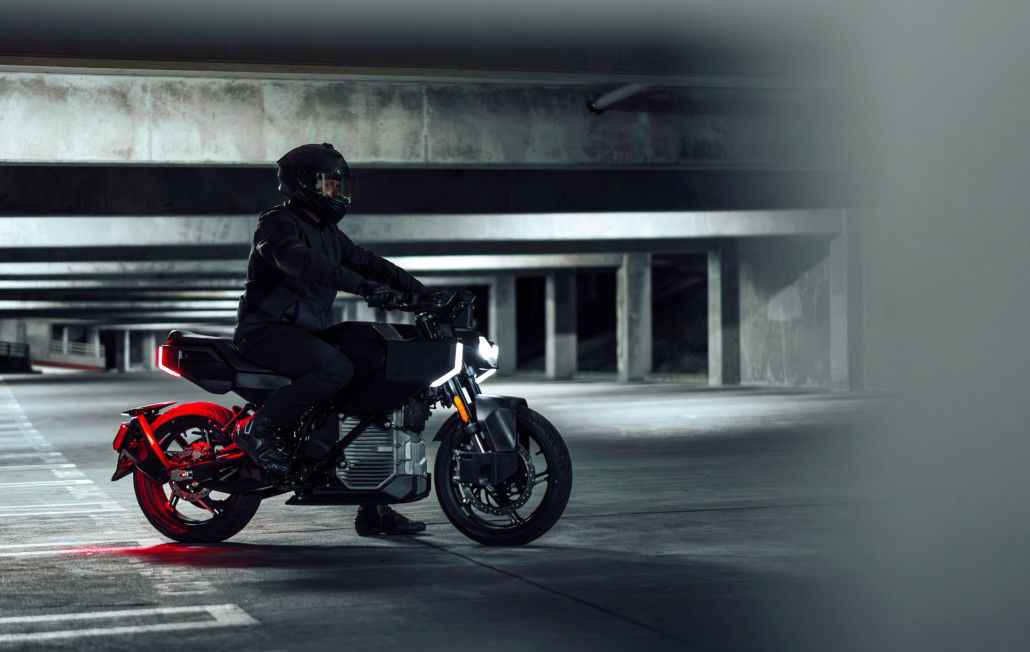
Electric motorcycles have long been seen by many riders as quiet commuter vehicles with no sporting appeal. Lightfighter takes a different approach and builds exclusively for the racetrack. The V3-RS as a fully faired supersport machine and the V3-RH as a naked bike share the same technical platform and aim to prove that electric powertrains can compete with established gasoline-powered rivals. In the 2026 season, the project joins a growing number of electric racing and high-performance motorcycles.
Who is behind Lightfighter?
Lightfighter is a California-based manufacturer built by a small team of co-founders. The project started as a passion project for club racing and grew once the machine proved it could keep up with fast gasoline-powered motorcycles in direct comparison.
The team includes Ely Schless, who in 2003 brought one of the first electric motocross bikes to market with the Blade from his company ElectricMoto. CEO Brian Wismann previously led development teams at Zero Motorcycles and Brammo and managed racing programs at events including the Isle of Man TT and Pikes Peak. Chief technical officer Nick Lambert spent nine years at Tesla. The V3 designation refers to the third stage of an electric program Wismann has been working on for roughly eight years. The company builds its battery in-house at its facility in Ashland, Oregon.
What sets the V3-RS apart from the V3-RH?
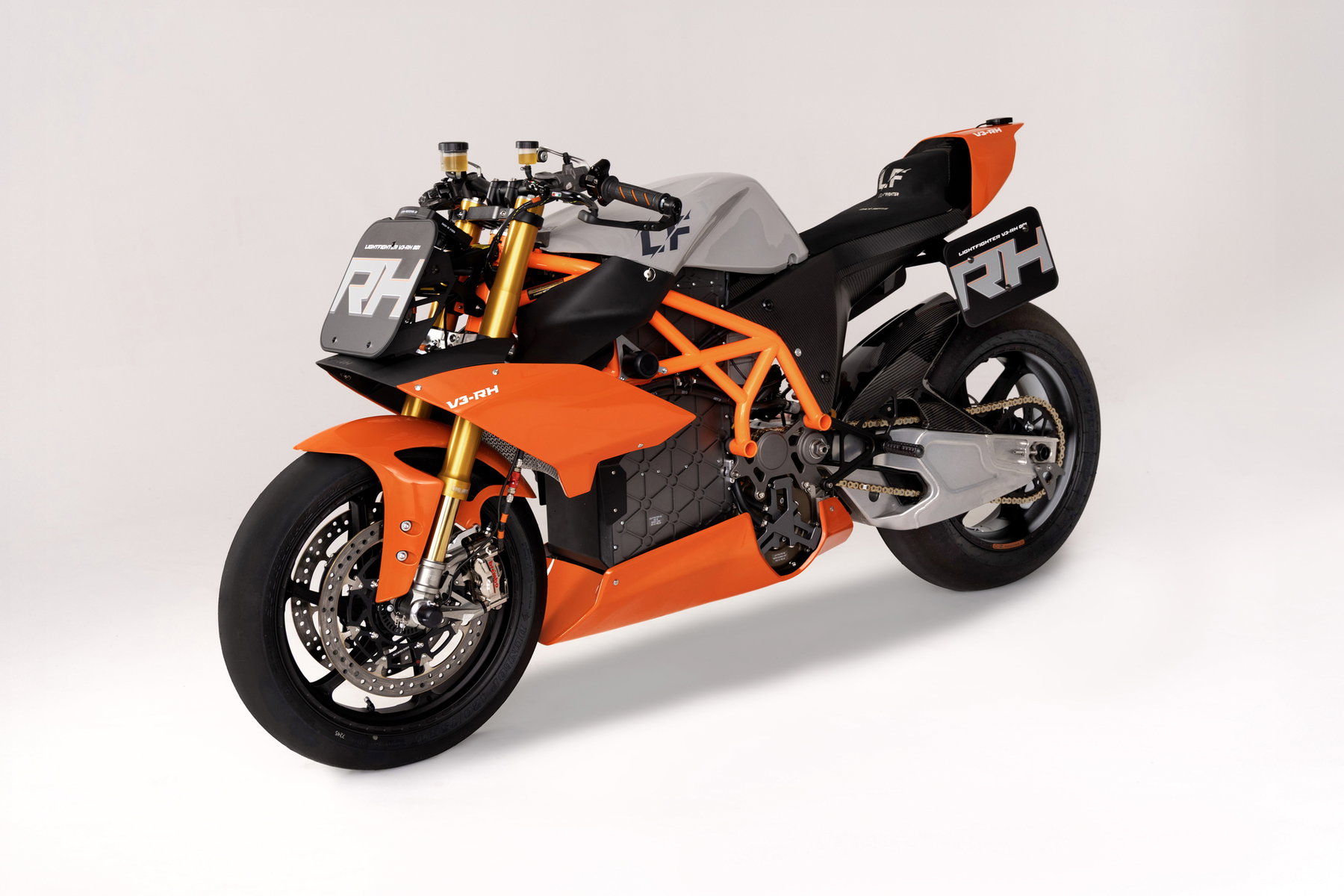
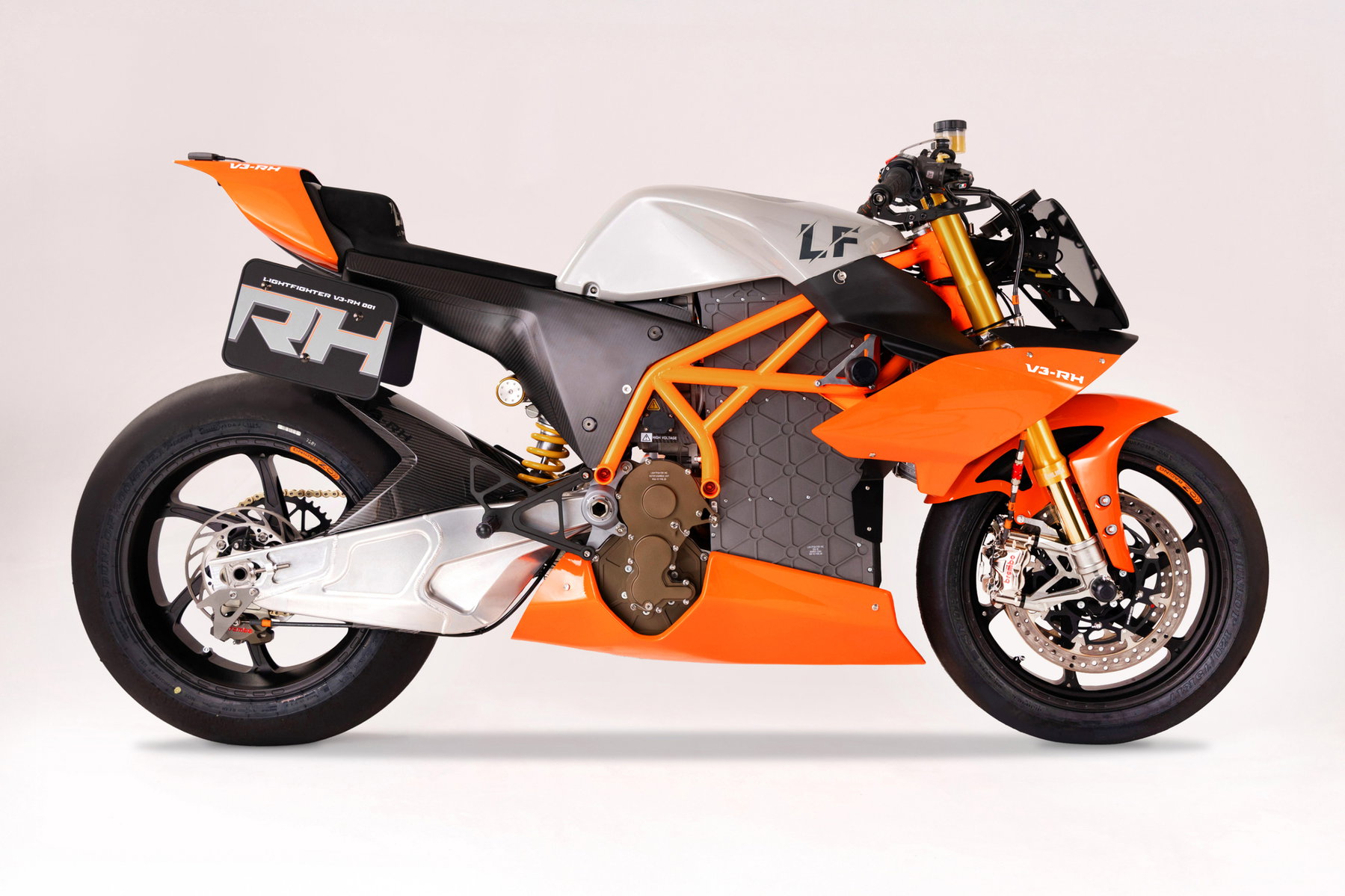
The V3-RS is the fully faired supersport model, while the V3-RH is the naked bike with upright handlebars. Both sit on the same platform and differ mainly in bodywork and handlebar configuration.
RS stands for Race Supersport, RH for Race Hooligan. The V3-RH is specifically designed for the Super Hooligan class, which mandates naked motorcycles with upright bars. Classic number plates at the front recall historic superbikes, while underneath sits a modern electric powertrain. In terms of tuning, the two models diverge on power output: the V3-RS produces 154 hp, the V3-RH is rated at 135 hp.
How much power does the electric motor deliver?
Both models use the same liquid-cooled motor rated at 115 kW, producing 154 hp in the V3-RS and 135 hp in the V3-RH. It is a Parker GVM 210 unit co-developed with the electric division of Parker-Hannifin.
The motor delivers 162 Nm (120 lb-ft) at the shaft. Through a 2:1 reduction, 324 Nm (239 lb-ft) is available at the gearbox output. Maximum speed exceeds 11,000 rpm. Energy comes from a 16 kWh battery with automotive-grade NMC cells from Farasis Energy, whose energy density is said to be around 300 watt-hours per kilogram. Nominal voltage is 383 volts, rising to a peak of 440 volts, with maximum current exceeding 300 amps. Active cooling with proprietary software is designed to manage heat over a full race distance, and the battery is said to charge in approximately one hour. The vehicle control unit is a MoTeC M130.
What technology is in the chassis?
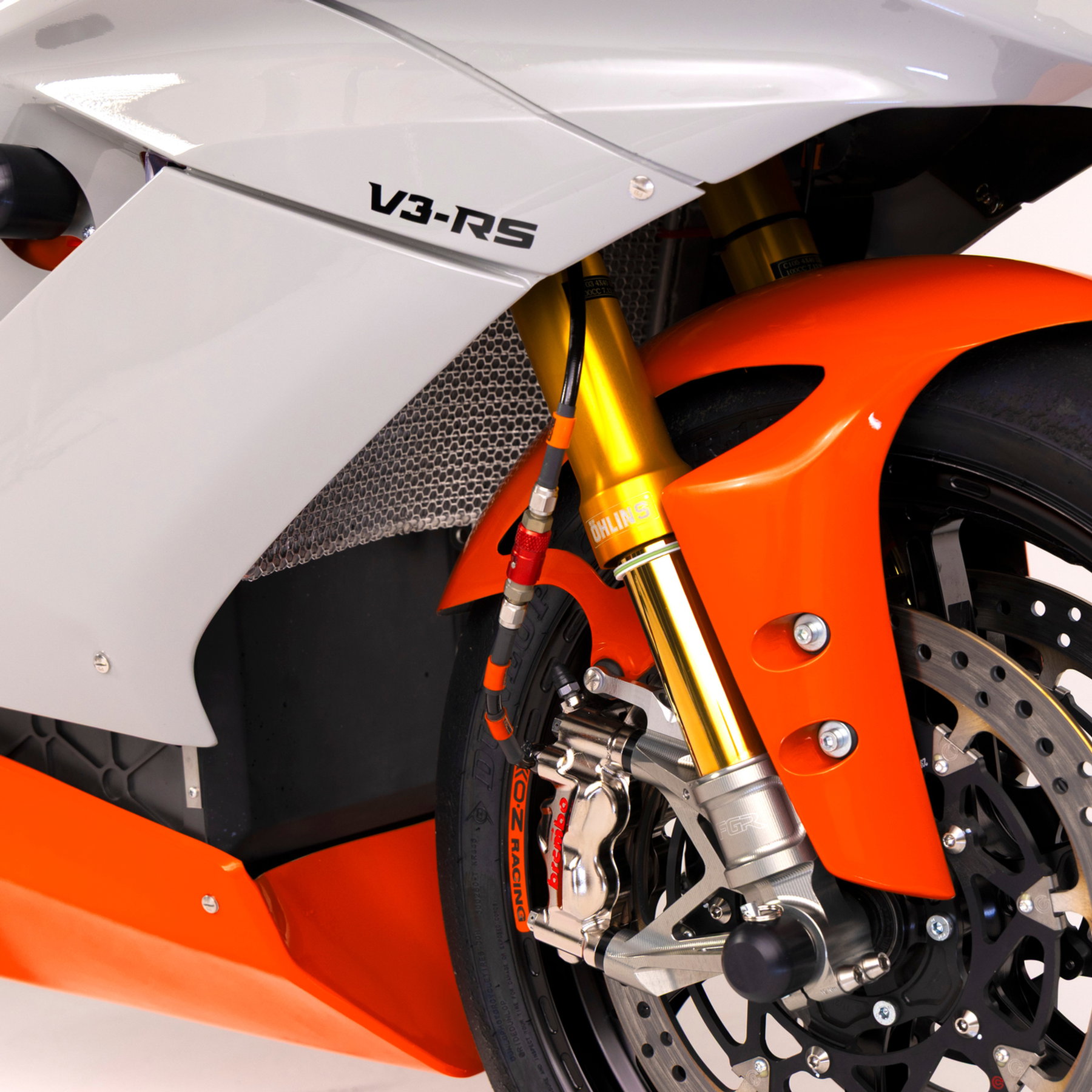
The chassis is based on a chromoly steel trellis frame that uses the motor housing as a stressed member. It is complemented by a structural carbon-fiber rear subframe that also serves as the tail section.
The front end features an Öhlins FGR 260 fork with a closed cartridge, the rear uses a TTX36 shock, and an Öhlins steering damper is fitted as well. Suspension travel is 130 millimeters at the front and 108 millimeters at the rear. The braking system is by Brembo with GP4-RX calipers and 320-millimeter discs up front, plus a CNC supersport caliper at the rear. Additional components include forged OZ Racing wheels, a Renthal handlebar, and a triple clamp with plus/minus three millimeters of adjustable offset. The swingarm is machined from billet by Suter Racing in Switzerland and reportedly accounts for nearly 20 percent of the build cost. According to media reports, a production-based superbike served as the starting point for chassis development. The platform runs on Pirelli SC3 slicks. Key dimensions include a 1,435-millimeter wheelbase, 24.5-degree steering head angle, 100-millimeter trail, and 825-millimeter seat height, with a weight of 181 kilograms (399 lbs). The electronics feature a ten-step adjustable traction control system supported by a six-axis IMU and five-stage regenerative braking. German company alpha Racing contributed to the calibration of these systems and also supplies the bar-end protectors, rearsets, and dashboard. Because an electric motor delivers torque continuously, grip can be lost more quickly than with a combustion engine and its individual ignition pulses, making traction control a critical element.
What does the MotoAmerica entry mean?
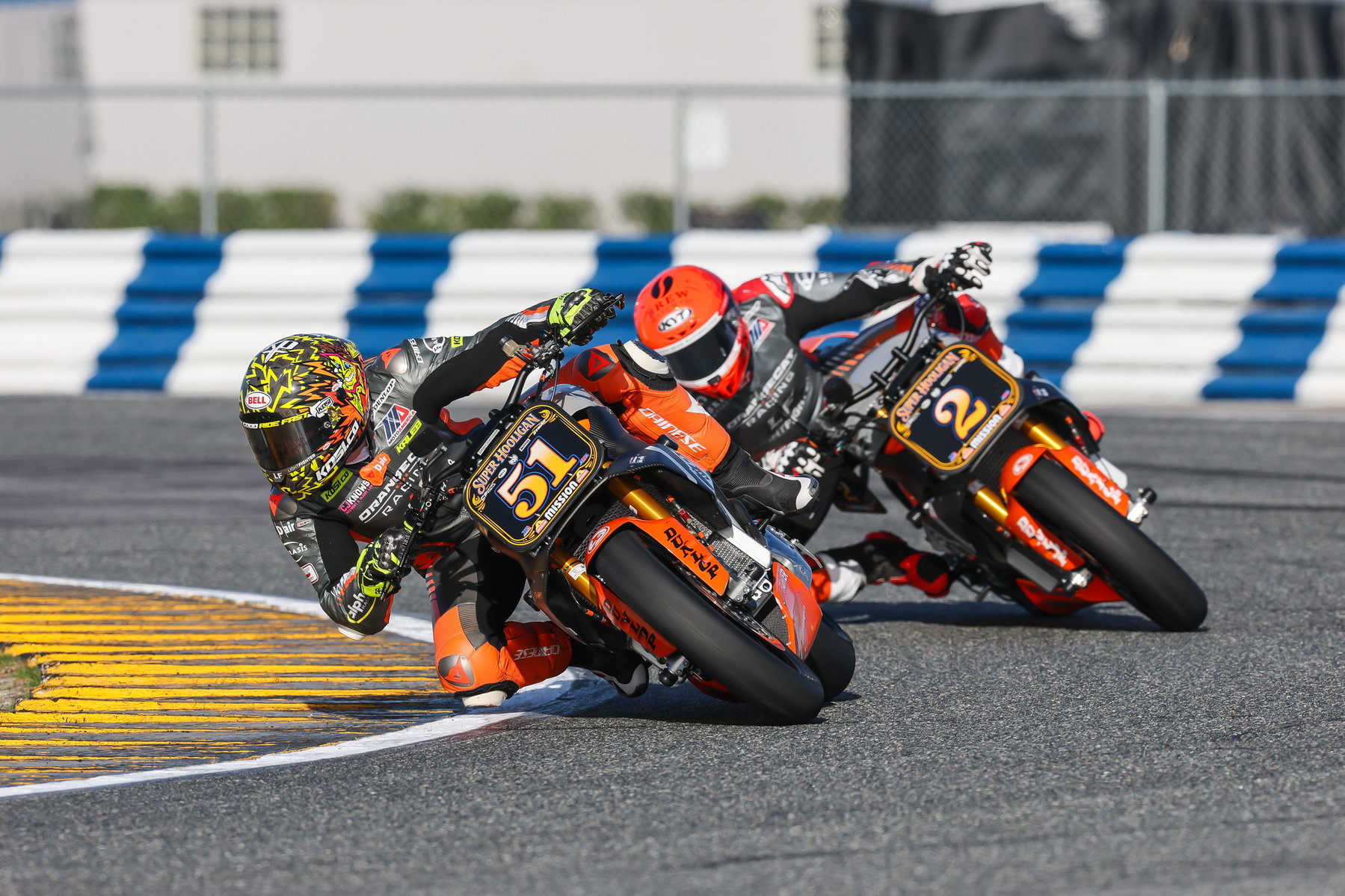
With the V3-RH, Lightfighter enters MotoAmerica for the first time in 2026, competing in the Super Hooligan class. The machines are run by OrangeCat Racing.
The two identically prepared motorcycles are ridden by Josh Herrin and Kaleb De Keyrel. Herrin has won four national titles across nearly two decades, including the Superbike championships in 2013 and 2024. De Keyrel became Twins Cup champion in 2021 and finished runner-up in the Stock 1000 class in 2023. The championship spans ten races across five events in the United States. Before stepping up to the professional series, the team gained experience in club racing, including setting an electric lap record and scoring two wins at the AHRMA round at Barber in October 2024. Lightfighter’s stated goal is to achieve performance parity with gasoline-powered motorcycles.
Can you buy a Lightfighter V3?
A conventional production model is not yet available. Access is through a limited Design Partner Program, capped at ten participants and priced at approximately 86,200 euros (100,000 USD).
For that amount, buyers receive a V3 along with eight track days that include private test sessions and amateur races. In return, they test components and provide feedback for the development of the next stage, the V4, which is scheduled to enter production in 2027. A later swap of the ridden V3 for a new V4 is planned. Rather than following annual model years, Lightfighter intends to update individual parts and design revisions so that existing machines can be brought up to date through backward-compatible components. The brand also offers demo rides and private track experiences.
➜ Technical data in our motorcycle database: Lightfighter V3-RS 2026 · Lightfighter V3-RH 2026
Frequently Asked Questions
-
How much horsepower does the Lightfighter V3-RS make?
The Lightfighter V3-RS produces 154 hp (115 kW). It shares its motor with the V3-RH, which is tuned to 135 hp. Peak torque is 162 Nm (120 lb-ft) at the motor shaft.
-
What racing series does the Lightfighter V3-RH compete in?
The V3-RH competes in the 2026 MotoAmerica Super Hooligan National Championship. It is fielded by OrangeCat Racing with riders Josh Herrin and Kaleb De Keyrel. The season comprises ten races across five events.
-
How much does a Lightfighter V3 cost?
Access is through the Design Partner Program at approximately 86,200 euros (100,000 USD). Ten participants receive a V3 along with eight track days. A later swap for the upcoming V4 is planned.
-
How fast does the Lightfighter V3 battery charge?
The 16 kWh battery is said to charge in about one hour, enabling back-to-back track sessions. The cells are supplied by Farasis Energy.