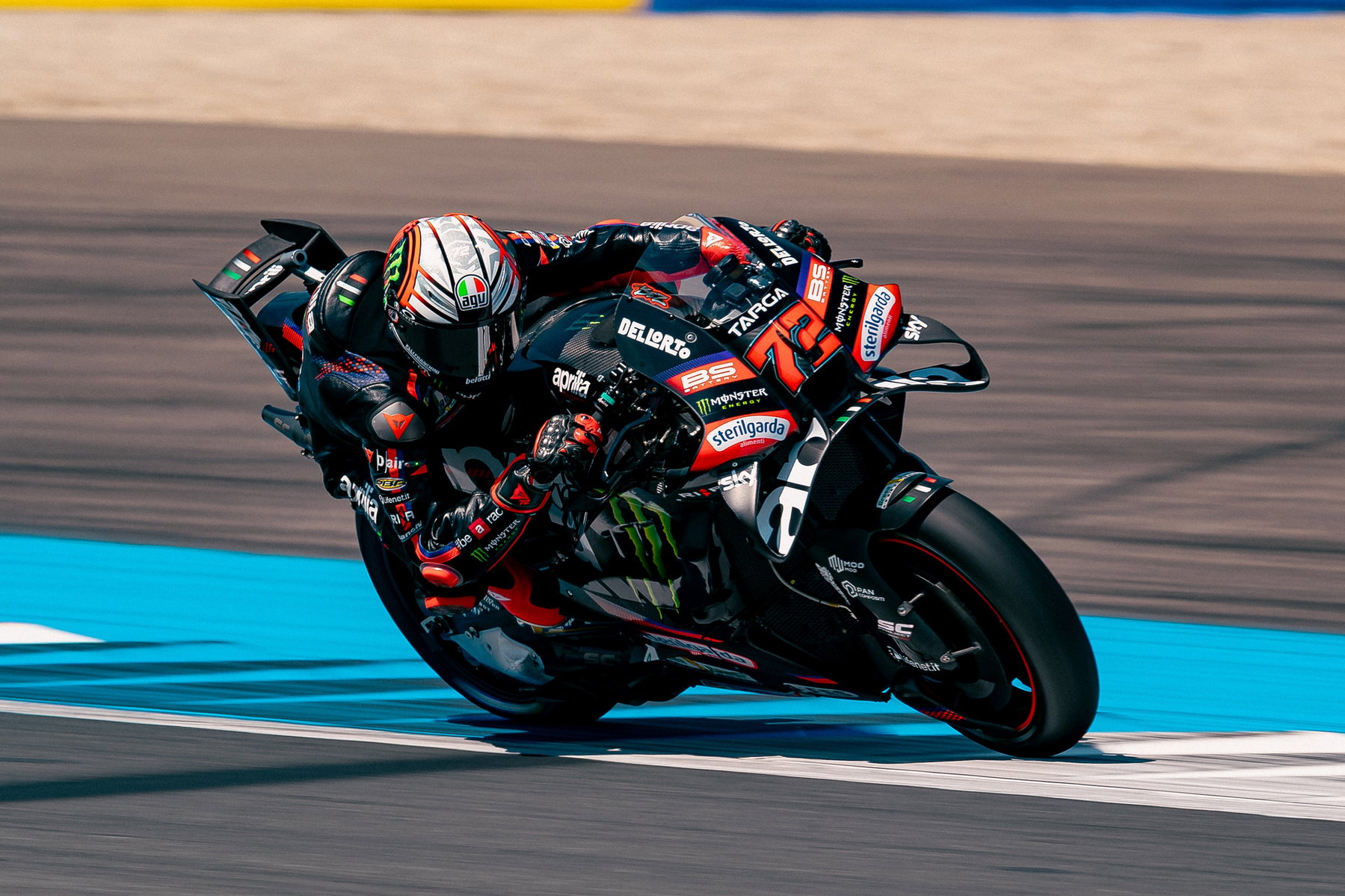
- Marco Bezzecchi (Aprilia) set the fastest time of 1:31.123 ahead of Raul Fernandez and Pedro Acosta
- Fermin Aldeguer was taken to hospital after a crash, with no diagnosis initially available
- Assen marks the first race weekend without the front holeshot device
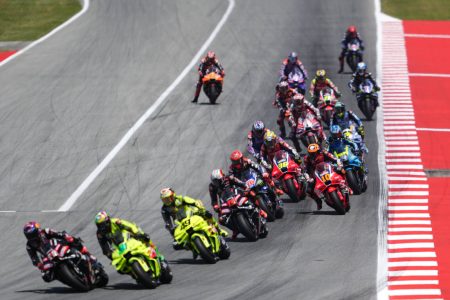
The opening day of MotoGP Assen proved turbulent. In tropical conditions at the TT Circuit, Aprilia dominated the timed practice while crashes piled up and satellite team Gresini had to send two riders for medical checks. Friday fits into a season in which Aprilia riders Marco Bezzecchi and Jorge Martin lead the championship standings, Fabio Di Giannantonio sits third 23 points behind, and defending champion Marc Marquez trails by 40 points. On top of that, a technical regulation change took effect at Assen for the first time and generated plenty of discussion.
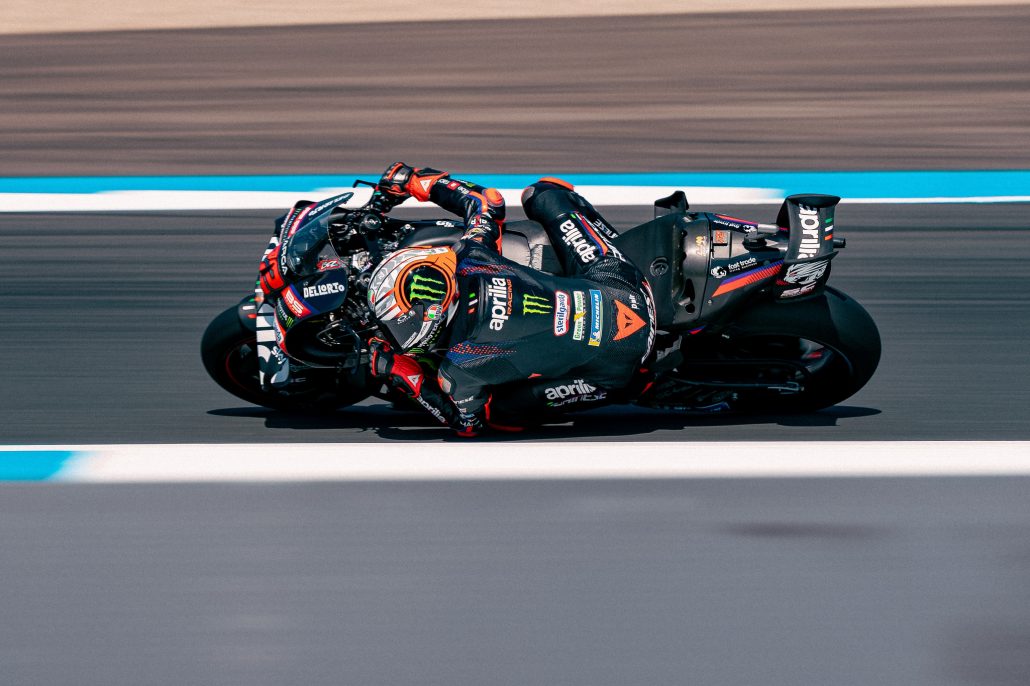
Who was fastest at Assen on Friday?
The fastest rider of the day was Marco Bezzecchi on the Aprilia with a best time of 1:31.123. He was followed by fellow Aprilia rider Raul Fernandez, ahead of Pedro Acosta on the KTM and Ai Ogura, also on an Aprilia. At one point all four Noale machines occupied the top four positions before Francesco Bagnaia broke the Aprilia stranglehold in fifth.
Bezzecchi bounced back after a difficult weekend in Brno. He described it as a very good day and said he felt comfortable on the bike and enjoyed riding it. When asked about his improvement in the final sector, he pointed to upgrades on the motorcycle and a detailed analysis of last year’s data. The biggest remaining issue is stability, as the Aprilia shows a lot of movement. Marc Marquez ended the day sixth, followed by Di Giannantonio and Bastianini. Alex Marquez secured a direct spot in Q2 before his crash, while Franco Morbidelli missed out on the top ten by just 0.026 seconds.
Why were there so many crashes at Assen?
The main cause of the crash spree was the extreme heat, which pushed the ambient temperature to around 35 degrees Celsius by the start of the afternoon practice. The high track temperatures took their toll on the tires and reignited the debate about rider welfare. Francesco Bagnaia attributed the numerous crashes to the temperatures and compared the conditions to those in India. The more laps on the tires, the more movement the heat creates, he explained.
Jorge Martin, who also crashed in the closing stages, said Assen felt more like a volcano than a racetrack. He said he had never experienced comparable conditions even in Thailand or Malaysia and questioned whether a full-distance race under such circumstances made sense. Since the peak temperature on Sunday was forecast to drop below 30 degrees, he considered the problem largely defused. Enea Bastianini described the track in the afternoon as dangerous and reported significantly reduced grip. Not all riders shared this assessment. Honda rider Luca Marini attributed the high crash count to riding at the limit and did not see the heat as the decisive factor. Marc Marquez also denied that the temperature had physically affected him.
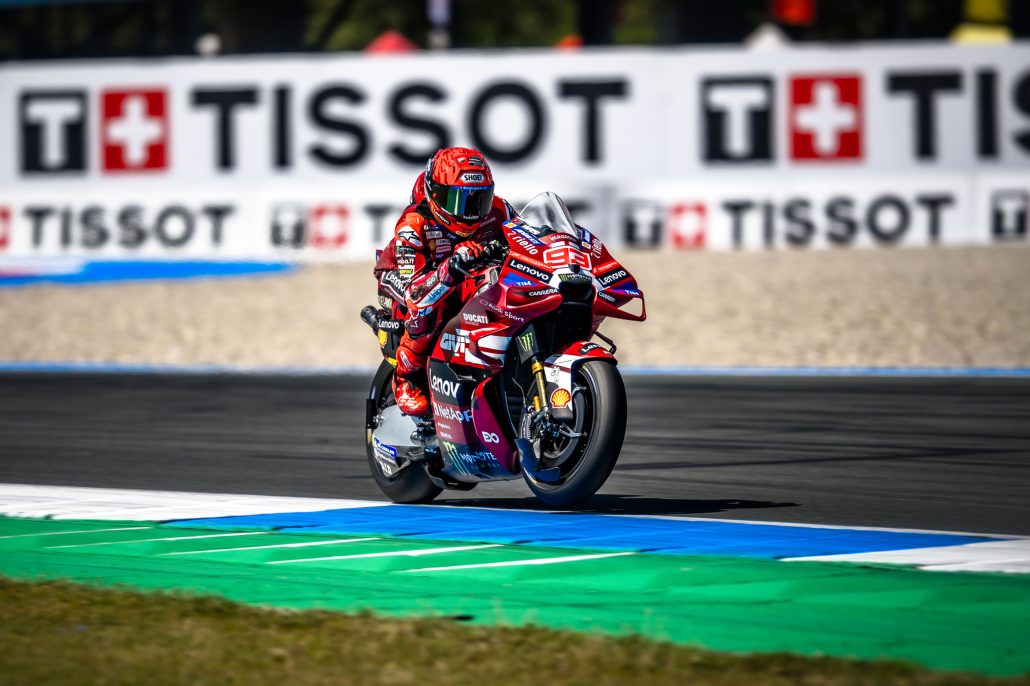
How are Fermin Aldeguer and Alex Marquez?
Fermin Aldeguer’s condition remained unclear at first, while Alex Marquez was given the all-clear. Aldeguer crashed after around 45 minutes of practice in the fast Turn 11, slid into the gravel trap, and tumbled several times. After initial treatment at the Medical Center, Gresini took him to a nearby hospital for further examination of his chest and back. Even hours after he was transported, no diagnosis had been released.
Just minutes after Aldeguer, his teammate Alex Marquez crashed at virtually the same spot, prompting a red flag. The Spaniard was thrown from the bike and could only leave the scene with assistance. Examinations revealed a bruise to his right shoulder and abrasions on his left arm, but the shoulder X-ray showed no fracture. That was particularly significant because Marquez had broken his right collarbone in a heavy crash during the Barcelona race on May 17 and underwent surgery. His brother Marc Marquez gave the all-clear based on his own observation, reporting that Alex had not broken anything but was in pain all over his body. A further medical examination is scheduled before Saturday morning’s practice session, which will determine whether he can continue the weekend.
Why does Marc Marquez criticize the risk at Assen?
Marc Marquez appreciates the track layout at Assen but rejects the high level of risk that comes with it. He described the direction changes as too fast and the track as too narrow, meaning small mistakes can be costly. He likes the layout itself, but not the risk.
The defending champion pointed to the gravel-filled run-off areas containing large stones. While this complies with the regulations, it does not sit well with him. Assen is one of the tracks where he wishes for rain, though that is unlikely this year. Marquez himself had already crashed in the morning session at the chicane, which he attributed to his own mistake. In the timed practice he secured sixth place and a direct spot in qualifying, then ended his working day early since the result was sufficient in his view. Jorge Martin and LCR Honda rider Diogo Moreira also went down during the day, both escaping without injury.
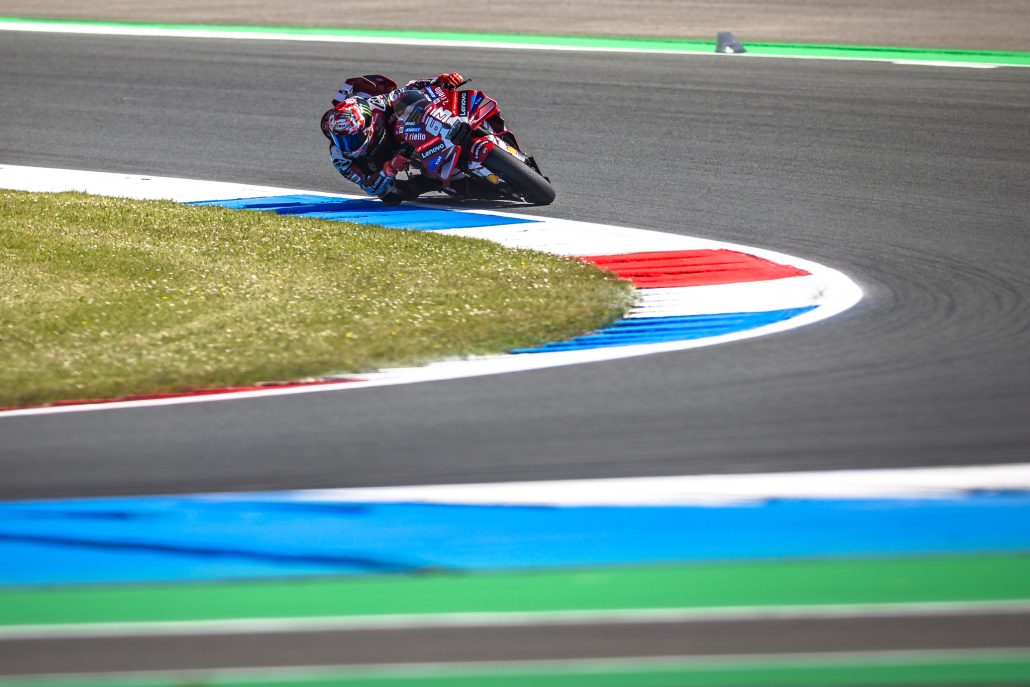
What changes with the holeshot device ban?
From the Assen weekend onwards, the front holeshot device is banned at the start, making Saturday’s sprint the first race without the mechanism. Riders used the practice starts after the sessions to adjust to the new situation. The aim of the measure is to make starts simpler and safer and to reduce reliance on complex riding aids. A complementary rule change, increasing the gap between grid rows from nine to twelve meters, does not take effect until the following race at the Sachsenring.
Rider opinions varied. Marc Marquez, who raced in MotoGP before the device was introduced, explained that from the start to the first corner it is now significantly more dangerous, but from the braking point into the corner it is safer. In two of his four practice starts, the front wheel did not touch the ground until the first corner. Since the rear device remains permitted, enough performance is retained. Pedro Acosta described it as an unknown factor, since teams know how their own brand colleagues behave at the start but not the competition. He would have preferred the device to be abolished entirely. Fabio Di Giannantonio expressed concerns, pointing to the danger that the front wheel might not touch down cleanly before the first corner and could wash out. Marco Bezzecchi expected to arrive at the first corner more slowly while also experiencing a greater tendency to wheelie, and said he would not have a clear picture until the sprint.
The revised regulations also led to early penalties. Marco Bezzecchi and Raul Fernandez were fined by the MotoGP stewards for positioning themselves ahead of already waiting motorcycles during the practice starts after the first session, contrary to the rules. As a repeat offender, Bezzecchi must pay 2,000 euros (approximately $2,280), while Fernandez received a 1,000-euro fine (approximately $1,140) for his first offense.
What penalty did Franco Morbidelli receive?
Franco Morbidelli received a three-place grid penalty for Sunday’s race. The FIM stewards ruled it was impeding that the VR46 Ducati rider was riding slowly on the racing line through the fast section at Turn 12 while Enea Bastianini was on a fast lap.
Bastianini was forced to run off the track and abandon his lap. According to the stewards’ ruling, Morbidelli violated Article 1.21.2 of the regulations, marking the second such offense of the season. Morbidelli was brief in his response, acknowledging that he had impeded Bastianini and was penalized for it. Despite the obstruction, Bastianini still managed to secure a direct spot in Q2 in the closing stages.
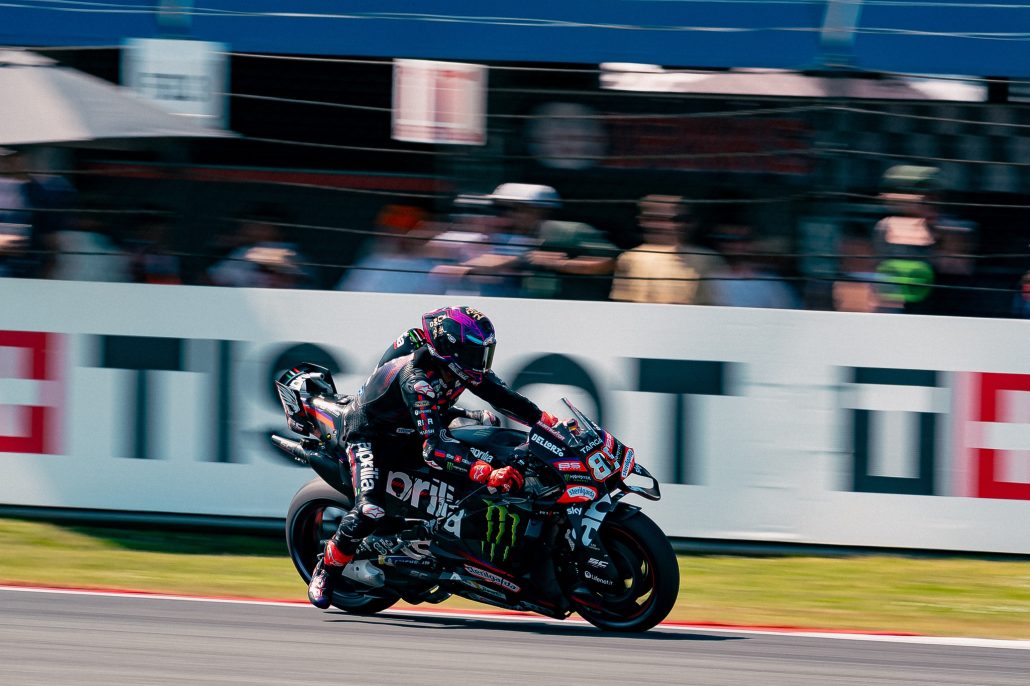
KTM and Pedro Acosta: between top times and concerns
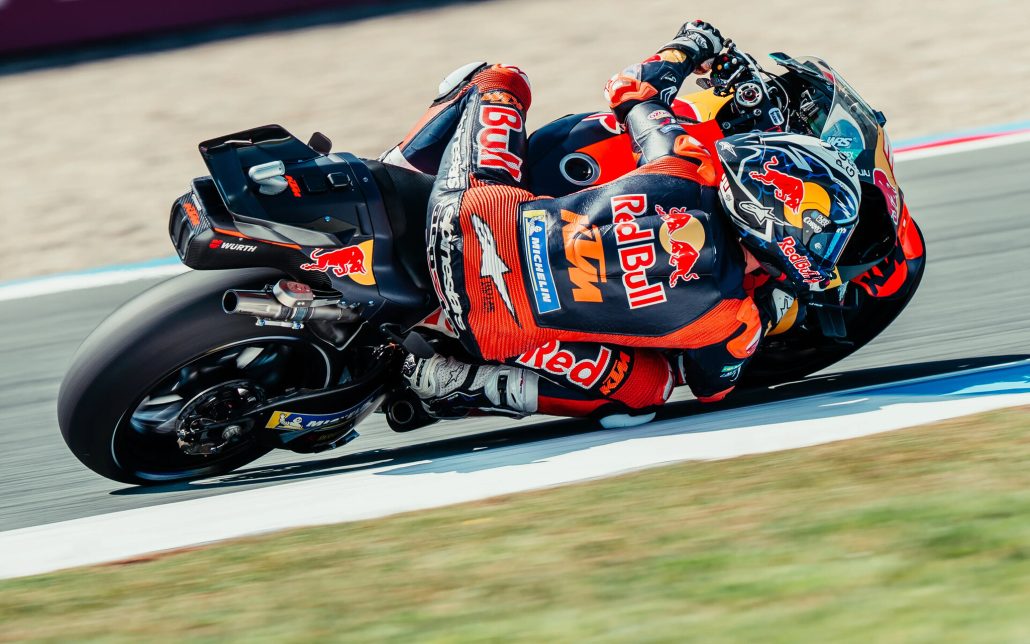
Pedro Acosta’s third place is deceptive by his own assessment and does not reflect KTM’s true race pace. The Spaniard made clear that the team is currently not in a position to fight for the top spots, and that the motorcycle shows too much movement in the fast corners, particularly Turn 6 and Turn 14. Over a distance of 26 laps, this is difficult to manage.
Adding to the concerns are KTM’s recent technical problems, which cost Acosta two retirements at the previous race in Brno. Whether those issues have been resolved, he could not say with certainty. As a rider he still has to put trust in the motorcycle, since otherwise he cannot compete. Enea Bastianini was the second-best KTM rider in eighth place, clearly faster than his teammate Maverick Vinales.
➜ This article is part of our comprehensive overview: 2026 MotoGP Season: The Complete Overview – Teams, Riders, Calendar & Championship Standings. Find all key information on this topic in one place.
Frequently Asked Questions
-
Who was fastest in MotoGP Assen practice on Friday?
Marco Bezzecchi was the fastest rider on Friday. The Aprilia rider set a best time of 1:31.123 and finished ahead of Raul Fernandez and Pedro Acosta in second and third.
-
How seriously was Fermin Aldeguer injured at Assen?
That remained unclear at first. Aldeguer was taken to hospital after his crash for examination of his chest and back, and no diagnosis had been released even hours later.
-
Why is the holeshot device banned at Assen?
The front holeshot device is banned from the Assen weekend onwards. The measure is intended to make starts safer and reduce reliance on technical riding aids, meaning riders now have to manage wheelies on their own.
-
What penalty did Franco Morbidelli receive at Assen?
Morbidelli received a three-place grid penalty for Sunday’s Grand Prix. The reason was impeding Enea Bastianini in Turn 12 during a fast lap.
-
Will Alex Marquez race in the Dutch Grand Prix?
That was still open after Friday. The shoulder X-ray showed no fracture, but a further medical examination is scheduled before Saturday’s practice session, which will determine whether he can continue.