- Entry into the Composizione Negoziata della Crisi officially confirmed; according to the unions the procedure has been running since August
- 2,166 registrations worldwide in the first half of 2026, up 3.4 percent, while the factory has reportedly been idle since April
- 184 employees on solidarity contracts until 31 December, court hearing in Varese on 25 November
For weeks there were reports of a production halt, unpaid suppliers and a collapsed stake by Chinese manufacturer CFMOTO. On 11 September 2026 MV Agusta responded and published a statement that rejects many of those reports as speculation, while confirming the core of the situation. The company speaks of a “proliferation of rumours, interpretations and reports without any objective basis” and counters with its own figures and a formal restructuring path. It is the first official statement since the summer and therefore the most reliable information the brand has given about its own position. It comes at a time when the European motorcycle industry has been in flux anyway since the KTM insolvency.
What is the Composizione Negoziata della Crisi?
The Composizione Negoziata della Crisi, CNC for short, is a voluntary restructuring procedure under Italian law for companies facing a temporary financial imbalance. It is neither an insolvency nor a liquidation, but an orderly framework for negotiation.
The procedure runs through the national platform of the chambers of commerce. Management stays in office and retains control of the company, but is assigned an independent expert. That expert negotiates with banks, suppliers, creditors and potential investors. The aim is an agreement that restructures maturities, debt, capital injections and the industrial plan while keeping operations running.
What matters just as much is what the CNC does not do: it does not solve the crisis automatically. It buys time, a procedure and a framework. On request, a company can additionally obtain so-called protective measures that prevent creditors from initiating or continuing enforcement. Those measures, however, have to be confirmed by a court.
MV Agusta itself stresses in the statement that access to the CNC requires “concrete prospects of recovery”, and describes the procedure as one of several instruments along a path already taken. Conversely, the step also shows that the liquidity problem has reached a scale that makes organised intervention necessary.
Why are registrations rising if the factory is supposed to be idle?
Registration figures count motorcycles that reach the end customer, not motorcycles that leave the factory. Both pictures can therefore be true at the same time.
MV Agusta reports 2,166 retail registrations worldwide for the first half of 2026, up 3.4 percent from 2,094 units in the same period last year on a comparable basis. Italy, the largest market, grew from 500 to 644 motorcycles, an increase of 28.8 percent. France was up 42.3 percent, the USA up 24.2 percent. Machines from dealer stock feed into these statistics as well, even if they were built months earlier. Industry reports carry a second number, namely 1,238 motorcycles delivered by the end of July. The two figures describe different things, and neither of them says what the factory actually built this year.
A closer look puts the growth into further perspective. Worldwide, just 72 motorcycles were added, while Italy alone gained 144 units. Outside the home market, sales therefore fell from 1,594 to 1,522 units, a drop of around 4.5 percent. The gain is currently being carried by the Italian market, despite the good development in France and the USA.
MV Agusta itself frames the numbers cautiously, writing that they do not remove the operational and financial difficulties of the current phase, but do confirm demand, the work of the dealer network and the industrial and commercial value of the brand. The statement says nothing at all about the production halt.
What do the unions say about the situation in Varese?
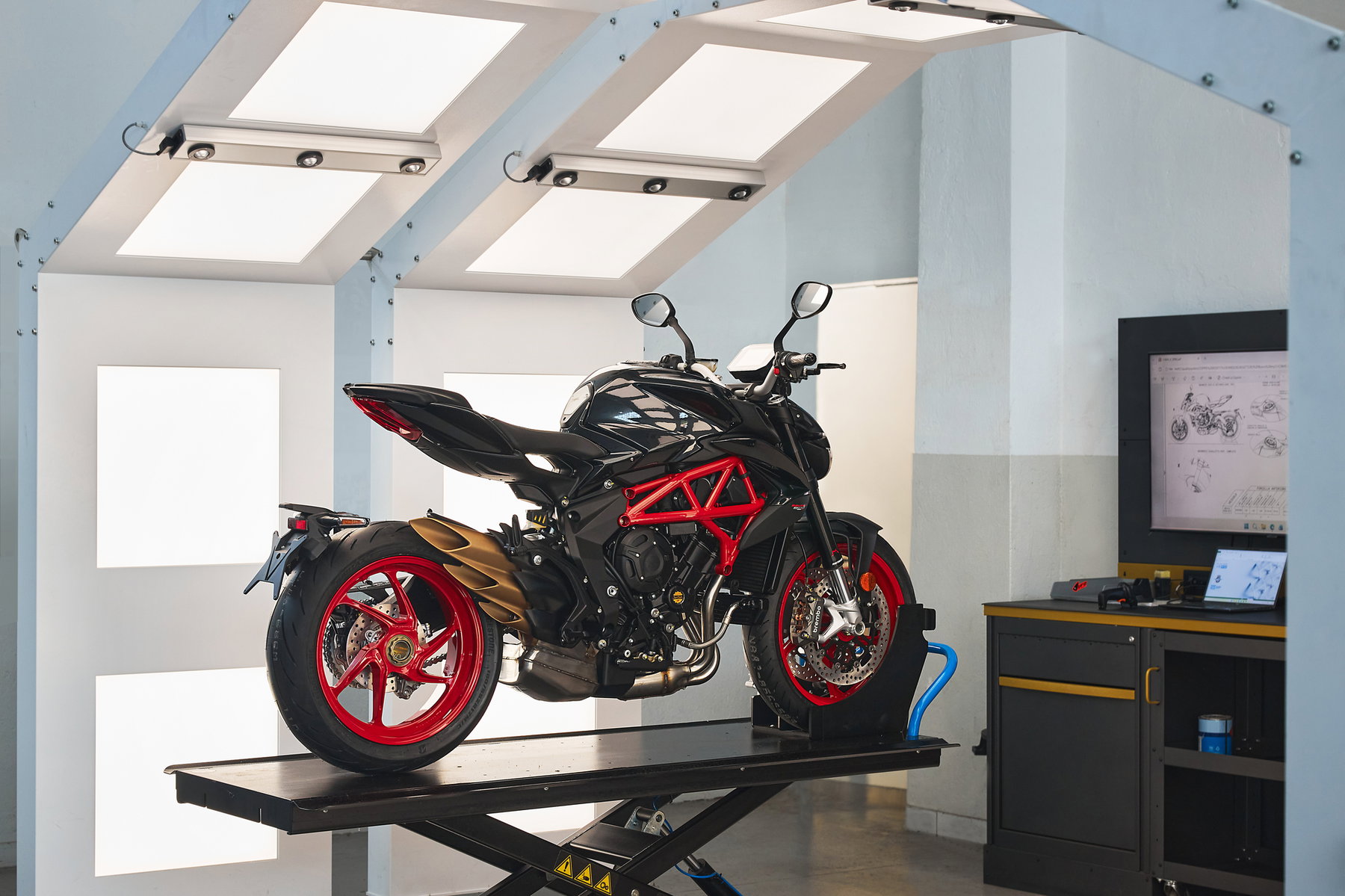
The Uil and Fiom Cgil unions in Varese paint a considerably bleaker picture than the company statement. They speak of a lack of liquidity, unpaid suppliers and production that has been at a standstill since April.
According to them, the 184 employees are on solidarity contracts, an Italian form of reduced working hours with partial wage compensation, comparable to short-time work in Germany. The deadline has been extended to 31 December. In September, staff are said to be working only four to five days, not per week but for the entire month. Wages have reportedly been paid so far, suppliers have not.
Fabio Dell’Angelo, general secretary of the Uil in Varese, describes the situation in blunt terms. The company is “in agonia” (“in agony”), and he adds: “Fanno un prodotto che ha ancora mercato, ma l’azienda non ha i fondi per mandare avanti l’attività” (“They make a product that still has a market, but the company does not have the funds to keep the business going”).
Giorgio La Rosa of Fiom Cgil Varese reports that office staff are mainly working to maintain the impression of a still functioning company towards the remaining suppliers and dealers. Marinela Cozma of the Uil says of the few working days in September: “una situazione che non può durare ancora a lungo, sta diventando insostenibile” (“a situation that cannot last much longer, it is becoming unsustainable”).
By this account, the problem is not demand, and it is not the factory or the workforce either. What is missing is money.
The 35 million euros that never arrived
In March 2026 MV Agusta approved a capital increase of 35 million euros (around 40.6 million US dollars). The money was to come from parent company Art of Mobility, a Luxembourg holding owned by the Sardarov family. In the commercial register extract, the capital injection is expressly recorded as urgently needed, and it was expected by the end of June.
According to the unions it never arrived. Invoices to suppliers are said to have remained unpaid, and anyone who is not paid eventually stops delivering. That is how the reports from Varese describe it: the supply chain broke down, and since April nothing is said to have come off the line at the Schiranna plant.
In the trade, this first became noticeable not with new vehicles but with spare parts. The statement of 11 September does not mention the sum of 35 million euros. MV Agusta neither confirms nor denies it.
Who could buy into MV Agusta?
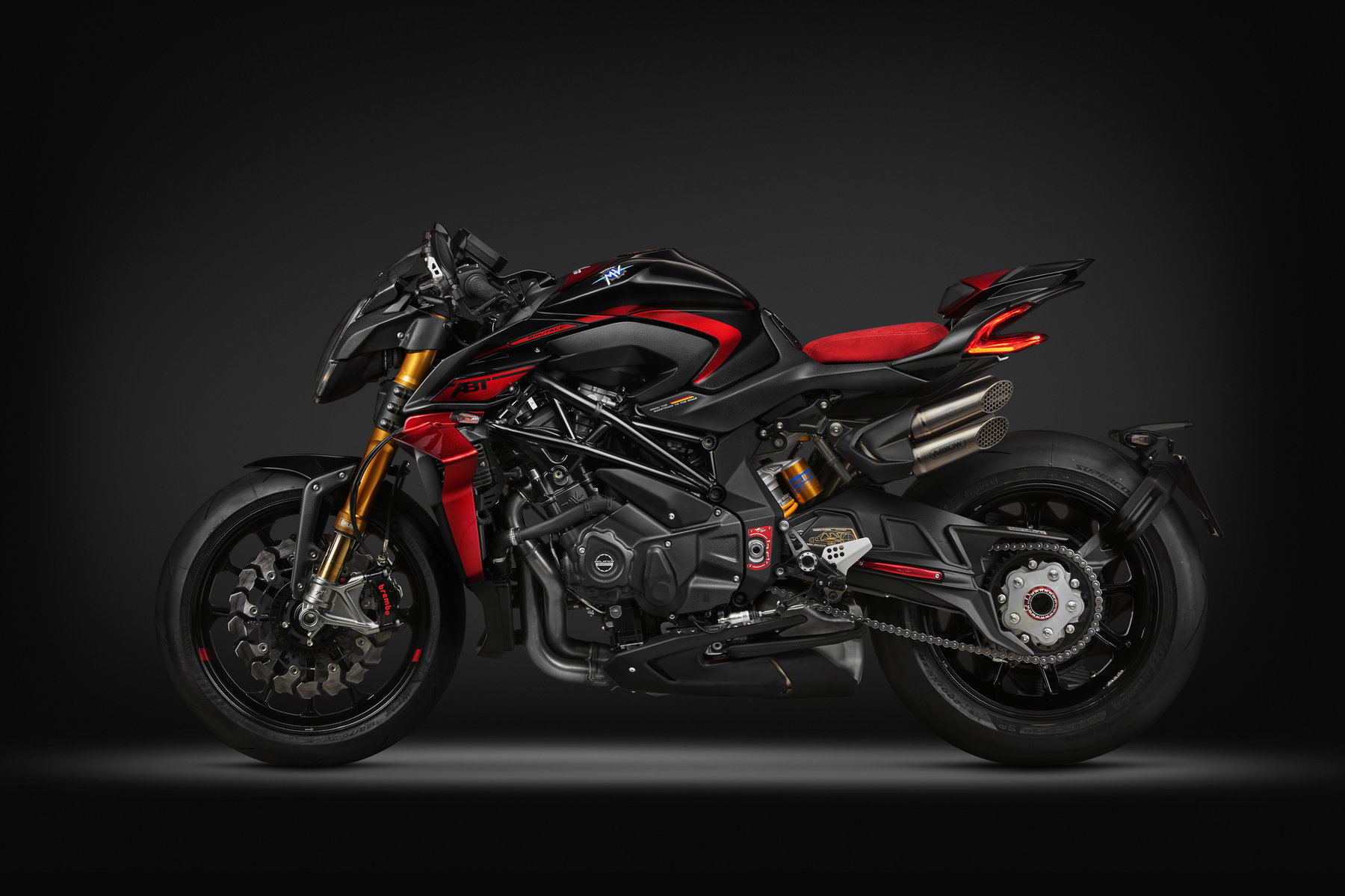
MV Agusta does not name names. The statement only confirms that owner Art of Mobility has held and continues to hold several talks about a possible change in the shareholding structure.
Some options were examined in depth and then classified as not viable, others did not meet the necessary requirements in terms of substance and reliability. Further counterparties and scenarios are still being assessed. The company describes the process as serious and structured, ongoing for several months and accompanied by external advisers. From Varese it is additionally reported that negotiations are under way with a financial fund whose name is not yet known.
On the most widely discussed rumour, CFMOTO taking a 49 percent stake including the financing of a restructuring programme, the statement says nothing. In June the two sides signed a letter of intent, brokered by the then chairman of the board Hubert Trunkenpolz, who knew the Chinese group from his time at KTM. On 20 July Trunkenpolz resigned with immediate effect. In parallel, Swiss investment company Circular Economy AG had concluded its own purchase agreement for MV Agusta with Art of Mobility, which the parent company later terminated unilaterally. The Swiss are taking legal action against this and are said to have won an initial case. MV Agusta’s management disputes that account and stresses that no ruling on the substance has been issued and no final transfer of ownership has been ordered.
Indirectly, the statement at least clears up one point: if Art of Mobility still holds 100 percent of the shares, there can be no question of a majority having already been sold. The company is more outspoken elsewhere. It states that part of the rumours apparently comes from people who took part in the talks in various roles or expressed interest. Such reports, MV Agusta says, do not represent the situation correctly and create confusion at a time that calls for responsibility, confidentiality and care. It will only provide information about changes once “concrete and final conditions” are in place.
From the KTM exit to its own restructuring
The starting point of today’s situation lies in the collapse of KTM. Timur Sardarov had taken over the majority of MV Agusta from the Castiglioni family in 2019. In November 2022 KTM bought in with 25.1 percent and took control in spring 2024 with 50.1 percent. When the Austrian group ran into trouble at the end of 2024 with around 1.2 billion euros (about 1.39 billion US dollars) of debt, the cards were reshuffled.
At the end of January 2025 MV Agusta announced that the Art of Mobility holding would regain full control. The step was completed in July 2025, and Luca Martin was appointed chief executive. Timur Sardarov said at the time that MV Agusta did not need somebody else’s plan, and Martin announced plans to expand the dealer network and the model range.
It is exactly this separation that MV Agusta now names as the cause of the difficult phase. The entanglement with KTM reached deep into sales, purchasing, logistics, manufacturing processes and organisation. The path back to independence meant rebuilding central functions, with corresponding consequences for costs and working capital. At the same time, according to Fiom Cgil, KTM is today among MV Agusta’s largest creditors, together with the suppliers.
Price cuts and the Brutale 950: the strategy before the crisis
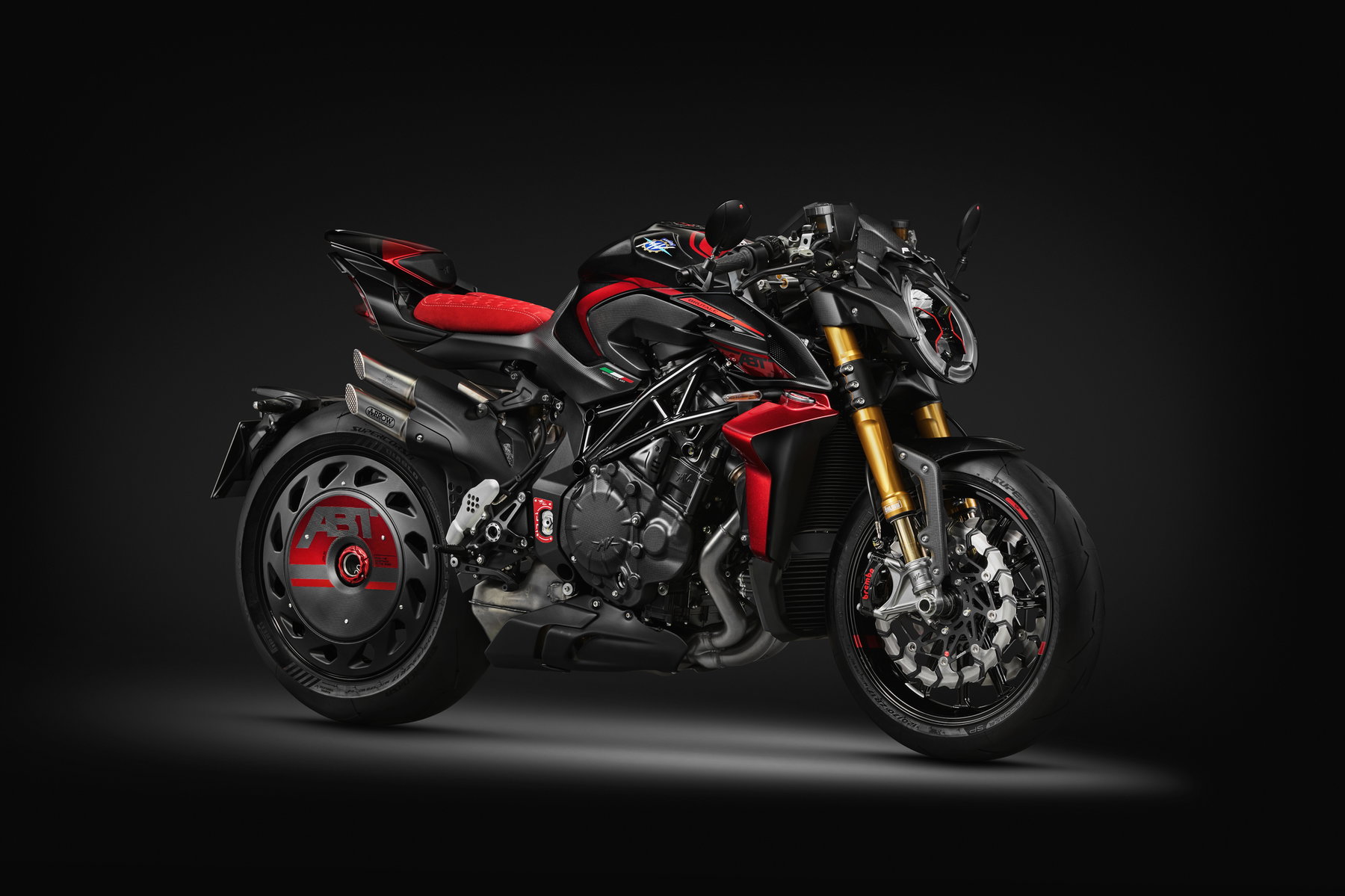
Alongside the financial realignment, MV Agusta has changed its pricing policy. Around EICMA 2025 the brand moved away from its positioning as a luxury supplier and noticeably lowered the prices of several models. Luca Martin justified the step by saying that MV Agusta wanted to position itself against competitors such as Ducati, KTM and Triumph rather than as an exclusive niche brand.
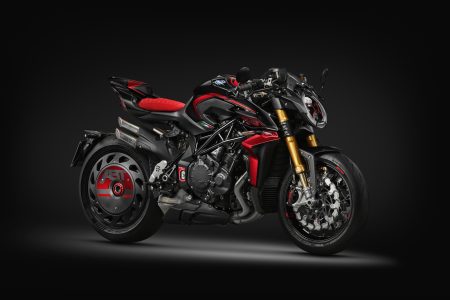
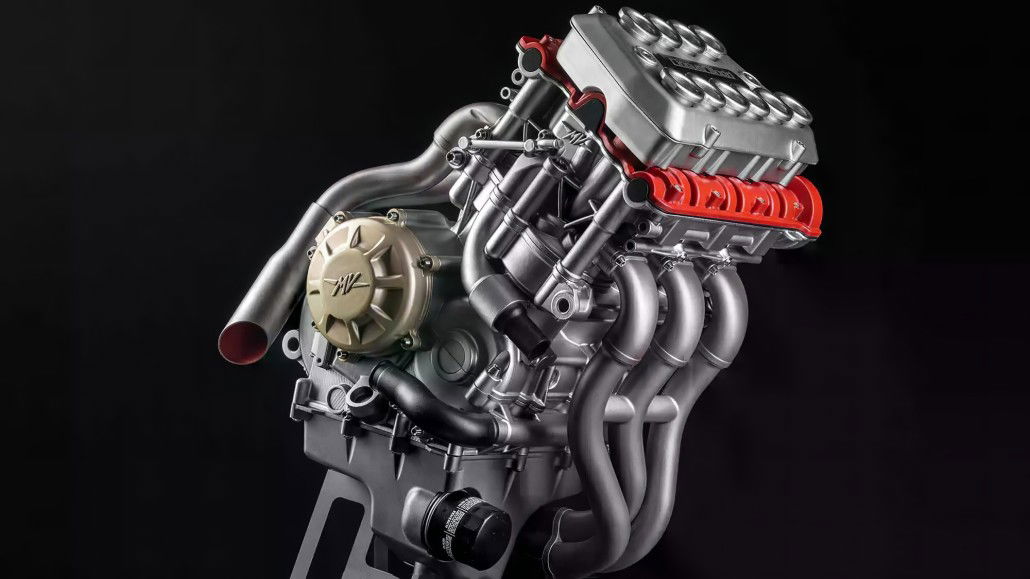
The same show also produced the latest new model so far. The Brutale 950 Serie Oro has a newly developed three-cylinder engine with 148 hp (109 kW), is limited to 300 units and was due to be delivered from the second quarter of 2026, in other words from exactly the period in which the line is said to have been standing still. Whether any units were built remains open.
What does the situation mean for MV Agusta owners?
A rider notices nothing of the crisis proceedings in Varese in everyday use, but notices missing spare parts immediately. That is exactly what several dealers have been reporting for weeks, and how long a motorcycle then sits in the workshop cannot currently be estimated.
Two statements show how differently the situation is arriving in the trade. One dealer who already sold the brand under the Castiglioni family says he has received exactly one motorcycle this year. A larger dealer in southern Germany, on the other hand, speaks of around 150 machines in 2026 and explains the gap by saying that the 2026 model year only starts in October. To this day, MV Agusta has not confirmed the production halt.
The second open question concerns the warranty. On the Brutale 950, for instance, MV Agusta grants five years, and a warranty is only ever as solid as the company behind it. What happens to such claims if the procedure fails has not been explained by anyone so far, neither by the factory nor by MV Agusta Operations GmbH in Cologne, which handles sales and service for the German-speaking market.
That leaves resale value. What a motorcycle is worth when its manufacturer may be about to disappear can only be answered seriously once it is clear how things continue at the factory. Anyone buying now should at least be aware of that uncertainty.
What will the court decide on 25 November?
On 25 November the court in Varese will hear the case on the protective measures in the ongoing crisis proceedings. It can confirm, amend or lift them.
These measures prevent creditors from accessing the company’s assets while negotiations are under way. According to Fiom Cgil, the procedure already began in August, around a month before it was publicly confirmed.
Five weeks after the court date, on 31 December, the workforce’s solidarity contracts expire. The unions consider insolvency a real risk if something goes wrong at the hearing and no buyer steps in. There is no official confirmation of that assessment. MV Agusta does not comment on it and names as its primary goal securing the continuation of the company, gradually consolidating operations and creating the conditions for a solid future.
Frequently Asked Questions
-
Is MV Agusta insolvent?
No. MV Agusta has confirmed its entry into the Composizione Negoziata della Crisi, an Italian restructuring procedure that is explicitly neither an insolvency nor a liquidation. Access requires concrete prospects of recovery, and management stays in office.
-
Are spare parts for MV Agusta still available?
Several dealers have been reporting supply problems with spare parts for weeks, in some cases with longer downtimes in the workshop. The company itself has not commented on this, and there is currently no reliable statement about the supply situation.
-
What happens to the warranty if MV Agusta does not survive the procedure?
No information is available on this. Neither the factory in Varese nor MV Agusta Operations GmbH in Cologne, which looks after the German-speaking market, has explained how existing warranty claims would be handled.
-
How many motorcycles has MV Agusta sold in 2026?
In the first half of 2026, 2,166 motorcycles were registered to end customers worldwide, compared with 2,094 in the same period last year. That corresponds to a rise of 3.4 percent, with Italy alone contributing 144 units to the increase.
-
Is production in Varese at a standstill?
According to the Uil and Fiom Cgil unions, manufacturing at the Schiranna plant has been at a standstill since April 2026. MV Agusta itself does not comment on production in its official statement, but does confirm operational and financial difficulties.