- 81 miles (around 130 kilometres) without a navigation device, a distance matching Hyde’s age
- Donation total on 26 August 2026: 3,343.22 pounds (approx. 3,908 euros / 4,557 US dollars) plus 452.75 pounds in Gift Aid
- The campaign runs throughout 2026
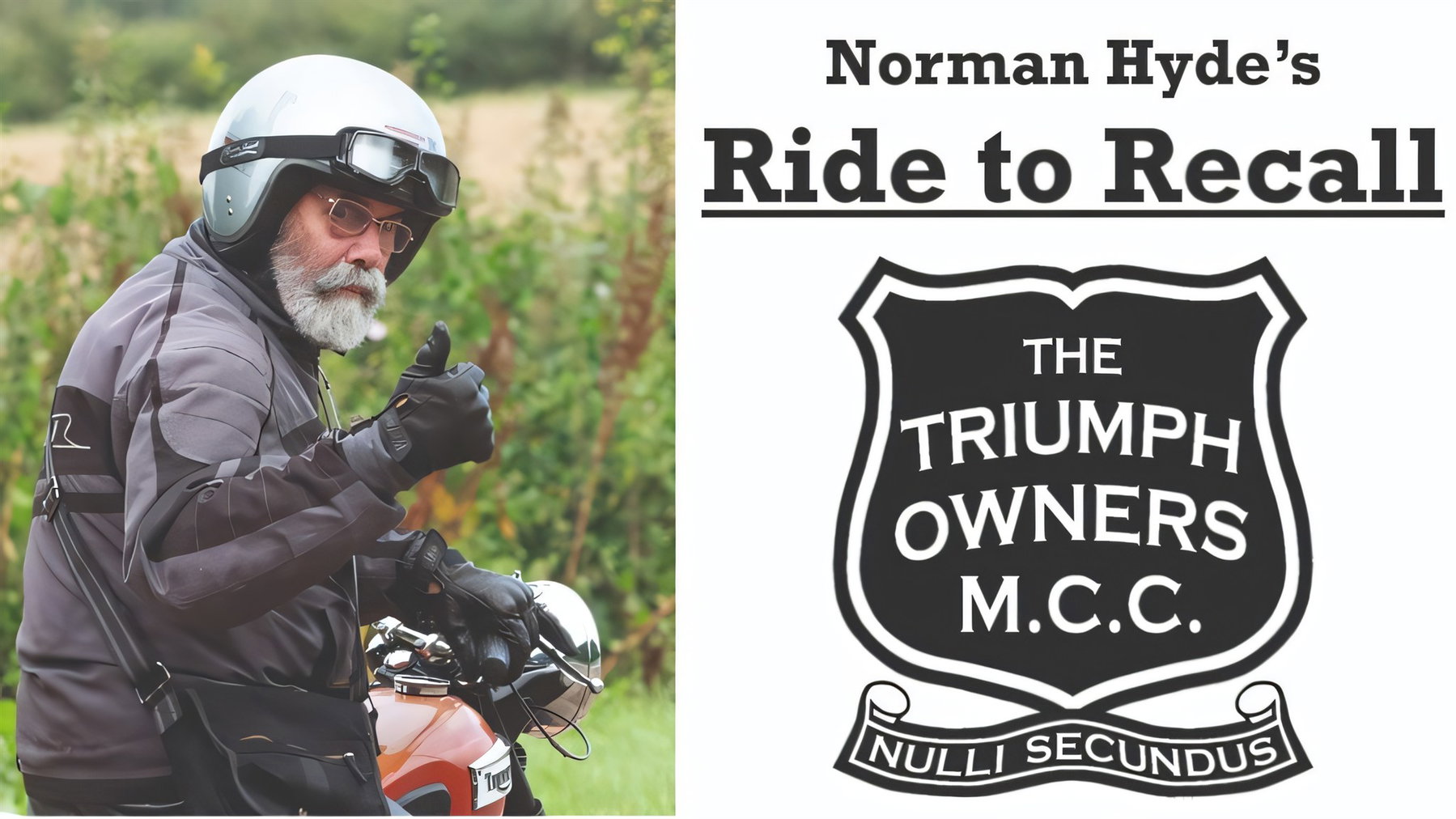
Anyone with an interest in British motorcycles of the sixties and seventies will sooner or later come across this name. Norman Hyde was a development engineer at Triumph in Meriden, a record breaker and later a manufacturer of tuning parts for the very machines he had worked on at the factory. Now the 81-year-old is in the news for a different reason: he has been diagnosed with dementia. Instead of withdrawing from public life, he has turned it into a nationwide fundraising campaign.
What is the “Ride to Recall” campaign?
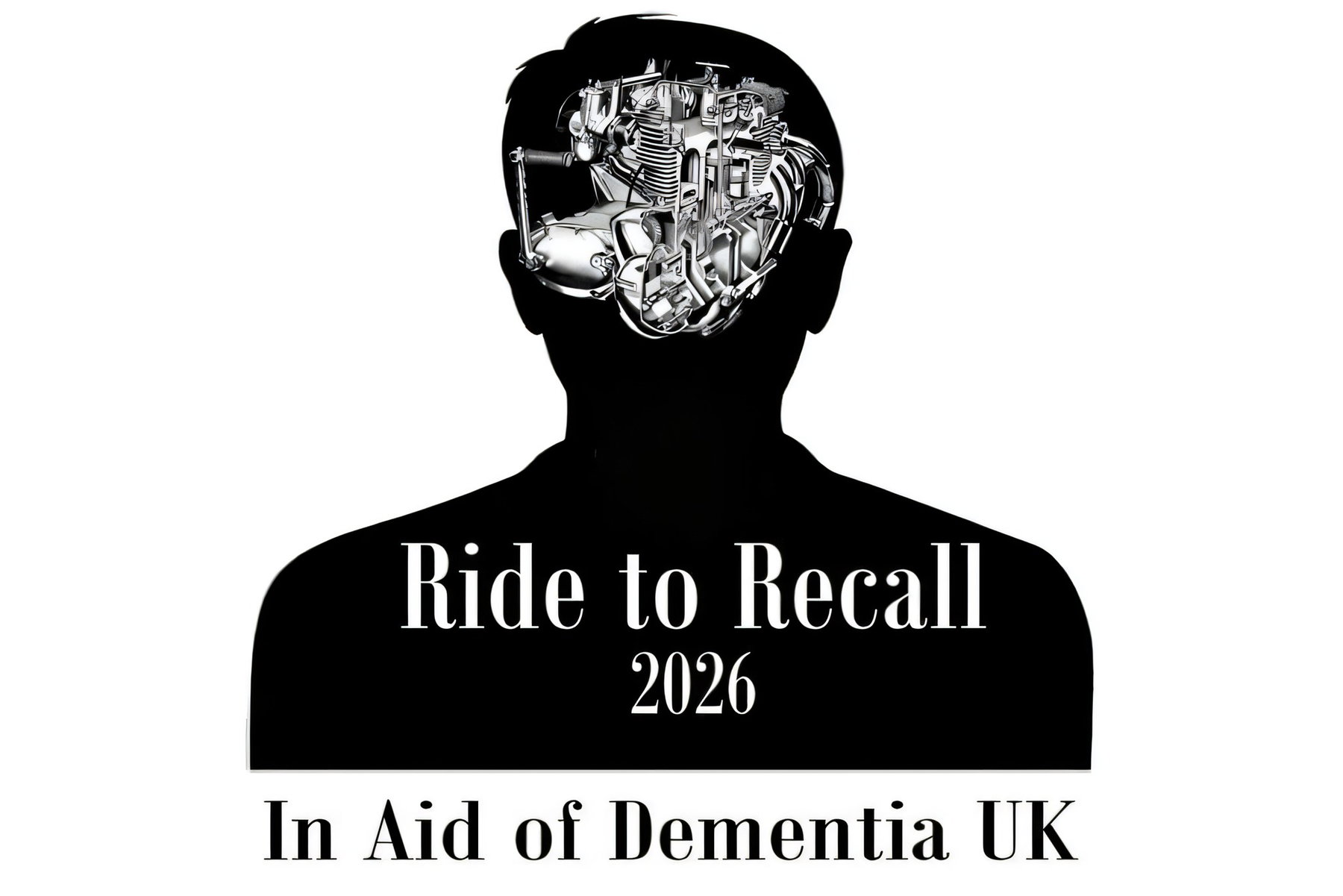
“Ride to Recall” is a fundraising campaign in aid of the British charity Dementia UK, in which motorcyclists cover 81 miles without electronic navigation aids and then donate an amount of their choosing. The number 81 is deliberate: it stands for Hyde’s age this year.
Hyde describes it like this: “Take a ride into the unknown, solo or with others. Ditch the Sat-Nav and all other navigational aids and have a real adventure, not knowing where you’ll end up. Set off and 81 miles later celebrate by making a donation of whatever you can afford to Dementia UK on the JustGiving page.”
Leaving the sat-nav behind is no gimmick but the heart of the idea. The campaign is meant to show how much orientation depends on memory, which is exactly what dementia affects. Anyone setting off without navigation has to remember turnings, place names and landmarks in order to find their way home.
Hyde has already completed his own ride. He covered 81 miles through the northern Cotswolds, accompanied by around 20 friends and colleagues from the motorcycle industry. The campaign continues throughout 2026, with other riders encouraged to complete their own 81-mile routes.
How much money has been raised so far?
On 26 August 2026 the official donation page showed a total of 3,343.22 pounds (approx. 3,908 euros / 4,557 US dollars). On top of that come 452.75 pounds (approx. 529 euros / 617 US dollars) through Gift Aid, a British scheme under which the state adds a supplement to donations from taxpayers.
The entire amount so far has come from online donations; offline donations are listed as zero on the page. According to the donation page, the appeal is aimed not only at individual riders but explicitly at all branches and members of the Triumph Owners’ Motor Cycle Club. Alongside ride-outs, it names trade show appearances, events and concours competitions as opportunities to collect money.
Why does the campaign support Dementia UK in particular?
Dementia UK describes itself as the only nationwide British charity focused on specialist dementia care. Its nurses, known as Admiral Nurses, advise and support those affected as well as their families free of charge.
The figures behind it explain why the charity depends on donations. Around 944,000 people in the United Kingdom are currently living with dementia. Among them are 70,800 people with an early-onset form, where symptoms begin before the age of 65. Set against that are fewer than 500 Admiral Nurses. Dementia UK is registered as a charity under number 1039404.
For many motorcyclists the subject is anything but abstract. They have already experienced dementia through relatives, partners or friends, according to the official announcement about the campaign.
Who is Norman Hyde?
Norman Hyde is a former Triumph development engineer who stayed connected to the brand for decades as a record breaker and parts manufacturer. In Britain his name is closely associated with the old Triumph factory in Meriden.
Hyde joined Triumph as a 16-year-old apprentice in 1964. For three years he spent six months a year in the various departments before being taken on as assistant to development chief Doug Hele. He recalls that application with a certain self-irony: “I had an interview with the great Doug Hele. I proudly took him a photograph and told him about my racing stuff, which rather put him off because he was worried it would distract my attention from the work in hand… which of course it did!”
After training as a mechanical engineer he moved into race development. There he was involved in several of the brand’s important twins as well as triples, among them the T120, T140, T150, T160 and T180 models. He also worked on the racing programme, including with works rider Percy Tait.
The record with “Roadrunner III”
Alongside his work at the factory, Hyde built a career as a sprint racer. In the end he had 22 speed records to his name, with his wife Diana riding as passenger in the sidecar. He describes how it started matter-of-factly: “I got into the records side of it all when I built a supercharged 350 and noticed that the sidecar records were pre-war. I thought I could beat those! I changed the top half and made the 350 twin into a 500 twin and got the sidecar record.”
His best-known outing dates from 24 September 1972. On the runway of RAF Fairford in Gloucestershire he pushed his “Roadrunner III” outfit to the start, powered by a Triumph Trident triple running on a mixture of nitromethane and methanol. Accounts of the capacity differ, with 830 cubic centimetres as well as 850 cubic centimetres quoted. The sidecar world record he set is said to stand at an average of 161.8 miles per hour (around 260.4 kilometres per hour) and to have lasted more than 35 years.
There were three stages of the “Roadrunner” in total. A fully restored example is on display today at the National Motorcycle Museum, where it survived the devastating fire of 2003.
From the spare room to his own workshop
When the Triumph factory at Meriden collapsed, Hyde stayed loyal to British motorcycles. With his redundancy payment of 600 pounds (approx. 701 euros / 818 US dollars) he founded his own company in 1976, making components for Triumph twins as well as triples and for other brands. He started out in the spare room; later the business moved into a unit of around 900 square feet in Warwick, roughly 84 square metres. He ran the company for forty years, then sold it.
In 1987 came what is probably his best-known project: the Hyde Harrier, built around Triumph engines with a chassis from Harris Performance. It is regarded as a typical example of the British specialist scene of those years. Even after the brand restarted at the Hinckley factory, Hyde continued to develop parts for Triumph, keeping the link between the old as well as new generations of British motorcycles alive.
This is not the engineer’s first fundraising campaign. After his own treatment he raised more than 2,700 pounds (approx. 3,156 euros / 3,681 US dollars) for Prostate Cancer UK through talks as well as public appearances. In 2023 he sounded visibly surprised at the continuing attention for his record runs: “I’m stunned at how many people are still pleased to shake my hand. After all, my land speed record was 50 years ago!”
How can you take part in “Ride to Recall”?
Anyone with a motorcycle as well as a licence can take part; there is no registration or entry fee. Those who want to join ride their own 81-mile route without navigation aids, then donate via the campaign’s donation page at justgiving.com/page/ridetorecall.
There is also campaign clothing. Hyde is patron of the Triumph Owners’ Motor Cycle Club, with sales running through its online shop at tomccmerchandise.com/shop. Five items are on offer, each plus postage: a T-shirt for 17 pounds (approx. 20 euros / 23 US dollars), a women’s-fit T-shirt at the same price, a polo shirt for 21 pounds (approx. 25 euros / 29 US dollars), a sweatshirt for 24 pounds (approx. 28 euros / 33 US dollars) as well as a hoodie for 28 pounds (approx. 33 euros / 38 US dollars). A share of every sale goes to Dementia UK.
That places “Ride to Recall” among a whole series of charity rides organised by the British motorcycle scene across the year. The barrier here is particularly low, though, because there is neither a fixed date nor a set route to stick to.
Frequently asked questions
-
What is Norman Hyde’s “Ride to Recall”?
“Ride to Recall” is a fundraising campaign for the British charity Dementia UK, launched by Norman Hyde after his own dementia diagnosis. Participants ride 81 miles without a navigation device, then donate an amount of their choosing. The campaign runs throughout 2026.
-
Why exactly 81 miles?
The distance matches Norman Hyde’s age; he turns 81 this year. 81 miles is around 130 kilometres. Leaving out every electronic navigation aid is meant to highlight the link between orientation as well as memory.
-
Which record did Norman Hyde set?
On 24 September 1972 Hyde set a sidecar world record at RAF Fairford with the Trident outfit “Roadrunner III”. The average is said to have been 161.8 miles per hour (around 260.4 kilometres per hour) as well as to have stood for more than 35 years. In total Hyde holds 22 speed records.
-
How much money has the campaign raised so far?
On 26 August 2026 the donation total stood at 3,343.22 pounds (approx. 3,908 euros / 4,557 US dollars), plus 452.75 pounds through the British Gift Aid scheme. The entire amount so far comes from online donations.
-
Where is the campaign merchandise available?
Sales run through the online shop of the Triumph Owners’ Motor Cycle Club at tomccmerchandise.com/shop, of which Hyde is patron. T-shirts, a polo shirt, a sweatshirt as well as a hoodie are available at prices between 17 and 28 pounds plus postage. A donation from every sale goes to Dementia UK.