- From the 2027 TT onwards, Supertwin machines are no longer eligible; the class runs entirely to Sportbike regulations
- Technical rules and Balance of Performance follow the British National Sportbike Championship, with small adjustments for the Mountain Course still permitted
- The Manx Grand Prix keeps its existing regulations and will still allow Supertwins to start in 2027
The organisers of the Tourist Trophy confirmed on 10 September 2026 that the Sportbike TT will be run entirely to Sportbike regulations from 2027. That brings to an end the step-by-step transition which began in 2024. In between, a consultation process with teams, riders and other stakeholders took place in spring 2025, and in 2026 Sportbike machines lined up alongside the established Supertwins for the first time. The class has been part of the programme in its Supertwin form since 2012, initially under the name Lightweight TT. For the 2027 TT, which runs from 31 May to 12 June, this is the second major rule change within a few days, following the overhaul of the sidecar class.
Why is the Isle of Man TT ending the Supertwin class?
The organisers give three reasons: cost, a level playing field and manufacturer interest. In their view the Supertwin regulations were the last class at the TT with genuine technical freedom, and it was precisely that openness which pushed costs upwards.
According to the official statement, anyone who wanted to run at the front needed either small-series special machines or elaborate in-house developments. Both are expensive. The Sportbike regulations, by contrast, set tighter limits and are intended to reduce the cost of building and running a bike, particularly for privateers without a large budget. On top of that comes the Balance of Performance, or BoP. Under this system, different machines are brought into line with each other through technical requirements so that twins, triples and fours run at similar speeds despite their different layouts.
Ed Wilson, Head of Sport at the Isle of Man TT Races, describes it as a logical next step. The Supertwin class had produced good racing and remarkable engineering, he says, but had drifted further and further away from production-based racing, with the high development effort becoming a real barrier to entry. “Moving to Sportbike gives us a much more relevant and sustainable platform”, said Wilson.
Another factor is industry interest. According to the organisers, the new direction has attracted several major manufacturers, some of which are already involved directly with teams and within the class. Among the Supertwins, that involvement had noticeably declined in recent years.
Which technical rules apply from the 2027 TT?
From 2027, the technical regulations and BoP of the Sportbike TT will match the National Sportbike Championship in the UK. Anyone competing there can run the same machine on the island without modification.
This alignment is the heart of the change. It creates continuous technical common ground between short-circuit championship and road racing. Because the Snaefell Mountain Course, at 37.73 miles (around 60.7 kilometres) and with its long flat-out sections, makes different demands than a short circuit, small TT-specific modifications are permitted. These mainly concern the bodywork and front end and are intended to give riders more wind protection. The same approach already applies in the Superstock class.
Dave Hagen, Technical Director of the Isle of Man TT Races, explains that the decision against a bespoke TT formula comes down to adopting a proven rulebook rather than inventing a new one. The combination of fixed rules and BoP is intended to reduce the advantage of expensive development, so that preparation and rider performance count for more in the result. The regulations can also be developed further as new manufacturers and models come to market.
What does the change mean for young riders?
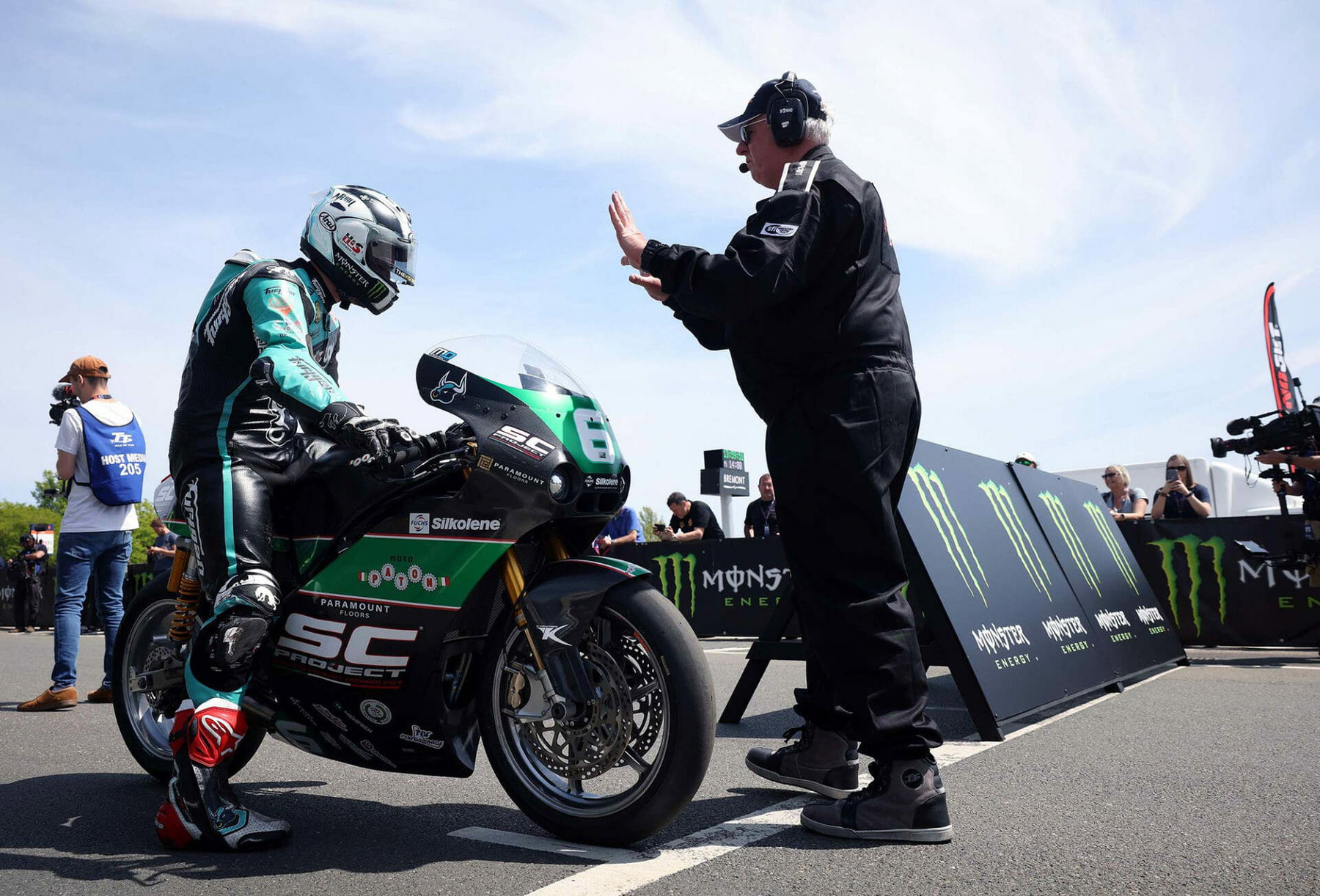
The organisers see it as a cheaper and shorter route onto the Mountain Course. Young riders should be able to move up to the TT earlier, without first taking the detour through Supersport and the 1000cc class on short circuits.
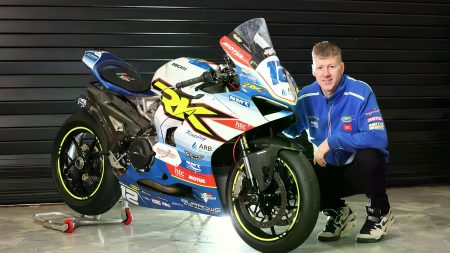
That detour has been the usual path for newcomers in recent years. One example from 2026 is debutant Rhys Stephenson, who made an impression on his first appearance. The leading Sportbike rider was Dominic Herbertson in seventh place in the Carole Nash Sportbike TT. He was just under an average of 120 miles per hour (around 193 km/h), aboard the Triumph Daytona 660 of the works team KTS Macadam Triumph Factory Racing.
From Lightweight TT to Sportbike TT: 14 years in review
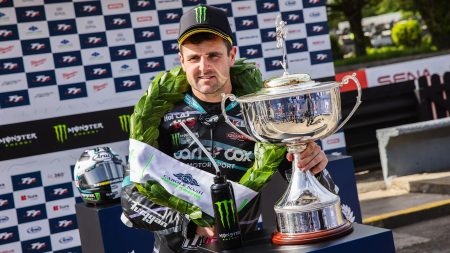
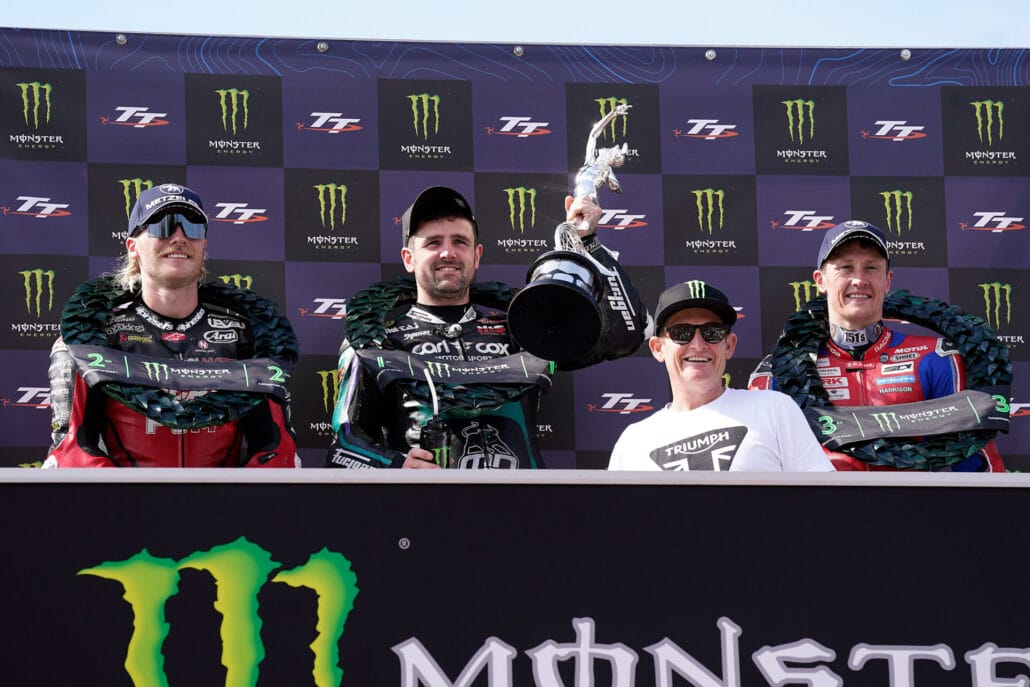
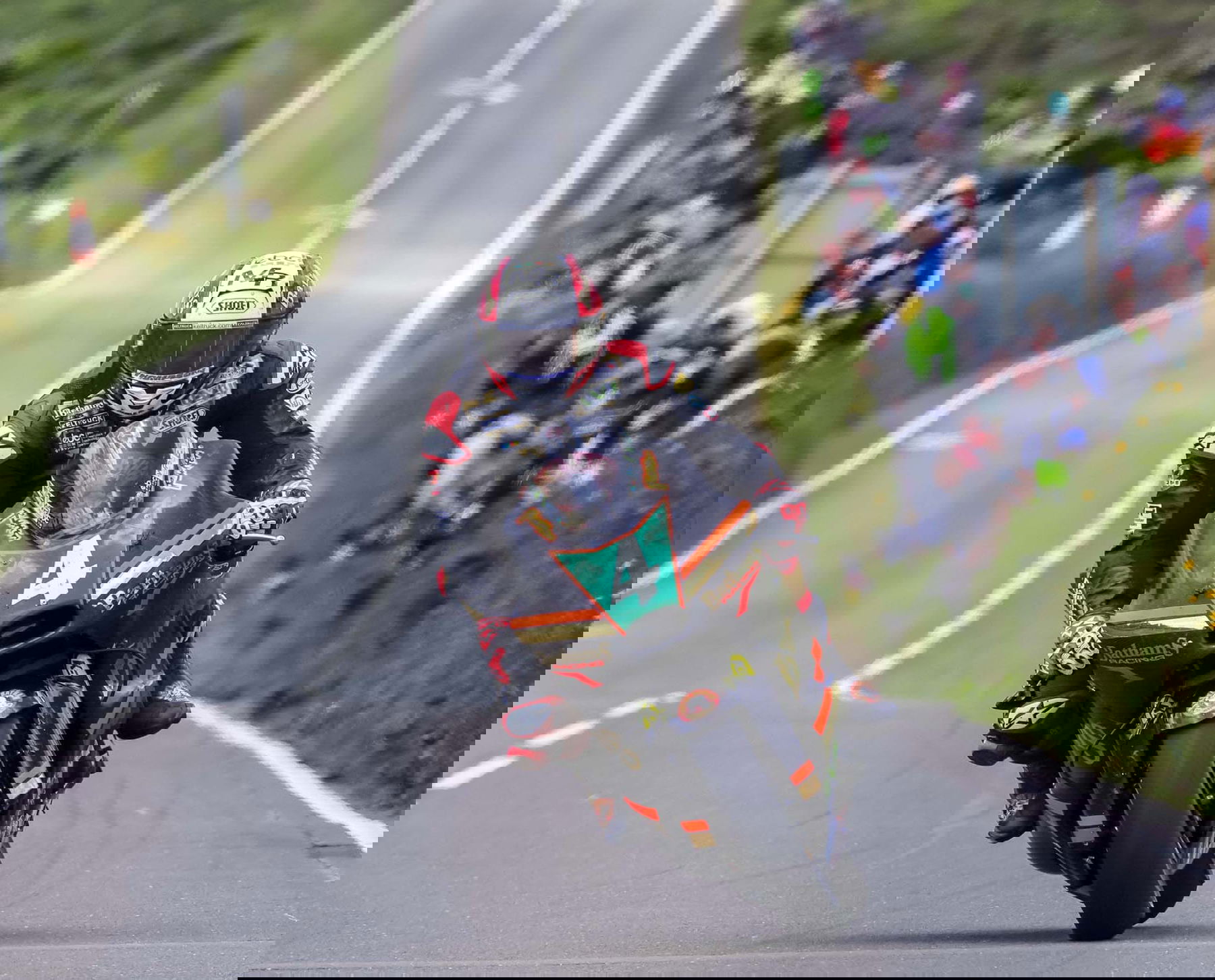
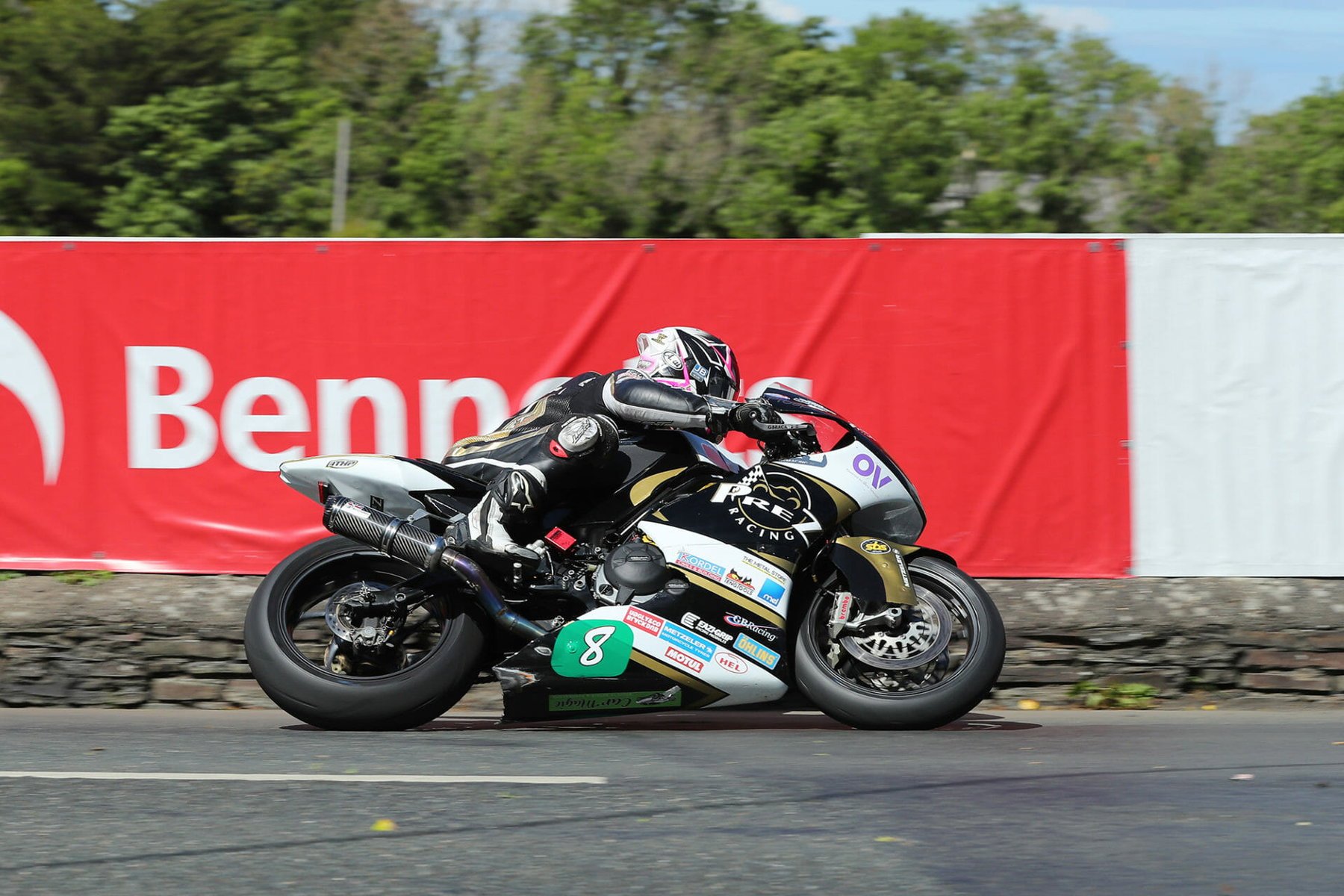
The class started out under the traditional name Lightweight TT. In its early years, James Hillier, Dean Harrison and Ivan Lintin celebrated their first TT wins there. Later, Michael Dunlop MBE became the dominant force on the works Paton S1-R and won six of the last eight races in the category.
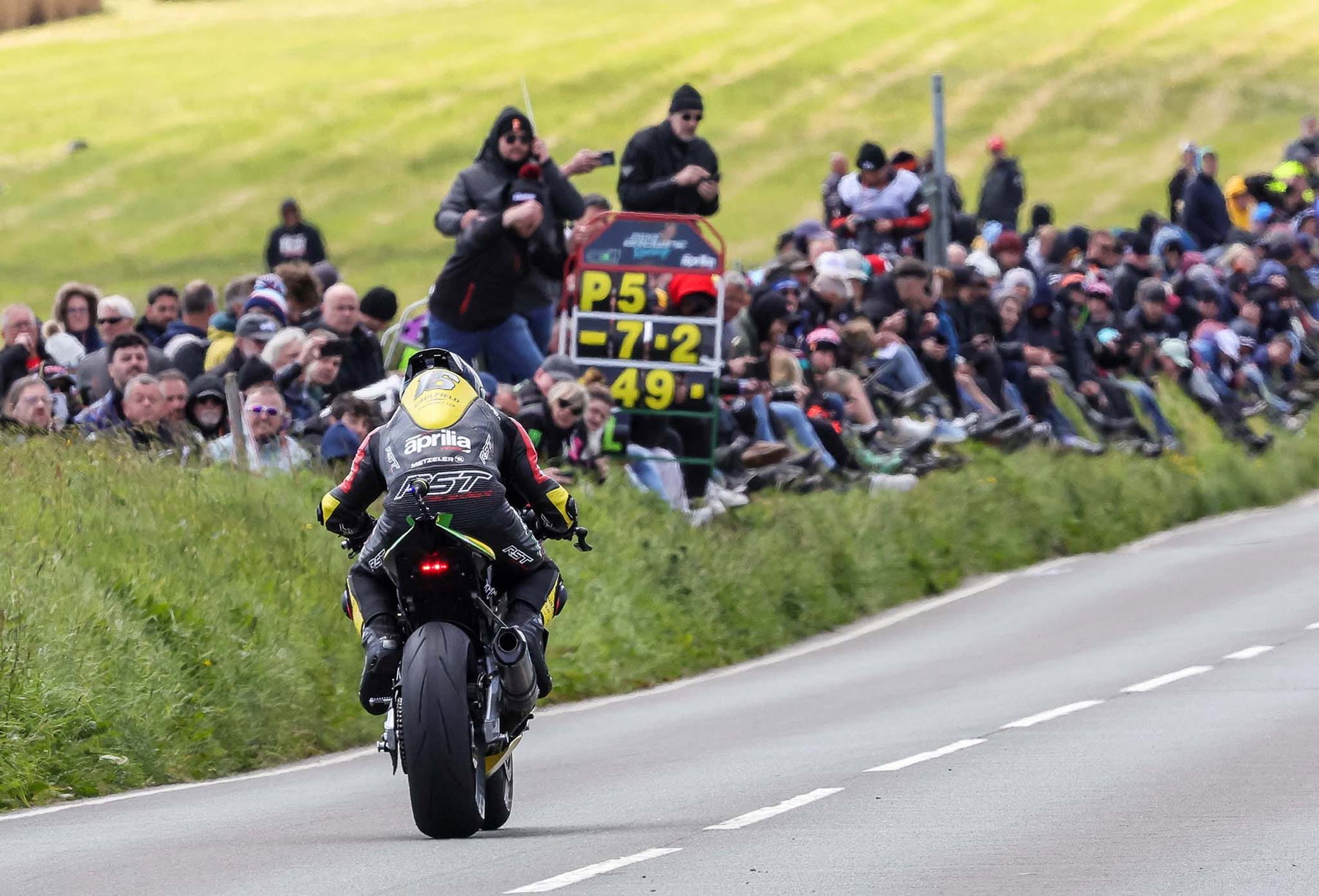
It was in the debut year of mixed grids of all years that the development level of the older machines became clear: at the 2026 Sportbike TT, Supertwins filled the first six places, with Dunlop winning once again. So the class is not disappearing because it had become slow, but because it had drifted technically away from everything else.
What happens to the existing Supertwin machines?
They remain usable on the Isle of Man, but at the Manx Grand Prix. The organising Manx Motor Cycle Club confirmed two days after the TT announcement that it will carry over its 2026 regulations unchanged for 2027.
That means Supertwins and Sportbikes remain eligible to race together at the Manx Grand Prix, specifically in the Sportbike MGP and Junior MGP races. The club explicitly cites the substantial investment riders and teams have put into their existing equipment. Anyone who already owns a competitive Supertwin therefore does not have to buy a new machine straight away. At the same time, the Sportbike category is to be allowed to develop at the MGP as well. The club’s message to undecided teams is brief: “Supertwins are staying for 2027”. Further details on regulations, entries and the schedule of the 2027 Manx Grand Prix are to follow later.
Sidecars will also race to new rules in 2027
The Sportbike decision is not the only rule change for next year’s event. A few days earlier, the organisers had announced a comprehensive overhaul of the sidecar class, which had been reviewed after being suspended during the 2026 TT. Instead of the previous 600cc four-cylinder engines, production-based middleweight engines to Sportbike rules will be used, among them the Yamaha R7, Aprilia RS660 and Kawasaki Ninja 650. Added to that are standardised Mectronik control units, likewise a Balance of Performance, and shorter races over two laps instead of three. Both decisions therefore follow the same line: production-based technology, tighter limits, lower costs.
When will the full regulations be available?
The complete technical regulations for the Sportbike TT and all other classes of the 2027 TT are due to be published in November 2026. Until then, details remain open.
That also applies to the question of which models will ultimately be eligible and exactly how the Balance of Performance will work. For the sidecars, several points such as weight, fluid retention and scrutineering have yet to be finalised as well.
Frequently Asked Questions
-
When does the Supertwin TT end for good?
From the 2027 TT, Supertwin machines are no longer eligible. The last edition with Supertwins was the 2026 TT, where they lined up alongside the new Sportbikes. In total the Supertwin era spans 14 years from 2012.
-
Which motorcycles are allowed to race in the 2027 Sportbike TT?
Machines built to the regulations of the British National Sportbike Championship are eligible. Small TT-specific modifications to bodywork and front end are permitted. The full list of eligible models and the details of the Balance of Performance are due to be published in November 2026.
-
Can you still race your Supertwin on the Isle of Man in 2027?
Yes, at the Manx Grand Prix. The Manx Motor Cycle Club is keeping its 2026 regulations, so Supertwins remain eligible in the Sportbike MGP and the Junior MGP. At the TT itself they are no longer permitted.
-
What is a Balance of Performance in motorcycle racing?
A Balance of Performance brings different machines into line with each other through technical requirements. The aim is that motorcycles with different engine layouts run at similar speeds despite their differing basic concepts. The TT introduces the system from 2027 in the Sportbike class and for the sidecars.