- 999 cc inline four based on the K5 engine with 152 PS (112 kW) and 106 Nm
- 15 rider aids, including Suzuki’s first Slide Control and a Brake Hold that also works downhill
- 214 kg kerb weight, 810 mm seat height, price and launch date still to be announced
With the GSX-10R, Suzuki fills the gap between the GSX-S1000 naked bike and the GSX-R1000R, which is built uncompromisingly for the track. The newcomer adopts the riding position of the GSX-R but pairs it with an engine tuned for midrange pull and a chassis designed to work as well on country roads as on a circuit. Suzuki sums up this approach with the slogan “Fun. Unlimited.” According to the manufacturer, it also comes with the most comprehensive package of rider aids ever fitted to a Suzuki motorcycle. The GSX-10R was unveiled on 3 November at EICMA 2026, where it is one of the Japanese brand’s most important new models for the 2027 season.
Does the GSX-10R replace the Suzuki GSX-R1000R?
No, the GSX-10R joins the range alongside the GSX-R1000R, which remains on sale. Suzuki deliberately does not want the new model to match the peak performance of the GSX-R. Instead, the GSX-10R is meant to fill the gap between the GSX-S1000 and the GSX-R1000R.
Before the premiere, that was exactly the big question. When the name GSX-10R first surfaced, a successor to the GSX-R1000 seemed the obvious conclusion. Arguing against it was the fact that Suzuki had only just updated the GSX-R1000 and GSX-R1000R to Euro 5+ for 2026. Another possibility was a successor to the GSX-S1000F. The half-faired sports roadster, built on the same platform as the naked bike, had been dropped from the range after the 2021 model year. The GSX-10R picks up on that idea rather, but is considerably sportier and fully faired. The name follows the new naming scheme Suzuki has used since the GSX-8S and GSX-8R, which was most recently also given to the DR-Z4S, DR-Z4SM and SV-7GX.
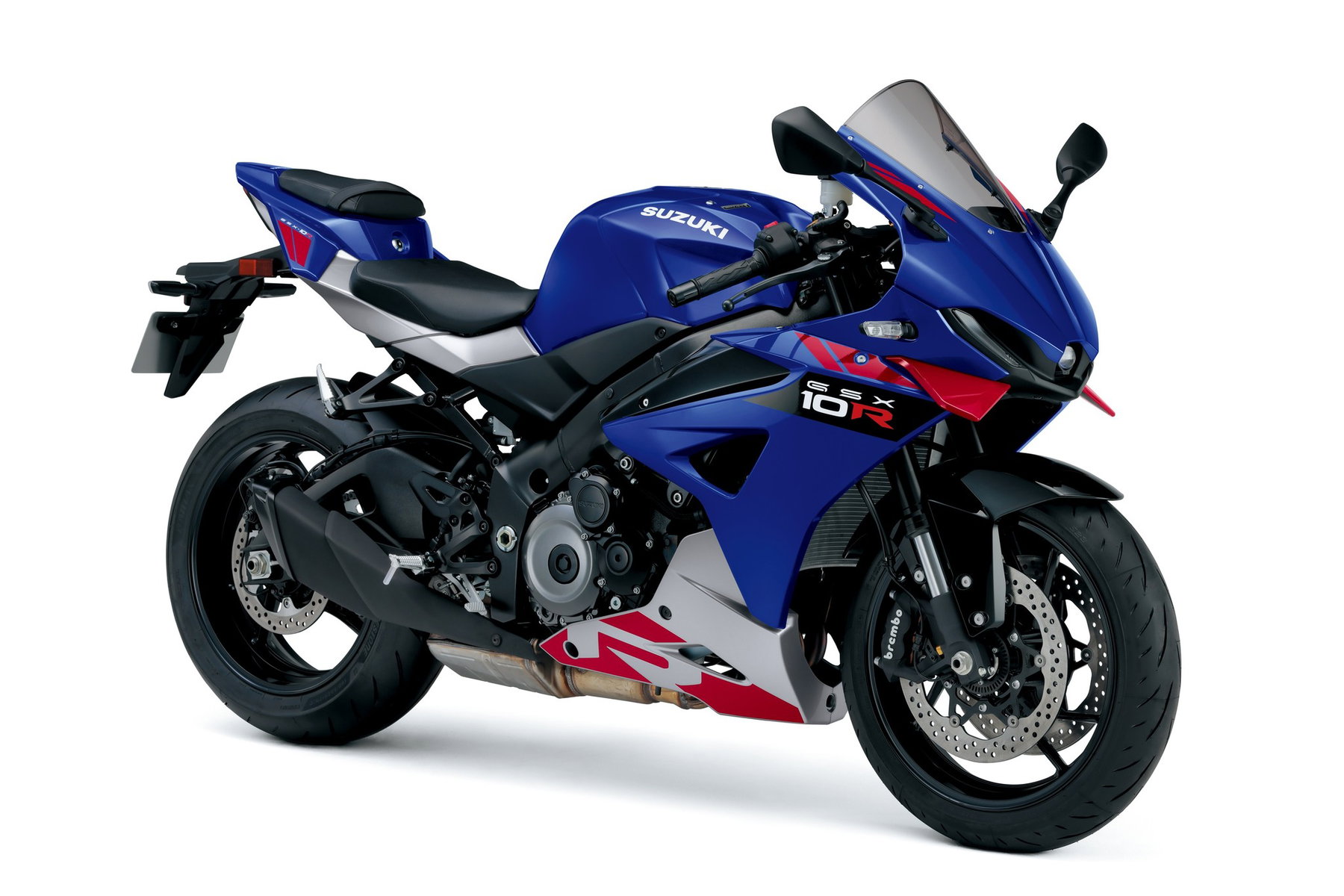
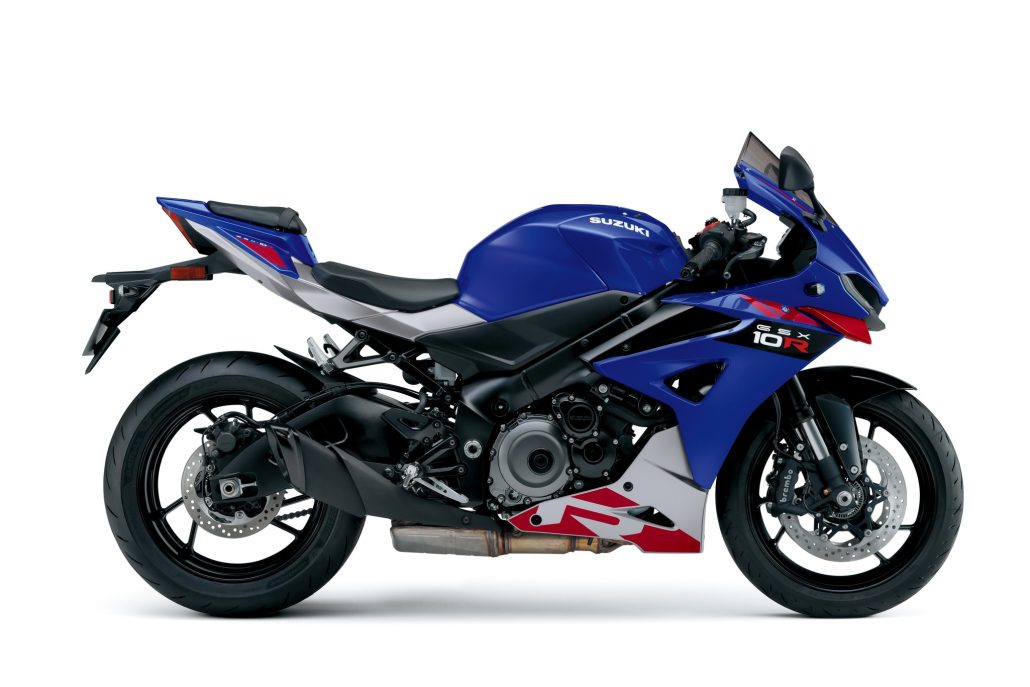
Visually, there should be no doubt about its heritage. The pointed nose with a compact LED headlight and side-mounted position lights echoes the shapes of the GSX-R family. Winglets on the sides of the fairing take their cue from the aerodynamics of current race bikes. The slim tail section rises steeply, and the fairing leaves part of the engine exposed. Graphics and lettering build the bridge to the GSX-R family.
How much power does the Suzuki GSX-10R engine have?
The 999 cc inline four produces 152 PS (112 kW) at 11,000 rpm and 106 Nm (78 lb-ft) at 9,250 rpm. It is based on the K5 engine that debuted in the GSX-R 1000 K5 in 2005.
Back then, the liquid-cooled four made 178 PS. Its strength has always been the combination of a strong midrange and robust top-end power. This is down to its comparatively long stroke, which delivers torque early. Since 2017, Suzuki has built a dedicated short-stroke engine with more than 200 PS for the GSX-R 1000. The K5, on the other hand, lived on in the GSX-S1000, the GSX-S1000 GT and the Katana, models where rideability matters more than the figure on the spec sheet.
For the GSX-10R, Suzuki has reworked the engine once again. The exhaust valves, cam chain and oil passages are new. This is intended to improve durability and reduce mechanical noise. The four-cylinder meets Euro 5+ and is already designed to run on fuels containing alcohol. It is tuned for plenty of pull from low and middle revs, with a noticeable extra kick further up. Helping with this is the Suzuki Exhaust Tuning (SET) system in the compact 4-2-1 exhaust with its low-slung silencer. It adjusts the exhaust back pressure according to engine speed.
The throttle is electronic ride-by-wire. Three riding modes (A, B and C) change how sharply the power is delivered, but the full 152 PS is available in every mode. The SCAS clutch has two jobs. When downshifting, it reduces engine braking so the rear wheel does not hop. At the same time, the clutch lever requires less effort, which is particularly helpful in city traffic. A quickshifter for up- and downshifts is standard.
Which rider aids does the GSX-10R have?
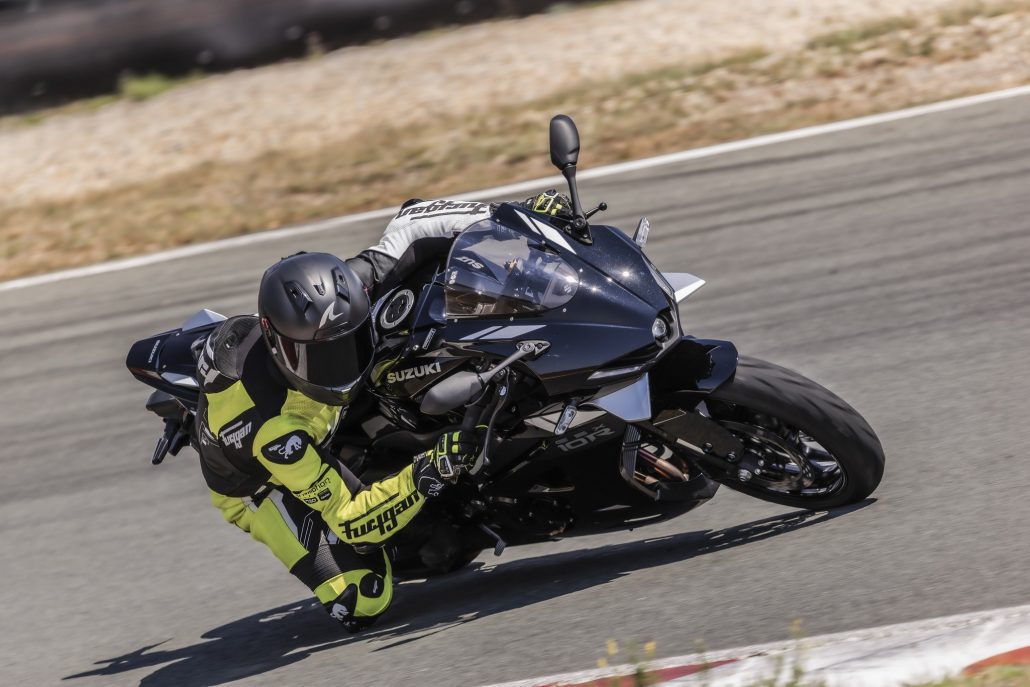
The GSX-10R has 15 rider aids, which Suzuki groups under the name Suzuki Intelligent Ride System (S.I.R.S.). They are controlled by a six-axis inertial measurement unit (IMU) that records the motorcycle’s lean angle, acceleration and rotational movements.
What does the new Slide Control do?
Slide Control detects when the rear wheel slides sideways in a corner and intervenes as gently as possible. It is the first system of its kind from Suzuki. What matters is how it works together with Roll Torque Control. That system predictively takes the lean angle into account and regulates torque so that a slide does not occur in the first place. Slide Control, by contrast, only steps in once the rear is already moving and catches the initial phase of the slide. According to Suzuki, it even allows a controlled drift instead of suppressing every movement immediately.
Traction, braking and launch
The rest of the package covers the tasks familiar from big superbikes. The STCS traction control prevents wheelspin, while the lift limiter keeps the front wheel on the ground under acceleration. When braking and downshifting, engine brake control and Anti-Skid Control help bring the bike calmly into the corner. For starts from a standstill there is launch control. The ABS is cornering-capable. The Slope Dependent Control System additionally takes uphill and downhill gradients into account when regulating the brakes, aiming to prevent the rear from lifting under hard braking downhill.
What does Brake Hold offer in everyday riding?
Brake Hold keeps the rear brake applied for around 30 seconds after the bike comes to a stop. Unlike many similar systems, it works not only uphill but also downhill and on level roads, where it prevents the bike from rolling away unintentionally. Pulling away on inclines in particular becomes much more relaxed on a sportbike.
For longer distances there is cruise control, which uses Curve Speed Control to reduce speed automatically before corners. A speed limiter is also included. The Low RPM Assist raises engine speed slightly when pulling away so the engine does not stall, and the Easy Start System fires up the engine with a single short press of the button.
What does Suzuki change on the chassis compared to the GSX-S1000?
The GSX-10R gets sharper geometry, a taller rear tyre and a much sportier riding position. The fork offset drops from 35 to 30 millimetres, putting it on a par with the GSX-R600. As a result, the wheelbase shrinks by 5 to 1,455 millimetres.
The smaller offset is meant to make turn-in easier. At the rear, a 190/55 ZR17 replaces the previous 190/50 tyre, with a 120/70 ZR17 up front. The taller profile is intended to provide more stability in corners and better traction when accelerating out of tight hairpins. The bike comes on Bridgestone Battlax Hypersport S23 tyres from the factory. This is a sports tyre for dry to slightly damp roads, not a semi-slick. Because the footpegs sit higher and further back than on the GSX-S1000, the possible lean angle increases from 48 to 53 degrees.
The backbone is an aluminium twin-spar frame combined with a newly developed aluminium swingarm. Up front is a fully adjustable 43 mm KYB upside-down fork. The rear shock, also new, is mounted via a linkage. In addition to preload and rebound damping, compression damping can be adjusted separately for high-speed and low-speed movements. The electronic steering damper increases damping as speed rises and frees up the steering at low speeds.
Braking at the front is handled by two discs and radially mounted Brembo four-piston calipers, operated by a radial master cylinder. The specially developed discs are designed to provide consistent deceleration throughout the entire braking process. The GSX-10R has a kerb weight of 214 kg (472 lbs). A lightweight lithium-ion battery contributes to this.
How suitable for everyday use is the Suzuki GSX-10R?
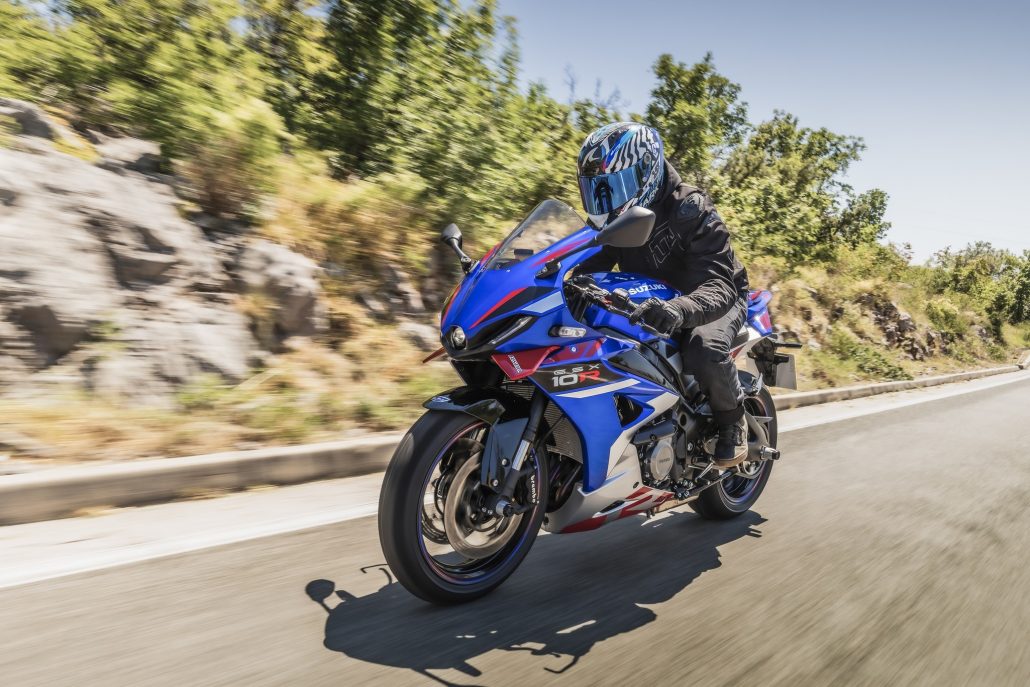
For a sportbike, the GSX-10R is unusually well prepared for the road. The seat height is 810 millimetres, the tank holds 18 litres, and under the pillion seat there is a storage compartment that can take a rain suit, for example.
The relationship between seat, clip-on handlebars and footpegs matches that of the GSX-R1000R, so the rider leans forward. However, the seat is said to be more softly padded than on the GSX-R. The shape of the tank allows a tight knee grip while still leaving enough room to move around on the bike.
A first for Suzuki are the indicators with the Suzuki Ground Beacon System (SGBS). They also project a beam of light onto the road surface, showing other road users more clearly which way the motorcycle is turning. The cockpit features a 4.2-inch colour TFT display operated via handlebar switches. With cruise control active, the set speed remains permanently visible. Via the Suzuki Ride Connect+ app for iOS and Android, the display shows turn-by-turn navigation, traffic information, messages, appointments and the weather. A USB-C socket is standard. As a small nod to GSX-R history, the ignition key carries its own 10R logo.
Colours, accessories and market launch
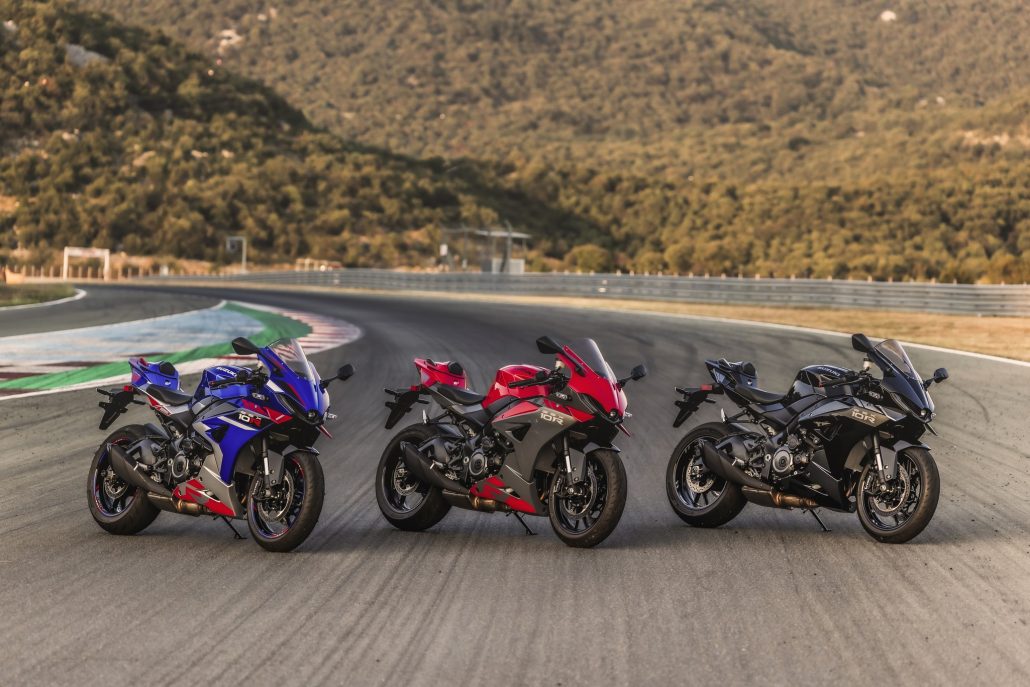
Suzuki offers the GSX-10R in three colour schemes: Pearl Vigor Blue with Metallic Mystic Silver, Pearl Pulse Red with Solid Iron Gray, and Metallic Galaxy Gray with Glass Sparkle Black. The most important accessory is a pillion seat cover with its own winglets, whose lines echo the wings at the front. Suzuki has not yet announced prices or delivery dates. These are expected to follow shortly.
Frequently Asked Questions
-
How much horsepower does the Suzuki GSX-10R have?
The Suzuki GSX-10R produces 152 PS (112 kW) at 11,000 rpm. Peak torque of 106 Nm arrives at 9,250 rpm. The engine is a reworked 999 cc K5 four-cylinder.
-
How much does the Suzuki GSX-10R cost?
Suzuki did not announce a price at the EICMA premiere. The market launch date is also still open. Both are expected to be announced shortly.
-
Is the GSX-10R the successor to the GSX-R1000R?
No, the GSX-R1000R remains in the range. The GSX-10R sits between the GSX-S1000 and the GSX-R1000R and deliberately does without the latter’s peak performance. In return, it has more rider aids and is better suited to everyday use.
-
How heavy is the GSX-10R?
The GSX-10R has a kerb weight of 214 kg (472 lbs). A lithium-ion battery is one of the factors contributing to its low weight.