- 73 hp (54 kW) from the familiar 90-degree V-twin, Euro 5+, A2 version with 35 kW
- Ride-by-wire, three riding modes, traction control and a two-way quickshifter as standard
- 200 kg ready to ride, 785 mm seat height, price for Germany not yet announced
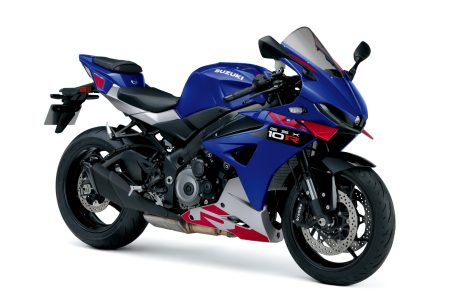
Since 1999, the SV650 has stood for an affordable way into the middle-weight class with a slim V-twin engine. Most recently, it had disappeared from the European line-up. At EICMA 2026 in Milan, Suzuki is now showing the SV-7S, which carries the concept forward: same displacement, same steel trellis frame, same low seat height. What is new above all is the electronics package the SV650 lacked right up to the end. Suzuki developed the bike under the motto “Easy to Ride, Hard to Forget”. The SV-7S is one of the new motorcycles for model year 2027 and was unveiled in Milan alongside the new GSX-10R sportbike.
Why did the SV650 disappear from Europe?
The SV650 no longer met the Euro 5+ emissions standard that has applied since 2026 and was therefore no longer offered in Europe. In the USA, it remained in the line-up.
That did not spell the end for the V-twin, however. For the SV-7GX crossover, Suzuki had already brought the engine up to Euro 5+ and switched it to ride-by-wire. Hints of a new naked bike appeared a few weeks ago, when US homologation documents listed an SV650 for model year 2027. That machine now carries the name SV-7S. Suzuki is aligning the name with its sister model, the SV-7GX, and following the naming scheme that began with the GSX-8S and GSX-8R.
Suzuki has built more than 500,000 engines of this type since 1999. The SV-7S continues this line and, like its predecessor, is aimed at beginners as well as experienced riders looking for a manageable bike for everyday use.
What changes on the SV-7S V-twin engine?
The liquid-cooled 645 cc V-twin with a 90-degree cylinder angle, double overhead camshafts and four valves per cylinder keeps its basic layout but has been revised in many areas. It produces 73 hp (54 kW) at 8,500 rpm and 64 Nm (47 lb-ft) at 6,800 rpm. The last SV650 still made 56 kW, so the new bike sits two kilowatts below it.
The biggest innovation is the electronic throttle. Instead of a cable, the two 39 mm throttle bodies now open via ride-by-wire, meaning they are controlled electronically. This is what makes riding modes and traction control possible in the first place. Added to this are revised fuel injectors and two iridium spark plugs per cylinder, which are intended to ensure cleaner combustion. The airbox sits directly under the tank and has been given shorter intake funnels, while exhaust gases flow through a compact 2-into-1 system. Suzuki has also worked on the intake and exhaust sound.
Inside, an SCEM coating on the cylinders, coated pistons and L-shaped piston rings are designed to reduce friction. Oil jets cool the piston crowns from below. The generator and gear wheels have also been revised with durability and the new electronics in mind. Gear changes are still handled by a six-speed gearbox. Suzuki quotes fuel consumption of 4.1 litres per 100 kilometres according to the WMTC standard, with CO2 emissions of 96 g/km.
Which riding modes and rider aids does the SV-7S have?
The SV-7S offers three riding modes, three-level traction control that can be switched off, and a quickshifter that shifts up and down without the clutch. Suzuki bundles the package under the name S.I.R.S. (Suzuki Intelligent Ride System).
Riding mode A (Active) delivers the most direct response. Mode B (Basic) is intended for everyday riding and is designed to reflect the character of the previous SV650. Mode C (Comfort) softens throttle response, reduces engine braking and limits output to 45 kW (61 hp). Traction control works independently: level 1 intervenes the least, level 2 is intended for normal roads and level 3 for wet or slippery surfaces. It regulates via ignition timing and throttle valve.
The quickshifter works on upshifts from 2,000 rpm and on downshifts from 1,700 rpm and can be deactivated. All systems are adjusted via the left switch cube on the handlebar. Two familiar Suzuki aids remain on board: the Low RPM Assist prevents revs from dropping too far when pulling away, in stop-and-go traffic and during U-turns. The Easy Start System starts the engine with a brief press of the button. ABS is mandatory equipment anyway.
Can you ride the SV-7S with an A2 licence?
Yes, Suzuki also offers the SV-7S as an A2 version with 35 kW (48 hp). Riding mode C does not replace this restriction.
At 45 kW, mode C is well above the A2 limit. It can also be left at any time via a switch, at which point full power is immediately available again. For riders with an A2 licence, only the restricted version is therefore permitted. Mode C is aimed primarily at less experienced riders who want to start out with gentler power delivery.
Chassis, ergonomics and weight of the SV-7S
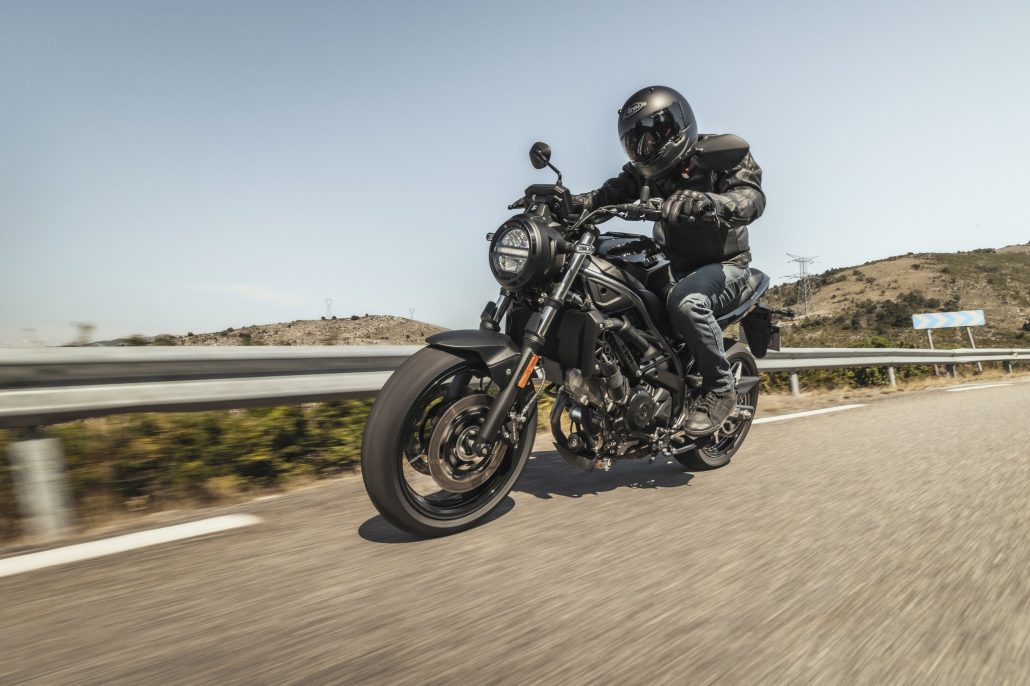
For the chassis, Suzuki continues to rely on a steel trellis frame and a tubular steel swingarm. At the front is a conventional 41 mm telescopic fork with 125 mm of travel, at the rear a linkage-operated shock absorber with 129 mm of travel. Its spring preload can be adjusted in seven steps, for example when riding with a passenger or luggage. The set-up is intended to offer a little more comfort without giving up the sporty character.
Braking is handled at the front by two floating 290 mm discs with four-piston calipers and at the rear by a 240 mm disc. The ten-spoke cast wheels are painted in the body colour and fitted with Dunlop Roadsmart III sport-touring tyres in 120/70 ZR 17 at the front and 160/60 ZR 17 at the rear. Suzuki chose them for their grip in the wet and their mileage.
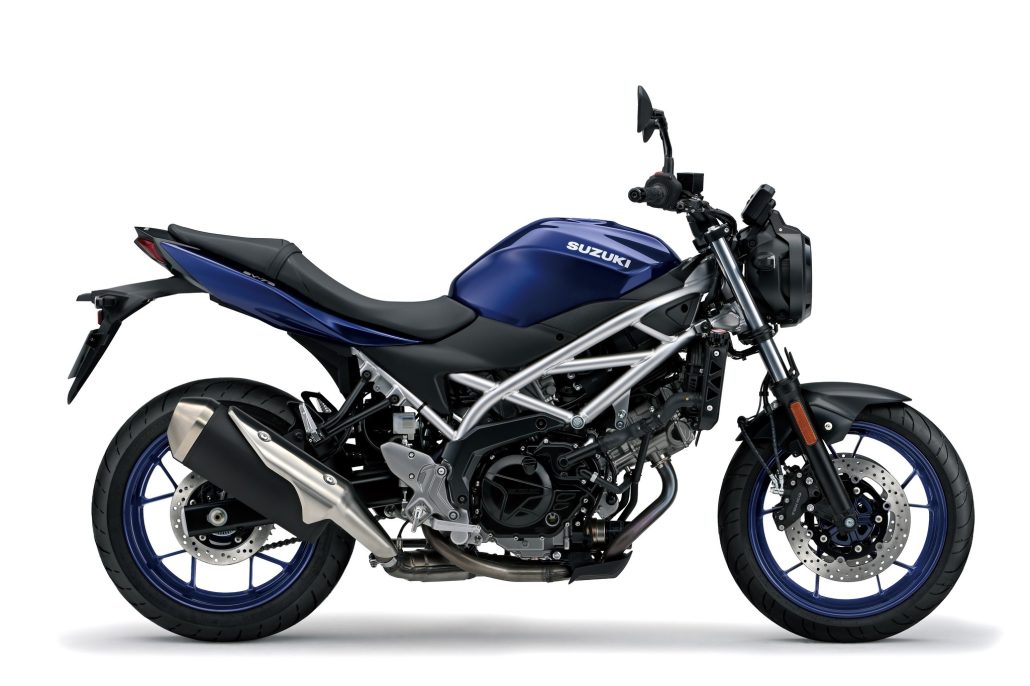
The key chassis figures are a 1,445 mm wheelbase, 25-degree rake, 106 mm trail and 135 mm ground clearance. Ready to ride with a full 14-litre tank, the SV-7S weighs 200 kg (441 lbs). The seat height remains at 785 mm. Because the seat and the transition to the tank are narrow, shorter riders should also be able to get their feet on the ground easily.
The handlebar has changed. The tapered aluminium handlebar, which gets thinner towards the ends, is 719 mm wide and sits closer to the rider than on the SV650. The grips move 11.5 mm outwards on each side. This results in an upright riding position with a slight forward lean. Knurled aluminium footpegs and a helmet holder under the seat complete the equipment.
How does the SV-7S differ from the SV-7GX?
Both share the engine, electronics and large parts of the chassis, but the SV-7S is the smaller, lighter and more classic motorcycle. The SV-7GX is built as a crossover with a fairing and more touring comfort.
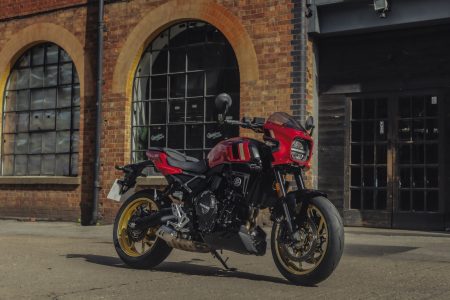
The 1,445 mm wheelbase, rake and trail are identical on both, pointing to a common base. At 200 kg, the SV-7S weighs around 11 kg less than the SV-7GX at 211 kg (465 lbs). Its 785 mm seat is 10 mm lower. In return, its tank holds only 14 litres instead of 17.4 litres. Visually, with its round headlight, exposed frame and slim side panels, the SV-7S follows the path of the classic naked bike.
What does the SV-7S TFT display show?
The SV-7S has a 4.2-inch colour TFT that, in addition to speed, revs and gear, also shows fuel consumption, range and the status of the rider aids. It can be paired with iOS and Android smartphones via the Suzuki Ride Connect+ app.
Without a connected phone, the display shows a classic round rev counter. When navigation is running, it switches to a horizontal layout with arrows for the next turn. The map itself and voice guidance run via the smartphone or a headset. A sensor adjusts the brightness, and day and night views can also be selected manually. Other displays include coolant temperature, battery voltage, two trip meters and an oil change reminder.
The app also sends calls, messages and appointments to the display, shows the weather at the current location and warns of rain on the route when navigation is active. It records rides with route, fuel consumption and speed, remembers the last parking spot and reminds you of service intervals. The connection ends when the ignition is switched off.
The lighting is also new. The LED round headlight is flattened at the bottom and picks up a shape from earlier SV models, with a slim position light running across its centre. The indicators, tail light and licence plate light also use LEDs.
How much will the Suzuki SV-7S cost?
Suzuki has not yet announced a price, and the market launch in Germany has not been set either. Suzuki Germany plans to announce both at a later date.
Two figures from Suzuki’s own model family help put it in context. The SV650 most recently cost 7,789 euros (approx. 8,740 US dollars) in Germany including on-the-road costs. The closely related SV-7GX is available from 7,999 euros (approx. 8,970 US dollars). Whether the SV-7S, with its additional electronics, will stay in this range remains to be seen.
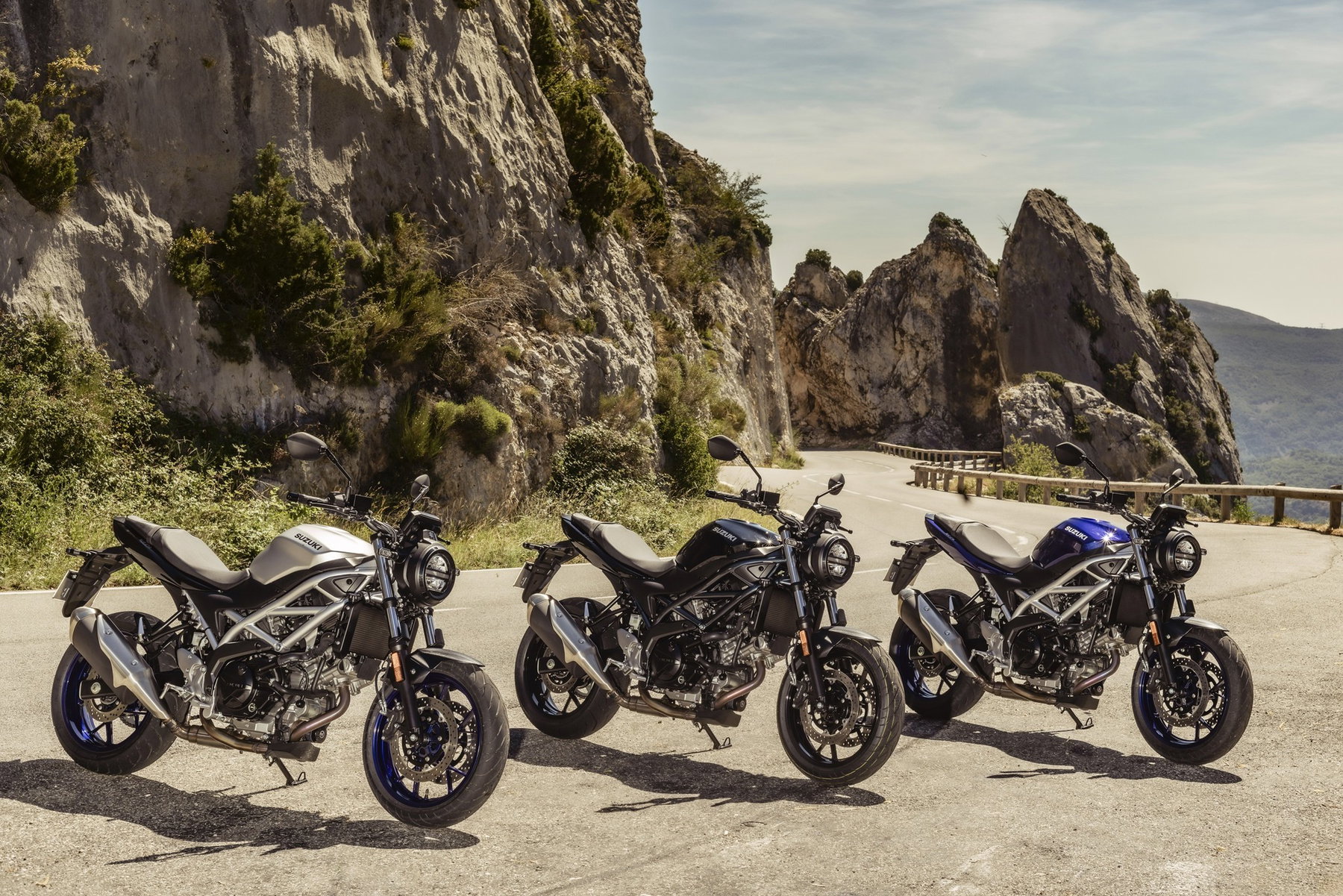
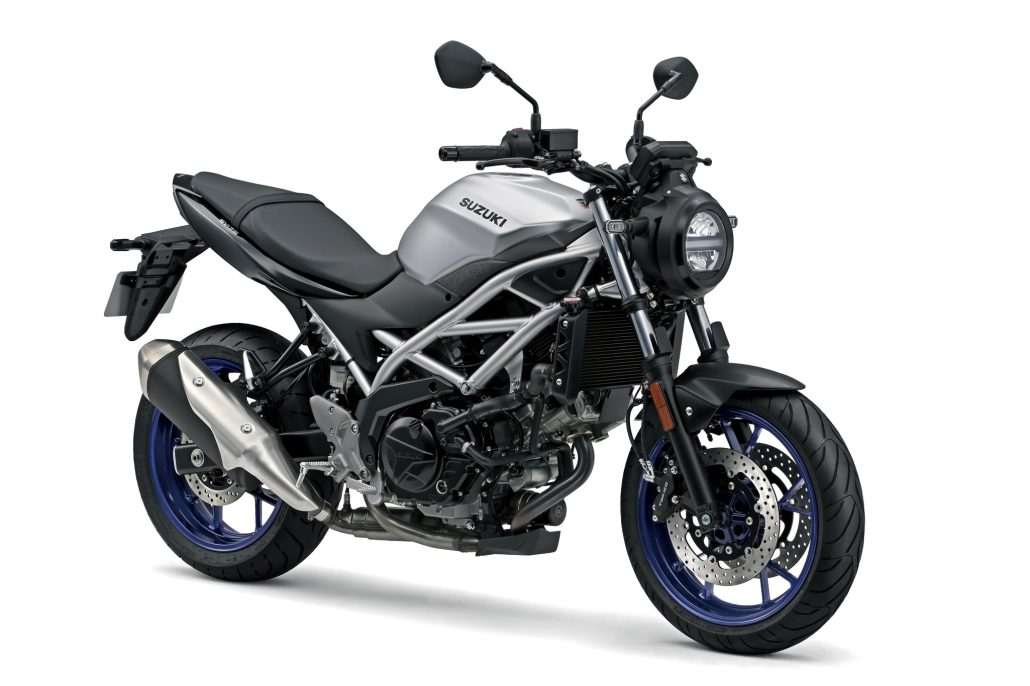
Three colour options are available. Pearl Suzuki Deep Blue No. 4 combines blue bodywork and blue wheels with a silver frame. Glass Sparkle Black features black parts and wheels with a grey frame. The third option pairs Mat Sword Silver on the tank and frame with black body panels and blue wheels.
Frequently Asked Questions
-
How much horsepower does the Suzuki SV-7S have?
The Suzuki SV-7S produces 73 hp (54 kW) at 8,500 rpm. Maximum torque is 64 Nm at 6,800 rpm. There is also an A2 version with 35 kW.
-
Is the SV-7S the successor to the SV650?
Yes, the SV-7S continues the SV650 concept with the same displacement, trellis frame and seat height. It meets Euro 5+ and, for the first time, comes with riding modes, traction control and a quickshifter. The SV650 had disappeared from Europe because of the emissions standard.
-
How heavy is the Suzuki SV-7S?
Ready to ride with a full 14-litre tank, the SV-7S weighs 200 kg. That makes it around 11 kg lighter than the faired SV-7GX. The seat height is 785 mm.
-
When will the Suzuki SV-7S arrive at dealers?
There is no date for Germany yet. Suzuki Germany plans to announce pricing and availability later. The SV-7S is part of model year 2027.
➜ Find all technical specifications for this model in our motorcycle database: Suzuki SV-7S 2027.
➜ This article is part of our comprehensive overview: New Motorcycles 2027: All Models, Releases and Highlights at a Glance. Find all key information on this topic in one place.
➜ More on this topic in our overview: EICMA 2026: All New Models and Premieres from Milan at a Glance.