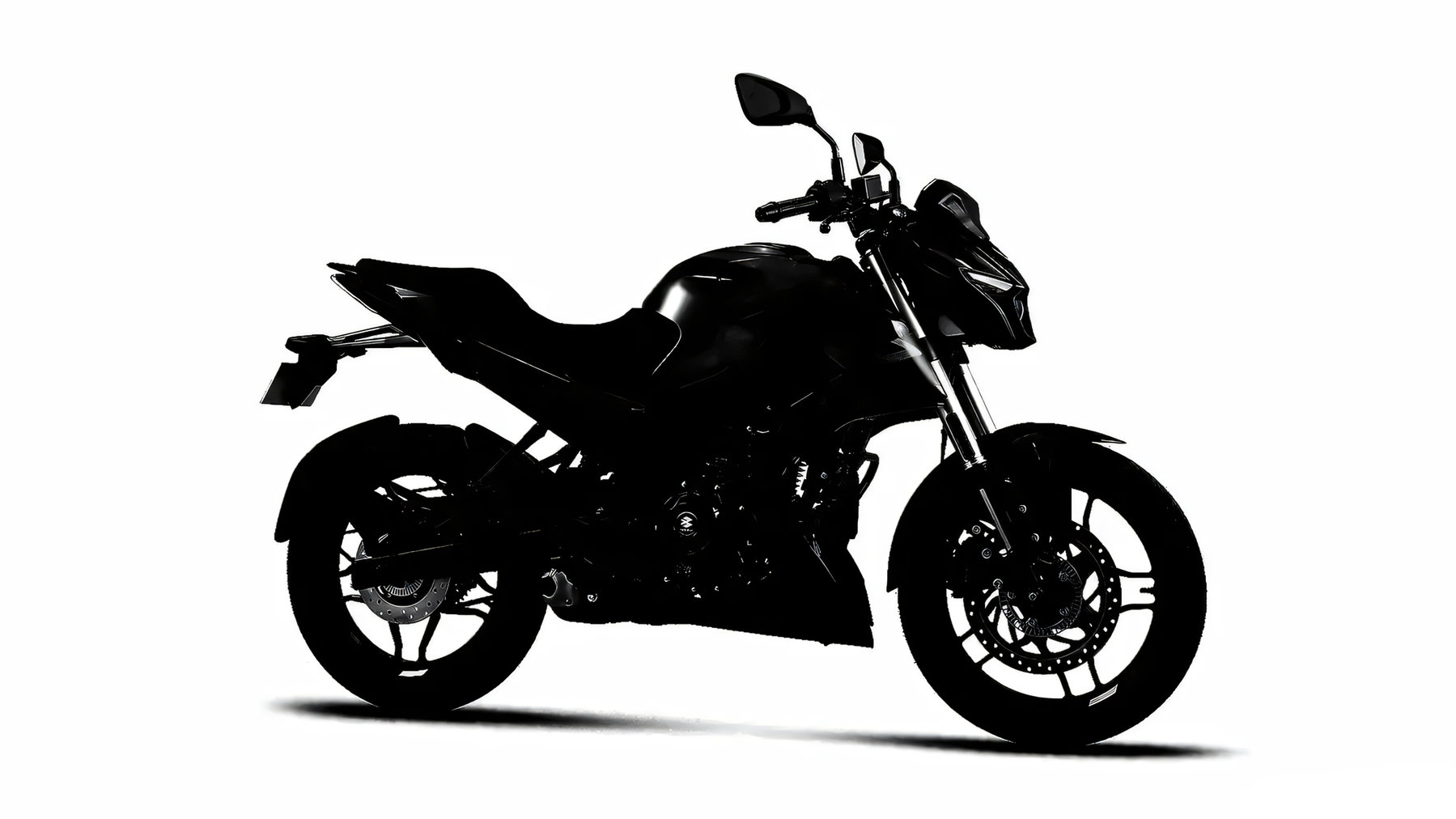
- Test mule spotted near Pune in two seat configurations
- Entirely new platform with monoshock replacing twin shocks
- Market launch in India expected in late July or early August 2026
In November 2026, the Bajaj Pulsar will celebrate its 25th anniversary. It is a brand that has shaped the Indian motorcycle market like few others and still accounts for roughly two-thirds of Bajaj Auto’s total two-wheeler sales. Yet the Classic models—the Pulsar 125 and Pulsar 150, which remain among the best-selling variants—are still based on a technical foundation whose core architecture can be traced back to the earliest Pulsar generations. That is about to change: A prototype photographed during test rides on the outskirts of Pune reveals for the first time what the next generation of the Pulsar Classic could look like.
What do the spy shots reveal about the new Bajaj Pulsar?
Despite heavy camouflage, the spy photos reveal several telling details. Multiple test vehicles were captured in different configurations, including a variant with a continuous single-piece seat as well as a version with a split seat. This pattern mirrors the current Pulsar 125 lineup, which also offers both seat options, while the more modern Pulsar N125 is available exclusively with a split seat.
Notably absent are the bulky fork shrouds that serve as a distinctive hallmark of the N125. Instead, the prototype features an openly visible telescopic fork. The overall silhouette—with its voluminous, muscular tank and softer lines—is far more reminiscent of the current Pulsar Classic’s design language than the sharper, more aggressive styling of the N-Series. Other details such as the engine guard, rear hugger, and enclosed chain cover are also hallmarks of the Classic range.
The wheel design provides another clue pointing toward the Pulsar 125 designation, appearing nearly identical to the alloy wheels currently fitted to the 125 cc models. At the front, a disc brake is visible, while the rear appears to retain a drum brake.
What technical changes does the new platform bring?
The most significant upgrade concerns the chassis. The current Pulsar Classic sits on an aging double-cradle frame with two conventional shock absorbers at the rear. According to multiple reports, the next generation will switch to an entirely new platform featuring a tubular steel perimeter frame and a centrally mounted monoshock at the rear. This setup mirrors the architecture Bajaj already uses in the newer Pulsar N models, which is widely regarded as a well-balanced compromise between handling and ride comfort.
On the new platform, the engine is expected to serve as a stressed member—an integral load-bearing part of the frame structure. This reduces weight and increases overall rigidity. No confirmed engine specifications are available at this stage, but noticeable improvements in refinement, power output, and rideability over the current DTS-i engines are anticipated. Whether the new powerplant will share internals with the N-Series engines remains to be seen. Displacement classes are expected to stay at 125 and 150 cc, as both segments rank among the highest-volume categories in India.
Given the growing adoption of ethanol-blended fuels in the Indian market, it would be logical to engineer the new engine for higher ethanol content from the outset. This would safeguard long-term market relevance and preempt future fuel regulations.
What is changing in the Pulsar Classic’s design?
Bajaj is likely to take an evolutionary rather than revolutionary approach to the design. The iconic, boldly masculine appearance of the Pulsar Classic—with its distinctive lines and muscular tank—remains one of the primary purchase drivers for this model family. In 2026, the famous “Wolf Eye” headlight design also marks its twentieth anniversary, having been introduced to the Pulsar range in 2006 and continuing in a slightly modified form on the Pulsar 150 and Pulsar 125 to this day.
The spy shots show a muscular fuel tank with tank extensions, a small bikini fairing, and a slim tail section—all styling elements that echo the silhouette of the original Pulsar. As part of the modernization effort, LED headlights, a digital instrument cluster, and Bluetooth connectivity are expected to be included as standard equipment. LED turn signals, which Bajaj already introduced with the most recent facelift of the Pulsar 150 and Pulsar 220, are also anticipated.
When will the new Bajaj Pulsar hit the market?
The market launch is expected in late July or early August 2026. The timing is strategically chosen: India’s festive season—centered around the major Hindu festivals—begins in August and is traditionally the strongest sales period of the year for two-wheeler manufacturers. A launch just ahead of it would ensure maximum visibility and demand for Bajaj.
The Pulsar 125 and Pulsar 150 are set to be the first Classic-range models to receive the update. The Pulsar 220F is also being considered for a later overhaul.
How much will the new Pulsar Classic cost?
Bajaj has not yet announced official pricing. According to industry estimates, the new Pulsar 125 is expected to start in a range of 80,000 to 90,000 Indian Rupees (approximately 732 to 824 euros / 847 to 953 US dollars), while the new Pulsar 150 could fall between 1.05 and 1.15 lakh Rupees (approximately 961 to 1,053 euros / 1,112 to 1,218 US dollars), both as ex-showroom prices excluding taxes and registration. This would represent a moderate premium over the current models. The outgoing Pulsar 125 is available from 82,420 Rupees (approximately 754 euros / 873 US dollars) and produces 11.8 hp (8.7 kW) at 8,500 rpm at a weight of 140 kg (309 lbs).
How does this update fit into Bajaj’s broader strategy?
The new Pulsar Classic is part of a comprehensive portfolio offensive that Bajaj Auto announced in early 2026. Rakesh Sharma, Executive Director of Bajaj Auto, confirmed during the earnings call for the third quarter of fiscal year 2025/26 that a total of eight new Pulsar models are planned. These range from minor refreshes to ground-up redesigns. Since November 2025, the company has already completed seven portfolio revisions, including the updated versions of the Pulsar 150 and Pulsar 125 in early 2026.
The stated goal: Bajaj aims to outpace industry growth in the 125 and 150+ cc segments with the renewed Pulsar family. The Pulsar brand is of existential importance to the company, contributing roughly two-thirds of its total two-wheeler sales according to its own figures. Rajiv Bajaj, Managing Director and CEO of Bajaj Auto, had already announced in late 2025 that 2026 would be dedicated entirely to the Pulsar.
Beyond the Classic models, the NS series (particularly the NS 160 and NS 200) as well as the broader Pulsar lineup are also on the update roadmap. The more modern N-Series, however, is unlikely to undergo fundamental changes, as its platform is still comparatively young.
➜ Find all technical specifications for these models in our motorcycle database: Bajaj Pulsar 125 (2026) and Bajaj Pulsar 150 (2026).
Frequently Asked Questions
-
When will the new Bajaj Pulsar Classic 2026 be released?
The next-generation Pulsar Classic is expected to launch in India in late July or early August 2026. Bajaj is aiming to have the new model available ahead of India’s festive season, which traditionally delivers the highest motorcycle sales figures of the year.
-
How much will the new Bajaj Pulsar 125 cost?
Official pricing has not been announced yet. Industry estimates suggest the new Pulsar 125 could start between 80,000 and 90,000 Indian Rupees, equivalent to approximately 732 to 824 euros (847 to 953 US dollars) as an ex-showroom price.
-
What chassis does the new Bajaj Pulsar Classic use?
The next generation switches from a double-cradle frame with twin shock absorbers to an entirely new platform featuring a tubular steel perimeter frame and a centrally mounted monoshock at the rear. The engine serves as a stressed member of the frame structure.
-
How much power does the current Bajaj Pulsar 125 produce?
The current Bajaj Pulsar 125 produces 11.8 hp (8.7 kW) at 8,500 rpm. Noticeable improvements in refinement and performance are expected for the next generation, though specific figures have not yet been confirmed.
-
Will the Bajaj Pulsar 150 also be updated?
Yes, the Pulsar 150 is one of the first two models—alongside the Pulsar 125—set to receive the generational update to the new platform. The Pulsar 220F is also being considered for a later overhaul.