- Benda Motor Europe has been based in Salzburg since October 2024 and now has around 30 employees
- Capra 700, Vinster 700 and Vinster X 700 are due to enter series production in 2028
- In Germany, around three in five newly registered Benda vehicles are 125s
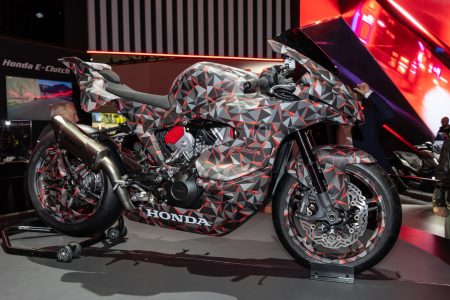
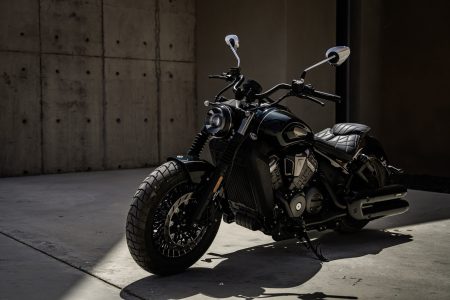
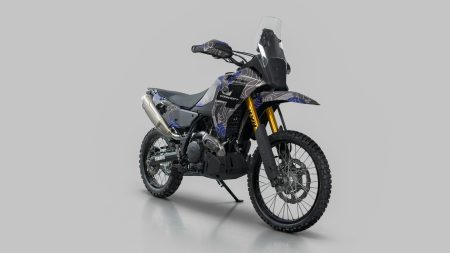
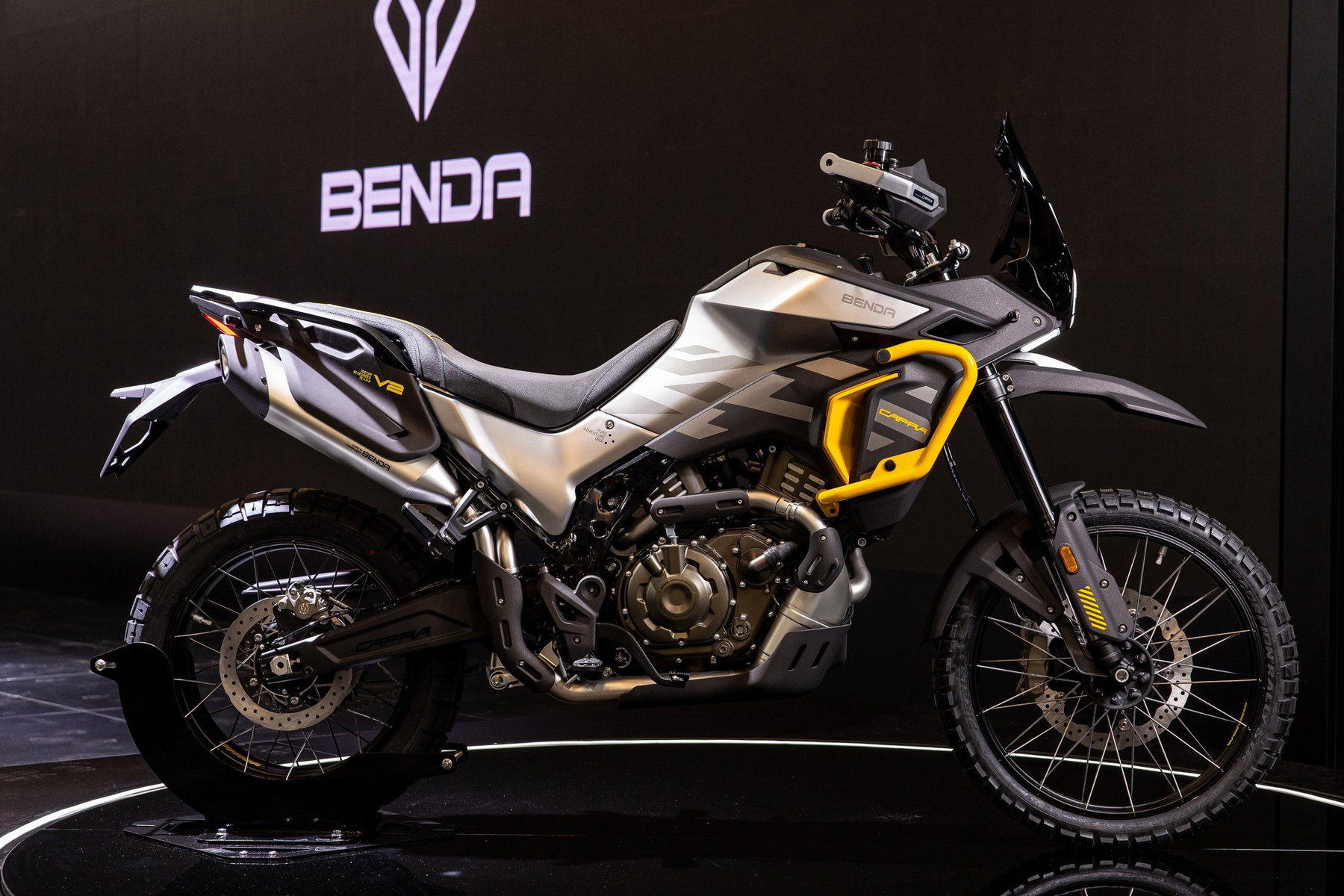
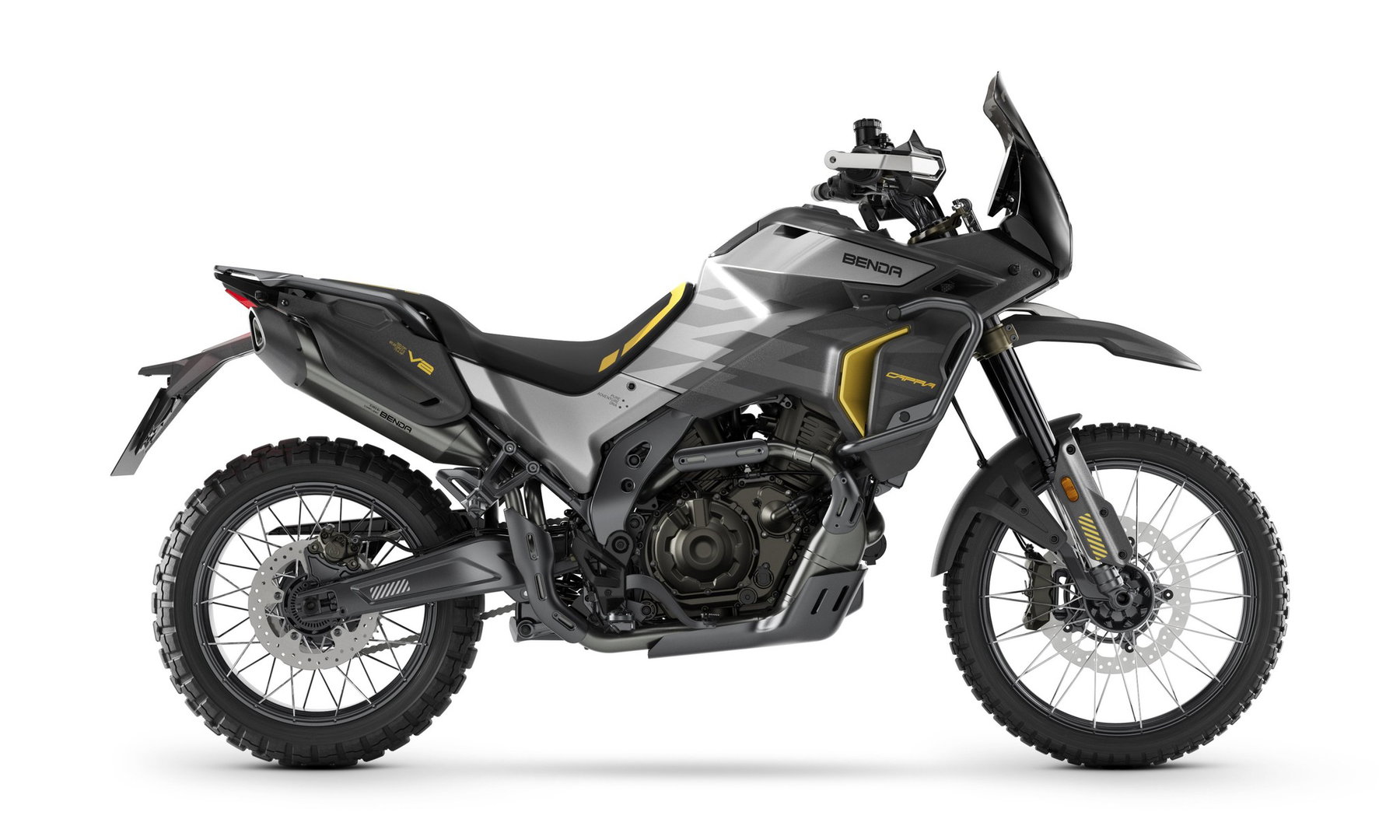
For a long time, the Benda name stood mainly for cruisers with wide rear tires and eye-catching design. At EICMA 2026 in Milan, however, the Chinese manufacturer also showed an adventure tourer and two roadsters. The Capra 700, Vinster 700 and Vinster X 700 were not drawn in China but in Salzburg. According to Benda, they are three models by European designers for European riders. Libo Liu, managing director and head of design at Benda Motor Europe, explained the strategy behind this in a detailed interview with the Italian magazine Dueruote.
Who is behind Benda Motor Europe in Salzburg?
Benda Motor Europe is the European subsidiary of the Chinese manufacturer and was founded in Salzburg in October 2024. It is headed by Libo Liu, who also runs the design studio there.
Liu knows both worlds. He studied industrial and transportation design in Braunschweig until 2012 and then completed a master’s degree at the Scuola Politecnica di Design in Milan. This was followed by stints as an interior designer at Audi and eight years as a senior designer at Kiska. At the end of 2022, he moved to Benda.
In his view, Salzburg was attractive not only because he had already lived there. Munich and Vienna are not far away, and the city already has several creative agencies and a number of manufacturers. From Salzburg, Benda manages sales in Germany, Austria and Switzerland as well as marketing for all of Europe. In Germany, Benda sells directly and also handles after-sales service. The team today numbers around 30 people, including field staff.
Benda brought in outside help right from the start. In October 2024, the manufacturer worked with Kiska to define how its market entry in Europe should proceed.
What role do former Kiska designers play at Benda?
Part of the Salzburg design team comes from Kiska, the agency where Liu himself worked for a long time. Since the end of 2024, several Kiska employees have moved to Benda after the agency’s revenue fell sharply in the wake of the KTM crisis.
Liu confirms this but stresses that, for him, design is one of the most important tasks of all when it comes to a motorcycle. That is why he wanted a strong international team open enough to work with Chinese companies. In his opinion, the old image of “Made in China” no longer fits, because today it means something different than it did ten years ago.
There is a lot of travel between Salzburg and China. Chinese colleagues come to Austria for design reviews, and the Salzburg designers accompany preparations for series production at the Chinese plants. The cruisers have so far been largely in Chinese hands and the new model lines largely in Salzburg’s hands. However, Liu explicitly does not want separate teams; both sides work on every model.
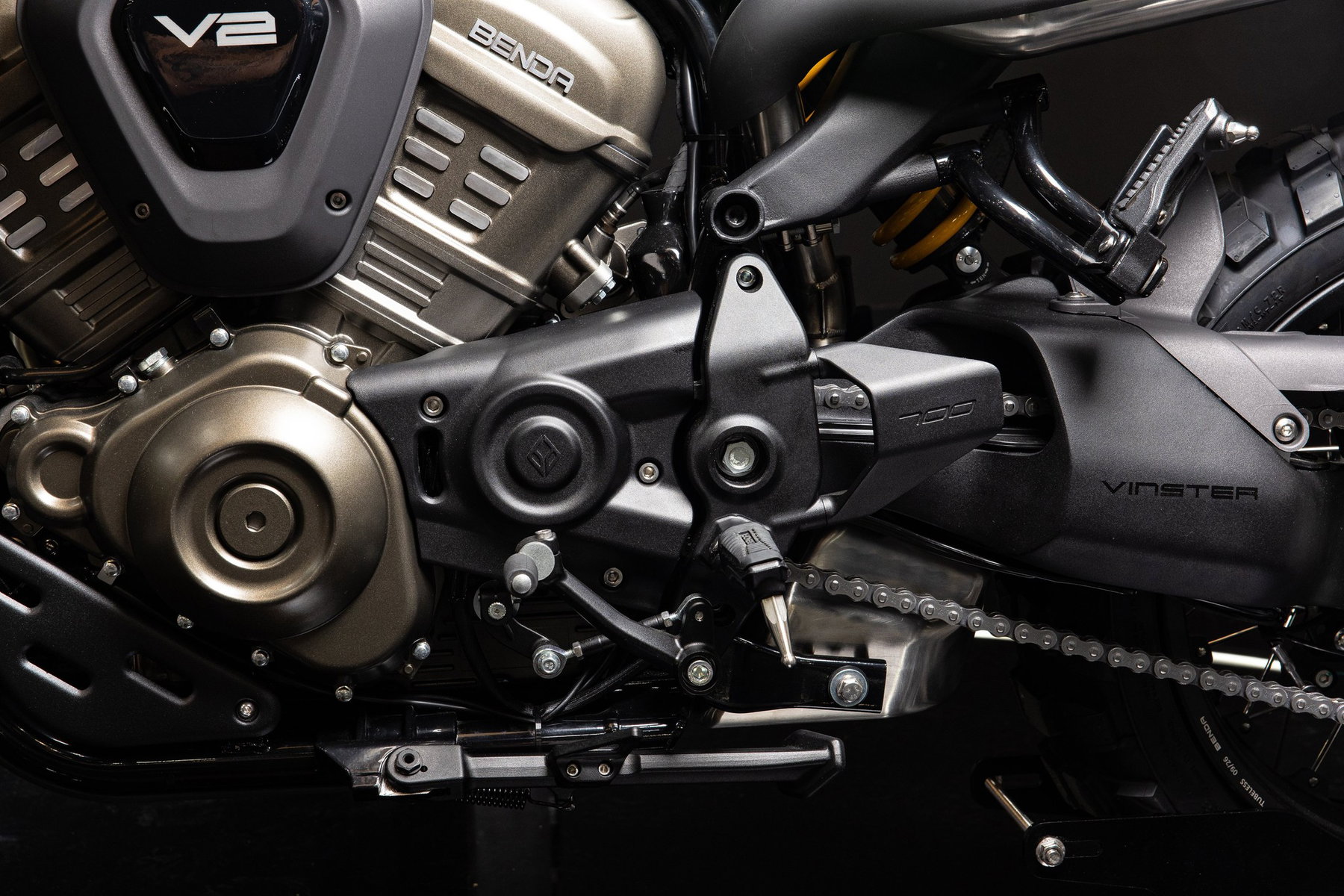
The Vinster 700 shows how strongly the Kiska school shines through. The clean surfaces and the aluminum single-sided swingarm are reminiscent of the agency’s work for Husqvarna. Liu himself speaks of the same design culture. The production version of the Vinster is meant to deviate as little as possible from the show bike.
Where does Benda come from and how big is the brand in China?
Benda has been building motorcycles under its own name since 2016. The company’s roots go back to 1994, when it made small scooter engines for export.
The 2016 reorganization brought its own cruisers and larger engines. The company boss is also a trained designer. According to Liu, Benda is now one of the five largest motorcycle brands in China and holds 33 percent of the cruiser market there. Mathematically, that would make every third cruiser sold in China a Benda.
The buyers differ considerably, however. In China, Benda customers are mostly between 20 and 30 years old, according to Liu. In Europe, the clientele is older, which he also explains by the fact that cruisers here traditionally appeal more to older riders. With models such as the Napoleonbob or the Rock 125, however, Benda also reaches younger people and women.
In future, Benda wants to build models more specifically for individual markets. In Liu’s words, the Capra and the two Vinster models are the first steps in this direction.
Why is Benda betting on a V-twin instead of a parallel twin?
Benda deliberately wants to stand out, because in Liu’s view almost all other manufacturers rely on parallel twins. Liu explained the decision to Dueruote as follows: “tutti fanno bicilindrici in linea con albero a 270°, che ormai annoiano” (in English: “Everyone builds parallel twins with a 270-degree crankshaft, and by now they are boring”).
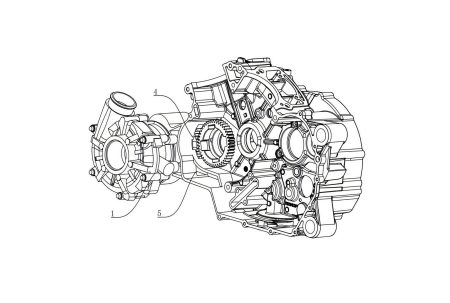
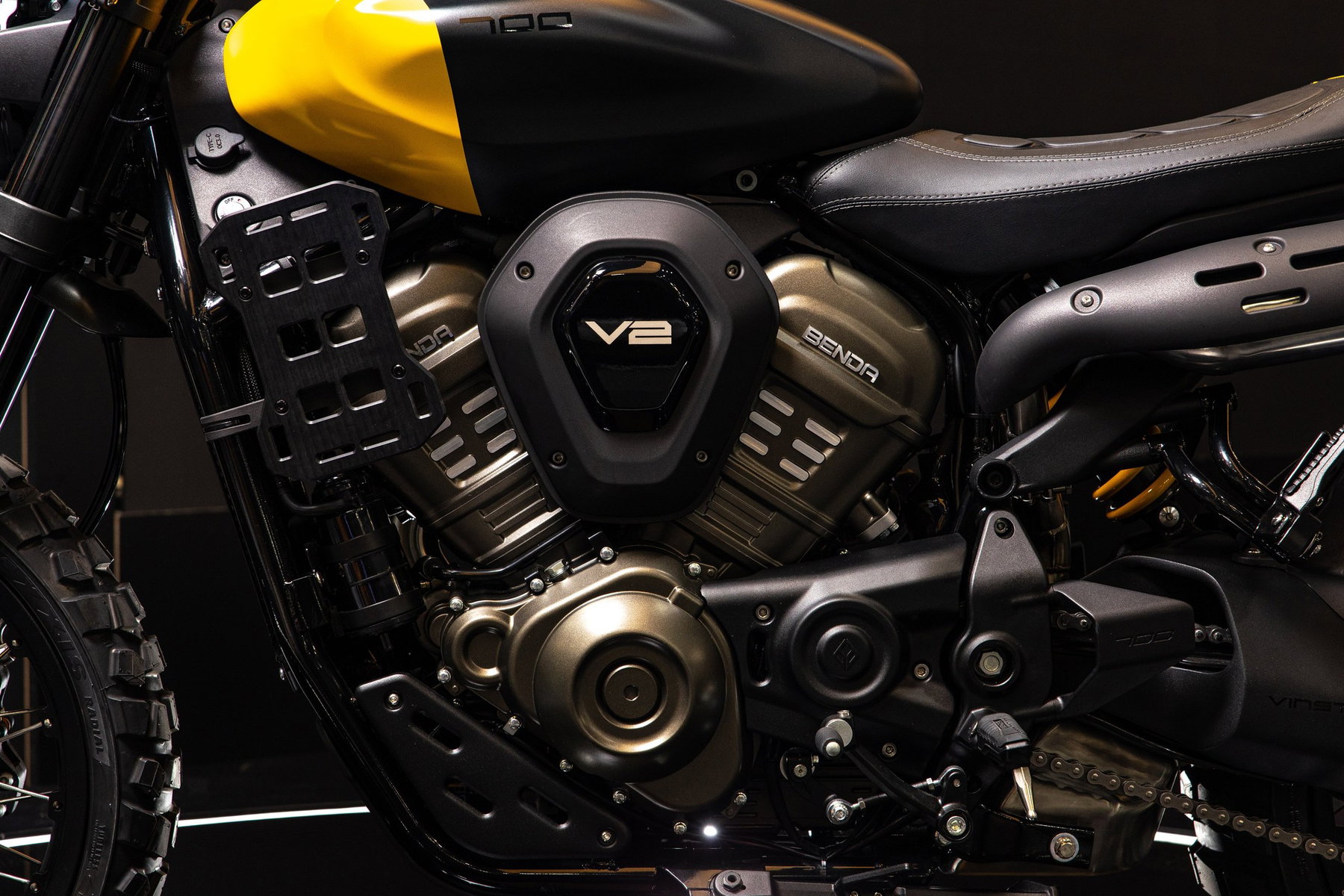
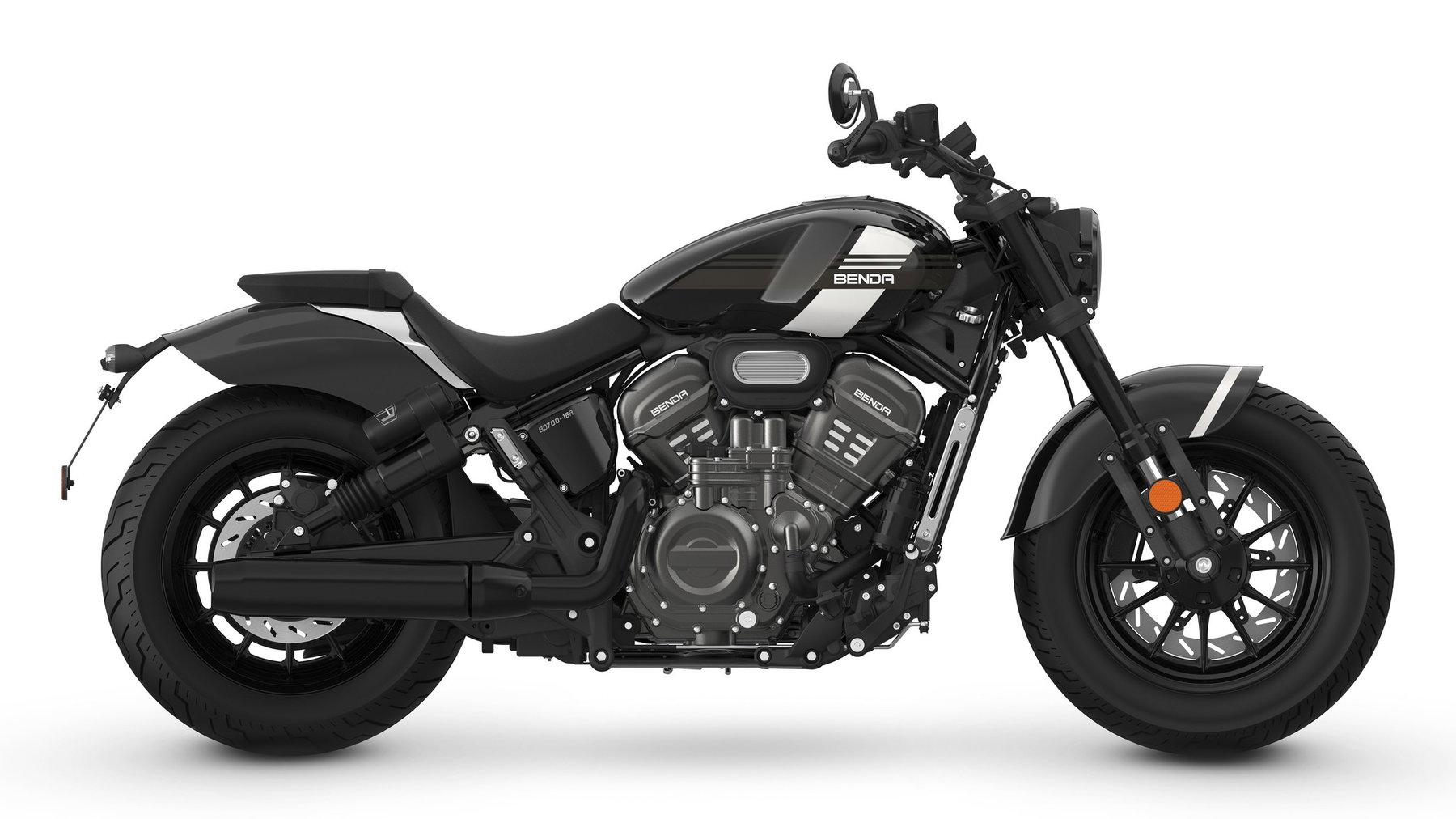
The narrow V-twin displaces 691.66cc, has a 65-degree cylinder angle and produces 73 hp at 9,000 rpm. Maximum torque is 68 Nm (around 50 lb-ft) at 6,500 rpm. The engine is already used in the Rock 707 EC cruiser and is the common basis for the Capra and the Vinster. One powertrain for three completely different vehicle classes, then. For Liu, one thing matters above all: emotion, he says, is today the most important reason to ride a motorcycle, and without it you will not win new customers.
Benda also sees itself as a technical pioneer. According to Liu, the brand was the first to bring air suspension to series production with the Dark Flag. With the LFC 700, Benda was the first to combine a die-cast aluminum frame, an inline four-cylinder engine and a 300-millimeter-wide rear tire. The individual components already existed, he says; the combination was new.
How many Benda motorcycles are registered in Germany?
From January to October 2026, 2,804 new Benda vehicles hit the road in Germany. The largest share are 125s; according to figures from the Industrie-Verband Motorrad (IVM), the German motorcycle industry association, 1,707 of them were light motorcycles.
This puts Benda in 6th place among 125s, with a market share of 6.0 percent in this class. The strongest month was August with 359 new light motorcycles. In the over-125cc motorcycle segment, there were 1,090 new registrations over the same period, corresponding to a share of 1.0 percent. Across the overall market, Benda reaches 1.5 percent.
Comparing the figures, a good one and a half times as many Benda 125s were registered as larger models. Entry into the brand starts with the Chinchilla 125 at 4,999 euros (around 5,525 US dollars) plus on-the-road costs. With the new models from Salzburg, Benda now wants to expand its range well beyond cruisers.
What is Benda researching in China and Salzburg?
Benda develops at both sites. In Austria, the manufacturer is expanding its development department, while in China a large team is working on projects that go far beyond the next one or two model years.
Liu describes the approach like this: anyone who does not pursue an idea themselves will sooner or later leave it to another manufacturer. The team is therefore supposed to think two steps further than usual and then bring the results back into the present. For Benda, the ordinary has no value.
The best-known example is the P51. It combines a 250cc boxer twin with an electric motor. The battery sits below the swingarm pivot, and Benda quotes 62 hp and 100 Nm (around 74 lb-ft). The P51 is now said to be undergoing testing in China as a pre-production prototype. Liu is convinced that this concept cannot be copied that easily.
For him, the biggest problem is not the idea itself but the path to series production at an affordable price. In his assessment, it helps that suppliers in China are more broadly positioned today than ever before. Solutions that would have been far too expensive five or ten years ago can now be implemented together with suppliers. Benda intends to use this to deliver a few more surprises in the coming years.
When will the Capra 700 and Vinster 700 come to Europe?
The Capra 700, Vinster 700 and Vinster X 700 are now entering the test phase, with series production planned for 2028. At EICMA 2026, Benda’s Salzburg marketing team also still spoke of prototypes that are being further developed technically and will come to Europe around 2028.
Until then, Benda offers the new V-twin in the Rock 707 EC. On the cruiser, the electronic clutch takes care of pulling away, shifting and stopping, though the rider can still operate the clutch by hand at any time. In Germany, the Rock 707 EC costs 9,999 euros (around 11,050 US dollars) plus on-the-road costs.
At the top of the range is the Dark Flag 950 with a 948cc V4 delivering 109 hp and 85 Nm (around 63 lb-ft). The first European markets will get it from the end of November 2026, and in Germany the price is 10,999 euros (around 12,155 US dollars). For 2027, Benda has also announced the Dark Flag 600 Ultra EC with electronic clutch for Europe, including an A2 version with 35 kW.
Frequently Asked Questions
-
What does Benda Europe do in Salzburg?
Benda Europe, officially Benda Motor Europe, manages sales in Germany, Austria and Switzerland as well as marketing for Europe from Salzburg. It is also home to an international design studio where the Capra 700 and the Vinster models were created. The subsidiary was founded in October 2024.
-
When will the Benda Capra 700 come to Europe?
The Benda Capra 700 is due to enter series production in 2028. Before that, the prototype will be tested and further developed technically. There is no price yet.
-
Who is Libo Liu?
Libo Liu is managing director and head of design at Benda Motor Europe. He studied design in Braunschweig and Milan, worked at Audi and spent eight years as a senior designer at Kiska. He joined Benda at the end of 2022.
-
What engine do the Capra 700 and Vinster 700 have?
Both use a 691.66cc V-twin with a 65-degree cylinder angle. It produces 73 hp at 9,000 rpm and 68 Nm at 6,500 rpm. The same engine is already used in the Rock 707 EC cruiser.