- 73 hp (54 kW) at 9,000 rpm and 68 Nm (around 50 lb-ft) at 6,500 rpm from 692 cc
- Seat height between 690 and 720 mm thanks to electronically controlled air suspension
- 9,999 euros in Germany, 11,199 euros in Austria, 10,990 francs in Switzerland
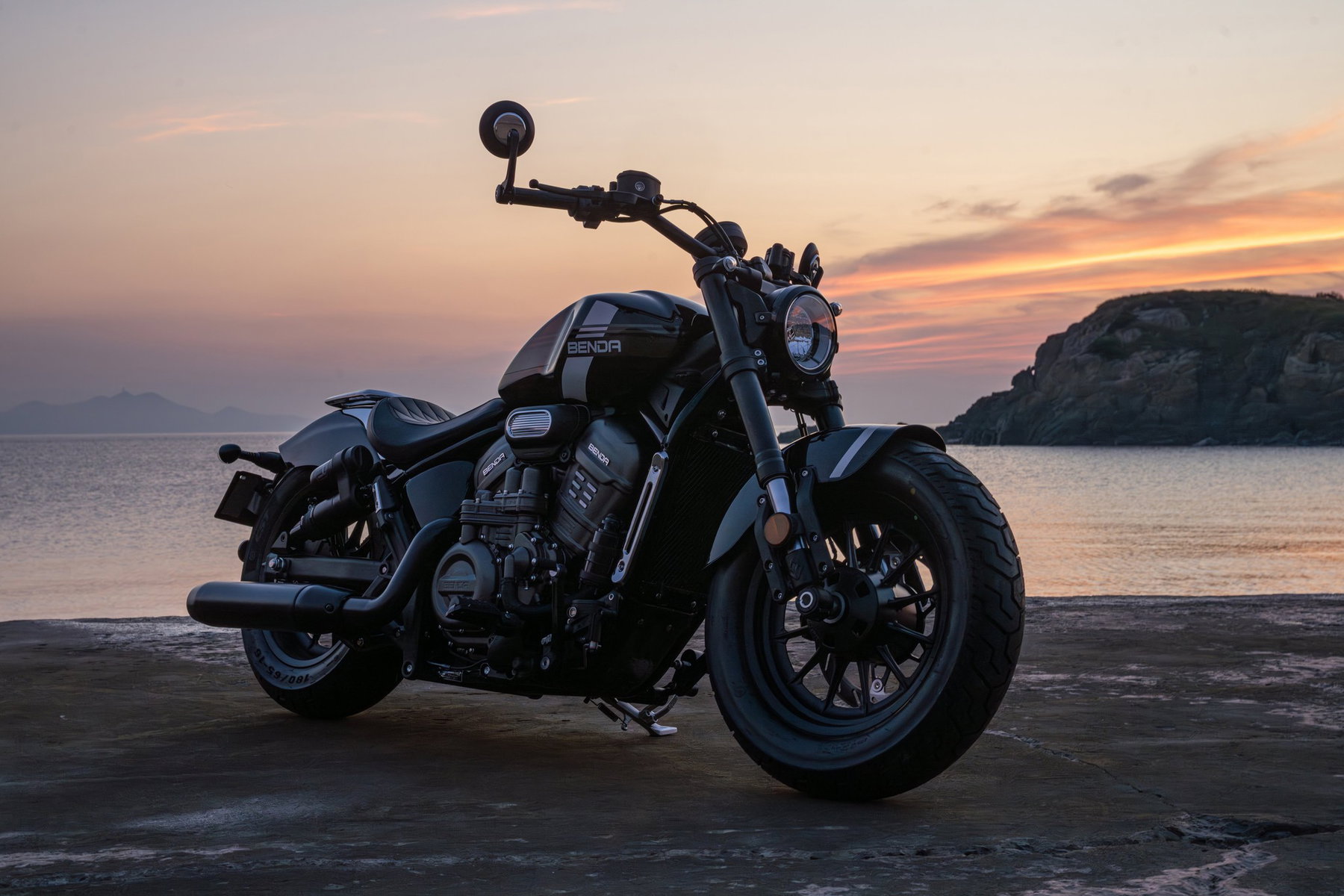
Cruisers normally live off tradition. Low seat, plenty of metal, little electronics. The Rock 707 sticks to the first part but breaks with the last: it arrives with air suspension that lowers the rear when you come to a stop, and with a clutch that operates itself on request. That makes it the most technically elaborate model the Chinese manufacturer has brought to Europe so far, and at the same time the newest member of the Rock range, which until now consisted of the Rock 125 and the Rock 300.
What can the Rock 707’s air suspension do?
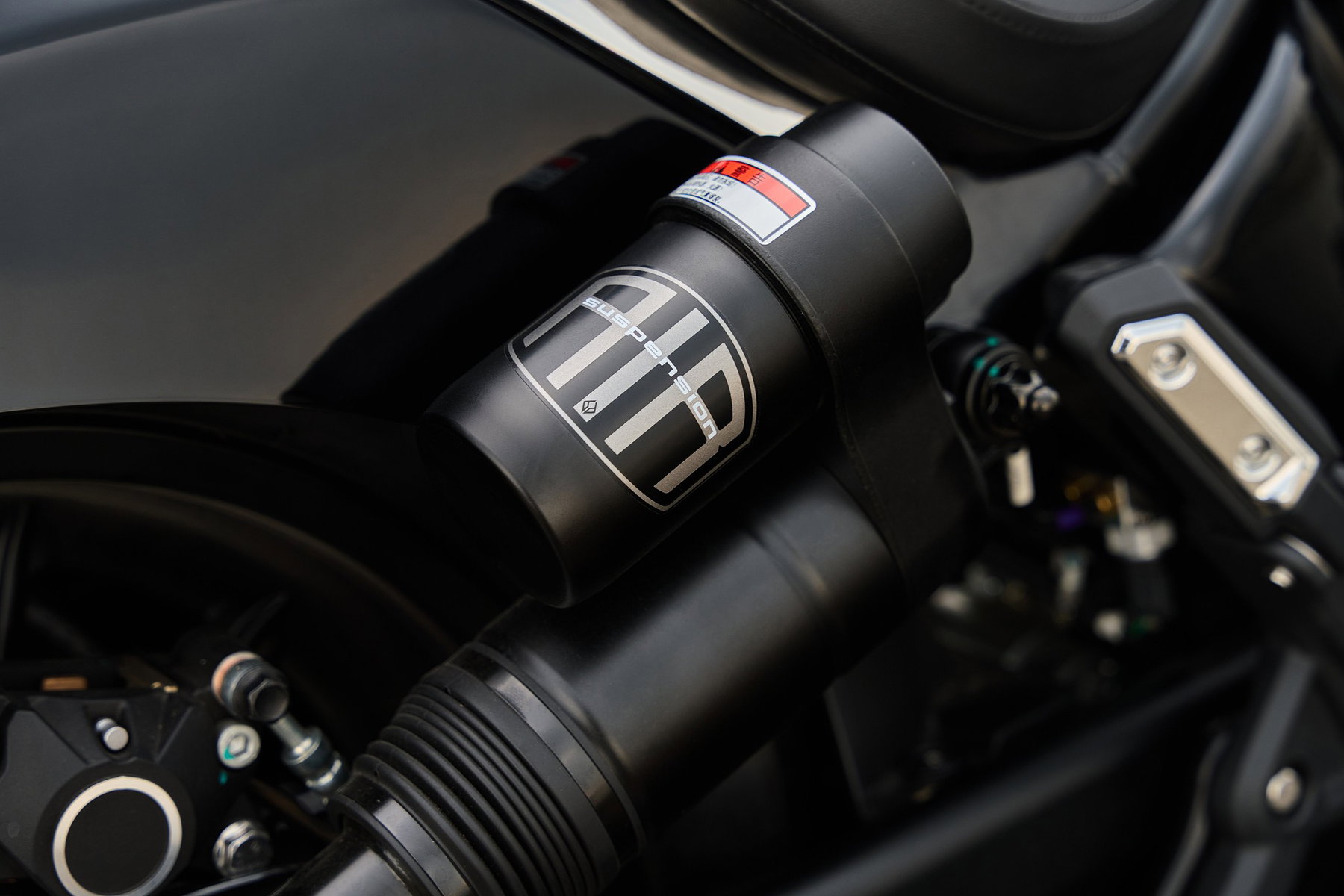
The Rock 707 has electronically controlled air suspension with two chambers at the rear, which adjusts the ride height automatically. The seat height changes by 30 millimetres in the process, from 720 to 690 millimetres.
In practice that means the bike drops to the lower position when you stop and rises back to normal riding height as you pull away. It helps when putting a foot down, at the fuel stop or when the road surface slopes to one side. Benda quotes a nominal seat height of 705 millimetres.
According to the manufacturer, the two air chambers respond not only to the weight of rider and pillion but also to the condition of the road. So the suspension is meant to adapt not just in height but also in firmness. Up front, by contrast, there is a conventional upside-down fork, that is, an inverted telescopic fork with the thicker tube at the top. Benda’s French site lists a 41-millimetre stanchion diameter for it. Travel is 130 millimetres at the front and 50 millimetres at the rear, with 135 millimetres of ground clearance.
How does the BEC MK-III electronic clutch work?
The BEC MK-III combines a mechanically actuated clutch with electronic control, so that pulling away, shifting and stopping are possible without the clutch lever. The lever remains in place and works without restriction at any time.
The system targets the situations in which a clutch is a nuisance: stop-and-go traffic, manoeuvring at walking pace, constant stopping in town. Anyone who prefers to work the clutch themselves can still do so. Benda states that two servo motors work redundantly, so the system has a fallback level should one motor fail. Technically, that puts the Rock 707 in the same league as the automated clutches that Japanese and European manufacturers have been offering for several years.
The equipment also includes a slipper clutch. It prevents the rear wheel from chattering under rapid downshifts because the engine braking torque comes in too abruptly.
Engine, chassis and brakes in detail
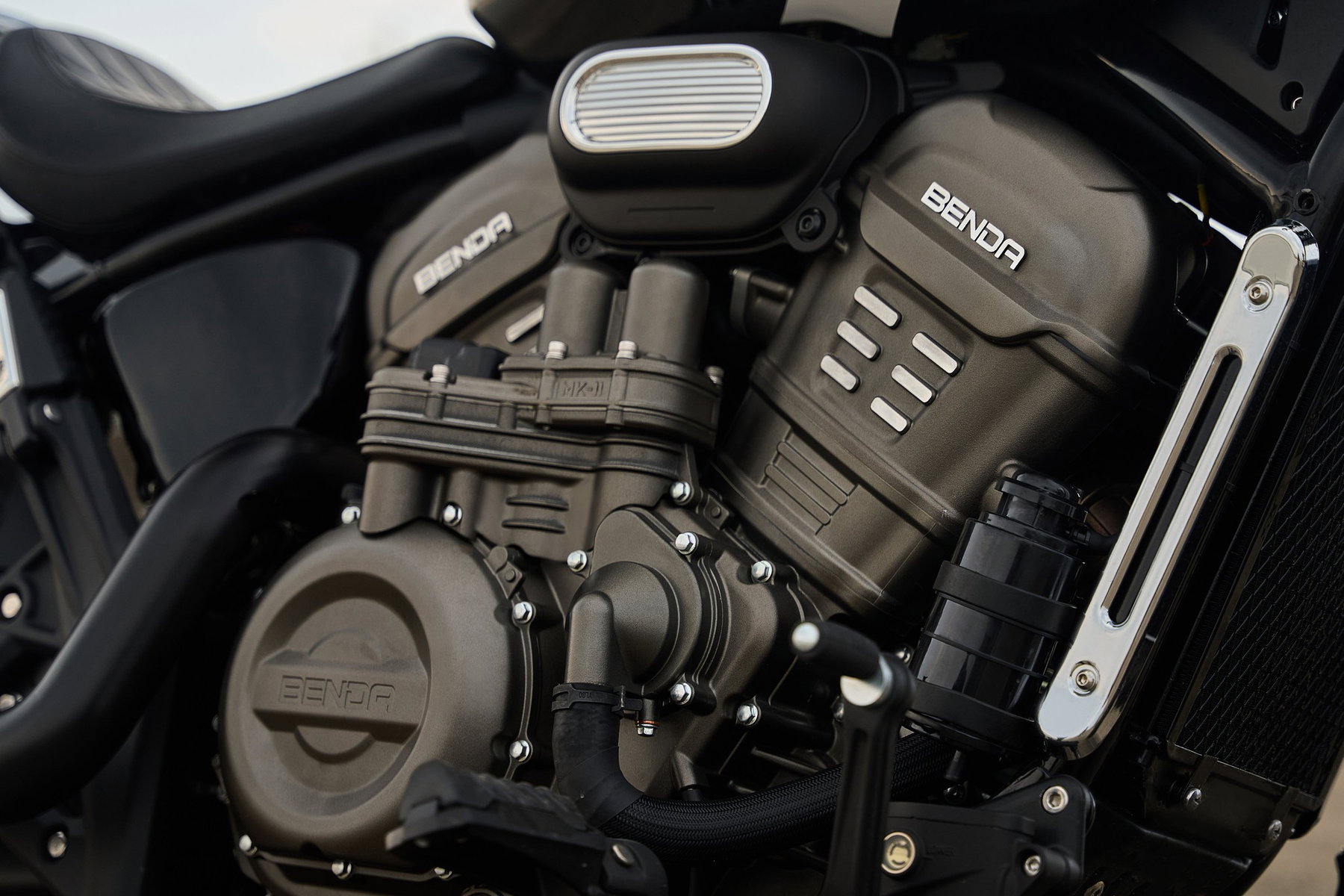
The 692 cc V-twin is an in-house Benda development. Bore and stroke are 80 by 68.8 millimetres, compression is 11.5:1, and eight valves are spread across the two cylinders. Peak output of 73 hp (54 kW) only arrives at 9,000 rpm, an unusually high engine speed for a cruiser. Maximum torque of 68 Nm (around 50 lb-ft) comes in at 6,500 rpm. A balancer shaft inside the engine is meant to damp vibration, and electronic throttle control to smooth throttle response.
Power goes to the rear wheel via a six-speed gearbox and a toothed belt. The belt runs more quietly than a chain and needs less maintenance. Benda quotes consumption of 5.3 litres per 100 kilometres; with a 16-litre tank that works out at a range of more than 250 kilometres. The manufacturer gives a top speed of 180 km/h. The engine meets Euro 5+, the CO2 figure is 125 g/km and the stationary noise level 105 dB(A).
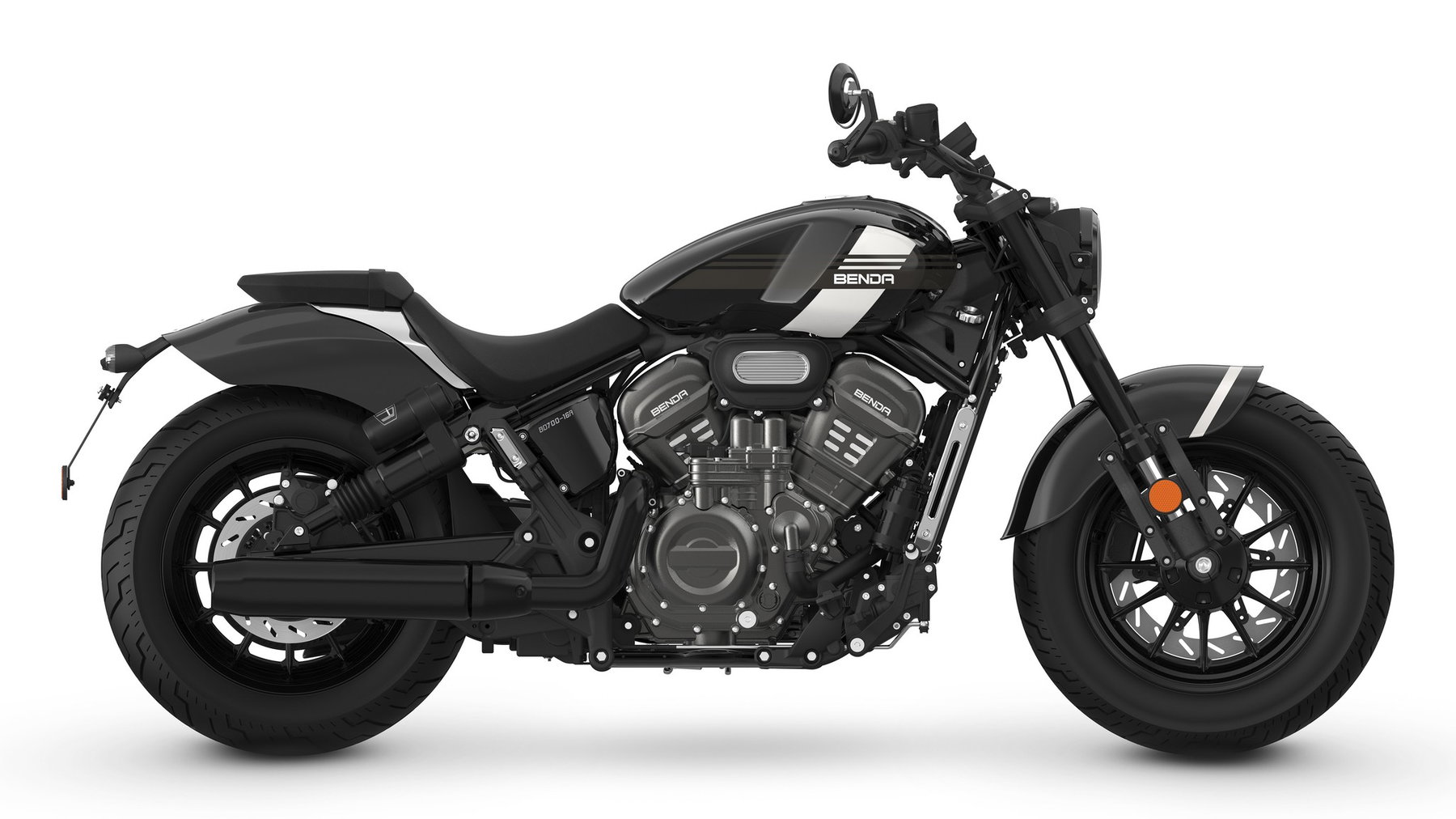
The frame is a tubular steel cradle frame, and the swingarm is aluminium. At the front sits a radially mounted four-piston caliper with 32-millimetre pistons on a single 320 mm disc, at the rear a two-piston caliper with 34-millimetre pistons on a 260 mm disc. ABS and traction control are standard. The wheels measure 16 inches, and the Rock 707 runs 150/80-16 at the front and 180/65-16 at the rear. At 2,285 millimetres long, with a 1,550-millimetre wheelbase and 235 kilograms (518 lbs) wet, it is a full-size machine. Instruments consist of a 3.6-inch TFT display with 800 nits of brightness, joined by cruise control and USB-A and USB-C charging ports.
What does the Benda Rock 707 cost in Germany, Austria and Switzerland?
In Germany the recommended retail price is 9,999 euros (around 11,550 US dollars), plus 350 euros (around 404 US dollars) in additional charges. In Austria the Rock 707 costs 11,199 euros (around 12,935 US dollars), in Switzerland 10,990 francs (around 11,653 euros / 13,460 US dollars).
The prices are not directly comparable. The Austrian figure already includes 20 percent VAT, the NoVA registration tax and additional charges, while the German one includes 19 percent VAT but not delivery. In Switzerland another 350 francs (around 371 euros / 429 US dollars) in additional charges are added on top. For Germany and Switzerland, Benda quotes a three-year warranty with the option to extend it to five years. In France, where a separate importer handles distribution, the Rock 707 is listed at 9,990 euros (around 11,539 US dollars), though with a two-year warranty.
For comparison within the range: the Rock 125 costs 4,999 euros (around 5,775 US dollars) in Germany, the Rock 300 sits at 5,599 euros (around 6,467 US dollars). The 707 therefore costs roughly twice as much as the range’s previous flagship.
When is the Rock 707 available?
From mid-September the Rock 707 will be at European Benda dealers. It gets a public show appearance on Tuesday, 3 November 2026, at EICMA in Milan, in hall 18 at stand A54.
There Benda will show the Rock 707 alongside further new models, according to the company. For the brand it is the next step in an expansion that has visibly gathered pace in recent months. European business is handled by BENDA Motor Europe GmbH, based in Salzburg, which looks after sales, after-sales, marketing and product development.
Where the figures for the Rock 707 diverge
With the Rock 707 it is worth taking a second look at the spec sheets, because the figures differ noticeably depending on the market and the source. That affects four points.
The first is the seat. The press release describes the Rock 707 as a two-seater as standard, with a luggage rack as an option in place of the pillion seat. The product pages for Germany and Austria, on the other hand, state explicitly that the pillion seat has to be ordered separately and is not included. The Swiss page puts it the other way round and describes the aluminium luggage rack as an accessory. Buyers should clarify this with their dealer.
The second point is the colours. In the German-language version Benda lists two paint finishes, Knight Black and Sandy Gray. The English version additionally lists Windy White and Armor Green, but points out that availability varies by market. So for German-speaking markets two colours are confirmed for now.
The third point is the designation of the clutch. The current release speaks of the third generation, BEC MK-III. Older documents and the French manufacturer site still refer to MK-II. Whether this is a revised version or merely a changed designation is unclear.
The fourth point is the weight. Current figures are 235 kilograms (518 lbs), the French site quotes 226 kilograms (498 lbs), and earlier values were 218 kilograms (481 lbs). The background is likely that the Rock 707 is offered in China in three equipment levels, while only the top version is planned for Europe. The valve count also varies between eight and sixteen, depending on which spec sheet you open.
Where does the Rock 707 fit into the Benda line-up?
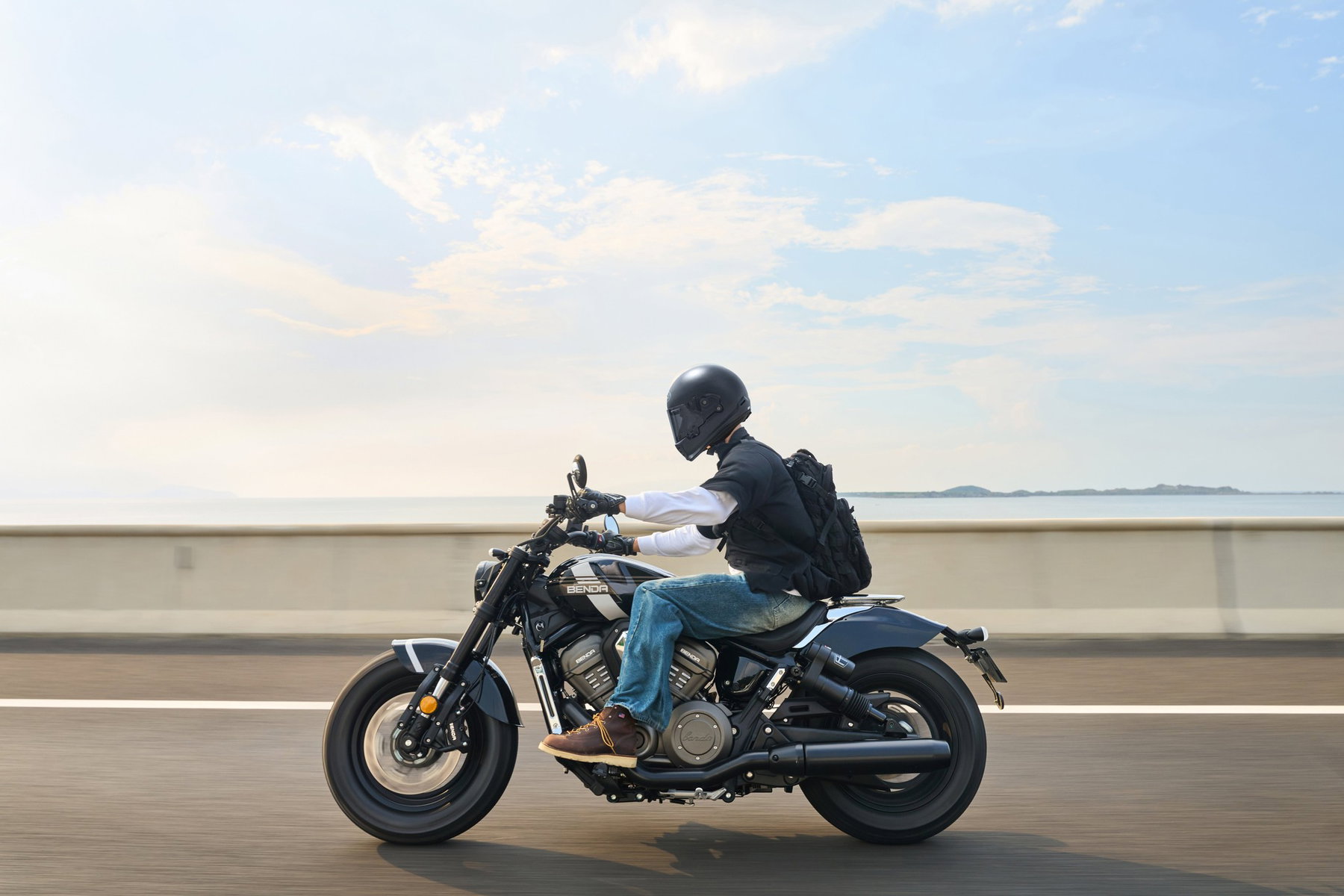
The Rock 707 is the brand’s technical flagship in the cruiser segment and sits between the small Rock range and the announced Dark Flag 950 with its V4 engine. It therefore marks the jump from the entry class into the middleweight class.
Benda has been systematically expanding its line-up for some time, from the Rock 250 CVT with its continuously variable automatic transmission through to the larger models. The ambition the company formulates sounds correspondingly self-assured. Marketing director Constantin Heinemann says that, from the manufacturer’s point of view, the Rock 707 shows where the cruiser could develop. It has the character, proportions and V-twin engine of a classic cruiser, he says, but brings technology with it “that changes the riding experience in a way motorcyclists do not expect”.
Whether that works out will be decided less by the spec sheet than by the dealer network, spare parts supply and resale value. Among this model year’s new arrivals, however, the Rock 707 is one of the few motorcycles trying something technically new in the cruiser segment instead of simply repainting a familiar recipe.
Frequently asked questions
-
What does the Benda Rock 707 cost?
In Germany the recommended retail price is 9,999 euros (around 11,550 US dollars) plus 350 euros in additional charges. In Austria it is 11,199 euros including VAT, NoVA registration tax and additional charges, and in Switzerland 10,990 francs (around 11,653 euros / 13,460 US dollars) plus 350 francs in additional charges.
-
How high is the seat of the Benda Rock 707?
The seat height can be adjusted via the air suspension between 690 and 720 millimetres; Benda quotes a nominal 705 millimetres. The motorcycle lowers itself automatically when stopping and returns to normal level while riding.
-
How much power does the Benda Rock 707 have?
The 692 cc V-twin produces 73 hp (54 kW) at 9,000 rpm and delivers 68 Nm (around 50 lb-ft) at 6,500 rpm. Power goes to the rear wheel via a six-speed gearbox and a toothed belt.
-
When does the Benda Rock 707 reach dealers?
The Rock 707 is available at European Benda dealers from mid-September 2026. It will be shown at EICMA in Milan on 3 November 2026 in hall 18 at stand A54.