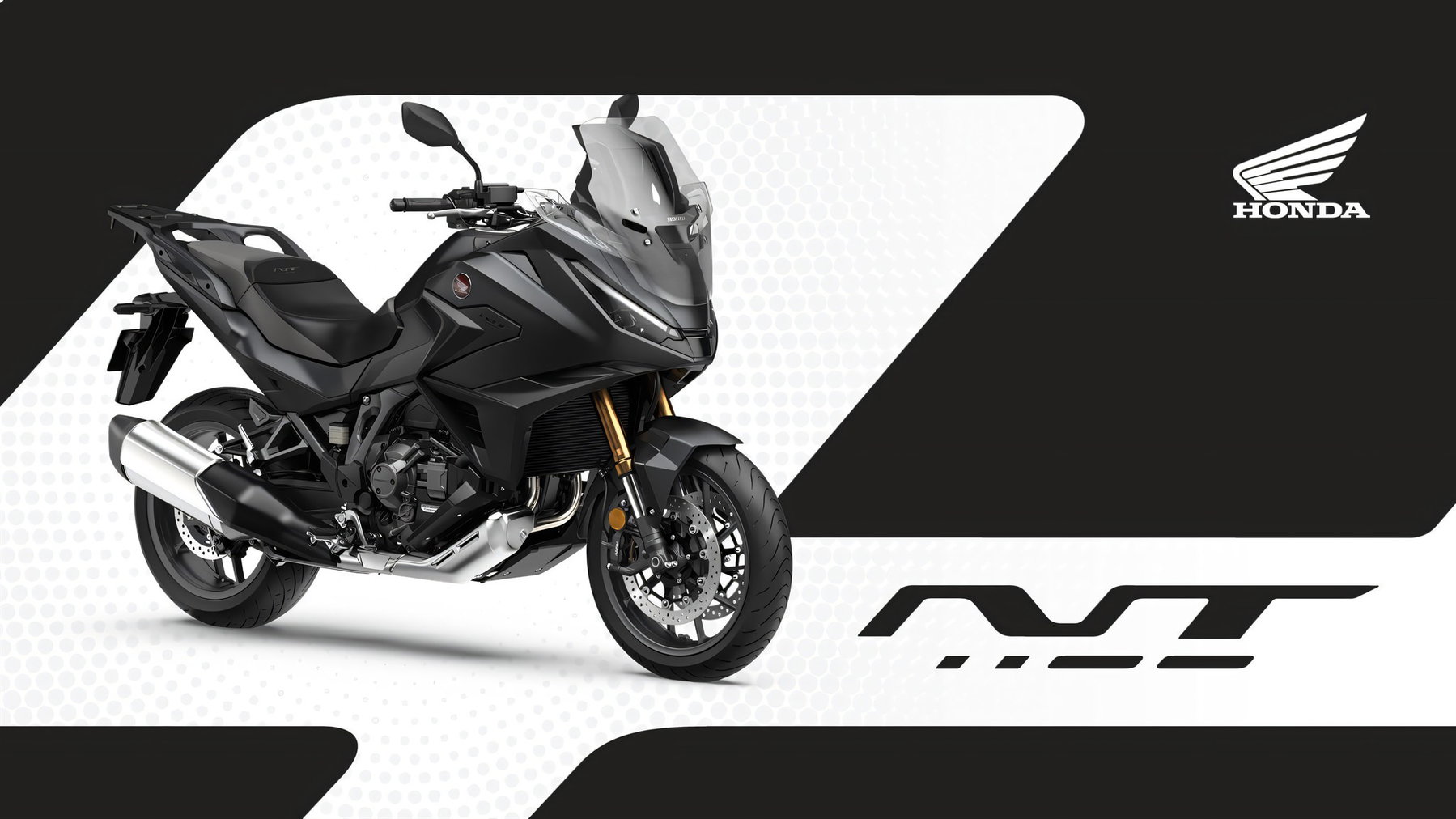
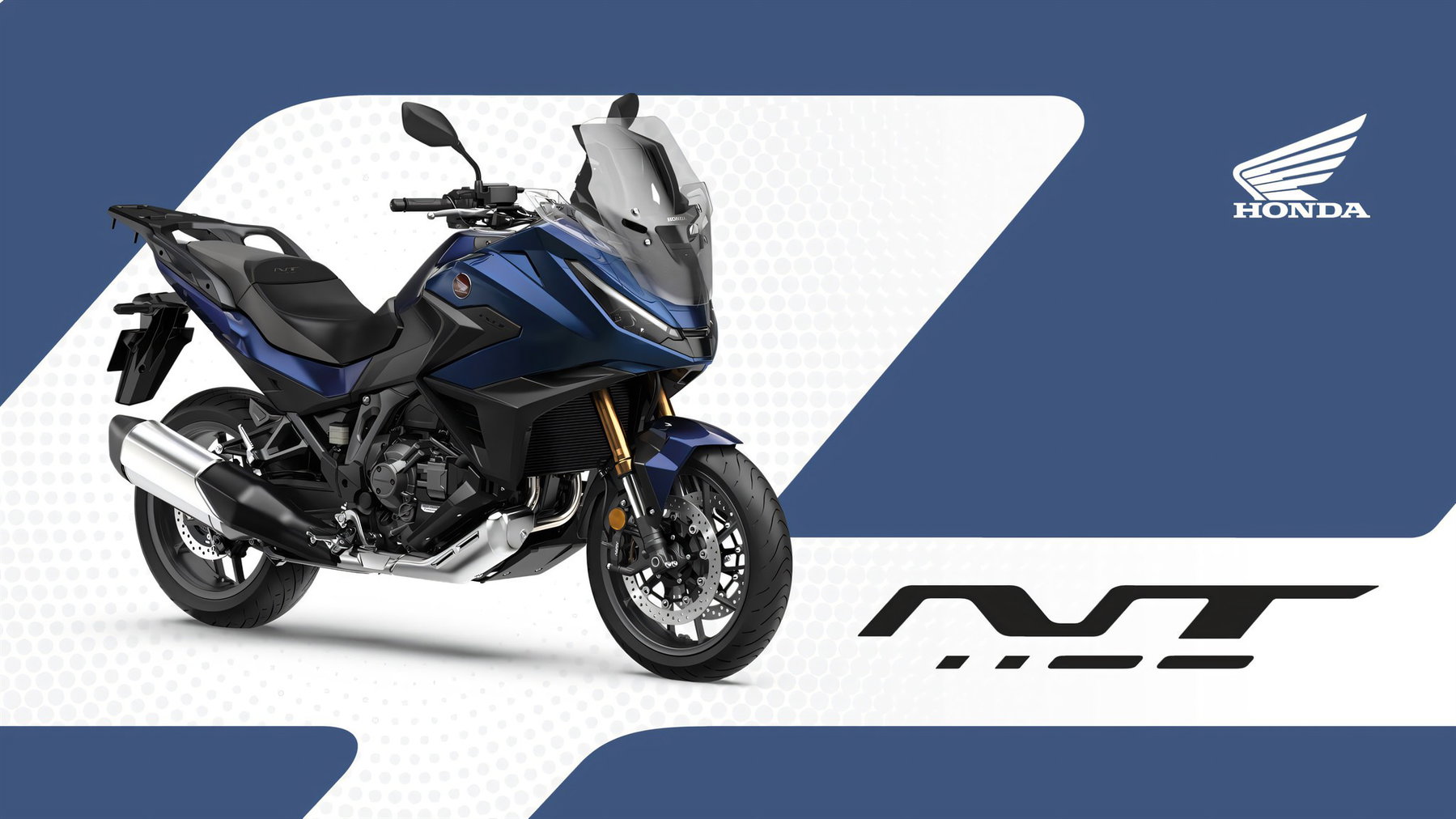
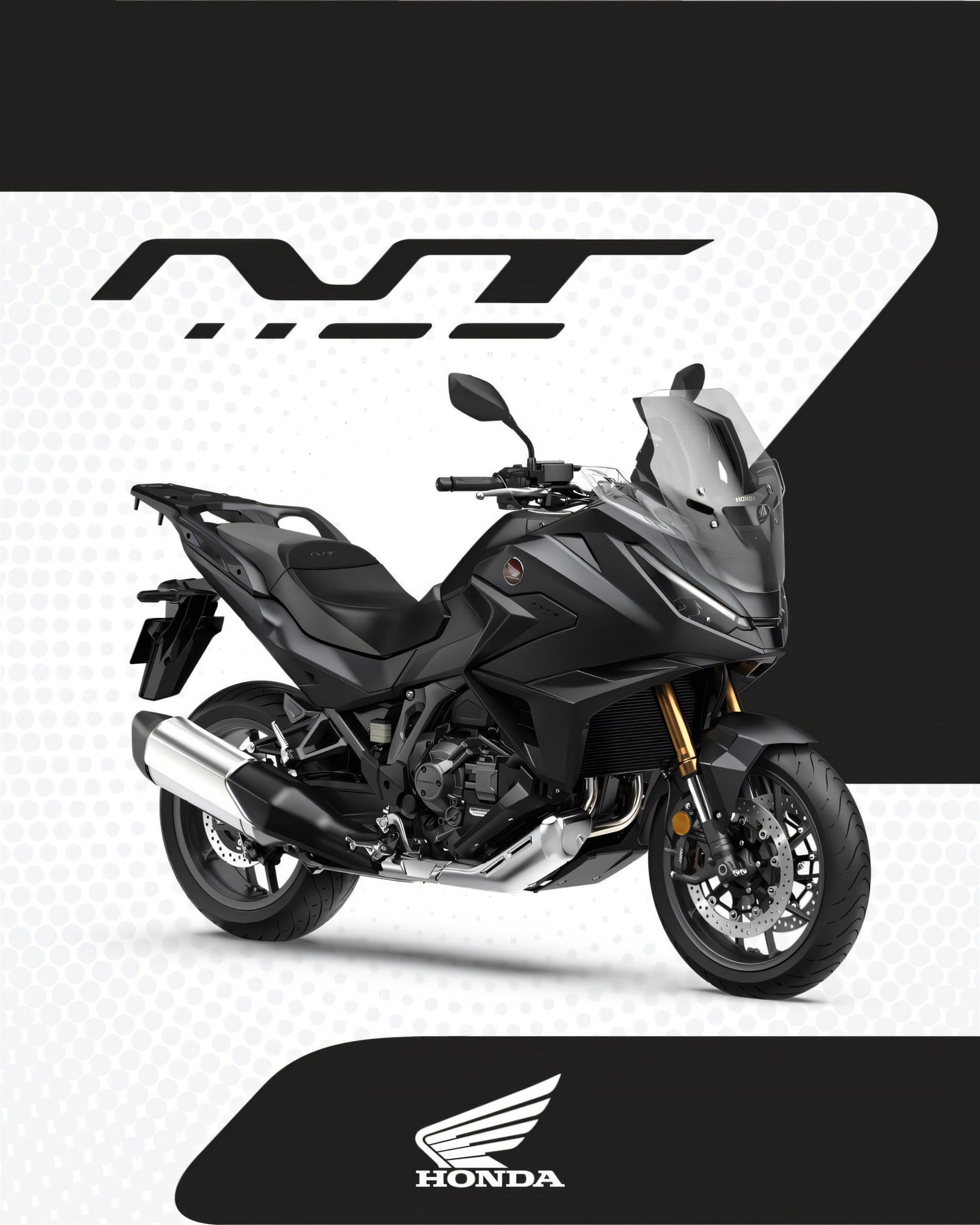
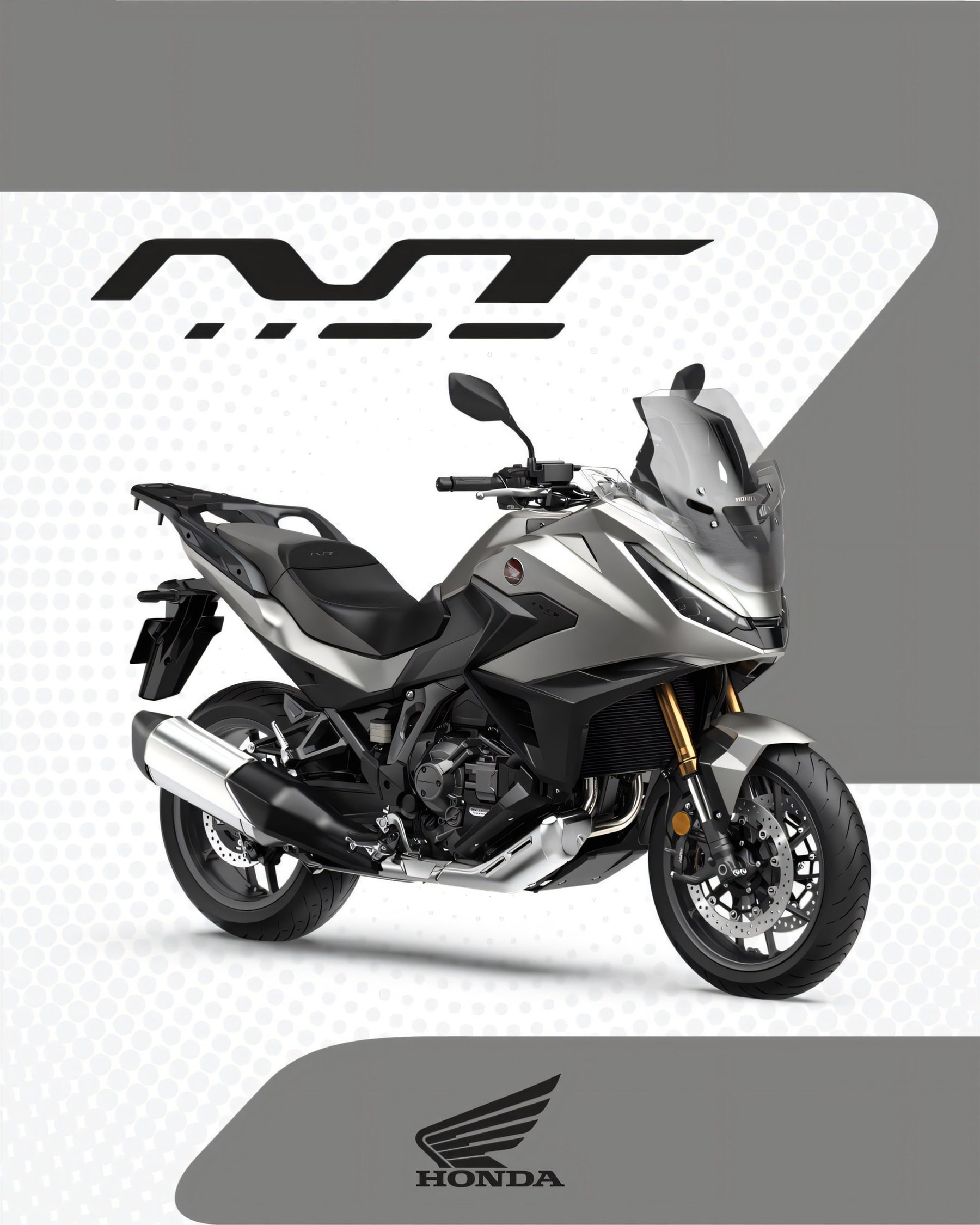
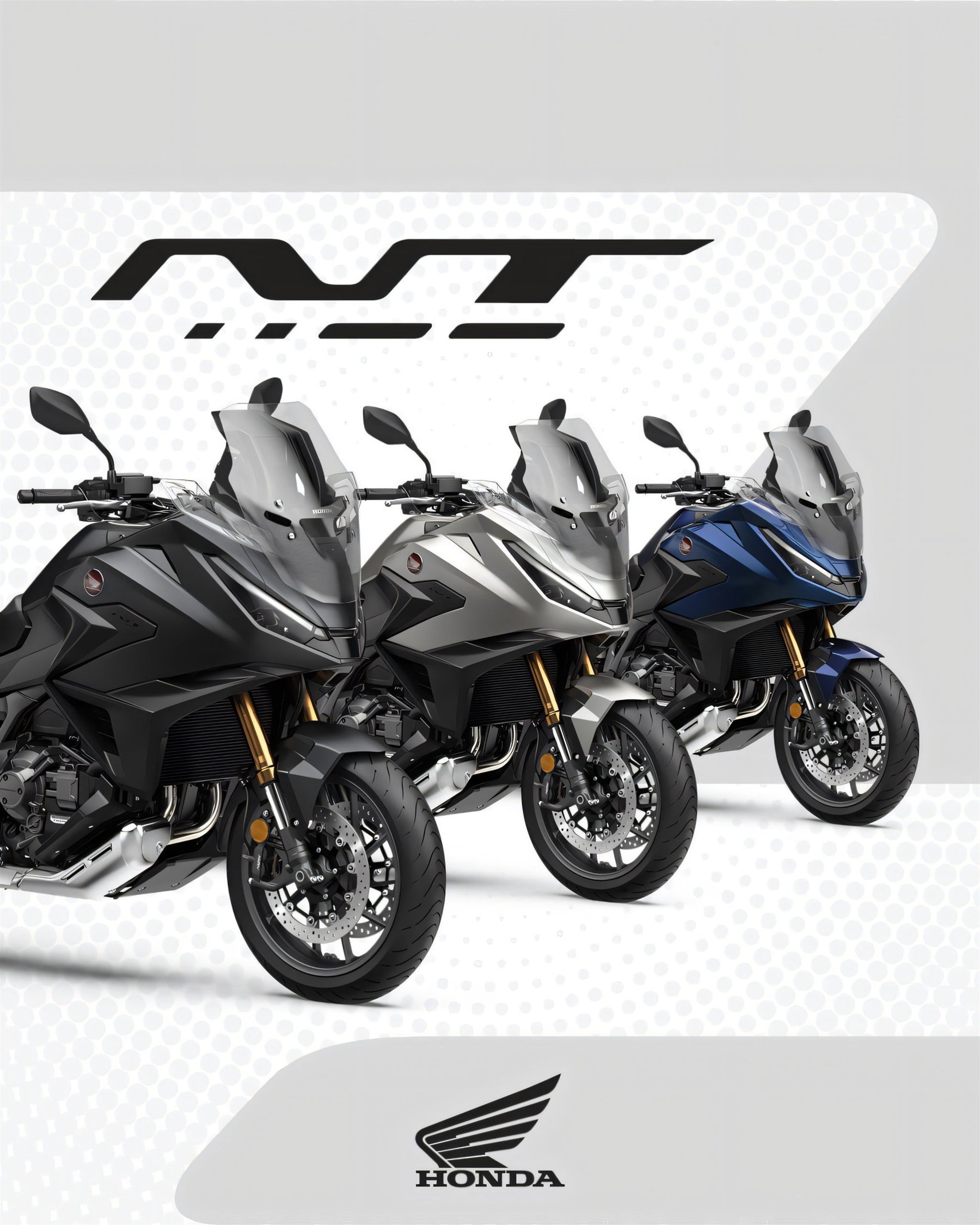
- Two new colours: Mat Ballistic Black Metallic and Mat Beta Silver Metallic
- Engine unchanged with 102 hp (75 kW) and 112 Nm (around 83 lb-ft)
- Honda reports more than 25,000 units sold and a 48 percent market share among tourers in Europe
The NT1100 rarely steals the spotlight, yet it has been selling well for years. According to Honda, it has led the European sales charts in the tourer class since 2023. For the 2027 model year, the Honda NT1100 2027 receives two new colours. That applies to the base version and equally to the NT1100 DCT Electronic Suspension with its electronically controlled suspension. Underneath the bodywork, everything stays as it was. Engine, electronics, equipment and chassis match the model Honda comprehensively overhauled for the 2025 model year.
What is new on the Honda NT1100 2027?
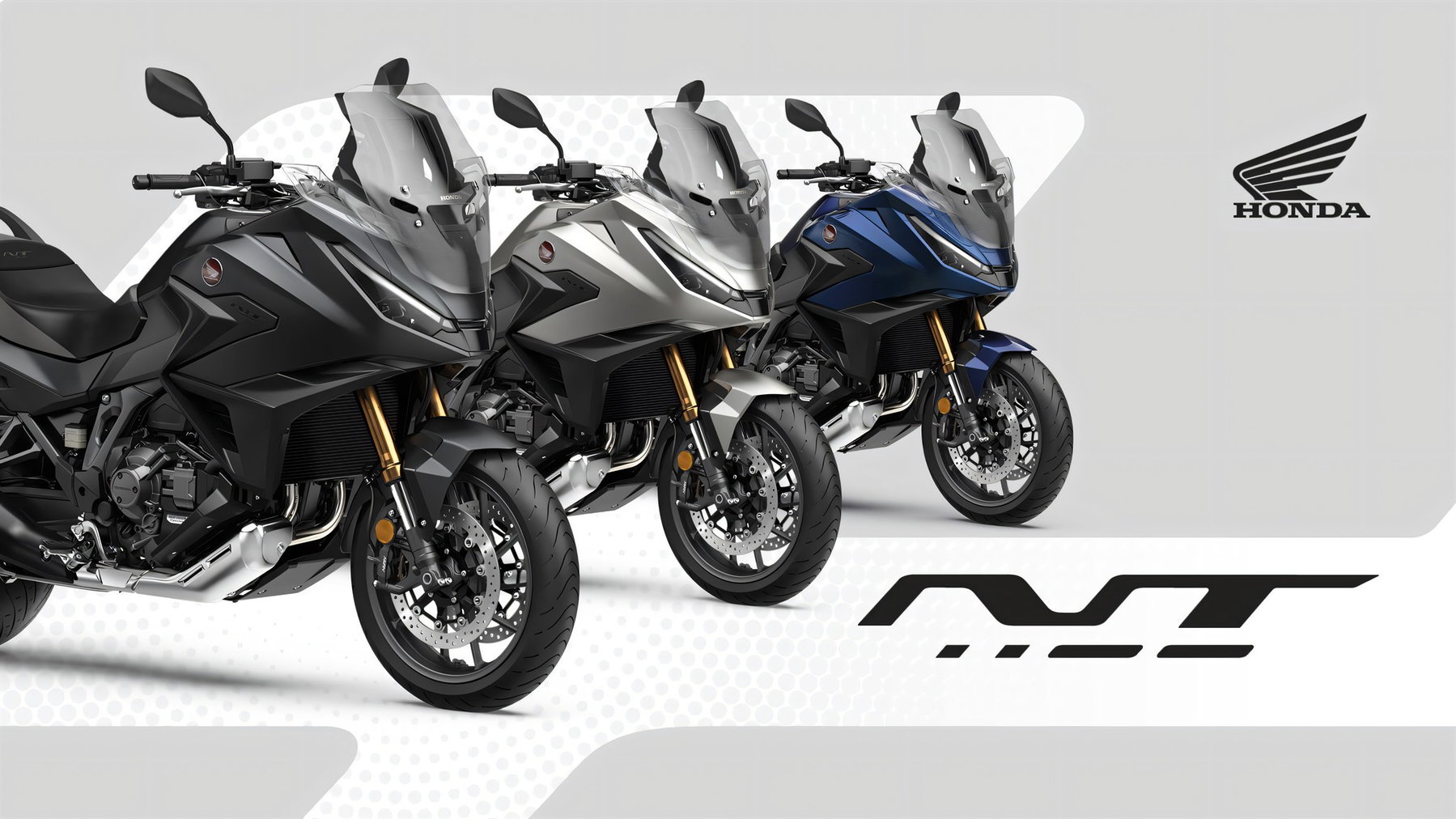
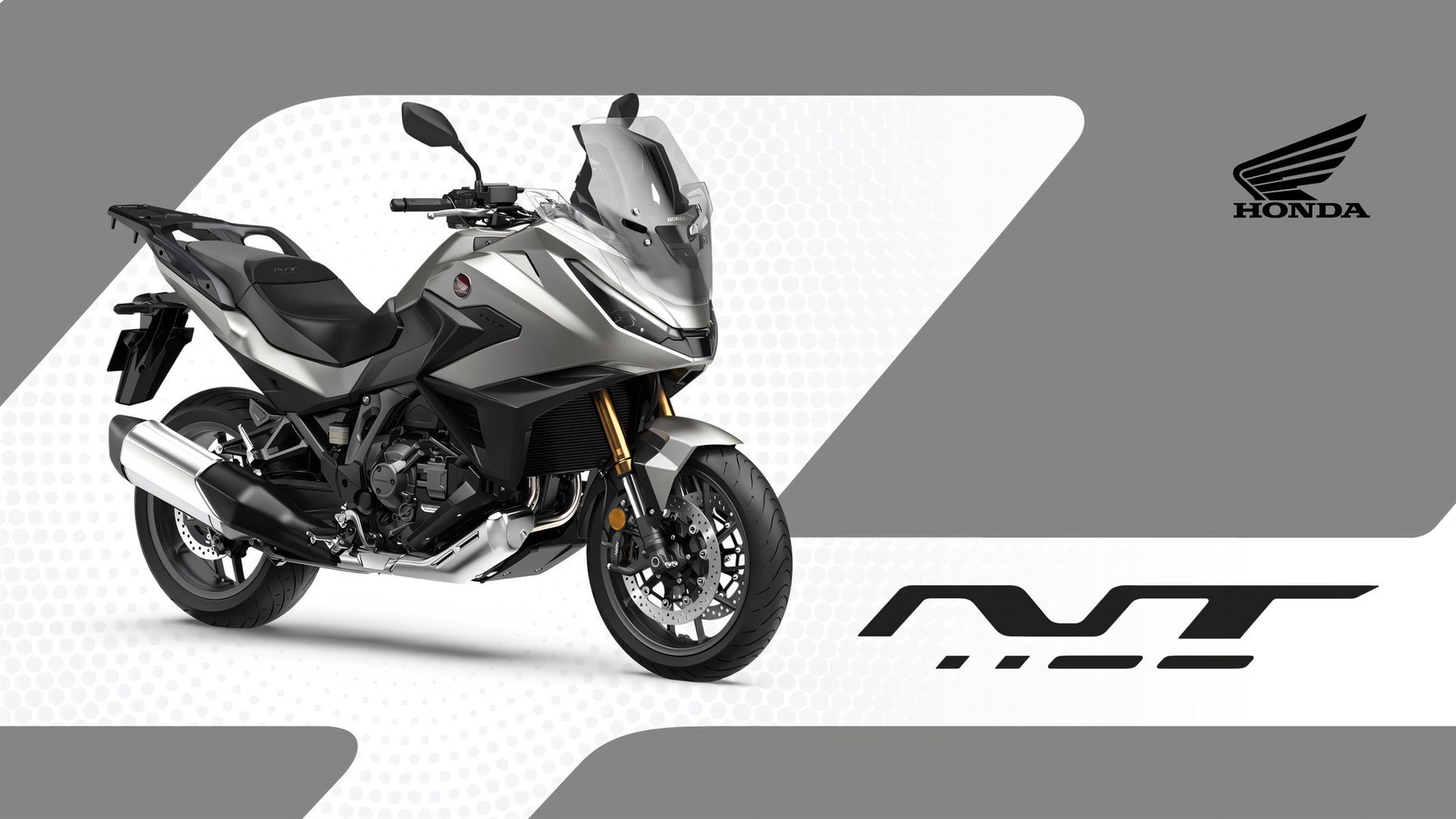
The only new items are the colours. For 2027, Honda offers the NT1100 in Mat Ballistic Black Metallic and Mat Beta Silver Metallic, while the familiar Pearl Hawkseye Blue remains in the range.
According to Honda, all three colours are available for the standard version and for the variant with electronic suspension. The two new shades are matte metallic paint finishes, one dark and one light. Honda has not announced any technical changes for the new model year. Among the motorcycle debuts for 2027, the NT1100 is therefore one of the models where the update is limited to the styling. For the 2026 model year, too, Honda had only changed the colour range.
How successful is the NT1100 in Europe?
According to Honda, the NT1100 has been the best-selling tourer in Europe every year since 2023. More than 25,000 units are said to have gone to customers so far, and for 2026 the manufacturer quotes a 48 percent market share in this class.
Honda launched the NT1100 for the 2022 model year. The thinking behind it: many riders want performance, long-distance comfort and modern technology, but not a large adventure bike with the matching looks and seat height. The NT1100 is therefore a pure road tourer. The frame and the parallel twin come from the CRF1100L Africa Twin and serve as the technical basis. As standard, the NT brings side cases, heated grips, cruise control and a centre stand, among other things. Honda says it is equally suited to the daily commute and to a fully loaded holiday trip.
What did the major 2025 update bring?
For the 2025 model year, Honda renewed the NT1100 in almost every area. The engine gained more torque in the lower and mid rev range, the electronics gained lean-angle-dependent rider aids, and the fairing was redrawn.
The front fairing has had sharper edges since then. According to Honda, it is partly made from Durabio, a plastic the manufacturer describes as biodegradable. The two LED headlights are projector units and feature a daytime running light with integrated indicators. Upper and lower wind deflectors were reshaped so that they protect the arms and lower body better from wind and weather.
Since 2025, the windscreen can be adjusted with one hand while seated. It has five positions and a range of adjustment of 167 millimetres. Honda says it made this change at the request of NT1100 owners. The front mudguard was extended 150 millimetres at the rear to keep more spray away.
There were changes on the comfort side as well. The seating area at the rear of the rider’s seat grew by 20 percent, while seat height stayed at 820 millimetres. The standard cases have lids that are 25 millimetres deeper and therefore hold 4 litres more each. The left case now takes 37 litres, the right one 36 litres, and each case holds a full-face helmet. The new cases also fit the 2022 model year NT1100. A lithium-ion battery saves a further 2.5 kilograms compared with the first model.
How much power does the Honda NT1100 have?
The Honda NT1100 produces 102 hp (75 kW) at 7,500 rpm. Maximum torque is 112 Nm (around 83 lb-ft) at 5,500 rpm.
Before the 2025 update, the figure was 105 Nm (around 77 lb-ft), and only at 6,250 rpm. According to Honda, torque in the low and mid range was raised by 7 percent without reducing peak power. The changes follow the overhaul of the Africa Twin engine from the 2024 model year.
The liquid-cooled parallel twin displaces 1,084 cubic centimetres, has eight valves and Honda’s Unicam valve train with a single overhead camshaft. The crankshaft has a 270-degree crankpin offset, which produces the uneven firing interval and the characteristic sound. Honda changed several parts for more pulling power. The intake ducts on the airbox grew from 25 to 33 millimetres in diameter, and the intake funnels were lengthened by 65 millimetres. The crankshaft and conrods are new, and the pistons are 0.4 millimetres longer. Compression rose to 10.5 to 1 as a result. An additional lambda sensor behind the catalytic converter provides more precise emissions figures to Euro 5+.
The ride-by-wire throttle was calibrated for a smoother response. On the manual gearbox, an assist and slipper clutch helps out. It makes the clutch lever lighter and prevents the rear wheel from chattering under rapid downshifts. Honda quotes a top speed of 200 km/h. Fuel consumption is 5.0 litres per 100 kilometres on the WMTC cycle. With the 20.4 litre tank, up to 400 kilometres of range should be possible.
Which rider aids does the NT1100 have?
The NT1100 has a six-axis measurement unit (IMU) that constantly measures the motorcycle’s lean angle, pitch and yaw. This data is used by the traction control with wheelie control, the cornering ABS and the rear wheel lift detection.
Honda calls its traction control HSTC. It has three levels and can also be switched off completely. The cornering ABS regulates brake pressure depending on lean angle, deceleration and slip at the front and rear wheel. If the rear wheel lifts under heavy braking, the system intervenes as well.
Three riding modes are permanently stored. Urban is the basic setting with medium power and medium engine braking. Rain reduces power and engine braking for wet roads. Tour releases full power and is intended for riding with a pillion and luggage. On top of that come two user modes in which power, engine braking and traction control can be combined freely.
All of this is operated via a 6.5-inch TFT touchscreen. It supports Apple CarPlay and Android Auto and offers three display layouts. Standard equipment also includes cruise control, heated grips, a 12-volt socket, a USB port, self-cancelling indicators and an emergency stop signal that makes the indicators flash automatically under emergency braking.
How does the NT1100’s DCT gearbox work?
The DCT is a dual-clutch transmission with six gears that can shift automatically or be operated by buttons on the left-hand end of the handlebar. The clutch lever and gear lever are dropped.
One clutch handles pulling away as well as gears 1, 3 and 5, the other looks after gears 2, 4 and 6. This lets the gearbox change gears with almost no interruption in drive. In automatic mode there is D for relaxed, economical riding and S with three sportier shift programmes. In manual mode the rider shifts via the paddles.
For the 2025 update, Honda improved the DCT. Pulling away and manoeuvring below 10 km/h, for instance when turning around, are said to work more sensitively since then. The gearbox is also linked to the IMU. If it detects that the bike is cornering, it holds the gear longer under braking instead of downshifting early.
The DCT has many fans on the NT1100. According to Honda, 66 percent of buyers choose this option. Across Europe, the manufacturer has sold more than 300,000 motorcycles with DCT since 2010, when the system debuted in the VFR1200F.
What does the NT1100 DCT Electronic Suspension offer?
The NT1100 DCT Electronic Suspension is the top version and combines the DCT with a semi-active Showa suspension. That means the damping adapts automatically to speed, riding situation and road surface while the bike is moving.
The system is called Showa EERA and is already known from the Africa Twin Adventure Sports. Honda developed its own settings for the NT1100. The control unit receives data from three sources: speed from the engine control unit, the motorcycle’s attitude from the IMU and the movement of the fork from a travel sensor. According to Honda, it adjusts the damping within 15 milliseconds. Under hard braking, the suspension is also said to dive less.
The suspension setting is linked to the riding modes. Urban corresponds to the standard suspension. Tour works with the firmest damping for high speeds and two-up riding with luggage. Rain damps more softly and calmly for wet roads. In user mode, damping and preload can be selected individually. Rear spring preload can be adjusted across 24 steps, and even while riding.
NT1100 chassis, brakes and weight at a glance
The base version and the DCT version run a conventional Showa suspension. At the front there is a 43-millimetre upside-down fork with 150 millimetres of travel and adjustable preload. At the rear sits a shock on an aluminium swingarm with Pro-Link linkage, likewise with 150 millimetres of travel. Its preload is adjusted hydraulically via a hand wheel, which helps when loading up.
The frame is a steel semi-double-cradle frame with a bolted-on aluminium subframe. The wheelbase measures 1,535 millimetres, the rake is 26.5 degrees and the trail 108 millimetres. Ground clearance is 175 millimetres. The cast wheels carry tyres sized 120/70 ZR17 at the front and 180/55 ZR17 at the rear. Two 310-millimetre discs with radially mounted four-piston calipers handle braking at the front, with a 256-millimetre disc and single-piston caliper at the rear.
Ready to ride, the NT1100 with manual gearbox weighs 238 kg (around 525 lbs). The DCT version tips the scales at 248 kg (around 547 lbs), the DCT Electronic Suspension at 249 kg (around 549 lbs). The standard cases are not included in those figures; together they add another 12 kg (around 26 lbs).
Which accessories are available for the NT1100?
For the NT1100, Honda offers a quickshifter with blipper, aluminium trim panels for the cases and a sticker set in two colours, among other items. On top of that come two accessory packs whose parts are also available individually.
The Urban Pack is aimed at everyday use. It includes a colour-matched 50-litre top box with an inner bag and a backrest pad, plus an alarm system. The Voyage Pack is aimed at riders planning longer trips. Alongside the 50-litre top box, it includes a 4.5-litre tank bag, comfort seats for rider and pillion, more comfortable pillion footpegs and fog lights.
What does the Honda NT1100 2027 cost?
Honda has not yet published prices for the Honda NT1100 2027. As a rule, the manufacturer announces prices for a new model year only at the beginning of the following year.
The 2026 model year prices provide a guide. The NT1100 with manual gearbox started at 14,890 euros (around 17,200 US dollars). The DCT version cost from 16,010 euros (around 18,490 US dollars), the NT1100 DCT Electronic Suspension from 17,440 euros (around 20,140 US dollars). On top of that came 629 euros (around 730 US dollars) each for delivery and setup. Honda has not yet named a delivery date for the 2027 model year.
Frequently asked questions
-
What is new on the Honda NT1100 2027?
The only new items are the colours Mat Ballistic Black Metallic and Mat Beta Silver Metallic. Pearl Hawkseye Blue remains available. Technically, the NT1100 matches the state of the 2025 update.
-
How much power does the Honda NT1100 have?
The Honda NT1100 produces 102 hp (75 kW) at 7,500 rpm and has maximum torque of 112 Nm (around 83 lb-ft) at 5,500 rpm. Since 2025, the 1,084 cubic centimetre parallel twin has offered 7 percent more torque in the low and mid rev range according to Honda.
-
Which NT1100 variants are available?
Honda offers the NT1100 with a six-speed manual gearbox, with the DCT dual-clutch transmission and as the NT1100 DCT Electronic Suspension. The top version has semi-active Showa EERA suspension, on which rear preload can also be adjusted while riding.
-
What does the Honda NT1100 2027 cost?
Prices for the 2027 model year have not been confirmed yet. In the 2026 model year, the NT1100 started at 14,890 euros (around 17,200 US dollars) plus 629 euros (around 730 US dollars) for delivery and setup. The version with electronic suspension was priced at 17,440 euros (around 20,140 US dollars).
➜ This article is part of our comprehensive overview: New Motorcycles 2027: All Models, Releases and Highlights at a Glance. Find all key information on this topic in one place.