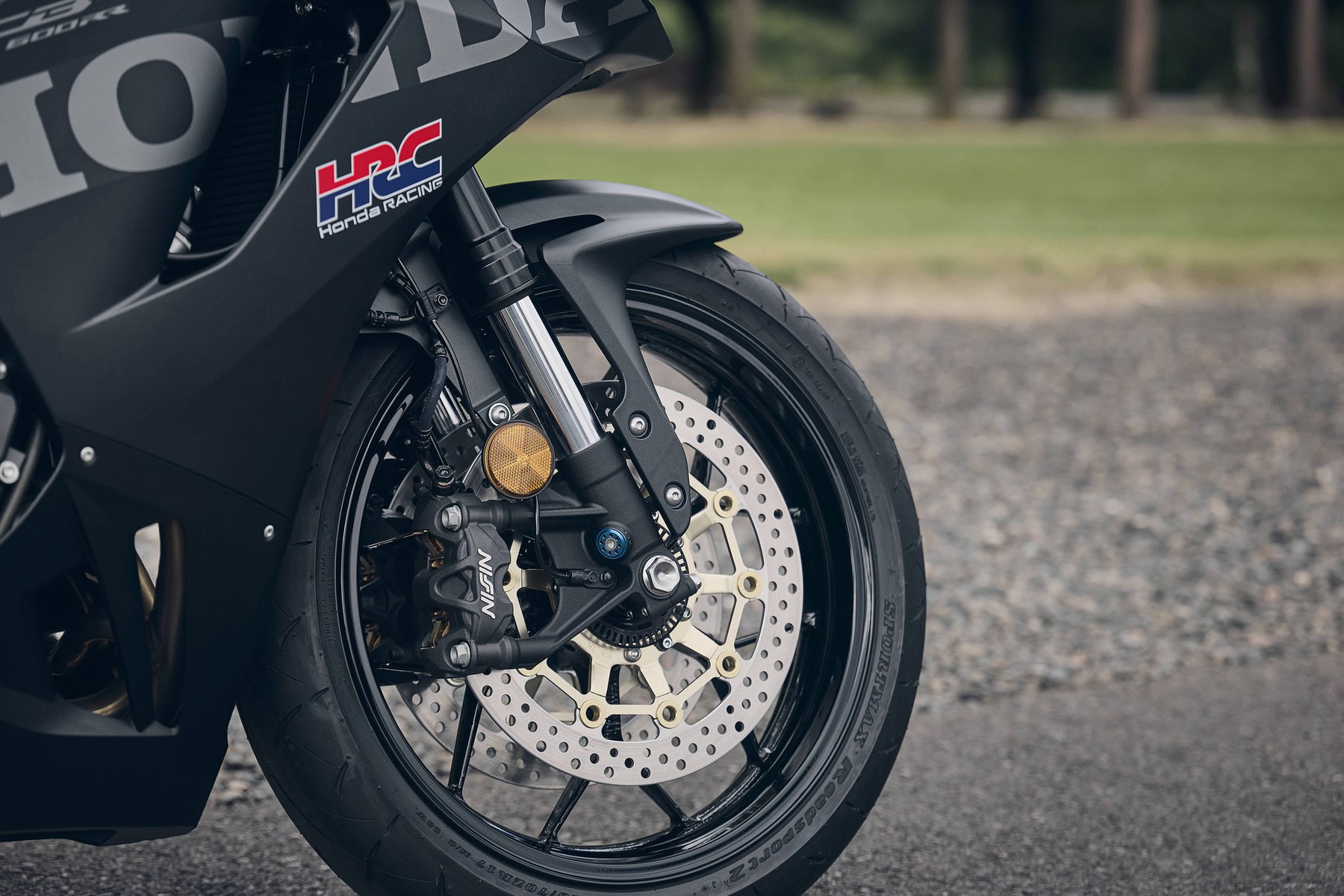
- Nissin four-piston brake calipers and ABS module from the CBR1000RR-R Fireblade with Standard, Track and Race modes
- Engine unchanged with 121 hp (89 kW) at 14,250 rpm and 63 Nm
- In the UK, the price stays at £10,999, with deliveries there from January 2027
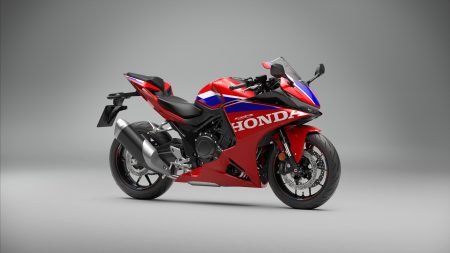
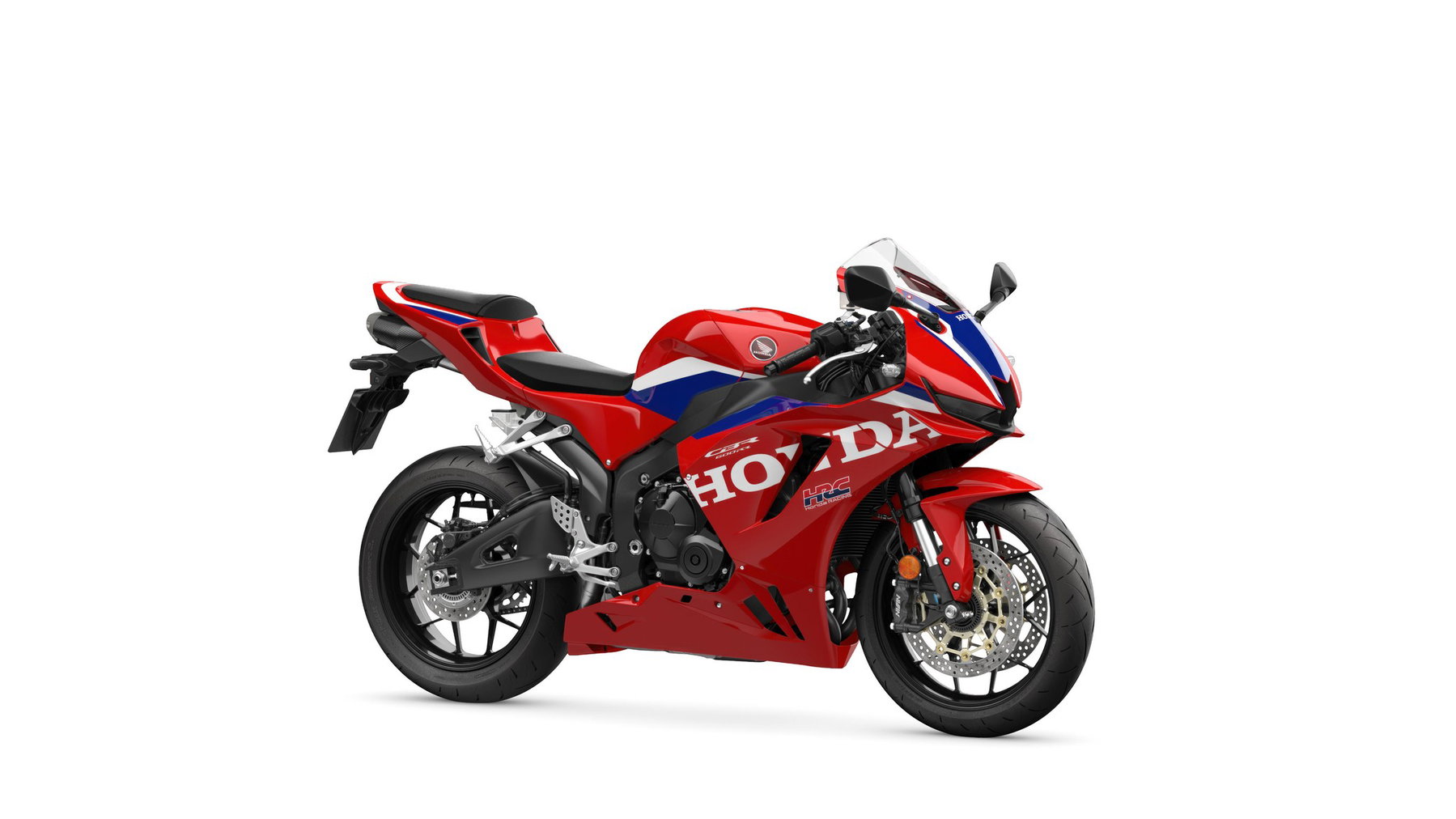
The Honda CBR600RR has been available in Europe again since 2024. For the 2027 model year, Honda is not completely rebuilding the 600 cc supersports bike but is fine-tuning it in specific areas. The focus is on the braking system, which comes straight from the big superbike. Visually, the most noticeable change is the winglets, which no longer stick out to the sides but have moved into the fairing. The high-revving inline four, on the other hand, stays as it is. This makes the CBR600RR one of the model updates in the 2027 line-up where the manufacturer sharpens things up in a targeted way rather than building a new motorcycle.
What is Honda changing on the CBR600RR for 2027?
For the 2027 CBR600RR, Honda fits new brake calipers and a new ABS module from the Fireblade, a 5-inch TFT display and a revised front fairing. Engine, frame and riding position remain the same.
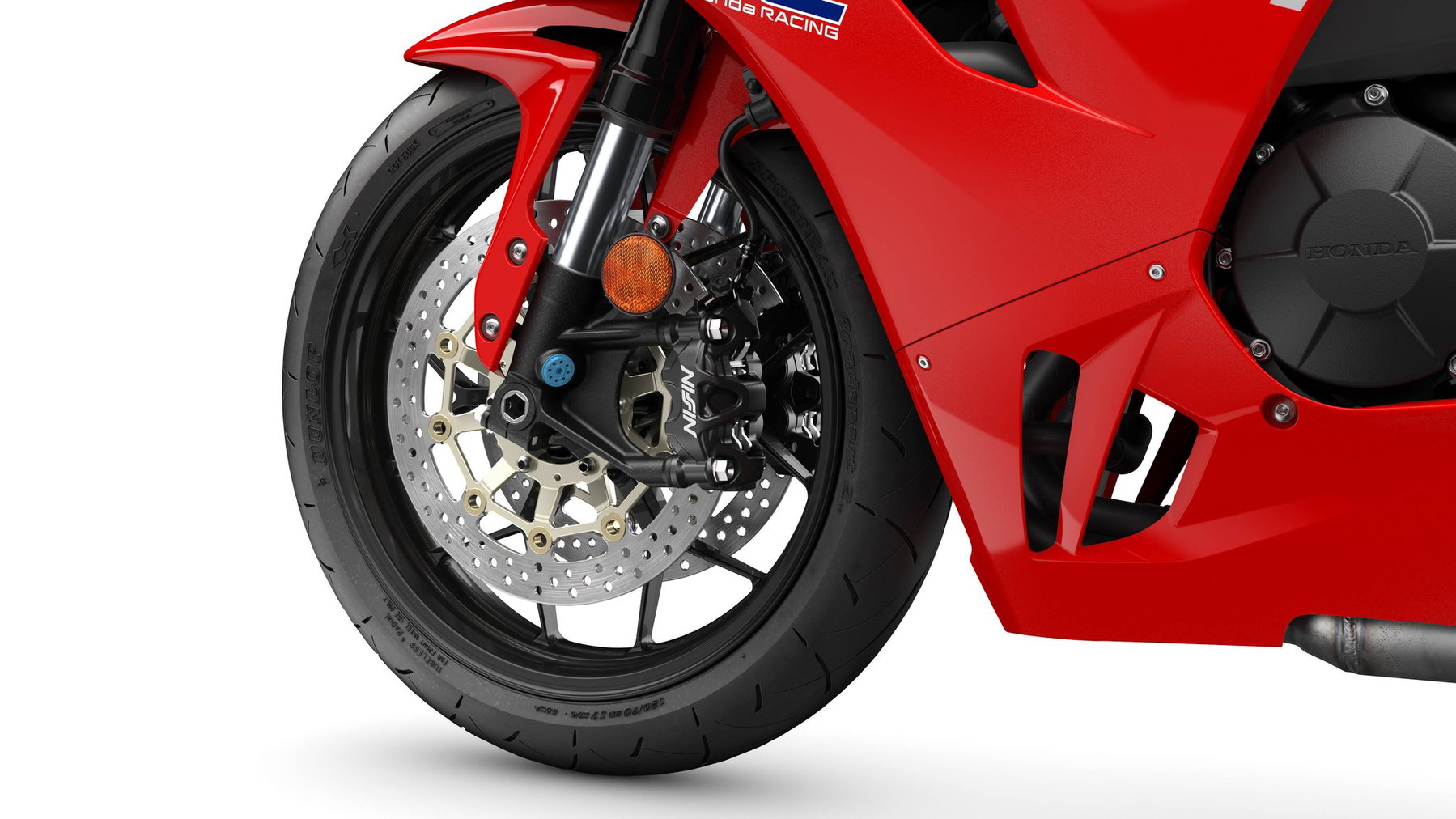
The most important technical change is at the front wheel. Previously, Tokico calipers did the work there; now it is radially mounted Nissin four-piston calipers. They come from the CBR1000RR-R Fireblade, as does the new ABS module with three selectable settings. In the cockpit, the colour screen grows from 4.2 inches to 5 inches. At the front, the separate wings disappear, and their job is now taken over by a spoiler integrated into the fairing beneath the headlights.
For racers and track day riders, the Honda Racing Corporation (HRC) is also expanding its offering. Instead of a single race kit, there are now three different packages tailored to different uses.
What brakes does the new Honda CBR600RR have?
At the front, two radially mounted Nissin four-piston calipers from the Fireblade bite on two floating discs with a diameter of 310 millimetres. At the rear, it remains a 220-millimetre disc with a single-piston caliper.
So the front disc size does not change; the calipers are new. Honda expects them to offer greater heat resistance, meaning less brake fade when the system is put under heavy load lap after lap on the track. The calipers are also meant to provide exactly the braking power and fine control required on the circuit. Pressure is built up by a radial master cylinder on the handlebar, which comes as standard. The brake pads front and rear are made of sintered metal.
What do the Standard, Track and Race ABS modes do?
The three ABS modes determine how strongly the system intervenes under braking. The sportier the mode, the more the electronics leave to the rider.
Standard mode is designed for stability and is meant to suit as many situations as possible, especially in the wet. In Track mode, the electronics switch off the detection of a lifting rear wheel. Honda calls this function Rear Lift Control, and it normally prevents the rear from rising too far under hard braking. Without this intervention, sharper braking is said to be possible on the track. Race mode goes one step further. Here, the ABS on the rear wheel is completely deactivated, and the system only controls slip at the front wheel. According to the manufacturer, this allows more aggressive braking manoeuvres.
Cornering ABS remains part of the electronics package. It receives its information from the six-axis inertial measurement unit, which according to Honda comes from Bosch and records the motorcycle’s attitude 100 times per second.
Why did Honda move the winglets into the fairing?
Honda wanted a slimmer, cleaner front end without losing downforce. According to the manufacturer, this has been achieved without increasing drag.
The winglets on the previous version stood out as individual wings on the fairing. For 2027, Honda has reshaped them and integrated them into the area beneath the headlights. They are still meant to provide stability and downforce. In addition, they deflect the airflow away from the rider’s arms. This is intended to reduce turbulence around the body and thus fatigue on longer rides.
The rest of the aerodynamics remains familiar. The central air intake, which generates ram pressure for the airbox, still sits between the two LED headlights. The middle section of the fairing is designed to supply the radiator with plenty of air. The lower fairing extends to just in front of the rear wheel and directs air downwards so that less airflow hits the tyre directly. The windscreen is angled at 38 degrees. Honda has not changed the riding position. The narrow tank still allows the rider to tuck in flat behind the fairing at high speed.
New cockpit with features for the track
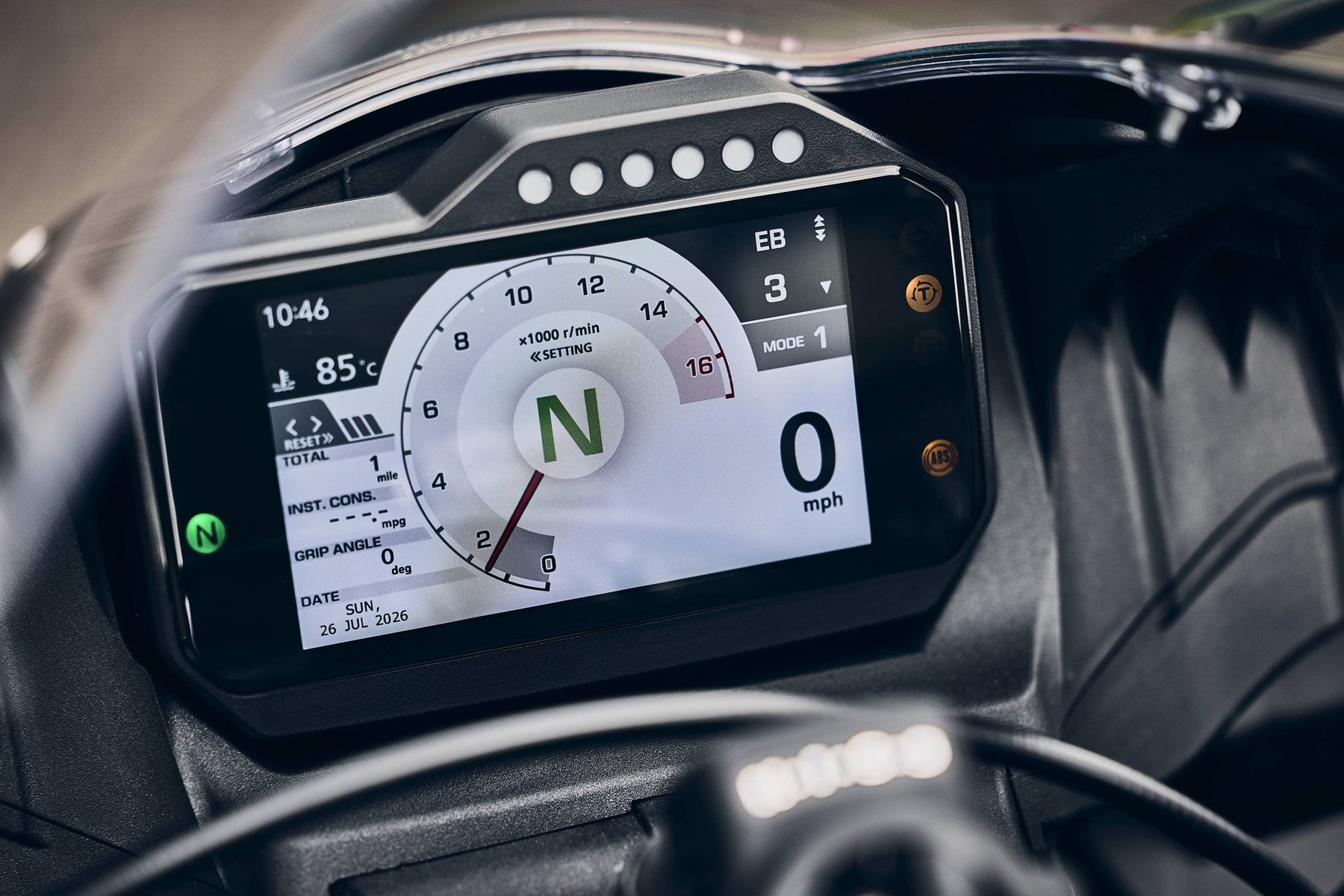
The full-colour TFT display now measures 5 inches and is said to present information more clearly than the previous screen. As before, the three views Street, Circuit and Mechanic can be selected.
Of particular interest for track days are the lap time functions. The display shows a lap timer, lap counter and personal best time. Above the screen sits a shift light made up of five white LEDs. They light up one after another and finally flash as soon as it is time to shift up. The rpm at which this happens can be adjusted.
The cockpit also has plenty to offer in everyday use. Headlight, tail light and indicators use LED technology. Under sudden emergency braking, the ESS Emergency Stop Signal activates the rear indicators to warn following traffic. The HISS immobiliser protects against theft. It only allows the engine to be started with the matching coded key. After switching off, a red LED in the cockpit flashes every 2.5 seconds for 24 hours, but the protection remains active after that too. A smartphone can be paired via Honda RoadSync.
How powerful is the 2027 Honda CBR600RR?
The 599 cc inline four still produces 121 hp (89 kW) at 14,250 rpm. Peak torque of 63 Nm (46.5 lb-ft) arrives at 11,500 rpm.
These engine speeds alone show where the engine feels at home. To make sure it can withstand such figures over the long term, Honda uses specially selected materials for the camshafts, valve springs and crankshaft. Bore and stroke are 67 by 42.5 millimetres, and the compression ratio is 12.2 to 1. For the European comeback in 2024, Honda revised the engine to comply with the Euro 5+ emissions standard. This included smoothed intake ports with 2.2 per cent more flow, intake and exhaust valve timing each shifted by 5 degrees, and a 4-2-1 exhaust system whose silencer still sits under the tail. The throttle bodies have a diameter of 44 millimetres.
Power is sent to the rear wheel via a six-speed gearbox and a chain. The assist and slipper clutch prevents the rear wheel from hopping under hard braking and quick downshifts. At the same time, it is said to reduce the effort at the clutch lever by 32 per cent. A quickshifter for fast clutchless gear changes comes as standard and can be adjusted in three levels.
What rider aids does the CBR600RR have?
Honda takes the electronics from the Fireblade. The throttle is electronically controlled (throttle by wire), plus there is nine-level traction control, wheelie control, adjustable engine braking, cornering ABS and Rear Lift Control.
Honda calls its traction control HSTC. It compares how fast the front and rear wheels are turning and cuts power when the rear wheel spins. Level 1 intervenes the least, level 9 the most, and the system can also be switched off. There are three preset riding modes, Fast, Fun and Comfortable, as well as two custom User modes. In these, engine power can be set in five levels, engine braking in three levels and wheelie control in three levels. For engine braking, level 1 stands for the strongest braking effect, for wheelie control it stands for the least intervention. The modes and the traction control level can be changed while riding via the left handlebar switch.
Chassis and dimensions of the 2027 CBR600RR
The backbone is a die-cast aluminium twin-spar frame that tightly wraps around the compact four-cylinder engine. At the rear, an aluminium swingarm with Honda’s typical Unit Pro-Link linkage guides the wheel.
At the front, a fully adjustable 41-millimetre Showa upside-down fork with 120 millimetres of travel does the work. It uses the Big Piston principle, in which a large damping piston is meant to provide finer response. At the rear, a fully adjustable Showa shock with 128 millimetres of travel handles suspension duties. The electronically controlled HESD steering damper works hydraulically and adapts its effect to speed. At low speed it damps less so that the motorcycle steers easily. As speed increases, damping increases to provide stability.
The wheelbase is 1,370 millimetres, the rake around 24.1 degrees and the trail 100 millimetres. Fully fuelled, the CBR600RR weighs 194 kg (428 lbs). The seat height is 820 millimetres and ground clearance 125 millimetres. The tank holds 18 litres, and Honda quotes fuel consumption according to the WMTC standard at 5.5 litres per 100 kilometres. From the factory, the CBR600RR rolls on 17-inch cast wheels with Dunlop Sportmax Roadsport 2 tyres in sizes 120/70 front and 180/55 rear.
What HRC race kits are available for the CBR600RR?
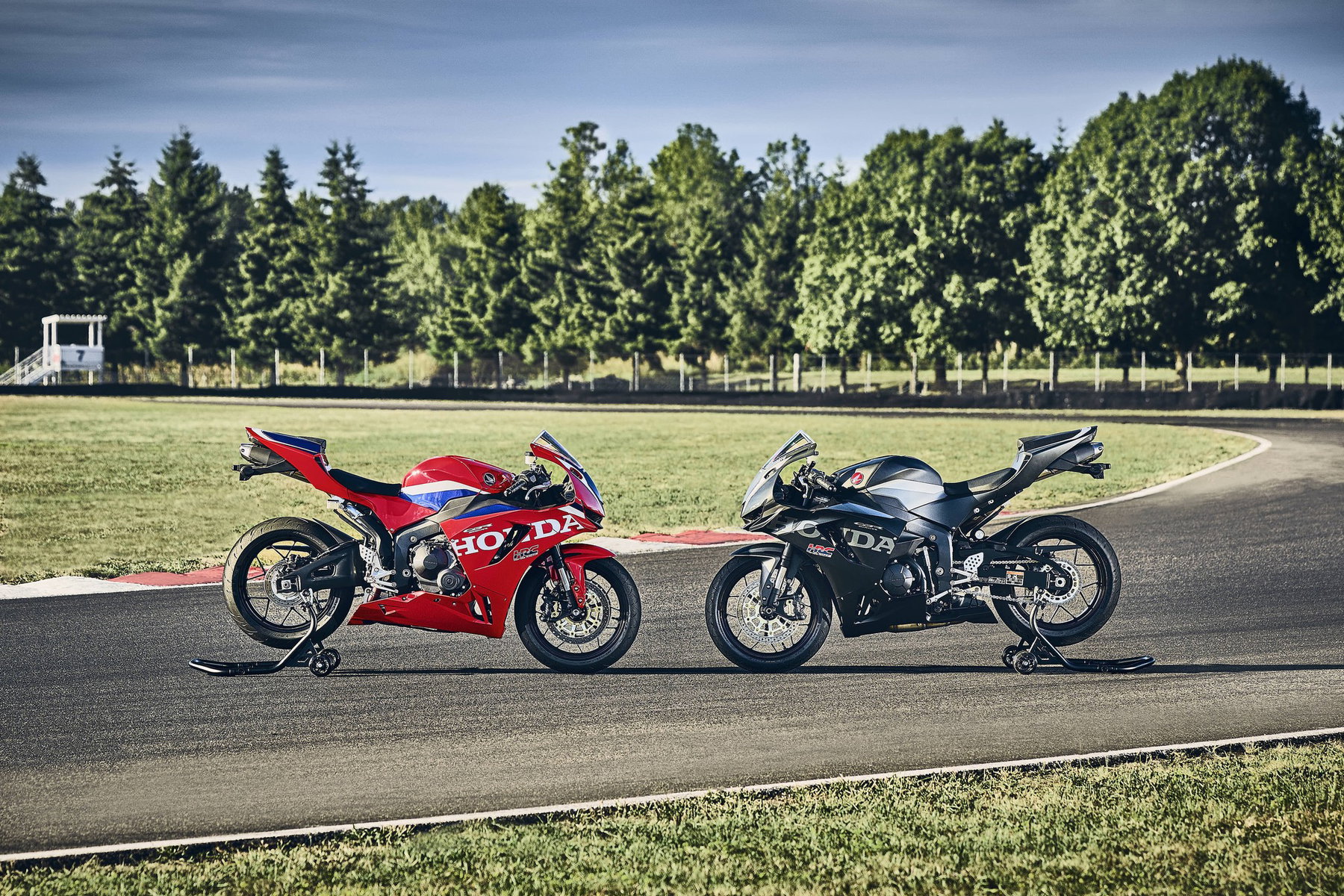
For the 2027 model year, HRC offers three different race kits, whereas previously there was only one. The packages cover use in the Supersport category, in Superbike classes and at track days.
All three kits are intended exclusively for the track. They are designed to deliver more power, improve cornering behaviour and grip, and save weight. To do this, all parts that are only needed for road homologation are removed. They are replaced by direct-fit HRC parts, including the ECU and wiring harness, cylinder head gasket, a larger radiator, a race exhaust, front and rear suspension components and brake discs. The kits differ in how much they increase performance. Honda has not yet given specific power figures or prices for the individual packages. All parts are also available individually.
How much does the 2027 Honda CBR600RR cost and when is it coming?
In the UK, the 2027 CBR600RR still costs £10,999 (approx. €13,060 / $14,660). It is due at dealers there from January 2027.
A price for Germany is not yet available. For context: at the European comeback in 2024, Honda charged €11,800 (approx. $13,250 at current exchange rates) ex works in Germany. Whether the German price will change for the new model year remains open.
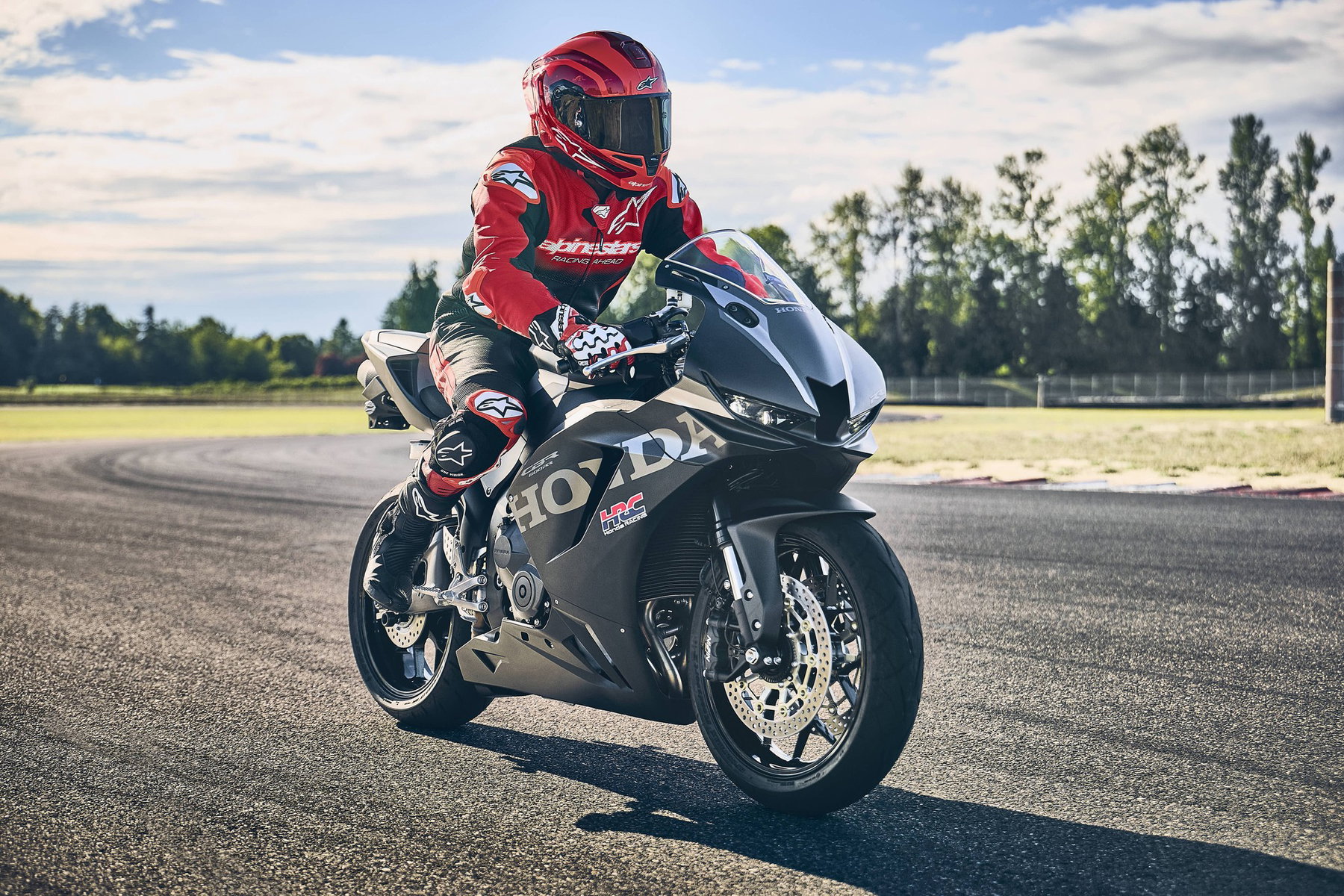
There are still two colour options. Ignition Red HRC TriColour carries the red, white and blue colours of the Honda Racing Corporation. Matt Ballistic Black Metallic is inspired by the liveries race teams use during winter testing.
What accessories does Honda offer for the CBR600RR?
Honda has put together two accessory packs. The Sport pack emphasises looks and includes an oil filler cap with HRC logo, side tank pads with CBR lettering, wheel stickers and a pillion seat cowl in red or black. The Comfort pack is meant to make the CBR600RR more suitable for everyday use. It includes a pillion seat bag with a capacity of 15 to 22 litres including mount, heated grips adjustable in five levels and a USB-C charging socket. Honda has not yet announced prices for the packs.
What is next for the Honda CBR600RR?
With this update, Honda keeps the CBR600RR in its line-up for 2027. At the same time, there is speculation about a possible successor with a three-cylinder V engine.
The history of the CBR600RR goes back to 2003. In its very first season, Chris Vermeulen won the Supersport World Championship title with it. Further world titles followed every year until 2008, as well as in 2010, 2012 and 2014. From 2010 to 2018, its engine also powered the entire Moto2 World Championship grid. As demand increasingly shifted towards naked bikes and adventure tourers, the CBR600RR disappeared from European showrooms in 2017. It returned in Japan and Thailand in 2021 and to Europe in 2024.
For the future, there has been speculation for several weeks about a supersports bike with Honda’s new V3 engine, which could take over the role of the CBR600RR as the V3R 900RR. Figures of 120 to 130 hp are being discussed. The background is that the CBR600RR is no longer among the strongest bikes in the Supersport World Championship field against models such as the Yamaha R9 and the Ducati Panigale V2. More details may emerge at EICMA in November 2026. Honda has not confirmed any of this so far. However, the 2027 update shows that the manufacturer is continuing to develop the CBR600RR for the time being.
Frequently Asked Questions
-
What is new on the 2027 Honda CBR600RR?
The main new features are the Nissin four-piston brake calipers and the ABS module from the Fireblade with Standard, Track and Race modes. In addition, the TFT display grows from 4.2 to 5 inches, and the winglets are now integrated into the fairing beneath the headlights. Engine, frame and riding position remain unchanged.
-
How much horsepower does the 2027 Honda CBR600RR have?
The 2027 CBR600RR produces 121 hp (89 kW) at 14,250 rpm. Peak torque is 63 Nm at 11,500 rpm. The figures are the same as the previous model.
-
How much does the 2027 Honda CBR600RR cost?
In the UK, it still costs £10,999, which is approximately €13,060 or $14,660. Honda has not yet announced a German price. At its market launch in 2024, the price in Germany was €11,800 ex works.
-
What does Race mode do on the CBR600RR ABS?
In Race mode, the ABS on the rear wheel is switched off, and the system only controls slip at the front wheel. This is intended to allow more aggressive braking on the track. In Track mode, rear-wheel ABS remains active, and only Rear Lift Control is deactivated.
-
How heavy is the Honda CBR600RR?
Fully fuelled, the CBR600RR weighs 194 kg (428 lbs). The tank holds 18 litres, and the seat height is 820 millimetres.