- Applies from 17 April 2027 on roads designed for at least 70 km/h
- Mandatory on tight bends, dangerous descents and narrowings, and on accident stretches
- Exemptions possible via a technical report, no deadline for retrofitting
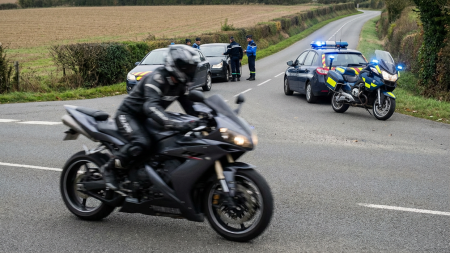
Anyone who crashes a motorcycle and slides across the asphalt can, in the worst case, hit the posts of a crash barrier with full force. A continuous protective strip below the barrier is meant to prevent this; in Germany it is usually called Unterfahrschutz, in English often referred to as underride protection or a motorcyclist protection system. In Italy these systems go by the abbreviation DSM, short for “dispositivi di sicurezza per motociclisti”, meaning safety devices for motorcyclists. New requirements now apply to underride protection in Italy: the Ministry of Transport in Rome published a decree signed by Minister Matteo Salvini in the Official Gazette on 19 October 2026. It replaces the 2019 regulations, which were criticised shortly after their publication for complicated rules on existing crash barriers.
What does Italy’s new decree on underride protection regulate?
The decree specifies at which points on Italian roads underride protection is to be fitted to crash barriers and which technical requirements it must meet. It covers new and existing crash barriers on roads designed for a speed of at least 70 km/h.
For older roads without a defined design speed, this value is derived from the road type and alignment. The aim is clearly defined: if a rider or pillion falls and slides across the road into the barrier, the consequences should be less severe.
To achieve this, the protection must be continuous. It is meant to catch a sliding person and redirect them along the barrier instead of letting them hit posts, anchorages, connecting pieces or obstacles behind the barrier. The systems must comply with the European test specification CEN/TS 17342, which replaced the older CEN/TS 1317-8 in 2019. The crash tests take place in accredited test laboratories, after which the manufacturer confirms the performance and ongoing control of its production. Systems that were tested under the old specification and are already installed or on the market are still considered sufficient.
Where in Italy must underride protection be fitted to crash barriers?
The decree names four types of location where crash barriers must at least be equipped with underride protection. These include tight bends and stretches with serious motorcycle accidents, but also dangerous descents and narrowings.
In detail, these are the cases:
- Bends with a radius of less than 250 metres, on the outside in each case. If the carriageways are separated, this applies to both sides.
- Sections where in the last three years there has been at least one accident in which a motorcycle or moped left the road or hit the crash barrier and the rider or passenger was killed or seriously injured.
- Dangerous descents on rural roads and urban expressways that are marked with the corresponding warning sign, on both edges of the road.
- Signposted road narrowings on the same road types, also on both sides.
The protection must cover the entire length of the bend, descent or narrowing and extend at least ten metres beyond it. For new projects, the decree requires a separate planning annex. In it, a registered engineer must justify their decisions and assess how high the risk of motorcyclists impacting at that location is.
What changes compared with the 2019 rules?
The list of mandatory locations has become longer, and a single serious accident can now trigger installation. The old rule recognised only one type of hazard and set a much higher threshold for accident stretches.
The April 2019 decree only required protection for bends with a radius of less than 250 metres. And even then only for new construction, major rebuilding with a changed alignment or when crash barriers were renewed over longer sections. On roads without construction work, the obligation only applied if there had been at least five accidents with fatalities or injuries involving motorcycles or mopeds within three years. Descents and narrowings played no role.
Even back then there were objections from experts. Marco Anghileri, professor of passive safety, head of the crash laboratory at the Politecnico di Milano and himself a developer of such protection systems, criticised above all the rules for existing crash barriers in a 2019 interview with the Italian portal Motospia. Depending on the age of the barrier, completely different procedures applied, and already installed barriers with CE marking were generally not covered at all. For newer barriers, a new crash test could become necessary. According to his calculation, such a test with a heavy vehicle costs around 40,000 euros (approx. 44,800 US dollars at today’s exchange rate; the figure dates from 2019), possibly just to fit 50 metres of protection. His conclusion at the time: of all things, it was the very old crash barriers that were most likely to be retrofitted.
How can an existing crash barrier be retrofitted?
The new decree describes three routes, depending on how old the crash barrier is and under which rules it was approved. Already installed barriers with CE marking are now explicitly covered.
For crash barriers with CE marking, fitting underride protection counts as a modification of the product. A notified body must therefore confirm that the combination still works. For minor changes, it may check this virtually, i.e. by computer simulation instead of a real crash test. If the protection is permanently integrated into the barrier from the outset, the entire system is certified together.
Older barriers installed under the 1992 rules may be retrofitted without further testing if three conditions are met. The underride protection must be mounted with the same fixings at the same spacing as in the crash test. Its lower edge may deviate from the test height by no more than two centimetres, and rainwater must still be able to drain away. In addition, the barrier must not deflect more on impact than the tested barrier; otherwise an additional test is required.
For all other crash barriers there is a third route: they must be technically identical to an already tested system. This means the same post spacing, the same posts and driving depth, the same overall height, the same height of the barrier profile above the ground and the same brackets and materials.
When may road operators do without underride protection?
A designer can justify in a separate technical report why underride protection is not necessary at a particular location. There is also an exemption for foreseeable special conditions such as frequent heavy snowfall.
For the justification, the designer may draw on a whole range of factors: the geometry of the route, the speeds actually driven, the volume and composition of traffic, the space next to the carriageway and the grip of the road surface. They can also point out that the danger can be reduced by other means, for example through traffic rules. The snow exemption requires the owner or operator of the road to demonstrate in a report that the protection could impair safety because of the necessary road maintenance.
For existing crash barriers at the mandatory locations, the operator must have the risk for falling motorcyclists assessed, again with a reasoned report by an engineer. The operators themselves decide which stretches are dealt with and when, based on these analyses. The decree does not set a deadline by which retrofitting must be completed. Nor does it contain any provisions on funding.

Why is the decree facing criticism?
Critics consider the leeway for designers and road operators to be too large. They fear that the new rules will therefore change little on the road.
In a video analysis for Moto.it, motorcycle journalist Nico Cereghini and engineer Giulio Bernardelle rate the decree as a step forward but see several weaknesses. In addition to the wide discretion of those responsible, they cite open questions about money, the timetable for retrofitting existing crash barriers and whether the requirements will actually be implemented in practice. Their fundamental objection: it would have made more sense to include motorcycle protection directly in the approval criteria for crash barriers. It would then automatically be mandatory for every new barrier instead of being examined case by case. Their verdict is correspondingly cautious. They speak of progress in the regulations, while it remains questionable whether it will become visible on the roads.
When does the new underride protection rule apply in Italy?
The new rules come into force on 17 April 2027, 180 days after publication in the Official Gazette. The long transition period is intended to allow manufacturers to bring protection systems for the various types of crash barrier to market.
Projects that have already been put out to tender by then or whose feasibility study has already been approved will continue under the old 2019 rules. The decree had come a long way before publication. The Higher Council of Public Works issued its opinion as early as December 2024. In May 2026 Italy notified the draft to the EU Commission, and no objections were received by the end of the review period on 26 August. The decree was signed on 11 September 2026 and registered by the Court of Auditors on 5 October.
New Codice della Strada: Italy plans further steps for motorcyclists
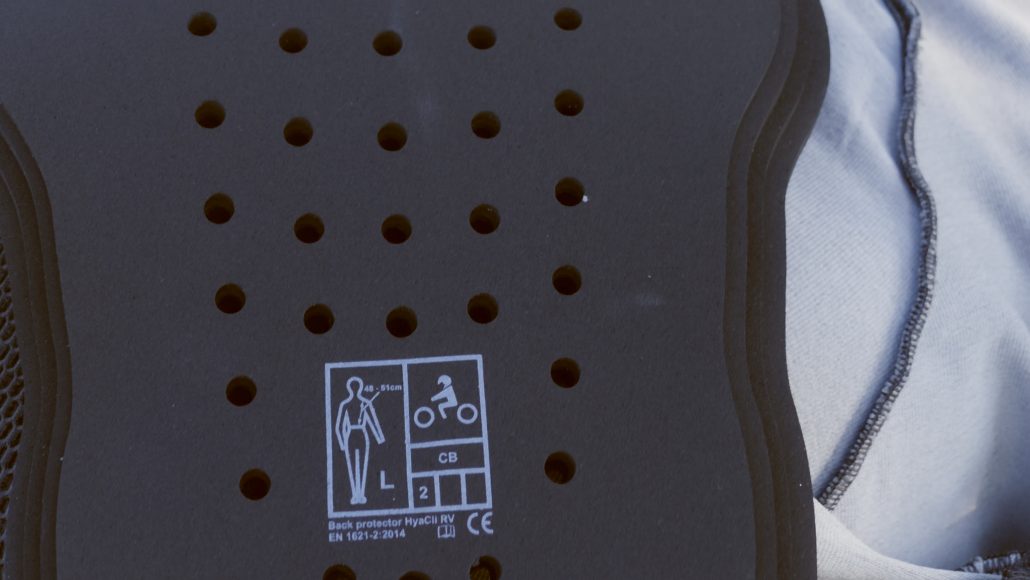
The decree is not the only construction site. In mid-October 2026 the Italian government approved the draft of a new highway code, the new Codice della Strada. It contains several innovations for motorcyclists, including permission to use the hard shoulder on the motorway in traffic jams and discounts on fines for riders who wear protective clothing.
The draft is also set to go further on underride protection. It provides for a binding installation plan. On rural roads and mountain passes with many motorcycle accidents, the protection is to become a firm obligation that road operators can no longer treat as a mere recommendation. However, this has not yet been adopted: the text must first pass through parliament. Final adoption is expected in spring 2027, and the new code is due to come into force on 1 January 2028.
Frequently Asked Questions
-
What is underride protection on crash barriers?
Underride protection is a continuous strip below the crash barrier that closes the gap between the road and the barrier. It is meant to catch fallen motorcyclists and prevent them from hitting posts or anchorages. In Italy these systems are called DSM.
-
When does the new underride protection rule apply in Italy?
The regulations come into force on 17 April 2027. The decree was published on 19 October 2026 and applies 180 days later. Projects already put out to tender still follow the 2019 rules.
-
Where must underride protection be installed in Italy?
It is mandatory on the outside of bends with a radius of less than 250 metres, on signposted dangerous descents and narrowings, and on stretches with at least one fatal or serious motorcycle accident in the last three years. This applies on roads designed for at least 70 km/h.
-
Do existing crash barriers have to be retrofitted?
Operators must have the risk for motorcyclists assessed at the mandatory locations and then plan where retrofitting will take place. The decree does not set a deadline for this. Depending on the age and approval of the crash barrier, different technical procedures apply to retrofitting.
-
Are there exemptions from the obligation?
Yes. Designers may justify not fitting it in a technical report, for example based on traffic volume, road alignment or other safety measures. Protection can also be omitted under special conditions such as frequent heavy snowfall if road maintenance would otherwise endanger safety.
➜ This article is part of our comprehensive overview: Motorcycle Law & Policy: Legislation, Court Rulings and Developments for Riders. Find all key information on this topic in one place.