- New FIM world record over the flying kilometre: 235.526 km/h (146.349 mph)
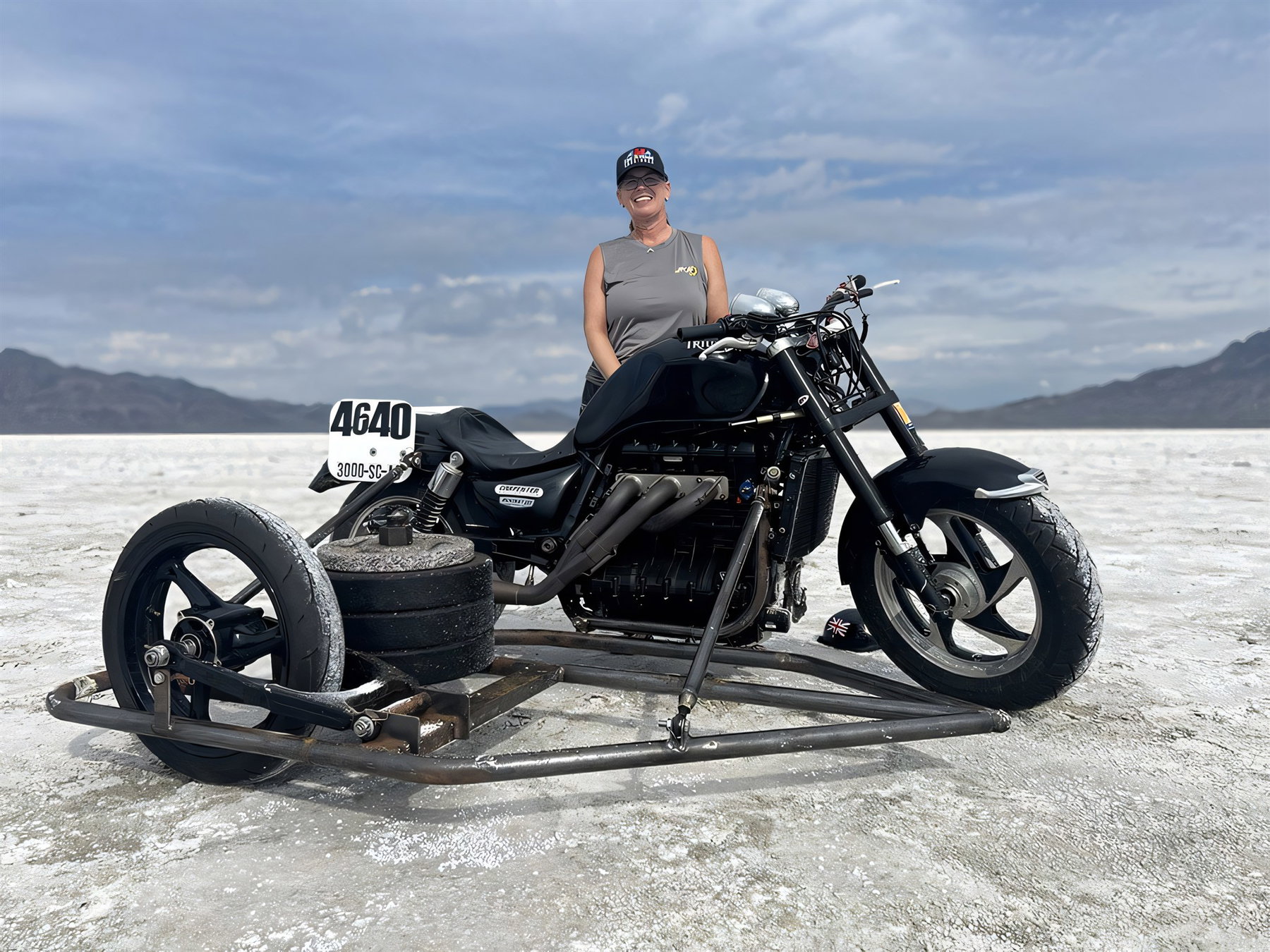
- Machine: 2012 Triumph Rocket III Roadster, three-cylinder with 2,295 cc, ballasted sidecar
- Eight new best marks in total at the Speed Trials, none of them ratified yet
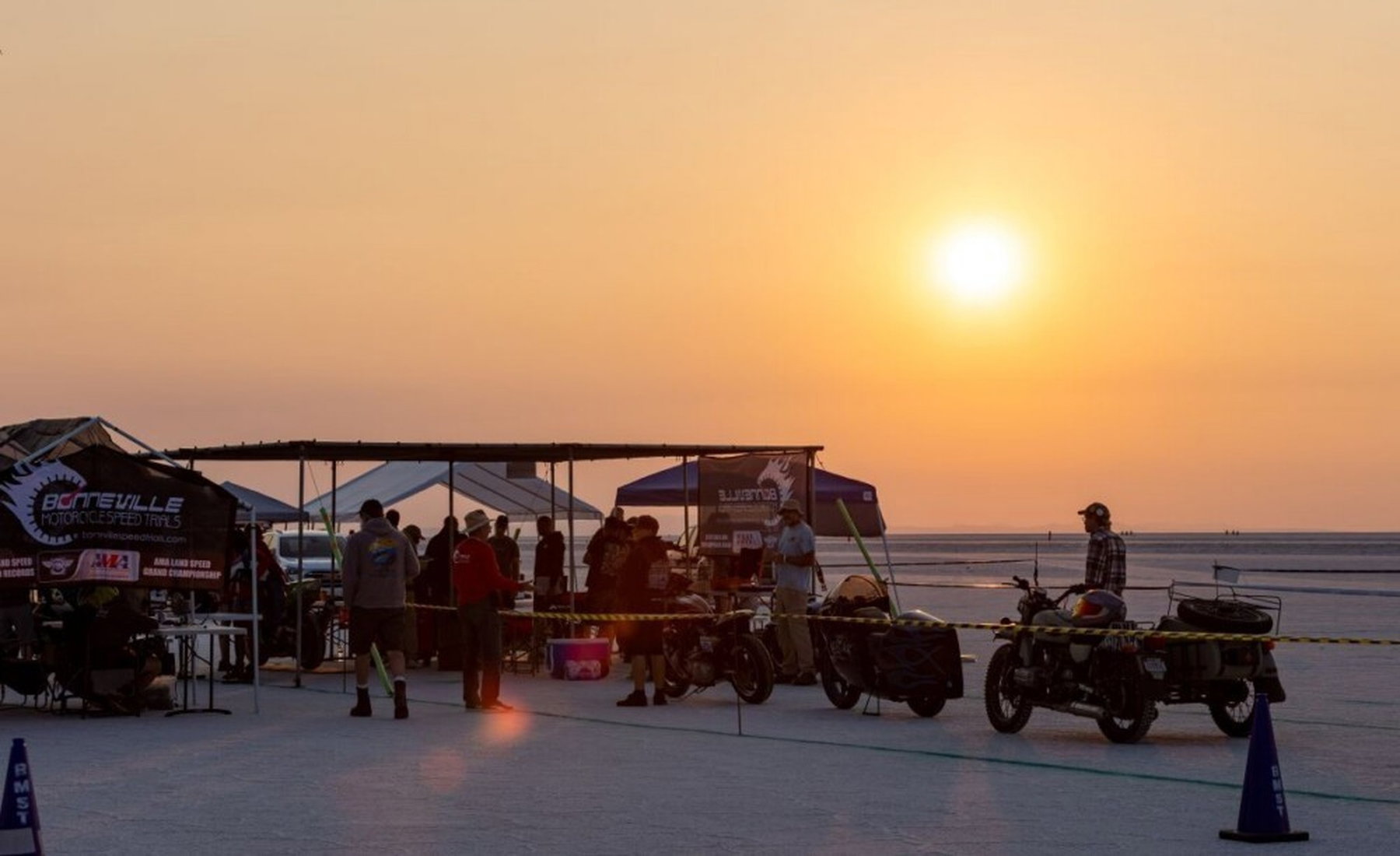
The Bonneville Motorcycle Speed Trials are the most important date in the FIM Land Speed World Records calendar. From 23 to 27 August 2026, the field gathered once again on the salt flats in Utah, around 200 kilometres west of Salt Lake City. Unlike the previous year, both the salt and the weather played along this time, and that fed straight through into the results. One of the riders who benefited was Liane Langlois from Edmonton in the province of Alberta.
How fast did Liane Langlois go at Bonneville?
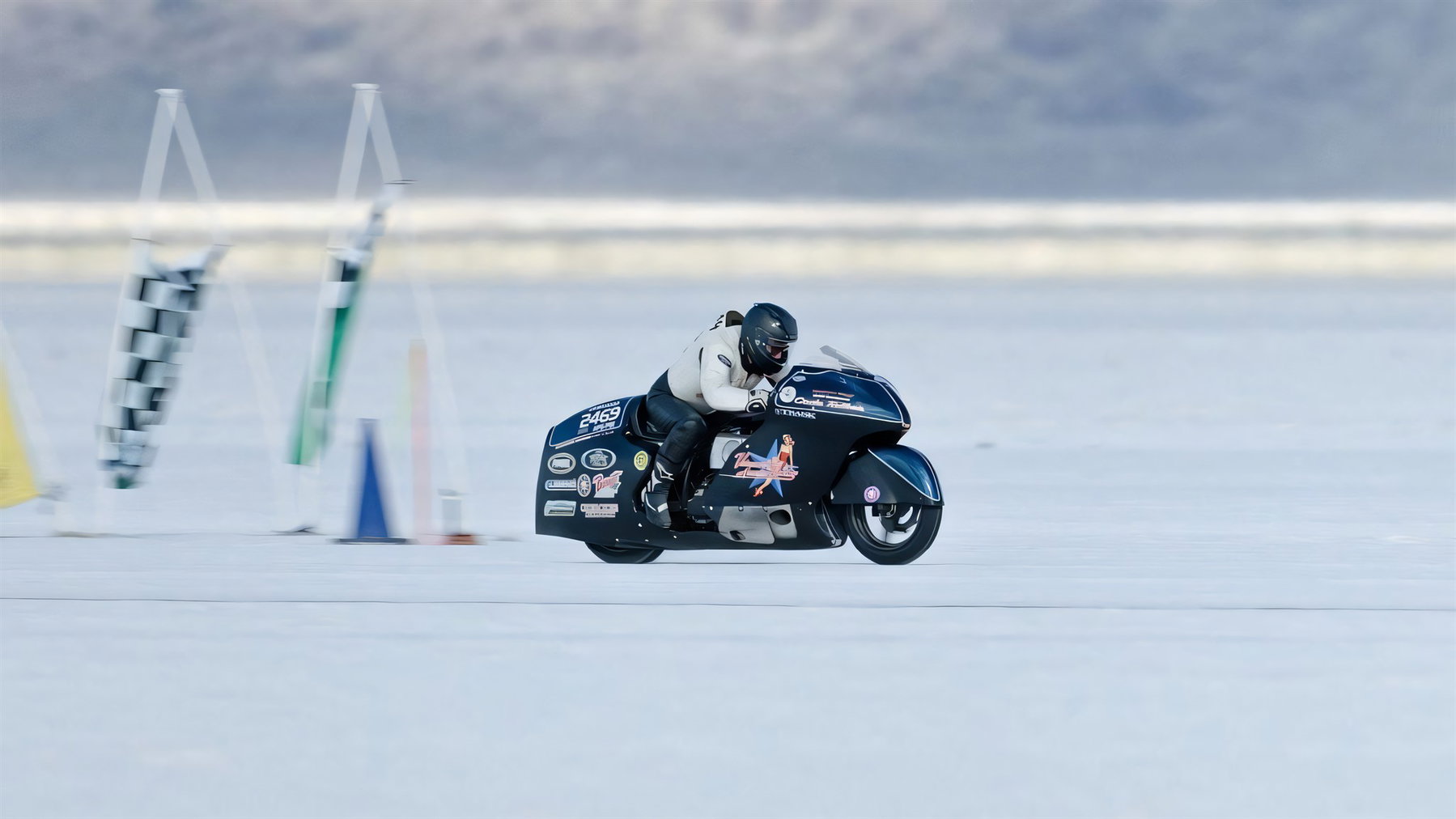
Langlois recorded 235.526 km/h (146.349 mph) over the flying kilometre, setting a new FIM world record. The previous year she had managed 219.403 km/h (136.331 mph) at the same spot.
The 51-year-old is the first Canadian woman to hold an FIM land speed world record on a motorcycle. By her own account she finished her outbound run on Tuesday at 146.9 mph. On the return she had the feeling something was not right while shifting, but still went through the measured mile at 145.7 mph. The official figure came out of both runs.
What is remarkable is the leap she has made in a short space of time. Her very first run with this outfit in 2024 was considerably slower. “The very first time I ran it in 2024, my very first pass was only 95mph!” In three years, 152.9 km/h turned into 235.5 km/h.
Why does the run count as a new record rather than an improvement?
Because Langlois entered a different class. For 2026 her outfit was given a front fairing and a cover over the sidecar wheel, and it is exactly that bodywork which determines the classification.
In the FIM Land Speed World Records all classes are gender-neutral. Entries are divided by drive type, bodywork, energy source, displacement and cylinder count. Her 2025 record was set with an unfaired outfit. With the new bodywork the machine falls into Division B for partially faired outfits, which are not fully enclosed like a streamliner. Before the event Langlois explained that this switch was precisely the aim: a bit more speed and another world record for Canada.
She herself described the project as a special case and noted that nobody else builds a sidecar onto a motorcycle of this size. That makes her the benchmark in this class, and she has no intention of setting it low.
What did the fairing change on the Rocket III?
The fairing was meant to cut drag, but it also brought an unknown into play. Langlois had no chance to test beforehand how the outfit would handle with it.
The machine is kept around 1,400 kilometres from her home with the American team in North Dakota. It was built by JKR Powersports, based on a 2012 Triumph Rocket III Roadster with the 2,295 cc three-cylinder and a ballasted sidecar. Before the event, Langlois spoke to Jeremy Ragle, the owner of JKR Powersports, about the possible consequences of the modifications. Her assessment: the front fairing brings aerodynamics and a safer feel, while the cover over the sidecar wheel increases downforce, which can change the handling.
She also pushed back on the widespread assumption that a sidecar makes things easier. She has ridden on two wheels on the salt as well, she said, and the outfit demands an entirely different kind of physical strength to hold it straight.
The second factor was the course itself. By her own account, her record could already have been higher in 2025, but the salt went soft and the weather did not cooperate. For 2026 she named her target as getting well beyond the 137 mph mark. In the end it was 146.349 mph.
How does timing work in FIM land speed records?
Timing is taken over a flying mile and a flying kilometre, in both directions. After the first run, riders have two hours for the return leg; an average is formed from both times, and that mean counts as the official speed.
That also explains why the individual figures in Langlois’ account do not match the record mark exactly. The outbound and return runs were each slightly off, and the average produced the 146.349 mph. All best marks set in Utah are moreover still subject to official ratification by the FIM.
Which other records fell at the Bonneville Speed Trials 2026?
Eight new best marks came together in total, considerably more than at the 2025 edition. According to the organisers, the main reason was the better conditions.
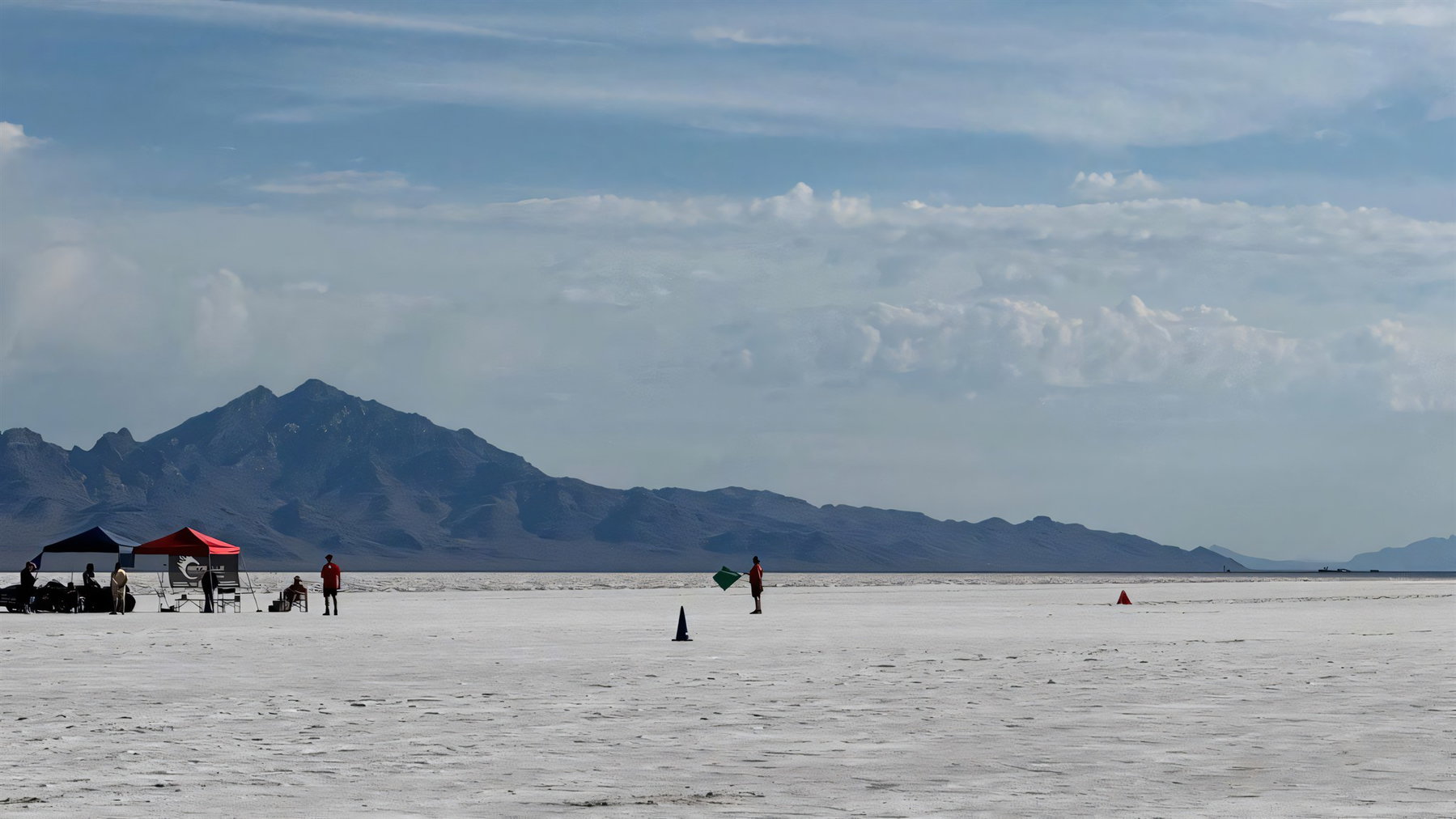
Delvene Reber, owner and director of the event, which she co-founded in 2004, spoke of a much better salt surface than the previous year and of several usable miles of course. Only at the start of the week were there concerns about wind. Even before the event she had pointed out that the salt crust had been very brittle in 2025 and that there were more entries this time.
The first new FIM record was set by Tyrell Marlow on the opening day with a 2002 Suzuki TL1000R. The twin managed 264.668 km/h (164.457 mph) over the flying kilometre. Angus Wing logged two best marks with his 2009 Kawasaki ZX-14 outfit: 186.865 km/h (116.112 mph) in partially faired trim and 176.9 km/h (109.919 mph) without a fairing.
The highest speed among the record runs went to Jay Allen, a well-known name in this discipline. On his twin-cylinder 2017 Harley-Davidson Electra Glide he was measured at 292.650 km/h (181.844 mph) over the flying kilometre. Lisa Cipolla improved both of her previous year’s figures with her four-cylinder 600 cc Kawasaki ZX-6R run by Zlock Racing LCC, to 243.924 km/h (151.567 mph) partially faired and 228.186 km/h (141.788 mph) unfaired.
That these records are not only about high speeds is shown by the case of Ronald Knight. The American entered on a rare 100 cc Yamaha LS2 from 1972, a twin built for a single year only. On the second day he set a record at 92.941 km/h (57.751 mph), improved it on the third day and added another step on the final day to 98.886 km/h (61.445 mph).
Rivas and Håkansson fall short of their targets
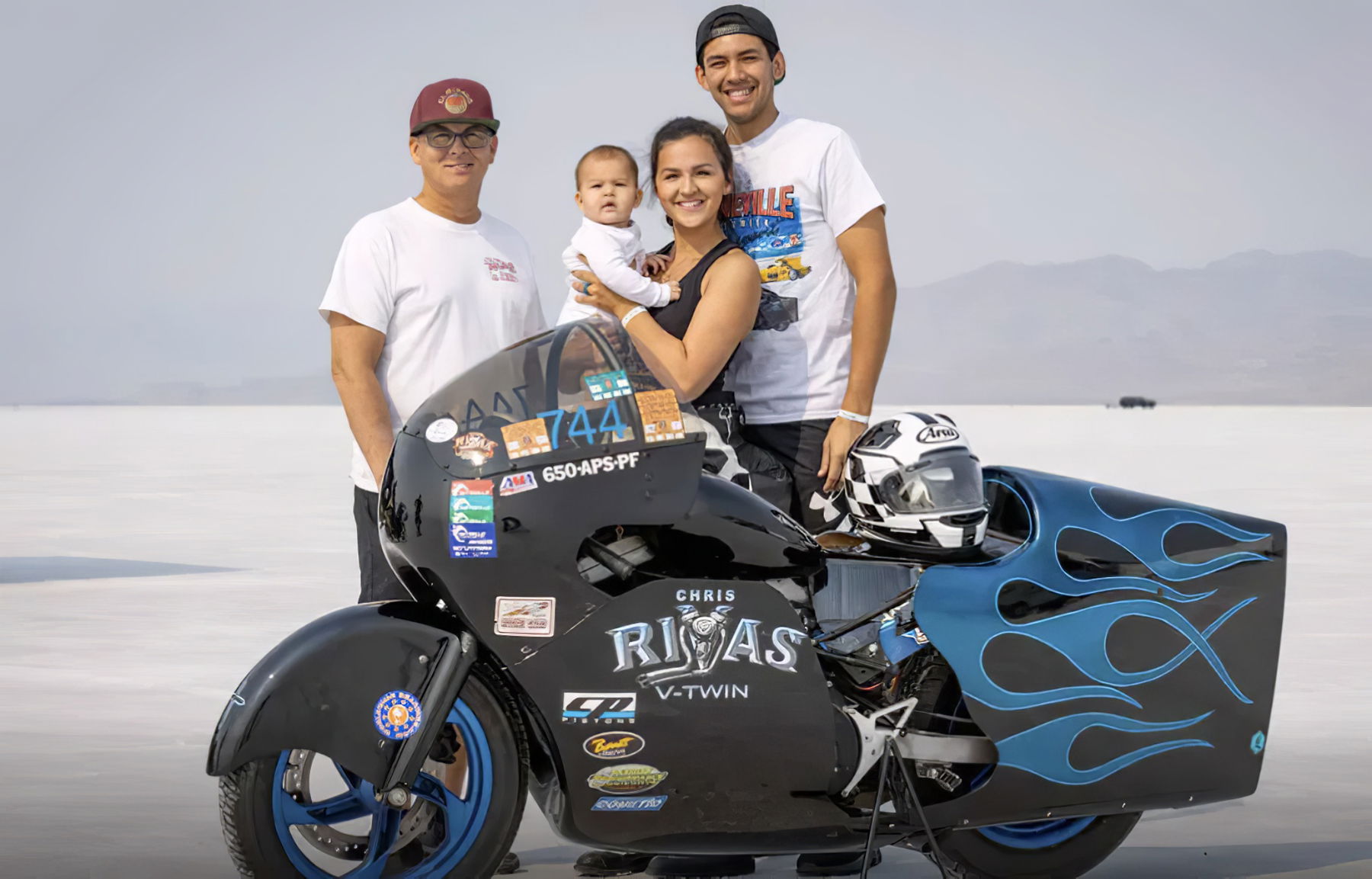
The two by far highest targets of the event went unmet. Chris Rivas entered with the BUB Seven Streamliner to attack the outright land speed world record of 605.697 km/h (376.363 mph), set by Rocky Robinson in 2010. He did not get close, although a run at 290.71 km/h (180.64 mph) counted as progress.
Eva Håkansson had set her sights with her electric streamliner Green Envy on the best mark held by Max Biaggi, who reached 455.737 km/h (283.182 mph) at Cape Canaveral in 2021. At a little over 250 mph her windscreen began to deform under the aerodynamic load. She could still see past it to the side, but had to abort the run early. Her best average was 395.899 km/h (246 mph).
Her verdict was positive nonetheless. She spoke of the best salt and the best course she had experienced in sixteen years of land speed racing at Bonneville, and said that with a few extra days it would have been possible to reinforce the screen. Everything essential had worked, the drivetrain ran faultlessly, and the vehicle has a speed of 300 mph in it comfortably. She wants to proceed step by step, though: “It’s kinda like training for the Olympics.”
Frequently Asked Questions
-
How fast was Liane Langlois in her 2026 world record?
Liane Langlois recorded 235.526 km/h (146.349 mph) over the flying kilometre. The figure is the average of the outbound and return runs. The previous year she had managed 219.403 km/h (136.331 mph) at the same spot.
-
Which motorcycle does Liane Langlois ride at Bonneville?
She rides a sidecar outfit based on a 2012 Triumph Rocket III Roadster. The three-cylinder engine displaces 2,295 cc, the outfit was built by JKR Powersports and has a ballasted sidecar. For 2026 a front fairing and a cover over the sidecar wheel were added.
-
Why does the run count as a record of its own?
Because the additional bodywork places the machine in a different FIM class, namely Division B for partially faired outfits. The classes are defined by drive type, bodywork, displacement and cylinder count, among other things. The 2025 record was set with an unfaired outfit.
-
How many records were set at the Bonneville Motorcycle Speed Trials 2026?
Eight new best marks in total, all still awaiting ratification. The fastest of them was set by Jay Allen at 292.650 km/h (181.844 mph) on a Harley-Davidson Electra Glide. The attempts on the outright record and the electric record, by contrast, came up short.