- 50 participants, more than 200 emergency stops from 50, 70 and 80 km/h
- Real braking distances on average: around 16 metres from 50 km/h, 22.4 metres from 70 km/h, 25.5 metres from 80 km/h
- 58 percent of the participants estimated purely by gut feeling
How much distance a motorcycle actually needs for a full stop can be worked out mathematically. Whether riders are able to judge that distance correctly is an entirely different question. That is exactly what the Institute for Motorcycle Safety (ifz) in Essen set out to examine. The study is titled “Grenzen der Wahrnehmung beim Bremsen. Schätzung und Realität von Bremswegen mit dem Motorrad im Vergleich” and was written by Matthias Haasper, André Lang and Alexander Conrad. The full report was published on 12 August 2026.
How was the ifz study carried out?
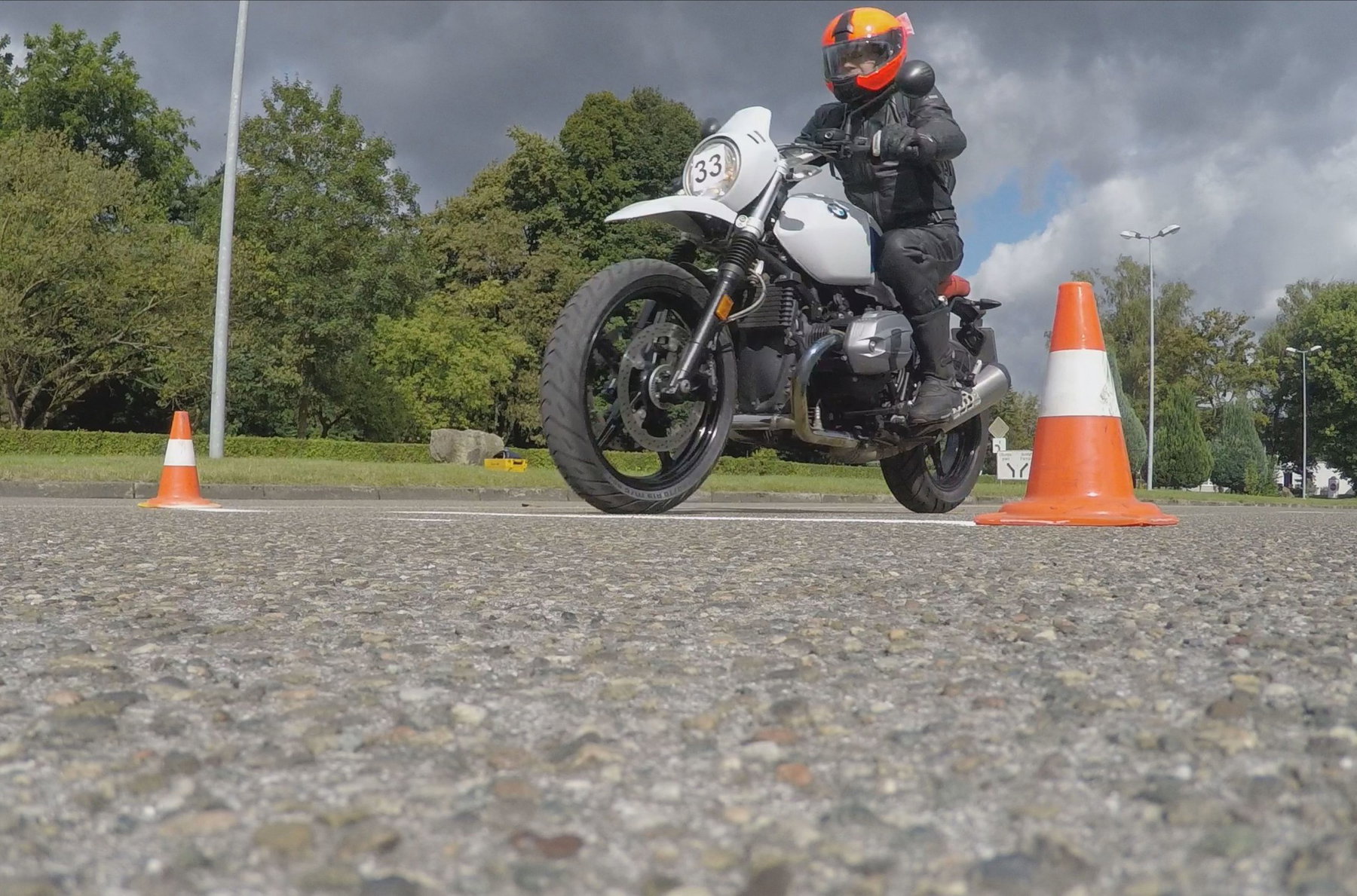
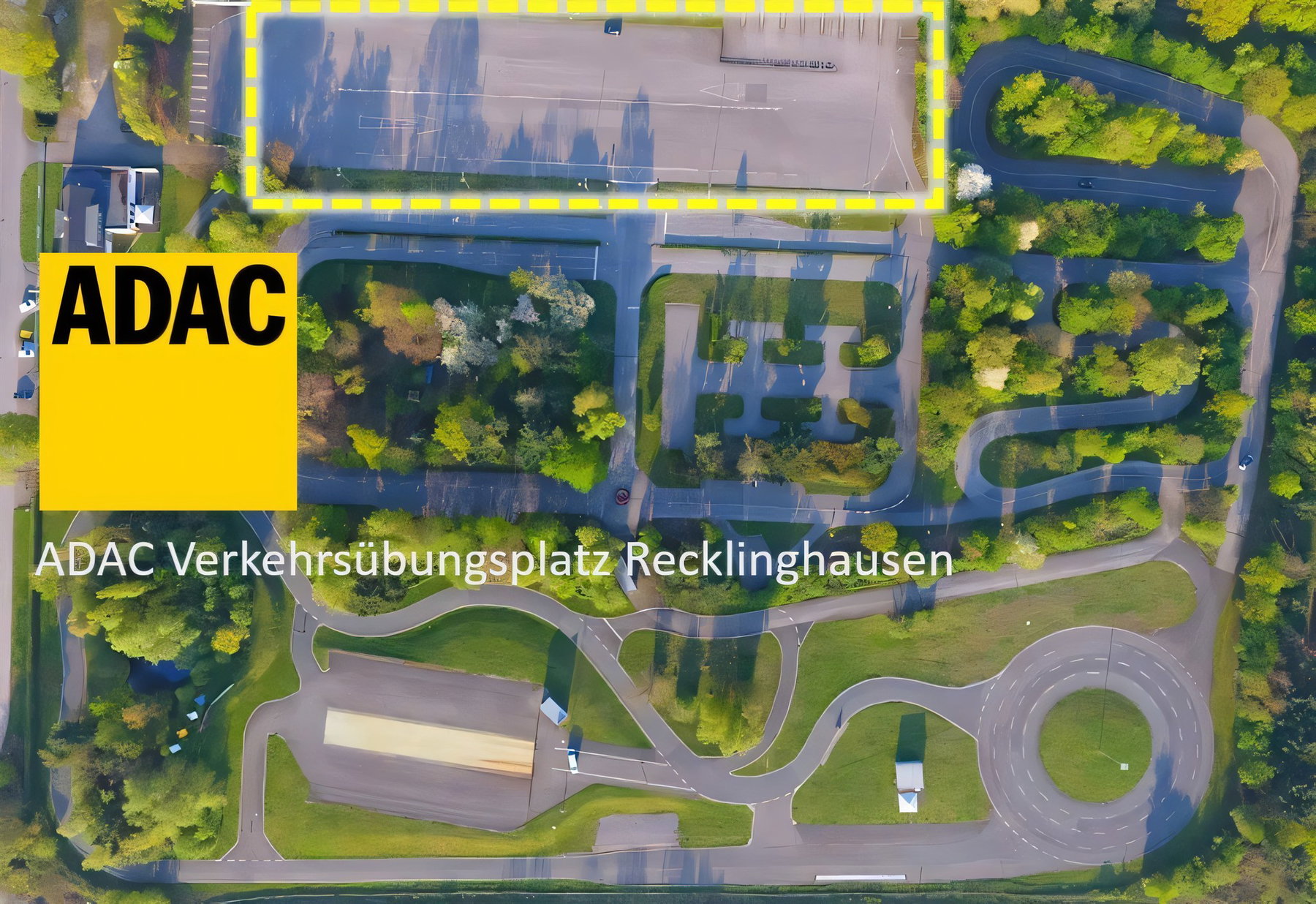
The institute had 50 motorcyclists estimate first and brake for real afterwards. The riding tests took place at the ADAC training ground in Recklinghausen, with the practical data collection running from June to September 2024.
The procedure was split into three parts. First, the participants sat on their own motorcycle at a painted braking line and had to name the point at which they would come to a standstill after an emergency stop from 50, 70, 80 and 100 km/h. An assistant placed a cone there and the team measured the distance. In the second step, the participants had to state that same distance in metres. The cone was then removed so that nobody could take their bearings from their own estimate. The third step consisted of the actual emergency stops from 50, 70 and 80 km/h. The institute skipped the stop from 100 km/h because the run-off area on the site would have been too short for it.
One detail matters for the validity of the results: until the moment of the first estimate, the participants had no idea what the study was even about. Subsequent test riders were not allowed onto the site beforehand. Every machine had to be fitted with ABS. The runs were recorded using two smartphones with measuring software carried in a backpack, while two fixed cameras filmed the brake lights in order to pinpoint the exact start of braking.
One point is decisive when reading the figures. Only the pure braking distance was measured. Reaction time and the resulting reaction distance were deliberately left out. On the road, that distance is added on top.
How far apart were the estimate and the real braking distance?
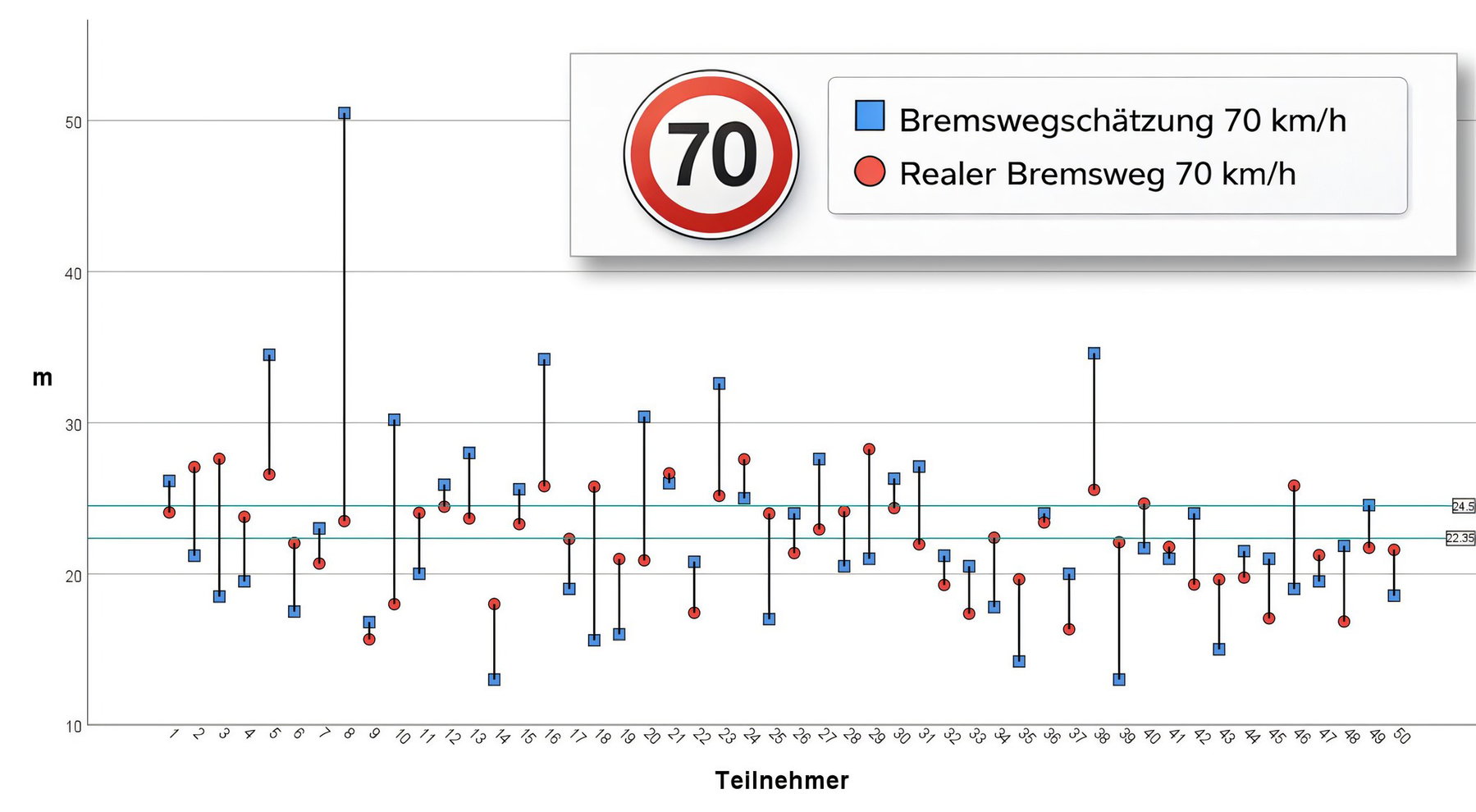
Depending on the speed, 46 to 54 percent of the participants needed more distance than they had assumed. From 50 km/h it was 54 percent, from 70 and 80 km/h 46 percent in each case.
Faced with an obstacle placed exactly at their own estimated stopping point, that group would no longer have come to a halt in time. It is also remarkable that not a single participant hit their estimate precisely. Everyone was off, in one direction or the other.
The measured values themselves sit closely together. On average the machines needed 15.96 metres from 50 km/h, 22.35 metres from 70 km/h and 25.54 metres from 80 km/h. Mean and median almost match, and there were barely any outliers. The spread therefore did not come from the braking, but from the estimates.
Another finding from the report: whoever misjudges at one speed usually misjudges at the others as well. The estimation errors at 50, 70 and 80 km/h are statistically very strongly linked. Misjudgement is therefore not a random product of individual situations, but a consistent pattern.
Why does the driving school formula not work on a motorcycle?
The rule of thumb taught in driving schools only provides rough reference points for motorcycles, and in one case it is even too optimistic. For 50 km/h the formula gives an emergency braking distance of 12.5 metres, while the measured median was around 16 metres.
At higher speeds the picture flips the other way. From 70 km/h the formula calculates 24.5 metres, whereas 22.35 metres were measured. From 80 km/h, 32 metres from the formula stand against 25.54 measured metres. The formula therefore comes out sometimes too short, sometimes far too long. The study report concludes from this that on a powered two-wheeler it only works as a rough rule of thumb.
The state of knowledge about the formula fits that picture. 48 percent of the participants stated from the outset that they did not know the formula. Of the 52 percent who ticked yes, 46.2 percent then named the wrong formula. All in all, 14 of 50 participants, or 28 percent, were able to calculate correctly.
A widespread misconception about the comparison with cars also stands out. 72 percent knew that a car comes to a stop faster under identical conditions. 26 percent considered the motorcycle superior and mostly justified that with its lower weight. Matthias Haasper, head of the ifz, calls this a “classic fallacy”.
Why do distances look longer than they really are?
Because many riders cannot reconcile figures in metres with actual distances. The participants estimated the very same distance they had just marked out visually as considerably longer when asked for metres.
The figures are unambiguous. At 50 km/h the cone stood at an average of 16.38 metres, yet 19.28 metres were stated. At 80 km/h, 26.83 measured metres stood against 32.76 stated metres. The gap grows widest at 100 km/h: there, 37.25 measured metres faced an average figure of 49.77 metres, a difference of around 12.5 metres. Research lead André Lang sums up the problem: “What looks like 50 metres is often only 30.”
For road traffic that has an uncomfortable consequence. Anyone aiming for a gap measured in metres tends to leave a shorter one in reality than they believe. The report concludes that rules of thumb given in metres are not enough on their own, and that safety campaigns and rider training should work more with visible reference points.
What do riders rely on when estimating?
Gut feeling. 58 percent of the participants stated that their visual estimate was based on exactly that.
18 percent named experience, 12 percent had calculated, and another 12 percent combined several approaches. One participant summed up his approach in the questionnaire like this: “In the end, braking remains a feeling.”
The self-assessment compared with the task is interesting. More than half of the participants, 52 percent to be exact, found estimating the braking distances difficult or very difficult. Nobody found the practical braking difficult, and 52 percent even rated it as very easy. Braking itself was therefore not the problem, but the mental picture of it.
Do experience, age and high mileage help?
No, at least not when it comes to estimating. Neither annual mileage nor self-assessed riding style showed any recognisable link to the quality of the estimate.
That is notable because the group of participants was anything but inexperienced. The average age was 56.4 years, on average the participants had been riding powered two-wheelers for almost 33 years, and 87.8 percent had already completed at least one motorcycle safety training course. Average annual mileage was 9,203 kilometres.
Age does show an effect, but not a helpful one. Older participants tended to estimate the braking distances as longer. That did not make their figures any more accurate. Women also consistently estimated the required distances as longer than men did. The report itself points out, however, that with seven female participants the group was small.
What actually shortens the braking distance?
Two things showed a positive effect in the test: engaging with your own brake system, and practising emergency stops regularly.
The link between engaging with your own brakes and a shorter real braking distance is statistically confirmed. For practising emergency stops the value narrowly misses the usual significance threshold, but the direction is right. The report puts it cautiously: regularly engaging with the theory and practice of emergency braking at least does not lengthen braking distances. How often riders practise varies widely: 8 percent of the participants never practise, while 44 percent do so regularly to very regularly.
What the results mean for safe following distances
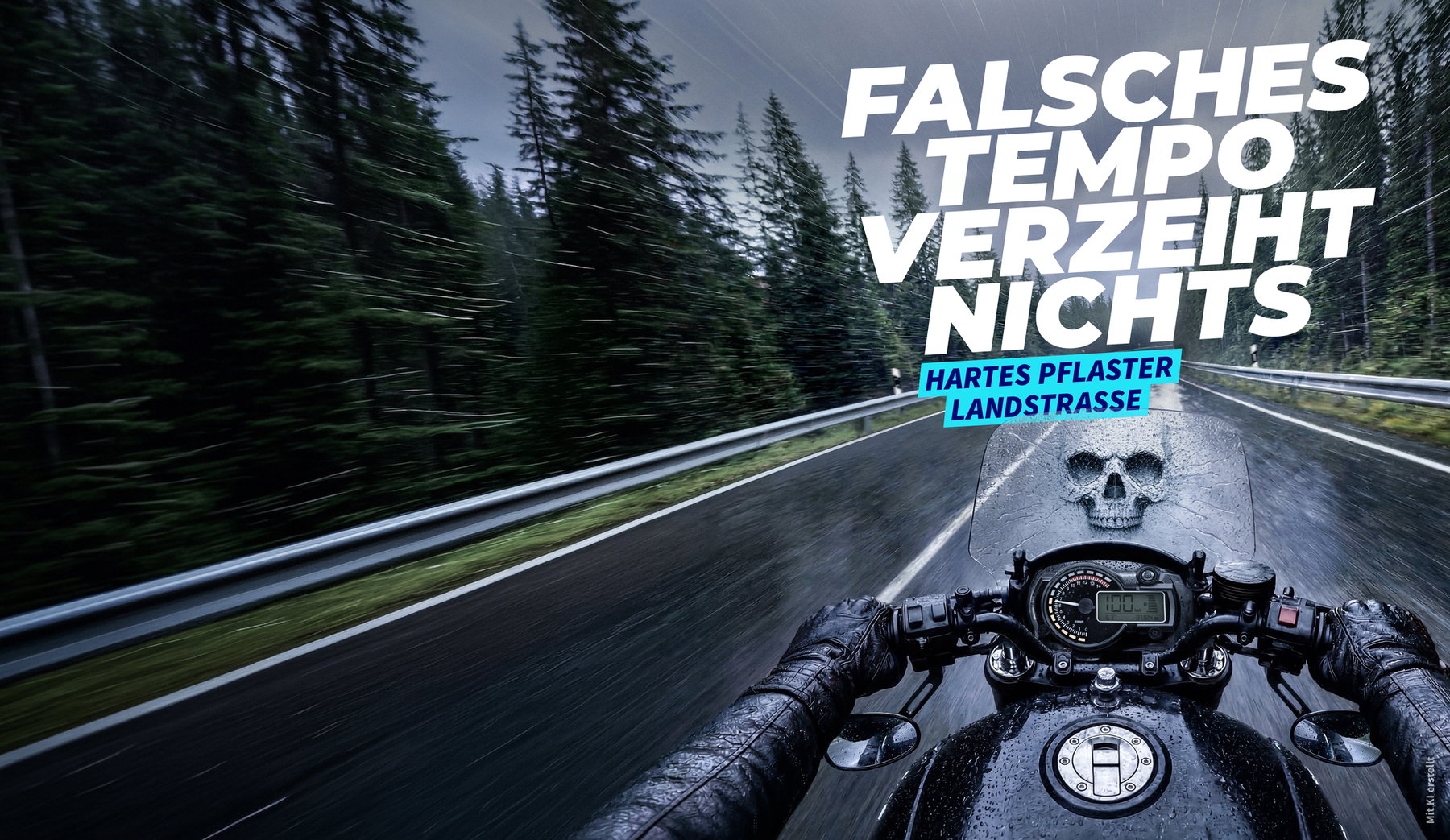
A campaign has grown out of the study. Together with the German Road Safety Council (DVR), the ifz launched the “#AbstandKommtAn” campaign in April 2026 with ten motifs for social media.
The background is the accident statistics. According to the study report, around 13 percent of accidents involving personal injury on officially registered motorcycles in 2024 were caused by insufficient following distance, based on figures from the Federal Statistical Office. That puts this type of behaviour high up the list of accident causes among motorcyclists. Haasper points to the study results in this context: “Almost half of all motorcyclists need more distance to brake than they previously estimated. The braking distance is therefore largely underestimated.”
Kay Schulte, head of accident prevention at the DVR, explains why this weighs more heavily on a motorcycle than in a car: “Unlike in a car, a motorcycle lacks the protective body shell, which makes the necessary distance all the more important. If the vehicle ahead brakes abruptly, too small a gap can quickly become very dangerous.”
In town, the participants themselves mostly kept gaps of more than ten metres, with a third staying below that. Vehicle lengths served as the usual yardstick, while a good fifth again went by gut feeling.
The study fits into the institute’s longer-term safety research. Back in 2016 the ifz had already examined the braking distances of 100 test riders in a study on braking versus swerving, though that one included the reaction distance. Beyond the question of misjudgement, the current report sees starting points in rider assistance systems for two-wheelers, for example distance warnings and emergency braking assistants.
Frequently Asked Questions
-
How long is a motorcycle braking distance from 50 km/h?
In the ifz study, the 50 participants needed an average of 15.96 metres for an emergency stop from 50 km/h. The median was around 16 metres. The driving school formula gives 12.5 metres for this speed, so the real figure is higher.
-
How many motorcyclists underestimate their braking distance?
Depending on the initial speed, 46 to 54 percent of the participants needed more distance than they had estimated beforehand. From 50 km/h it was 54 percent, from 70 and 80 km/h 46 percent in each case. Not a single participant hit their estimate exactly.
-
Who carried out the motorcycle braking distance study?
The study comes from the Institute for Motorcycle Safety (ifz) in Essen and was written by Matthias Haasper, André Lang and Alexander Conrad. The riding tests ran in 2024 at the ADAC training ground in Recklinghausen. The full report was published on 12 August 2026.
-
Does plenty of riding practice help judge braking distances better?
No. The study found no recognisable link between annual mileage and the accuracy of the estimate. What did have an effect was practising emergency stops regularly and engaging with your own brake system, both of which led to shorter real braking distances.
-
Why is the braking distance even longer in real traffic?
The study measured the pure braking distance only. Reaction time and reaction distance were deliberately excluded because the participants knew where and when they were going to brake. On the road, that distance is added on top.