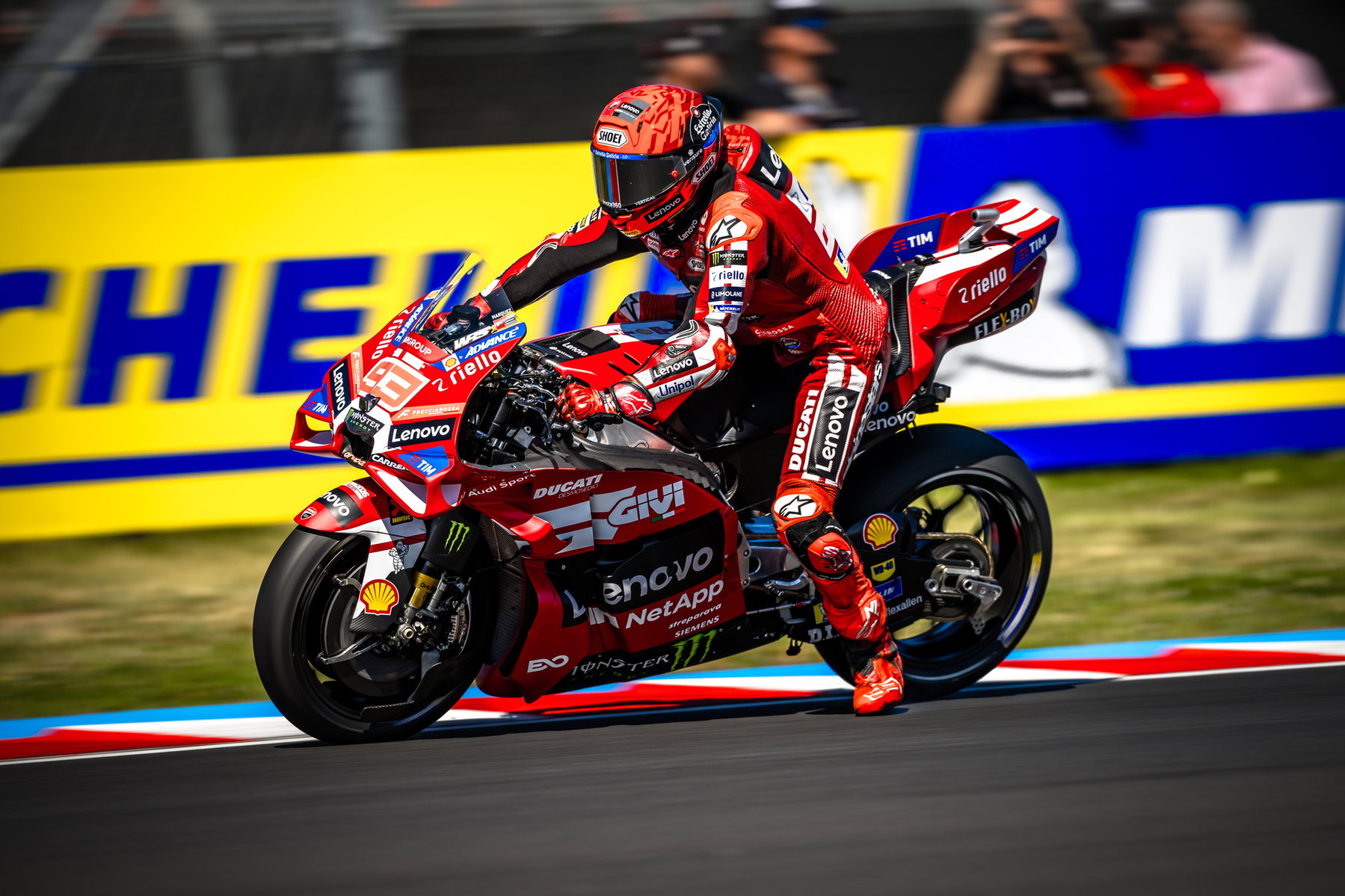
- First test of MotoGP regular riders with Pirelli tires for 2027 takes place on June 22 in Brno
- Pirelli replaces Michelin as the sole tire supplier of the premier class in 2027
- Maximum two riders per manufacturer at the Brno test, including at least one regular rider
MotoGP faces one of its biggest technical upheavals in years in 2027. Displacement drops from 1,000 to 850 cubic centimeters, aerodynamic aids and so-called ride-height devices are eliminated, and Pirelli enters the premier class as a new tire manufacturer after more than a decade. The tires are considered by many to be the biggest unknown of this reform. A few days before the first test with regular riders, Pirelli’s motorcycle racing director Giorgio Barbier has now explained how far development has come and what principles his company follows.
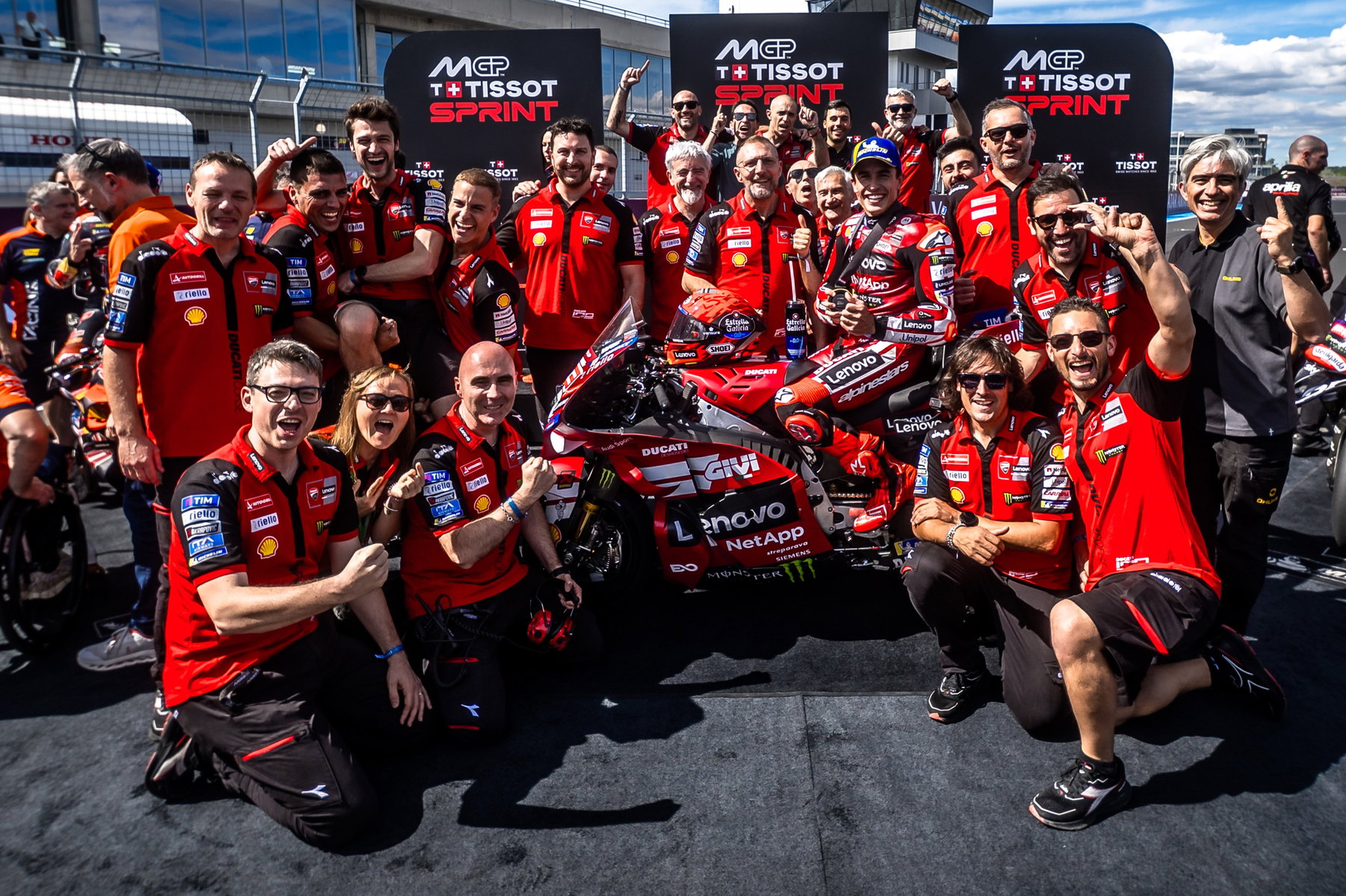
Why Pirelli won’t build a dedicated Marquez tire for MotoGP
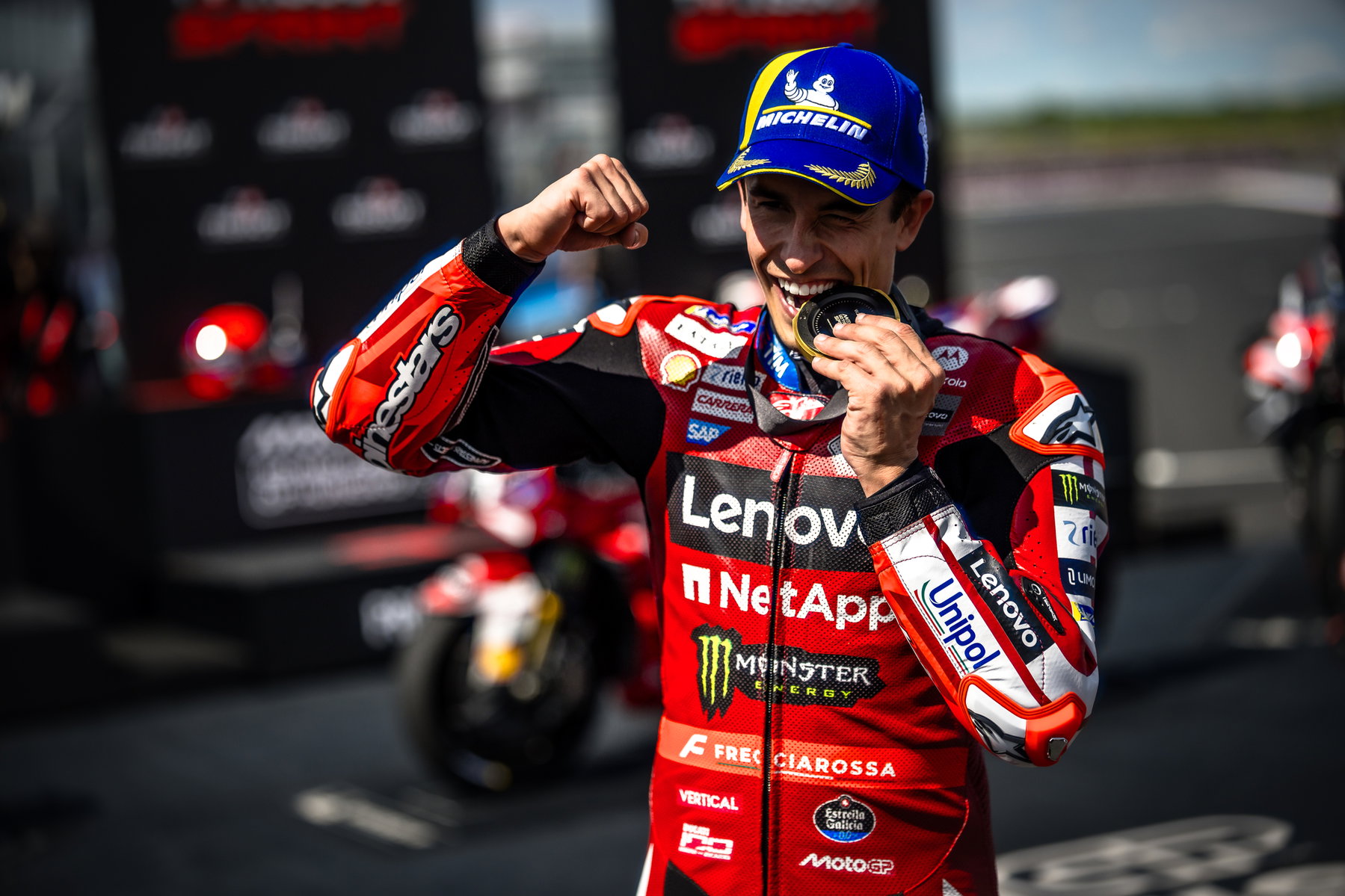
Pirelli says it has no intention of developing a tire specifically tailored to a single rider like Marc Marquez. Since the reigning world champion is expected to be among the riders at the first test, and his feedback carries particular weight due to his success, the question had recently arisen whether the 2027 tires could become a pure Marquez tire.
Barbier firmly rejected this. It is not the way his company operates, he emphasized with the words “it is not our style.” In 23 years in Superbike, they have always maintained certain balances, and that is also the stated goal of the promoter. At the same time, he acknowledged that riders who can provide more and more precise feedback naturally receive more attention. What matters is the ability to understand and communicate information, whether it is Marquez or another rider.
When will MotoGP regular riders first test the Pirelli tires?
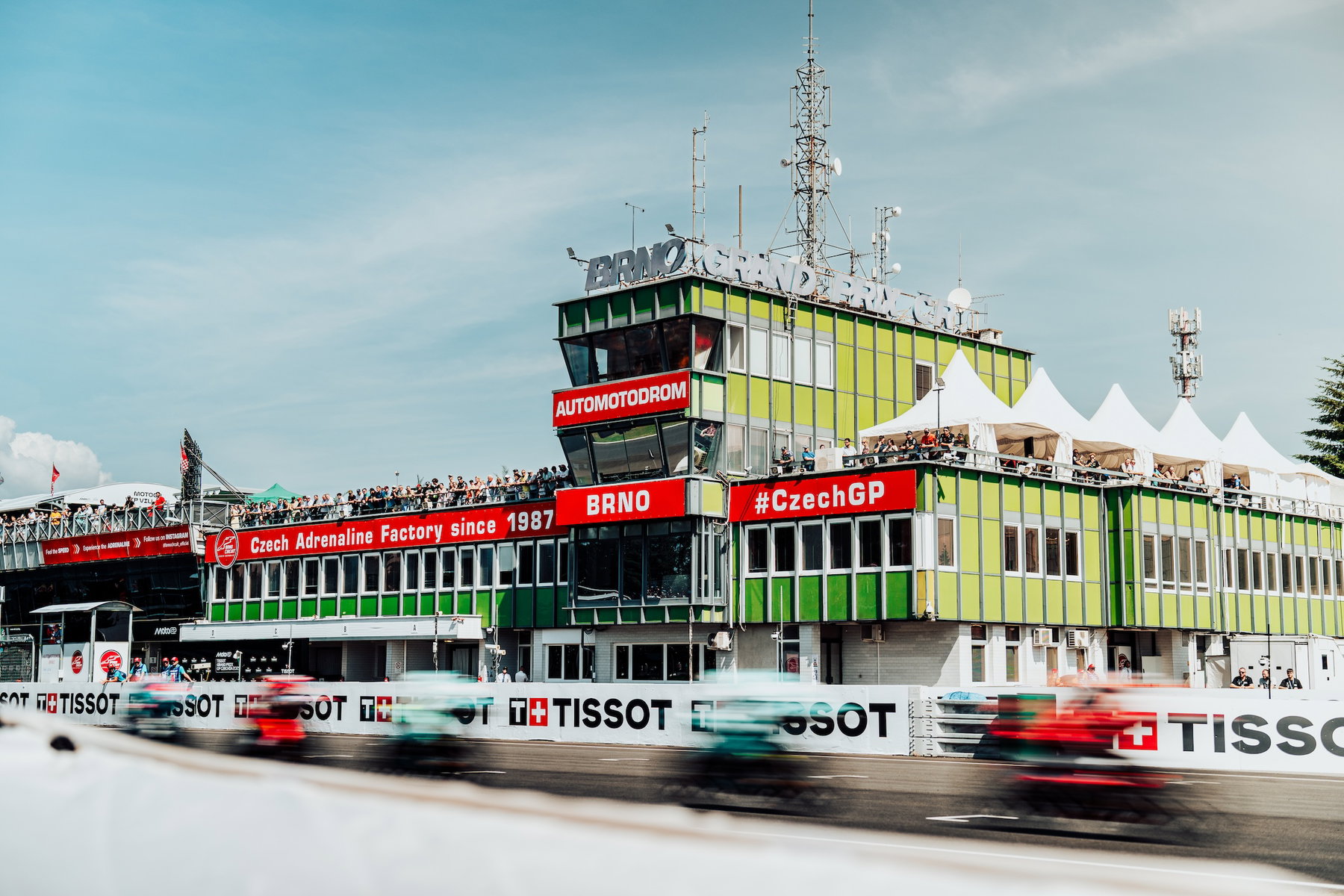
The first test of MotoGP regular riders with the Pirelli tires for 2027 takes place on June 22 in Brno, directly following the Grand Prix of the Czech Republic. Until that date, no contracted regular rider had driven the new tires. Augusto Fernandez is considered the only rider from the current field who has come close to the Pirellis.
The Brno test takes place behind closed doors, as Michelin’s contract still runs until the end of the year. According to reports, it is limited to a maximum of two riders per manufacturer, with Pirelli requiring at least one of them to be a regular rider. Unlike previous tests, genuine 2027 prototypes are expected to be used in Brno rather than modified current machines. This promises Pirelli significantly more precise insights into tire behavior.
Which riders are allowed to ride the 2027 prototypes in Brno?
In Brno, primarily the riders who will remain with their current manufacturer in 2027 get to ride. These include Marco Bezzecchi at Aprilia, Toprak Razgatlioğlu at Yamaha, Diogo Moreira at Honda, and Ducati riders Marc Marquez and Fermin Aldeguer. At Honda, Johann Zarco could also be in contention, provided he has recovered from his injury.
KTM faces a more difficult choice and is expected to rely solely on experienced test riders Dani Pedrosa and Pol Espargaro, as the expected new factory duo of Alex Marquez and Fabio di Giannantonio are still under contract elsewhere. The reason for the restraint lies in the rider market. The line-ups for 2027 are said to have been set long ago but cannot officially be announced until the manufacturers have signed the new multi-year agreement with the rights holder. No factory wants to entrust a prototype to a rider switching to a competitor, as that would reveal valuable information. Corresponding announcements could therefore come around the time of the Brno test.
How does Pirelli develop the new MotoGP tires?
Pirelli develops the tires in close coordination with all manufacturers and has been present at nearly every test since September 2025. Development started with modified 1,000 cc machines; from December, the first 850 cc bikes were added. According to information, Pirelli delivered an initial package of around 70 tires per manufacturer in October 2025, followed by a second package with the same quantity and initial development improvements at the end of April. Barbier did not want to officially confirm the exact numbers but did confirm the two deliveries as such.
At the Mugello test on May 31, the manufacturers are said to have used up all the tires from the first package, which Pirelli views as a positive sign for the material’s usability. A joint test at Misano, where all five manufacturers were on track simultaneously with the new prototypes for the first time, is considered particularly significant. At one of the early Misano tests, each team had seven tire sets available, with two front variants and three rear variants, in the current MotoGP dimensions with 17-inch diameter. At the time, test riders Augusto Fernandez (Yamaha), Dani Pedrosa (KTM), Takaaki Nakagami (Honda), Lorenzo Savadori (Aprilia), and Michele Pirro (Ducati) tested the material at asphalt temperatures between 25 and 43 degrees.
After Brno, two more important dates are scheduled. A more open test is planned at Spielberg, in which all teams including private outfits are expected to participate, presumably still with detuned 1,000 cc machines. The final event is the Valencia test on December 1. Barbier expressed concern that some riders could end up testing Pirelli for the first time only there, due to the unclear market situation, shortly before heading to Sepang in January.
What are the technical characteristics of the Pirelli tires?
The key characteristics of the Pirelli tires, according to the manufacturer, are instant grip, very fast warm-up, and precise front-end feedback. The clear signals about where the limit is are crucial for a rider. Pirelli has developed this characteristic over years in Superbike.
Barbier pointed out that the tires operate at higher pressures and with a wider operating window than previously common. On the topic of tire pressure monitoring, which has sparked debate in MotoGP, he was cautious. During a Misano test with six machines and around 60 degrees asphalt temperature, no significant pressure fluctuations occurred, which he described as a good sign. However, the behavior in the slipstream, when heat flows from brakes and aerodynamics hit the following motorcycle, is still unknown to Pirelli. Therefore, they want to keep the existing regulation for now and decide later whether to adjust or drop it. All race tires continue to be manufactured at the German factory, using the processes and materials familiar from Pirelli.
Who benefits from a head start in tire knowledge?
The main beneficiaries are likely to be riders who already know Pirelli from Superbike. Maverick Viñales emphasized how important an early test would be for him. Anyone who rides the Pirellis early cannot influence tire development but can influence the setup of their own motorcycle, which is a big advantage.
A similar picture emerges with Nicolo Bulega, who is set to join Ducati’s VR46 team in 2027. When he first tested the new tires on a MotoGP machine at Misano, his first comment according to Pirelli was “mi sono trovato subito a casa” (in English: “I immediately felt at home”). The previous year, Bulega had substituted for Marquez at two Grands Prix and struggled with the tires at the time. With the Pirellis, the transition is now easier for him. Barbier also noted that a MotoGP machine is significantly stiffer than a Superbike and moves less, which is why manufacturers need to adapt their prototypes accordingly.
How much the reform will impact overall, Barbier indicated using the example of performance. With the elimination of launch devices and a power reduction in the range of 30 to 50 hp (approximately 22 to 37 kW), the riding style will shift toward higher corner speeds. At top speed, machines could be around 20 km/h slower at Mugello. This is exactly where the new tires are meant to help, both with front-end turn-in and rear grip.
Frequently Asked Questions
-
When is the first Pirelli MotoGP 2027 test with regular riders?
The first test of regular riders with the Pirelli tires for 2027 takes place on June 22 in Brno, following the Grand Prix of the Czech Republic. It is the first opportunity for current regular riders to ride the 2027 prototypes with the new tires.
-
Who replaces Michelin as the MotoGP tire supplier?
Pirelli replaces Michelin and will be the sole tire supplier for MotoGP from 2027 onward. Michelin’s contract still runs until the end of 2026, which is why Pirelli tests are held behind closed doors until then.
-
What changes technically in MotoGP 2027?
MotoGP switches from 1,000 to 850 cc displacement in 2027, eliminates ride-height devices, and reduces aerodynamics. In addition, the tire change from Michelin to Pirelli is expected to alter the riding style.
-
Which riders test the new tires in Brno?
Marco Bezzecchi, Toprak Razgatlioğlu, Diogo Moreira, Marc Marquez, and Fermin Aldeguer are expected to ride in Brno, as they are staying with their manufacturers. KTM is likely to rely on test riders Dani Pedrosa and Pol Espargaro.
➜ More on this topic in our overview: 2027 MotoGP Season: The Complete Overview.
➜ This article is part of our comprehensive overview: 2026 MotoGP Season: The Complete Overview – Teams, Riders, Calendar & Championship Standings. Find all key information on this topic in one place.