- New air/oil-cooled parallel twin with 743 cc, 55 hp and 63 Nm
- A first for Royal Enfield: cruise control, cornering ABS, adjustable Showa suspension and twin front discs
- Available to order in Italy from 7,390 euros, German prices still pending
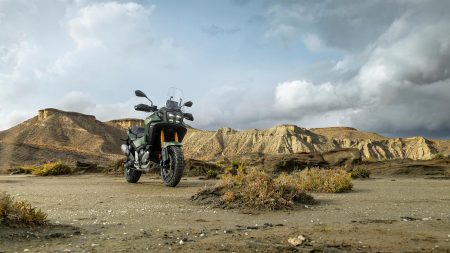
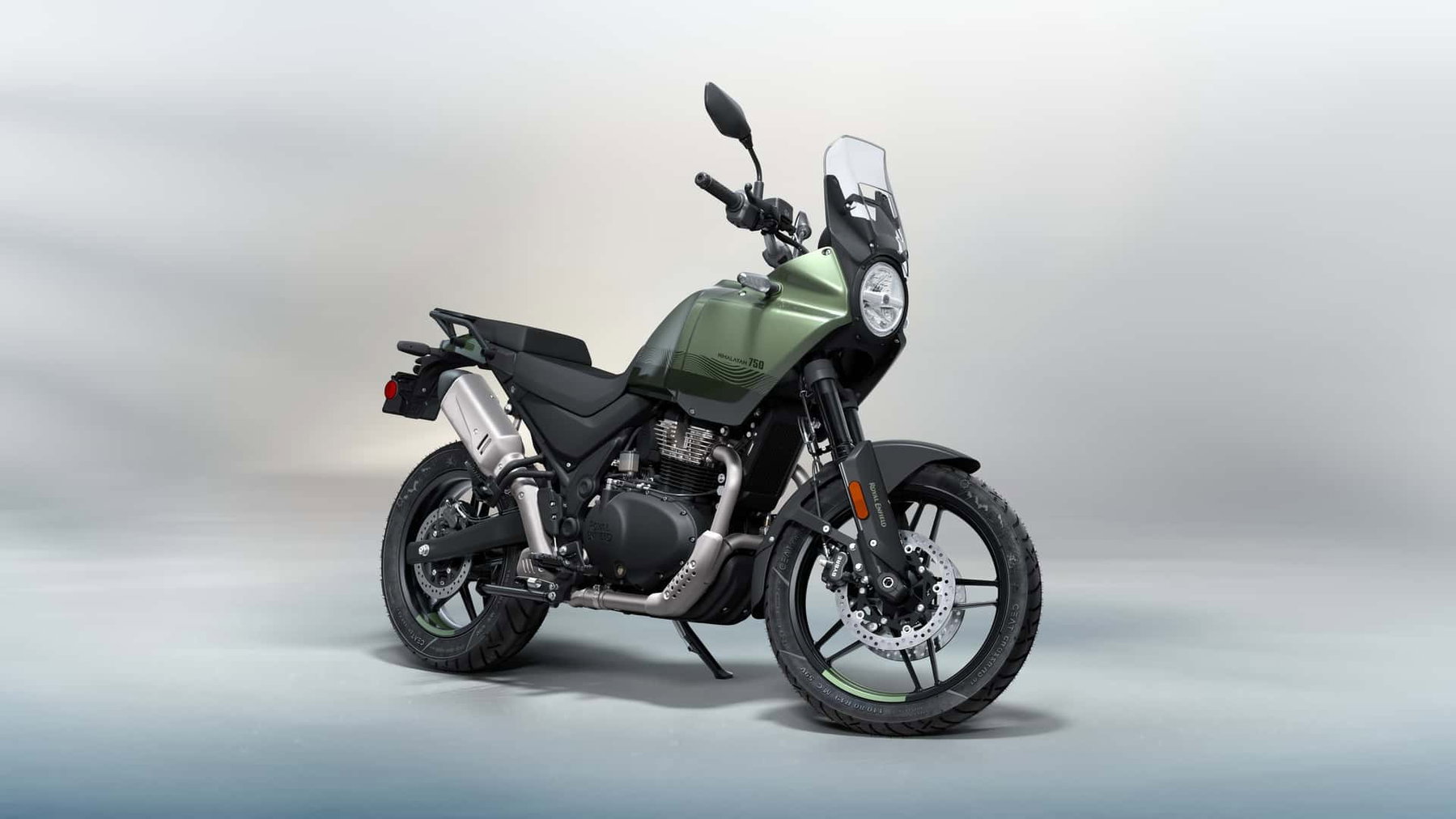
Ten years after the first Himalayan 411, Royal Enfield is placing a model above its familiar singles. The Himalayan 750 premiered in Milan on 3 November 2026, rounding off the company’s 125th anniversary. It is the first production model with the new 743 cc twin, which also powers the Continental GT 750 shown at the same time. That makes the Himalayan 750 one of the most important new models of this show season and one of the motorcycles of the 2027 model year. Anyone expecting a pumped-up rally machine, however, will be surprised: Royal Enfield is betting on everyday torque, comfort and equipment rather than peak power.
What engine does the Royal Enfield Himalayan 750 have?
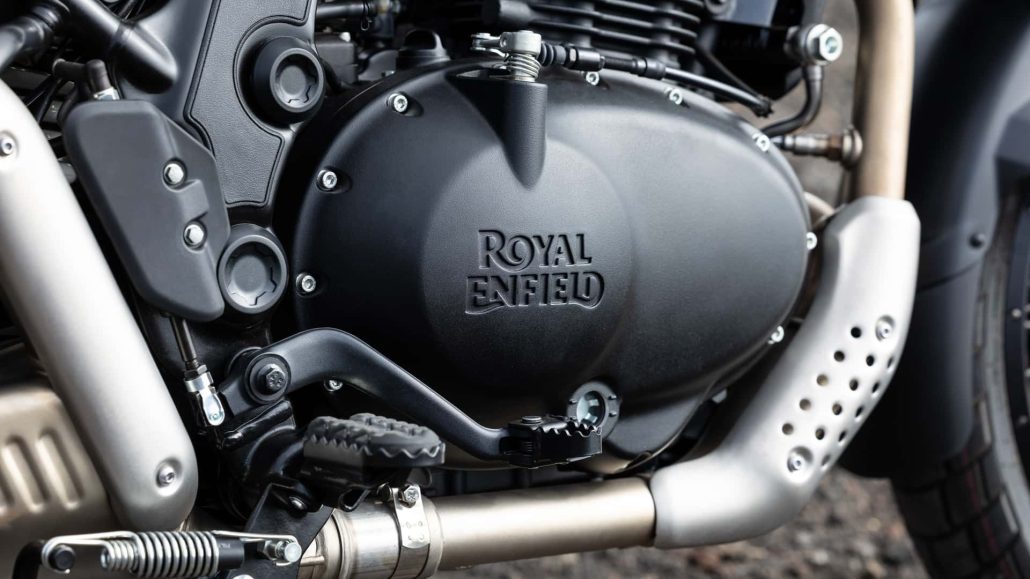
The Royal Enfield Himalayan 750 is powered by an air/oil-cooled parallel twin with a displacement of 743 cc. It produces 55 hp (40.5 kW) at 7,000 rpm and 63 Nm (46.5 lb-ft) of torque at 5,000 rpm.
Technically, the engine is based on the well-known 650 twin used in the Interceptor and Continental GT, among others. The bore grows from 78 to 83.5 millimetres, while the stroke stays at 67.8 millimetres. Even so, most of the components are said to be new. These include coated cylinder bores, shorter cooling fins and magnesium engine covers. Thanks to the lightweight material, a single throttle body and a 2-into-1 exhaust, the larger engine is said to weigh barely more than the 650.
The character is what is most interesting. According to the manufacturer, around 90 percent of peak torque is already available at 3,500 rpm. This means the 750 delivers more pulling power low in the rev range than the 650 manages at its peak. Compared with the 650’s 47 hp, power rises by around 15 percent and torque by as much as roughly 20 percent. The low compression ratio of 9.5:1 suits travel in countries where high-quality fuel is not available everywhere.
Power goes through an anti-hopping clutch to a six-speed gearbox and from there by chain to the rear wheel. An anti-hopping clutch prevents the rear wheel from chattering under hard downshifts. Royal Enfield does not offer a quickshifter or an automatic clutch.
What is new about the electronics of the Himalayan 750?
The Himalayan 750 is the first Royal Enfield with a ride-by-wire throttle, i.e. an electronic rather than a mechanical connection to the throttle body. This is what makes cruise control and lean-sensitive assistance systems possible in the first place.
A six-axis inertial measurement unit (IMU) constantly records how much the motorcycle leans, pitches and accelerates. Using this data, the cornering ABS and traction control also work at lean angle. Traction control has three levels and can be switched off, as can the rear-wheel ABS, which helps off-road. Five riding modes called Rain, Road, Road Sport, Trail and Custom let the rider adjust throttle response, traction control and ABS.
The brand also steps up on equipment. Standard features include:
- cruise control and tyre pressure monitoring
- round 4-inch TFT display with Wi-Fi, Bluetooth and navigation via Google Maps
- connection to the Royal Enfield app with Wingman 2.0 via 4G and GPS
- two USB-C ports, one of them with 27-watt fast charging
- self-cancelling indicators, emergency brake light and immobiliser
- 7-inch LED headlight in an aluminium housing and a centre stand
This means the Himalayan offers, for example, cruise control – something even the considerably more expensive Yamaha Ténéré 700 does not have.
How does the Himalayan 750 differ from the Himalayan 450?
The 750 is not a bigger sibling for even more off-roading but a travel bike. It has a smaller front wheel, less suspension travel and around 30 kilograms more weight than the Himalayan 450.
The 450 rolls on a 21-inch front wheel, the 750 on a 19-inch wheel, with a 17-inch rear. This combination is typical of road-oriented adventure tourers. The tyres measure 110/80 R19 and 150/70 R17. Royal Enfield offers cast and spoked wheels, both for tubeless tyres. The spoked version comes from the factory on knobbly Vredestein Centauro XR tyres, the cast-wheel version on Ceat Crossrad RT.
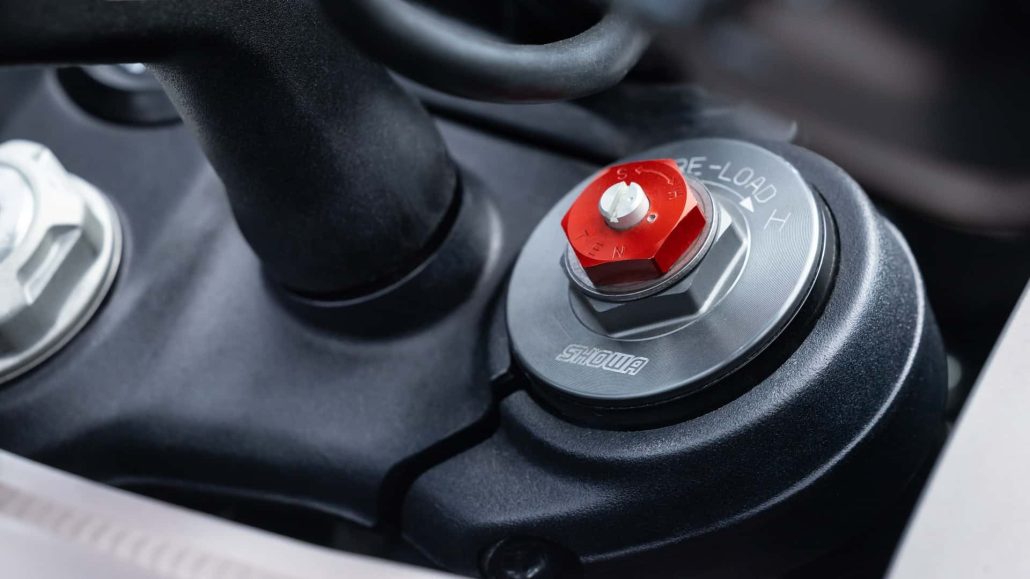
For the suspension, Royal Enfield relies on Showa. The 43 mm upside-down fork has 190 millimetres of travel and is adjustable for compression and rebound. At the rear, a linkage-mounted shock with 175 millimetres of travel offers adjustable rebound and, via a handwheel, adjustable spring preload. The 450 has 200 millimetres front and rear. No Royal Enfield model has had adjustable damping before.
The frame is a box-section central-spine frame with pressed steel arms, with the engine as a stressed member. This is intended to keep the centre of gravity low. At the front, two floating 280 mm discs with two-piston floating calipers from ByBre do the braking, with a 255 mm disc at the rear. Royal Enfield has never had twin front discs before either.
Ready to ride with a 90 percent full tank, the Himalayan 750 weighs 223 kg (492 lbs) according to the manufacturer. The wheelbase measures 1,522 millimetres, the rake 27.9 degrees and the trail 121.5 millimetres.
How well suited is the Himalayan 750 to long trips?
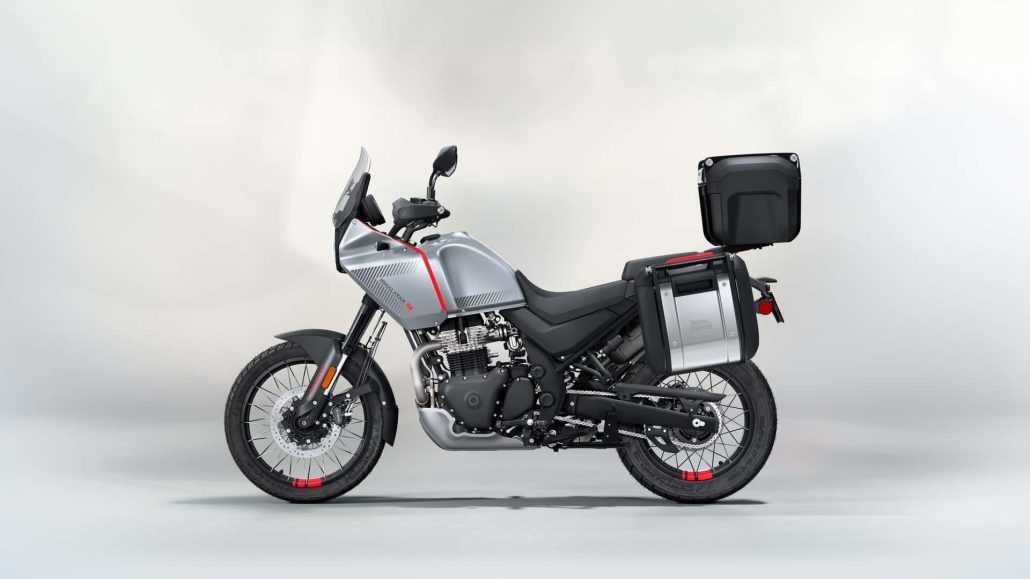
The Himalayan 750 is much better prepared for long distances than its smaller sisters. A 17.8-litre tank, separate seats for rider and pillion and a payload of just under 195 kg (430 lbs) are clearly aimed at two-up touring with luggage.
Fuel consumption is said to be around 4.4 litres per 100 kilometres. On paper, a full tank is therefore good for around 400 kilometres. Seat height is 815 millimetres, a rather low figure for an adventure tourer of this size. A lower seat and comfort seats for rider and pillion are available as accessories. The windscreen can be adjusted in five steps over a total of 60 millimetres. Ground clearance is 205 millimetres.
Together with Givi, Royal Enfield has developed a pannier system that mounts to the motorcycle without a separate luggage rack. Soft luggage from the same collaboration is also available.
How does the Himalayan 750 compare with the competition?
With 55 hp and 63 Nm, the Himalayan 750’s raw figures fall short of many mid-size adventure tourers. The almost identically sized Honda Transalp, for example, has more torque, and liquid-cooled rivals usually offer considerably more power.
Royal Enfield instead focuses on equipment and price. Cruise control, cornering ABS, adjustable Showa suspension and tyre pressure monitoring are far from a given in this price class. The air/oil-cooled design also does without a radiator that could be damaged off-road. How well the package works on the road remains to be seen in the first ride reports.
Which versions and prices are there for the Royal Enfield Himalayan 750?
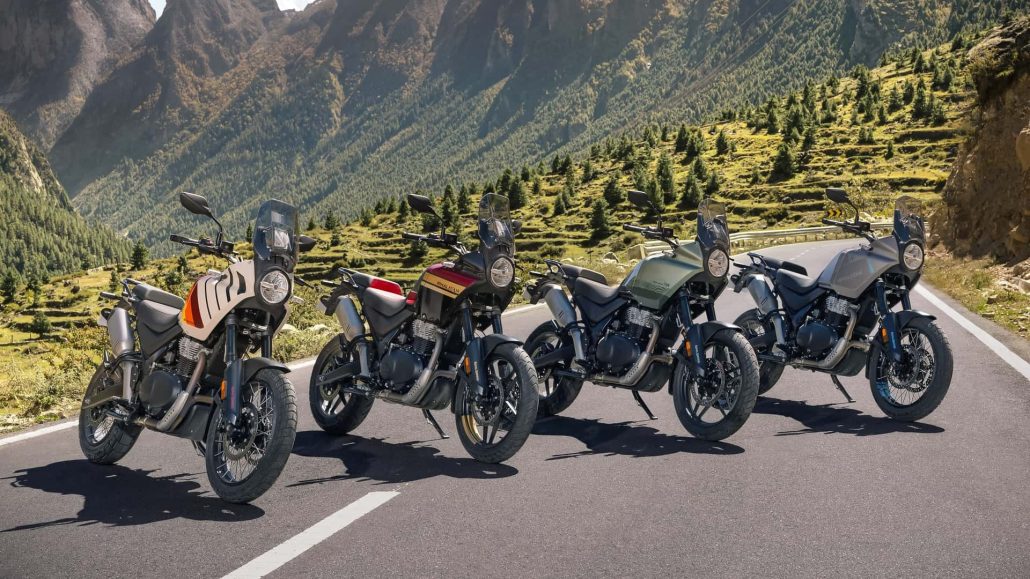
In Europe, the Royal Enfield Himalayan 750 is available in three trim levels, and orders have been open since 3 November 2026. In Italy, prices range from 7,390 euros (approx. 8,260 US dollars) to 9,290 euros (approx. 10,390 US dollars).
The base model has cast wheels and comes in Aztec Green; Royal Enfield also lists Tectonic Black for the cast-wheel version. The spoked-wheel variants come in Viking Bronze or Siberia White. At the top of the range is the Antarctic Silver version. It comes as standard with Givi side cases and top case including mounts and inner bags, heated grips, hand guards and an aluminium bash plate.
The launch prices at a glance:
- Cast wheels: 7,390 euros in Italy (approx. 8,260 US dollars), 6,999 pounds in the UK (approx. 8,400 euros / 9,390 US dollars)
- Spoked wheels: 7,790 euros in Italy (approx. 8,710 US dollars), 7,299 pounds in the UK (approx. 8,760 euros / 9,790 US dollars)
- Antarctic Silver with touring pack: 9,290 euros in Italy (approx. 10,390 US dollars), 8,699 pounds in the UK (approx. 10,440 euros / 11,670 US dollars)
In the UK, Royal Enfield offers a three-year warranty that can be extended to up to seven years.
When is the Himalayan 750 coming to Germany?
Royal Enfield has not yet announced a German price or delivery date. There is also no information yet on pricing and market launch for the USA.
Since orders have been open across Europe since early November and the Italian prices are fixed, the German price is likely to be in a similar range. Royal Enfield now has its own subsidiary in Germany. As soon as the brand announces prices for the German market, we will update this article.
Frequently Asked Questions
-
How much horsepower does the Royal Enfield Himalayan 750 have?
The Royal Enfield Himalayan 750 produces 55 hp (40.5 kW) at 7,000 rpm. Peak torque of 63 Nm arrives at 5,000 rpm, with around 90 percent of it said to be available from 3,500 rpm.
-
How much does the Royal Enfield Himalayan 750 cost?
In Italy, the Himalayan 750 starts at 7,390 euros (approx. 8,260 US dollars), in the UK at 6,999 pounds (approx. 8,400 euros / 9,390 US dollars). The top version with Givi luggage costs 9,290 euros in Italy. German prices have not yet been set.
-
How heavy is the Himalayan 750?
Ready to ride with a 90 percent full tank, the Himalayan 750 weighs 223 kg (492 lbs) according to the manufacturer. That makes it around 30 kilograms heavier than the Himalayan 450, and it has a payload of just under 195 kg.
-
Does the Himalayan 750 have a 21-inch front wheel?
No, the Himalayan 750 rolls on a 19-inch front wheel and a 17-inch rear wheel. Cast or spoked wheels are available, both for tubeless tyres.