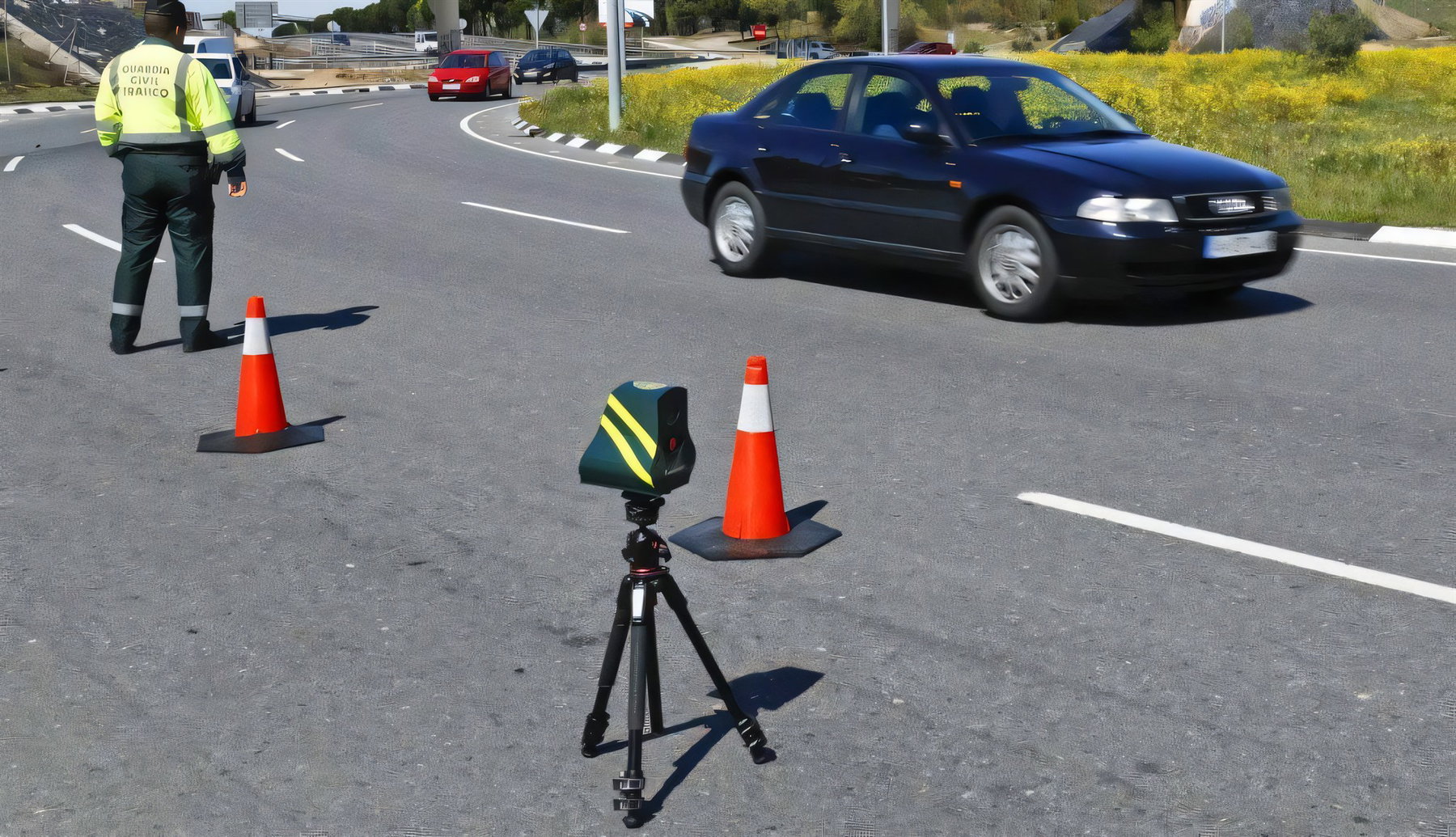
- 130 Veloláser units from two procurement rounds (60 and 70 devices), in service since 2018
- Measuring range 30 to 250 km/h, both directions of travel, day and night, no flash
- On top of that, new dynamic laser radars worth 1,020,000 euros net (around 1,183,000 US dollars), reportedly 15 units, plus a plan for 122 fixed enforcement points
Spain’s Dirección General de Tráfico, DGT for short, keeps expanding its speed enforcement. At the centre of it sits a device that has been out on Spanish roads since 2018 and has lost none of its importance despite drones, average speed cameras and AI cameras: the Veloláser. According to media reports, the Guardia Civil currently has 130 of these portable laser radars. In parallel, in the spring of 2026 the DGT awarded a contract worth more than one million euros for new dynamic radar devices. This overview shows what the Veloláser can actually do, where it is placed and what sets the new devices apart from it.
What is a Veloláser radar?
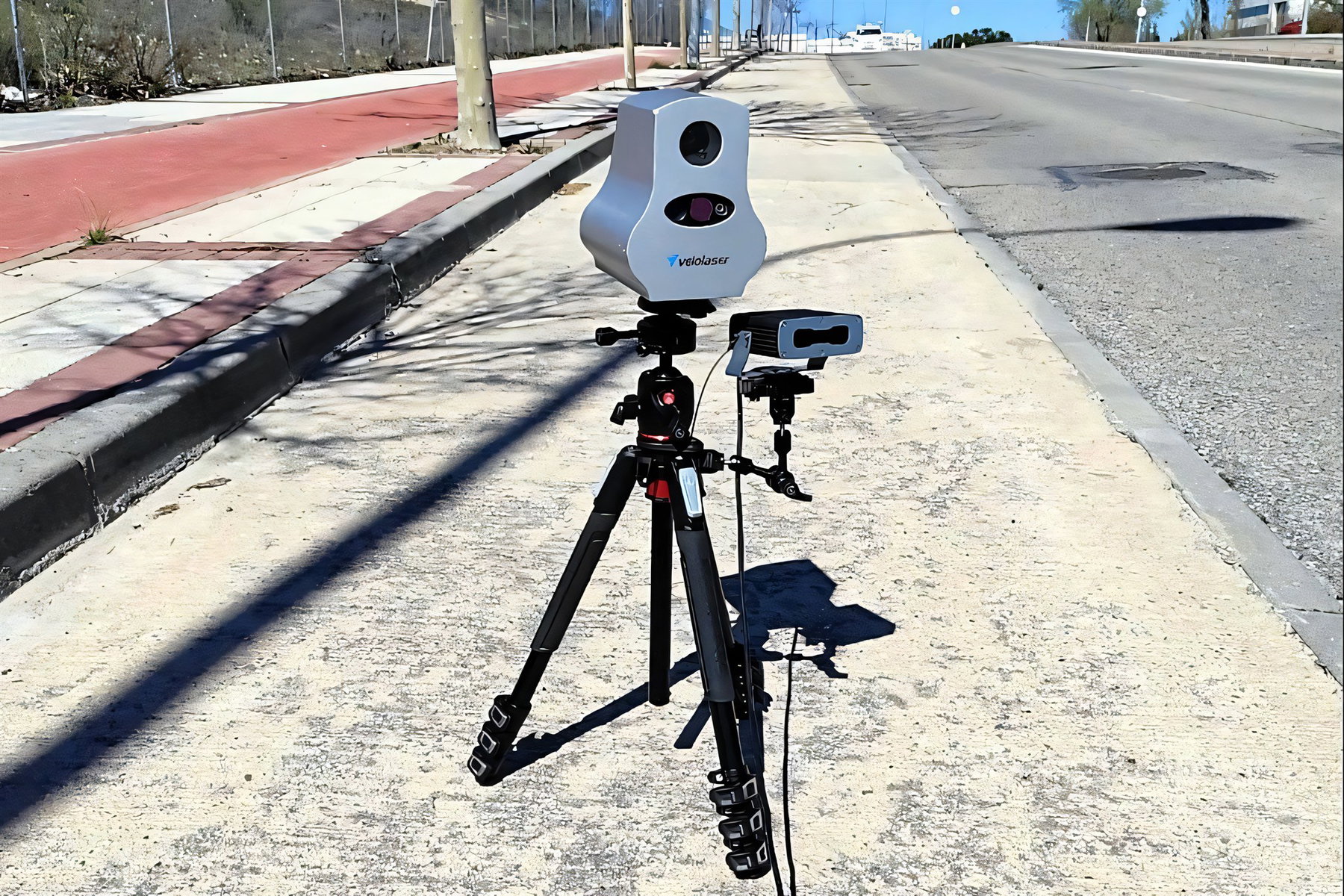
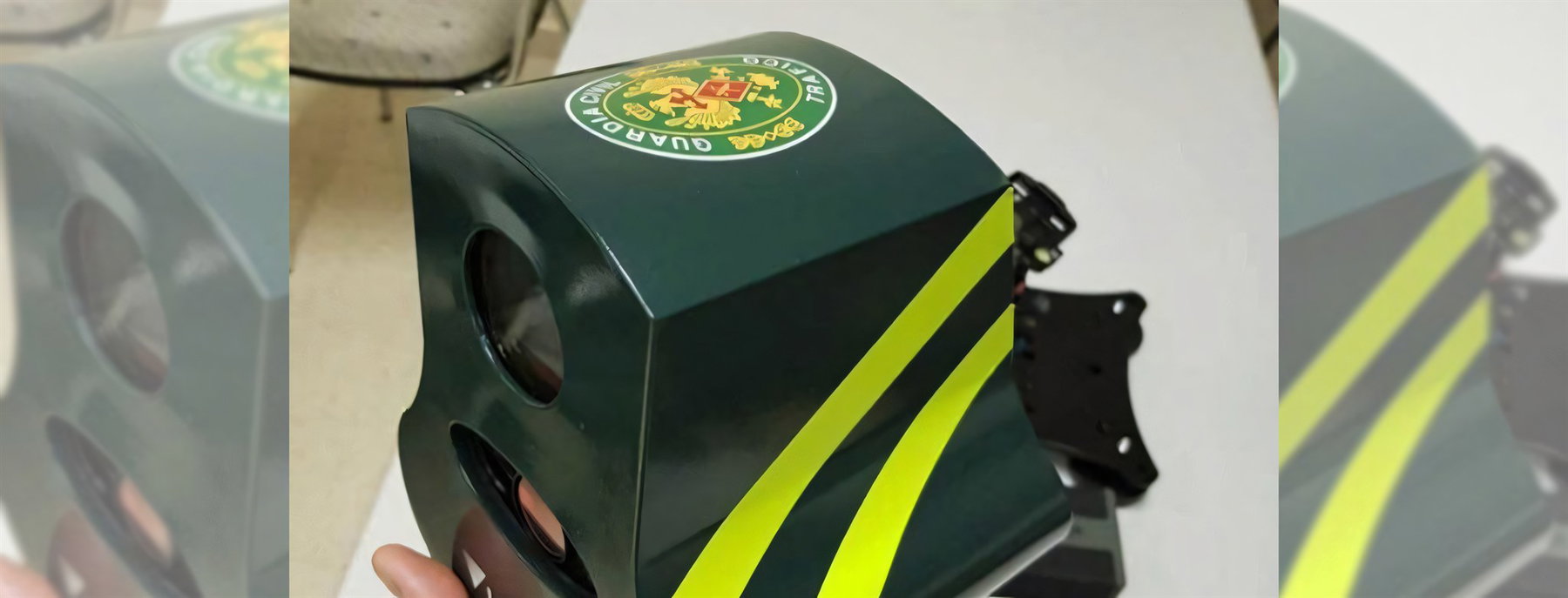
The Veloláser is a portable laser speed measuring device that the DGT, the Guardia Civil and some local police forces in Spain have been using since 2018. It stands around 50 centimetres tall, weighs between 1.2 and just under 2 kilograms (around 2.6 to 4.4 pounds) depending on the source, and works completely wirelessly.
The DGT bought the first batch of 60 units in early 2018 for a total of 860,310 euros (around 998,000 US dollars), which works out at roughly 14,339 euros (around 16,630 US dollars) per unit. A further 70 devices were added later, so the fleet now comprises 130 units. The manufacturer is said to be the French company Mesta, and in Spain the device was distributed through the companies Invia Sistemas and Labrax. That manufacturer information comes from a radar detector supplier, however, and could not be confirmed through an official source.
The name Veloláser has become a fixed term in Spain. In everyday conversation, car and motorcycle riders often speak of the „radares indetectables“, the undetectable radars. That is not entirely accurate in technical terms, but it describes the point well: the devices are small, emit no visible signal and are often placed where nobody expects a speed check.
How does measurement with the Veloláser work?
The Veloláser measures speed using invisible infrared laser pulses and needs no flash to do so. The device sends out light pulses that are reflected back by the vehicle and calculates the distance from the travel time. The change in that distance over a short period gives the speed.
According to specialist sources, the laser works at a wavelength of 905 nanometres, so in the infrared range. The beam is invisible to the human eye. Classic radar detectors, which respond to microwaves in the K or Ka band, do not react to a laser device. The measurement itself takes only fractions of a second, around 0.3 seconds according to the manufacturer.
What matters in practice is the connectivity. The Veloláser has Wi-Fi and a 4G mobile connection. The officers therefore do not have to stand next to the device. They can sit some distance away in a patrol car and receive the images and readings in real time on a tablet. There they check the offence and release it, after which the notice is processed automatically. The internal battery lasts for up to five hours of operation.
What can the Veloláser measure?
The Veloláser records speeds between 30 and 250 km/h and monitors both directions of travel at the same time. That covers everything from a 30 km/h zone in town to the motorway.
The device works day and night and under varying weather conditions. It distinguishes between vehicle types such as cars, light commercial vehicles and trucks, and can therefore store a separate speed limit for each vehicle class. According to specialist sources, the Veloláser monitors up to three lanes at once, with different limits per lane. Older reports from 2018 still spoke of two lanes. The optimal measuring distance is 15 to 50 metres. The software reads the number plates automatically.
One detail concerns tolerance. Following a ruling by the Spanish Supreme Court, a measurement error deduction of 5 percent applies to the Veloláser instead of the 7 percent that used to be standard for other mobile radars. The device is therefore treated like a fixed installation. In practice that means: with a limit of 120 km/h, a fine can become due from around 126 km/h instead of 128 km/h.
Where does the Guardia Civil deploy the Veloláser?
The Guardia Civil deploys the Veloláser above all at accident black spots and on rural roads, where excessive speed represents a particularly high risk. The DGT has confirmed that the so-called Tramos de Concentración de Accidentes, sections with a high number of accidents, are given priority.
Thanks to its small size, the device fits almost anywhere. It is mounted on crash barriers and metal brackets, hung on road signs with magnets or placed on a tripod that then stands behind bus stops, trees, bushes, bridge piers, sign gantries or lamp posts. The Veloláser is also used on the bodywork or behind the windscreen of unmarked DGT vehicles. Another novelty in 2018 was that the devices could for the first time also be carried by Guardia Civil motorcycle patrols.
There is no fixed list of locations. That is precisely the core of the concept: the devices constantly change position depending on accident statistics. Analyses from 2018 showed that a Veloláser stayed at one location for around 70 minutes on average, stood on a tripod in 67 percent of cases and was mainly used between 8 a.m. and 1 p.m. At the time, the devices turned up particularly often in the Madrid region, in Galicia and in Murcia. Night-time checks are said to have increased since then.
What changes at the DGT in 2026 and 2027?
In the spring of 2026 the DGT signed a contract worth 1,020,000 euros (around 1,183,000 US dollars) for new dynamic radar devices, reportedly covering 15 units, and separately from that a plan for 122 new fixed enforcement points is under way. Various media reports mix these two projects up with the Veloláser. The official documents, however, paint a different picture.
The contract was awarded on 24 February 2026 and published in the Spanish official gazette BOE on 6 April 2026. According to the BOE, the contract value is exactly 1,020,000 euros, which is the net amount without VAT. The gazette does not name a quantity. The figure of 15 devices comes from media reports on the tender documents. That works out at around 68,000 euros (around 78,900 US dollars) per device excluding tax. Reports quoting 83,000 euros per device and 1.23 million euros in total are calculating with the 21 percent VAT customary in Spain, so both figures describe the same contract. The contractor is the company Tradesegur, which according to media reports is the only company in Spain allowed to supply and service these devices. That is why the DGT chose a negotiated procedure without a tender, which Spanish procurement law permits when only one supplier meets the technical requirements. Exactly one bid was submitted. The DGT justifies the purchase by stating that old devices are „obsoletos o con averías irreparables“, in other words outdated or beyond repair.
According to media reports, the new devices are 15 laser radars from the German manufacturer Jenoptik for the vehicles of the Guardia Civil traffic division. They are said to have been delivered within four months and therefore before the summer of 2026. The technical specifications go well beyond the Veloláser: up to six lanes in both directions, image capture at distances of up to 1,200 metres, two triggers per second, a battery life of 12 to 16 hours and a weight of around 1.5 kilograms (around 3.3 pounds). These devices also distinguish vehicle types and can measure from a tripod or from an unmarked patrol car, including while the vehicle is moving.
The figure of 122 belongs to a different programme. Back in 2025 the DGT had announced that it would set up 122 new speed enforcement points on rural roads and heavily used routes, mostly fixed radars and average speed cameras. By the end of February 2026, 106 of them were in operation, and on 27 February alone 33 new installations went live across eleven autonomous communities. The rest are due to follow during 2026. Together with the 15 dynamic devices, that adds up to a considerable expansion in just two years, and the 130 Veloláser units remain a firm part of the enforcement effort.
Why does the DGT rely so heavily on speed checks?
The DGT justifies the expansion with the accident statistics: inappropriate speed was a factor in 24 percent of fatal accidents on Spanish roads in 2024, in 307 accidents with fatal outcomes in total. Since the first plan for fixed radars in 2005, the number of road deaths has fallen by 75 percent, together with other measures.
The authority points out that higher speed not only increases the risk of an accident but also shortens reaction time and makes injuries more severe. The aim of the enforcement points is therefore not only to prevent fatal accidents but also to reduce the number of seriously injured people.
At the same time the subject matters for the state coffers. According to media reports, in 2025 the DGT recorded a record of more than 6.3 million penalty notices and around 540 million euros (around 626 million US dollars) in fines. Around 60 percent of that came from speeding offences.
Do such radar devices exist in Germany as well?
Laser measuring devices have been in use in Germany for more than 30 years, though mostly as handheld units operated by an officer. The first „laser gun“ was approved for traffic enforcement by the Physikalisch-Technische Bundesanstalt on 2 November 1992. Since around 1994, three similarly working handheld laser devices have been widespread across the country: the Riegl LR 90-235/P from Austria, the LTI 20.20 TS/KM from the United States and the LAVEG from Jenoptik.
The difference to the Spanish concept lies in the operation. With a device such as the Riegl FG 21-P, which the Brandenburg police use in built-up areas as well as on state and federal roads, an officer aims at the vehicle and triggers the measurement. A second officer serves as a witness. No photo is taken. The rider is stopped directly and is told the reading on the spot. The device measures at distances of 30 to 1,000 metres and up to 250 km/h. An unmanned laser device hanging on a crash barrier and reporting to a tablet by radio is not common in Germany in this form. For fixed and mobile installations with a photo, laser scanner systems such as PoliScan Speed tend to be used here instead.
➜ This article is part of our comprehensive overview: Motorcycle Law & Policy: Legislation, Court Rulings and Developments for Riders. Find all key information on this topic in one place.
Frequently asked questions
-
What is a Veloláser radar?
The Veloláser is a portable laser speed measuring device used by the Spanish traffic authority DGT. It stands around 50 centimetres tall, weighs under two kilograms and works wirelessly with a battery, Wi-Fi and 4G. The Guardia Civil has been using it since 2018 and currently has 130 devices in circulation.
-
What speeds does the Veloláser measure?
The Veloláser records speeds between 30 and 250 km/h in both directions of travel. It works day and night, distinguishes vehicle types and, according to specialist sources, monitors up to three lanes at once.
-
Why is the Veloláser considered undetectable?
The device measures with invisible infrared laser pulses and needs no flash. Classic radar detectors, which respond to microwaves, therefore do not react. It is also so small that it barely stands out behind crash barriers, signs or in unmarked vehicles.
-
Where are the Veloláser units placed in Spain?
Mainly at accident black spots and on rural roads, and the locations change constantly. There is no fixed list. Older analyses showed particularly frequent deployments in the Madrid region, in Galicia and in Murcia.
-
Is the DGT buying new Veloláser units now?
No, the contract worth 1,020,000 euros net published in April 2026 covers dynamic laser radars from Jenoptik for the Guardia Civil, reportedly 15 units at around 68,000 euros net each. The 122 new enforcement points belong to a separate plan for fixed and average speed cameras dating from 2025. The 130 Veloláser units remain in service alongside them.