- 326 hp (240 kW), 20 kWh battery and 230 kg (507 lbs) according to the manufacturer
- EVERSOR drive with an axial flux motor in the front wheel and a second electric motor at the rear
- Only a small production run is planned; the focus is on licensing the technology to other manufacturers
The electric motorcycle world regularly sees projects with huge power figures that end up as little more than computer renderings. At first glance, the Furion Taran looks like another case of this kind: an angular shape, 326 hp and two driven wheels. Behind the motorcycle, however, is a small company from Le Mans that has already tested its drive technology in a running prototype. Take a closer look at the Taran and you find both: measured values and figures that so far exist only on paper.
What is the Furion Taran?
The Furion Taran is an all-wheel-drive electric motorcycle and the first model set to use the company’s own EVERSOR drive. Furion plans it as a small premium series intended above all to show what the technology can do.
Furion was founded by Marc Evenisse and is based in Le Mans. The company has been working on motorcycle drivetrains for around ten years. It started with hybrid projects, but Furion now focuses exclusively on electric motorcycles. The company presented the Taran in a press release in September 2026.
What does the Furion Taran look like and where does the name come from?
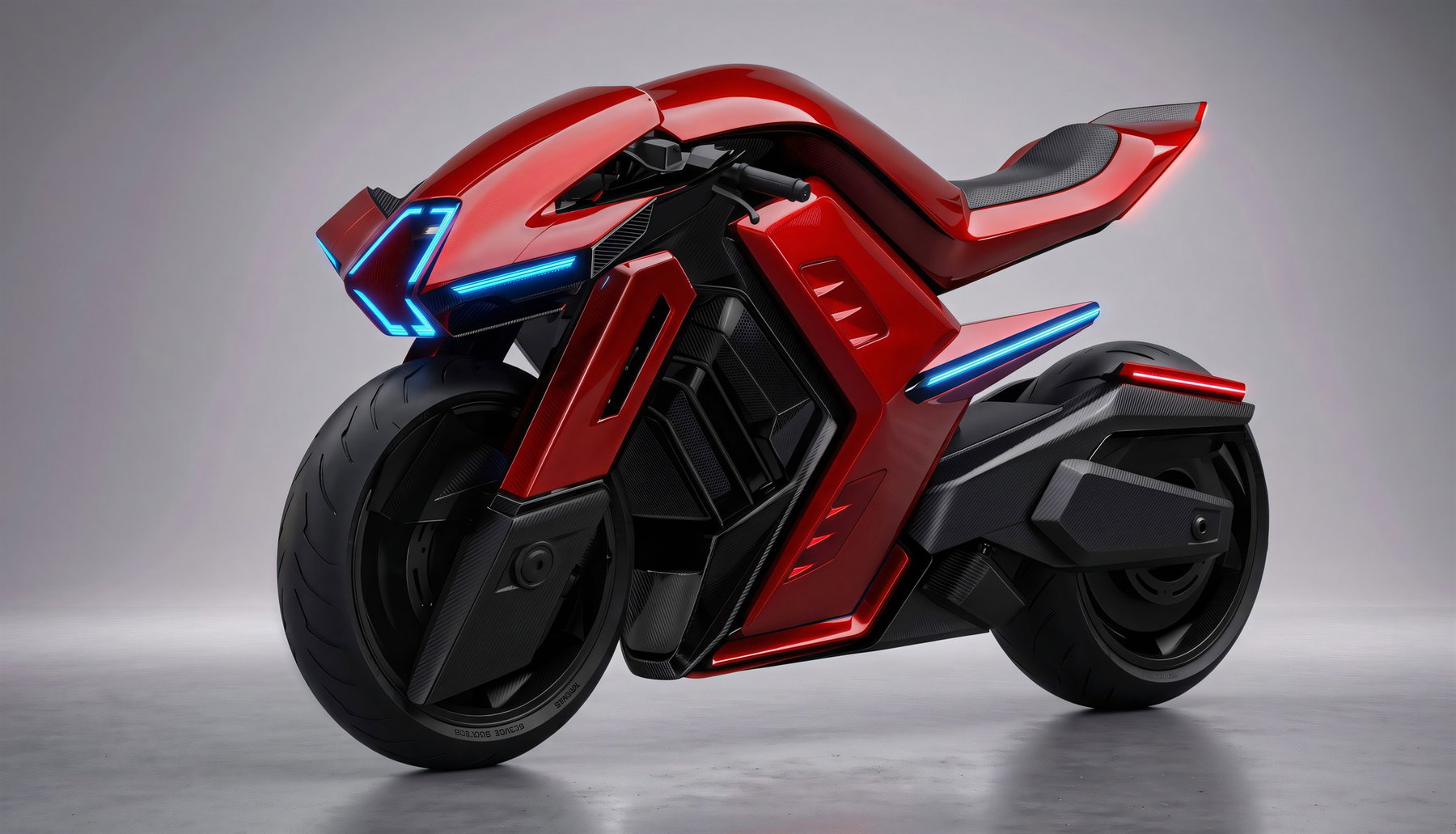
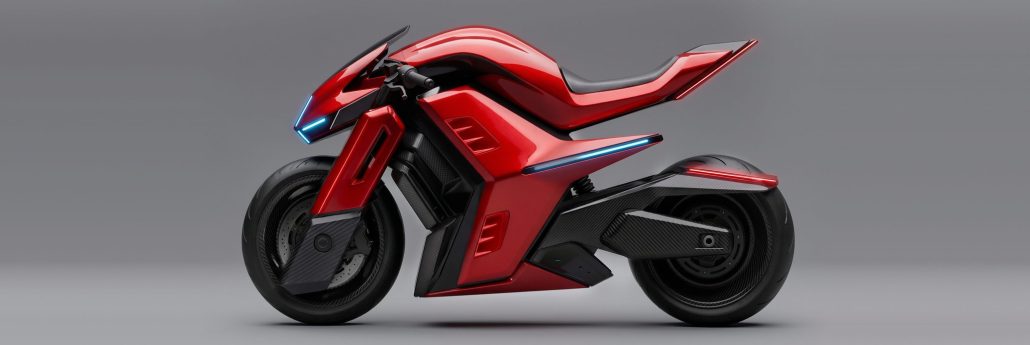
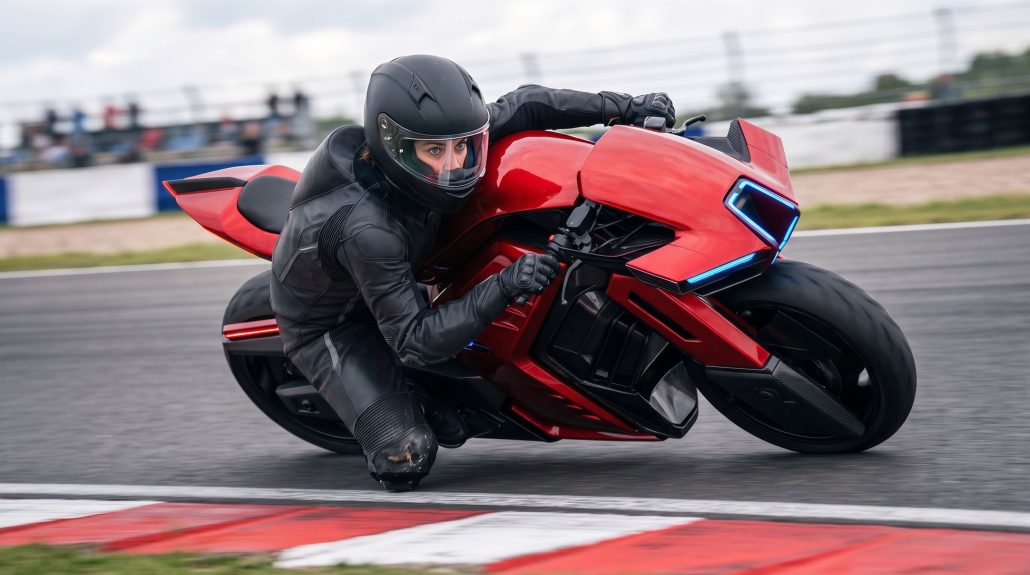
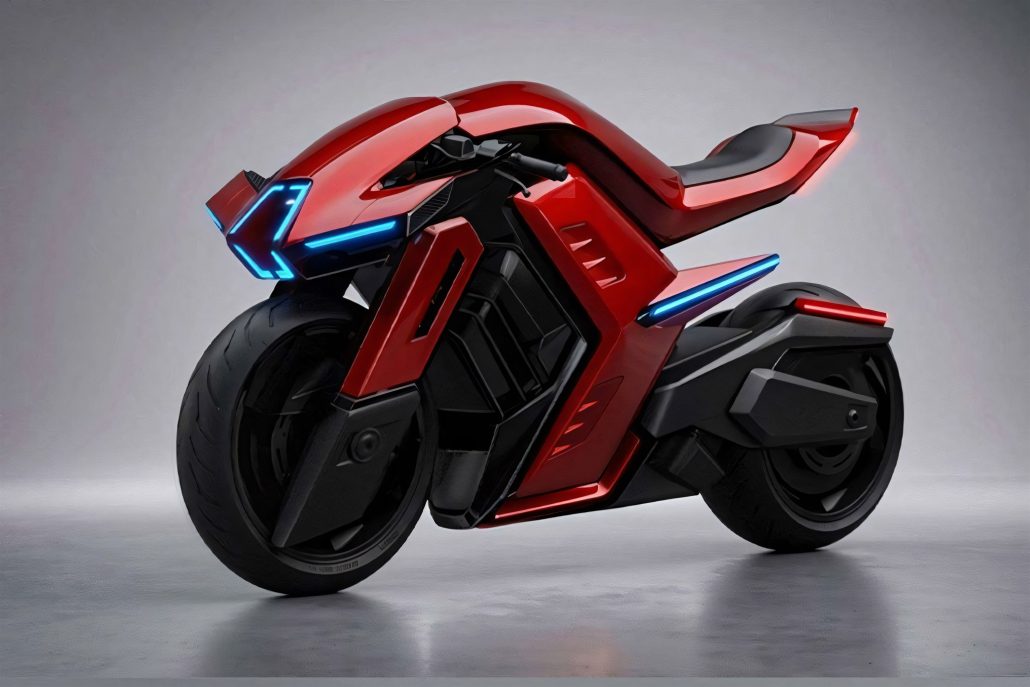
The Taran has an angular shape with a pronounced forward lean. Its name is short for Taranis, the Celtic god of thunder, and according to Furion the nod to lightning was a deliberate choice for an electric motorcycle.
The motorcycle was designed by Takumi Yamamoto, who also penned the GT by Citroën concept. Project management and artistic direction were handled by L’Agence Pigment, a design agency specialising in mobility. According to Furion, the designers involved bring more than 25 years of experience from car and motorcycle design as well as boat and aviation design.
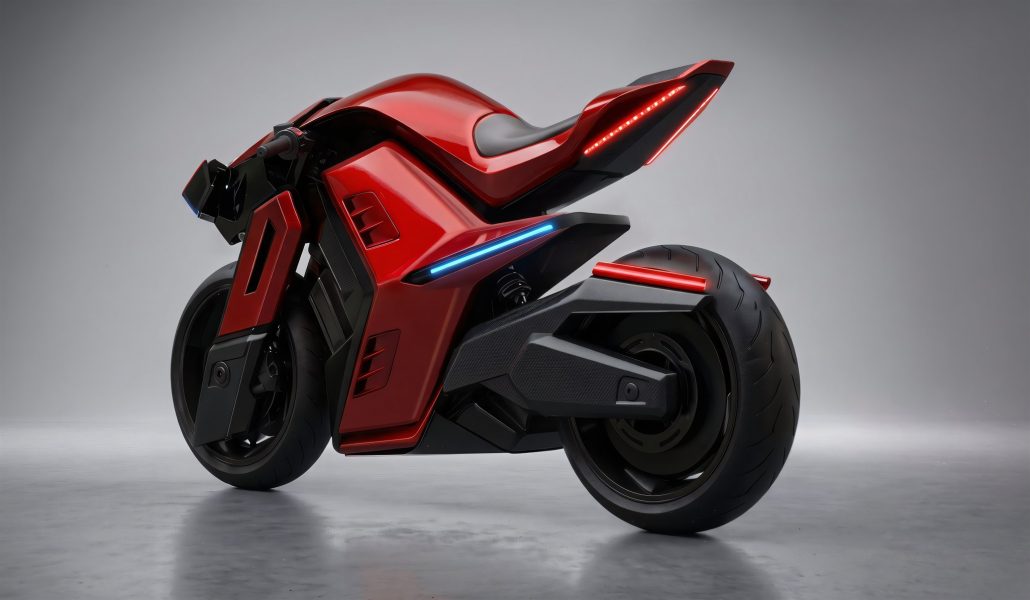
Typical features of the Taran include faceted surfaces with chamfered zones, perforated and layered bodywork panels, and slim light signatures. The seat is minimalist, and the centre of gravity sits low and far forward. The shape is meant not only to look good, but also to take the cooling of the battery and power electronics into account. Furion puts it like this: “Le profil intègre les contraintes de refroidissement des modules de puissance et de la batterie tout en conservant une signature visuelle propre et fonctionnelle” (The profile incorporates the cooling requirements of the power modules and the battery while retaining a clean, functional visual signature).
The front wheel is at the centre of the silhouette. It is not a decorative element but the motor itself, and according to the manufacturer the rest of the shape is built around this wheel. So far, the Taran can be viewed in a virtual 3D showroom that works in a browser, on a smartphone and with a VR headset.
How does the Furion Taran’s EVERSOR drive work?
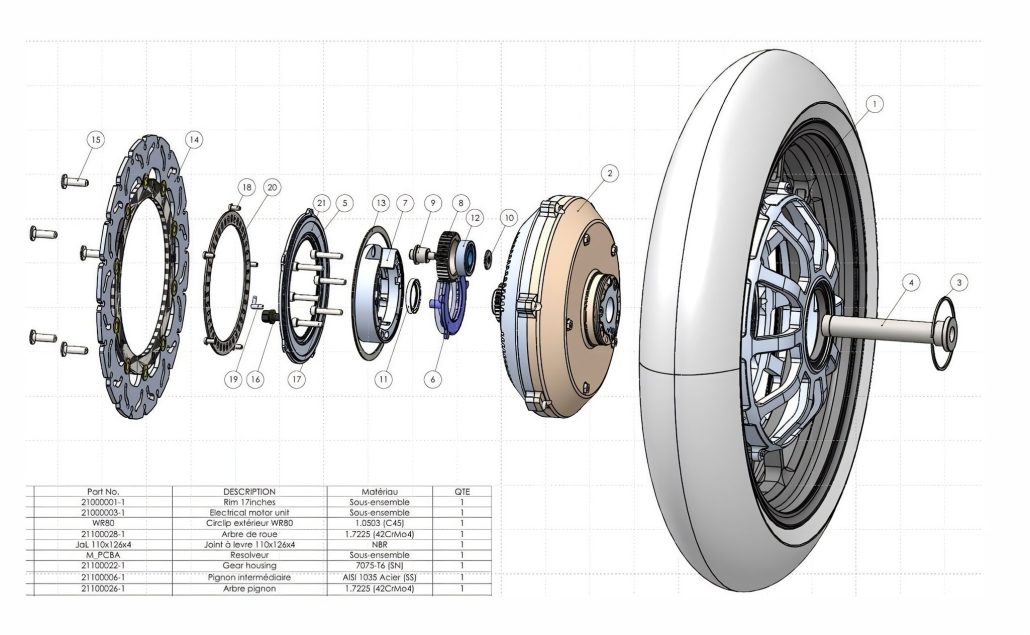
EVERSOR places a compact axial flux motor directly in the front wheel and, on the Taran, combines it with a second electric motor for the rear wheel. Software distributes the drive force between the two wheels.
An axial flux motor is very compact and delivers a lot of power relative to its size. That is why it fits into the hub of a motorcycle wheel, in this case with a 17-inch rim. Furion describes EVERSOR as a system of four building blocks that work together.
Motor in the front wheel
The first building block is the position of the motor. According to Furion, this very decision is the key to everything else, rather than any improvement in the efficiency of the motor itself.
Counter-rotating motor against the gyroscopic effect
Rotating parts create a gyroscopic effect that the rider feels when turning in and has so far simply had to accept. With EVERSOR, the motor rotates against the direction of the wheel, and does so in a controlled way. This turns the gyroscopic effect into a variable that can be adjusted deliberately. The motorcycle is supposed to feel lighter and turn in more willingly as a result. Based on a vehicle dynamics simulation, Furion claims an 11 percent gain in agility. The counter-rotation is patented, and the protection has been extended internationally.
The idea is not entirely new: Ducati has used a crankshaft that rotates in the opposite direction to the wheels on its V4 superbikes for years.
Recovering energy under braking
Electric motors can act as generators under braking and send electricity back into the battery. This regeneration has so far been difficult on motorcycles. Under braking, the weight shifts forward, so a motor at the rear wheel has little grip and can only absorb a small amount of energy. The rest is lost as heat at the front brake.
According to Furion, a conventional layout recovers only 7 percent of the braking energy this way, while 93 percent is lost. If the motor sits in the front wheel instead, exactly where the load is during braking, the figure is said to be 77 percent. This value comes from a circuit simulation that was calibrated against real measurements in Le Mans.
Software-controlled all-wheel drive
The fourth building block is the control system that splits the power between the front and rear wheels. This is meant to make traction a matter of electronics rather than a mechanical compromise. Furion expects this to bring above all more safety in the wet, on gravel and on uneven surfaces.
What technical specifications does Furion give for the Taran?
Furion quotes 326 hp (240 kW) for the Taran, distributed between both wheels, with a weight of 230 kg (507 lbs) including the battery. The range is said to be 200 km (124 miles).
- Power: 326 hp (240 kW), distributed between the front and rear wheels
- Weight: 230 kg (507 lbs) including battery
- Battery: 20 kWh usable capacity
- Consumption: around 100 Wh per kilometre, i.e. 10 kWh per 100 km
- Range: 200 km (124 miles)
- Drive: all-wheel drive with an axial flux motor in the front wheel and a second motor at the rear
- Electrical system: 400 volts planned, possibly 800 volts later
Furion explicitly describes the 200 km as a real-world figure rather than one from a homologation cycle. Compared with a conventional electric motorcycle with a battery of the same size, the Taran is said to go 20 to 30 percent further. According to Furion, this requires neither additional cells nor extra weight or higher material costs. However, Furion determined this range gain in simulations based on the standardised WLTC driving cycle, calibrated against real measurements.
For the electrical system, Furion initially plans 400 volts, with an 800-volt stage considered an option. The higher voltage is meant to allow thinner cables, reduce heat losses and enable high charging and discharging currents without the battery cells heating up significantly.
Is the Furion Taran already rideable?
No, Furion has not yet publicly shown a complete, running Taran. Its performance figures are manufacturer claims, and there are no independent tests of the Taran yet.
What has been demonstrated, however, is that the EVERSOR drive works in principle. In Le Mans, Furion tested a running prototype fitted with measuring equipment on track. Under braking, it recovered 7.9 kW (around 10.7 hp), which corresponds to 76 percent of its motor’s peak output. The simulations for range and regeneration are based on these measurements. Furion sums it up confidently: “This is not a concept. It rides.”
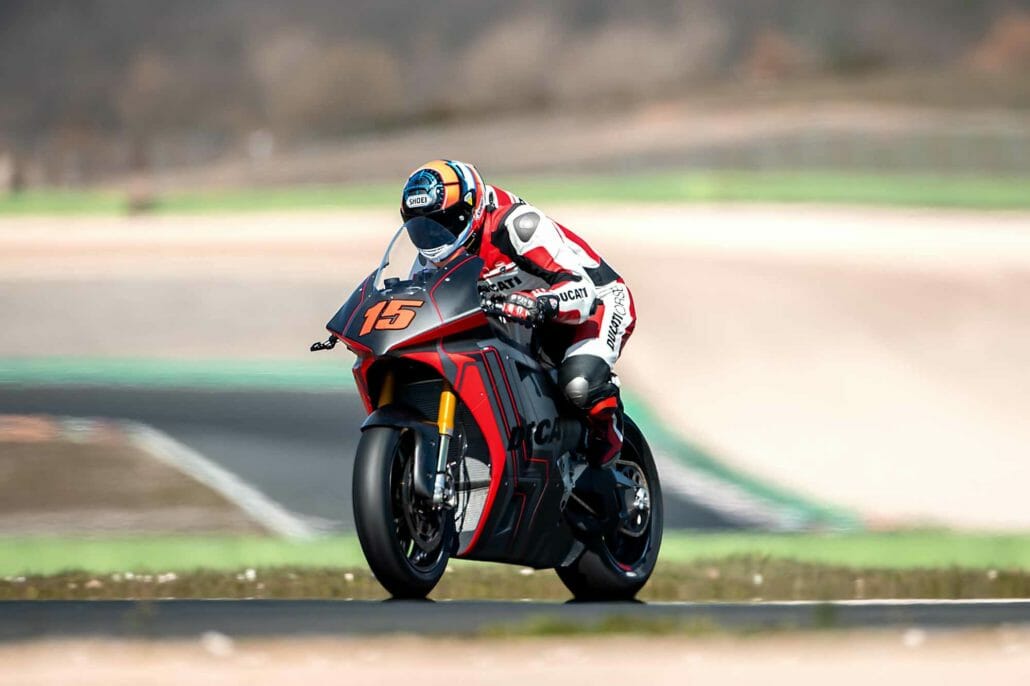
That statement, however, refers to the test mule and not to the Taran itself. This test platform runs on 48 volts, while the Taran is set to operate at a minimum of 400 volts. According to Furion, only at this voltage will the technology show its full potential, but the necessary high-voltage architecture still has to be developed. The two images of the Taran on a race track are also, according to the manufacturer, only artist’s impressions. There is still a good deal of work to be done between a functioning test vehicle and a production-ready electric superbike.
From hybrid MT-07 to pure electric motorcycle
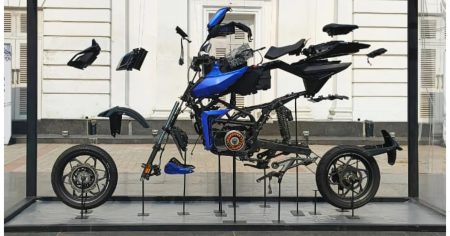
The Taran’s direct predecessor is the M2, a hybrid prototype based on the Yamaha MT-07 that Furion presented in early 2026. It was the first time EVERSOR was used in a running motorcycle.
On the M2, Yamaha’s 689 cc CP2 parallel twin continued to drive the rear wheel. An electric motor in the front wheel also contributed, according to Furion, 300 Nm (221 lb-ft) and around 20 hp (approx. 15 kW) under acceleration. Under braking, it worked as a generator. The battery was housed in the tail. The M2 was tested at venues including the Pôle Mécanique Alès Cévennes, where it was ridden on track by four-time Supermoto world champion Adrien Chareyre.
With the Taran, the combustion engine is dropped entirely and replaced by a second electric motor for the rear wheel. Furion describes the step like this: the system “n’est plus un complément à un moteur thermique : il devient l’architecture” (is no longer a complement to a combustion engine: it becomes the architecture).
The company’s roots go back further. As early as 2017 and 2018, Marc Evenisse presented a hybrid motorcycle under the name M1, although it never went into production. In early 2026, Furion also talked about a production model called the F1. The company has not yet confirmed whether the Taran continues or replaces that project.
Why does Furion only want to build the Taran in small numbers?
Furion does not want to become a volume manufacturer, but to license EVERSOR to other motorcycle manufacturers and suppliers. The Taran is meant to serve as a rolling showcase for the technology.
The business model is based on non-exclusive licences for manufacturing and use. It targets premium and volume manufacturers worldwide. Furion itself develops the technology, protects it with two internationally extended patent families and markets it. Series production is to be handled by manufacturers and large suppliers under licence. Furion says it sees manufacturers as customers rather than competitors.
The company explains on its website why there is still a motorcycle of its own: “We could have simply sold a licence. We would rather show what EVERSOR does when nothing holds it back.” Furion also says it wants to compete with its motorcycles on international race tracks in the long term.
How much does the Furion Taran cost and when is it coming?
Furion has not yet announced a price or a market launch date. It is also unclear how many units the small series will include.
Interested buyers can sign up to a list on Furion’s website. The company plans to use it to inform them as soon as reservations are possible, private test rides take place or new details emerge. Until then, the Taran stands as follows: Furion has proven the idea behind the drive with the M2 and the test mule in Le Mans. Whether it can also turn this into a 326 hp electric superbike is something the company still has to show.
Frequently Asked Questions
-
How much horsepower does the Furion Taran have?
According to the manufacturer, the Furion Taran produces 326 hp (240 kW). The power is split between two electric motors, one in the front wheel and one for the rear wheel. This figure has not yet been independently measured.
-
How far can the Furion Taran go on one battery charge?
Furion quotes a real-world range of 200 km (124 miles). This is based on a 20 kWh battery and consumption of around 100 Wh per kilometre. Thanks to energy recovery under braking, the front wheel motor is said to deliver 20 to 30 percent more range than a conventional layout.
-
Can you already buy the Furion Taran?
No, the Furion Taran is not yet available, and neither the price nor the market launch has been set. Furion is planning a small premium series and is currently collecting interested buyers via a list on its website.
-
What is Furion EVERSOR?
EVERSOR is a drive system with an axial flux motor in the front wheel that rotates against the direction of the wheel. It is designed to recover significantly more energy under braking, make turning in easier and enable all-wheel drive. It was first used in the M2 hybrid prototype based on the Yamaha MT-07.