- 13,581 miles (around 21,860 kilometres) in 24 days
- 38 US states, starting on 29 June in Olympia, Washington
- A daily workload of roughly 600 miles (just under 1,000 kilometres)
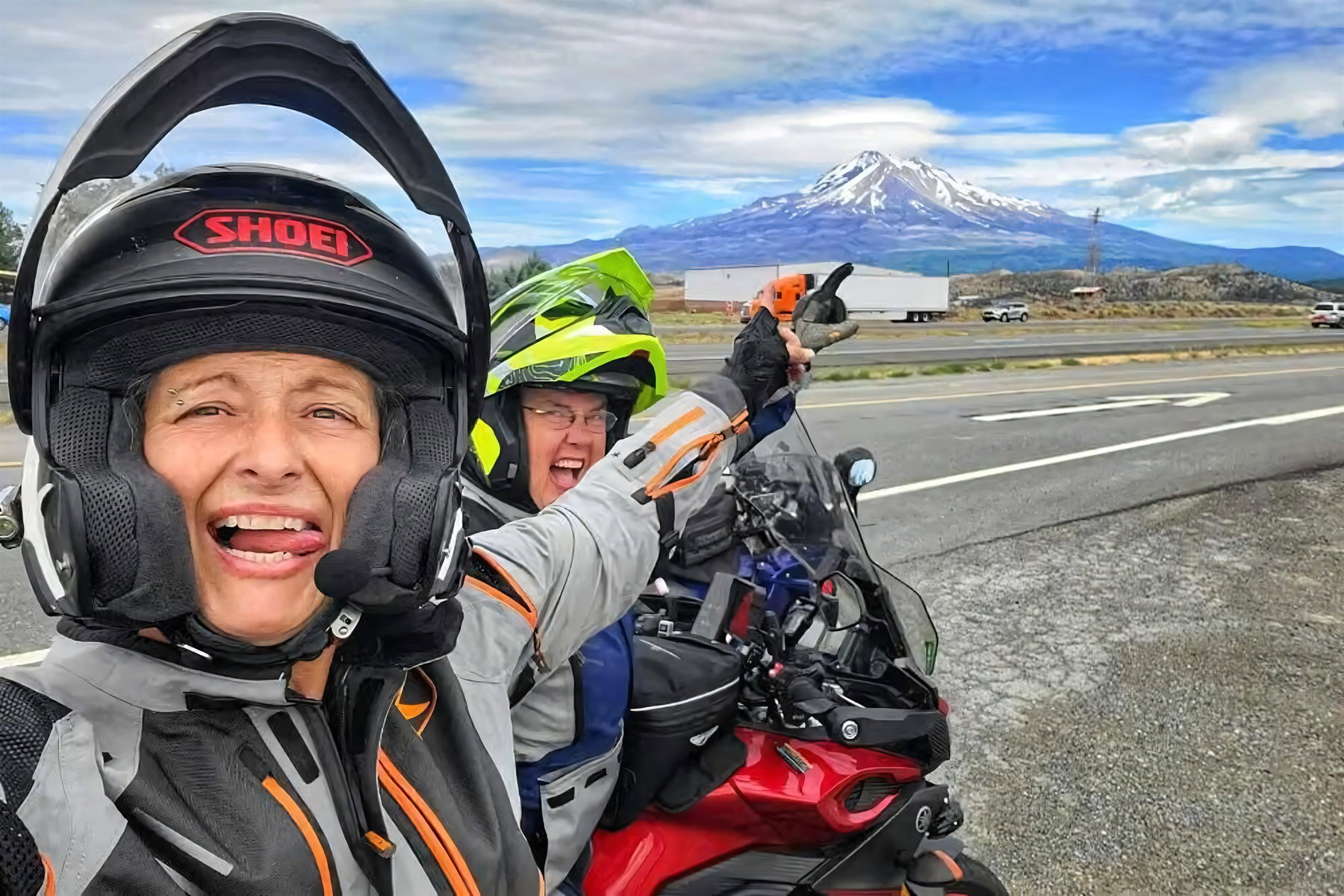
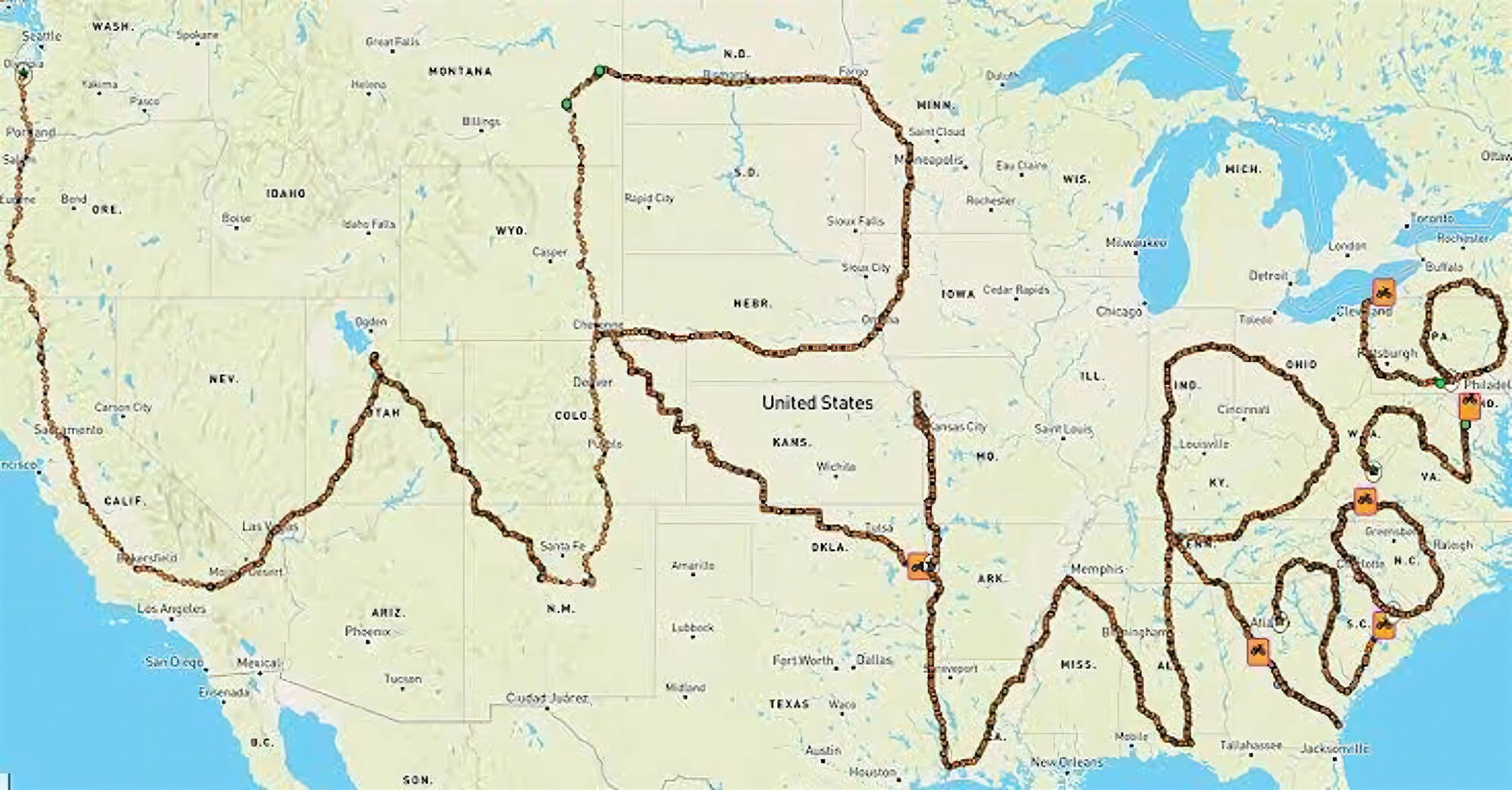
Wendy Crockett and Liza Miller did something in the summer of 2026 that had never been done in this form before. Instead of simply piling up as many miles as possible, they used the map of the United States as a drawing surface. Every stage they rode was recorded by GPS, and the sum of all those lines adds up to a readable piece of lettering. The result is the sequence „WRWR 2026“, the abbreviation of the Women Riders World Relay together with the year. The project is called the WR3 Ride, short for Women Riders World Relay World Record.
What exactly was recognised as a world record?
Guinness World Records certified the ride as the largest coordinated GPS drawing by a motorcycle pair. The certificate was handed to the two riders once the journey was complete.
The title deliberately sets itself apart from pure distance records. What was assessed was not how many kilometres were covered, but how large the drawn motif turned out and whether it was created in a properly coordinated way. According to sources close to the ride, the previous best mark is said to have stood at around 4,451 kilometres. That comparison figure has not been firmly confirmed so far.
For Wendy Crockett this was a conscious break with her own past. She describes how, after her big distance ride in 2022, she realised that miles cannot be stacked up forever and that size can work in a different way too. In her own words: „And genuinely, what is bigger than using the entire United States as your canvas, right?“
How did the idea come about?
The roots lie in the Women Riders World Relay of 2019. Back then a relay baton was passed from rider to rider until it had travelled once around the world.
According to the organisers, that relay connected more than 20,000 female motorcyclists from over 102 countries, with the baton itself passing through 78 countries. Liza Miller, co-founder and managing director of the organisation, was responsible for the stages through the United States at the time. Seven years later she wanted to make the message visible again and brought Wendy Crockett on board.
Miller is blunt about what set her involvement in motion: „This all started because the industry doesn’t cater to women riders.“ She points out that women often have to fall back on gear and machines developed for men. The organisation’s motto is „Connect, Challenge, Change“.
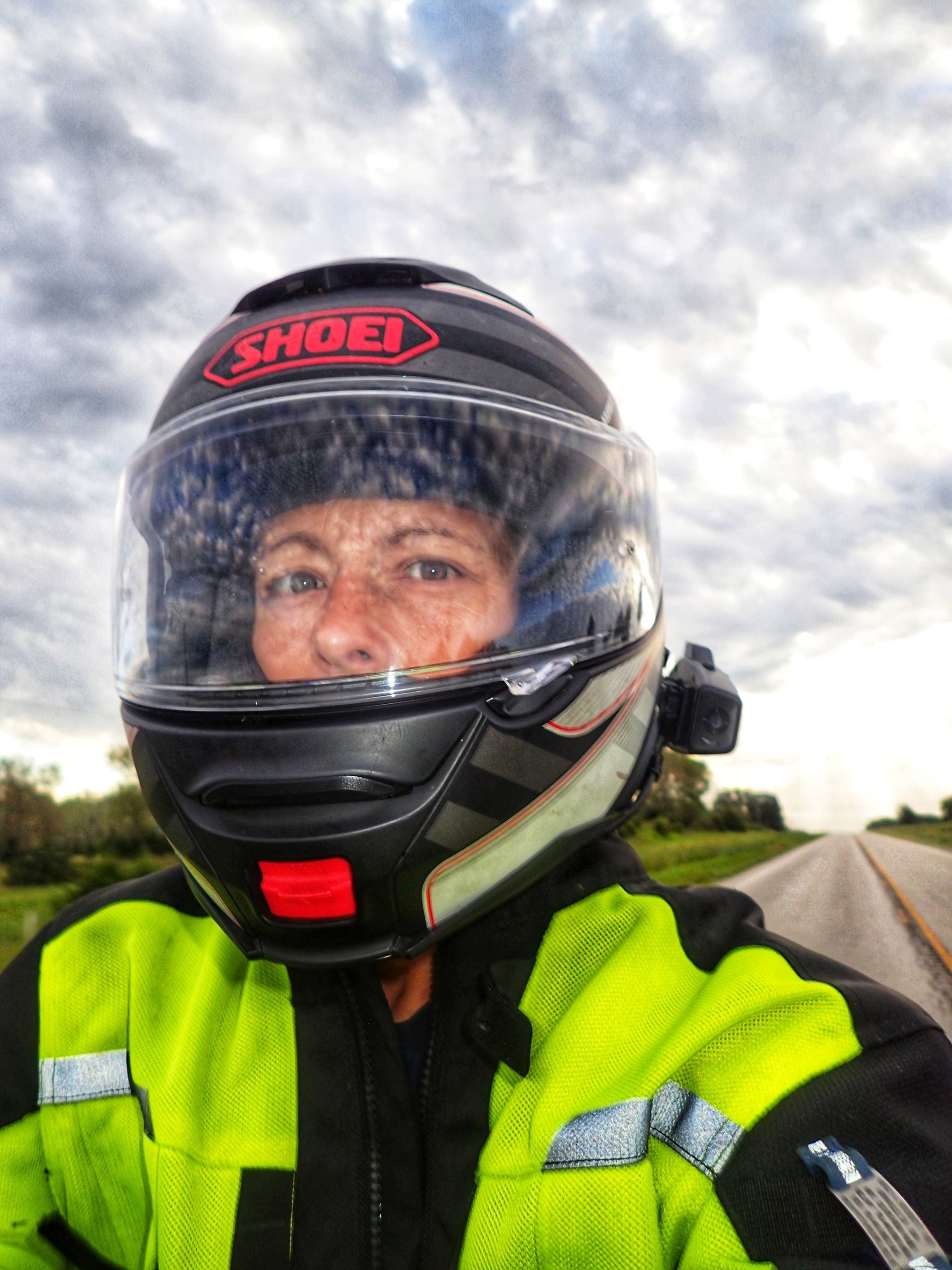
Crockett brings exactly the right experience to a project like this. She is a multiple factory-certified motorcycle technician, tour guide and instructor for first aid at crash scenes. In 2019 she became the first woman to win the Iron Butt Rally, an endurance event lasting eleven days and 11,000 miles (around 17,700 kilometres). In 2022, together with Ian McPhee, she set a Guinness record for the longest continuous motorcycle ride within one country as a team, which Guinness recognised at 80,208 miles (129,082 kilometres). In total she says she has covered more than one million miles (around 1.6 million kilometres), including rides in 49 US states and in every Canadian province reachable by motorcycle.
How do you plan a drawing on this scale?
By hand, and with plenty of failed attempts. Software that automatically translates drawings of this dimension into a rideable route simply does not exist.
Crockett sums it up drily: „Yeah, so there’s no app to make GPS drawings on this scale.“
The western part of the motif, the first „WR“, was comparatively straightforward because Crockett already knew many of those roads. Further east it became more complicated. The motif had to stay legible while every daily stage had to begin and end in a place able to accommodate a varying number of participants. More than once a line looked perfect on the map until it became clear that there was no hotel within a 300-mile radius. Then it was back to the drawing board. On top of that, every road is said to have been checked for rideability in advance via Google Street View.
Miller draws a parallel to the original relay, for which she had to plan a route through countries she had never visited herself, including checks on monsoon seasons and unpaved sections.
Almost 1,000 kilometres a day for 24 days
The pace was around 600 miles (just under 1,000 kilometres) per day, and that for 24 consecutive days. For most of the riders who joined, that was considerably more than they had ever covered in one go.
The ride started on 29 June in Olympia, Washington, and finished at the end of July in Erie, Pennsylvania. Along the way the route touched 38 states. Anyone interested could follow the progress on a public live map.
Crockett describes how her role consisted above all of keeping the rhythm. With ten people, a planned five-minute break quickly turns into half an hour, and eight breaks like that add up to a day on which the group only arrives once the restaurants have closed. Once, that is no problem, but over 24 days the lack of sleep and food adds up to a real risk.
The weather took its toll as well. On several days the temperature is said to have reached 40 degrees Celsius (104 degrees Fahrenheit), smoke from wildfires restricted visibility and heavy rain left the visor almost blind at times. The longest riding day is said to have lasted 15 hours.
What problems came up along the way?
Two incidents stand out: a technical failure on the highway and a hospital stay on day eight.
Miller’s rear wheel valve broke while riding and the tyre lost air instantly. She thought the day was over until Crockett pulled a repair valve out of her toolkit, a component Miller says she did not even know existed. Further technical incidents such as a damaged radiator and a heavily worn drive chain are reported to have occurred as well.
Things became more serious on the eighth day. Miller suffered severe dehydration, developed breathing problems and a tingling sensation in her hands and feet. She abandoned the stage and was taken to hospital. By coincidence a trained nurse had joined the group the previous evening. She cancelled her own plans and stayed with Miller until her condition had stabilised. The schedule nevertheless held, because riders were already waiting at every destination for the next stage.
Who was allowed to join?
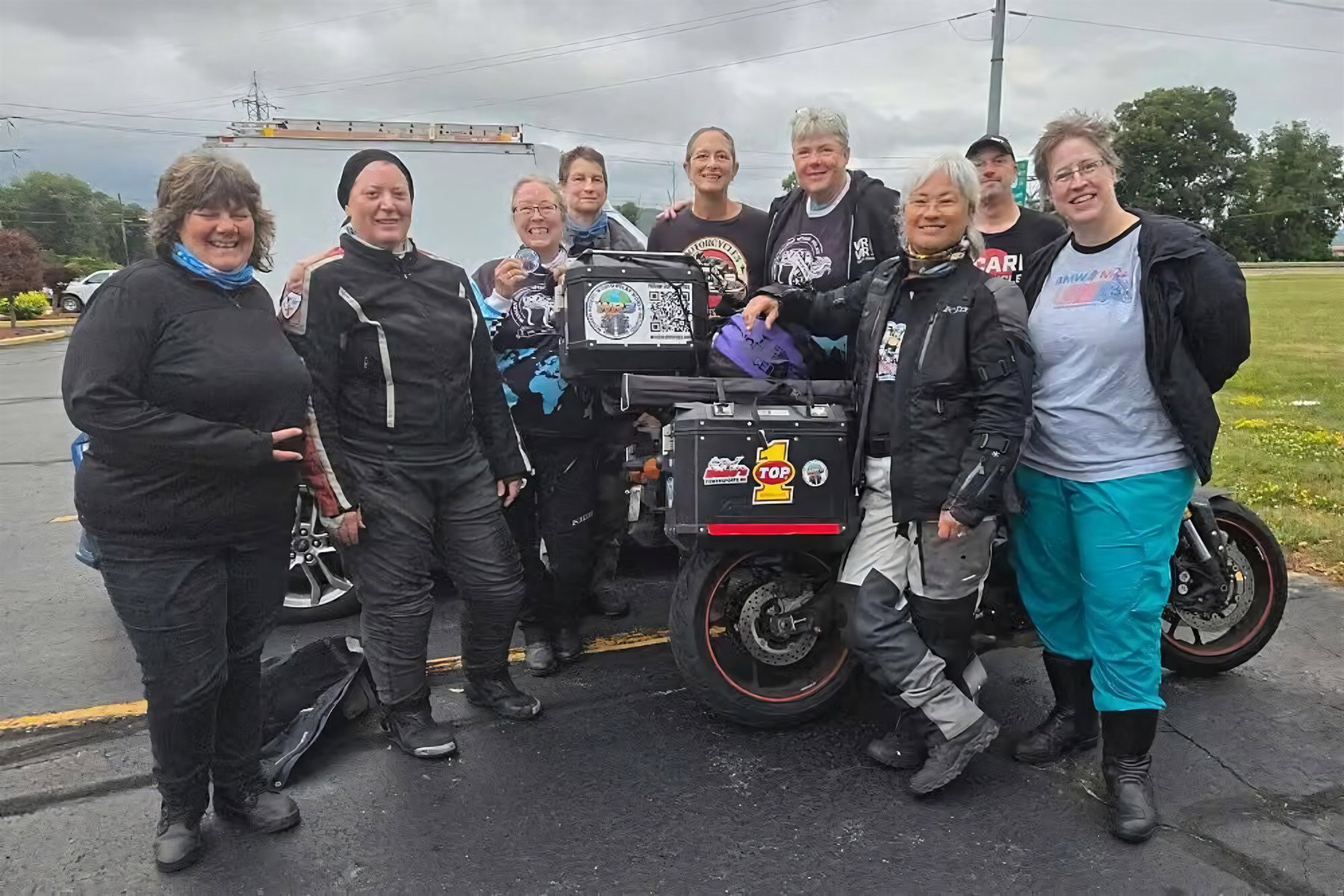
The WR3 Ride was designed to be open from the very beginning. Dozens of women, and occasionally men as well, joined for individual days or entire sections.
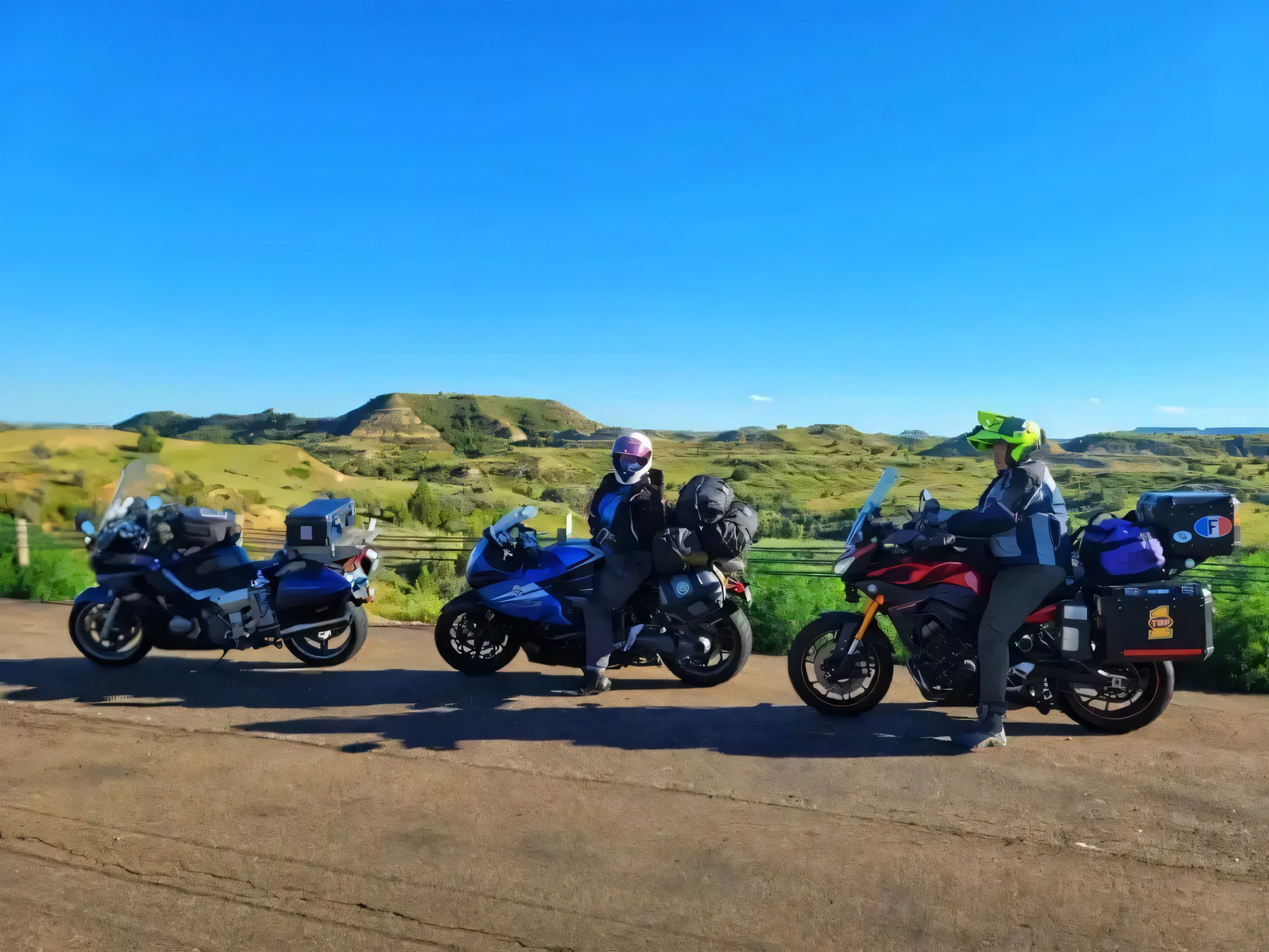
The largest group comprised around ten motorcycles. A participant named Rose stayed on for almost the entire distance and shared the radio link with Crockett and Miller, which made leading larger groups considerably easier. Experience levels varied enormously. Crockett on that point: „We had so many people joining us, all sorts of different skill levels.“ Four Iron Butt Rally veterans are said to have taken part alongside relatively new motorcyclists.
As a symbol the pair carried the original 2019 relay baton with them. Participants were allowed to hold it when they joined the group. For women who had already been part of the 2019 relay, that was an emotional moment.
Miller made no attempt to sell the effort as a jaunt. Asked whether she was having fun, she replied: „No! This isn’t fun! If it was fun, everyone would do it.“
How long was the route in reality?
The figures vary depending on the source. The most frequently quoted value, and the one relevant to the record, is 13,581 miles, or around 21,860 kilometres.
Before the start, Crockett had put the pure drawing route at roughly 13,600 miles, not counting the connecting stages between the individual letters and digits. Including those linking sections, the total distance was expected to come to 16,000 miles (around 25,750 kilometres) or more. Some reports also mention a distance of 13,204 miles. Exactly which figure Guinness used has not been publicly documented so far.
What remains of the project?
A certificate, a map with four letters, and a number of riders who now judge their own range rather differently.
Miller turned 60 during the ride and describes how she proved to herself that she can still push to her limits. She says they now receive messages from people planning their first Iron Butt ride, meaning 1,000 miles (1,600 kilometres) within 24 hours. Her conclusion on the whole venture is short: „Just say yes.“
The season is not entirely over for the two of them. Shortly after the record ride they travelled together to Sturgis to take part in the Pearl’s Jam event. For any future attempt, Miller says she would opt for a motorcycle geared more towards long-distance comfort, starting with a better seat.
The WR3 Ride therefore joins a series of record rides that have opened up new categories again and again in recent years, from pure distance marks through to best marks for speed and endurance. The approach of making the map itself the result is the new part.
Frequently Asked Questions
-
What is the largest GPS drawing in the world?
It is the lettering „WRWR 2026“, which Wendy Crockett and Liza Miller rode across the United States on their motorcycles in 2026. Guinness World Records recognised it as the largest coordinated GPS drawing by a motorcycle pair. The route measured 13,581 miles, or around 21,860 kilometres.
-
How long did the record ride take?
The ride lasted 24 days. It began on 29 June in Olympia, Washington, and finished at the end of July in Erie, Pennsylvania. The average daily workload was around 600 miles, or just under 1,000 kilometres.
-
How many US states did the route pass through?
The route touched 38 of the 50 states. The western part of the motif ran along roads Wendy Crockett already knew, while in the east the route had to be replanned several times. The deciding factor was often whether the stage destination offered any accommodation for the group at all.
-
Who are Wendy Crockett and Liza Miller?
Wendy Crockett is a motorcycle technician, tour guide and long-distance rider. In 2019 she became the first woman to win the Iron Butt Rally and since 2022 she has held a Guinness record over 80,208 miles (129,082 kilometres) together with Ian McPhee. Liza Miller is co-founder and managing director of the Women Riders World Relay as well as founder of the community project Re-Cycle Garage.
-
What is the Women Riders World Relay?
The Women Riders World Relay is an international initiative for female motorcyclists with the motto „Connect, Challenge, Change“. In 2019 it organised a worldwide relay in which, according to the organisation, more than 20,000 women from over 102 countries took part. The 2026 GPS drawing picks up on that project.