- For the first time, regular riders evaluated the 850cc machines and Pirelli tires, though they were barred from making specific statements about either
- Power output is lower, especially on corner exits, and without ride-height devices the motorcycle feels “more real” according to riders
- Engineers estimate up to 50 percent less downforce and expect a higher spectacle value
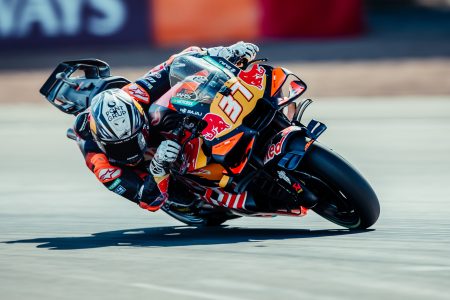
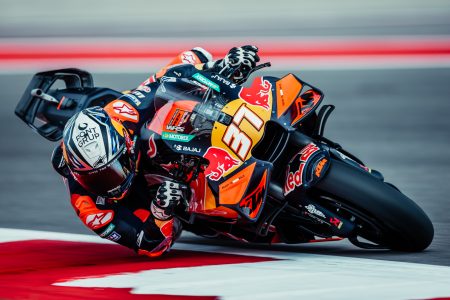
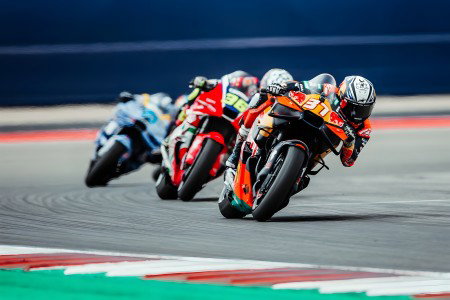
One day after the Czech Republic Grand Prix, MotoGP’s regular riders got their first taste of what awaits them from 2027 onward at the Automotodrom Brno. During a private Pirelli test, they rode the new 850cc prototypes and their accompanying tires for the very first time — the rubber that will replace Michelin as spec supplier from the 2027 season. The test took place behind closed doors at Michelin’s request, as the French manufacturer remains sole tire supplier until the end of the current season. Manufacturers also instructed their riders to refrain from making specific comments about the new motorcycles, and especially about the Pirelli tires. General impressions of the rule change were permitted, and those impressions alone offer a first glimpse of where the premier class is heading.
Why does the MotoGP 850cc feel slower?
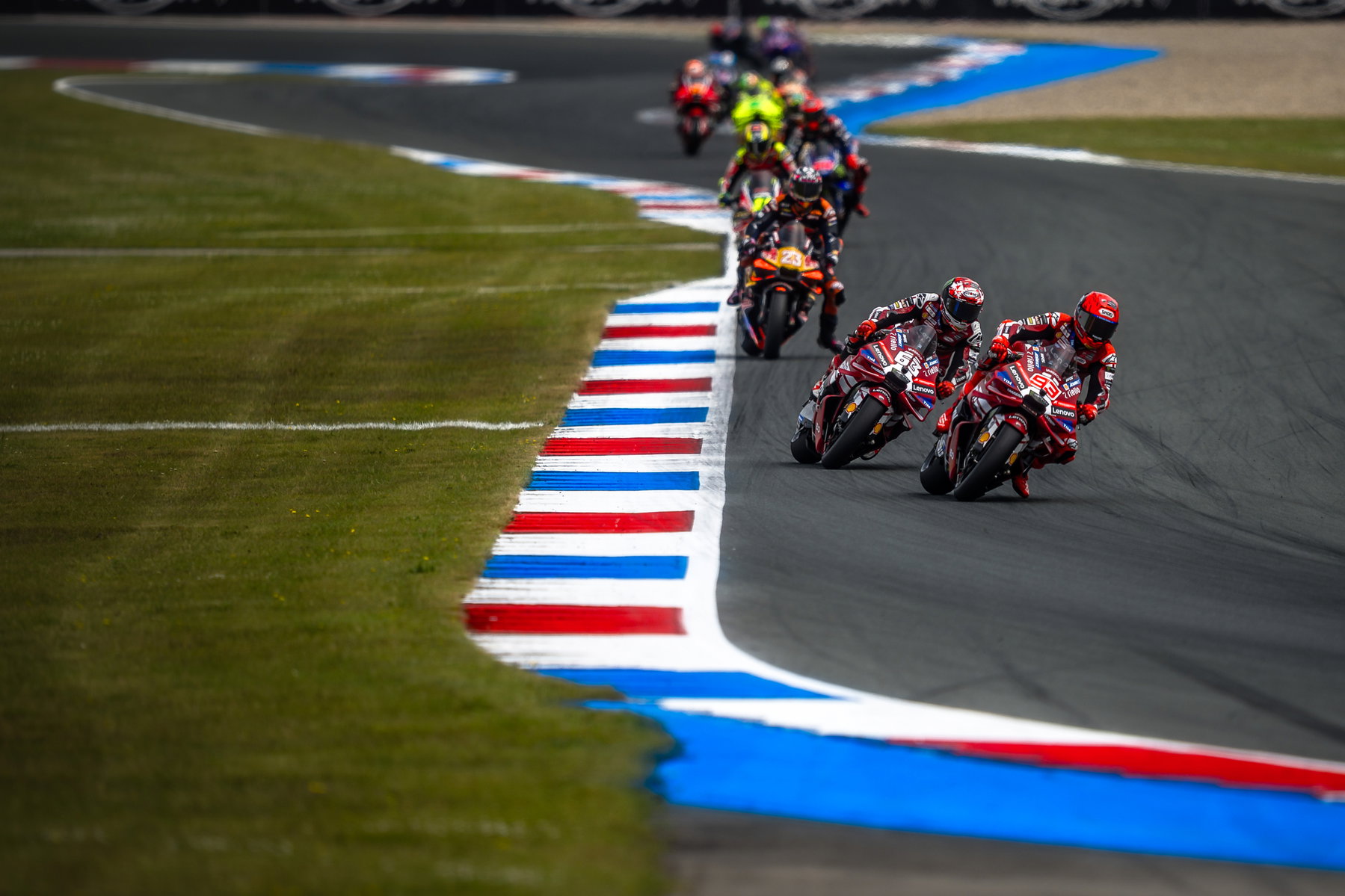
The smaller engines produce less power, something riders notice immediately on corner exits. Toprak Razgatlioglu described the 850cc as feeling very slow compared to the current 1000cc, especially in the acceleration phase in third and fourth gear, where almost nothing seems to happen. His first instinct was that something was wrong on the straight, until it became clear that all manufacturers were reporting the same impression. Rules are rules, he said — you have to adapt, even if the machine remains a fast motorcycle regardless.
Pedro Acosta went further and compared the 850cc to a different category altogether. “It feels like another class,” the KTM rider said, comparing it to the power of today’s engines. His first impression was nevertheless quite positive. Joan Mir added that corner speed is higher while top speed is lower. With less drive pressure on corner exits, carrying more momentum into corners is likely to become more important — a shift Razgatlioglu also anticipates for the coming season. Marc Marquez was characteristically brief: a first impression remains a first impression, but the starting point had not been bad.
What does Toprak Razgatlioglu say about the Pirelli tires?
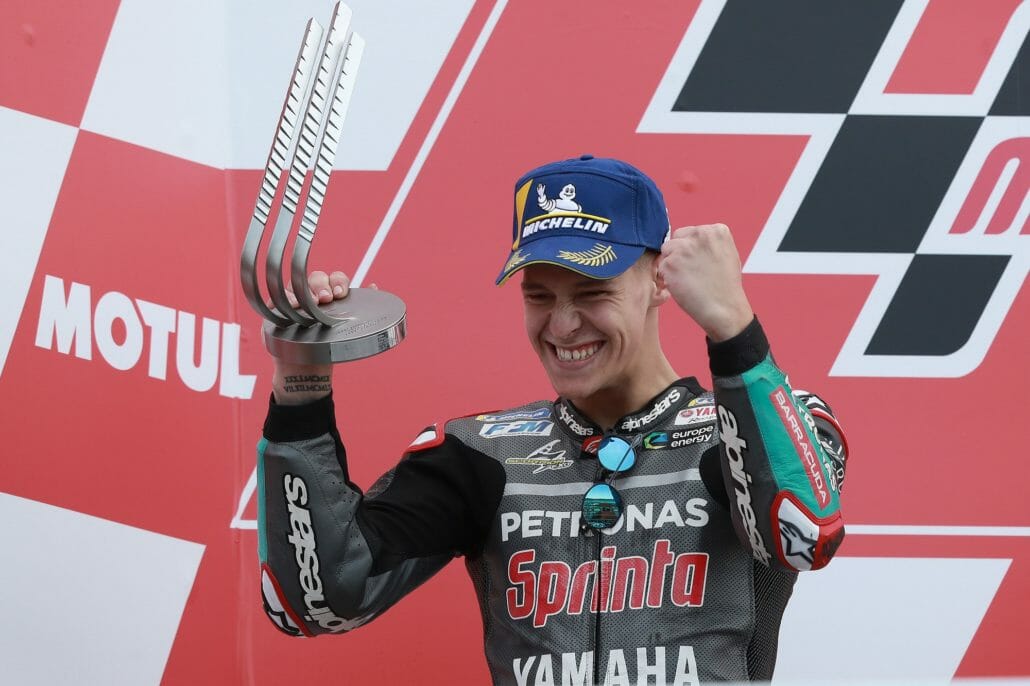
Razgatlioglu recognizes a familiar feeling from his Superbike days in the Pirelli front tire. “I feel the same, like Superbike. The feeling,” the three-time Superbike world champion said. He sees room for improvement at the rear, but the grip is strong. Yamaha test rider Augusto Fernandez observed that Razgatlioglu had rediscovered his hard braking style from the Superbike World Championship with the Pirelli tires. Brno is not a circuit known for heavy braking, yet he felt comfortable from the very first lap, with confidence growing each session — especially at the front.
This assessment aligns with what was heard in the paddock. The new Pirellis are said to have retained their character and are considered softer and more neutral than the current Michelin. There were also indications from team circles that Pirelli may still need to adjust carcass stiffness to better handle the demands of MotoGP machinery.
Why do riders describe it as a "more real" motorcycle?
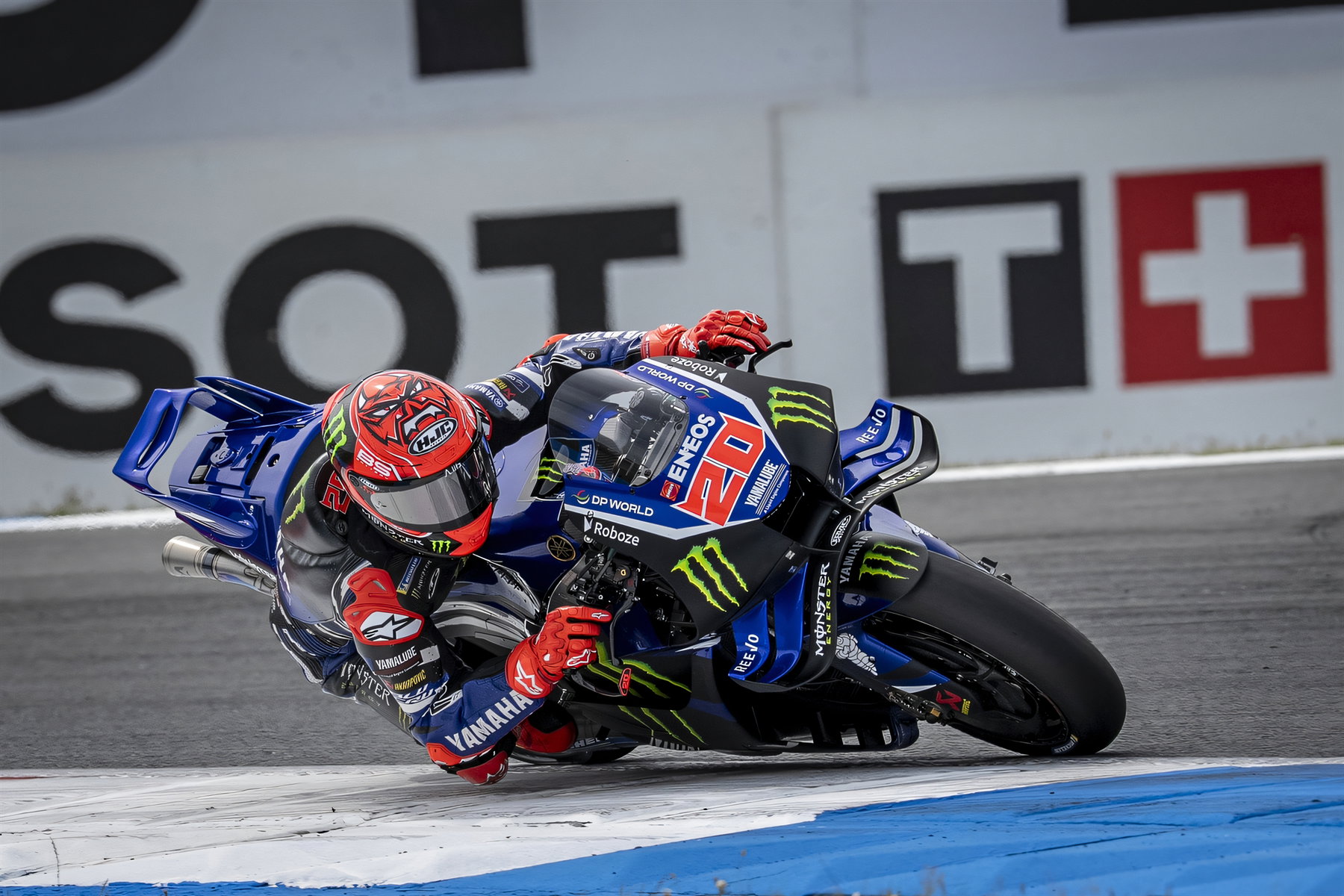
Without ride-height devices, riders must take more direct control of the motorcycle, something many find more natural. Augusto Fernandez, who has the most experience with the new specification, described the 850cc as “more like a real and natural bike.” You are riding again yourself rather than being carried along by the technology. Power output is lower, but not dramatically so, and the riding is simply more fun. For spectators, he expects more spectacle, because riders can play with the motorcycle more, fight closer together and with less risk — helped also by the tires. The current Michelins have long suffered from an overloaded front tire; the Pirellis are expected to make closer following easier.
Fernandez illustrates just how significant the tire transition is by pointing to his own experience: as a test rider, he switches constantly between Michelin and Pirelli and says he has to briefly remind himself which tire he is on, because the two brands work in completely different ways. One can be relied upon in a certain way, the other cannot to the same degree, and that difference has already cost him a crash this year. Joan Mir spoke of an entirely different riding style and hinted at surprises for 2027. Marco Bezzecchi, who had missed the Czech GP through a penalty, called the test day one of his best ever on a motorcycle, while also tempering expectations: adapting to the new machine will be very hard, and sixty laps cannot replace five years of accumulated experience.
That the transition will not be straightforward was underlined by two crashes. Marc Marquez slid off at turn one and left Brno early to head to Assen, while KTM test rider Pol Espargaro suffered a highside exiting the first corner and caused significant damage to one of the 850cc prototypes. Neither rider was injured.
The technical pillars of the 850cc era
Alongside the smaller displacement, a series of further changes take effect from 2027 that are designed to make the motorcycle more demanding and the racing more spectacular. The transition is regarded as the most far-reaching technical overhaul since the founding of the Motorcycle World Championship in 1949. Minimum weight drops from 157 kilograms (346 lbs) to 153 kilograms (337 lbs), fuel tank capacity from 22 to 20 liters, and in Sprint races from 12 to 11 liters. Electronic clutch software is also outlawed, as are ride-height devices and the holeshot devices that were already phased out ahead of schedule.
On the aerodynamics front, the front fairing will be 50 millimeters narrower and moved 50 millimeters rearward, significantly reducing front-end downforce. Aprilia technical director Fabiano Sterlacchini estimates 30 to 50 percent less downforce and expects overtaking to become easier with the new machines. HRC technical director Romano Albesiano adds that the new bikes will pitch more and demand more from riders. Today’s motorcycles are easy to ride thanks to their perfectly linear power delivery and aerodynamic grip; the 850cc machines will be less forgiving and more challenging — which can only benefit the spectacle.
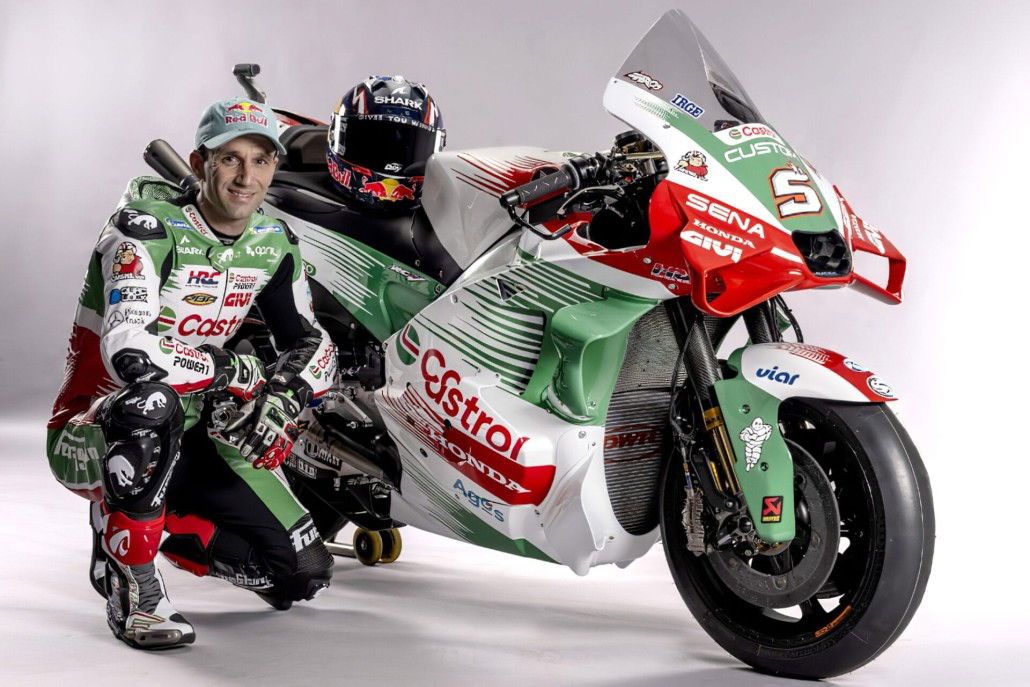
The smaller bore of the 850cc — a maximum of 71 mm compared to 81 mm on the 1000cc — also makes the engines less oversquare and therefore more tractable. An oversquare engine has a bore larger than its stroke, meaning the cylinder diameter exceeds the distance the piston travels. Such engines rev very high and produce substantial peak power, often with a sharp, hard-to-manage power character. Because the 850cc is less extreme in this respect, it should prove more predictable to ride. The regulations were also deliberately drawn up to avoid repeating the narrow, one-dimensional character of the 800cc machines used from 2007 to 2011. Honda rider Luca Marini, who rode the 850cc at Brno, welcomed the approach: anything that allows rider talent and skill to shine through more clearly is to be welcomed.
Who was not allowed to test at Brno?
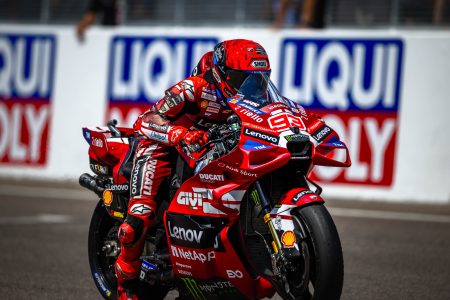
Several prominent riders had to watch from the sidelines because they are changing manufacturers for the 2027 season. Fabio Quartararo, who is expected to leave Yamaha for Honda, was not nominated and commented that he would be at home barbecuing with his family instead. He said he understood the decision, but would have tested had he been asked. He expressed no great concern about only having the one available day in Valencia to learn the new technology. Honda, by contrast, deliberately chose the departing Mir and Marini, placing experience above confidentiality, while Yamaha, Ducati and Aprilia fielded riders who will remain with them in 2027. Pecco Bagnaia, who was also absent due to a team change, suggested that riders not eligible for the test should at least have been allowed to try the Pirelli tires on their current 1000cc machines.
What happens after the Brno test?
The next test with regular riders follows in September after the Austrian Grand Prix at the Red Bull Ring in Spielberg, with a further session after the season finale in Valencia. A larger field is expected at Spielberg, though it remains open whether all manufacturers will be able to supply enough 850cc prototypes and whether riders changing teams will at least be permitted to test the Pirelli tires on the 1000cc machines. Pirelli aims to produce the first batches of 2027-specification tires in September and October, as they need to be shipped around the world in time for the first tests and races.
Leaked hand-timed lap data also suggested the deficit is smaller than feared. The fastest test riders were running in the high 1:53 to low 1:55 range, while the Brno lap record from race day stood at 1:53.1 minutes. The pre-test assumption that the 850cc machines would be two to three seconds slower was therefore not confirmed. The Brno test is thus only the opening chapter of a lengthy transition period, at the end of which, from 2027, stands a technically redefined MotoGP.
Frequently Asked Questions
➜ This article is part of our comprehensive overview: 2026 MotoGP Season: The Complete Overview – Teams, Riders, Calendar & Championship Standings. Find all key information on this topic in one place.